

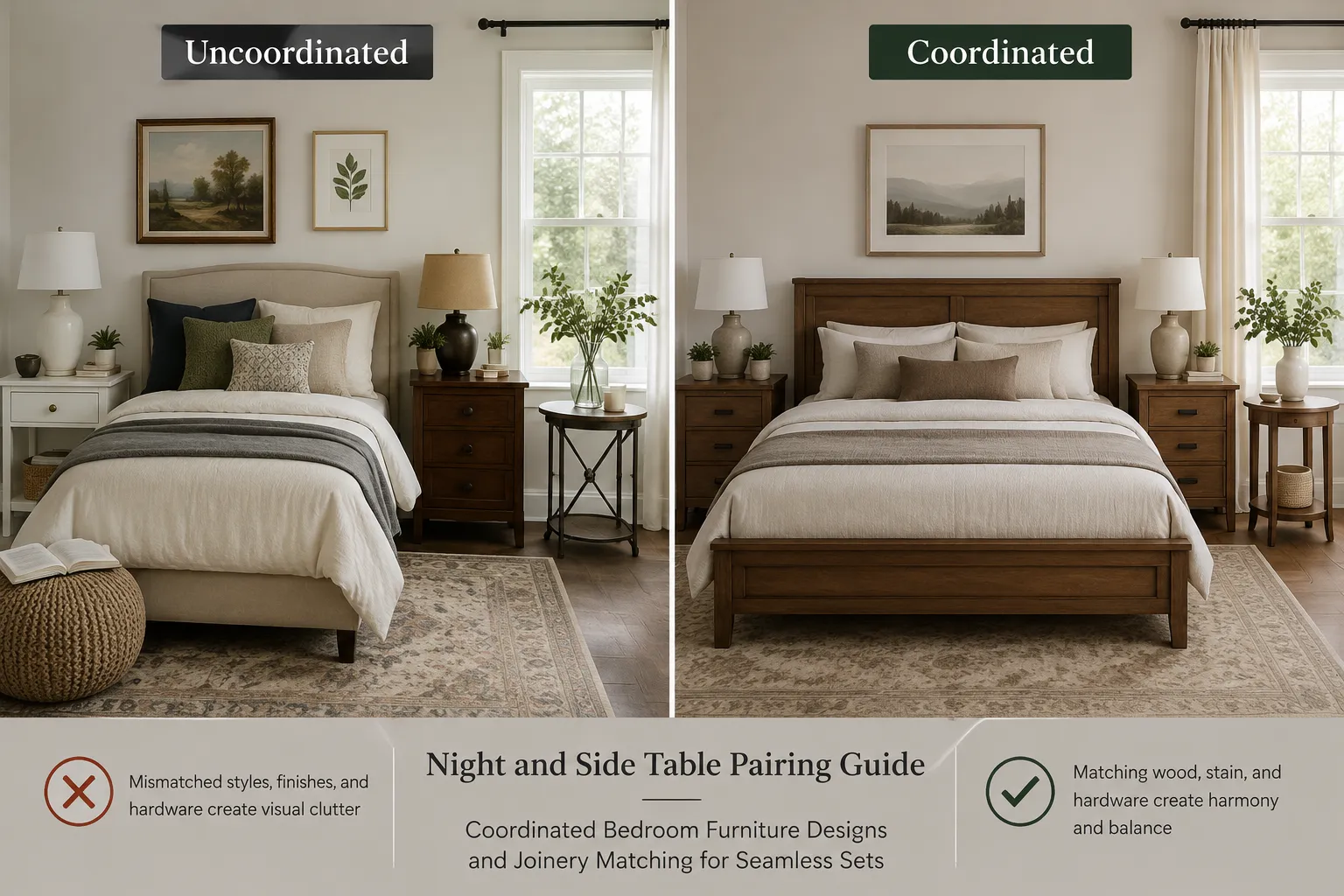
The average bedroom, often a sanctuary from the day’s demands, can easily devolve into a disjointed collection of furniture if not approached with a cohesive design strategy. The crucial, yet frequently overlooked, element in achieving this harmony lies in the deliberate pairing of nightstands and side tables. This comprehensive Night and Side Table Pairing Guide: Coordinated Bedroom Furniture Designs and Joinery Matching for Seamless Sets will explore how meticulous attention to design principles, material consistency, and joinery techniques can transform a functional space into a unified, aesthetically pleasing retreat in 2026. Ignoring these details results in visual clutter and a sense of imbalance, undermining the very purpose of a restful bedroom.
Key Takeaways
- Cohesion is Key: Matching design elements (style, material, finish) across nightstands and side tables creates a harmonious bedroom aesthetic.
- Function Dictates Form: Consider the primary use of each table (storage, display, support) when selecting and pairing designs.
- Joinery Unifies: Consistent use of specific joinery types (e.g., dovetails, mortise and tenon) reinforces a handcrafted, high-quality look.
- Scale and Proportion: Ensure tables are appropriately sized relative to the bed and other furniture to maintain visual balance.
- Beyond the Bedside: Extend pairing principles to other side tables in the bedroom for a truly seamless design.
The Art of Aesthetic Pairing: Design Principles for Coordinated Bedroom Furniture
Creating a cohesive bedroom environment begins with understanding the core principles of aesthetic pairing. This involves more than just buying two identical nightstands; it’s about thoughtful consideration of style, material, finish, and even hardware. The goal is to ensure that all tables, whether flanking the bed or accenting a reading nook, feel like part of a deliberate design scheme.
Defining Your Bedroom’s Style
Before selecting any piece of furniture, define the overarching style of your bedroom. Is it modern minimalist, rustic farmhouse, traditional, or eclectic? This style will dictate the design language for your tables.
- Modern Minimalist: Look for clean lines, geometric shapes, and often leggy designs. Materials might include light-colored woods, metal, or even glass.
- Rustic Farmhouse: Embrace natural, often distressed wood finishes, sturdy construction, and perhaps simple, traditional hardware.
- Traditional: Opt for richer wood tones, ornate details, classic profiles, and perhaps turned legs or carved accents.
- Eclectic: This style allows for more freedom but still requires a unifying element, such as a consistent wood tone or a shared design motif, even if the forms differ slightly.
Matching Materials and Finishes
The most impactful way to achieve a coordinated look is through consistent material and finish choices.
Wood Species: Ideally, use the same wood species or woods with similar grain patterns. For example, pairing two walnut nightstands with a third walnut side table immediately creates harmony. If using different woods, ensure they complement each other, perhaps through a shared undertone.
Stain or Paint Color: This is critical. Identical or very closely matched stain colors will tie pieces together effortlessly. If painting, use the exact same paint color and sheen. Variation in finish can be intentional (e.g., a matte finish on one, a subtle sheen on another for contrast), but this requires a more advanced design eye. For guidance on finishes, consider “Matte Hardwax Oil Finishing Guide: How to Achieve Dark, Moody Tones” which can help achieve specific aesthetic goals.
Hardware: Drawer pulls, knobs, and other metallic accents should also be consistent. Using the same style and finish of hardware (e.g., brushed brass handles on all pieces) is a subtle yet powerful way to unify furniture.
Table: Material and Finish Pairing Guide
| Style Category | Recommended Wood/Material | Suggested Finish | Hardware Examples |
|---|---|---|---|
| Modern Minimalist | Maple, Ash, Light Oak | Natural, Whitewash, Black Lacquer | Slim Metal Pulls, Push-to-Open |
| Rustic Farmhouse | Reclaimed Pine, Oak | Distressed Stain, Matte Varnish | Iron Pulls, Cup Handles |
| Traditional | Cherry, Walnut, Mahogany | Rich Stain, Polished Lacquer | Brass Knobs, Bail Pulls |
| Industrial Chic | Mango Wood, Metal | Dark Stain, Powder-Coated Metal | Exposed Bolts, Bar Pulls |
Form and Function: Distinguishing Nightstands and Side Tables
While both serve as small surface areas, nightstands and side tables often have distinct primary functions that influence their design. For a deeper dive into their differences, refer to “Nightstands vs. Side Tables: Design Standards, Heights, and Storage.”
- Nightstands: Typically flank the bed and hold essentials like lamps, books, and alarm clocks. They often feature drawers for storage, keeping clutter out of sight. Their height should align with the top of the mattress for ergonomic access. When building, consider techniques from “Building a Nightstand Side Table: Joinery and Drawer Techniques for.”
- Side Tables: More versatile, a side table might be placed next to a chair, against a wall, or in a corner. Its design can be more open, focusing on display rather than enclosed storage, though some offer shelves. Their height can vary more depending on the adjacent furniture.
When pairing, it’s not always about identical pieces. A pair of nightstands might be identical, but a third side table in the room could share the same wood and finish but have a different form, perhaps a slimmer profile or an open shelf design instead of drawers, to suit its specific location and function. The key is visual continuity, not absolute sameness.
Joinery Matching for Seamless Sets: Crafting Durability and Cohesion
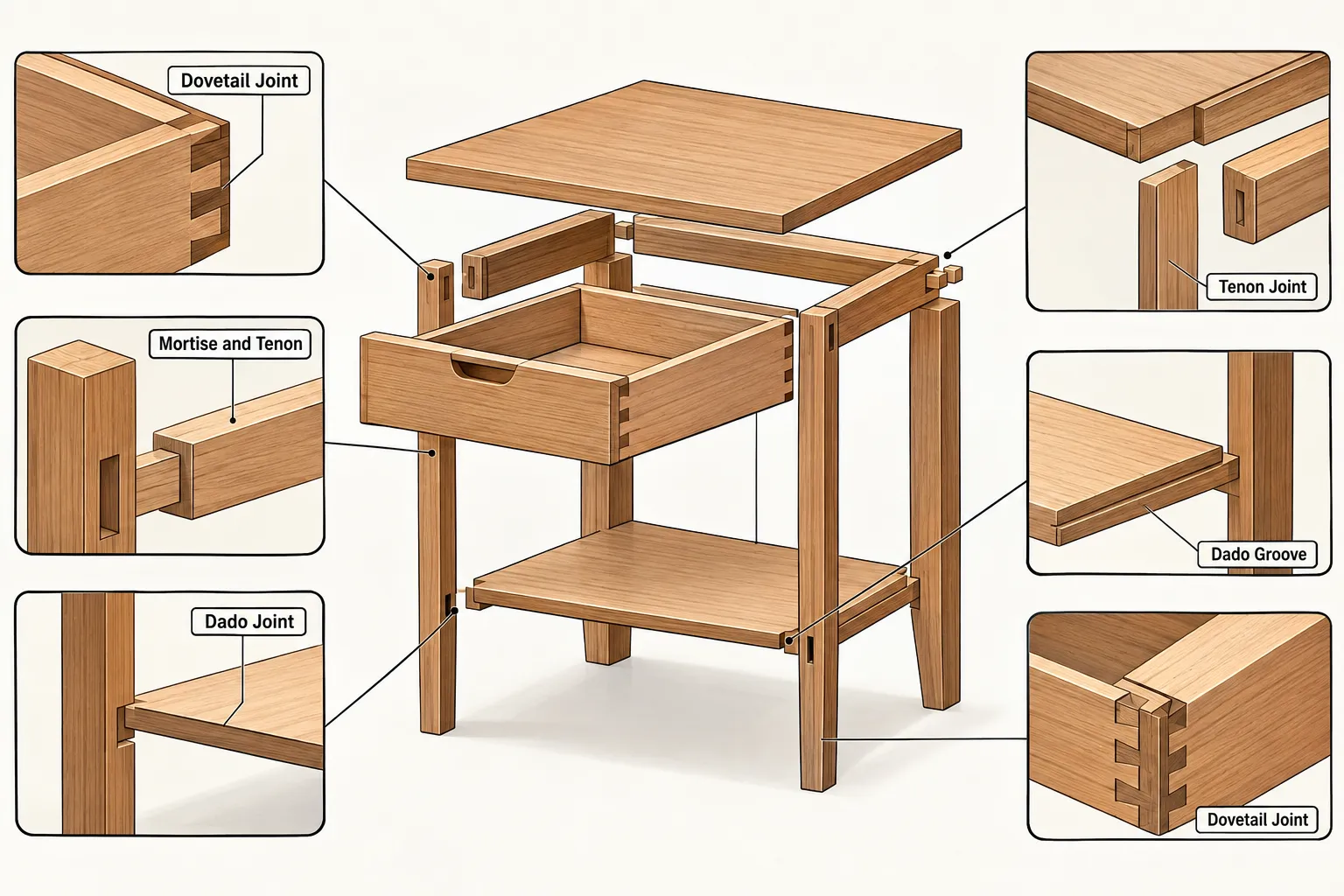
Beyond aesthetics, the methods used to construct your furniture, the joinery, play a vital role in both durability and the perception of a seamless, high-quality set. When creating a Night and Side Table Pairing Guide: Coordinated Bedroom Furniture Designs and Joinery Matching for Seamless Sets, aligning your joinery choices across multiple pieces elevates the craftsmanship and creates a subtle, yet powerful, sense of unity.
The Importance of Consistent Joinery
Imagine a bedroom set where one nightstand uses simple butt joints, while the other features elegant dovetails, and a side table relies on pocket screws. This inconsistency, even if not immediately obvious, detracts from the overall quality and handmade feel. Consistent joinery, however, suggests a master craftsman applied the same level of skill and attention to detail to every piece.
- Visual Appeal: Exposed joinery, like through dovetails or wedged mortise and tenons, can be design features in themselves. When these are consistently applied across a set, they become a signature element.
- Structural Integrity: Robust joinery ensures longevity. By using the same strong joints across all pieces, you guarantee uniform structural integrity for the entire set.
- Craftsman’s Mark: For those who appreciate woodworking, consistent, well-executed joinery is a hallmark of quality and intentional design. Explore advanced techniques with “Mastering Modern Hand Cut Joinery Adapting Classics For Live Edge And Modular Furniture.”
Common Joinery Types for Tables
Different types of joinery offer varying levels of strength, complexity, and aesthetic appeal.
1. Dovetail Joints:
- Description: Recognized by their interlocking wedge-shaped pins and tails, dovetail joints are among the strongest and most beautiful.
- Application: Primarily used for drawer construction, but can also be seen in case construction for table tops or leg assemblies.
- Cohesion Tip: Use half-blind dovetails for drawers on all nightstands and side tables with storage. If a side table has a small drawer, ensure it also features dovetail joinery.
2. Mortise and Tenon Joints:
- Description: A classic, strong joint where a projecting tenon on one piece fits snugly into a rectangular hole (mortise) on another.
- Application: Ideal for connecting legs to aprons (the frame beneath the tabletop) or rails to stiles in frame-and-panel construction.
- Cohesion Tip: If your nightstands feature mortise and tenon leg-to-apron connections, ensure any other side tables in the room use the same method for consistency.
3. Dado and Rabbet Joints:
- Description:
- Dado: A flat-bottomed groove cut across the grain of a board, into which another board fits.
- Rabbet: A recess cut along the edge or end of a board, forming a step.
- Application: Useful for shelves, drawer bottoms, and back panels.
- Cohesion Tip: Use consistent dado depths and widths for all shelves or drawer bottoms across your furniture pieces.
4. Butt Joints (Reinforced):
- Description: Where two pieces of wood are simply butted together. While weak on their own, they can be reinforced with screws, dowels, or biscuits.
- Application: Can be used for hidden frame construction or where a simpler aesthetic is desired, but should always be reinforced.
- Cohesion Tip: If using reinforced butt joints (e.g., with pocket screws) for internal frames, apply this consistently across all internal frame constructions for the tables.
Table: Joinery Applications for Coordinated Tables
| Joinery Type | Primary Application Area | Contribution to Cohesion |
|---|---|---|
| Dovetail | Drawers, Case Corners | Visual marker of craftsmanship, uniform drawer quality |
| Mortise & Tenon | Leg-to-Apron, Frame Assembly | Structural integrity, consistent leg/frame construction |
| Dado & Rabbet | Shelves, Back Panels, Drawer Bottoms | Uniform internal structure, neat panel installation |
| Biscuit/Domino | Panel Glue-ups, Carcase Assembly | Strong, invisible joins for flat surfaces or basic frames |
Ultimately, the choice of joinery should reflect the desired aesthetic and the intended use of the piece. For a truly high-end, bespoke feel, incorporating traditional, robust joinery consistently across all your bedroom tables speaks volumes about quality and design intent. For a DIY approach, understanding “The Ultimate Guide To Wood Glue Choosing The Right Adhesive For Every Project Joint And Environmental Condition” is essential for strong, lasting joints.
Expanding Beyond the Bedside: Integrated Design for the Entire Bedroom
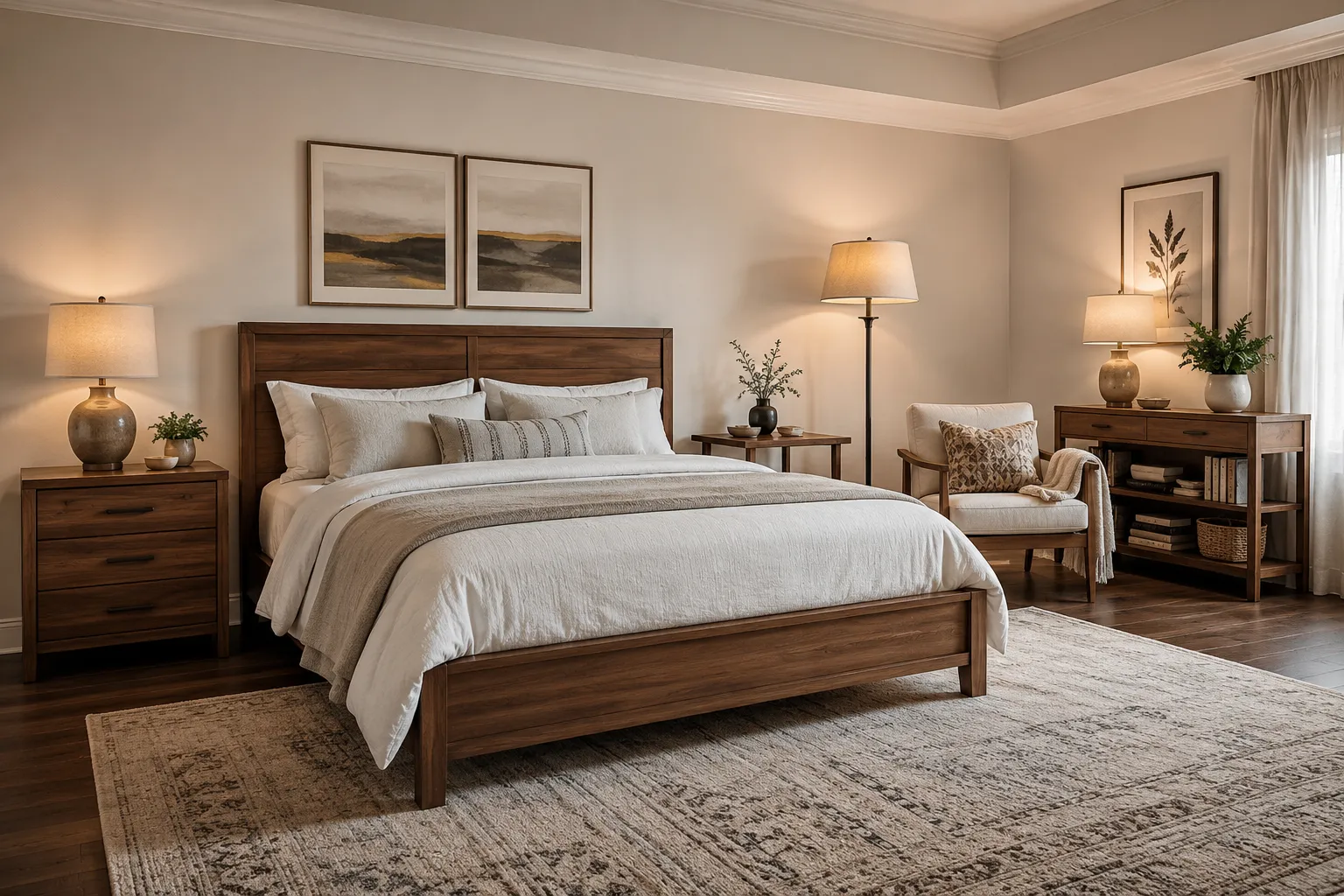
A truly seamless bedroom doesn’t stop at the bedside. Extending the principles of the Night and Side Table Pairing Guide: Coordinated Bedroom Furniture Designs and Joinery Matching for Seamless Sets to other areas of the room enhances the overall harmony and functionality. Consider how additional tables, such as console tables, accent tables, or even small benches, can be integrated into the cohesive design.
Planning for Multiple Table Types
Begin by mapping out the functional needs of your bedroom. Do you need a dedicated reading nook? A vanity area? A spot for decorative items? Each area might benefit from a specific type of table, all while adhering to your established design language.
- Reading Nook Side Table: If you have an armchair, a small side table or a DIY Poolside Side Tables with Hidden Storage for Towels and Sunscreen (adaptable for indoor use) with a similar finish to your nightstands can create a unified look. Ensure its height is comfortable for resting a book or a drink while seated.
- Console Table: A console table along an empty wall or beneath a window can offer additional display space or a surface for a television. Matching its wood, finish, and design style to your bedside tables will tie the room together.
- Vanity or Dressing Table: If your vanity is a standalone piece, consider mirroring the design elements of your nightstands, perhaps with a shared leg style or drawer front detail.
Scale, Proportion, and Placement
Even with perfectly matched materials and joinery, incorrect scale and placement can disrupt the flow.
- Scale: Ensure that the size of each table is appropriate for its location and the surrounding furniture. A large, bulky side table might overwhelm a small corner, while a tiny nightstand can look lost beside a grand king-sized bed.
- Proportion: Pay attention to the relationship between the table and other items it supports (e.g., a lamp, a stack of books). The table should proportionally balance these items without appearing too crowded or too sparse.
- Placement: Consider traffic flow and accessibility. Tables should be positioned to be easily reachable without obstructing movement. For example, bedside tables should be within arm’s reach while in bed. For practical advice on spacing, “Dining Area Table Placement: How Much Space You Really Need Around” offers relevant principles applicable to bedroom layouts.
Beyond Wood: Incorporating Other Materials
While wood is often the primary material for bedroom furniture, incorporating other materials can add texture and interest without sacrificing cohesion, provided they are chosen carefully.
- Metal Accents: If your nightstands have metal drawer pulls, a side table with a metal frame or metal-capped legs can echo this detail.
- Glass Tops: A glass top on a side table can offer a lighter feel, especially in a smaller room, while the base remains consistent with the wooden elements.
- Upholstery: While less common for tables, if your bedroom features an upholstered headboard, consider a subtle nod to the fabric texture in a unique side table design or stool that complements the overall palette.
By thinking beyond just the bed and its immediate surroundings, you can create a truly integrated bedroom design. Every table becomes a carefully considered component of a larger, harmonious whole, elevating both the function and aesthetic appeal of your personal sanctuary in 2026.
Conclusion
Creating a harmonious bedroom environment in 2026 involves more than just selecting individual pieces of furniture; it demands a strategic approach to design and craftsmanship. This Night and Side Table Pairing Guide: Coordinated Bedroom Furniture Designs and Joinery Matching for Seamless Sets has outlined how careful attention to style, material, finish, and especially joinery can transform a collection of tables into a unified, elegant suite. From defining your bedroom’s overarching aesthetic to ensuring consistent and robust joinery, every detail contributes to a cohesive and visually pleasing space. By applying these principles, you not only enhance the beauty of your bedroom but also create a space that feels intentionally designed and built to last.
Actionable Next Steps
- Assess Your Current Bedroom: Evaluate existing nightstands and side tables for aesthetic and structural consistency.
- Define Your Desired Style: Solidify the specific design aesthetic you want for your bedroom (e.g., modern, rustic, traditional).
- Plan Your Table Needs: Determine the number and type of tables required, considering both bedside and accent placements.
- Source Materials and Finishes: Select wood species, stains, and hardware that complement each other.
- Choose Consistent Joinery: Decide on 2-3 primary joinery types to use across all your tables for structural integrity and visual unity.
- Start Building (or Buying) with Intent: Whether building your own or purchasing, actively seek out pieces that adhere to your cohesive design plan.
Meta Title: Night & Side Table Pairing Guide: Seamless Bedroom Furniture in 2026 Meta Description: Create a harmonious bedroom with this Night and Side Table Pairing Guide. Learn coordinated designs, matching joinery, and functional setups for seamless furniture sets in 2026.