
The pursuit of a beautifully furnished home often leads to admired brands like Pottery Barn, known for their distinctive blend of farmhouse charm and modern sophistication. However, the price tags associated with such aspirational pieces can often be a barrier. This article, “Woodworking for Pottery Barn Style: Replicating Farmhouse and Modern Furniture Designs at Home,” offers a comprehensive guide for those eager to craft similar high-quality furniture themselves, achieving the coveted aesthetic on a DIY budget in 2026. By understanding the core design principles and mastering key woodworking techniques, enthusiasts can bring these elegant and robust designs to life in their own workshops, creating custom pieces that rival their retail counterparts.
Key Takeaways
- Pottery Barn style combines farmhouse warmth with modern minimalism, achievable through specific woodworking techniques.
- Selecting the right wood species and finishes is crucial for replicating the authentic look and feel.
- Essential tools and joinery methods enable durable and aesthetically pleasing furniture construction.
- Detailed plans and careful execution are vital for building aspirational pieces like farmhouse tables and modern console tables.
- Finishing techniques, including distressing and staining, are key to mimicking the signature Pottery Barn aesthetic.
Understanding the Pottery Barn Aesthetic and Its Woodworking Foundations
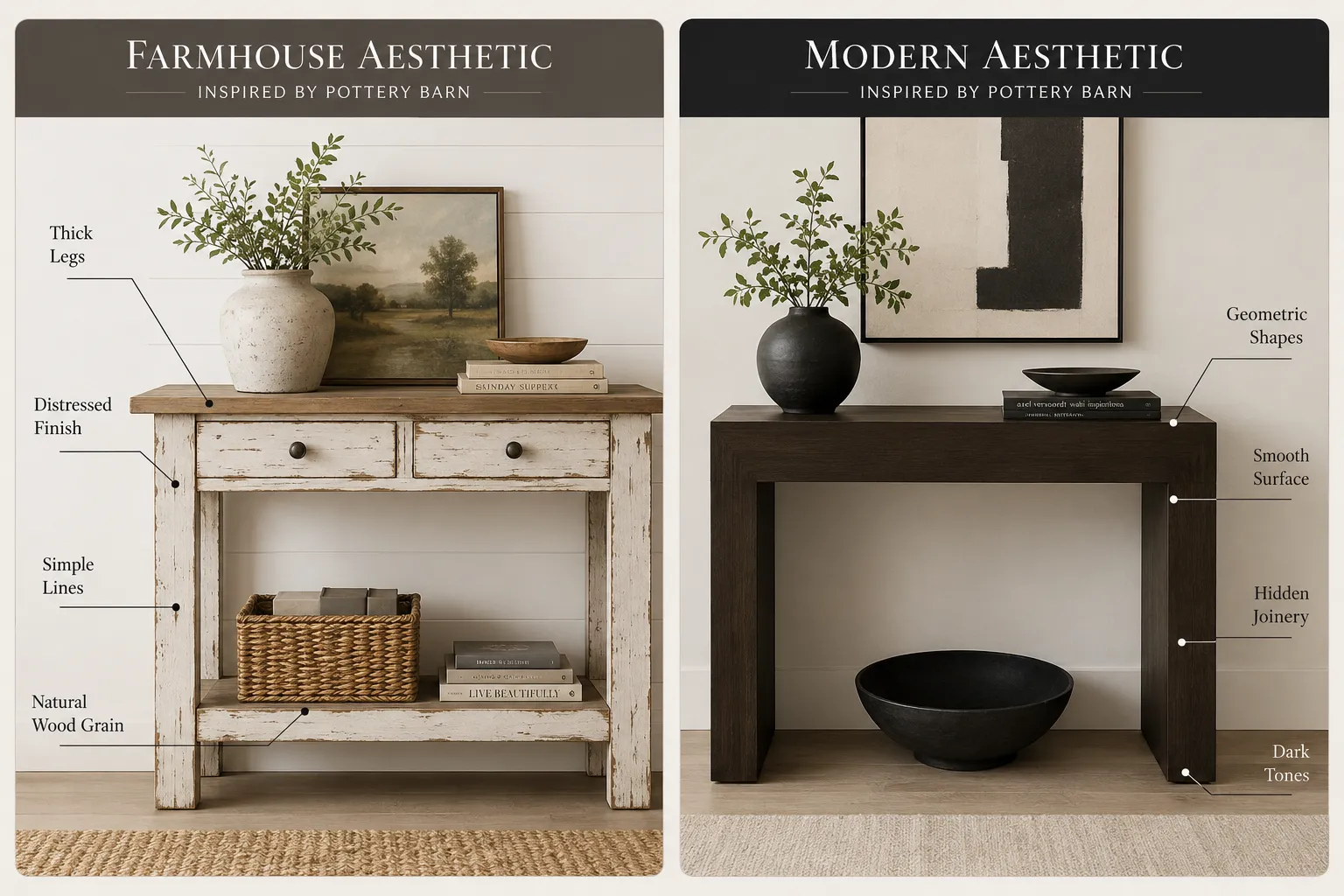
Pottery Barn’s design philosophy masterfully blends rustic appeal with contemporary elegance, creating furniture that feels both timeless and current. This dual aesthetic forms the core of “Woodworking for Pottery Barn Style: Replicating Farmhouse and Modern Furniture Designs at Home.” The farmhouse elements typically feature sturdy construction, visible wood grain, natural finishes, and sometimes distressed textures. Modern aspects often involve clean lines, geometric forms, smooth surfaces, and a focus on functional simplicity. Replicating this style demands attention to detail, from initial wood selection to the final finishing touches.
Core Design Principles: Farmhouse vs. Modern
To successfully replicate Pottery Barn furniture, it is essential to deconstruct its signature styles:
Farmhouse Style Characteristics:
- Robust Proportions: Furniture tends to be substantial, conveying durability and presence. Think thick tabletops, chunky legs, and generous dimensions.
- Natural Materials: A strong emphasis on solid wood, often with a visible grain. Oak, pine, and reclaimed wood are common choices.
- Distressed Finishes: Imperfections are often celebrated, with techniques like sanding through paint, intentional scuffs, or aged patinas to create a lived-in feel.
- Simple Joinery (often visible): While strong, the joinery might be showcased as part of the design, such as exposed mortise and tenon joints or simple butt joints reinforced with screws.
- Earthy Color Palettes: Whites, creams, grays, and natural wood tones dominate, creating a calm and inviting atmosphere.
Modern Style Characteristics:
- Clean Lines and Geometry: Furniture often features straight lines, sharp angles, and minimalist forms, prioritizing function and uncluttered aesthetics.
- Smooth Surfaces: Finishes are typically sleek, polished, and free of visible imperfections, emphasizing refinement.
- Concealed Joinery: Joinery is usually hidden, contributing to the seamless and streamlined appearance of the piece. Common methods include pocket holes, dowels, or mortise and tenon joints carefully concealed.
- Varied Materials: While wood is central, modern designs might integrate metal accents, glass, or stone for contrast and contemporary appeal.
- Neutral to Bold Color Palettes: Often relies on shades of gray, black, white, and natural wood, sometimes with a pop of accent color.
Understanding these distinctions allows a woodworker to choose the appropriate techniques and materials. For instance, creating a farmhouse dining table will involve different finishing considerations than a sleek, modern console table.
Choosing the Right Wood and Materials
The selection of wood is paramount in achieving the desired Pottery Barn aesthetic.
- Pine: An economical and readily available option, pine is excellent for farmhouse projects due to its prominent grain and ability to take stains and paints well, especially when distressing is desired.
- Oak (Red and White): Known for its strength and distinctive grain patterns, oak is a classic choice for durable furniture. White oak, in particular, offers a lighter, more modern appeal with proper finishing.
- Maple: A denser wood with a fine, even grain, maple is ideal for smooth, modern finishes that require minimal grain distraction. It stains evenly and is very durable.
- Poplar: While softer, poplar is inexpensive and takes paint exceptionally well, making it a good choice for painted farmhouse pieces.
- Plywood/MDF: For hidden panels, drawer bottoms, or painted surfaces, high-quality plywood or MDF can be used to reduce costs without compromising structural integrity or aesthetic appeal, particularly in modern designs.
For the aspiring woodworker, exploring The Essential Guide To Wood Species For Beginner Furniture Makers Selection Properties And Best Uses can provide deeper insights into material selection.
Essential Tools and Techniques for Replicating Farmhouse and Modern Furniture Designs
Successful “Woodworking for Pottery Barn Style: Replicating Farmhouse and Modern Furniture Designs at Home” hinges on mastering a foundational set of tools and techniques. While a fully equipped workshop is beneficial, many projects can be completed with a more modest setup, emphasizing skill and precision.
Must-Have Woodworking Tools
A balanced set of hand tools and power tools will enable a wide range of projects:
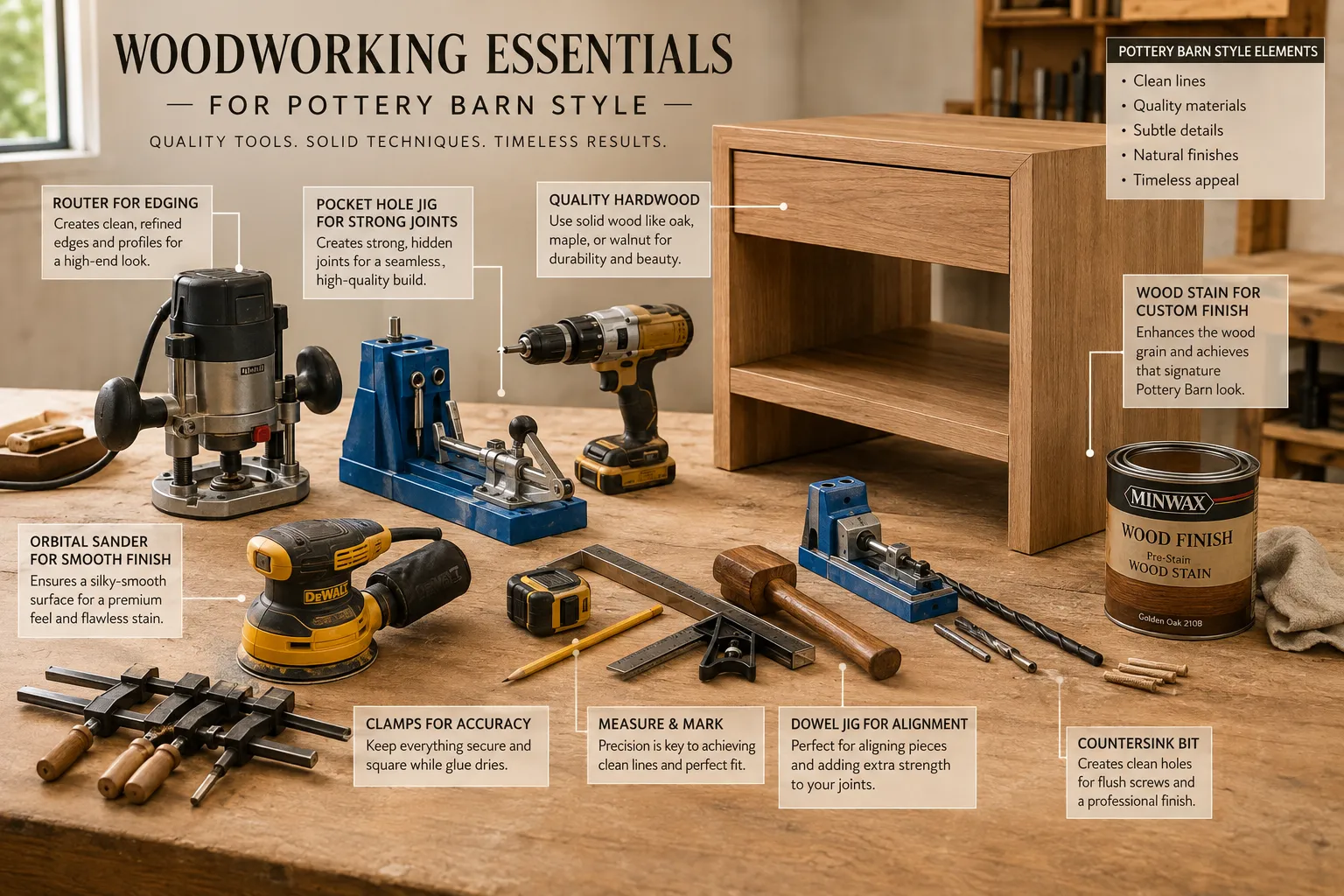
- Table Saw: Essential for accurate and repeatable cuts, especially for larger pieces and breaking down sheet goods. A reliable 12 Inch Craftsman Table Saw Features Advantages And Woodworking Tips can be a game-changer.
- Miter Saw: Perfect for precise crosscuts and angle cuts, crucial for legs, aprons, and other structural components.
- Router: Indispensable for creating decorative edges, dados, rabbets, and flush trimming.
- Orbital Sander: For achieving smooth, blemish-free surfaces, vital for both modern and farmhouse finishes.
- Drill/Driver: For pilot holes, fastening, and assembling components.
- Clamps: A variety of clamps (bar clamps, pipe clamps, F-clamps) are critical for holding pieces securely during glue-up and assembly.
- Hand Planes and Chisels: For fine-tuning joints, chamfering edges, and other detailed work, especially if aiming for traditional joinery.
- Measuring and Marking Tools: Tape measures, squares, marking gauges, and pencils are fundamental for accuracy.
Key Joinery Methods for Strength and Style
The choice of joinery significantly impacts both the strength and visual appeal of your furniture:
- Pocket Hole Joinery: A popular and relatively easy method for strong, concealed joints, perfect for modern furniture where visible fasteners are undesirable. It’s also effective for quick and sturdy farmhouse assemblies.
- Mortise and Tenon Joints: A classic, incredibly strong joint often found in traditional and farmhouse furniture. It can be exposed for a rustic look or carefully concealed for modern pieces. For those looking to hone this skill, exploring Beginners Guide To Hand Cut Mortise And Tenon Joints Mastering The Fundamentals For Strong Furniture is highly recommended.
- Dovetail Joints: While more advanced, dovetails offer exceptional strength and a beautiful aesthetic, often showcased in drawer boxes for both farmhouse and modern designs. More insights can be found in Hand Tool Joinery For Visible Wood Joints Dovetails Mortise And Tenon And Box Joints As Design Features In Furniture And Small Projects.
- Butt Joints with Reinforcement: Simple butt joints can be reinforced with dowels, biscuits, or specialized fasteners for added strength, often used in less stressed areas or for farmhouse pieces.
- Rabbets and Dados: These grooves are ideal for shelves, drawer bottoms, and back panels, providing strong, clean connections.
Understanding when and where to apply each joinery method is crucial for building furniture that is both structurally sound and aesthetically pleasing, aligning with Pottery Barn’s quality standards.
Building and Finishing Techniques for Pottery Barn Style Furniture in 2026
Bringing “Woodworking for Pottery Barn Style: Replicating Farmhouse and Modern Furniture Designs at Home” to fruition involves careful execution of building and finishing techniques. This is where raw materials transform into elegant pieces, imbued with the desired character.
Step-by-Step Project: A Farmhouse Dining Table
A classic farmhouse dining table is an excellent project to embody the Pottery Barn aesthetic.
- Design and Planning: Start with detailed drawings, including dimensions, wood species, and joinery. Pottery Barn tables often feature thick tops and robust legs.
- Material Selection and Preparation: Choose solid wood planks, typically pine or oak. Mill your lumber to the correct thickness, ensuring all faces are flat and square.
- Tabletop Assembly:
- Edge joint your tabletop planks to create a perfectly flat seam.
- Apply wood glue generously along the edges and clamp them together, ensuring even pressure. Allow ample drying time.
- Once dry, flatten the tabletop surface using a planer, jointer, or a combination of hand planes and sanding.
- Base Construction:
- Cut the legs to size, often using substantial 3×3 or 4×4 stock for a sturdy look.
- Construct the apron (the frame connecting the legs) using mortise and tenon joints for traditional strength, or pocket hole joinery for speed and concealed connections.
- Assemble the base, ensuring all joints are square and secure.
- Attaching the Top:
- Since wood expands and contracts, attach the tabletop to the base using fasteners that allow for seasonal movement. Z-clips, tabletop fasteners, or elongated screw holes are common methods. Avoid rigidly screwing the top directly to the base.
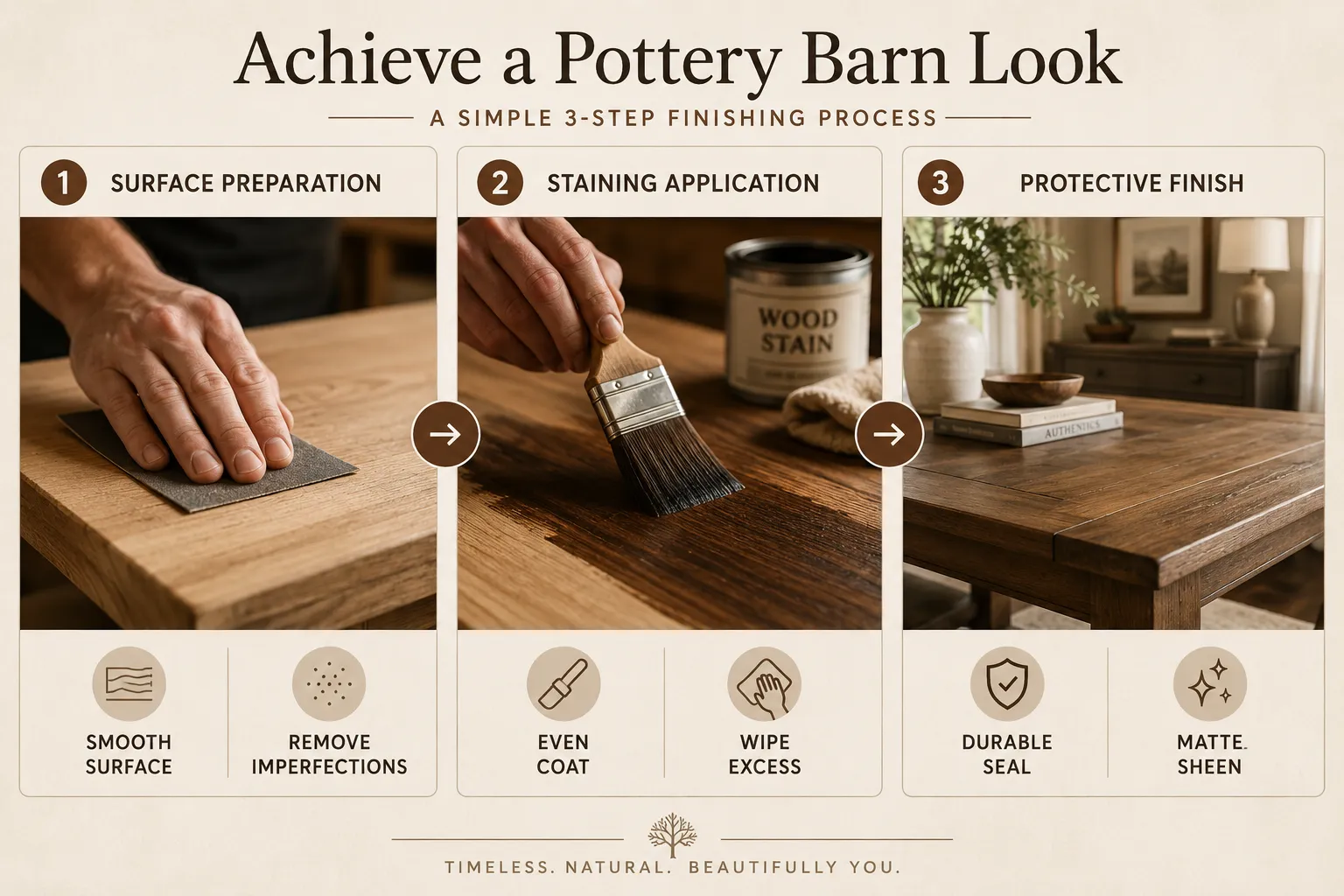
- Sanding: Begin with a coarse grit sandpaper (e.g., 80 or 100 grit) to remove milling marks and level surfaces. Progress through finer grits (120, 150, 180, 220) for a silky-smooth finish. Achieving a flawless surface is critical for accepting stain evenly.
Replicating Modern Console Tables
Modern console tables typically feature sleeker lines and often integrate different materials.
- Minimalist Design: Focus on clean, straight lines and simple geometric shapes. Consider floating designs or designs with thin, elegant legs.
- Precision Cuts: Accuracy is paramount for modern furniture. Use a table saw and miter saw with sharp blades to achieve perfectly square and straight cuts.
- Concealed Joinery: Pocket holes, dowel joints, or biscuits are ideal for invisible connections. The goal is a seamless appearance.
- Smooth Finishes: After assembly, sand thoroughly up to 220 grit, or even higher for a truly polished look. Any imperfections will stand out on a smooth, modern surface.
- Integration of Materials: Consider adding a glass top, metal legs, or stone accents for a true modern Pottery Barn feel.
For those interested in smaller, modern projects, DIY Modern Nightstands with Integrated Wireless Charging: A offers an excellent starting point for learning contemporary design principles.
Finishing for the Pottery Barn Look
Finishing is where your project truly takes on its Pottery Barn character.
- Staining:
- Pre-stain Conditioner: Always use a pre-stain conditioner, especially on softer woods like pine, to prevent blotchiness and ensure an even stain application.
- Application: Apply stain evenly with a brush or rag, working in small sections. Wipe off excess stain according to the manufacturer’s instructions to control the depth of color.
- Layering: For a richer, more complex color, consider applying multiple thin coats of stain or using a gel stain.
- Painting and Distressing (Farmhouse):
- Primer: Apply a good quality wood primer to ensure paint adhesion and block tannins from bleeding through.
- Paint Application: Use a durable, low-sheen paint (e.g., eggshell or satin latex) in classic farmhouse colors like white, off-white, or light gray. Apply multiple thin coats for a smooth finish.
- Distressing Techniques: Once the paint is fully cured, use sandpaper (120-220 grit) on edges and corners to reveal the wood underneath, mimicking natural wear. For a more aged look, use a scraping tool or light hammer to add subtle dents before painting.
- Topcoats:
- Polyurethane/Polycrylic: Durable and protective. Polyurethane is oil-based, often adding a slight amber tone, suitable for farmhouse. Polycrylic is water-based, dries clear, and is excellent for modern pieces where color preservation is key.
- Varnish/Lacquer: Offer exceptional durability and a beautiful finish, often favored for high-end modern furniture. These typically require spray application for best results.
- Wax/Oil Finishes: For a more natural, hand-rubbed look, especially on farmhouse pieces, consider tung oil, Danish oil, or furniture wax. These penetrate the wood, offering protection while enhancing the natural grain.
Attention to these finishing details ensures that your handcrafted furniture not only looks authentic but also withstands daily use, just like its Pottery Barn inspirations. Further details on achieving specific finishes can be found in guides like Restoring And Repurposing Vintage Wooden Furniture Techniques For Repair Refinishing And Modernization.
Conclusion
Mastering “Woodworking for Pottery Barn Style: Replicating Farmhouse and Modern Furniture Designs at Home” is a rewarding endeavor that empowers you to create custom, high-quality furniture pieces without the premium price tag. By understanding the distinct characteristics of farmhouse and modern aesthetics, selecting appropriate materials, and employing essential woodworking tools and techniques, you can transform raw lumber into cherished household items. From robust dining tables to sleek console tables, the principles of precision, thoughtful design, and careful finishing are your keys to success. As you embark on your projects in 2026, remember that each piece you craft not only reflects your skill but also infuses your home with personalized style and enduring quality.
Next Steps:
- Start Small: Begin with simpler projects like Handcrafted Coffee Tables Designs That Sell From Farmhouse To Modern or end tables to hone your skills before tackling larger furniture.
- Gather Resources: Invest in quality tools, research detailed plans, and explore various wood species to match your project needs.
- Practice Finishing: Experiment with different stains, paints, and topcoats on scrap wood to perfect your finishing techniques before applying them to your main project.
- Embrace the Process: Woodworking is a journey of learning and refinement. Enjoy the challenge and satisfaction of creating something beautiful and functional with your own hands.
SEO Meta Title: Woodworking for Pottery Barn Style: DIY Farmhouse & Modern Furniture SEO Meta Description: Replicate Pottery Barn’s farmhouse and modern furniture designs at home in 2026. Learn essential woodworking techniques, tools, and finishing for DIY pieces.