
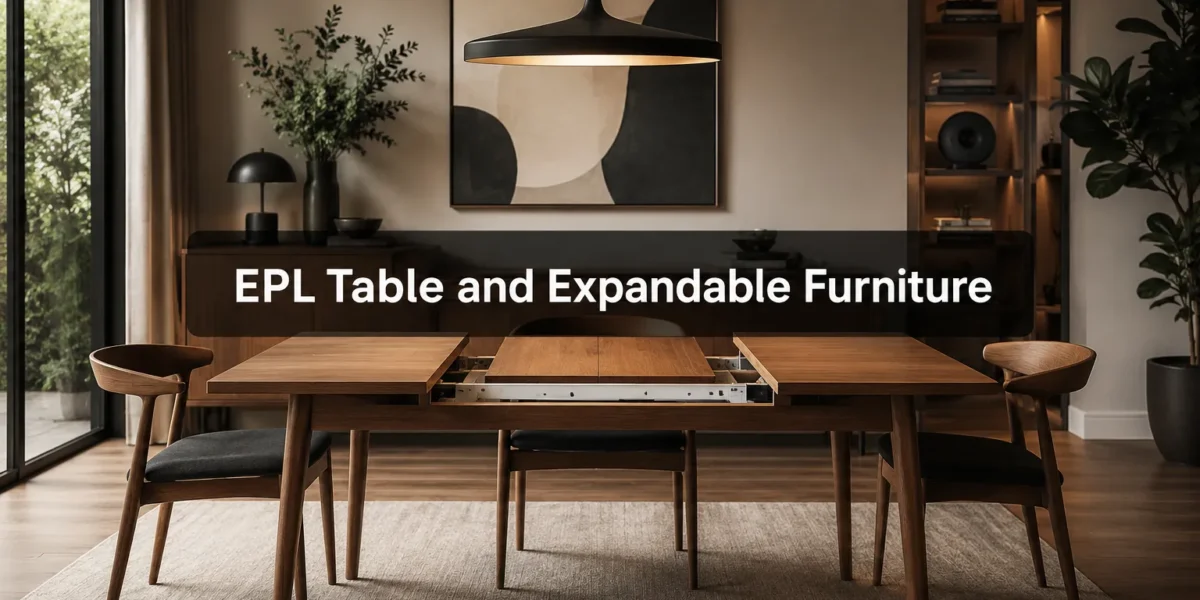
With urban living spaces becoming increasingly compact in 2026, the demand for adaptable and multi-functional furniture has never been higher. Homeowners are actively seeking innovative solutions to maximize every square foot, transforming single rooms to serve multiple purposes throughout the day. This comprehensive design and build guide for an EPL (Extendable Plank) Table and Expandable Furniture focuses on creating space-saving dining solutions that are both practical and aesthetically pleasing. Master the art of building versatile EPL tables and other expandable furniture, providing comprehensive plans for space-saving dining solutions perfect for small homes and workshops. This article will equip you with the knowledge and techniques to design, build, and finish your own adaptable dining furniture, enhancing the functionality and elegance of any compact dwelling.
Key Takeaways
- EPL (Extendable Plank) tables are ideal for small spaces, offering adaptable dining solutions.
- Understanding different extension mechanisms (e.g., butterfly, self-storing, drop leaf) is crucial for design.
- Careful material selection, prioritizing durable hardwoods, ensures longevity and stability for movable parts.
- Accurate joinery and precision in hardware installation are critical for smooth operation and durability.
- Proper finishing protects the wood and enhances the aesthetic appeal of expandable furniture.
Understanding EPL Table and Expandable Furniture Mechanisms
The core innovation behind EPL table and expandable furniture lies in its ability to transform, offering varying sizes and functionalities. For dining tables, this typically means a compact form for everyday use, which can then expand to accommodate more guests for special occasions. Understanding the various extension mechanisms is the first step in designing and building your own space-saving dining solution.
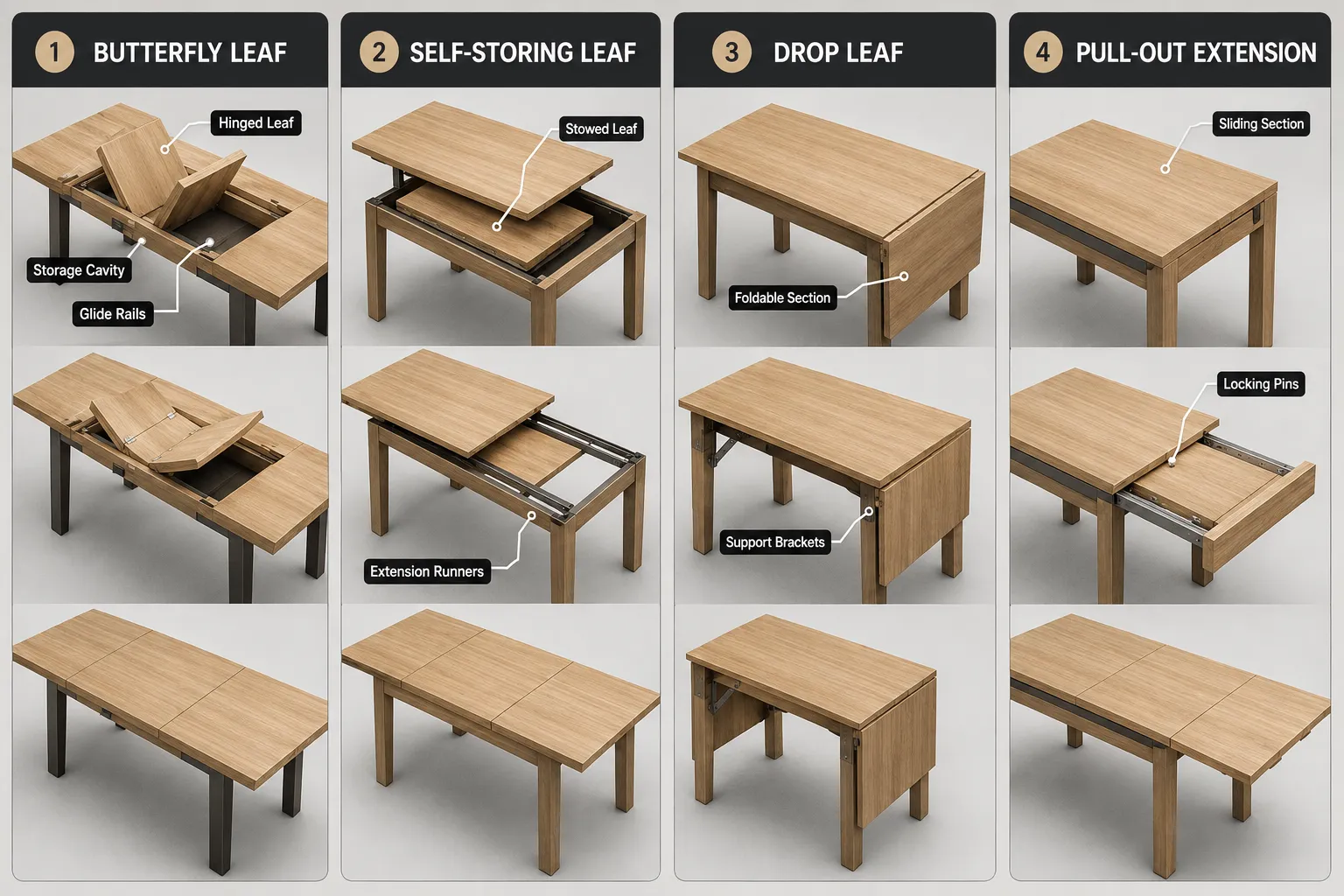
There are several popular mechanisms used in extendable tables, each with its own advantages and complexities:
Butterfly Leaf Mechanism
The butterfly leaf is a clever self-storing solution where the extension leaves are hinged and fold in half, tucking neatly beneath the tabletop when not in use. This design eliminates the need to store leaves separately, making it incredibly convenient. When expanding the table, the two halves of the main tabletop slide apart, revealing the folded leaf, which is then unfolded and locked into place.
- Pros: Self-storing, clean aesthetic, no separate storage required.
- Cons: Can be mechanically complex to build, requires precise alignment.
Self-Storing Leaf Mechanism
Similar to the butterfly leaf in convenience, the self-storing leaf mechanism involves leaves that slide underneath the main tabletop. However, instead of folding, these leaves typically lie flat and are pulled out from either end of the table or sometimes from the center.
- Pros: Relatively simpler mechanism than butterfly, leaves are always with the table.
- Cons: Can add significant thickness to the tabletop’s apron, limiting legroom.
Drop Leaf Mechanism
A classic and often simpler approach, drop leaf tables feature one or two hinged leaves on the sides that can be folded down when not needed. Support arms or pull-out rails typically prop up the leaves when extended. This is an excellent option for very narrow spaces, allowing the table to sit flush against a wall.
- Pros: Mechanically simple, very space-efficient, easy to operate.
- Cons: Visible hinges, leaves might not be perfectly flush with the main tabletop.
Pull-Out Extension (Drawer Leaf)
This mechanism involves extension leaves that are pulled out from underneath the main tabletop, often from the ends. These leaves are typically full-thickness and slide on rails, often locking into place to create a seamless extension.
- Pros: Strong and stable extension, leaves can be easily added or removed.
- Cons: Leaves may need separate storage if not designed to fully retract, can be heavy to pull out.
When selecting a mechanism for your EPL Table and Expandable Furniture: Complete Design and Build Guide for Space-Saving Dining project, consider the frequency of expansion, the desired aesthetic, and your woodworking skill level. More complex mechanisms like the butterfly leaf require greater precision in joinery and hardware installation. For beginners, a drop leaf or simple pull-out extension might be a more approachable starting point.
Designing Your Space-Saving EPL Dining Table
Successful expandable furniture hinges on meticulous design, balancing aesthetics with functionality. Before cutting any wood, a detailed plan is essential. This section covers critical design considerations for your EPL table, ensuring it meets your specific needs and integrates seamlessly into your living space.
Initial Planning and Dimensions
Begin by assessing your space. Measure the available area for the table in both its compact and expanded forms. Consider traffic flow and clearance requirements for chairs. Our guide on dining room table layouts for small homes offers valuable insights into space planning.
- Compact Dimensions: How many people will the table typically seat? What’s the minimum footprint it needs?
- Expanded Dimensions: How many additional guests do you need to accommodate? What’s the maximum usable length?
- Seating Capacity: Refer to standard seating guidelines (e.g., 24-30 inches per person) for comfortable dining.
- Chair Clearance: Ensure adequate space (at least 36 inches) between the table and walls or other furniture when chairs are pulled out.
Material Selection for Durability and Aesthetics
The choice of wood greatly influences the table’s durability, appearance, and ease of construction, especially for an EPL table that will undergo movement and wear.
| Wood Type | Characteristics | Best Use for Expandable Furniture |
|---|---|---|
| Hardwoods | Oak, Maple, Walnut, Cherry. Dense, durable, good wear resistance, often attractive grain. | Main tabletop, frame, extension mechanisms that bear weight. |
| Softwoods | Pine, Fir, Cedar. Lighter, easier to work, more affordable, but less dent-resistant. | Secondary components, internal framing (if not load-bearing), aesthetic details. |
| Plywood | Stable, strong, consistent thickness. | Table leaves, bases for mechanisms, less visible structural parts. |
| MDF | Smooth, stable, good for painting. | Table leaves (if properly sealed), non-structural components. |
For an EPL Table and Expandable Furniture: Complete Design and Build Guide for Space-Saving Dining project, hardwoods are generally preferred for the main tabletop and load-bearing components due to their resilience against daily use and the stresses of expansion and contraction. Maple and oak, for instance, offer excellent strength and stability. Plywood can be a cost-effective and stable option for leaves. For more on wood selection, see The Essential Guide To Wood Species For Beginner Furniture Makers.
Hardware Selection
Specialized hardware is crucial for the smooth and stable operation of expandable tables.
- Table Slides/Rails: These are the backbone of most extension mechanisms, allowing table halves to separate and leaves to be inserted. Heavy-duty metal slides are often recommended for longevity.
- Hinges: For butterfly or drop-leaf tables, strong, flush-mounted hinges are necessary.
- Latches/Locks: To secure the table in both its compact and extended states, various latches or locking pins are used.
- Leg Mechanisms: Some designs incorporate foldable or telescopic legs for ultra-compact storage.
Research and source high-quality hardware that matches the weight and size of your table. Inferior hardware can lead to wobbly tables or mechanisms that seize over time.
Building Your EPL Table and Expandable Furniture: A Step-by-Step Approach
Once your design is finalized and materials are selected, the building process begins. Precision and attention to detail are paramount when crafting an EPL table, as even small inaccuracies can affect the smooth operation of the extension mechanism. This section outlines the general steps involved in constructing your space-saving dining solution.
1. Preparing the Wood
- Milling and Dimensioning: Cut all your lumber to the exact dimensions specified in your plans. Ensure all pieces are square and true. This is where tools like a table saw become invaluable.
- Sanding: Sand all individual components before assembly. Start with a coarser grit (e.g., 80 or 100) and progressively move to finer grits (e.g., 180 or 220) for a smooth surface.
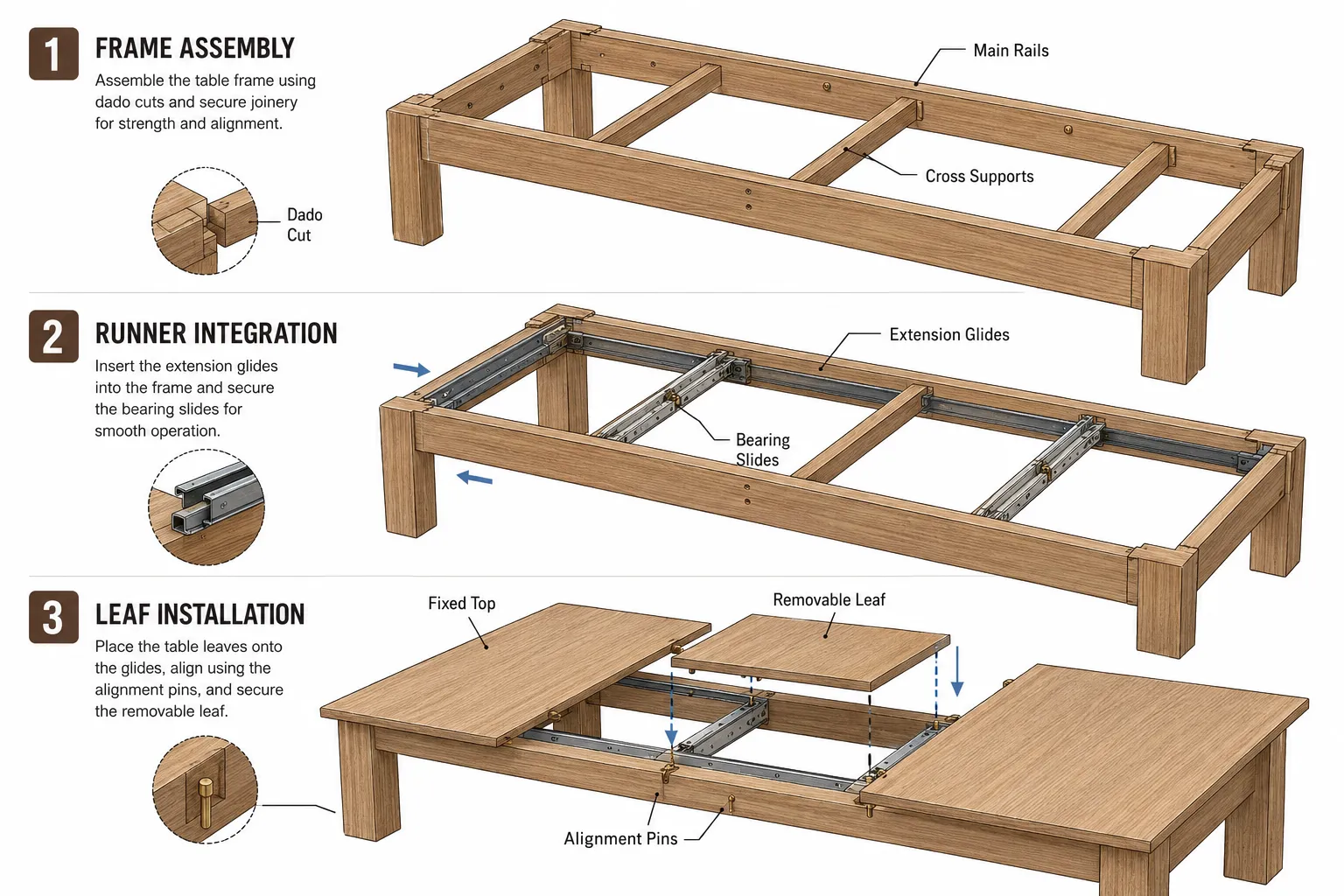
2. Constructing the Table Base and Frame
The base and frame provide the structural integrity for your EPL table.
- Legs: Craft your table legs. Depending on your design, these could be turned, tapered, or straight. For stability, consider robust joinery like mortise and tenon joints. The complete guide to hand tool joinery offers detailed instructions.
- Aprons/Rails: These connect the legs and support the tabletop. Use strong joinery for these connections.
- Assembly: Assemble the base using wood glue and appropriate fasteners (screws, dowels, or tenons). Ensure the frame is square and level.
3. Building the Tabletop and Extension Mechanism
This is the most critical stage for an EPL table.
- Main Tabletop: Construct the fixed parts of your tabletop. This might involve panel glue-ups if you’re using solid wood. Carefully cut the tabletop into the sections required for your extension mechanism (e.g., two halves for a butterfly leaf system).
- Integrating Slides/Rails: Install the chosen table slides or extension rails onto the underside of the main tabletop sections. Follow the manufacturer’s instructions precisely for proper alignment and spacing.
- Crafting the Leaves: Cut and prepare your extension leaves. For butterfly leaves, this involves hinging two halves together. For self-storing leaves, ensure they fit snugly beneath the main top when retracted and seamlessly integrate when extended.
- Dry Fit and Adjustment: Before final assembly, dry fit all tabletop components and the extension mechanism. Check for smooth operation, proper alignment, and tight joints. Make any necessary adjustments now.
4. Final Assembly and Finishing
With the core structure and mechanism in place, it’s time for final assembly and applying a protective finish.
- Securing Top to Base: Attach the tabletop assembly to the base, allowing for wood movement. Z-clips, tabletop fasteners, or screws in elongated holes are common methods.
- Final Sanding: Perform a final light sanding over the entire table (220-grit or higher) to remove any handling marks or glue residue.
- Finishing: Apply your chosen finish. Options include:
- Oil Finishes: Penetrate the wood, offering a natural look and feel. Easy to repair.
- Varnish/Polyurethane: Form a durable protective layer on the surface, resistant to spills and scratches. Consider a warm matte finish for dining room tables for an elegant look.
- Paint: Offers a wide range of aesthetic possibilities, requires proper priming.
Apply multiple thin coats, sanding lightly between coats according to the product’s instructions. Allow ample time for curing before use.
Advanced Design and Integration of Expandable Furniture
Beyond the fundamental EPL table, woodworking offers a vast canvas for integrating advanced expandable furniture solutions into a compact living space. These designs push the boundaries of multi-functionality, creating dining areas that appear and disappear as needed.
Incorporating Multi-Functional Elements
The true essence of space-saving design is multi-functionality. Consider how your EPL table can serve more than one purpose:
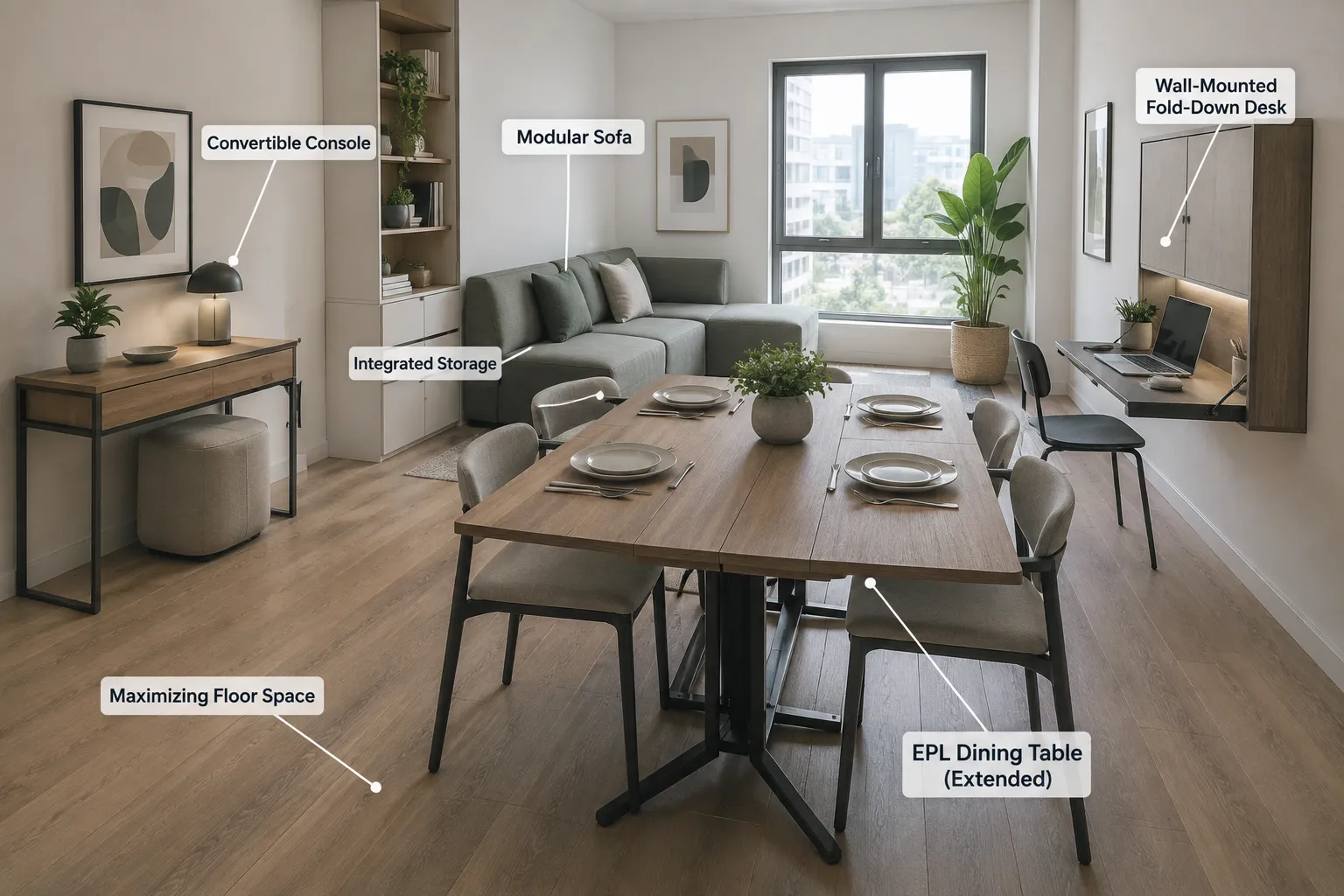
- Console to Dining Table: A narrow console table against a wall can cleverly expand into a full dining table. This often involves a folding or telescoping mechanism, with leaves stored either internally or as separate panels. Such a piece can serve as an entryway table for decorative items and then transform for dining.
- Coffee Table to Dining Table: Some innovative designs allow a coffee table to both lift and expand, becoming a dining-height table. These typically use scissor lifts or specialized hardware for vertical and horizontal movement. The challenge here is ensuring stability in both configurations. If you’re interested in building a DIY coffee table, consider designs that accommodate future expandability.
- Wall-Mounted Fold-Down Tables: For extremely tight spaces, a table that folds flat against the wall is an ideal solution. These often use strong hinges and a sturdy latching mechanism. They can be simple drop-leaf style or even incorporate a small storage cabinet when folded.
Smart Storage Solutions for Dining Accoutrements
Expandable dining often means less dedicated space for dining-related items. Integrate smart storage into your furniture design:
- Built-in Cutlery Drawers: Small, shallow drawers within the table’s apron can store cutlery and napkins, keeping them handy.
- Hidden Compartments: Design secret compartments beneath the tabletop or within the base for placemats or small serving dishes.
- Modular Seating with Storage: Pair your EPL table with benches or stools that have integrated storage for linens, small appliances, or even the table leaves themselves. Building a simple entryway bench with shoe storage could provide inspiration for a dining bench.
Joinery and Stability for Expandable Components
For any EPL Table and Expandable Furniture: Complete Design and Build Guide for Space-Saving Dining project, the joints must withstand repeated movement and load changes.
- Mortise and Tenon: Excellent for frame construction, providing robust, long-lasting connections.
- Dovetail Joints: Ideal for drawers or where strong pull-out resistance is needed, as seen in self-storing leaf mechanisms. For more on this, see mastering dovetail joinery for drawers.
- Sliding Dovetail: Can be used to secure fixed tabletop sections while allowing for slight wood movement.
- Through-Bolts: For highly stressed areas or where disassembly might be required, through-bolts with washers and nuts provide superior strength and adjustability.
Always ensure that any moving parts have sufficient clearance to prevent binding, but not so much that they wobble. Precision in cutting and assembly is non-negotiable for smooth operation and long-term durability. Test all mechanisms thoroughly before applying final finishes.
Maintenance and Care for Your Expandable Dining Table
Proper maintenance is crucial for ensuring the longevity and continued smooth operation of your EPL table and expandable furniture. Unlike static furniture, pieces with moving parts require specific attention to keep their mechanisms functioning flawlessly and their wood surfaces looking pristine.
Regular Cleaning and Protection
The first line of defense against wear and tear is consistent cleaning and protection.
- Daily Wipe-Downs: After each use, wipe down the tabletop with a damp cloth to remove food debris and spills. Avoid abrasive cleaners that can damage the finish.
- Prompt Spill Cleanup: Wood, especially joints and extension mechanisms, can be sensitive to moisture. Clean up spills immediately to prevent water damage or staining.
- Coasters and Trivets: Always use coasters for drinks and trivets for hot dishes to protect the surface from heat and moisture rings.
- Protective Pads: When the table is in use, especially in its expanded form, consider using a tablecloth or table pads to shield the surface from scratches and impacts.
Mechanism Care and Lubrication
The moving parts of your expandable table are its defining feature and require special care.
- Cleanliness: Dust and debris can accumulate in the slides, hinges, and other mechanisms, impeding their smooth operation. Regularly clean these areas with a dry cloth or a soft brush. A vacuum with a brush attachment can be effective for reaching tight spots.
- Lubrication: Depending on the type of slides (wood-on-wood, metal, or ball-bearing), periodic lubrication may be necessary.
- Wood Slides: For wood-on-wood slides, a dry lubricant like paraffin wax or a specialized wood furniture wax can reduce friction.
- Metal Slides: Metal slides may benefit from a silicone-based spray lubricant (ensure it’s safe for wood and won’t stain). Avoid oil-based lubricants as they can attract dust and grime.
- Ball-Bearing Slides: These often require no lubrication or specific light lubricants as recommended by the manufacturer.
- Check Fasteners: Over time, screws and bolts holding the mechanism in place can loosen. Periodically check and tighten all fasteners to maintain stability and prevent wobbling.
Addressing Wood Movement and Environmental Factors
Wood is a natural material that responds to changes in humidity and temperature, known as wood movement. This is particularly important for expandable furniture where precise fit is essential.
- Humidity Control: Maintain a stable indoor humidity level (ideally between 40-55%). Extreme fluctuations can cause the wood to swell, making mechanisms tight, or shrink, leading to gaps and looseness.
- Avoid Direct Sunlight and Heat Sources: Prolonged exposure to direct sunlight or proximity to heat sources (radiators, fireplaces) can cause wood to dry out unevenly, warp, or crack, impacting the fit of your EPL table.
- Seasonal Adjustments: In some climates, you may notice that your table’s extension mechanism operates slightly differently between seasons due to natural wood movement. This is generally normal, but ensure it doesn’t cause binding or excessive gaps. If issues arise, a slight adjustment to the mechanism’s fasteners might be needed.
By adhering to these maintenance guidelines, your custom-built EPL table and expandable furniture will remain a functional and beautiful centerpiece of your space-saving dining area for many years.
Conclusion
The EPL Table and Expandable Furniture: Complete Design and Build Guide for Space-Saving Dining provides a robust framework for crafting versatile, multi-functional dining solutions tailored for modern living in 2026. From understanding intricate extension mechanisms to meticulously planning dimensions, selecting durable materials, and executing precise joinery, each step contributes to the ultimate success and longevity of your project. The ability to transform a compact surface into a spacious dining area is not merely a convenience; it’s a strategic design choice that maximizes utility without sacrificing aesthetic appeal.
By following the detailed steps for construction, selecting the right hardware, and integrating smart storage solutions, you can create a piece of furniture that is both a testament to your woodworking skill and a highly practical addition to your home. Furthermore, diligent maintenance and care will ensure that your expandable dining table remains a cherished and functional centerpiece for years to come.
Take the first step by sketching out your ideal design, researching hardware options, and selecting the perfect wood. Embrace the challenge of crafting furniture that adapts to your needs, transforming your living space and enriching your dining experience.
SEO Meta Title: EPL Table & Expandable Furniture: DIY Space-Saving Dining Guide
SEO Meta Description: Master building EPL table and expandable furniture in 2026 with our guide. Design & build space-saving dining solutions for small homes, from plans to finish.