
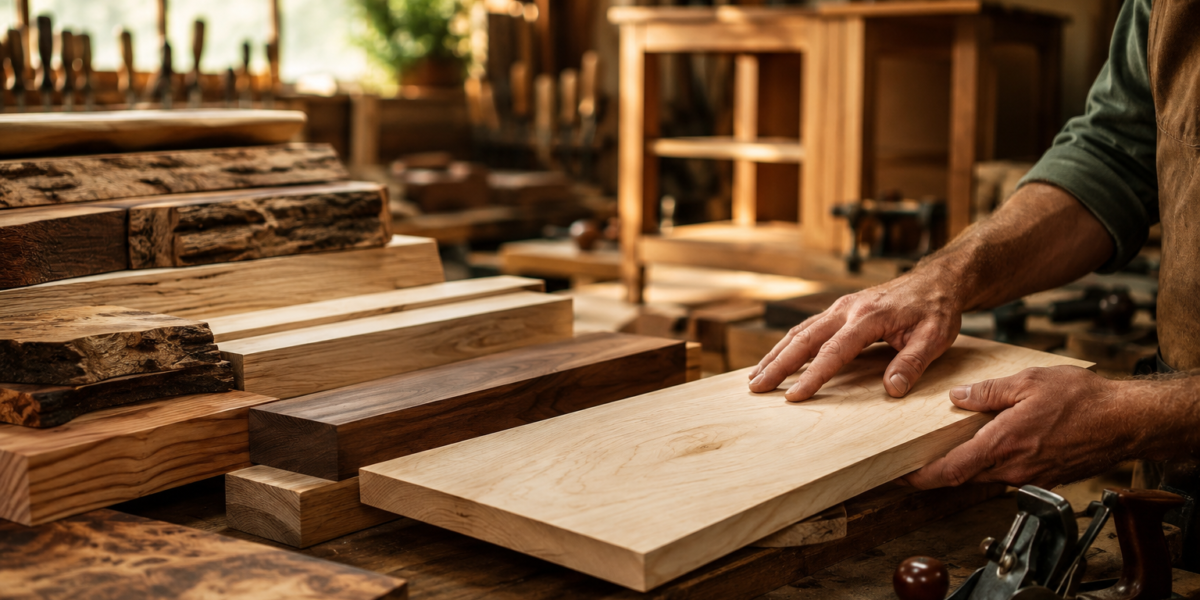
Fewer woodworking endeavors begin with a precise understanding of material selection than one might assume. Many beginners, fueled by enthusiasm, grab the nearest plank without fully appreciating that the wood species itself dictates a project’s success, durability, and aesthetic. This oversight can lead to frustrating challenges: warped tabletops, splintered joints, or finishes that simply don’t adhere. To circumvent these common pitfalls and lay a strong foundation for crafting beautiful, lasting pieces, mastering “The Essential Guide to Wood Species for Beginner Furniture Makers: Selection, Properties, and Best Uses” is paramount in 2026.
Key Takeaways
- Understanding wood properties like hardness, grain, and stability is crucial for selecting the right material for any furniture project.
- Hardwoods (e.g., Oak, Maple, Cherry, Walnut) offer durability and aesthetic appeal for fine furniture, while softwoods (e.g., Pine, Fir) are budget-friendly and easier to work with for simpler projects.
- Matching the wood species to the project’s functional and aesthetic requirements ensures successful outcomes and lasting quality.
- Consider factors such as cost, workability, finishability, and availability when making your selection.
- Proper sourcing, including sustainable options, is an increasingly important aspect of modern woodworking.
Understanding Wood Basics: Hardwood vs. Softwood
The first step in The Essential Guide to Wood Species for Beginner Furniture Makers involves grasping the fundamental distinction between hardwoods and softwoods. This classification, however, isn’t solely based on a wood’s physical hardness, but rather on the botanical family of the tree it comes from.
Hardwoods are typically deciduous trees, meaning they shed their leaves annually. Examples include Oak, Maple, Cherry, and Walnut. These woods are generally denser, more durable, and possess complex grain patterns, making them ideal for furniture that needs to withstand significant wear and tear. Their slow growth contributes to their higher cost and often more challenging workability, yet their beauty and longevity are unparalleled for fine furniture.
Softwoods come from coniferous trees, which typically have needles and cones and remain evergreen. Common softwoods include Pine, Fir, Cedar, and Spruce. These woods grow faster, are generally lighter in weight, and are easier to cut, shape, and fasten. They are often more affordable and readily available, making them excellent choices for beginner projects, utility furniture, or components where strength is not the primary concern. While they can be prone to dents and scratches, many softwoods offer a charming rustic aesthetic.
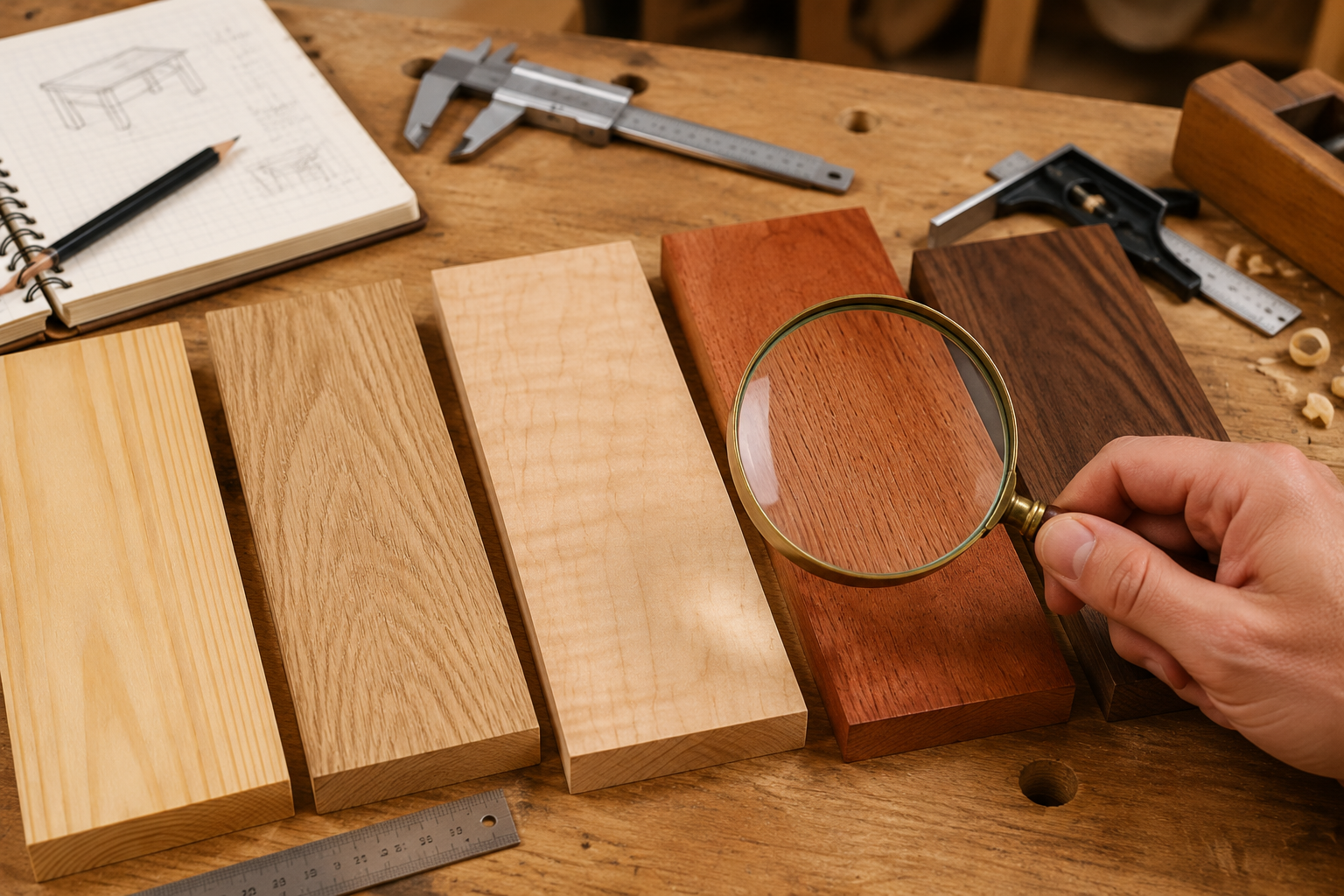
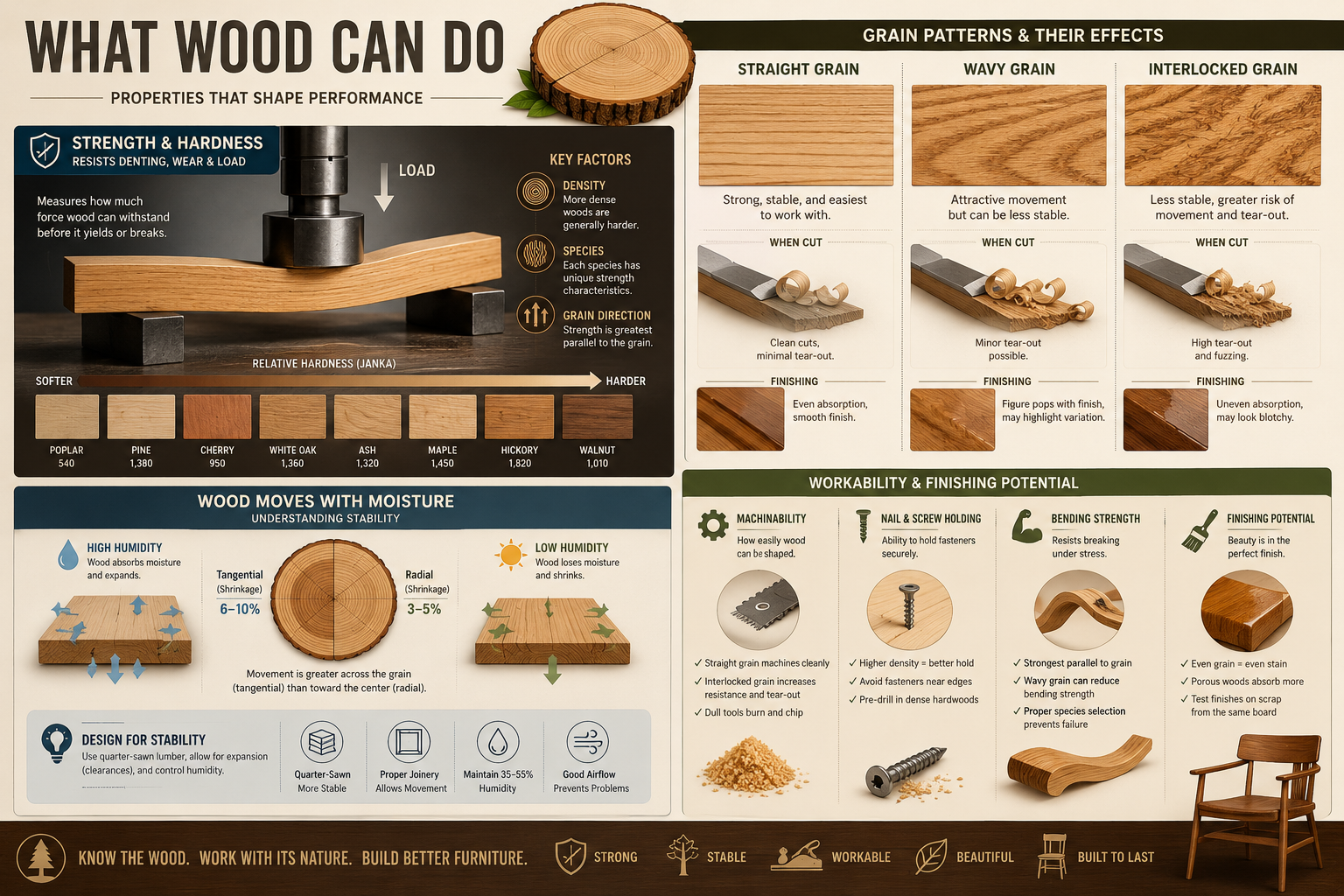
A crucial aspect of selecting wood is understanding its moisture content. Wood is a hygroscopic material, meaning it absorbs and releases moisture from the air. This process causes wood to expand and contract, which can lead to warping, cracking, or joint failure if not properly acclimated and dimensioned. Kiln-dried lumber, commonly available, has been processed to a stable moisture content, typically between 6-8%, which is ideal for indoor furniture projects. For more on sourcing, consider exploring Sustainable Wood Sourcing for the Modern Woodworker: Beyond Reclaimed.
Key Properties of Wood to Consider
Beyond the hardwood/softwood distinction, several properties directly impact a wood’s suitability for furniture making:
- Hardness: Measured by the Janka hardness test, this indicates the wood’s resistance to denting and wear. Higher Janka ratings mean a harder, more durable wood.
- Grain: Refers to the arrangement of wood fibers. Straight grain is stable and easy to work, while figured grains (e.g., curly, bird’s eye) are highly decorative but can be challenging to plane without tear-out.
- Stability: How much a wood moves (expands/contracts) with changes in humidity. Stable woods are less prone to warping and cracking, making them better for precise joinery and large panels.
- Workability: How easy the wood is to cut, plane, sand, and carve. Some woods are notoriously difficult, dulling tools quickly, while others are a pleasure to work with.
- Finishing Potential: How well a wood accepts stains, oils, and clear coats. Open-pored woods may require grain filling, while dense woods can be challenging to stain evenly.
Common Wood Species for Beginners: Properties and Uses
Choosing the right material is a cornerstone of The Essential Guide to Wood Species for Beginner Furniture Makers. For those starting their woodworking journey in 2026, a focused selection of readily available and forgiving wood species is recommended. Here, we delve into popular options, outlining their unique characteristics and ideal applications.
Softwoods for Accessibility and Simplicity
Softwoods are often the beginner’s best friend due to their affordability and ease of workability.
- Pine (Eastern White Pine, Ponderosa Pine):
- Properties: Light, soft, straight grain, knotty, pale yellow to reddish-brown.
- Workability: Very easy to cut, saw, and sand. Accepts nails and screws well. Can dent easily and knots can be problematic for finishing.
- Best Uses: Shelving, simple tables, crates, rustic furniture, interior framing. Excellent for practicing joinery like Hand Tool Joinery for Visible Wood Joints: Dovetails, Mortis.
- Fir (Douglas Fir):
- Properties: Strong for a softwood, distinct straight grain, reddish-brown.
- Workability: Relatively easy to work with, good for construction. Can sometimes splinter.
- Best Uses: Framing, structural components, outdoor furniture (with proper sealing), sturdy benches (see Crafting Profitable Wooden Benches: From Entryway Seats to G).
- Poplar:
- Properties: Medium density, straight grain, pale cream to yellowish-green, can have purplish streaks.
- Workability: Easy to cut, glue, and finish. Holds paint exceptionally well.
- Best Uses: Painted furniture, interior trim, drawer boxes, hidden structural components. Often used as a secondary wood where it won’t be seen.
Hardwoods for Durability and Aesthetics
As skills advance, hardwoods offer superior strength, beauty, and longevity.
- Oak (Red Oak, White Oak):
- Properties: Very hard, open grain, prominent ray flecks (especially White Oak), light to medium brown.
- Workability: Moderately difficult to cut and plane due to hardness and open grain. Excellent steam bending properties.
- Best Uses: Dining tables, chairs, cabinets, flooring, mission-style furniture. Extremely durable. For finishing, refer to Oak Wood Finishing Techniques.
- Maple (Hard Maple, Soft Maple):
- Properties: Hard Maple is very dense and hard, fine, uniform grain, light cream to reddish-brown. Soft Maple is less dense but still durable.
- Workability: Hard Maple can be challenging to work with hand tools; power tools are recommended. Sands beautifully.
- Best Uses: Cutting boards (Hard Maple), tabletops, cabinets, musical instruments, butcher blocks. Ideal for projects requiring smooth, hard surfaces.
- Cherry:
- Properties: Medium hardness, fine, straight grain, beautiful reddish-brown color that darkens with age and exposure to light.
- Workability: A pleasure to work with hand and power tools. Sands and finishes exceptionally well.
- Best Uses: Fine furniture, cabinets, decorative boxes, turned items. Its natural beauty makes it a favorite for elegant pieces.
- Walnut (Black Walnut):
- Properties: Medium hardness, rich dark brown color, often with purple undertones, beautiful varied grain.
- Workability: Very good workability, holds detail well. Sands and finishes beautifully.
- Best Uses: High-end furniture, decorative accents, gunstocks, small boxes. Its striking appearance makes it a premium choice.
- Poplar: While listed under softwoods, it’s botanically a hardwood. Its moderate density and fine, uniform grain make it behave more like a softwood in terms of workability, but its robust nature is characteristic of a hardwood.
When choosing wood, always inspect boards for defects such as knots, checks, cracks, and excessive warping. Look for straight grain, especially for structural components, and ensure the wood is free from insect damage or rot.
Matching Wood Species to Project Needs
The final and arguably most crucial aspect of The Essential Guide to Wood Species for Beginner Furniture Makers: Selection, Properties, and Best Uses is intelligently matching your chosen wood to the specific demands of your project. This involves considering the project’s function, desired aesthetic, budget, and the maker’s skill level.
Functional Considerations
- Durability and Hardness: For furniture that will see heavy use, like dining tables, chairs, or cutting boards, opt for harder woods such as Oak, Maple, or Ash. These can withstand impacts and wear.
- Stability: For large panels (tabletops, cabinet doors) or precise joinery, woods with good stability (less movement due to humidity changes) are preferred. Mahogany (if budget allows), Cherry, and even well-seasoned Walnut are good choices.
- Weight: If portability is a factor, lighter softwoods like Pine or Poplar are suitable for small tables or shelving.
Aesthetic Considerations
- Color and Grain: Do you want a light, airy feel (Maple, Ash, light Pine) or a rich, dark statement (Walnut, Cherry)? The grain pattern also contributes significantly to the visual appeal.
- Finishing: Some woods take stain beautifully (Oak, Ash, Poplar), while others are best with a clear finish to highlight their natural color and figure (Cherry, Walnut, figured Maple). Consider your desired final look. For advanced finishing, explore Mahogany Wood Finishing Techniques.
- Overall Style: Rustic furniture often benefits from knotty Pine or reclaimed wood. Mid-century modern designs frequently feature Walnut or Teak. Shaker-style pieces traditionally use Cherry or Maple.
Practical Considerations for Beginners
- Cost: Pine and Poplar are budget-friendly, making them ideal for practice projects or when you need a lot of material. Hardwoods like Oak and Maple are moderately priced, while Cherry and Walnut are premium options. For cost-effective smaller projects, consider Profitable Woodworking for Beginners: Building and Selling H.
- Workability: Begin with woods that are forgiving and easy to work, such as Pine, Poplar, or even Basswood (for carving or small projects, see Basswood Cutting Board: Selecting, Shaping, and Maintenance Tips). As your skills with tools improve, you can tackle denser hardwoods.
- Availability: Check local lumberyards or specialty wood suppliers. Some exotic hardwoods can be hard to find or prohibitively expensive. In 2026, local and sustainably sourced lumber is increasingly popular.
Project Examples and Suitable Wood Choices
Let’s look at a few common beginner projects and their ideal wood matches:
| Project Type | Recommended Wood Species | Rationale |
|---|---|---|
| Simple Bookshelf | Pine, Poplar | Affordable, easy to cut and assemble, accepts paint or light stain. Good for practicing basic joinery. |
| Coffee Table | Oak, Maple, Poplar (for painted) | Durable surface, good stability. Oak offers classic grain, Maple provides a clean look, Poplar for painted finishes. |
| Small Storage Box | Cherry, Walnut, Maple | Allows for fine joinery, beautiful natural finish, showcases grain. Good for learning precision. |
| Cutting Board | Hard Maple, Walnut, Cherry | Extreme hardness, food-safe, tight grain to resist moisture, durable surface. |
| Picture Frames | Poplar, Pine, Cherry, Walnut | Easy to cut and finish for precise miter joints. Poplar for paint, others for natural beauty. |
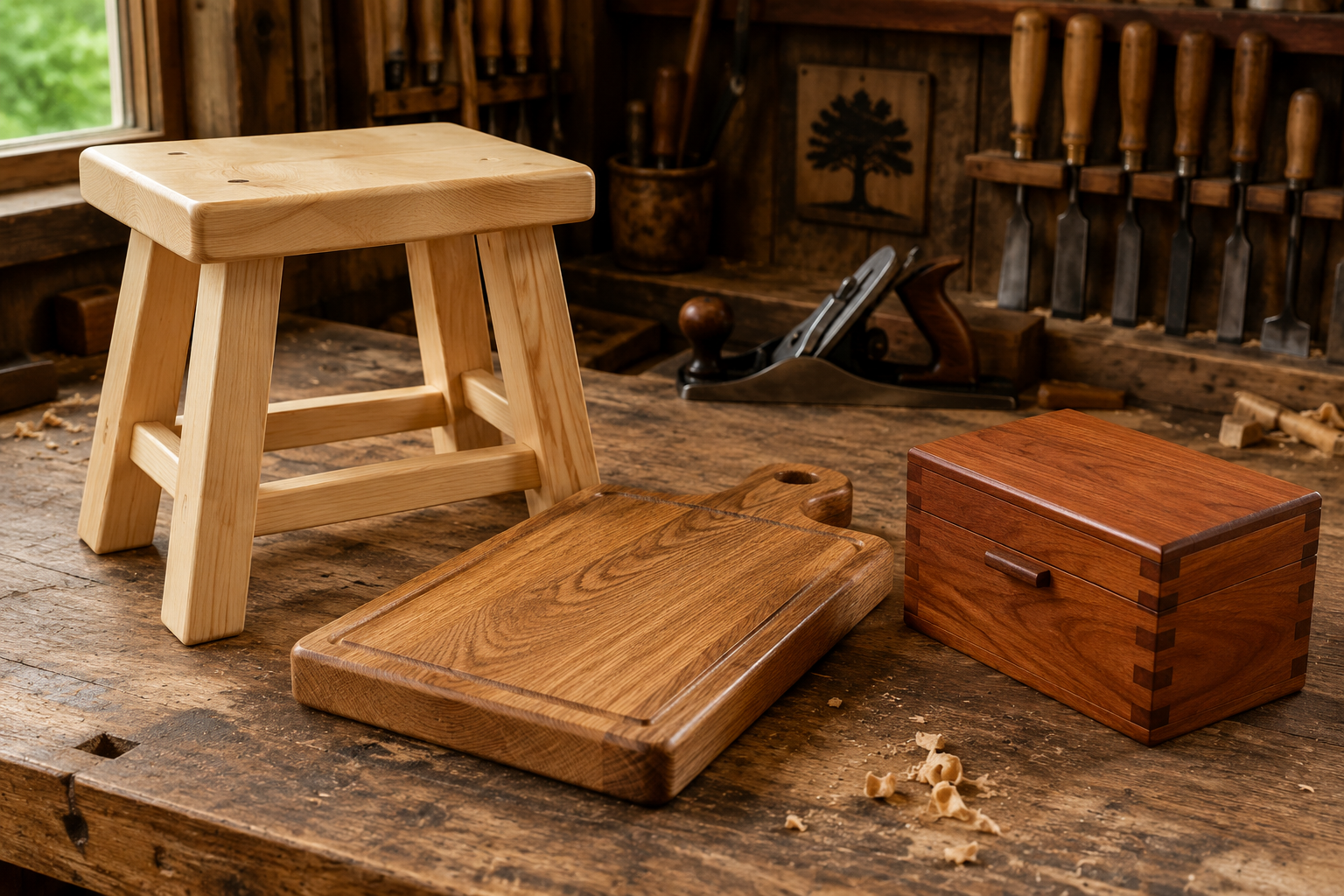
Always consider how the wood will interact with other materials, such as specific wood glues or hardware. The journey of selecting the right wood is as much a part of the craft as the building itself.
Conclusion
Embarking on furniture making as a beginner in 2026 is an incredibly rewarding pursuit, and a solid understanding of wood species is your bedrock for success. The Essential Guide to Wood Species for Beginner Furniture Makers, by emphasizing selection, properties, and best uses, empowers you to move beyond trial and error. From the approachable workability of softwoods like Pine and Poplar to the enduring beauty and strength of hardwoods such as Oak, Maple, Cherry, and Walnut, each species offers unique characteristics that can either elevate or hinder your project.
By carefully considering a project’s functional needs, desired aesthetic, and your budget and skill level, you can make informed choices that lead to satisfying and successful outcomes. Take the time to understand the grain, hardness, stability, and finishing potential of the woods you consider. This deliberate approach not only minimizes frustration but also fosters a deeper appreciation for the material and the craft. Start with forgiving woods, learn their nuances, and gradually expand your repertoire to explore the vast and diverse world of timber. Your journey as a furniture maker will be richer and more rewarding for it.
SEO Meta Title: Wood Species for Beginners: Selection, Properties & Uses (2026) SEO Meta Description: Master wood selection for furniture in 2026. This guide covers essential wood species, properties like hardness & grain, and best uses for beginner makers.