
The average bar stool endures significant daily stress: shifting weights, spills, scrapes, and constant movement. This inherent demand means that selecting the right material isn’t just about aesthetics; it’s fundamental to longevity, safety, and overall user satisfaction. For DIY enthusiasts embarking on building custom seating, understanding the properties of different wood species is paramount for success. This article delves into Choosing the Best Wood for DIY Bar Stools: Durability, Grain, and Finishing Options for Home Bars in 2026, guiding you through the essential considerations to ensure your handmade stools are both beautiful and built to last.
Key Takeaways
- Durability is paramount: Select hardwoods like Oak, Maple, or Ash for their strength and resistance to wear, crucial for the demands of bar stool use.
- Grain dictates aesthetics: Open-grain woods (Oak, Ash) offer a rustic look, while fine-grain woods (Maple, Cherry) provide a smoother, more contemporary finish.
- Workability affects the build: Consider the wood’s hardness and stability; softer hardwoods like Poplar are easier to work with but less durable.
- Finishing protects and beautifies: The right finish, whether oil, polyurethane, or lacquer, protects against spills and wear while enhancing the wood’s natural appeal.
- Cost and sustainability: Balance budget and environmental impact by considering locally sourced or certified sustainable options.
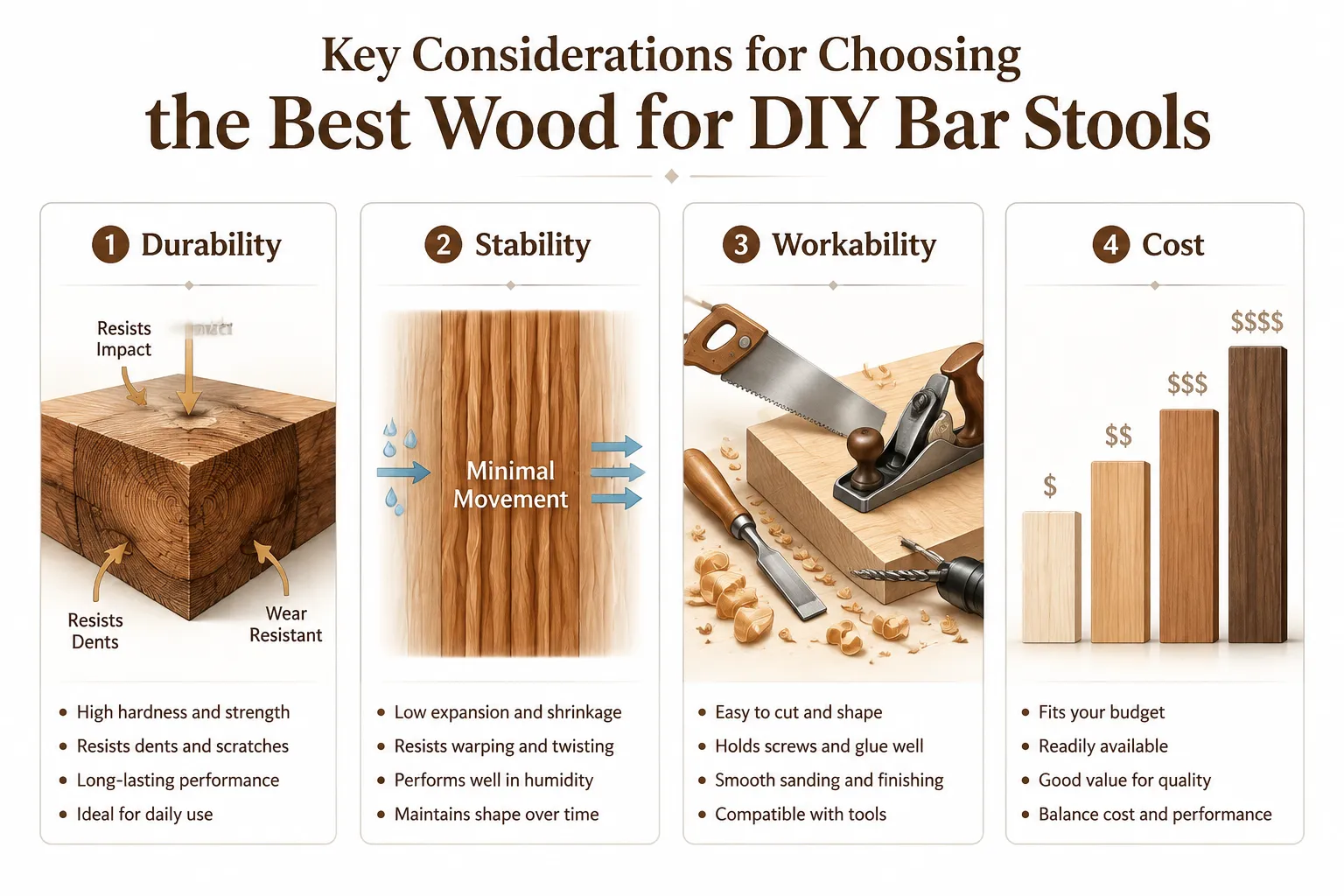
Key Considerations for Choosing the Best Wood for DIY Bar Stools: Durability, Grain, and Finishing Options for Home Bars
When embarking on a DIY bar stool project, the initial choice of wood sets the foundation for the entire build. This decision impacts not only the stool’s appearance but also its structural integrity, ease of construction, and how it will withstand years of use in a home bar environment. Several critical factors must be weighed before making a purchase.
Durability and Hardness
The primary function of a bar stool is to support weight and withstand frequent movement. Therefore, durability is non-negotiable. Hardwoods are generally preferred over softwoods for furniture applications, especially for items that will see heavy use. The Janka hardness scale provides a good measure of a wood’s resistance to denting and wear. Higher Janka ratings indicate greater hardness.
Common durable hardwoods include:
- Oak (Red and White): Excellent hardness, strong, and highly resistant to dents and scratches. Its open grain accepts stains beautifully.
- Maple (Hard Maple): Very hard, dense, and resistant to impacts. Maple has a fine, uniform grain, making it ideal for smooth finishes.
- Ash: Similar in strength and appearance to oak but often more affordable. It has good shock resistance, making it suitable for furniture that experiences impact.
- Cherry: Moderately hard with excellent stability. Known for its rich, reddish-brown color that deepens with age and its smooth, fine grain.
While softwoods like pine or fir might be tempting due to their lower cost and easier workability, they are generally not recommended for bar stools. They are prone to denting, scratching, and structural weakness over time, leading to a shorter lifespan and potential safety concerns. For certain decorative elements or less stressed components, they might be considered, but never for primary structural pieces.
Grain Pattern and Aesthetic Appeal
The grain of the wood refers to the alignment and texture of its fibers, creating distinct visual patterns. This characteristic significantly influences the final aesthetic of your bar stools.
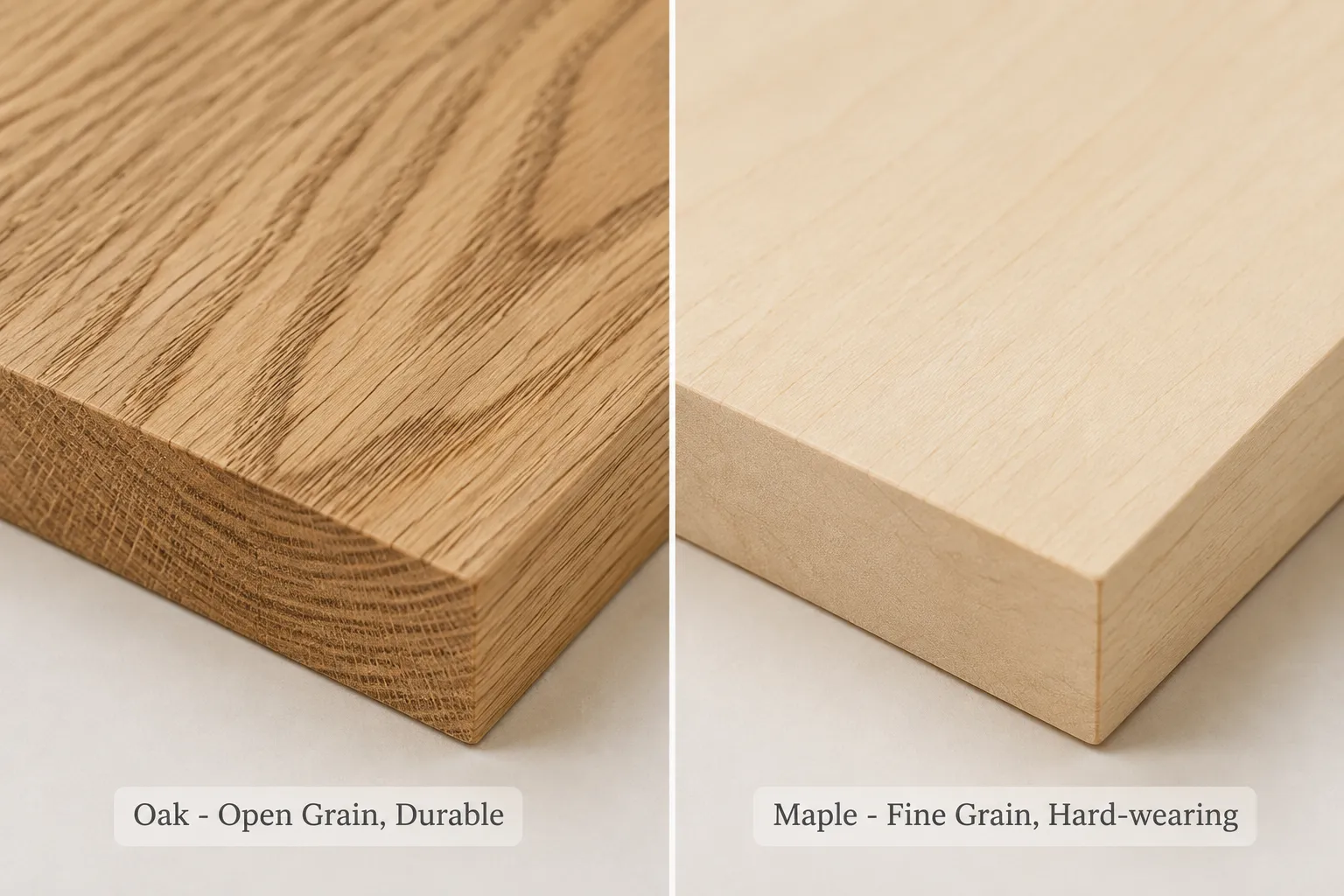
- Open-Grain Woods: Woods like Oak and Ash have prominent, porous grain patterns that can create a rustic or traditional look. These grains absorb stains deeply, highlighting their texture.
- Closed-Grain Woods: Maple, Cherry, and Poplar feature tighter, less porous grain patterns. These woods often result in a smoother, more uniform appearance, perfect for modern or minimalist designs. They take finishes very evenly.
Consider how the grain will complement your existing home bar decor. Do you prefer a rustic, textured look, or a sleek, contemporary feel? The grain choice is integral to achieving your desired style. For projects where you want the natural wood to be a feature, consider options like live edge lumber, which can add unique character to a seat or backrest. Learn more about unique wood projects with our guide on Live Edge Wood Projects From Design To Execution For Home Craftspeople.
Workability and Stability
Workability refers to how easily a wood can be cut, planed, sanded, and joined. Stability describes a wood’s resistance to warping, twisting, or shrinking due to changes in humidity and temperature.
- Ease of Working: Softer hardwoods like Poplar are very easy to cut and shape, making them suitable for beginners. Harder woods like Maple can be challenging, requiring sharp tools and more effort, but they offer superior durability.
- Stability: Woods with interlocked or fine grain tend to be more stable. Quarter-sawn lumber, regardless of species, is also known for superior stability compared to plain-sawn. Stable wood is crucial for bar stools to prevent joints from loosening and components from warping, which can compromise safety.
For structural integrity, proper joinery is critical. Choosing wood that accepts various joinery methods well, such as mortise and tenon or dovetails, is beneficial. Explore more about joinery techniques with our article on Hand Tool Joinery For Visible Wood Joints Dovetails Mortise And Tenon And Box Joints As Design Features In Furniture And Small Projects.
Cost and Availability
The price of lumber can vary significantly based on species, grade, and local availability. Exotic hardwoods tend to be more expensive than domestic options.
Price Range (General Guide):
- Economical: Poplar (least durable hardwood option), Ash
- Mid-Range: Red Oak, Maple, Cherry
- Premium: White Oak (often higher grade), Walnut
Consider your budget and the availability of specific species at your local lumberyard. Sometimes, a less expensive wood with good properties can be transformed with a quality finish to achieve a high-end look. When considering your choices, also think about the environmental impact. Choosing sustainable wood finishing eco friendly oils waxes and natural stains for healthier projects is an increasingly important consideration for many DIYers in 2026.
Top Wood Species for DIY Bar Stools: Grain, Durability, and Finishing Options for Home Bars
Let’s dive deeper into some of the most popular and suitable wood species for crafting durable and attractive bar stools, focusing on their unique characteristics.
Oak (Red and White)
Oak is a perennial favorite in furniture making due to its exceptional strength and prominent grain.
- Durability: Both Red and White Oak boast high Janka hardness ratings, making them incredibly resistant to wear, dents, and scratches, perfect for high-traffic bar stools. White Oak, in particular, has good resistance to moisture and rot, historically used in boat building.
- Grain: Oak has a distinctive open, coarse grain that can be quartersawn to reveal beautiful ray flecks. This porous nature allows it to absorb stains deeply, accentuating the grain pattern for a classic, robust look.
- Finishing: Oak accepts stains, oils, and varnishes very well. Stains can highlight its natural beauty, from light honey tones to dark espresso. A clear polyurethane or lacquer topcoat will provide excellent protection against spills and daily abuse. For a truly natural look, a hardwax oil can bring out the depth of the grain while offering good protection.
- Aesthetic: Versatile, fitting traditional, farmhouse, and even some modern industrial styles depending on the finish.
Maple (Hard Maple)
Hard Maple is an excellent choice for those seeking a durable, clean, and contemporary aesthetic.
- Durability: With one of the highest Janka ratings among domestic hardwoods, Maple is incredibly hard, dense, and resistant to impact. It’s an ideal choice for the heavy use bar stools endure.
- Grain: Maple features a fine, tight, and generally straight grain. It often has a creamy white color, which can sometimes have subtle streaks of reddish-brown. Its uniform texture makes it perfect for achieving very smooth, sleek finishes.
- Finishing: Maple takes stains less predictably due to its density; it can appear blotchy without proper preparation (like a pre-stain conditioner). However, it excels with natural or light finishes, allowing its inherent bright color to shine. Clear finishes like lacquer or polyurethane are popular for maximizing its clean appearance and providing superior protection.
- Aesthetic: Excellent for modern, minimalist, and Scandinavian designs. Its light color also makes it a good candidate for painted stools.
Ash
Ash offers a fantastic balance of strength, flexibility, and aesthetic appeal, often compared to Oak.
- Durability: Ash is a strong, tough wood with good shock resistance, making it suitable for furniture that needs to withstand impact without splintering. Its hardness is comparable to Red Oak.
- Grain: Ash typically has a straight, open grain pattern, similar to Oak but often with slightly less pronounced ray flecks. Its color ranges from creamy white to light brown.
- Finishing: Like Oak, Ash takes stains beautifully, allowing the open grain to pop. It also finishes well with clear coats, which emphasize its natural, light coloring. Its resilience makes it a great candidate for both stained and painted applications.
- Aesthetic: Very versatile, suitable for both traditional and contemporary styles. Its lighter color lends itself well to bright, airy spaces.
Cherry
Cherry is prized for its rich color and smooth texture, making it a premium choice for fine furniture.
- Durability: Moderately hard, offering good resistance to dents and scratches. While not as hard as Maple, it’s very stable and holds its shape well.
- Grain: Cherry has a fine, closed, and usually straight grain, occasionally featuring small gum pockets. It’s known for its rich, reddish-brown color that darkens considerably and beautifully with age and exposure to light.
- Finishing: Cherry takes stains and finishes exceptionally well, resulting in a very smooth, lustrous surface. A clear oil or lacquer finish will enhance its natural color and allow it to develop a beautiful patina over time. Many prefer to simply apply a clear finish to let the wood’s natural aging process create its characteristic deep tones.
- Aesthetic: Classic, elegant, and sophisticated, ideal for traditional or transitional home bar designs.
Walnut
Walnut is a luxurious hardwood known for its striking dark color and excellent workability.
- Durability: Good hardness and very stable. Walnut is renowned for its strength-to-weight ratio and resistance to warping.
- Grain: Walnut typically has a straight, open grain, though it can sometimes exhibit interesting figure patterns like curls or burls. Its rich, dark brown heartwood, often with purplish or reddish tints, is highly sought after.
- Finishing: Walnut needs minimal staining due to its natural deep color. A simple clear oil finish (like tung oil or linseed oil) or a clear lacquer/polyurethane will enhance its natural beauty and provide adequate protection. The goal is often to let its inherent color shine through.
- Aesthetic: High-end, sophisticated, and can fit into various styles from mid-century modern to traditional.
Other Considerations: Poplar and Birch
While not as hard or durable as the top choices, Poplar and Birch can be considered for specific reasons:
- Poplar: Very affordable and exceptionally easy to work with. It’s a softer hardwood, prone to denting, so it’s best used for bar stools that will be painted rather than stained, or for less critical components. It’s a good choice for beginners due to its forgiving nature.
- Birch (Yellow Birch): Moderately hard and takes stains reasonably well. It has a fine, uniform grain, similar to Maple but often with a slightly yellowish hue. It’s a good mid-range option for durability and appearance.
Choosing the right wood means balancing durability for active use with the desired aesthetic to complement your home bar. For more detailed guidance on woodworking projects, explore resources like “High Demand Woodworking Projects For 2026 Coffee Tables Wine Racks And Clocks” which offers further inspiration.
Finishing Options and Maintenance for Your DIY Bar Stools
Once you’ve chosen your wood and constructed your bar stools, the finishing process is crucial. A good finish not only enhances the wood’s natural beauty and grain but also provides essential protection against spills, scratches, and daily wear and tear. Proper maintenance ensures your stools remain attractive and functional for years to come.
Types of Finishes for Bar Stools
The environment of a home bar means finishes need to be highly durable and resistant to liquids.
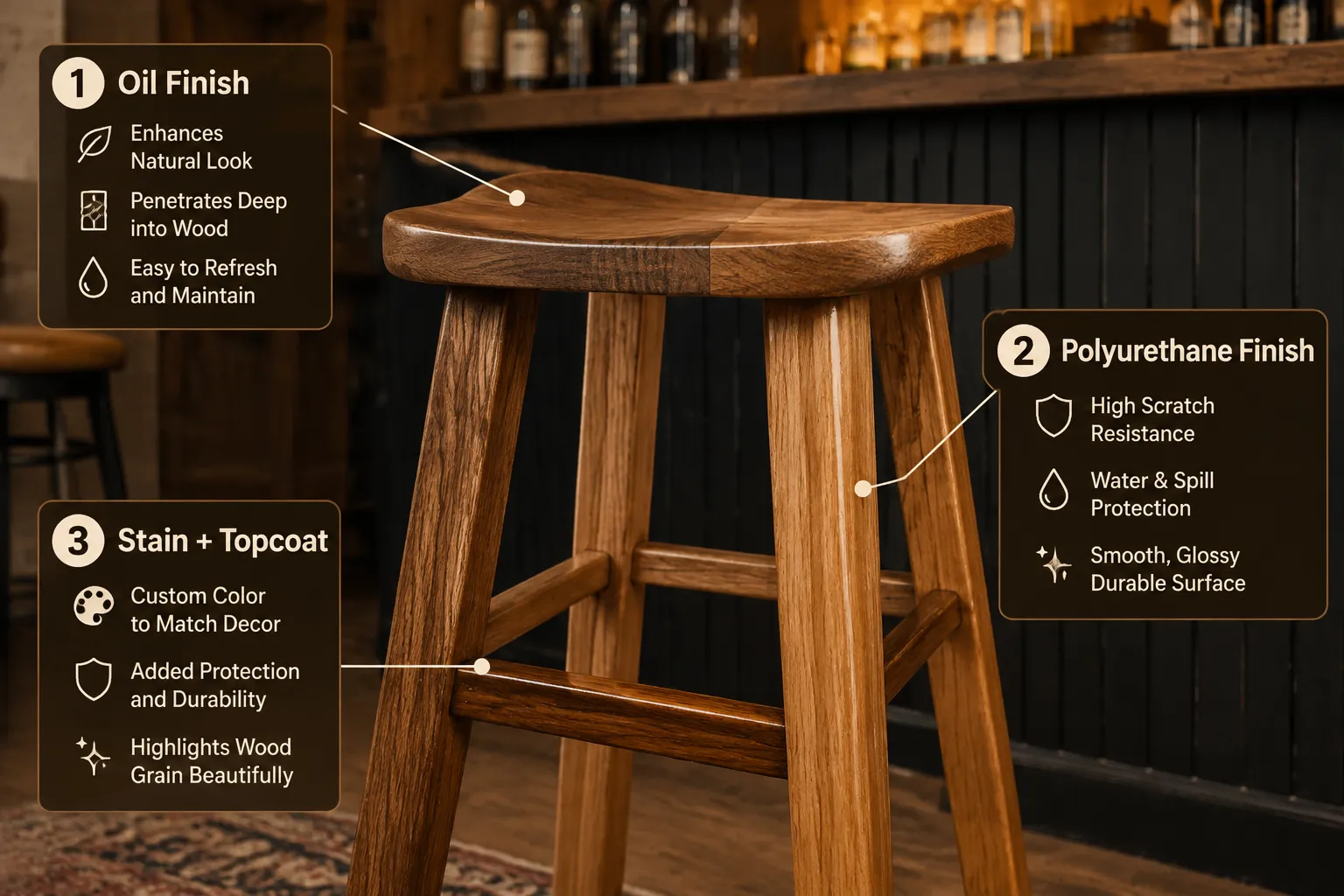
Polyurethane (Oil-Based or Water-Based):
- Pros: Extremely durable, highly resistant to scratches, water, and alcohol. Available in various sheens (matte, satin, semi-gloss, gloss). Water-based options are low VOC and dry quickly.
- Cons: Can be challenging to apply without brush marks. Oil-based polyurethane can yellow over time, especially on lighter woods.
- Best for: High-traffic stools, maximum protection, and a smooth, hard surface.
Lacquer:
- Pros: Dries incredibly fast, builds a durable, hard finish quickly. Provides a clear, smooth surface.
- Cons: Can be difficult to apply without specialized spray equipment. Fumes are strong, requiring good ventilation.
- Best for: Professional-looking, high-gloss finishes where speed and hardness are priorities.
Varnish:
- Pros: Very durable and water-resistant. Often used for outdoor furniture, but marine varnish provides superior protection indoors against moisture and alcohol.
- Cons: Slower drying than lacquer. Can be thick to apply.
- Best for: Excellent protection, especially where moisture resistance is critical.
Penetrating Oils (Tung Oil, Linseed Oil, Hardwax Oils):
- Pros: Enhance the natural beauty and feel of the wood, providing a warm, hand-rubbed look. Easy to repair localized damage. Eco-friendly options are available.
- Cons: Offer less surface protection against scratches and impacts compared to film-building finishes. Require more frequent reapplication.
- Best for: Emphasizing the natural grain, a more tactile feel, and easier repairability. Great for natural or sustainable wood finishing eco friendly oils waxes and natural stains for healthier projects.
Stains:
- Function: Stains are not a finish but a coloring agent. They penetrate the wood to change or enhance its color before a topcoat is applied.
- Application: Always apply a topcoat over stain for protection. Ensure proper sanding and pre-stain conditioning, especially on blotchy woods like Maple or Pine.
- Explore: For more detailed guidance on coloring, see our Beginner’s Guide to Wood Staining: Color Selection, Application, and Troubleshooting Common Issues.
Application Tips for Durable Finishes
- Surface Preparation: Proper sanding is crucial. Start with a coarser grit and progressively move to finer grits (e.g., 100, 150, 220) to achieve a smooth surface. Remove all sanding dust before applying any finish.
- Grain Filling (for open-grain woods): For woods like Oak or Ash, a grain filler can create an even smoother surface before applying a topcoat, resulting in a more refined look.
- Multiple Thin Coats: Apply several thin coats rather than one thick coat. This allows for better adhesion, even drying, and a more durable finish. Lightly sand between coats with a very fine grit (e.g., 320 or 400) for optimal smoothness.
- Read Product Instructions: Always follow the manufacturer’s recommendations for application, drying times, and recoating.
Ongoing Maintenance for Your DIY Bar Stools
Even with a durable finish, proper care extends the life and beauty of your bar stools.
- Regular Cleaning: Wipe down stools regularly with a soft, damp cloth. Avoid harsh chemical cleaners, which can damage the finish.
- Immediate Spill Cleanup: Address spills immediately, especially alcohol or acidic liquids, as they can etch or soften finishes if left to sit.
- Protection: Consider felt pads on the bottom of the stool legs to prevent scratching floors and reduce noise.
- Reapplication/Repair: For oil finishes, reapply a fresh coat periodically as recommended by the product. For film-forming finishes, minor scratches can sometimes be buffed out; deeper damage may require sanding and spot-repairing the finish.
By carefully selecting your wood, applying a suitable protective finish, and committing to regular maintenance, your DIY bar stools will provide lasting beauty and functionality to your home bar for many years to come in 2026. For further insights on finishing techniques, delve into the broader topic of Finishing on our site.
Conclusion
Choosing the Best Wood for DIY Bar Stools: Durability, Grain, and Finishing Options for Home Bars is a foundational decision that significantly impacts the success and longevity of your woodworking project. By prioritizing durable hardwoods such as Oak, Maple, Ash, Cherry, or Walnut, you lay the groundwork for a robust and reliable piece of furniture. Each wood species brings its own unique character, from the bold, open grain of Oak to the refined, subtle beauty of Maple, allowing you to tailor the aesthetic precisely to your home bar’s style.
Beyond selection, the finishing process is equally critical. Applying a high-quality, durable finish like polyurethane or lacquer will protect your hard work from the rigors of daily use, spills, and general wear and tear, ensuring your stools remain both beautiful and functional. For those who prefer a more natural feel, penetrating oils offer an elegant solution with easier repairability.
As you embark on your DIY bar stool journey in 2026, remember to balance durability, aesthetic preference, workability, and cost. Invest in quality materials, employ sound woodworking techniques, and apply a suitable protective finish. Your thoughtfully chosen and meticulously crafted bar stools will not only serve as practical seating but also as proud testaments to your skill and vision, enhancing your home bar for years to come. For more on custom furniture builds, consider reading about Bar Stools and Counter Seating: What to Buy vs. What to Build for.