
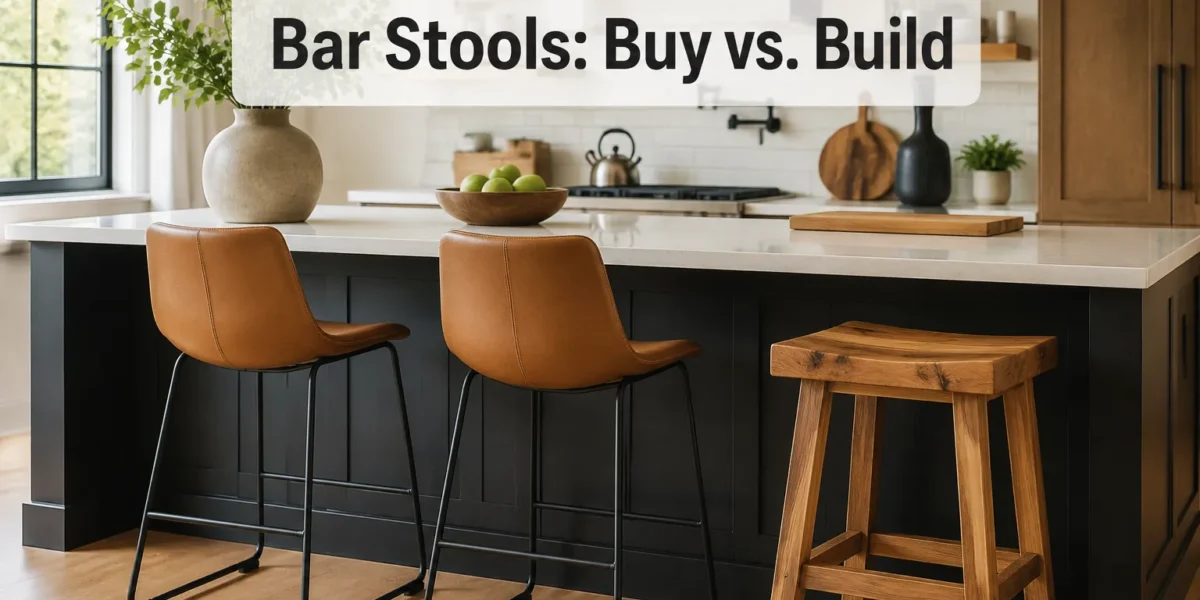
For many homeowners in 2026, the kitchen island is the undeniable heart of the home, a multi-functional hub for cooking, dining, homework, and social gatherings. Yet, the choice of seating, specifically Bar Stools and Counter Seating: What to Buy vs. What to Build for Your Kitchen Island, often presents a significant dilemma. Do you opt for the convenience and immediate gratification of purchasing ready-made stools, or do you embrace the satisfaction and customization potential of building your own? This decision impacts not only your budget and timeline but also the aesthetic coherence and long-term durability of your kitchen space.
Key Takeaways
- Height is Critical: Always measure your island’s height to determine if you need counter-height (24-27 inches) or bar-height (28-33 inches) seating.
- Buying Offers Convenience and Variety: Purchased stools provide immediate solutions, a vast array of styles, and often competitive pricing, especially for basic models.
- Building Delivers Customization and Craftsmanship: DIY stools allow for precise fit, unique aesthetics, and the satisfaction of creating something tailored to your space and skills.
- Cost vs. Value: While buying can be cheaper upfront, building can offer better long-term value through higher quality materials and custom design.
- Durability and Repairability: Built stools, particularly those with solid wood construction and robust joinery, are often more durable and easier to repair than many mass-produced alternatives.
Bar Stools and Counter Seating: The “Buy” Perspective for Your Kitchen Island
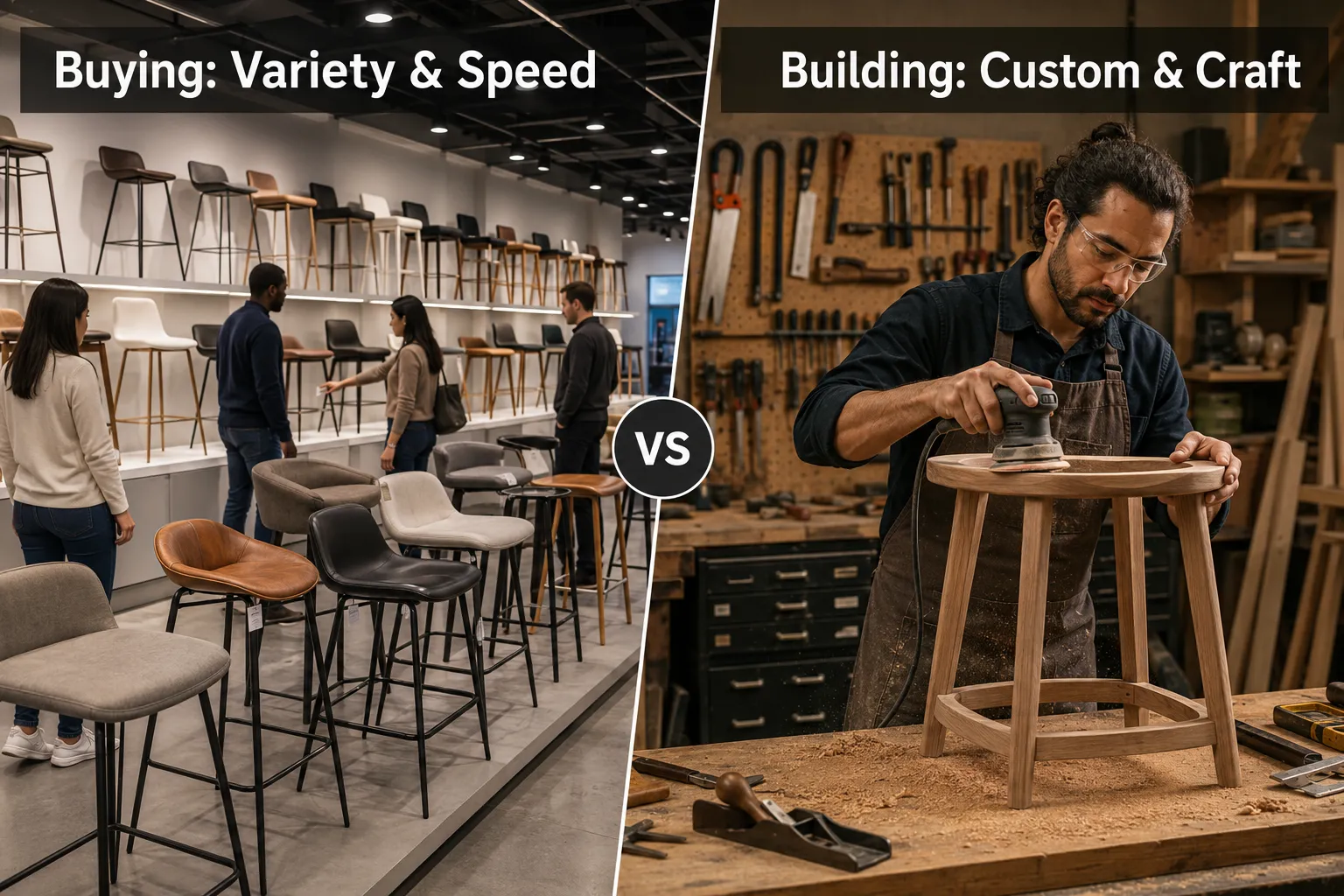
Choosing to buy bar stools or counter seating for your kitchen island is a path many homeowners take due to its inherent convenience, immediate availability, and vast selection. In 2026, the market offers an unprecedented range of styles, materials, and price points, making it easy to find something that seemingly fits your needs.
Advantages of Buying Pre-Made Seating
- Immediate Availability: Walk into a store or click “add to cart,” and your seating can often be delivered or picked up within days, sometimes even hours. This is ideal for those with tight deadlines or who simply prefer instant gratification.
- Vast Selection and Style Variety: Retailers, both online and brick-and-mortar, stock an enormous range of designs, from sleek modern metal stools to rustic farmhouse wood benches, minimalist plastic seats, and upholstered options. This variety allows you to perfectly match an existing decor or explore new styles.
- Professional Finish and Quality Assurance (Mostly): Reputable brands typically offer a consistent, factory-finished product. While quality can vary greatly between brands and price points, higher-end purchased stools often boast professional upholstery, consistent welding, and durable finishes that can be challenging to replicate perfectly in a home workshop.
- Warranty and Returns: Most purchased items come with a warranty, providing peace of mind against manufacturing defects. The option to return or exchange if the item doesn’t fit or meet expectations is also a significant benefit.
- Competitive Pricing for Basic Models: For standard, off-the-shelf designs, buying is often more cost-effective than sourcing individual materials and tools for a DIY project. Mass production efficiencies drive down the per-unit cost.
Disadvantages of Buying Pre-Made Seating
- Limited Customization: While there’s a wide selection, finding a stool that precisely matches your island’s unique height, depth, or specific aesthetic nuances can be difficult. You might have to compromise on color, fabric, or dimensions.
- Variable Quality: The quality spectrum in retail is vast. Budget-friendly stools might use less durable materials (e.g., particleboard, thin veneers, lightweight metal) or inferior construction methods (e.g., staples instead of screws, weak welds), leading to shorter lifespans and less stability.
- Assembly Required (Often): Many purchased stools come “knock-down,” requiring consumer assembly. This can be time-consuming and, if not done correctly, can compromise the stool’s stability and durability.
- Environmental Impact: Mass-produced furniture often involves long supply chains, less sustainable materials, and can contribute to a “throwaway” culture when items aren’t built to last.
When to Buy
You should strongly consider buying if:
- You need seating immediately.
- You prioritize convenience over customization.
- Your budget is a primary concern, and you’re looking for standard, functional seating.
- You don’t have the tools, space, or skills for woodworking.
- You prefer a specific high-end designer look that would be difficult to replicate.
Bar Stools and Counter Seating: The “Build” Perspective for Your Kitchen Island
The decision to build your own bar stools or counter seating is often driven by a desire for complete control over design, materials, and the satisfaction of creating something with your own hands. This approach, while requiring more time and effort, can result in truly unique and enduring pieces tailored precisely to your kitchen.
Advantages of Building Custom Seating
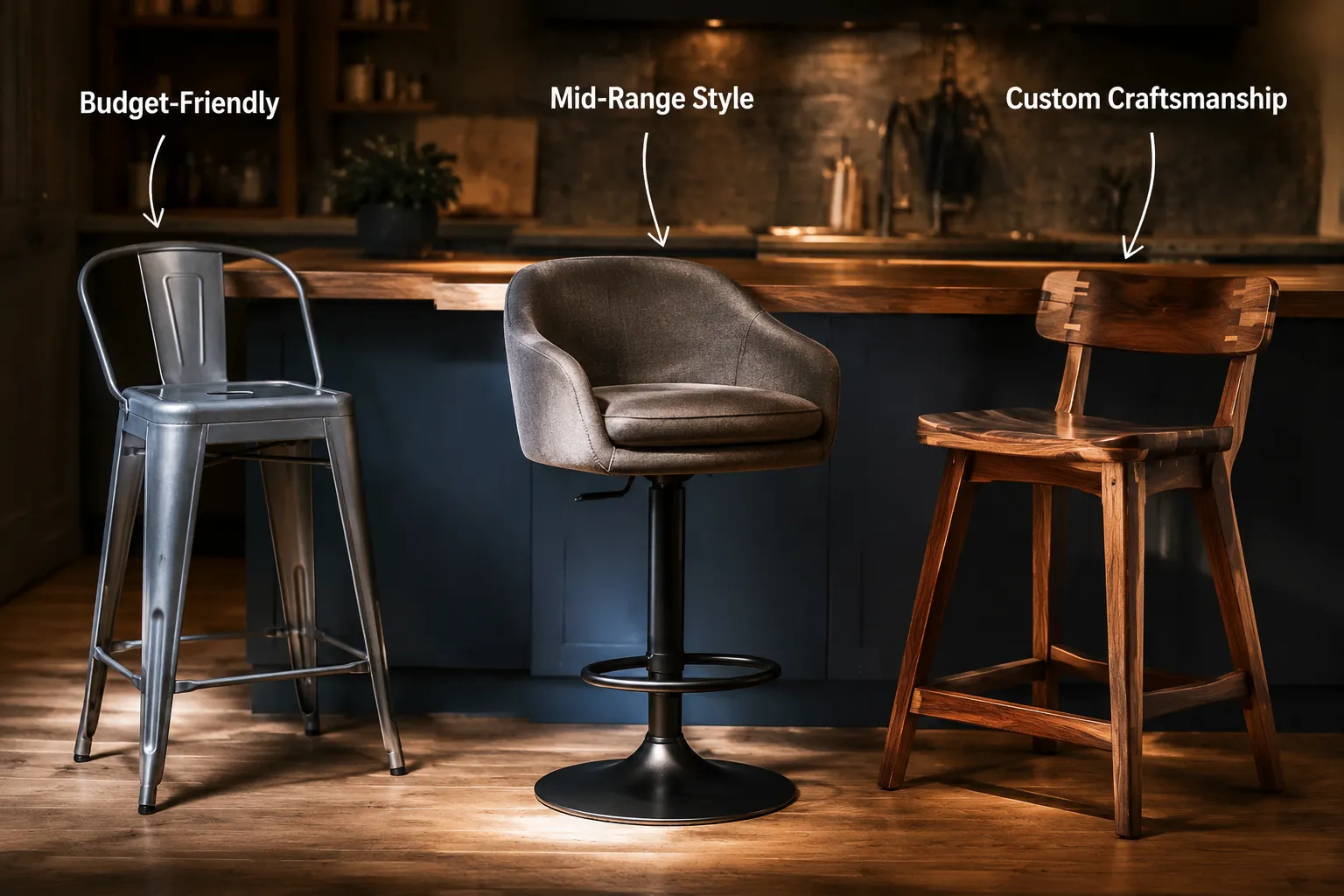
- Unparalleled Customization: This is the primary advantage. You dictate every aspect: height, width, depth, wood species, finish, joinery, and even integrated features like backrests or footrests. This ensures a perfect fit for your kitchen island and a seamless integration with your existing decor.
- Superior Quality and Durability: By choosing high-quality lumber (e.g., oak, maple, walnut) and employing robust woodworking techniques (e.g., mortise and tenon joints, dowel joints, through tenons), you can create furniture that significantly outlasts many mass-produced options. This investment in craftsmanship pays off in longevity.
- Cost-Effectiveness (Long-Term): While initial material costs might seem higher than budget-friendly retail options, building can be more economical for high-quality, solid wood furniture. The longevity and repairability mean you won’t need to replace them as frequently. For advice on creating sturdy workshop furniture, which is essential for any serious woodworking project, consider “Creating Ergonomic Workshop Furniture: Building Custom Workbenches”.
- Skill Development and Personal Satisfaction: The process of designing, cutting, joining, and finishing your own furniture is incredibly rewarding. It hones your woodworking skills and provides a sense of pride in your home. For beginners, resources like “Beginner’s Guide to Building a Simple Wooden Bookshelf: Tools,” can offer a great starting point for developing foundational skills.
- Unique Aesthetic: Your built stools will be one-of-a-kind, adding character and a personal touch that no off-the-shelf item can replicate. This can be a significant conversation starter and a true focal point in your kitchen.
- Repairability: Should a joint loosen or a component break, a handmade wooden stool is typically easier to repair than a complex, mass-produced piece often made from mixed materials.
Disadvantages of Building Custom Seating
- Time Commitment: Designing and building furniture from scratch is a time-intensive process, especially for beginners. It involves planning, material sourcing, cutting, shaping, joining, sanding, and finishing.
- Requires Tools and Space: You’ll need a range of woodworking tools (saws, drills, clamps, sanders, measuring tools) and a dedicated workspace. This initial investment can be substantial if you’re starting from scratch.
- Learning Curve: Woodworking requires skill and patience. Mistakes can be costly in terms of wasted materials and time. Beginners might find certain joinery techniques challenging.
- Potential for Imperfections: Unless you’re an experienced woodworker, your handmade stools might have minor imperfections compared to a factory-finished product. Embrace these as signs of true craftsmanship, or strive for perfection with practice.
- Material Sourcing: Finding the right quality and quantity of lumber can sometimes be a challenge, especially if you’re looking for specific wood species or reclaimed materials.
When to Build
Building your bar stools or counter seating is the right choice if:
- You desire truly custom dimensions, design, or wood species.
- You prioritize long-term durability and quality over immediate convenience.
- You enjoy woodworking, have the necessary tools, or are willing to invest in them.
- You have the time and patience for a project.
- You want a unique, handcrafted piece that reflects your personal style.
Bar Stools and Counter Seating: DIY-Friendly Purchase Models for Enthusiasts
For those who appreciate the aesthetic of handmade furniture but lack the time or advanced skills to build from scratch, a middle ground exists. Certain types of purchased bar stools and counter seating lend themselves well to customization or simple DIY enhancements, offering a blend of convenience and personal touch. This approach allows enthusiasts to infuse their personality without undertaking a full build.
Simple Wood Stools with Minimal Assembly
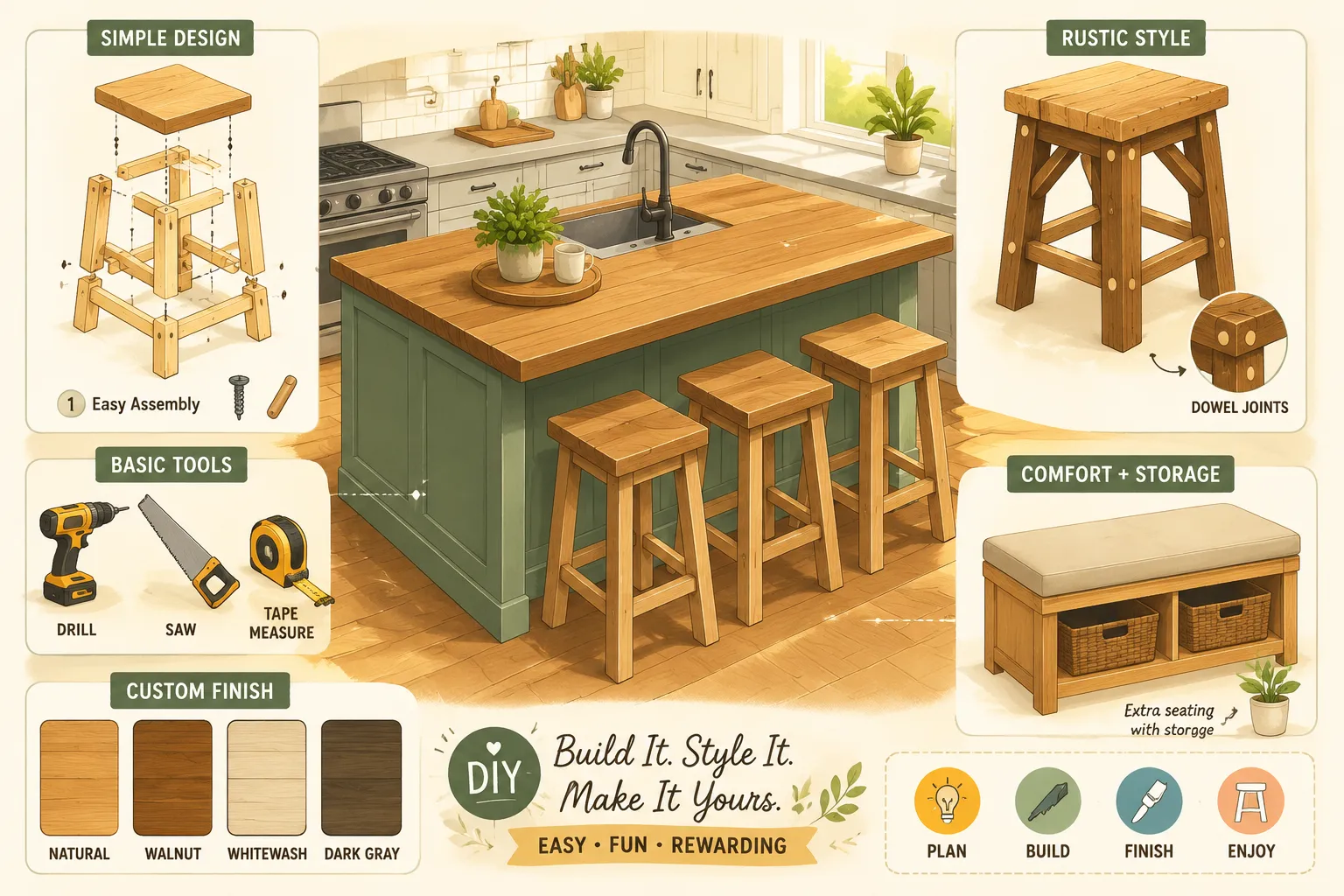
Many retailers offer basic wooden bar stools that are either fully assembled or require very minimal assembly (attaching legs to a seat). These are excellent canvases for DIY modifications.
- Sanding and Refinishing: You can easily sand down the existing finish (or lack thereof) and apply a custom stain, paint, or a distressed look to match your kitchen’s aesthetic. This is a low-skill, high-impact modification.
- Upholstery Upgrade: Basic wooden stools can be easily upholstered or reupholstered with a fabric of your choice, adding comfort and a pop of color or pattern. This involves removing the seat, adding foam and batting, and stapling new fabric.
- Adding Footrests or Backrests: While more advanced, some simple designs allow for the addition of a metal or wooden footrest, or a small backrest for added comfort, transforming a basic stool into a more ergonomic piece. For more on creating ergonomic seating, consider our guide on “Creating Ergonomic Workshop Furniture: Building Custom Workbenches”.
Metal Frame Stools with Wood or Custom Seats
Another popular option is a stool with a sturdy metal frame and a removable seat. These offer a strong foundation while allowing for significant personalization.
- Replacing the Seat: The most straightforward modification is replacing the existing seat with a custom wooden one. You can craft a live-edge slab, a meticulously joined piece, or a simply shaped wooden disc to fit the frame. This allows you to choose your preferred wood species and finish. For inspiration on working with natural wood, explore “DIY Live-Edge Dining Table: Step-by-Step Build for 2026 Trends”.
- Custom Cushioning: Similar to all-wood stools, the seat can be custom-cushioned and upholstered, providing a unique comfort and style.
- Painting the Frame: The metal frame itself can be sanded and painted a custom color to complement your kitchen, offering a high-impact aesthetic change.
The Best of Both Worlds
This hybrid approach allows you to:
- Save Time on Complex Joinery: You avoid the most challenging aspects of furniture building, like precise joinery and structural integrity.
- Benefit from Manufacturer Durability: The core structure is typically engineered for strength and stability.
- Express Creativity: You still get to apply your personal design choices and develop basic woodworking and finishing skills.
- Control Costs: Buying a basic, unfinished stool or a metal frame can be very cost-effective, allowing you to invest more in high-quality finishing materials.
Considerations for DIY-Friendly Purchases
- Measure Everything: Before buying, accurately measure the stool’s existing components (especially the seat dimensions and mounting points) to ensure your custom additions will fit.
- Tool Requirements: While less extensive than a full build, you’ll still need basic tools like a drill, saw (for custom seats), sander, staple gun (for upholstery), and finishing supplies.
- Material Selection: Choose materials for your customizations that are durable and appropriate for kitchen use, considering spills and wear.
This blended approach to Bar Stools and Counter Seating: What to Buy vs. What to Build for Your Kitchen Island is ideal for those who want to dip their toes into woodworking and customization without committing to a full-scale furniture build.
Conclusion
The decision of whether to buy or build Bar Stools and Counter Seating: What to Buy vs. What to Build for Your Kitchen Island ultimately hinges on a balance of your budget, timeline, skill level, and desire for customization. Purchased stools offer unparalleled convenience, immediate availability, and a vast array of styles, making them an excellent choice for those prioritizing speed and standard designs. However, the quality can be variable, and true customization is often limited.
Building your own stools, on the other hand, provides the ultimate freedom in design, materials, and dimensions, allowing you to create truly unique, durable, and repairable pieces that perfectly complement your kitchen’s aesthetic. This path requires a greater investment of time, tools, and skill, but the personal satisfaction and long-term value are significant.
For those who fall in between, consider the hybrid approach: purchasing a basic, well-built stool and then applying DIY enhancements such as custom finishes, upholstery, or even crafting a new seat. This method offers a rewarding way to infuse personal style and develop woodworking skills without the complexities of a full build.
Regardless of your chosen path, always prioritize proper height for your kitchen island (counter height: 24-27 inches; bar height: 28-33 inches) and ensure the seating provides adequate comfort and stability. Evaluate your priorities carefully, and you’ll successfully outfit your kitchen island with seating that serves both function and style for years to come in 2026.
SEO Meta Title: Buy vs. Build Bar Stools for Your Kitchen Island (2026) SEO Meta Description: Deciding on bar stools or counter seating for your kitchen island in 2026? Compare buying convenience vs. building custom designs, costs, durability, and DIY-friendly options.