
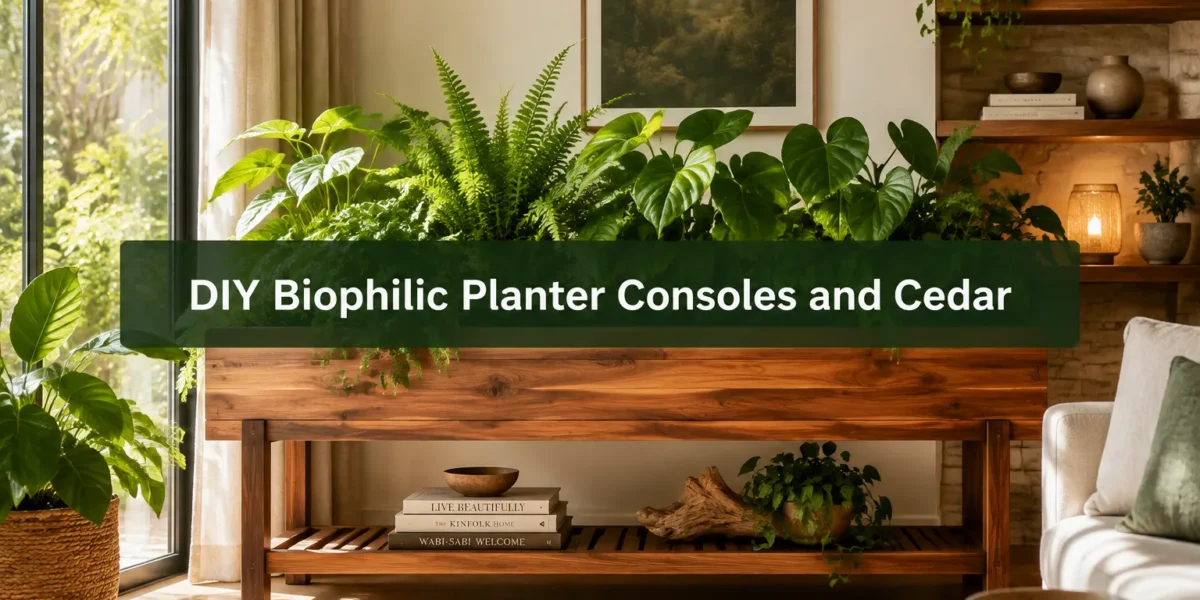
Combine your passion for woodworking and indoor gardening by learning to build beautiful biophilic planter consoles and cedar planter shelves, perfect for integrating nature into your home. In an increasingly digital world, the craving for natural connection has surged, making biophilic design a cornerstone of modern interiors. This isn’t just about placing a potted plant on a windowsill; it’s about crafting functional, aesthetically pleasing wooden structures that seamlessly blend horticulture with home decor. Mastering woodworking techniques to create DIY Biophilic Planter Consoles and Cedar Planter Shelves: Woodworking Projects for Indoor Gardens allows you to not only enhance your living space with vibrant greenery but also to engage in a rewarding craft that offers both utility and artistic expression.
These projects transform ordinary spaces into living sanctuaries, providing fresh air, reducing stress, and elevating interior aesthetics. Whether you are a seasoned woodworker looking for your next challenge or a beginner eager to develop practical skills, this guide will illuminate the path to building custom pieces that celebrate the beauty of nature indoors.
Key Takeaways
- Biophilic design integrates nature into living spaces, improving well-being and aesthetics.
- DIY Biophilic Planter Consoles and Cedar Planter Shelves: Woodworking Projects for Indoor Gardens offer custom solutions for indoor plant display.
- Cedar is an excellent wood choice for planters due to its natural resistance to rot and insects.
- Proper planning, including drainage and material selection, is crucial for project success and plant health.
- These woodworking projects are accessible to various skill levels, offering opportunities for skill development and creative expression.
Designing Your DIY Biophilic Planter Consoles
Creating a biophilic planter console involves more than just building a box for plants; it’s about designing a piece of furniture that enhances both the plants and the surrounding environment. The console should serve as a functional home for your indoor garden while complementing your existing decor. Key considerations include the types of plants you plan to house, the available light, and the overall aesthetic you wish to achieve.
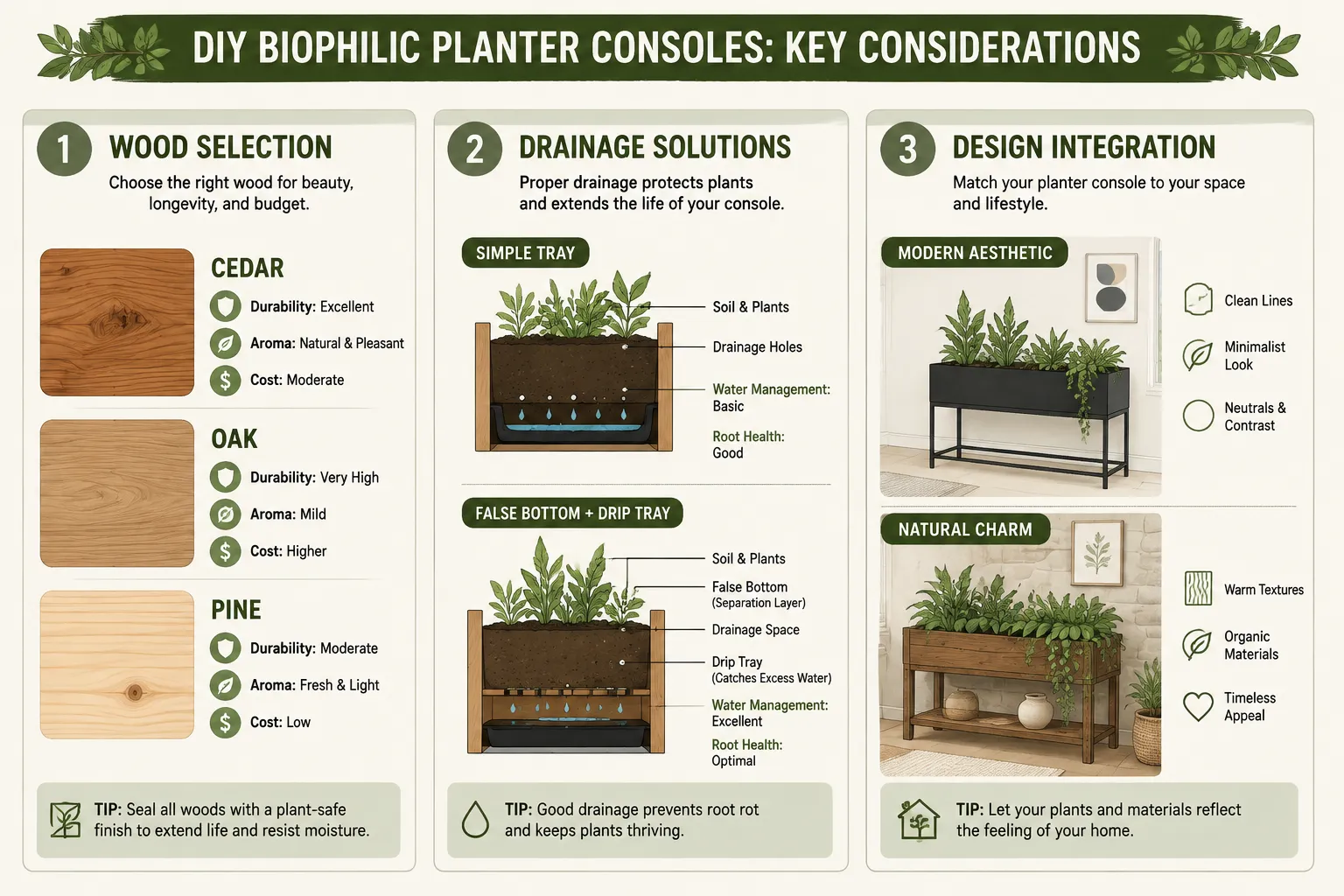
When embarking on DIY Biophilic Planter Consoles and Cedar Planter Shelves: Woodworking Projects for Indoor Gardens, the initial design phase is paramount. Think about the console’s intended location. Is it for a bright entryway, a cozy living room nook, or a narrow hallway? The dimensions will largely depend on this. Console tables are inherently versatile, and designing one that integrates planters adds another layer of functionality and visual appeal. For instance, a slim console might feature a series of small, integrated pots, while a wider one could accommodate a larger, continuous planter bed. Consider the height as well; some plants thrive closer to light sources, while others prefer lower, shadier spots.
The choice of wood is critical. For indoor use, a variety of hardwoods and softwoods can work, but for direct contact with soil or high humidity, moisture resistance is key. Cedar, discussed in the next section, is a strong contender. Other options like teak, redwood, or even treated pine can be suitable. However, for a truly “biophilic” design, prioritize sustainable and non-toxic materials. You might want to explore sustainable wood finishing eco friendly oils waxes and natural stains for healthier projects to ensure your console is safe for both your plants and your home.
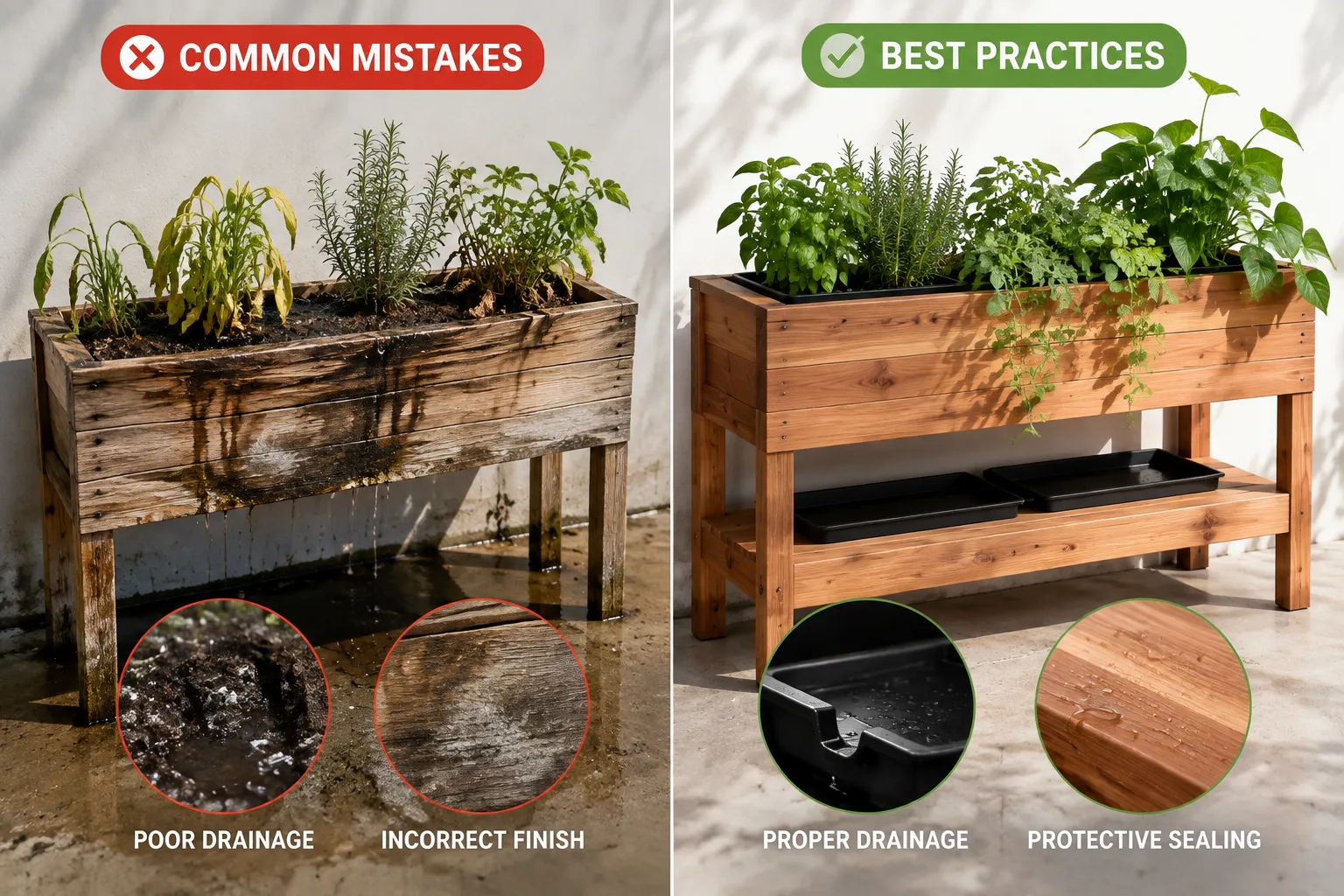
Drainage is another non-negotiable aspect. Plants need proper drainage to prevent root rot. This can be achieved through:
- Integrated Drip Trays: A hidden tray beneath the plant containers to collect excess water.
- False Bottoms: Creating a raised platform within the planter to keep pots out of standing water.
- Removable Liners: Using waterproof liners that can be pulled out for easy cleaning and watering.
Consider also the weight of the console once filled with soil and plants. Reinforced joinery, such as mortise and tenon or dovetails, will provide superior strength and longevity. Beginners might opt for simpler joinery like pocket screws, but a sturdy design is always important. Learn more about hand tool joinery for visible wood joints dovetails mortise and tenon and box joints as design features in furniture and small projects.
Aesthetic considerations should guide your design choices. Do you prefer a sleek, modern look with clean lines and a minimalist finish? Or a more rustic, organic feel that highlights natural wood grain and textures? Incorporating natural curves or uneven edges can further enhance the biophilic feel. The console could also feature integrated lighting for plants that require more light, or even small storage compartments for gardening tools.
Building Cedar Planter Shelves for Optimal Indoor Gardens
Cedar stands out as an exceptional material for woodworking projects involving plants, especially for DIY Biophilic Planter Consoles and Cedar Planter Shelves: Woodworking Projects for Indoor Gardens. Its natural resistance to rot, decay, and insect infestation makes it ideal for environments with high humidity and direct contact with soil. Moreover, cedar has a beautiful, distinct aroma and an appealing grain pattern that ages gracefully.
When planning your cedar planter shelves, durability and functionality should be at the forefront. Cedar is a softwood, making it relatively easy to work with, yet it offers impressive longevity for outdoor and humid indoor applications. For shelves, a slatted design is often preferred as it allows for excellent air circulation around pots and prevents water accumulation, crucial for plant health.
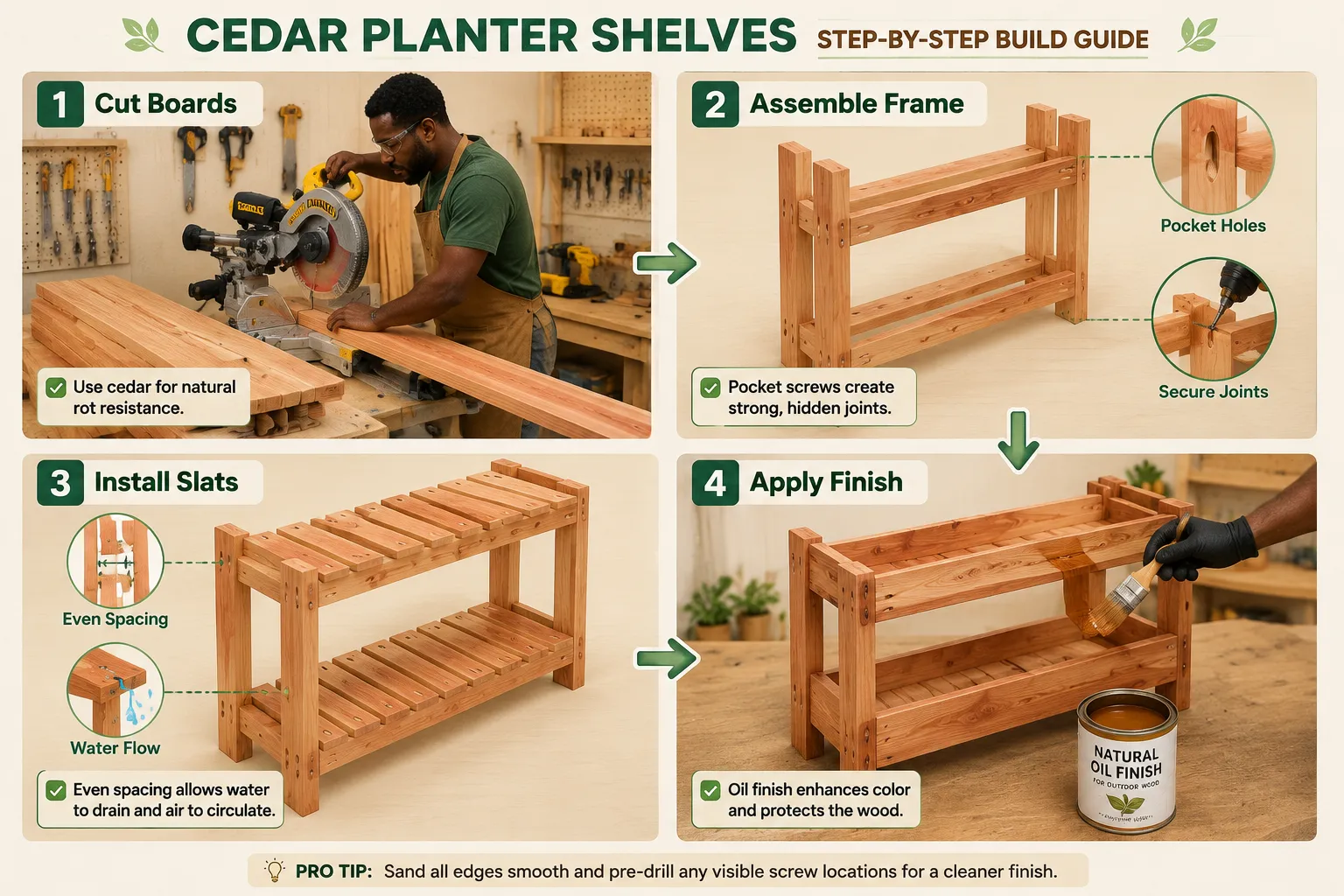
Here’s a general approach to building cedar planter shelves:
- Material Selection: Choose clear cedar planks for a cleaner look, or knotty cedar for a more rustic aesthetic. Ensure the wood is dimensionally stable and free from significant defects. Consider different wood species for beginner furniture makers selection properties and best uses to broaden your understanding of material choices.
- Design and Measurements: Determine the desired height, width, and depth of your shelves. Consider how many tiers you need and the sizes of the pots they will hold. Sketch out your design, including shelf spacing.
- Cutting the Components: Accurately cut all uprights, horizontal supports, and slats according to your measurements. A miter saw or circular saw with a guide will ensure precise cuts.
- Assembling the Frame: Use waterproof wood glue and screws or appropriate joinery to assemble the main frame of the shelves. Pilot holes are essential to prevent splitting the cedar.
- Adding the Slats: Attach the cedar slats to the horizontal supports. Leave small gaps (e.g., 1/4 inch) between slats for drainage and air circulation. Stainless steel screws are recommended to prevent rust in humid conditions.
- Finishing: While cedar is naturally resistant, a good finish will further protect the wood and enhance its appearance. Opt for natural wood finishing without chemicals plant based stains oils and protective coatings for health conscious makers and eco conscious buyers for a truly biophilic approach. These finishes will not harm your plants and maintain the natural qualities of the cedar.
For optimal plant growth, consider building a custom grow light stand for indoor plants aesthetic designs for urban gardeners alongside your cedar shelves. This ensures your indoor garden receives adequate light, especially during darker months. The combination of beautiful cedar and proper lighting will create a thriving environment for your plants.
When constructing the shelves, pay attention to the stability. For taller units, consider anchoring them to a wall to prevent tipping, especially if you have pets or children. The beauty of DIY Biophilic Planter Consoles and Cedar Planter Shelves: Woodworking Projects for Indoor Gardens lies in the ability to customize every aspect to fit your space and plant collection perfectly.
Essential Woodworking Techniques and Tools for Planter Projects
Embarking on DIY Biophilic Planter Consoles and Cedar Planter Shelves: Woodworking Projects for Indoor Gardens requires a grasp of fundamental woodworking techniques and the right tools. While elaborate joinery can add a touch of craftsmanship, many functional and beautiful designs can be achieved with basic skills and common tools. The goal is to create durable structures that stand up to moisture and the demands of an indoor garden.
Key Woodworking Techniques
- Accurate Measuring and Marking: Precision is paramount in woodworking. Use a reliable tape measure, a carpenter’s square, and a sharp pencil or marking knife. “Measure twice, cut once” is a mantra for a reason.
- Precise Cutting:
- Crosscutting: For cutting wood across the grain, a miter saw is excellent for speed and accuracy. A hand saw or circular saw can also be used.
- Ripping: For cutting wood along the grain, a table saw is ideal. For beginners, a circular saw with a rip fence can suffice.
- Joining Wood:
- Pocket Hole Joinery: This is a popular and relatively simple method for beginners, using a pocket hole jig to create strong, hidden joints with screws.
- Butt Joints with Screws/Glue: Simple and effective for non-structural elements or when reinforced with brackets.
- Dadoes and Rabbets: These provide stronger, more professional-looking joints, suitable for shelves and case construction. They require a table saw or router.
- Dovetails/Mortise and Tenon: Advanced techniques that offer exceptional strength and aesthetic appeal, often associated with fine furniture making. You can learn more about these in guides like hand tool joinery for visible wood joints dovetails mortise and tenon and box joints as design features in furniture and small projects.
- Sanding and Finishing: Proper sanding is crucial for a professional look and feel. Start with a coarser grit (e.g., 80-100) and progressively move to finer grits (e.g., 180-220). Finishing protects the wood from moisture and enhances its natural beauty. For planters, choose finishes that are water-resistant and plant-safe, as mentioned earlier regarding sustainable wood finishing.
Essential Tools for Planter Projects
A well-equipped workshop, even a small one, will make these projects more enjoyable and efficient. Here’s a list of tools you might need:
| Tool Category | Specific Tools | Purpose |
|---|---|---|
| Measuring & Marking | Tape Measure, Combination Square, Pencil/Marking Knife | Accurate layout and dimensioning of cuts |
| Cutting | Miter Saw (Chop Saw), Circular Saw, Hand Saw | Precise crosscuts and rip cuts for planks and boards |
| Joining | Cordless Drill/Driver, Pocket Hole Jig, Clamps | Driving screws, creating pocket holes, holding pieces during assembly |
| Shaping & Smoothing | Orbital Sander, Sandpaper (various grits), Wood Rasp | Preparing surfaces for finishing, removing imperfections |
| Safety | Safety Glasses, Hearing Protection, Dust Mask | Protecting eyes, ears, and lungs during operation |
| Miscellaneous | Wood Glue (Waterproof), Wood Filler, Level, Paint Brushes | Securing joints, filling gaps, ensuring level surfaces, applying finishes |
Remember, you don’t need every tool right away. Many projects can be started with a basic set of hand tools. As you gain experience, you can gradually invest in power tools to increase efficiency and precision. For larger console tables, consider resources like power tool mastery for building console tables modern entryway furniture for small spaces to refine your skills.
Regardless of your skill level, always prioritize safety. Understand how to use each tool correctly and wear appropriate personal protective equipment (PPE). By mastering these techniques and utilizing the right tools, your DIY Biophilic Planter Consoles and Cedar Planter Shelves: Woodworking Projects for Indoor Gardens will not only be beautiful but also built to last.
Conclusion
Embracing the craft of woodworking to create DIY Biophilic Planter Consoles and Cedar Planter Shelves: Woodworking Projects for Indoor Gardens offers a profound opportunity to merge creativity with a love for nature. These projects transcend simple decor, becoming living pieces of furniture that foster a deeper connection to the natural world within your home. From the initial design of a bespoke console to the precise construction of cedar shelving, each step provides a chance to hone your skills, experiment with materials, and infuse your personal aesthetic into your living space.
The benefits extend beyond mere aesthetics; introducing more greenery through well-designed planters contributes to a healthier indoor environment, reducing stress and improving air quality. By choosing durable, plant-friendly materials like cedar and applying appropriate finishes, your handmade pieces will thrive alongside your indoor garden for years to come. Whether you’re enhancing an existing plant collection or starting a new indoor oasis, these woodworking projects empower you to create functional art that nurtures both your plants and your well-being.
Take the first step today by sketching out a design, gathering your materials, and enjoying the rewarding process of bringing a piece of nature indoors through your own hands.