
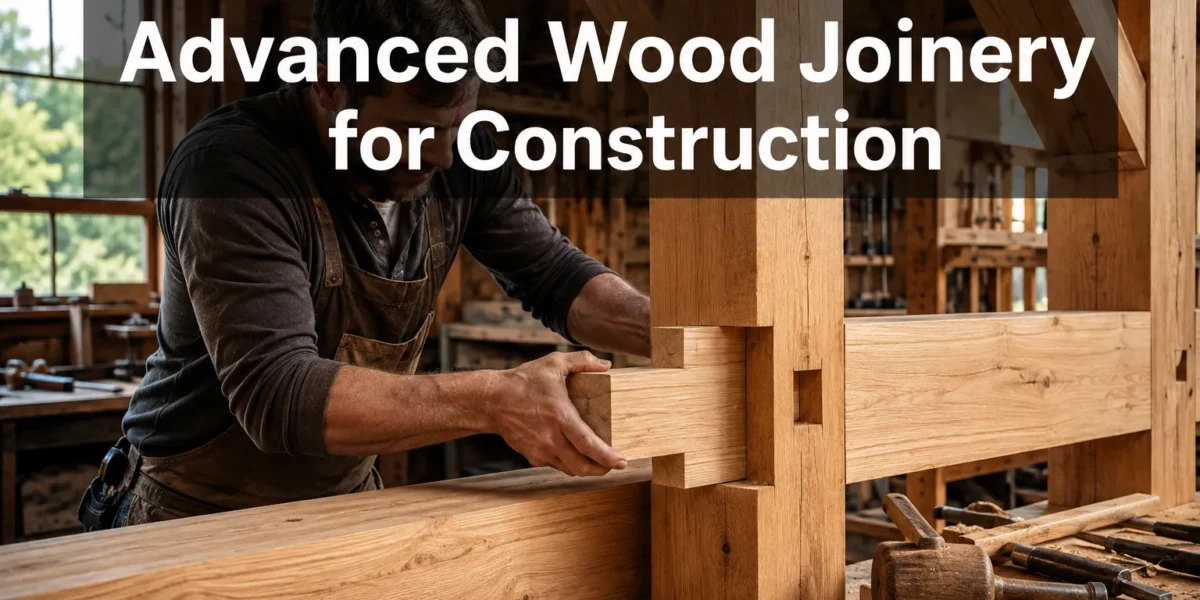
The structural integrity of a wooden building or a piece of furniture often hinges on the quality and design of its connections. While screws and metal fasteners are ubiquitous in modern construction, the mastery of advanced wood joinery offers superior aesthetics, enhanced durability, and remarkable structural resilience, particularly for applications like framing, creating robust beams, and building strong load-bearing furniture. In 2026, as sustainability and craftsmanship regain prominence, understanding these traditional yet sophisticated techniques becomes crucial for any serious woodworker or builder. This article delves into the principles and specific methods of advanced wood joinery, showcasing how these time-honored practices provide exceptional strength and longevity.
Key Takeaways
- Advanced wood joinery significantly enhances structural integrity and aesthetic appeal in construction.
- Understanding wood properties is fundamental to designing effective load-bearing joints.
- Traditional joints like mortise-and-tenon, dovetail, and scarf joints are critical for framing and beams.
- Specialized joints and hybrid techniques offer robust solutions for heavy furniture and complex structures.
- Proper execution, precise measurements, and material selection are paramount for joint strength.
The Foundation of Strength: Understanding Wood and Load Dynamics
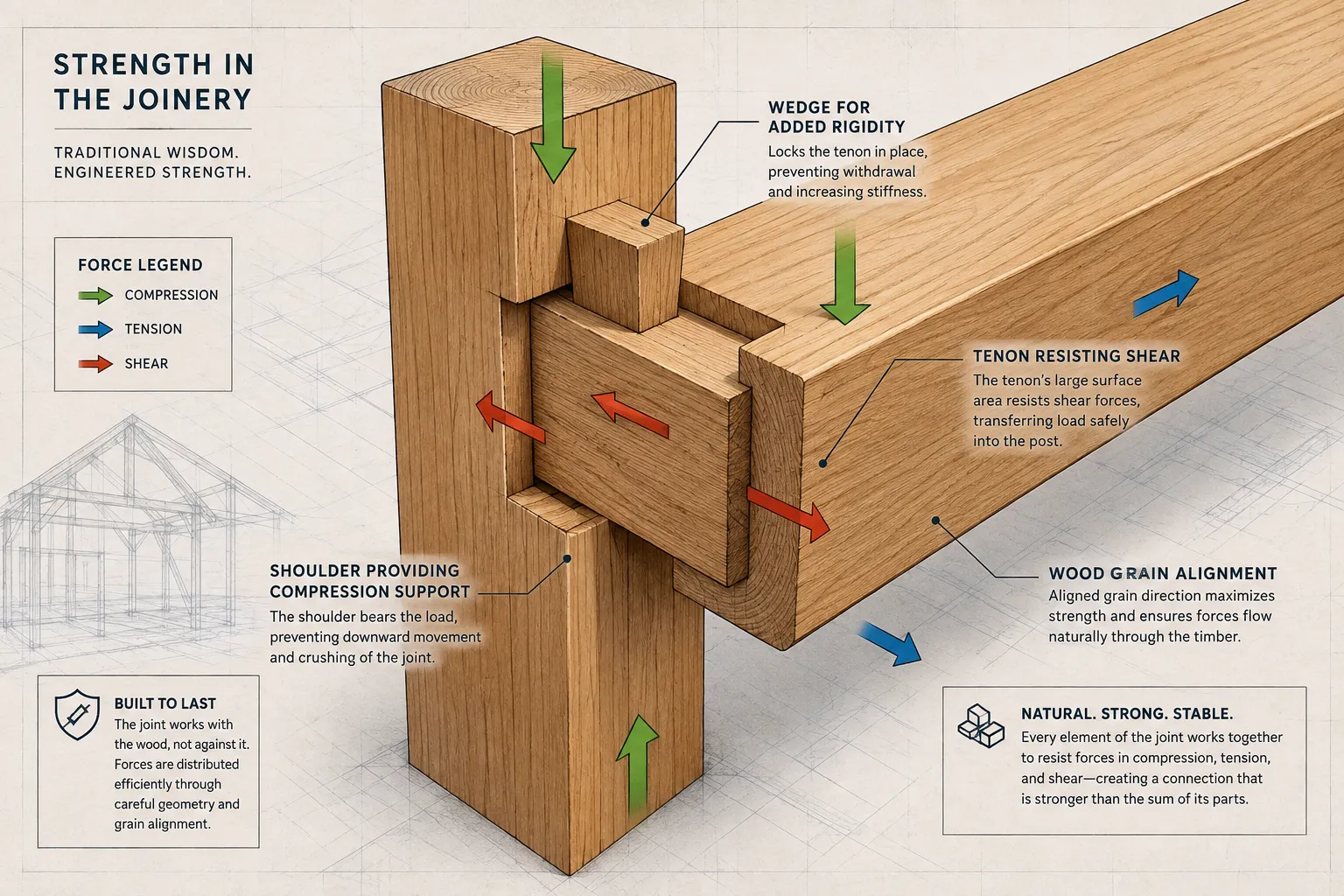
Before diving into specific joints, it is imperative to grasp the fundamental principles of wood as a structural material and how it interacts with various loads. Wood is anisotropic, meaning its strength properties vary depending on the direction of the grain. It is strongest along the grain (in tension and compression) and significantly weaker across the grain (in shear and splitting). This inherent characteristic dictates how joints must be designed to effectively transfer forces.
For framing, beams, and load-bearing furniture, joints must be engineered to resist compression, tension, shear, and bending forces without failing. A poorly designed joint can create weak points, leading to structural instability or collapse. Advanced wood joinery seeks to utilize the wood’s natural strengths by orienting grain appropriately, maximizing surface area contact, and incorporating mechanical locking mechanisms that rely on the wood itself, rather than solely on external fasteners.
Essential Wood Properties for Structural Joinery
- Grain Direction: Always consider how the grain runs through a joint. Ideally, stress should be parallel to the grain for maximum strength.
- Hardness & Density: Denser, harder woods (e.g., oak, maple, hickory) generally offer greater strength and better hold for mechanical connections compared to softer woods.
- Moisture Content: Wood expands and contracts with changes in moisture. Joints must account for this movement to prevent cracking or loosening. Properly dried wood is essential for structural applications.
- Species Selection: Different wood species have varying strengths, stiffness, and workability. For heavy structural applications, select species known for their durability and load-bearing capabilities. Learn more about wood selection for custom projects.
Advanced Wood Joinery for Construction: Structural Techniques for Framing and Beams
Timber framing, a construction method that predates modern stick framing, heavily relies on robust wood joinery. These techniques are designed to withstand significant static and dynamic loads over centuries. The beauty of these joints lies in their ability to lock timber elements together without the need for extensive metal hardware, making them inherently durable and often aesthetically exposed.
Mortise-and-Tenon Joints: The Cornerstone of Timber Framing
The mortise-and-tenon is arguably the most fundamental and versatile structural joint. It consists of a projection (tenon) from one piece of wood that fits precisely into a cavity (mortise) in another. For structural applications, various enhancements are made to maximize strength:
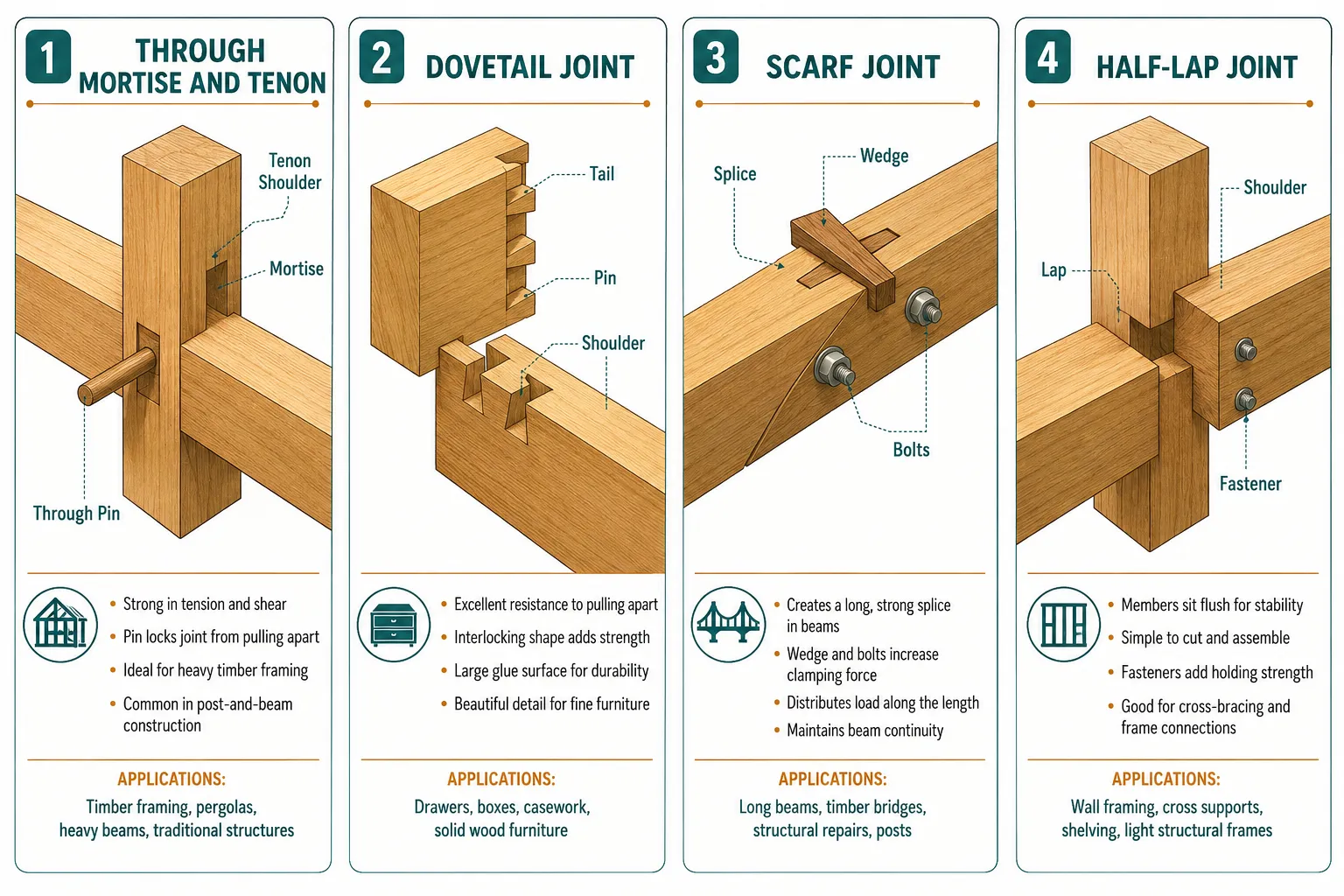
- Through Mortise and Tenon: The tenon passes entirely through the mortise, allowing for pinning or wedging from the outside. This provides a visible, strong connection often used in timber frames.
- Wedged Mortise and Tenon: Small wedges are driven into the end of a through tenon, expanding it within the mortise for an exceptionally tight and strong mechanical lock. This is particularly effective for resisting withdrawal forces.
- Drawboring: A technique where the peg hole in the tenon is intentionally offset slightly from the mortise, causing the joint to pull tighter as the peg is driven through, creating immense compression. This technique is often used in combination with through or blind mortise and tenon joints. Explore more advanced mortise and tenon variations.
Key Application: Main structural connections in timber frames, post-and-beam construction, and heavy gate construction.
Scarf Joints: Extending Beams and Timbers
When timbers are not long enough to span an entire distance, scarf joints are employed to connect two pieces end-to-end while maintaining structural integrity. These joints are designed to resist bending and tension loads effectively.
- Slipped Scarf Joint: A long, sloping cut with a stepped shoulder, often pinned or bolted, designed to resist both tension and compression.
- Bladed Scarf Joint: Features a long blade on one piece fitting into a corresponding recess on the other, increasing shear resistance.
- Table Scarf Joint: A more complex variation with interlocking shoulders and wedges, offering superior strength and rigidity for critical beam connections.
Scarf joints are meticulously crafted to distribute stress across a large surface area, often reinforced with wooden pegs (trunnels) or hidden bolts. They allow for the creation of very long, continuous structural members from shorter timbers, which is a hallmark of exposed beam installation in modern homes.
Dovetail Joints: Resisting Tension and Withdrawal
While often associated with drawer construction, large-scale dovetail joints are incredibly strong in structural applications where resistance to pulling apart (tension) and withdrawal is critical.
- Through Dovetail: The pins and tails pass completely through the adjoining piece, providing maximum surface area for glue and a strong mechanical lock. Used for joining timbers at corners or where strong tension resistance is needed.
- Half-Lap Dovetail: Combines the strength of a dovetail with the simplicity of a half-lap, used for corner connections where one face needs to remain flush.
Dovetails are less common in primary timber frame connections due to their complexity in large dimensions but are invaluable for specific stress points and in load-bearing furniture where aesthetics and strength converge.
Advanced Wood Joinery for Construction: Structural Techniques for Load-Bearing Furniture
Building furniture that can withstand significant weight and daily use requires a deep understanding of joinery that goes beyond simple butt joints or screws. Advanced joinery in furniture design ensures stability, longevity, and often contributes significantly to the piece’s aesthetic.
Bridle Joints: For Frames and Legs
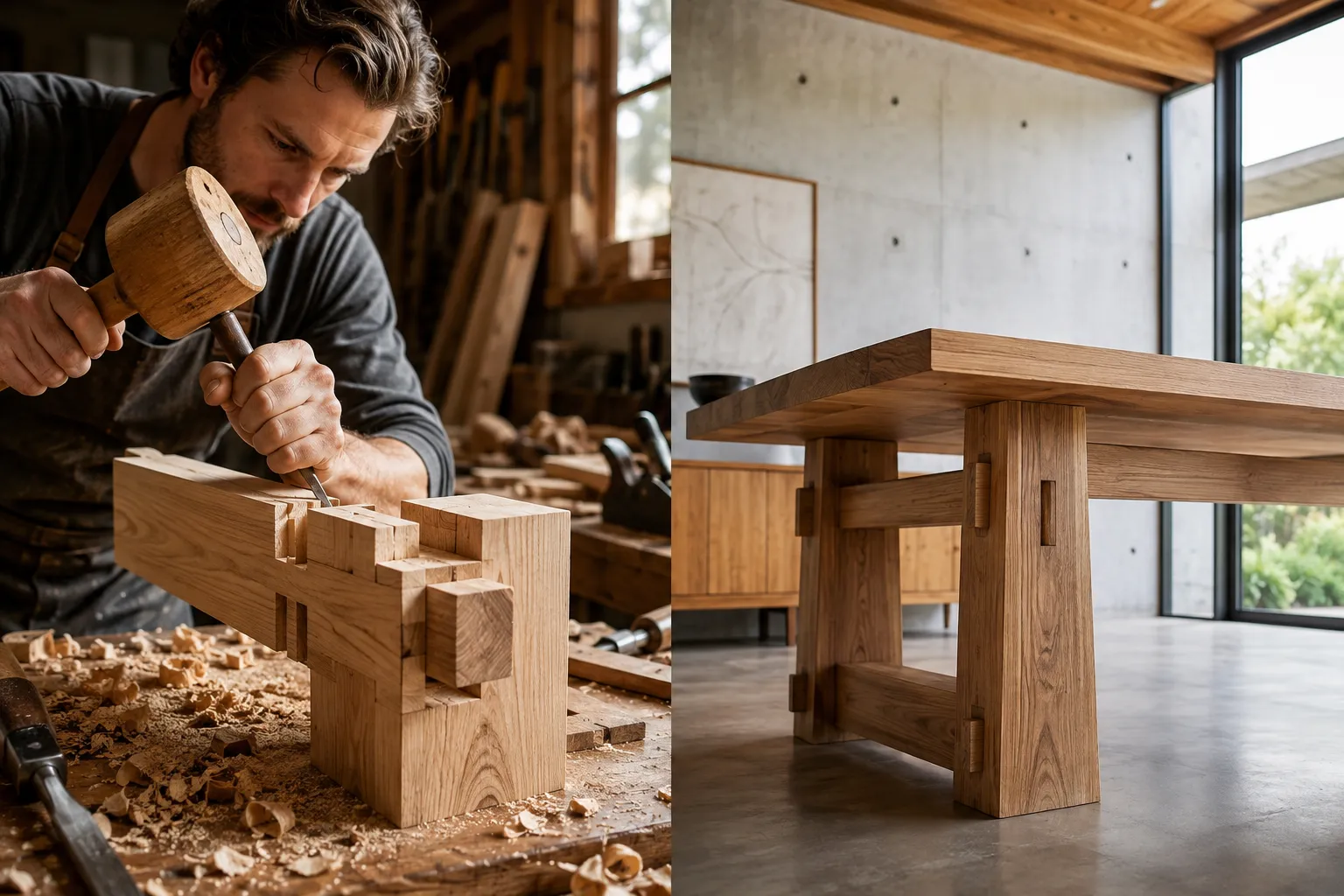
Bridle joints are essentially an open mortise-and-tenon. They offer excellent strength for connecting rails to legs or for constructing robust frames where the joint can be exposed.
- Through Bridle: The tenon extends through the full width of the mating piece, allowing for pinning. This joint is strong in both tension and compression.
- Mitered Bridle: The shoulders of the bridle are mitered, creating a clean, seamless appearance on the outside while maintaining strength.
Bridle joints are fantastic for table legs, chair frames, and any application requiring a strong, rigid corner connection, particularly in building bar stools with backs.
Lap Joints: Simple Yet Strong
Lap joints involve overlapping two pieces of wood, and while seemingly basic, when precisely executed, they offer considerable strength.
- Half-Lap Joint: Each piece has half its thickness removed, allowing them to overlap and create a flush surface. Strong against shear forces, often pinned or glued. Used in structural bracing or framework where thickness can be sacrificed.
- Dovetail Half-Lap: Combines the mechanical lock of a dovetail with the flushness of a half-lap, offering superior resistance to pulling apart.
Mitred Joints with Reinforcement
While a simple mitre is weak on its own, reinforcements can transform it into a surprisingly strong joint suitable for load-bearing furniture elements, particularly for aesthetic reasons where exposed end grain is undesirable.
- Splined Mitre: A thin piece of wood (a spline) is inserted into matching grooves cut across the mitre, significantly increasing glue surface area and shear strength.
- Keyed Mitre (or Mitred Key): Small, often contrasting, keys are cut into the external corner of the mitre, locking the joint together and providing a decorative element. This is excellent for heavy table skirts or robust box construction.
Hybrid Joinery Techniques
Modern woodworking often combines traditional joinery with contemporary fastening methods or materials to achieve optimal performance and efficiency. This “hybrid joinery” approach leverages the best of both worlds.
- Timber-Frame Joinery with Structural Screws: For large timbers, traditional joints can be augmented with specialized structural screws that provide additional shear or tension resistance, particularly during initial assembly.
- Concealed Fasteners with Traditional Joinery: In fine load-bearing furniture, hidden metal connectors or epoxy can reinforce traditional joints without compromising the aesthetic.
- Epoxy-Reinforced Joints: For extreme conditions or repair, specialized structural epoxies can be used to fill gaps and bond joint surfaces, significantly increasing overall strength, especially in hybrid joinery and bio-resin inlays.
Using advanced machinery like CNC routers can also aid in the precise execution of complex traditional joints, merging old-world craftsmanship with 21st-century technology. Entry-level CNC routing for woodworkers allows for incredibly accurate and repeatable joinery.
Precision and Execution: Keys to Structural Joinery Success
The theoretical strength of an advanced joint means little without meticulous execution. Precision is paramount.
Measurement and Marking
Accurate measurement and marking are the first critical steps. Even a millimeter off can compromise the fit and strength of a joint. Use sharp pencils, marking knives, and precise squares. Digital calipers and depth gauges are invaluable for tight tolerances.
Cutting Techniques
Whether using hand tools (chisels, hand saws) or power tools (routers, table saws, mortisers), the cuts must be clean, square, and accurate.
- Hand Tools: Develop skill with chisels for cleaning out mortises and fitting tenons. Hand saws are crucial for accurate shoulders.
- Power Tools: A mortiser creates precise mortises rapidly. A table saw with a dado stack can make tenons, and a router can refine shoulders and cut intricate profiles. Mastering Stihl chainsaw techniques can even assist in roughing out large timber joints.
Fit and Assembly
A well-made joint should fit snugly without excessive force, but also without gaps. Over-tightening can split the wood, while loose joints are weak. Glue selection is also critical for load-bearing joints. For structural applications, a strong, gap-filling adhesive like epoxy or a high-quality polyurethane glue may be preferred over standard PVA glues, especially for outdoor use. Consult our ultimate guide to wood glue for detailed recommendations.
Conclusion
Advanced wood joinery for construction, encompassing structural techniques for framing, beams, and load-bearing furniture, represents a pinnacle of woodworking craftsmanship. These techniques are not merely historical curiosities; they are highly relevant in 2026 for their inherent strength, durability, and aesthetic qualities. By understanding the properties of wood, mastering precise cutting and fitting, and thoughtfully selecting the appropriate joint for each application, woodworkers can create structures and furniture pieces that stand the test of time, carrying immense loads with grace and integrity. Embracing these advanced methods elevates a project from mere assembly to a testament of enduring skill and thoughtful design.
Next Steps for Woodworkers:
- Deepen Your Knowledge: Research the specific strengths and weaknesses of different wood species for structural use.
- Practice Precision: Invest time in practicing measurement, marking, and cutting techniques on scrap wood to achieve perfect fits.
- Study Timber Framing: Explore resources on traditional timber framing to understand the principles behind large-scale structural joinery.
- Experiment with Hybrid Joinery: Consider how modern fasteners or adhesives can complement traditional joints for added strength or ease of construction.