
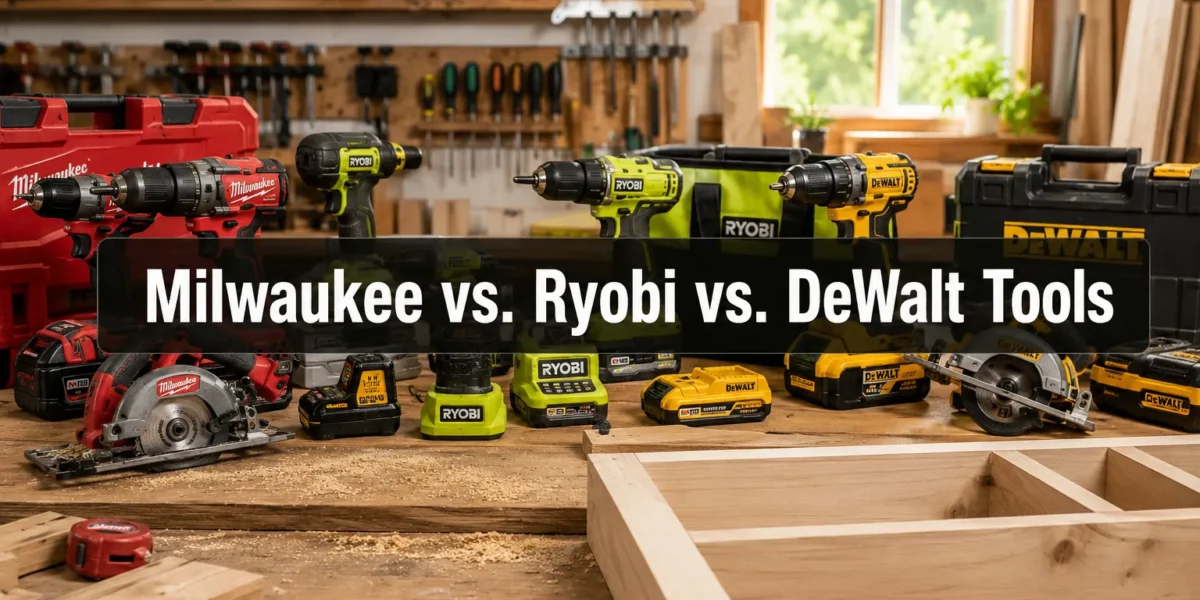
For woodworking hobbyists in 2026, the choice of a power tool system is not merely about selecting an individual tool; it’s about committing to an ecosystem of batteries, chargers, and compatible devices that will define your workshop’s capabilities for years. The perennial debate pitting Milwaukee Electric Tools vs. Ryobi and DeWalt: Comparing Power Tool Systems for Woodworking Hobbyists is more complex than a simple brand preference. It requires a deep dive into performance, cost-effectiveness, battery compatibility, and the sheer breadth of tools available for common woodworking tasks such as ripping lumber, creating precise joints, and drilling pilot holes. This article aims to cut through the marketing noise and provide a clear, professional comparison to help you make an informed decision for your woodworking passion.
Key Takeaways
- Milwaukee excels in professional-grade performance and durability, offering advanced features and robust construction suitable for demanding woodworking projects.
- Ryobi provides unparalleled value and versatility, boasting the broadest battery platform for household and light-duty workshop tasks, making it ideal for beginners or budget-conscious hobbyists.
- DeWalt strikes a balance between professional performance and accessibility, offering a comprehensive range of durable tools favored by contractors and serious hobbyists alike.
- Battery ecosystem is a critical factor, influencing long-term costs, convenience, and tool expansion capabilities across all three brands.
- Consider your primary woodworking tasks and budget when evaluating these systems, as each brand offers distinct advantages for different user needs.
Understanding the Landscape: Milwaukee Electric Tools vs. Ryobi and DeWalt: Comparing Power Tool Systems for Woodworking Hobbyists
When it comes to outfitting a woodworking shop in 2026, hobbyists are confronted with a vast array of choices, but three brands consistently rise to the top of discussions: Milwaukee Electric Tools, Ryobi, and DeWalt. Each brand has carved out a distinct niche, appealing to different segments of the market through their strategic approaches to tool development, battery technology, and overall system design. The core of this comparison lies in understanding these differences, especially when considering the specific demands of woodworking.
Milwaukee, often perceived as a premium, professional-grade brand, targets users who demand peak performance, advanced features, and exceptional durability. Their FUEL line, in particular, represents the pinnacle of their cordless technology, utilizing brushless motors and sophisticated electronics to deliver power and run-time that rival corded tools. For a woodworking hobbyist tackling intricate joinery or large-scale projects, the precision and power offered by Milwaukee can be a significant advantage. Tools like their M18 FUEL track saw or their advanced routers embody this commitment to high-end performance.
Ryobi, on the other hand, champions accessibility and a vast, interconnected battery platform. Their ONE+ system boasts over 280 tools, all powered by the same 18V battery. This extensive range covers everything from drills and saws to specialized woodworking tools, and even lifestyle products like fans and vacuums. For the hobbyist just starting out, or one who values having a single battery system for all their home and workshop needs, Ryobi’s breadth and competitive pricing are highly appealing. While they might not always match Milwaukee or DeWalt in raw power or advanced features for heavy-duty tasks, their value proposition for light to medium woodworking projects is undeniable.
DeWalt positions itself as a robust, jobsite-ready brand, often favored by contractors but equally popular among serious woodworking hobbyists. Their 20V MAX and FLEXVOLT systems offer a strong balance of power, durability, and a comprehensive tool lineup. DeWalt tools are known for their rugged construction and reliability, capable of withstanding the rigors of a busy workshop. Their focus on ergonomic design and consistent performance makes them a dependable choice for a wide range of woodworking applications, from rough framing to fine finishing. The yellow and black aesthetic is synonymous with reliability and a no-nonsense approach to getting the job done.
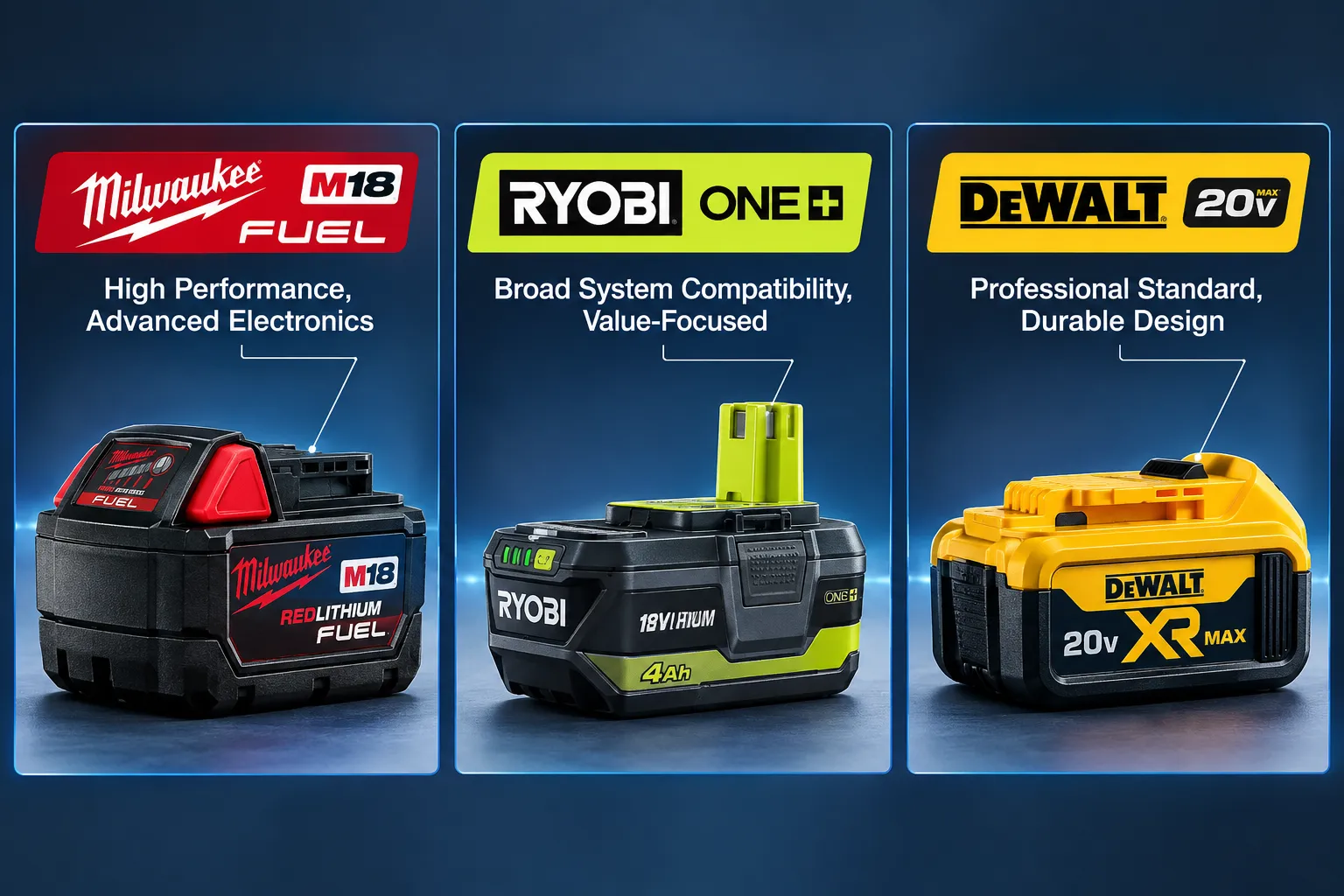
A key differentiator among these brands, and a crucial factor for woodworking hobbyists, is their respective battery ecosystems. Investing in a tool system means investing in its battery platform. Milwaukee’s M18 and M12 systems, DeWalt’s 20V MAX and FLEXVOLT, and Ryobi’s ONE+ all offer distinct advantages and limitations regarding battery capacity, charging speed, and the sheer number of compatible tools. Understanding how these ecosystems integrate with your typical woodworking tasks, be it repetitive drilling, continuous cutting, or stationary tool power, will inform your decision. For example, a hobbyist frequently using a cordless router might prioritize Milwaukee’s high-capacity batteries and efficient brushless motors, while someone focusing on smaller projects might find Ryobi’s widespread tool compatibility more beneficial.
Ultimately, the choice among Milwaukee Electric Tools vs. Ryobi and DeWalt: Comparing Power Tool Systems for Woodworking Hobbyists hinges on a detailed evaluation of your specific needs, budget, and long-term aspirations for your craft.
Performance and Power for Woodworking Tasks
When evaluating power tool systems for woodworking, performance and power are paramount. Different tasks, ripping sheet goods, jointing lumber, drilling precise holes, or intricate sanding, demand varying levels of capability from your tools. This section breaks down how Milwaukee Electric Tools, Ryobi, and DeWalt compare in delivering the necessary grunt and precision for common woodworking applications.
Ripping and Cross-Cutting Lumber
For tasks like ripping long boards or cross-cutting sheet goods, the power and precision of a circular saw or track saw are critical.
- Milwaukee Electric Tools: Milwaukee’s M18 FUEL circular saws and track saws are renowned for their raw power, speed, and cutting depth. Featuring advanced brushless motors and REDLINK PLUS intelligence, these tools often deliver corded-tool performance in a cordless package. For hobbyists regularly breaking down full sheets of plywood or rough lumber, Milwaukee offers superior power and consistency, leading to cleaner, faster cuts. Their track saw, in particular, provides cabinet-shop-level precision.
- Ryobi: Ryobi’s 18V ONE+ circular saws are perfectly capable for most light to medium-duty ripping and cross-cutting. They offer good value and are suitable for occasional use or smaller projects. While they might not match Milwaukee’s speed or cutting depth in demanding materials, they are more than adequate for typical hobbyist needs like cutting dimensional lumber or smaller plywood pieces.
- DeWalt: DeWalt’s 20V MAX circular saws are a strong contender, offering excellent power and durability. They are a staple on job sites for a reason, providing reliable performance for heavy use. For woodworking hobbyists, DeWalt’s saws strike a great balance between the sheer power of Milwaukee and the value of Ryobi, making them highly effective for a wide range of cutting tasks with good precision and robust construction.
Jointing and Shaping
While dedicated jointers and planers are often corded stationary tools, cordless routers and trim routers play a crucial role in edge profiling, dado cuts, and mortises.
- Milwaukee Electric Tools: Milwaukee offers powerful M18 FUEL routers that deliver excellent control and consistent power for detailed shaping and joinery. Their variable speed settings and robust bases contribute to precise work. For advanced hand tool joinery or crafting intricate furniture accents, the precision and power are invaluable.
- Ryobi: Ryobi’s 18V ONE+ routers and trim routers are well-suited for general routing tasks, edge treatments, and lighter shaping. They are easy to handle and offer good value for hobbyists not pushing the limits of heavy material removal.
- DeWalt: DeWalt’s 20V MAX routers are known for their power, smooth operation, and ergonomic design. They are a solid choice for a variety of routing applications, from flush trimming to cutting deep dadoes, offering a professional feel and consistent results.
Drilling and Fastening
Every woodworking project involves drilling holes, pilot holes, pocket holes, or holes for hardware. Impact drivers are also essential for fastening screws quickly and efficiently.
- Milwaukee Electric Tools: Milwaukee’s M18 FUEL drills and impact drivers are often considered best-in-class for their power, speed, and compact design. Their drills feature exceptional torque for drilling large holes and driving fasteners, while their impact drivers offer incredible fastening speed. This makes them ideal for demanding applications or repeated, high-volume work.
- Ryobi: Ryobi’s 18V ONE+ drills and impact drivers are excellent all-around performers for the hobbyist. They are lightweight, comfortable to use, and offer sufficient power for most drilling and fastening tasks encountered in a home workshop. They represent fantastic value and are a great entry point into cordless tools.
- DeWalt: DeWalt’s 20V MAX drills and impact drivers are robust, powerful, and reliable. They deliver consistent performance, making them a go-to choice for serious hobbyists and professionals. Their ergonomic design and durability make them comfortable for extended use, handling everything from delicate pilot holes to driving long structural screws.
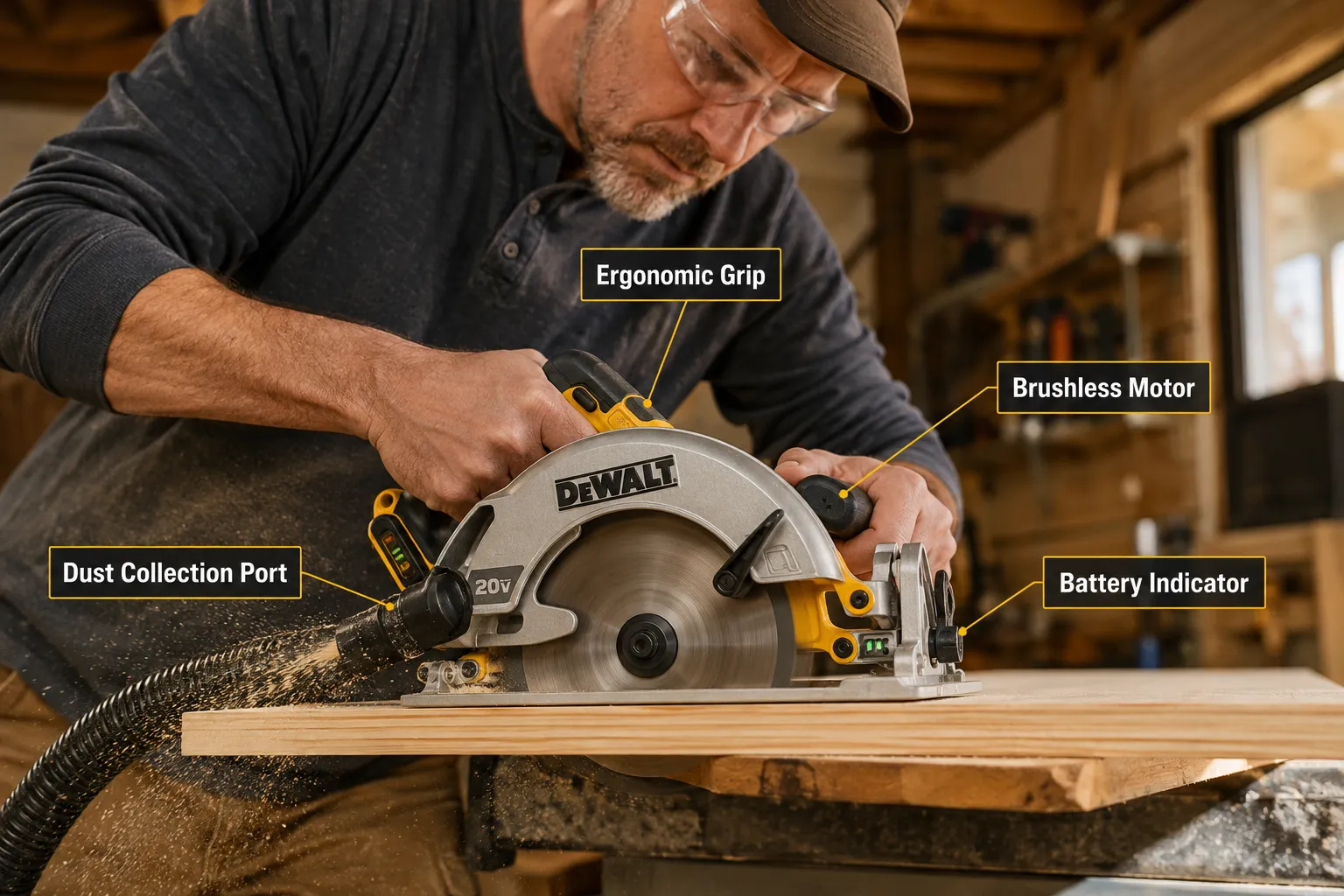
When comparing Milwaukee Electric Tools vs. Ryobi and DeWalt: Comparing Power Tool Systems for Woodworking Hobbyists, it’s clear that while Milwaukee often leads in sheer performance and advanced features, DeWalt provides a strong, reliable professional-grade alternative, and Ryobi delivers excellent value and versatility for the majority of hobbyist needs. Your specific projects and frequency of use will dictate which power profile best suits your workshop. For instance, if you are building custom wooden charging stations or crafting small woodworking gifts, any of these systems could work, but the ease of use and cost might steer you toward Ryobi, while precision and speed for high-volume work might favor Milwaukee or DeWalt.
Battery Systems, Cost, and Long-Term Value
The battery ecosystem is arguably the most critical factor when investing in a cordless power tool system. It dictates not only the initial cost but also future expansion capabilities, convenience, and the overall long-term value of your investment. This is particularly true when considering Milwaukee Electric Tools vs. Ryobi and DeWalt: Comparing Power Tool Systems for Woodworking Hobbyists.
Battery Ecosystems and Compatibility
Each brand has its proprietary battery platform, which forms the backbone of its cordless tool lineup.
- Milwaukee Electric Tools (M18 & M12): Milwaukee offers two primary battery lines: M18 for their 18V tools and M12 for their 12V compact tools. The M18 system is known for its high-performance batteries (e.g., HO, XC, HD models) that provide exceptional run-time and power delivery, especially when paired with their FUEL tools. The M12 system, while smaller, offers surprising power for its size, ideal for light-duty tasks and tight spaces. Milwaukee prioritizes performance and durability in their battery design, ensuring reliability under heavy load. The sheer number of Diy Smart Workshop Upgrades Integrating Ai Powered Tools And Automated Systems For Precision And Efficiency or advanced projects you can tackle with these systems is impressive.
- Ryobi (ONE+ 18V): The Ryobi ONE+ system is famous for its universal compatibility. Every 18V ONE+ battery works with every 18V ONE+ tool, past, present, and future. This commitment to backward and forward compatibility is a significant advantage, particularly for hobbyists who may upgrade tools over time. Ryobi offers a wide range of battery capacities, from compact P102s to high-capacity HP batteries, providing flexibility for different tasks. The expansive ONE+ system means a single battery can power your drill, sander, outdoor tools, and even specialty items like an inflator or fan.
- DeWalt (20V MAX & FLEXVOLT): DeWalt’s primary system is 20V MAX, offering robust power and durability. Their batteries are designed for demanding job site conditions, meaning they can withstand the rigors of a woodworking shop. DeWalt also features the innovative FLEXVOLT system, where batteries can automatically switch between 20V MAX and 60V (or 120V when using two), powering their higher-voltage tools and making them incredibly versatile for both cordless and more power-hungry corded-tool replacements. This dual-voltage capability provides unique flexibility for heavy-duty woodworking equipment that might otherwise require a cord.
Initial Investment and Long-Term Costs
The initial price tag of tools and batteries, along with potential future costs for expansion, varies significantly.
- Milwaukee Electric Tools: Generally, Milwaukee represents the highest initial investment. Their tools and high-capacity batteries are premium-priced, reflecting their professional-grade features, performance, and durability. However, the long-term value comes from their longevity, reduced need for replacements, and the efficiency they bring to demanding tasks.
- Ryobi: Ryobi typically offers the lowest entry cost. Their tools and batteries are aggressively priced, making them an excellent choice for hobbyists on a budget or those just starting their tool collection. The broad compatibility of the ONE+ system also means you can often buy “tool-only” versions, saving money if you already have batteries, which reduces overall long-term investment.
- DeWalt: DeWalt sits in the mid-to-high range. While often more expensive than Ryobi, they are generally more accessible than Milwaukee. Their pricing reflects a balance of professional-grade quality and widespread availability. The FLEXVOLT system, while innovative, can add to the cost, but it also opens up possibilities for more powerful cordless options for tasks like building a modular home office desk system or creating ergonomic workshop layouts.
Upgrade Path and System Longevity
Considering how easy and affordable it will be to expand your tool collection in the future is essential.
- Milwaukee Electric Tools: The upgrade path with Milwaukee is focused on continuous innovation and specialized tools. As a hobbyist’s skills grow, they can seamlessly upgrade to more powerful or specialized M18 FUEL tools, knowing their existing batteries will perform optimally. The brand’s commitment to durability means tools often have a long service life.
- Ryobi: Ryobi’s strength in system longevity lies in its unwavering commitment to the ONE+ platform. Hobbyists can confidently invest in the system, knowing that new tools will always be compatible with older batteries, and vice-versa. This ensures a smooth and cost-effective upgrade path for adding a wide variety of tools, from a new sander to a garden blower. This makes building modular wood storage systems for small workshops or other diverse projects incredibly flexible.
- DeWalt: DeWalt offers a robust upgrade path, allowing hobbyists to start with essential 20V MAX tools and gradually expand into more powerful FLEXVOLT-compatible options for heavier tasks. Their systems are designed for professional use, suggesting high reliability and a long life cycle, providing excellent value over many years of woodworking.
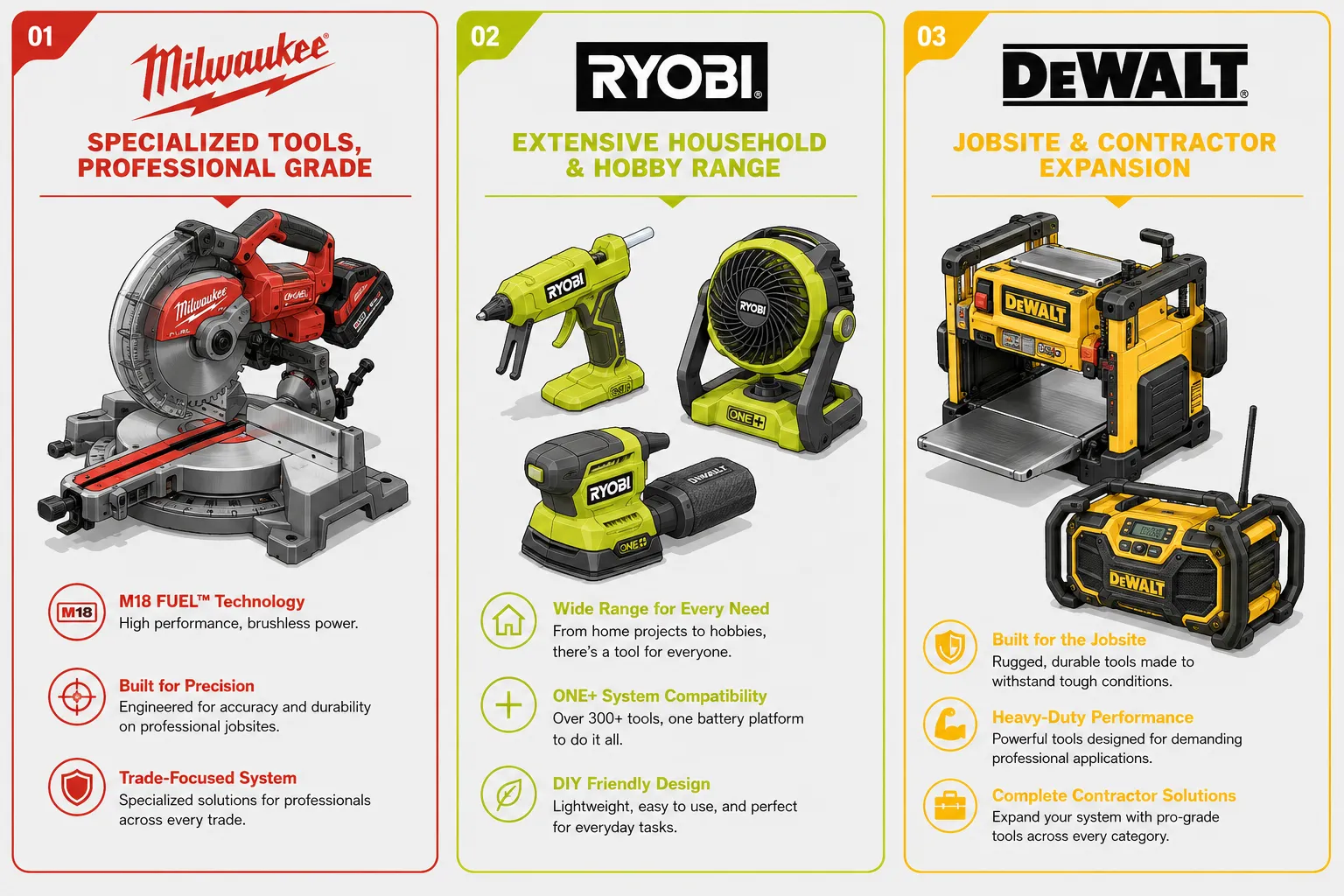
In summary, for Milwaukee Electric Tools vs. Ryobi and DeWalt: Comparing Power Tool Systems for Woodworking Hobbyists, the battery system and cost considerations are intertwined. Milwaukee offers top-tier performance at a premium, ideal for those demanding the best and willing to pay for it. Ryobi provides an incredibly versatile and affordable entry point with unparalleled cross-compatibility. DeWalt strikes a professional balance, offering power, durability, and a smart upgrade path with its FLEXVOLT technology. Your budget, project complexity, and future ambitions should guide your choice.
Conclusion
Choosing the right power tool system as a woodworking hobbyist in 2026 is a significant decision, impacting your capabilities, efficiency, and long-term satisfaction. The debate of Milwaukee Electric Tools vs. Ryobi and DeWalt: Comparing Power Tool Systems for Woodworking Hobbyists reveals that there’s no single “best” option; rather, the optimal choice is deeply personal and depends on your specific needs, budget, and project aspirations.
- For the hobbyist who demands professional-grade performance, cutting-edge technology, and exceptional durability, and is willing to invest a premium, Milwaukee Electric Tools stand out. Their M18 FUEL lineup provides unparalleled power and precision for demanding woodworking tasks, ensuring your tools can keep pace with even the most ambitious projects.
- If value, versatility, and broad compatibility across a vast range of tools are your priorities, Ryobi’s ONE+ system is an outstanding choice. Its affordability, coupled with a massive ecosystem of over 280 compatible tools, makes it ideal for beginners, general home use, and a wide array of light to medium-duty woodworking projects.
- For those seeking a robust, reliable system that balances professional performance with accessibility and a strong upgrade path, DeWalt offers a compelling solution. Their 20V MAX and FLEXVOLT platforms provide durable tools capable of handling serious woodworking, favored by both contractors and dedicated hobbyists for their consistent power and ergonomic design.
Before making your final decision, consider visiting local hardware stores or woodworking expos to physically handle tools from each brand. Pay attention to ergonomics, weight, and build quality. Read reviews from other woodworking hobbyists who share similar project interests. Most importantly, identify your core woodworking tasks for 2026 and beyond, and choose the system that most effectively and efficiently helps you bring your wooden creations to life.
SEO Meta Title: Milwaukee vs. Ryobi vs. DeWalt: Woodworking Tools Compared (2026) SEO Meta Description: Comparing Milwaukee, Ryobi, and DeWalt power tool systems for woodworking hobbyists in 2026. Discover performance, battery ecosystems, and value.