
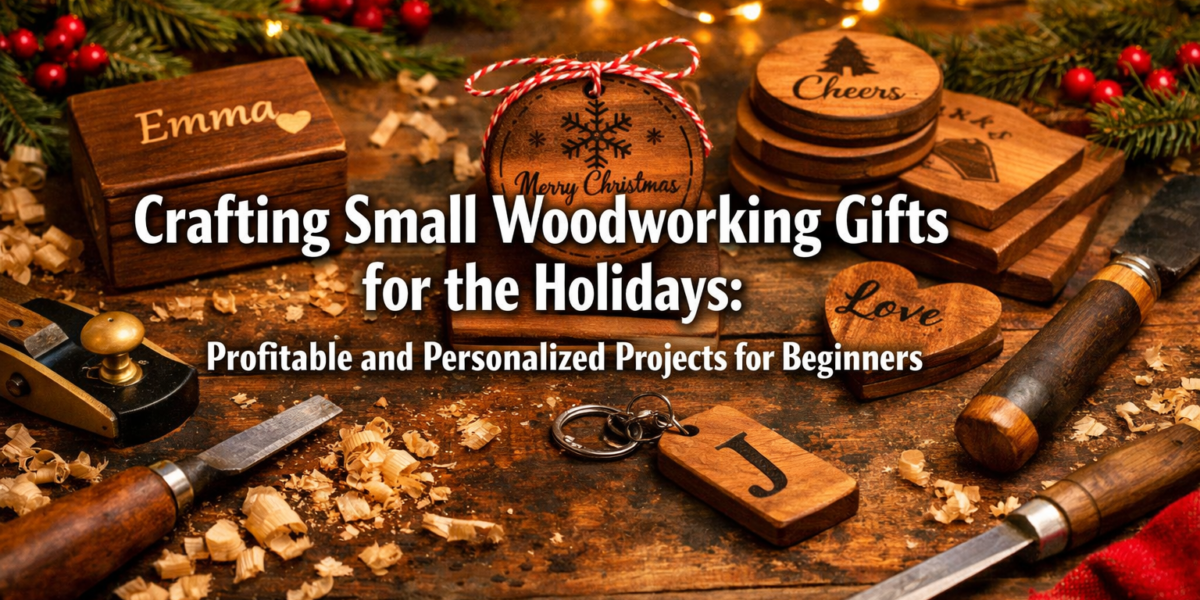
In the bustling lead-up to the holiday season of 2026, many consumers are turning away from mass-produced items, actively seeking out unique, heartfelt, and handcrafted gifts. This shift presents a golden opportunity for aspiring woodworkers. Crafting Small Woodworking Gifts for the Holidays: Profitable and Personalized Projects for Beginners is not just a hobby; it’s a pathway to both personal satisfaction and potential income. Small-scale woodworking projects are ideal for novices because they typically require minimal tools, less expensive materials, and offer quicker build times, allowing for rapid skill development and a steady stream of finished products.
This article will guide you through the essentials of getting started, highlight popular and profitable gift ideas, and discuss key techniques to personalize your creations, ensuring they stand out in a crowded market. Whether you aim to create cherished gifts for loved ones or establish a lucrative side hustle, the world of small woodworking gifts for the holidays is waiting for you.
Key Takeaways
- Small woodworking projects are perfect for beginners due to low material costs and quick build times.
- Personalization is crucial for increasing the perceived value and marketability of handmade gifts.
- Essential tools for beginners include hand tools and basic power tools, ensuring a low initial investment.
- Popular and profitable gift ideas range from coasters and cutting boards to decorative boxes and ornaments.
- Effective finishing and presentation are vital for transforming simple projects into desirable gifts.
The Allure of Small Woodworking Gifts: Why Start Now?
The holiday season of 2026 is fast approaching, and the demand for unique, thoughtful presents is higher than ever. For beginners, the prospect of entering the woodworking world can seem daunting, often conjuring images of large machinery and complex joinery. However, Crafting Small Woodworking Gifts for the Holidays: Profitable and Personalized Projects for Beginners shatters this misconception. Small projects offer numerous advantages:
- Low Material Cost: You can often use scrap wood or smaller, more affordable cuts, significantly reducing your initial investment. Consider exploring 3 Profitable Scrap Wood Projects That Sell in 2026 for inspiration.
- Quick Build Times: Many small gifts can be completed in an afternoon or a weekend, providing immediate gratification and allowing you to produce multiple items efficiently. This rapid turnaround is essential when preparing for holiday sales.
- Skill Development: Each small project is a learning opportunity. You can practice fundamental techniques like cutting, sanding, and finishing without committing to a large, complex piece.
- High Profit Potential: With low production costs and the ability to add significant value through personalization, small woodworking gifts can be surprisingly profitable. Consumers are willing to pay a premium for unique, handmade items.
- Personal Touch: Handmade gifts carry an inherent warmth and sincerity that store-bought items simply cannot replicate. This makes them ideal for both personal gifting and market appeal.
Starting with small projects allows beginners to gain confidence, hone their skills, and even establish a profitable venture before tackling larger, more intricate furniture pieces. The journey begins with understanding the right tools and materials to get started without breaking the bank.
 image focusing on a beginner’s woodworking station, showcasing an array of essential hand tools (tape measure,](https://zsxkvszxbhpwnvzxdydv.supabase.co/storage/v1/object/public/generated-images/kie/e703c2d2-f8d3-4220-954f-d67e00872555/slot-1-1777608844374.png))
Essential Tools for the Beginner Woodworker
One of the biggest hurdles for new woodworkers is the perceived need for an expensive, fully equipped workshop. For Crafting Small Woodworking Gifts for the Holidays: Profitable and Personalized Projects for Beginners, this simply isn’t true. A basic set of hand tools, augmented by a few entry-level power tools, is often sufficient.
Hand Tools (Foundation)
- Measuring and Marking: A good tape measure, a ruler, a marking knife or pencil, and a combination square are indispensable for accuracy.
- Cutting: A handsaw (a Japanese pull saw is great for beginners due to its ease of use), coping saw, or even a basic utility knife can handle many small cuts.
- Shaping and Smoothing: Chisels, a block plane, files, rasps, and various grits of sandpaper are crucial for refining your work.
- Clamping: A few C-clamps or bar clamps are invaluable for holding pieces while gluing or cutting.
Power Tools (Optional, but Boosts Efficiency)
- Jigsaw: Excellent for cutting curves and irregular shapes in thinner stock.
- Orbital Sander: Significantly speeds up the sanding process, resulting in smoother finishes.
- Drill/Driver: Essential for drilling holes and driving screws.
- Router (with a table): While more advanced, a small trim router can be incredibly useful for adding decorative edges or creating joinery. For those looking to dive deeper, consider exploring Choosing and Using Router Tables: Maximizing Precision and Safety for Edge Profiling and Joinery.
Table 1: Beginner Tool Essentials and Their Uses
| Tool Type | Example Tool | Primary Use | Budget Impact |
|---|---|---|---|
| Measuring | Tape Measure | Accurate dimensions | Low |
| Marking | Pencil, Combination Square | Layouts and precise angles | Low |
| Cutting (Hand) | Japanese Pull Saw | Straight cuts, small pieces | Medium |
| Shaping | Chisels, Block Plane | Refining edges, removing material | Medium |
| Smoothing | Sandpaper, Orbital Sander | Surface preparation, achieving smooth finish | Low-Medium |
| Joining | Wood Glue, Clamps | Assembling pieces | Low |
| Power (Basic) | Cordless Drill/Driver | Drilling holes, fastening | Medium |
Sourcing Materials Responsibly
For small projects, you don’t need large, expensive lumber. Look for:
- Scrap Wood: Local lumberyards or cabinet shops often have bins of offcuts they sell cheaply or even give away. These are perfect for coasters, keychains, and small boxes.
- Hardwood Retailers: Purchase small project boards in common species like maple, cherry, walnut, or oak. These woods are durable and finish beautifully.
- Reclaimed Wood: Old pallets, barn wood, or salvaged furniture can be repurposed into unique gifts, adding a story to your creations. Ensure it’s clean and safe to work with. For more on ethical sourcing, check out Sustainable Wood Sourcing for the Modern Woodworker: Beyond Reclaimed to Urban Logging, Certified Forests.
Profitable and Personalized Projects for the Holidays
The true magic of Crafting Small Woodworking Gifts for the Holidays: Profitable and Personalized Projects for Beginners lies in combining simple construction with thoughtful customization. This section will explore popular gift ideas that are both beginner-friendly and have strong market appeal.
Popular Project Ideas for Beginners
1. Wooden Coasters
Coasters are perhaps the quintessential beginner woodworking project. They require minimal wood, can be made quickly, and offer endless possibilities for personalization.
- Difficulty: Very Easy
- Tools: Saw, sander, router (optional for edges).
- Personalization: Engrave initials, names, dates, or simple designs using a wood burner, stencil, or even a small CNC machine. Beginner’s Guide to CNC Routers for Small Woodshops: From Setup to First Project might be helpful for more advanced personalization.
- Finishing: Food-safe oil or a waterproof finish.
2. Small Cutting Boards/Cheese Boards
These are slightly larger than coasters but still very manageable. They make excellent gifts, especially when made from contrasting wood species.
- Difficulty: Easy to Medium
- Tools: Saw, planer (optional, but helpful), sander, router (for juice groove or decorative edge).
- Personalization: Carve handles, engrave family names, special dates, or a favorite recipe.
- Finishing: Food-safe mineral oil or butcher block conditioner.
3. Decorative Boxes (e.g., Jewelry Boxes, Keepsake Boxes)
Small boxes are a step up in complexity, often involving simple joinery like butt joints or finger joints, but are incredibly rewarding.
- Difficulty: Medium
- Tools: Saw, router (for dados or rabbets), clamps, sander.
- Personalization: Inlays, carved lids, unique hardware, flocking inside, or felt lining. Consider exploring Mastering Dovetail Joinery for Drawers: Hand and Router Methods for Cabinet Builders for more advanced joinery.
- Finishing: Varnish, shellac, or wax for a luxurious feel.
4. Keychains and Ornaments
These are the ultimate scrap wood projects. They’re small, quick, and ideal for practicing intricate cuts or carving.
- Difficulty: Easy
- Tools: Scroll saw, coping saw, sanding block, drill.
- Personalization: Carve shapes, engrave dates, paint, or add small metal accents.
- Finishing: Clear coat, paint, or simple oil finish.
5. Wooden Napkin Holders and Spice Racks
Functional gifts are always appreciated. These projects are practical and can be designed with clean lines or rustic charm.
- Difficulty: Easy to Medium
- Tools: Saw, drill, sander, clamps.
- Personalization: Unique designs, specific sizing, or added compartments.
- Finishing: A durable, wipeable finish. For inspiration, check out Mastering Wooden Napkin Holders: Foldable Designs with Brass Accents for Dining Tables and Building Wooden Spice Racks: Wall-Mounted and Rotating Designs for Efficient Kitchens.
 image showcasing three distinct small wooden gifts: a personalized cutting board with a laser-engraved monogram,](https://zsxkvszxbhpwnvzxdydv.supabase.co/storage/v1/object/public/generated-images/kie/e703c2d2-f8d3-4220-954f-d67e00872555/slot-2-1777608834457.png))
Adding Value Through Personalization
Personalization is what transforms a nice wooden item into a truly special gift. It’s also a key factor in making Crafting Small Woodworking Gifts for the Holidays: Profitable and Personalized Projects for Beginners a successful venture.
- Engraving/Wood Burning: Add names, dates, quotes, or simple artwork directly onto the wood. Wood burners are inexpensive and easy to learn.
- Inlays: For a more advanced touch, inlay contrasting wood species, shell, or even metal into your pieces.
- Carving: Simple chip carving or relief carving can add unique textures and designs.
- Custom Shapes: Don’t limit yourself to squares and rectangles. Use a jigsaw or scroll saw to create unique silhouettes for ornaments or keychains.
- Color Accents: While wood’s natural beauty is often enough, subtle painting or staining can highlight certain features or match a recipient’s decor.
- Hardware: Selecting unique hinges, latches, or handles for boxes can significantly elevate their appearance.
Finishing Touches and Presentation for Profitability
The difference between a well-made project and a highly desirable gift often comes down to the finishing and presentation. For Crafting Small Woodworking Gifts for the Holidays: Profitable and Personalized Projects for Beginners, these final steps are critical for market appeal and achieving a premium price point.
The Art of Finishing
A smooth, durable, and attractive finish protects the wood and enhances its natural beauty.
- Sanding: This is arguably the most important step. Start with a coarse grit (around 80-100) to remove tool marks, then progressively move through finer grits (120, 150, 180, 220, and even 320 for ultra-smooth surfaces). Always sand with the grain.
- Dust Removal: Before applying any finish, ensure the surface is perfectly clean. Use a tack cloth or compressed air.
- Choosing Your Finish:
- Oils (Mineral Oil, Danish Oil, Tung Oil): These penetrate the wood, enhancing its natural color and grain. They are easy to apply and repair, making them great for beginners and food-safe items. Danish Oil vs. Linseed: The Ultimate Wood Finishing Guide provides an in-depth comparison.
- Waxes (Paste Wax, Butcher Block Wax): Provide a low-sheen, protective layer, often used over oil finishes for added durability and feel.
- Polyurethane/Varnish: Offer a highly durable, water-resistant film finish. Can be brushed or sprayed, providing a more robust surface suitable for items that will see heavy use. For application tips, see Spray vs. Brush Polyurethane: Pros, Cons, and Guidance.
- Shellac: A natural, fast-drying finish that provides a beautiful amber tone and is food-safe when de-waxed.
- Application: Always follow the manufacturer’s instructions. Apply thin coats, allow proper drying time between coats, and lightly sand with a very fine grit (400+) between coats for optimal smoothness.
Packaging and Presentation
Even the most beautiful wooden gift can lose its appeal if poorly presented. Thoughtful packaging elevates the entire experience.
- Simple & Elegant: Kraft paper boxes, linen bags, or even a simple ribbon can add a touch of class.
- Branding: Include a small, tastefully designed tag with your brand name or a handwritten note.
- Care Instructions: For items like cutting boards, include a small card with care instructions to help the recipient maintain the gift’s beauty and longevity.
- Photography: If selling online, invest time in good product photography. Well-lit, high-quality images showcasing the details and personalization will attract buyers.
 image depicting the finishing and packaging stage for small woodworking gifts. Hands are carefully applying a](https://zsxkvszxbhpwnvzxdydv.supabase.co/storage/v1/object/public/generated-images/kie/e703c2d2-f8d3-4220-954f-d67e00872555/slot-3-1777608848400.png))
Pricing Your Creations
Determining a fair price for your handcrafted items is crucial for profitability. Consider these factors:
- Material Cost: Sum up all raw materials used per item.
- Time Investment: How many hours did it take you to make one item? Value your time at a reasonable hourly rate.
- Overhead: Account for consumables like sandpaper, glue, electricity, and tool depreciation.
- Perceived Value: What are similar items selling for? How unique and personalized is your product?
- Profit Margin: Ensure your price allows for a healthy profit. A common formula is (Materials + Labor + Overhead) x 2 or 2.5.
By focusing on these elements, you can ensure your hard work in Crafting Small Woodworking Gifts for the Holidays: Profitable and Personalized Projects for Beginners translates into both cherished gifts and a successful small business.
Conclusion
The holiday season of 2026 offers a unique opportunity for both aspiring woodworkers and seasoned craftspeople to create and share beautiful, personalized wooden gifts. Crafting Small Woodworking Gifts for the Holidays: Profitable and Personalized Projects for Beginners is an accessible and rewarding endeavor that requires minimal initial investment but offers significant returns—both in personal satisfaction and potential income. By focusing on essential tools, choosing beginner-friendly projects, mastering personalization techniques, and paying attention to professional finishing and presentation, anyone can create gifts that are truly special and highly sought after.
The journey into woodworking, especially with small-scale projects, is a continuous learning process. Each cut, each sanding stroke, and each personalized detail contributes to skill development and confidence. Embrace the creative process, experiment with different woods and finishes, and most importantly, enjoy the satisfaction of bringing a piece of wood to life.
Actionable Next Steps:
- Gather Basic Tools: Start with a few essential hand tools and perhaps one versatile power tool like a drill or orbital sander.
- Source Scrap Wood: Visit local lumberyards or construction sites for affordable offcuts to practice on.
- Choose Your First Project: Begin with simple items like coasters or keychains to build confidence.
- Practice Finishing: Experiment with different stains and finishes on scrap pieces to understand their effects.
- Personalize Early: Incorporate simple personalization methods like wood burning from your very first project.
- Plan for Holidays 2026: Start prototyping designs and calculating material needs now to be ready for the holiday rush.