
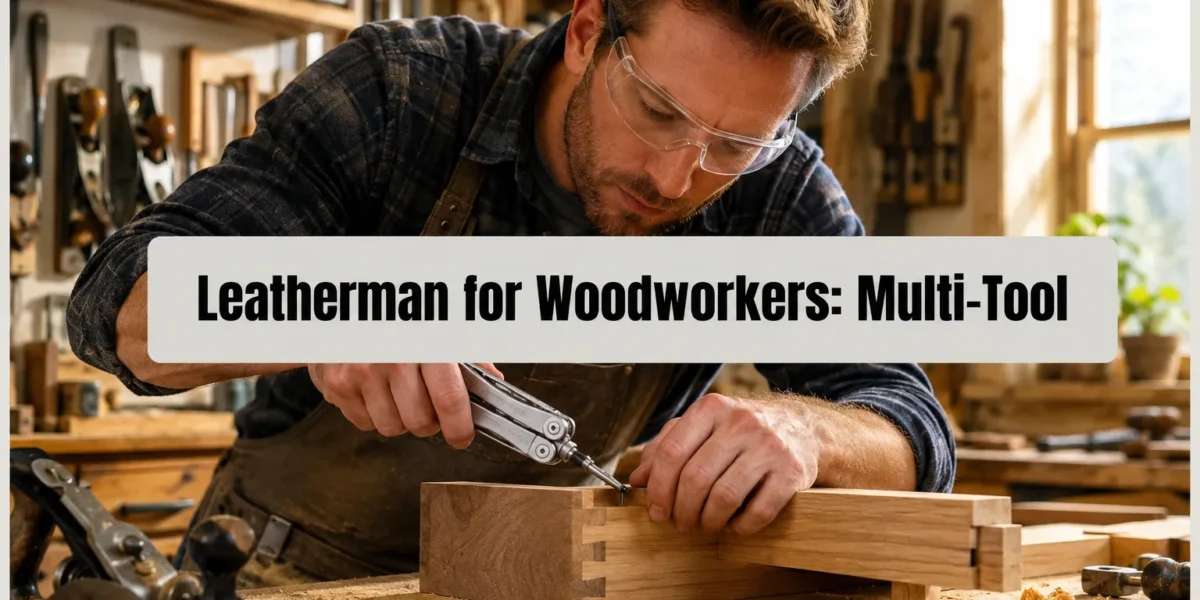
The subtle advantage of having a specific tool for every conceivable task often clashes with the practical realities of a bustling workshop or an unexpected on-site repair. In woodworking, where precision meets ingenuity, the sheer volume of specialized tools can be overwhelming. Yet, a singular, expertly designed instrument can frequently bridge the gap between needing a dedicated tool and having immediate functionality. This is precisely where a high-quality multi-tool, particularly a Leatherman, proves invaluable, offering a versatile solution for a wide range of woodworking scenarios. This article will delve into the multifaceted utility of a Leatherman for Woodworkers: Multi-Tool Uses in the Workshop, On-Site Installs, and Furniture Repairs, demonstrating how this compact companion enhances efficiency and problem-solving for both hobbyists and seasoned professionals in 2026.
Key Takeaways
- A Leatherman multi-tool provides essential functionality for quick adjustments, minor repairs, and hardware tasks in woodworking.
- Its compact nature makes it ideal for on-site installations, where carrying a full toolbox is impractical.
- Specific Leatherman models offer diverse tool sets tailored to different woodworking needs, from light repairs to more robust tasks.
- The integrated pliers, screwdrivers, and knives are particularly useful for hardware installation, material trimming, and tightening loose components.
- Investing in a Leatherman enhances preparedness and efficiency in various woodworking environments.
The Indispensable Leatherman in the Woodworking Workshop
In the controlled environment of a woodworking workshop, efficiency and precision are paramount. While dedicated power tools and hand tool mastery for detail work form the core of any woodworker’s arsenal, a Leatherman multi-tool serves as an incredibly useful adjunct for numerous day-to-day tasks that don’t warrant reaching for a specialized single-function tool. From tightening a loose screw on a jig to quickly scoring a line on a piece of trim, its immediate accessibility and integrated functionality save precious time and effort.
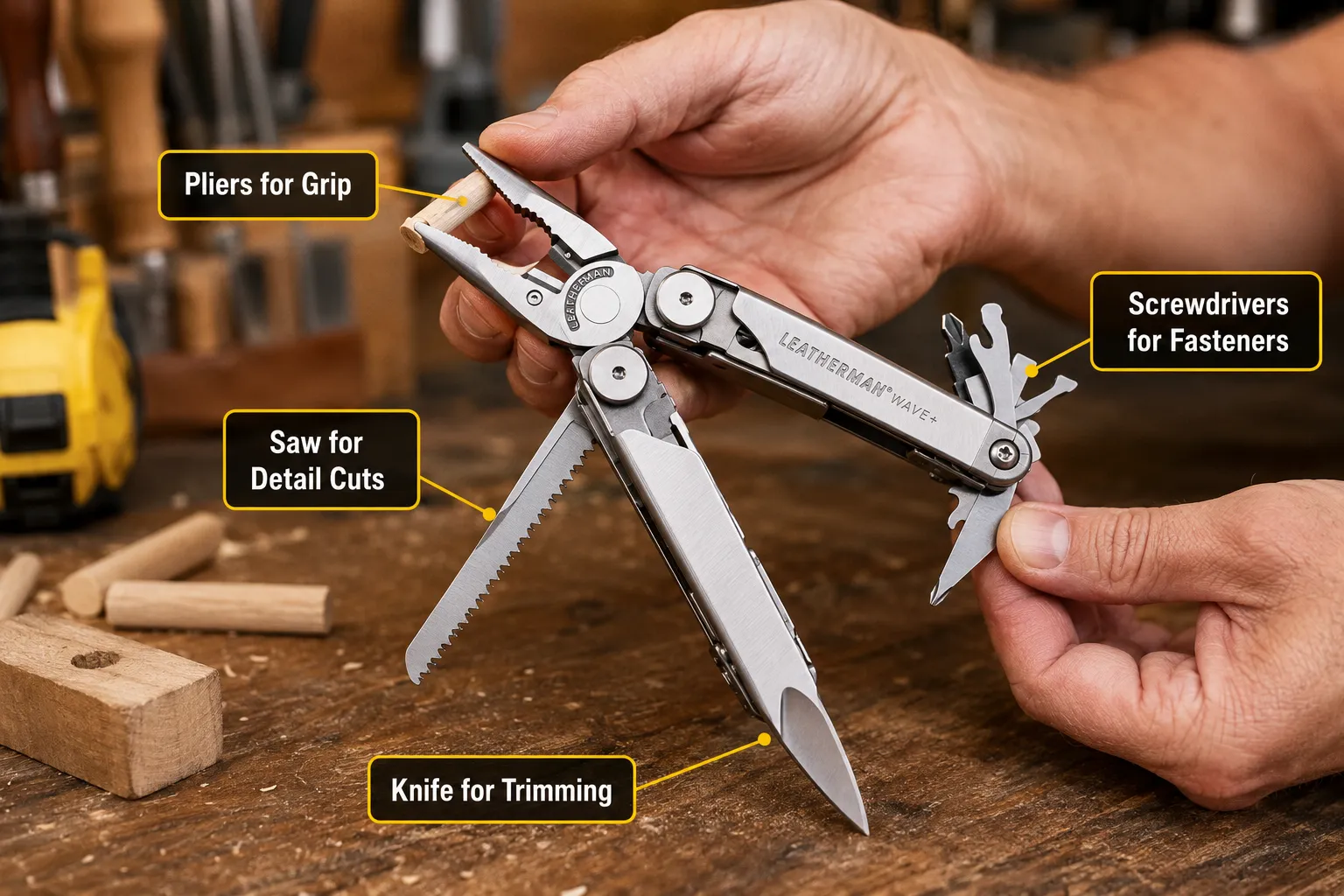
One of the primary benefits of having a Leatherman handy in the workshop is its ability to perform quick adjustments. Jigs, fences, and various workshop fixtures often require minor tweaks to ensure accuracy. A Leatherman, typically equipped with multiple screwdriver bits (flathead, Phillips, often Torx), allows for rapid tightening or loosening of fasteners without interrupting the workflow to locate a screwdriver set. Similarly, its pliers can be invaluable for gripping small components, bending wire for dust collection hoses, or extracting stubborn brads.
Consider the common scenario of installing hardware on a newly finished piece of furniture. Drawer pulls, hinges, and cabinet latches frequently come with various screw types. A single Leatherman can often handle the entire process, from opening the hardware packaging with its knife blade to carefully tightening the screws with its integrated drivers. This eliminates the need to carry a separate knife, pliers, and multiple screwdrivers, simplifying the process and reducing clutter on the workbench. For those interested in building a custom tool chest or cabinet, the Leatherman can be a crucial tool during the assembly and fitting stages.
The saw blade found on many Leatherman models, while not a replacement for a dedicated hand saw or circular saw, can be surprisingly effective for small, precise cuts. Imagine needing to trim a dowel flush, remove a splinter from a piece of stock, or even cut a small piece of veneer. The compact saw blade offers sufficient capability for these light-duty tasks, providing a controlled cut where a larger saw might be cumbersome or overkill. Furthermore, the file found on some models is excellent for deburring edges or refining small wooden surfaces, especially in areas difficult to reach with standard sandpaper or files.
Specific Workshop Applications:
- Jig and Fixture Adjustments: Tightening or loosening wingnuts and screws on router jigs, saw fences, or clamps.
- Hardware Installation: Screwing in hinges, drawer slides, cabinet pulls, or other furniture hardware.
- Material Trimming: Quick cuts on wood veneer, plastic edging, or small dowels.
- Wire Management: Bending and stripping wires for shop lighting or small electrical repairs.
- Cleanup and Maintenance: Scraping dried glue, prying open paint cans, or general utility tasks.
The integration of these various tools into one compact unit means less time spent searching for the right implement and more time dedicated to the craft itself. In a well-organized workshop, where every tool has its place, the Leatherman easily finds a home within arm’s reach, ready for action. For more ideas on optimizing workshop space, explore resources like DIY Smart Workshop Storage Solutions or Building Modular Wood Storage Systems For Small Workshops.
Leatherman for On-Site Installs and Furniture Repairs
Woodworking doesn’t always happen in the comfort of a dedicated workshop. On-site installations, client deliveries, and mobile furniture repairs demand a portable and adaptable toolkit. Hauling a heavy toolbox full of specialized tools for what might be minor adjustments or repairs is inefficient and often unnecessary. This is where the true value of a Leatherman for Woodworkers: Multi-Tool Uses in the Workshop, On-Site Installs, and Furniture Repairs shines brightest. Its compact size and comprehensive toolset make it the ultimate grab-and-go solution for professionals and DIY enthusiasts alike.
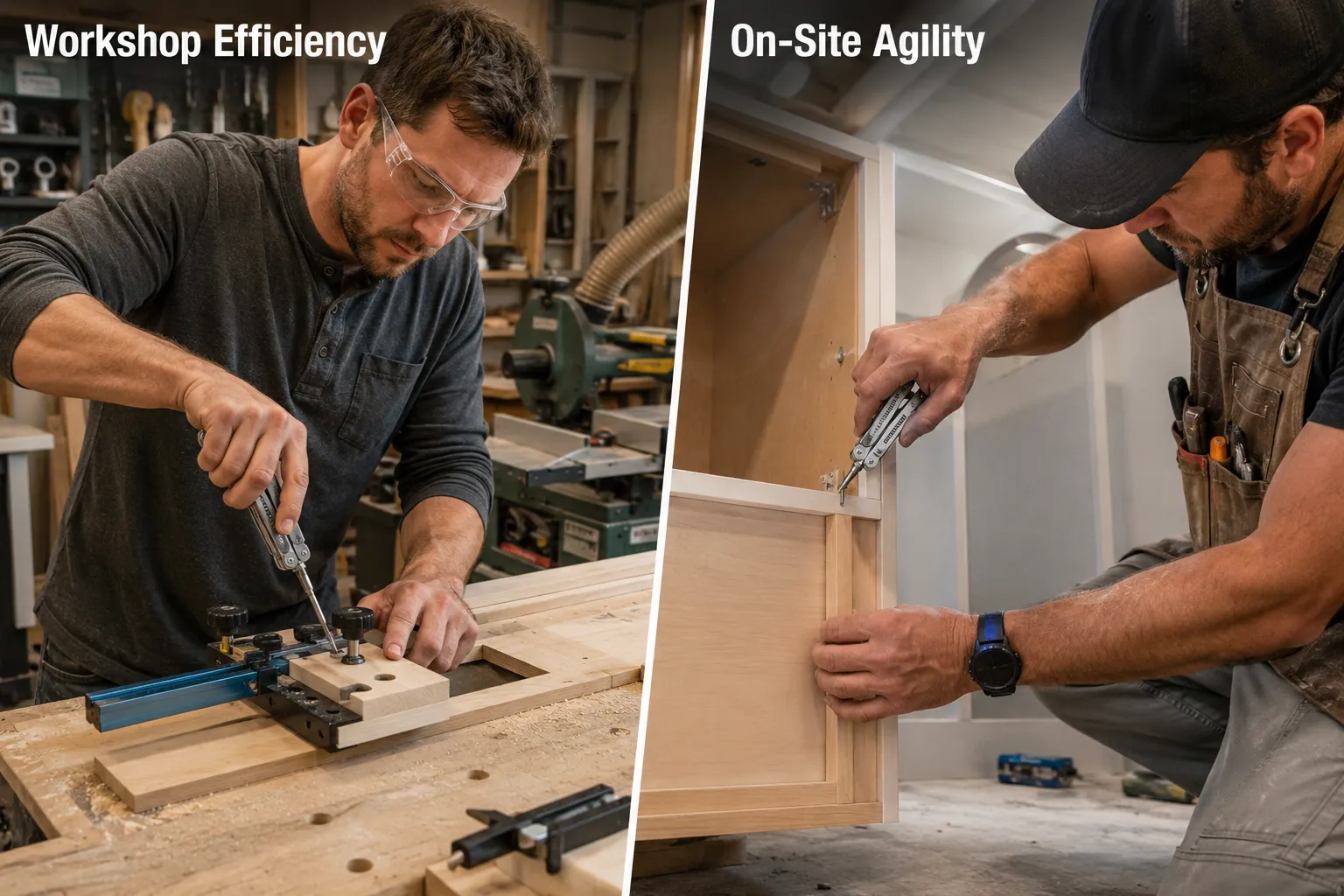
Consider the common scenario of installing custom cabinetry or built-in shelving. During installation, minor tweaks are almost inevitable. A door might need adjustment because it’s rubbing, a shelf bracket might be slightly off-level, or a screw might need a final snugging. A Leatherman multi-tool, clipped to a belt or easily accessible in a pocket, provides immediate access to the necessary screwdrivers, pliers, or even a small knife to trim a shim or clean a tight corner. This agility can significantly speed up the installation process and ensure a professional finish without repeated trips back to the vehicle for tools. For complex installations like robust floating shelves with hidden fasteners, the Leatherman can be invaluable for the final adjustments and securing of hardware.
Furniture repairs, whether at a client’s home or a flea market find, often require a similar level of flexibility. A wobbly chair leg, a loose table leaf, or a stripped screw in an antique dresser can often be remedied with the versatile tools found on a Leatherman. The pliers are excellent for straightening bent nails or manipulating small pieces, while the various screwdriver bits can address a wide array of fasteners. Some models even include specialized tools like an awl, which can be used to ream out a pilot hole or mark a precise spot for a new screw.
“A Leatherman multi-tool isn’t just a convenience; it’s a productivity enhancer on any job site. The ability to quickly address a minor issue without a full toolbox makes all the difference in meeting deadlines and delivering quality.” , A Professional Furniture Installer
The integrated blade is also incredibly useful for opening packaging, cutting tie-downs, or performing quick modifications to materials like felt pads or adhesive strips. When dealing with delicate finishes, the precision offered by a sharp blade can prevent damage that a bulkier knife might cause. Moreover, its relatively small footprint means it doesn’t take up much space in a bag or a smaller, focused DIY Smart Workshop Storage Solutions portable kit.
Key On-Site & Repair Functions:
- Hardware Tightening: Securing loose screws on furniture, cabinets, or architectural trim.
- Minor Adjustments: Aligning doors, drawers, or panels that are slightly out of true.
- Material Preparation: Trimming shims, cutting felt pads, or modifying small components.
- Quick Fixes: Straightening bent nails, pulling out staples, or freeing jammed parts.
- Measurement and Marking: Using a ruler or awl for quick estimations and marking.
The strength and durability of a genuine Leatherman multi-tool ensure that it can withstand the rigors of professional use. Unlike lesser imitations, the locking mechanisms, blade sharpness, and overall build quality are designed for consistent performance. This reliability is crucial when on-site, where unexpected tool failures can lead to costly delays or damage. For anyone involved in installations or repairs, having a Leatherman is not just about convenience; it’s about preparedness and professionalism.
Choosing the Right Leatherman for Woodworking: Multi-Tool Uses in the Workshop, On-Site Installs, and Furniture Repairs
With a variety of models available, selecting the ideal Leatherman multi-tool for woodworking can seem daunting. Each model offers a distinct set of tools, size, and weight, catering to different needs and preferences. Understanding the specific tasks you’ll most frequently use a Leatherman for, whether predominantly in the workshop, for extensive on-site installations, or primarily for light furniture repairs, will guide your choice in 2026.
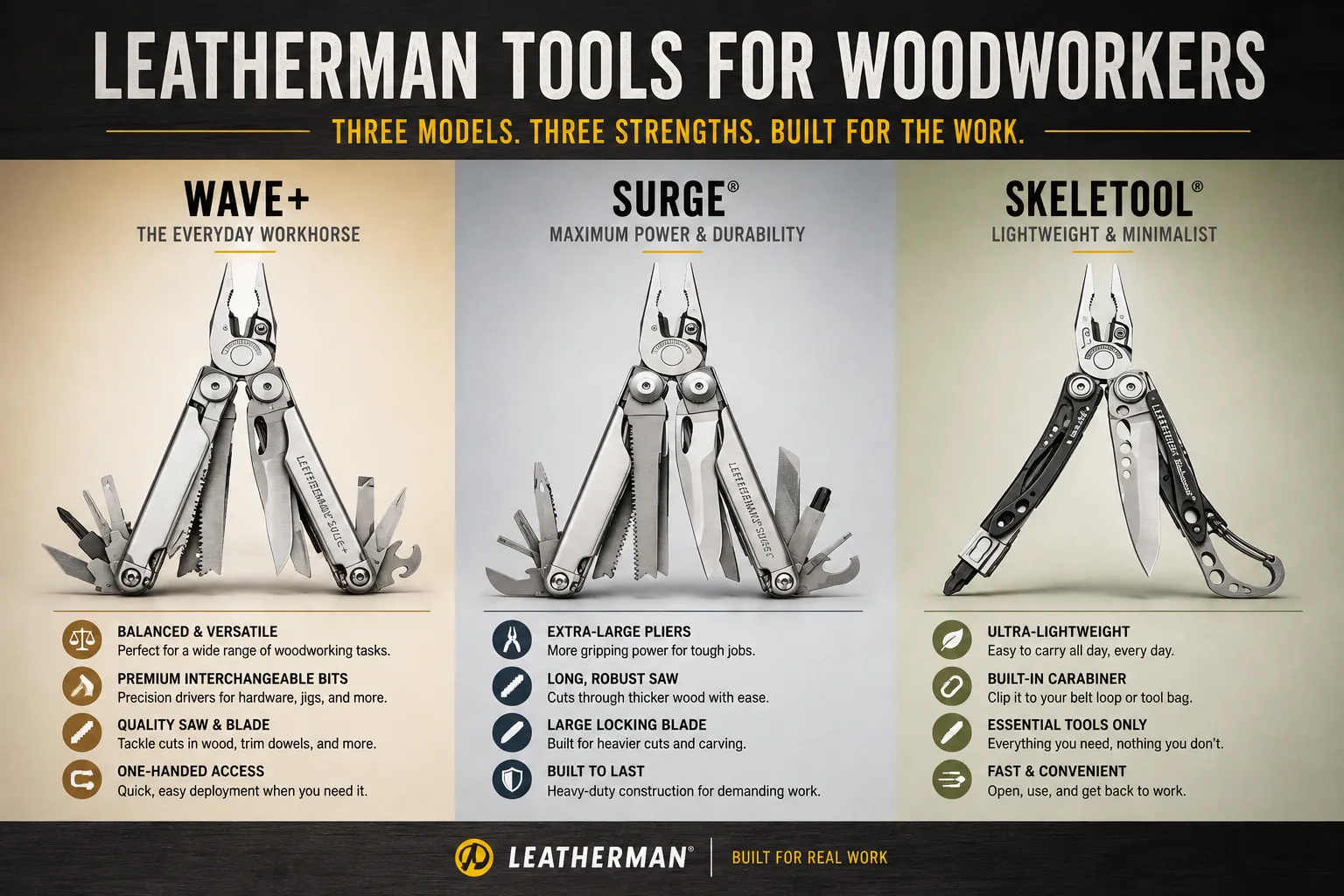
For workshop-centric woodworkers who value a robust set of features, models like the Leatherman Wave+ or Surge are often highly recommended. The Wave+ is a perennial favorite, known for its balanced array of 18 tools, including two knife blades, a saw, spring-action pliers, and multiple screwdrivers (including a bit driver for interchangeable bits). This versatility makes it excellent for quick adjustments to jigs, hardware installation, and general utility. The Surge takes it a step further, offering larger pliers, longer blades, and stronger scissors, often preferred by those who tackle more heavy-duty tasks or prefer a more substantial feel in hand. Its replaceable wire cutters are also a significant advantage for those working with various materials.
For professionals focusing on on-site installs and furniture repairs, where portability and a lighter footprint are crucial, models like the Leatherman Skeletool or Charge+ might be more suitable. The Skeletool, as its name suggests, is a minimalist multi-tool, prioritizing weight reduction and essential functions. It typically includes pliers, a knife, bit drivers, and a carabiner/bottle opener, making it exceptionally light and easy to carry on a belt or in a pocket without feeling cumbersome. While it has fewer tools, the core functions are robust. The Charge+, on the other hand, offers a premium blend of robust tools and lighter weight, often featuring higher-grade steel blades and more refined ergonomics. It provides many of the functions of the Wave+ but in a lighter, more compact package, making it an excellent all-rounder for mobile professionals.
Recommended Leatherman Models for Woodworkers:
| Model | Key Features for Woodworking | Ideal Use Case |
|---|---|---|
| Wave+ | Balanced 18 tools, spring-action pliers, saw, bit driver, two knife blades, file. | General workshop tasks, light-to-medium on-site installs, all-around utility. |
| Surge | Heavy-duty 21 tools, larger pliers, longer blades, robust scissors, replaceable wire cutters, bit driver, saw, awl. | Demanding workshop tasks, heavy-duty on-site installations, more robust repairs, those needing more leverage. |
| Charge+ | Premium materials (e.g., S30V knife blade), 19 tools, bit driver, saw, file, lighter than Surge. | Professional on-site installs, precision furniture repairs, everyday carry for discerning woodworkers. |
| Skeletool | Lightweight and minimalist, 7 essential tools, large knife blade, bit driver, carabiner/bottle opener. | Light on-site adjustments, quick fixes, minimal carry, secondary tool for specific light tasks. |
| Rebar | Industrial strength, 17 tools, all-locking features, needle-nose pliers, saw, file, multiple screwdrivers (non-bit driver). | Durable workshop tool, heavy-duty repairs where interchangeable bits aren’t critical, fixed tool reliability. |
Beyond the specific models, consider the ergonomics and build quality. A comfortable grip is essential for sustained use, especially when applying force. Look for models with well-designed handles that don’t pinch your hand. The quality of the steel in the blades and tools directly impacts their durability and edge retention, which is crucial for cutting and filing tasks. Many Leatherman tools feature locking blades and tools, a vital safety feature that prevents accidental closure during use.
Ultimately, the best Leatherman for a woodworker is one that feels comfortable in hand, provides the most frequently used tools, and is reliably built to withstand the demands of both the workshop and the field. For woodworkers who embrace efficiency and preparedness, a Leatherman multi-tool is an indispensable companion, proving its worth repeatedly across various tasks and environments.
Conclusion
The role of a Leatherman multi-tool in woodworking, whether for intricate workshop tasks, dynamic on-site installations, or precise furniture repairs, is undeniably significant. In 2026, as woodworkers continue to seek ways to enhance efficiency and consolidate their toolkits, the versatile, compact, and robust nature of a Leatherman proves to be an invaluable asset. It bridges the gap between carrying a full array of specialized tools and having immediate, reliable functionality at your fingertips. From tightening a hinge with a Phillips head driver to making a quick trim with a sharp blade, a Leatherman empowers woodworkers to tackle minor challenges with agility and confidence. Choosing the right model, tailored to your specific workflow and environment, ensures that this singular tool becomes a trusted extension of your craftsmanship, ready to assist in every phase of a woodworking project.
Actionable Next Steps
- Assess Your Needs: Evaluate your primary woodworking activities. Do you spend more time in a dedicated workshop, or do you frequently work on-site or perform mobile repairs? This will help narrow down the ideal Leatherman model.
- Compare Models: Research specific Leatherman models like the Wave+, Surge, Charge+, or Skeletool, focusing on the tool sets they offer. Prioritize models with pliers, multiple screwdrivers (especially bit drivers), and a saw or file if those are common needs.
- Read Reviews: Consult reviews from other woodworkers and professionals to gain insights into real-world performance and durability of different models.
- Hands-On Test: If possible, visit a retailer to physically handle different Leatherman models. Check the ergonomics, tool deployment, and overall feel to ensure it suits your comfort and grip preferences.
- Invest in Quality: Purchase from a reputable dealer to ensure authenticity and benefit from Leatherman’s warranty and customer support.
SEO Meta Title: Leatherman for Woodworkers: Workshop, Installs, & Repairs SEO Meta Description: Discover Leatherman multi-tool uses for woodworkers in 2026, enhancing efficiency in the workshop, on-site installs, and furniture repairs with versatile tools.