
New viral tutorials demonstrating how to construct a first bench or a simple furniture piece are significantly increasing interest in accessible, step-by-step woodworking guides for novices. For many, the idea of building furniture from scratch seems daunting, reserved for seasoned craftsmen with fully equipped workshops. However, with the right approach and a focus on fundamental techniques, embarking on first-furniture builds for total beginners is not only achievable but deeply rewarding.
This article provides a comprehensive roadmap for individuals looking to create their own furniture pieces, demystifying the process and highlighting projects specifically suited for those new to woodworking in 2026.
Key Takeaways
- Beginner furniture builds prioritize simple designs and basic joinery for quick success.
- Essential tools for first projects are minimal and often inexpensive, focusing on measuring, cutting, assembling, and finishing.
- Plywood and common softwoods like pine are excellent material choices for their workability and affordability.
- Safety in the workshop is paramount, regardless of project complexity or experience level.
- Finishing techniques can dramatically enhance the appearance and durability of a beginner build.
Starting Your Journey: What Are First-Furniture Builds for Total Beginners?
First-furniture builds for total beginners are projects designed with simplicity, affordability, and teachability in mind. These are not heirloom pieces requiring complex joinery or specialized machinery. Instead, they focus on building foundational skills, understanding wood properties, and gaining confidence with basic tools. The goal is to produce functional, attractive furniture without overwhelming the new builder.
Common first projects often include:
- Simple benches: These teach basic cutting, assembly, and stability.
- Small tables or nightstands: Introduce concepts of flat surfaces and leg attachment.
- Storage crates or shelves: Excellent for learning about box construction and basic joinery.
- Bookcases: A slightly more complex project that builds on shelving principles.
The appeal of these projects lies in their immediate gratification. A beginner can often complete a functional piece within a weekend or a few evenings, fostering a sense of accomplishment that encourages further exploration into woodworking. Moreover, building your own furniture allows for customization, ensuring the piece perfectly fits your space and aesthetic preferences, a luxury often unavailable with mass-produced items.
Essential Tools and Materials for Your First-Furniture Builds for Total Beginners
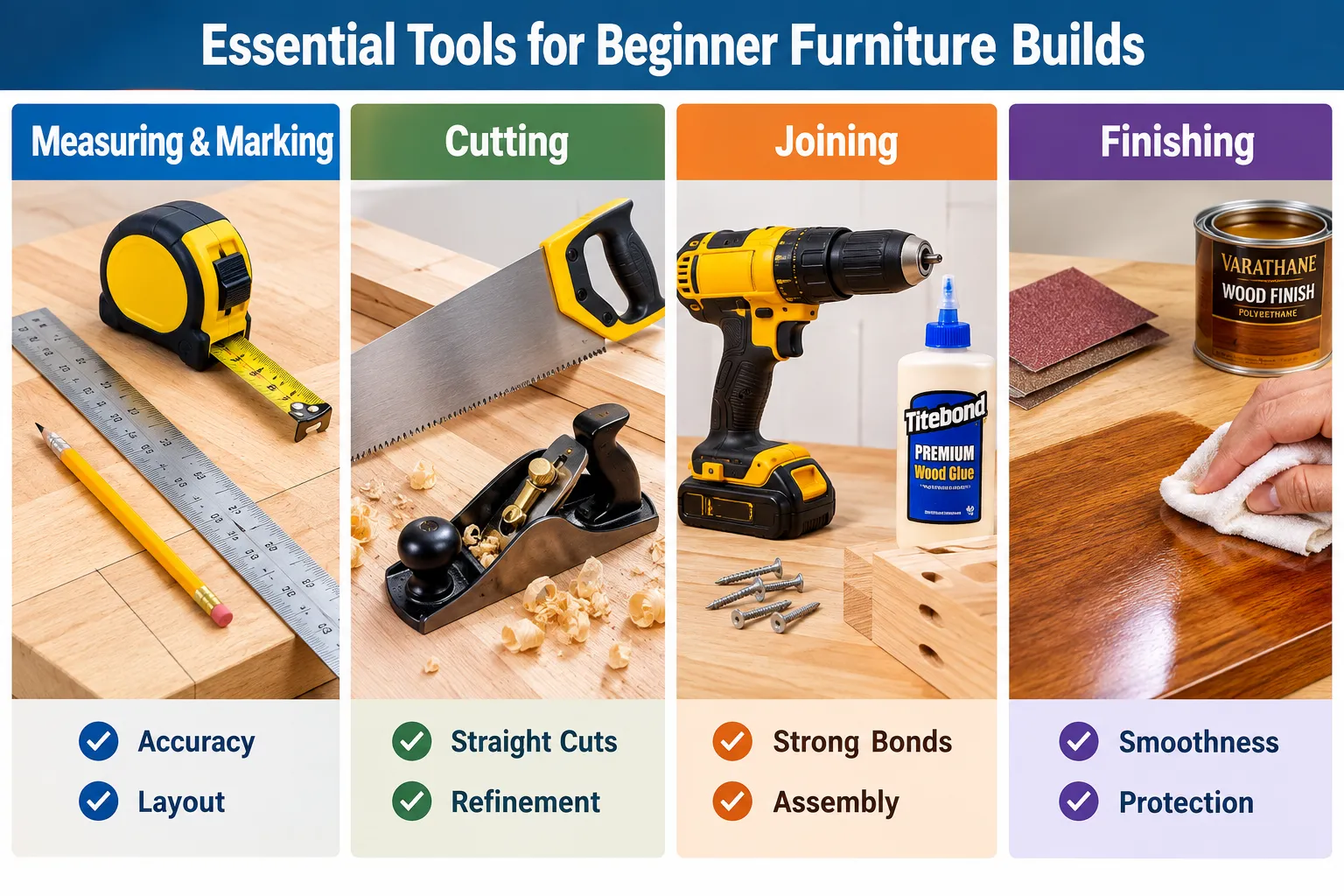
Successfully completing your first furniture project doesn’t require an arsenal of expensive power tools. Many foundational skills can be learned with a modest collection of hand tools and a few basic power tools. The key is to select tools that are versatile, safe, and appropriate for the scale of beginner projects.
Hand Tools
These are the bedrock of any woodworking endeavor and are invaluable for precision and control.
- Measuring and Marking:
- Tape Measure: For general dimensions.
- Ruler/Straightedge: For accurate lines and smaller measurements.
- Pencil: For marking cuts and layouts.
- Combination Square: Essential for marking square lines and checking angles.
- Cutting:
- Handsaw: A crosscut saw or a Japanese pull saw is excellent for straight cuts.
- Coping Saw: For curved cuts, if your design requires them.
- Shaping and Smoothing:
- Block Plane: Useful for chamfering edges and fine-tuning dimensions.
- Chisels: A set of common sizes (e.g., 1/2″, 3/4″, 1″) for cleaning joints and paring.
- Assembly:
- Clamps: A variety of bar clamps and C-clamps are crucial for holding pieces together during gluing and assembly. Aim for at least 4-6 clamps.
- Wood Mallet: For tapping joints together without damage.
Power Tools (Optional, but Highly Recommended)
While not strictly necessary for all first projects, these power tools can significantly speed up and simplify certain tasks, especially cutting and drilling.
- Cordless Drill/Driver: Indispensable for pre-drilling holes and driving screws. Choose one with a clutch setting to prevent overtightening.
- Circular Saw: For making straight cuts in larger pieces of sheet goods or dimensional lumber. A guide or straightedge accessory can dramatically improve accuracy.
- Orbital Sander: Speeds up the sanding process and provides a smoother finish than hand sanding alone.
- Jigsaw: Great for cutting curves and intricate shapes that a circular saw cannot handle.
Material Selection
Choosing the right wood is critical for beginner success.
- Softwoods:
- Pine: Readily available, inexpensive, and easy to work with. Perfect for initial projects where mistakes are likely.
- Poplar: Slightly harder than pine, with a finer grain, and takes paint well. Aspen vs Poplar For Cabinets Wood Characteristics Aesthetic Qualities And Cost Considerations provides more insights.
- Plywood:
- Cabinet-grade plywood: Offers stability, strength, and larger sheet sizes. Excellent for tabletops, shelves, and cabinet sides. Learn more about 12 Plywood Cabinets Understanding Construction Techniques And Maintenance.
- Baltic Birch plywood: Known for its strong, void-free core and attractive edges, though it can be pricier.
For your initial projects, prioritize materials that are easy to cut, sand, and join. Avoid very hard or exotic woods until you have more experience.
Step-by-Step Approach to First-Furniture Builds for Total Beginners
A structured approach ensures that your first furniture build is a positive and educational experience. Breaking the project down into manageable steps reduces complexity and helps in troubleshooting.
1. Project Selection and Planning
Before you even touch a tool, select a simple project. Look for plans that include:
- Clear cut lists.
- Detailed diagrams or step-by-step instructions.
- Few complex joinery techniques.
Consider a project like a simple bench, a small side table, or a basic wall shelf. Websites like Woodcraftwiz and popular woodworking magazines often provide free beginner-friendly plans. When planning, visualize the steps and identify any potential challenges.
2. Gathering Materials and Tools
Once you have a plan, create a comprehensive list of all necessary lumber, hardware (screws, glue), and finishes. Check your tool inventory against the project requirements. If you need new tools, consider renting or borrowing for your first few projects to see what you truly enjoy using before investing heavily. Ensure all blades are sharp and tools are in good working order.
3. Cutting and Preparing Wood
Accuracy in cutting is paramount. “Measure twice, cut once” is an old adage for a reason.
- Measure and Mark: Use your tape measure and square to mark all cuts precisely.
- Cut: Use a circular saw with a straightedge guide for long, straight cuts in plywood or dimensional lumber. For smaller pieces, a handsaw can be very effective. A Beginners Guide To Essential Woodworking Jigs Improving Accuracy And Safety On Table Saws And Routers can provide further guidance on improving cut accuracy.
- Dry Fit: Before applying any glue or screws, dry-fit all your pieces together. This helps identify any errors in cutting and ensures a smooth assembly process.
4. Joinery and Assembly
For first-furniture builds for total beginners, focus on simple yet strong joinery methods.
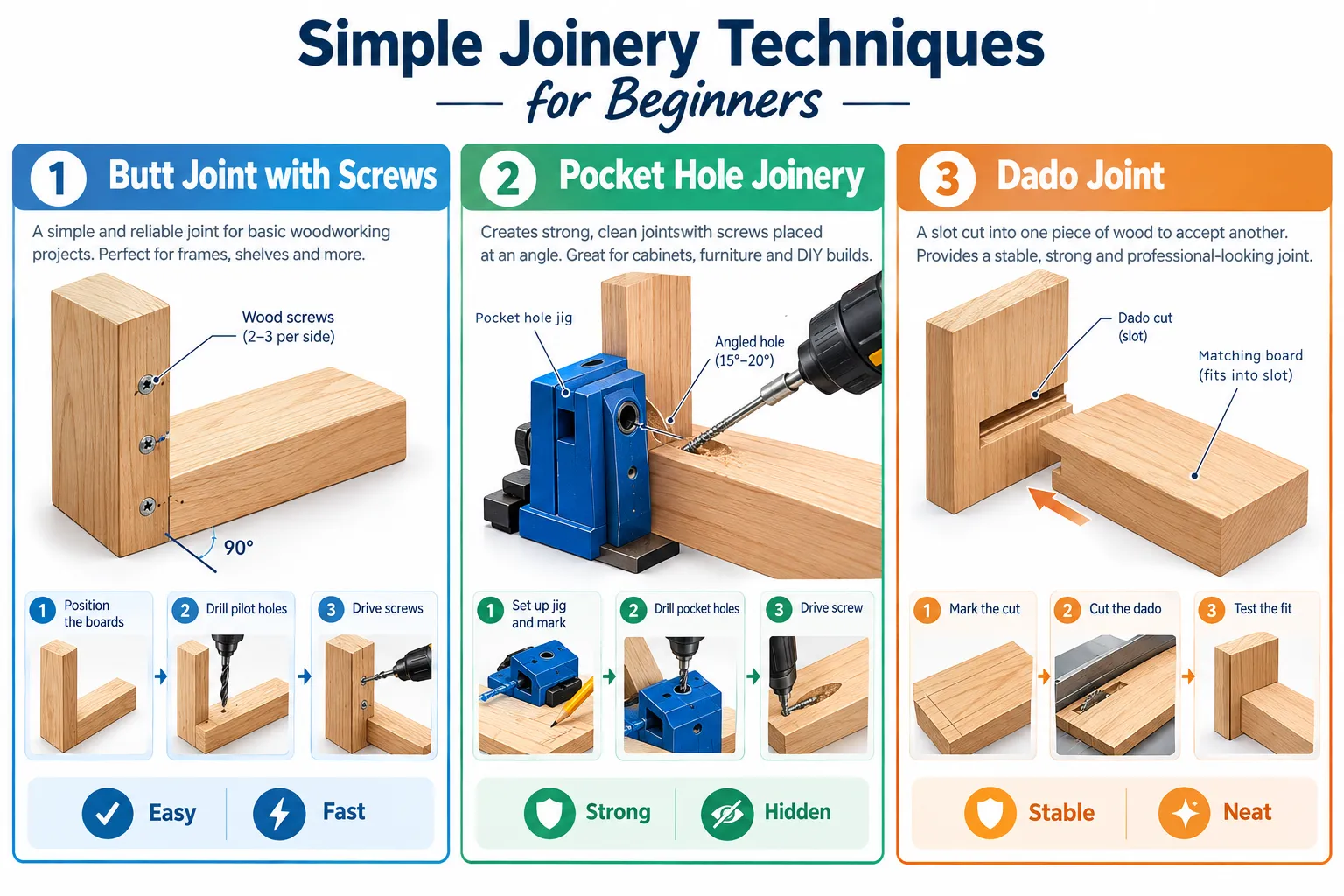
- Butt Joints with Screws and Glue: This is the simplest joint. Apply wood glue to the mating surfaces, clamp them together, and then reinforce with screws. Pre-drill pilot holes to prevent splitting.
- Pocket Hole Joinery: A fantastic technique for beginners, pocket hole jigs allow you to create strong, hidden joints with specialized screws. These are excellent for table aprons, cabinet frames, and face frames.
- Dado Joints: For shelves, a dado (a groove cut across the grain) provides excellent support. While it requires a router or a table saw, simpler versions can be made with multiple passes of a circular saw or even careful hand tool work. Find more about Hand Tool Joinery For Visible Wood Joints Dovetails Mortise And Tenon And Box Joints As Design Features In Furniture And Small Projects.
Always use wood glue in addition to fasteners for maximum strength. Ensure your pieces are square and clamped securely while the glue dries.
5. Sanding and Finishing
The finish can make or break the appearance of your furniture.
- Sanding: Start with a coarser grit sandpaper (e.g., 80 or 100 grit) to remove any major imperfections and tool marks, then progress to finer grits (e.g., 150, 220 grit) for a smooth surface. An orbital sander speeds this up considerably.
- Finishing:
- Paint: A forgiving option that hides minor imperfections.
- Stain: Enhances the natural grain of the wood. Staining Birch Dark Enhancing Grain Visibility And Care Tips offers specific advice.
- Clear Coat (Polyurethane, Varnish, Danish Oil): Protects the wood and provides durability. For beginners, a wipe-on polyurethane or Danish oil is easy to apply. Check out Danish Oil Vs Linseed The Ultimate Wood Finishing Guide for a detailed comparison. Always apply finishes in a well-ventilated area.
Safety First: Essential Practices for New Woodworkers
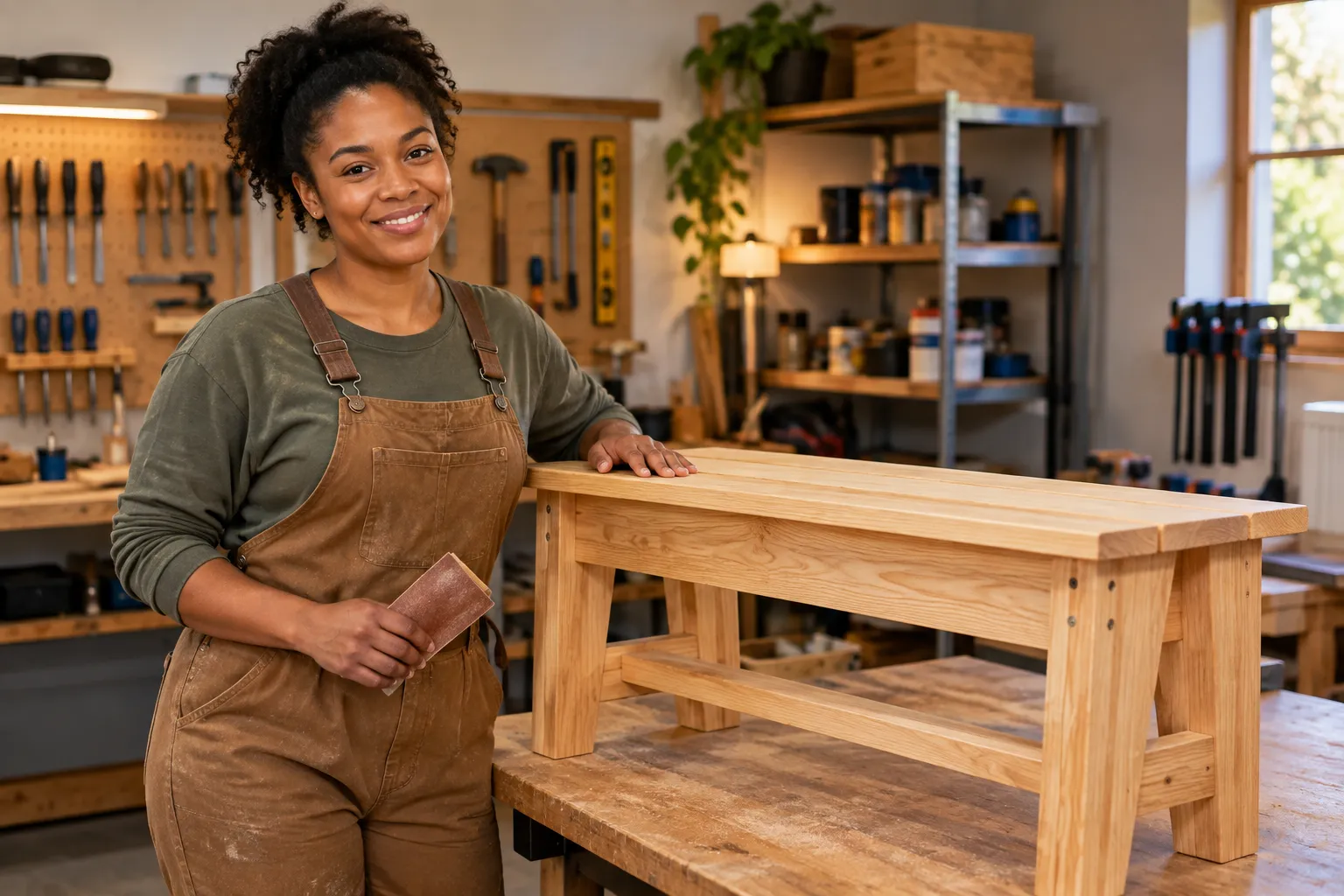
Woodworking can be a safe and enjoyable hobby, but it demands respect for tools and adherence to safety protocols. This is especially true when embarking on first-furniture builds for total beginners.
- Eye Protection: Always wear safety glasses or goggles. Wood chips and dust can cause serious injury.
- Hearing Protection: Power tools generate significant noise that can lead to long-term hearing damage. Earmuffs or earplugs are a must.
- Dust Mask/Respirator: Fine wood dust can be a respiratory irritant and allergen. A good dust mask protects your lungs.
- Appropriate Clothing: Avoid loose clothing, dangling jewelry, or long, untied hair that can get caught in machinery.
- Tool Maintenance: Keep your tools sharp and in good repair. Dull blades are more dangerous than sharp ones because they require more force, increasing the risk of slips.
- Read Manuals: Always read and understand the operating manual for any power tool before using it.
- Work Area: Keep your workspace clean, well-lit, and free of clutter. Ensure stable footing.
- Focus: Avoid distractions while operating tools. Never work while fatigued or under the influence of substances.
By prioritizing safety, you ensure that your woodworking journey remains a positive experience, allowing you to enjoy the process of creating beautiful and functional pieces.
Conclusion
Embarking on first-furniture builds for total beginners is an incredibly rewarding journey. It’s a chance to learn new skills, develop a creative outlet, and furnish your home with unique pieces crafted by your own hands. By starting with simple projects, focusing on essential tools, understanding basic joinery, and always prioritizing safety, you can overcome initial hesitations and build confidence with each successful piece. In 2026, the resources available, from online tutorials to dedicated workshops, make it easier than ever to dive into the world of woodworking. So, pick a project, gather your tools, and begin the satisfying process of turning raw materials into functional art.
Actionable Next Steps:
- Choose Your First Project: Select a simple plan like a small bench or storage box.
- Acquire Basic Tools: Invest in essential hand tools and consider a cordless drill.
- Source Materials: Opt for accessible and affordable woods like pine or plywood.
- Prioritize Safety: Always wear appropriate personal protective equipment.
- Start Building: Follow your plan step-by-step, taking your time with each stage.
Meta Title: First Furniture Builds for Beginners: Your 2026 Guide Meta Description: Learn how to approach first-furniture builds for total beginners in 2026. Discover essential tools, simple projects, and safety tips for new woodworkers.
woodworking for beginners, DIY furniture, beginner woodworking projects, essential woodworking tools, simple joinery, furniture building tips, wood selection, woodworking safety, basic carpentry, home DIY, 2026 woodworking