

The profound allure of natural forms, the sinuous curves of a fallen branch, the intricate network of an exposed root, or the smooth, weathered contours of driftwood, offers an unparalleled canvas for creative expression. Unlike traditional woodworking, which often begins with milled lumber, Wild Crafts with Wood: Beginner-Friendly Projects Using Found Branches, Roots, and Natural Forms invites a different approach. It champions the art of seeing potential in nature’s discards, transforming them into unique, rustic pieces of decor and furniture with minimal tools and a deep respect for the material’s inherent character. This article serves as a comprehensive guide for those eager to embark on this accessible and rewarding journey in 2026.
Key Takeaways
- Wild crafting with wood involves using naturally shaped found materials like branches, roots, and driftwood.
- Sustainable harvesting practices are crucial, focusing on fallen or discarded wood rather than living trees.
- Basic preparation includes cleaning, drying, and potentially debarking the found wood.
- Beginner-friendly projects range from decorative items to functional furniture, often requiring minimal tools.
- Embracing the wood’s natural form is central to the aesthetic of wild crafts.
The Philosophy and Practice of Wild Crafts with Wood: Beginner-Friendly Projects Using Found Branches, Roots, and Natural Forms
Wild crafting with wood is more than just a hobby; it is a mindful practice that connects the artisan with the natural world. It celebrates imperfections, embraces asymmetry, and transforms forgotten elements of the forest floor into objects of beauty and utility. The core principle lies in respecting the material’s original shape, allowing it to dictate the final form of the project. This approach not only reduces the need for complex woodworking techniques but also makes the craft incredibly accessible to beginners.
The beauty of engaging in Wild Crafts with Wood: Beginner-Friendly Projects Using Found Branches, Roots, and Natural Forms is its inherent sustainability. By utilizing wood that has naturally fallen or been discarded, crafters contribute to a cycle of renewal, giving new life to what would otherwise decompose. This process encourages an outdoor exploration, offering opportunities to observe nature closely and appreciate its intricate designs.
Sustainable Sourcing and Ethical Harvesting
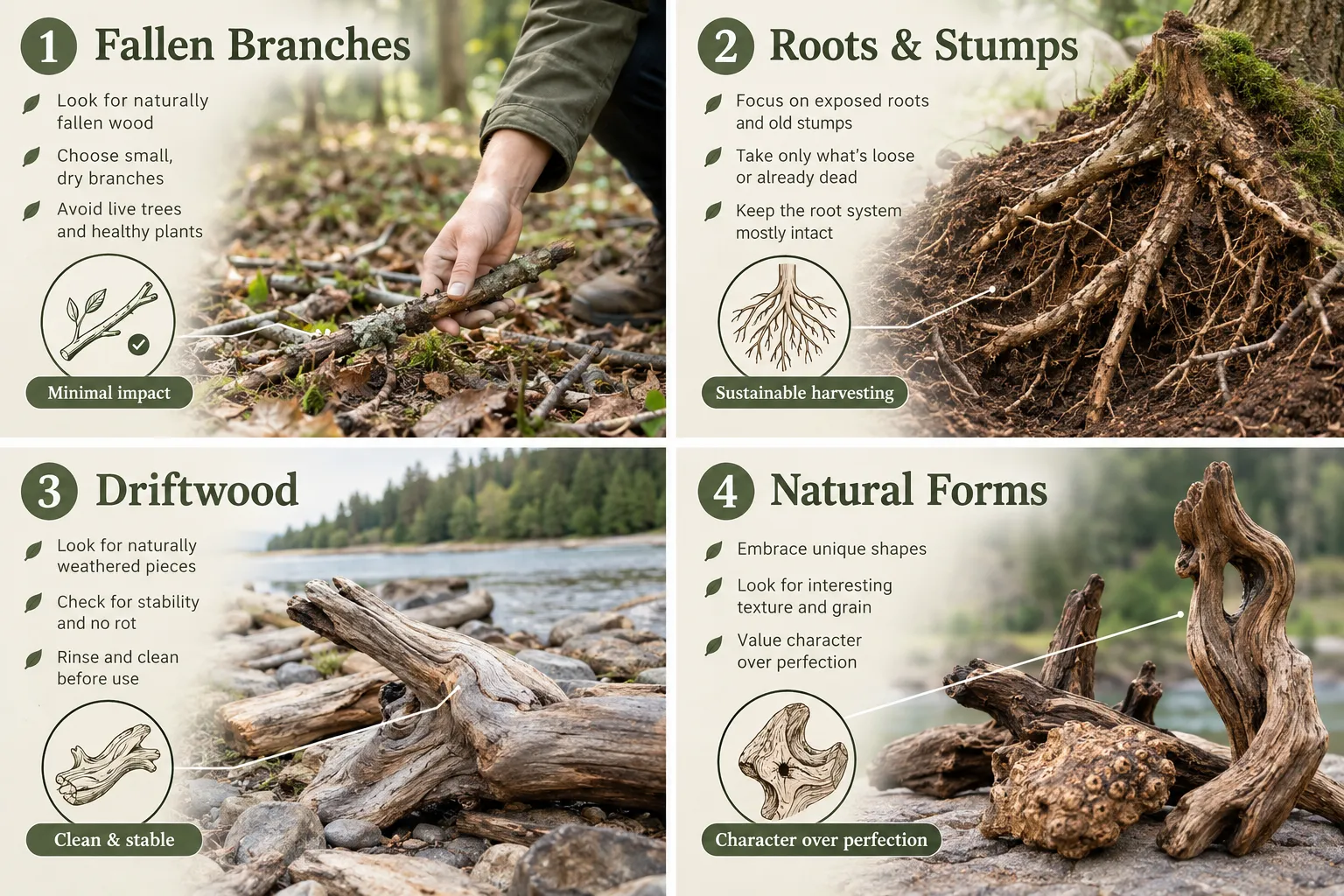
Before any crafting can begin, the most critical step is responsibly sourcing your materials. The guiding principle is “leave no trace” and “do no harm.” This means avoiding cutting down living trees or damaging ecosystems. Instead, focus on gathering wood that has already fallen.
Consider the following when foraging:
- Fallen Branches: Look for branches that have broken off naturally due due to storms, age, or animal activity. These are often dry and ready for use after minimal processing.
- Driftwood: Found along riverbanks, lakeshores, or beaches, driftwood is typically weathered and already dried by the elements, making it an excellent choice. It often possesses unique textures and shapes.
- Roots and Stumps: Harvesting roots requires more care. Focus on exposed roots from fallen trees or sections of old stumps that have already decomposed significantly. Avoid disturbing the soil around living plants.
- Legal and Permissible Areas: Always check local regulations regarding foraging in parks, forests, or private land. Many areas prohibit the removal of natural materials without a permit. Obtaining wood from your own property or with a landowner’s permission is generally the safest approach.
When selecting wood, look for pieces that are structurally sound. Avoid anything that is excessively punky, riddled with insect holes, or shows signs of advanced rot, unless the intention is specifically to work with decaying wood for a particular artistic effect. For more on sustainable sourcing, consider exploring resources on Sustainable Wood Sourcing A Guide To Salvaging Urban Timber And Fallen Trees For Woodworking Projects.
Preparing Your Found Wood for Wild Crafts with Wood: Beginner-Friendly Projects
Once you’ve responsibly gathered your natural wood pieces, proper preparation is essential to ensure longevity and workability. This stage is relatively simple and sets the foundation for your projects.
Cleaning and Drying
Initial Cleaning:
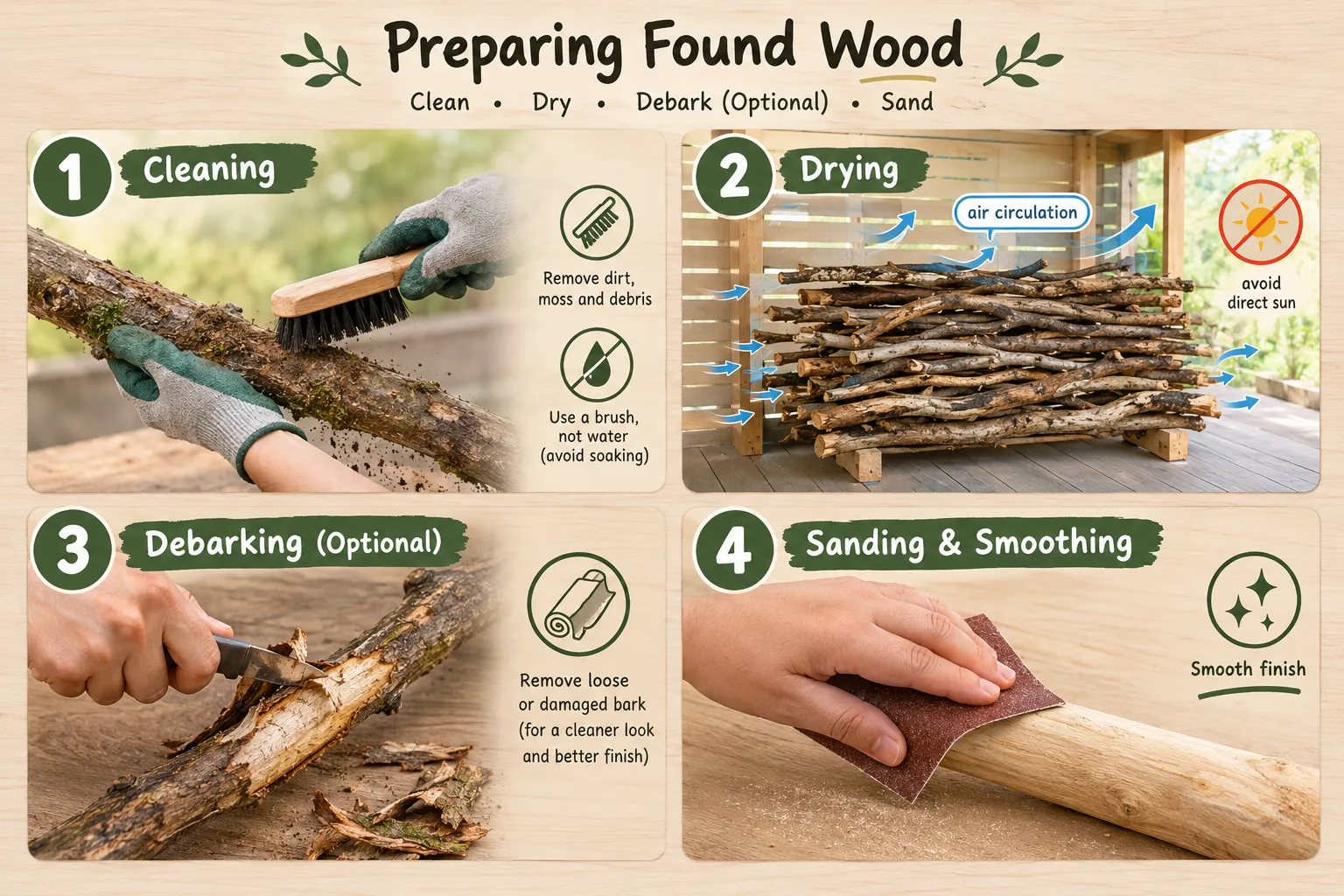
- Brush off Loose Debris: Use a stiff brush (a wire brush works well for stubborn dirt) to remove soil, loose bark, moss, and any other surface grime.
- Wash (if necessary): For very dirty pieces, especially roots or those submerged in mud, a gentle wash with water and a scrub brush can be beneficial. Avoid harsh chemicals. Allow the wood to air dry completely after washing.
- Pest Inspection: Carefully examine the wood for any signs of insects. If pests are present, you might need to leave the wood outside in the sun for an extended period, or in extreme cases, consider baking smaller pieces in an oven on a very low heat (around 200°F / 95°C) for several hours to kill any remaining organisms.
Drying:
- Air Drying: This is the most crucial step. Found wood, especially recently fallen branches, will contain a lot of moisture. Attempting to craft with wet wood will lead to warping, cracking, and potential mold growth as it dries. Stack pieces in a well-ventilated area, away from direct sunlight or heat, which can cause rapid, uneven drying and splitting. A garage, shed, or covered outdoor space is ideal.
- Patience is Key: Drying times vary significantly depending on wood thickness, type, and humidity. Smaller branches might dry in a few weeks, while thicker pieces could take several months or even a year. A good rule of thumb is to allow one year of drying time per inch of thickness for larger pieces, though smaller pieces will dry faster. You can check dryness by listening for a dull thud when tapped or by using a moisture meter.
- Debarking (Optional): While leaving bark on can add a rustic aesthetic, removing it can reveal interesting grain patterns and prevent potential insect issues. Use a drawknife, a dull chisel, or even a sturdy scraper to carefully peel or scrape off the bark. This is often easier when the wood is still slightly green.
Basic Tools for Wild Crafting
One of the appeals of this type of woodworking is the minimal tool requirement. For most beginner-friendly projects, you won’t need an elaborate workshop.
Here’s a list of essential tools:
- Hand Saw: For cutting branches to length. A pruning saw or a small bow saw works well.
- Carving Knife/Whittling Knife: For shaping, debarking, or adding details.
- Sandpaper: Various grits (from coarse to fine) for smoothing rough edges and surfaces.
- Drill with Assorted Bits: For making holes for joinery or decorative elements.
- Wood Glue: Essential for securing joints. For outdoor projects, choose a waterproof exterior wood glue. Learn more about selecting the right adhesive in The Ultimate Guide To Wood Glue Choosing The Right Adhesive For Every Woodworking Joint And Project.
- Clamps: To hold pieces together while glue dries.
- Finishing Oil or Varnish: To protect the wood and enhance its natural beauty.
Advanced tools like a small bench vise, rasp, file, or wood burning tool can expand your capabilities, but are not necessary to start.
Beginner-Friendly Projects with Found Branches, Roots, and Natural Forms
The beauty of Wild Crafts with Wood: Beginner-Friendly Projects Using Found Branches, Roots, and Natural Forms is that the wood itself often inspires the project. Let the unique twists, turns, and textures guide your creativity. Here are several accessible ideas perfect for beginners in 2026.
Decorative Items
These projects focus on showcasing the natural beauty of the wood itself, often requiring minimal alteration.
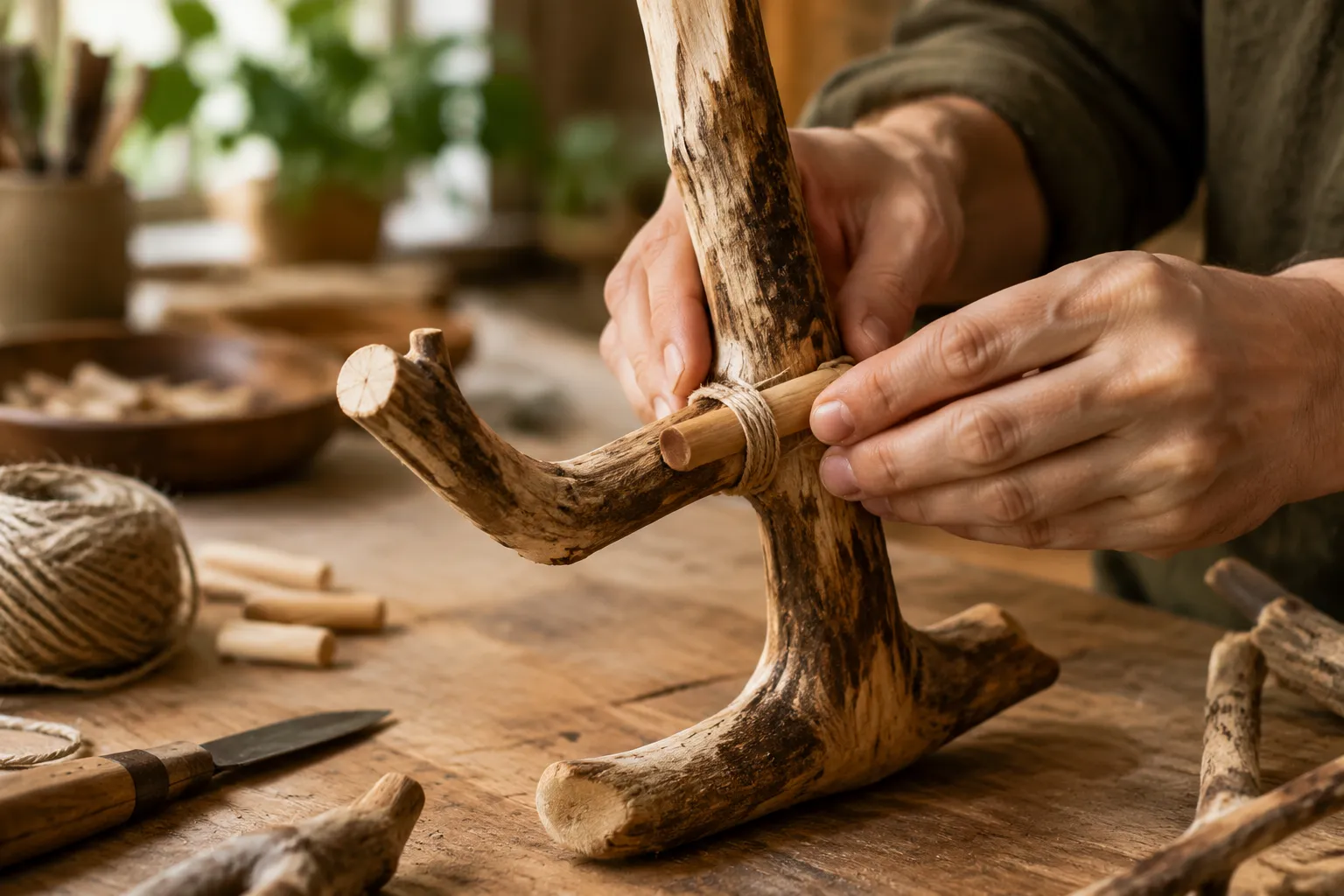
- Rustic Wall Hooks/Racks: Find a sturdy branch with smaller offshoots or knots. Cut it to length, clean and dry it, then sand any rough spots. The offshoots serve as natural hooks. Attach it to a piece of backing wood or directly to a wall using screws. These can be used for coats, keys, or even lightweight decor.
- Votive Candle Holders: Take a thicker branch or log section. Using a drill with a Forstner bit, bore holes large enough to hold tea lights or small votive candles. Sand the top surface smooth and finish with a fire-retardant sealant or oil.
- Picture/Card Holders: Select smaller, interesting branches or twigs. Cut a slit into the top of a short, sturdy piece of wood using a thin saw blade (like a hacksaw or coping saw) to hold a photo or card. Alternatively, use a “Y” shaped branch to cradle a photo.
- Natural Sculptures: Sometimes, a found piece of wood is so intrinsically beautiful it requires no modification. Clean it, perhaps give it a light sanding and finish, and display it as a natural art piece. Combine multiple pieces using simple joinery (drilling and pegging, or strong glue) to create more complex forms. Consider how these natural elements integrate with Creating Biophilic Design Elements In Woodworking Incorporating Natural Forms And Live Plants Into Furniture And Decor.
Functional Small Furniture & Home Accents
With slightly more effort, found wood can become practical household items.
- Coasters and Trivets: Slice cross-sections from a sturdy, dry branch or log. Sand them smooth and apply a waterproof finish. For a trivet, you might arrange several smaller slices on a backing.
- Branch-Legged Stool or Side Table: This is a classic wild craft project. Find a flat, stable wood slab for the top (this could be a larger cross-section of a log, or even a piece of salvaged timber). Then, select three or four sturdy, relatively straight branches of equal thickness for legs. Drill holes into the underside of the slab at an angle, then insert and glue the branch legs securely. You may need to trim the bottom of the legs to ensure the stool is level. This requires careful measurement and steady hands.
- Rustic Planters: Utilizing hollowed out logs or combining several pieces of wood to form a natural-looking container can create unique planters. Ensure proper drainage holes are added. For more ideas, see Crafting Custom Wooden Planters Indoor And Outdoor Designs With Drainage Solutions And Weatherproofing.
- Magazine Racks/Bookends: Use two stable, interesting pieces of wood as bookends, perhaps anchoring them to a base. For a magazine rack, branches can be assembled into an A-frame or X-frame structure to hold publications. For inspiration on crafting custom magazine racks, refer to Crafting Magazine Racks Wall Mounted And Freestanding Designs With Hidden Fasteners.
Finishing Your Wild Crafts
Once your piece is assembled, a proper finish will protect the wood, enhance its natural beauty, and ensure its longevity.
- Sanding: Begin with a coarser grit (e.g., 80-120) to remove rough spots and smooth the surface, then progress to finer grits (e.g., 180-220) for a silky-smooth feel.
- Oil Finishes: Linseed oil, tung oil, or Danish oil penetrate the wood, bringing out its grain and offering a natural, matte finish. Apply multiple thin coats, wiping off excess between applications.
- Varnish/Polyurethane: These create a protective film on the surface, offering more durability and water resistance, especially for items that will see heavy use or outdoor exposure. Choose an appropriate finish for the intended use; for outdoor projects, refer to Selecting The Right Wood For Outdoor Projects Durability Weather Resistance And Aesthetics.
- Wax Finishes: A natural beeswax or furniture wax can add a soft sheen and a layer of protection, particularly for decorative indoor items.
Always follow the manufacturer’s instructions for any finishing product, and ensure adequate ventilation.
Conclusion
Engaging in Wild Crafts with Wood: Beginner-Friendly Projects Using Found Branches, Roots, and Natural Forms is a deeply satisfying pursuit that fosters creativity, sustainability, and a connection with nature. By embracing the unique character of naturally sourced wood, beginners can create beautiful, one-of-a-kind pieces of decor and furniture with minimal tools and an abundance of inspiration. In 2026, this approach to woodworking continues to gain popularity, reflecting a desire for authentic, handcrafted items that tell a story.
Start your journey by exploring your local natural environment (responsibly!), gathering interesting pieces of fallen wood, and letting their inherent forms spark your imagination. With careful preparation and a few basic tools, you will soon be transforming nature’s discards into cherished works of art that bring a touch of the wild into your home.
SEO Meta Title: Wild Crafts with Wood: Beginner Projects from Nature SEO Meta Description: Explore wild crafts with wood! Learn to find, prepare, and create beginner-friendly decor and furniture using found branches, roots, and natural forms in 2026.