
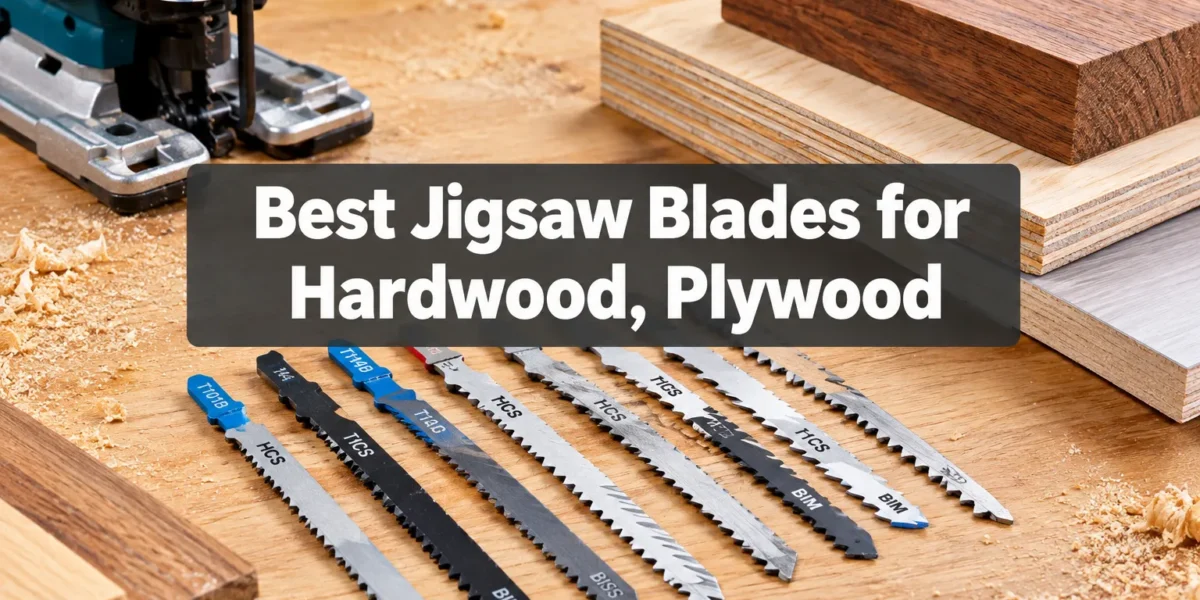
The subtle hum of a jigsaw cutting through wood is a familiar sound in many workshops, but the difference between a clean, effortless cut and a frustrating, splintered mess often comes down to one critical component: the blade. Choosing the best jigsaw blades for hardwood, plywood, laminate, and scroll-style woodworking can dramatically impact your project’s quality, efficiency, and your overall satisfaction. It’s not just about the saw itself, but the specific characteristics of the blade that truly dictate performance across diverse materials and cutting requirements.
Key Takeaways
- Material-Specific Blades are Crucial: Hardwood, plywood, and laminate each demand unique blade characteristics (tooth count, material, geometry) for optimal results.
- Tooth Per Inch (TPI) is Key: Higher TPI blades offer cleaner cuts, ideal for laminates and fine scrollwork, while lower TPI blades provide faster, rougher cuts for thicker materials like hardwood.
- Blade Material Matters: High Carbon Steel (HCS) is suitable for softer woods, High-Speed Steel (HSS) for harder materials and metals, and Bi-Metal (BIM) offers durability and versatility. Tungsten Carbide (TC) blades are best for abrasives like laminate.
- Shank Type Ensures Compatibility: Most modern jigsaws use T-shank blades, but U-shank blades are still available for older models. Always check your saw’s compatibility.
- Reverse-Tooth Blades Prevent Splintering: For pristine top surfaces on veneered plywood and laminates, reverse-tooth blades cut on the downstroke, minimizing tear-out.
Understanding Jigsaw Blade Anatomy and Types
Before diving into material-specific recommendations, it’s essential to understand the fundamental design elements of jigsaw blades. These elements, material, tooth per inch (TPI), tooth geometry, and shank type, are the primary determinants of a blade’s suitability for different woodworking tasks. For occasional makers, grasping these basics will save countless hours of frustration and wasted material.
Blade Material: The Foundation of Performance
The material from which a jigsaw blade is made directly affects its durability, sharpness retention, and the types of materials it can effectively cut.
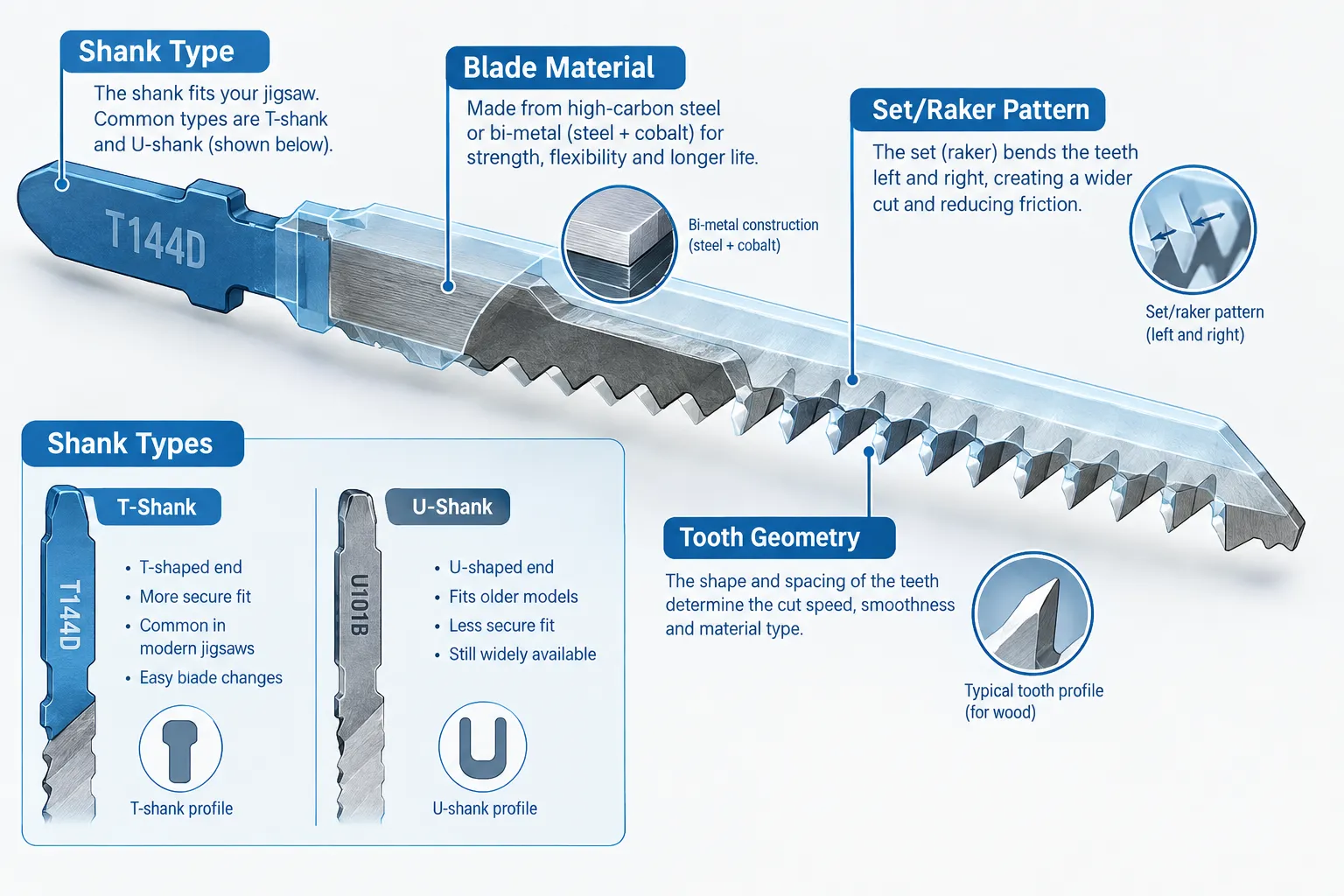
- High Carbon Steel (HCS): These blades are economical and flexible, making them ideal for cutting softer woods, plastics, and wood fiberboards. They are prone to dulling quickly on harder materials or with prolonged use.
- High-Speed Steel (HSS): HSS blades are harder and more heat-resistant than HCS, making them suitable for cutting hard materials like hardwood, aluminum, and non-ferrous metals. They offer better durability and maintain sharpness longer in challenging applications.
- Bi-Metal (BIM): Combining the flexibility of HCS with the hardness of HSS, bi-metal blades feature an HSS cutting edge laser-welded to an HCS body. This hybrid construction results in blades that are highly durable, resistant to breakage, and excel at cutting a wide range of materials, including hardwood, metal, and PVC. They are often considered the best all-around option for diverse woodworking projects.
- Tungsten Carbide (TC): For highly abrasive materials like laminates, fiberglass, and ceramics, tungsten carbide blades are the preferred choice. Their extreme hardness and abrasion resistance ensure a clean cut and extended blade life where other blades would quickly fail.
Tooth Per Inch (TPI) and Tooth Geometry
The number of teeth per inch (TPI) and the shape/set of those teeth significantly influence the speed and finish of your cut.
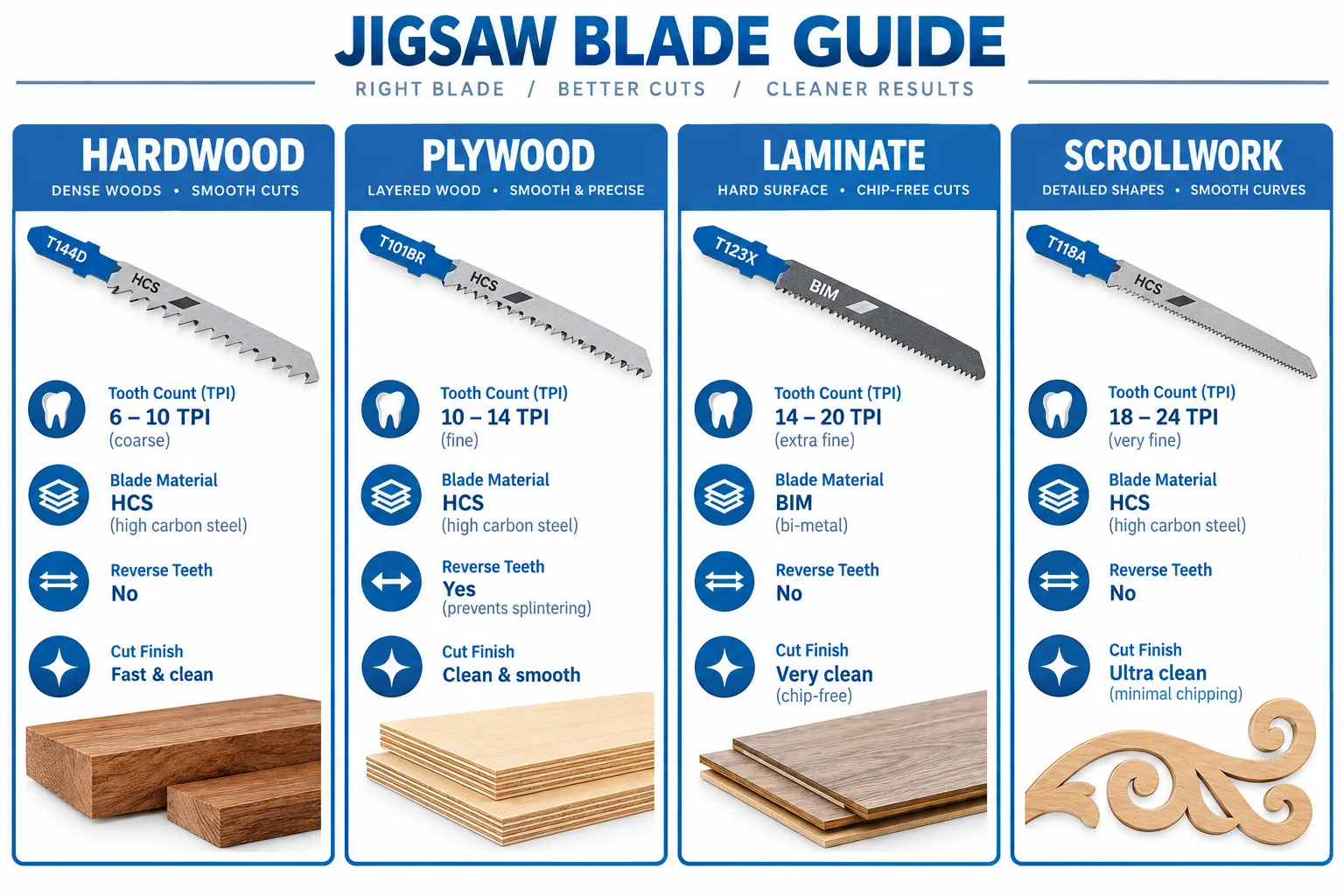
- Lower TPI (6-10 TPI): Blades with fewer, larger teeth cut faster and are generally used for thicker materials where a rougher finish is acceptable, such as construction lumber or quickly sizing rough stock. They clear sawdust quickly.
- Medium TPI (10-14 TPI): These are general-purpose blades offering a balance between cutting speed and finish. They are versatile for various woods and thicknesses.
- High TPI (14-24+ TPI): Blades with many small teeth produce very clean cuts with minimal splintering, making them essential for delicate work, thin materials, laminates, and scroll-style woodworking where precision and finish are paramount. They cut slower but leave a superior edge.
- Tooth Geometry/Set:
- Milled/Ground Teeth: Milled teeth are often coarser and suitable for faster, rougher cuts. Ground teeth, particularly taper ground, offer a finer edge for cleaner cuts, especially in laminates and hardwoods.
- Raker Set: Teeth are alternately bent left and right, with one straight tooth in the middle. This aggressive pattern is good for fast, general-purpose cutting.
- Wavy Set: Teeth are set in a wave pattern, which provides a smoother cut in thinner materials and metals.
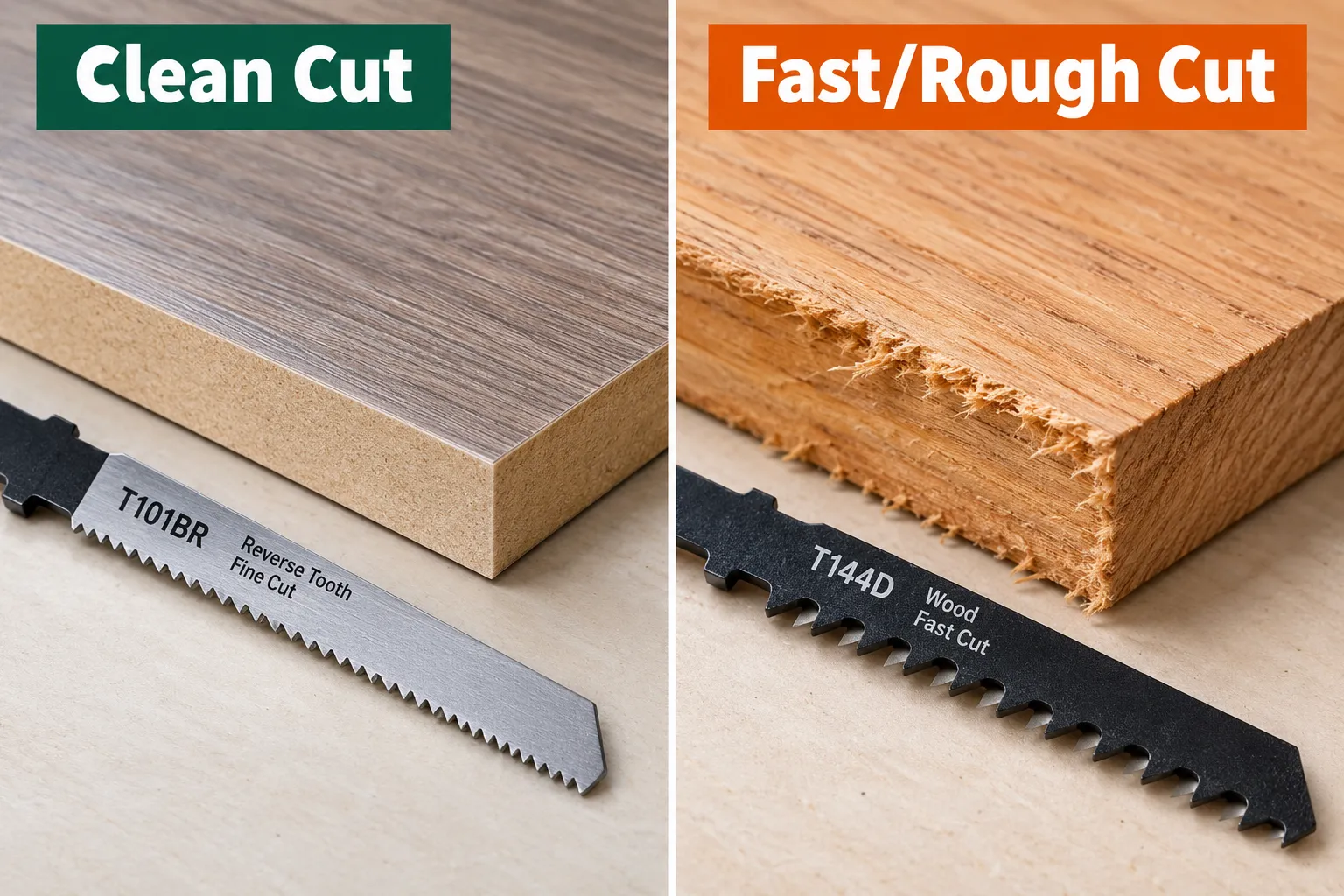
- Reverse-Tooth (Up-Cut/Down-Cut): Standard jigsaw blades cut on the upstroke, pushing material upwards and often causing splintering on the top surface. Reverse-tooth blades (also called down-cut blades) have teeth angled to cut on the downstroke, pressing the material against the workpiece and producing a splinter-free top surface. This is critical for materials like veneered plywood, finished laminates, and any project where the visible top surface must be pristine.
Shank Compatibility: T-Shank vs. U-Shank
The shank is the part of the blade that inserts into your jigsaw. Modern jigsaws predominantly use T-shank blades, which feature a T-shaped top that slides into a quick-release or tool-free clamping mechanism. This design ensures a secure fit and easy blade changes. Older jigsaw models, however, may require U-shank blades, which have a U-shaped cut-out at the top. Always verify your jigsaw’s shank requirement before purchasing blades. For comprehensive information on different types of wood, including hardwoods and softwoods, explore our Beginners Guide To Wood Species Hardwoods Vs Softwoods Workability And Best Uses For Diy Projects.
Best Jigsaw Blades for Hardwood
Cutting hardwood effectively requires blades that can withstand significant friction and heat while maintaining a sharp edge for a clean finish. The density of hardwoods like oak, maple, and cherry demands specific blade characteristics.
Key Blade Traits for Hardwood
- Blade Material: Bi-Metal (BIM) or High-Speed Steel (HSS) are the top choices. BIM blades offer superior durability and resist breakage, making them excellent for hardwoods. HSS is also effective but may have a shorter lifespan compared to BIM for intensive hardwood cutting.
- TPI (Teeth Per Inch): Aim for a medium to high TPI range, typically 8-12 TPI. This range balances cutting speed with a relatively clean cut. Too low a TPI will result in a rough, splintered edge, while excessively high TPI can lead to slow cutting and increased heat buildup without significant benefit in finish.
- Tooth Geometry: Milled or ground teeth with a slight set (alternately bent) help clear chips efficiently, reducing friction and heat. Taper-ground blades can also offer a cleaner finish.
- Blade Width: Wider blades offer better stability and accuracy for straight cuts in thick hardwood. Narrower blades can be used for curves, but stability will be reduced.
Specific Recommendations for Hardwood
For general cuts in hardwoods up to 1 inch thick, a Bi-Metal blade with 8-10 TPI is an excellent all-around choice. For thicker hardwoods or where a very clean finish is critical, look for BIM blades with 10-12 TPI and taper-ground teeth. These will cut slower but leave a much smoother edge, reducing the need for extensive sanding.
Consider the application: if you’re making rough cuts to size stock, a more aggressive, lower TPI (6-8 TPI) HCS or HSS blade might suffice for speed. However, for visible cuts in furniture or cabinetry, invest in quality BIM blades to achieve professional results.
Best Jigsaw Blades for Plywood and Laminate
Plywood and laminate present unique challenges due to their construction. Plywood, with its alternating grain layers and veneers, is prone to splintering, especially on the top and bottom surfaces. Laminate, a composite material with a hard, often brittle surface, requires blades that can cut cleanly without chipping or prematurely dulling.
Key Blade Traits for Plywood
- Blade Material: Bi-Metal (BIM) or High Carbon Steel (HCS) for general purpose. For veneered plywood, BIM is preferred due to its durability.
- TPI: 10-14 TPI is ideal for clean cuts in plywood. A higher TPI minimizes tear-out.
- Reverse-Tooth Blades: This is arguably the most important feature for veneered plywood. A reverse-tooth (down-cut) blade cuts on the downstroke, pushing the veneer against the core and virtually eliminating splintering on the top face. This is essential for projects where the visible surface must be pristine.
- Tooth Geometry: Taper-ground teeth contribute to a cleaner finish.
Key Blade Traits for Laminate
- Blade Material: Tungsten Carbide (TC) is the superior choice for laminate. Its extreme hardness resists the abrasive nature of laminate, preventing chipping and ensuring a long blade life. Bi-Metal (BIM) blades with fine, ground teeth can also work but will dull faster.
- TPI: Very high TPI, typically 14-24+ TPI. The more teeth, the finer the cut and the less chance of chipping the delicate laminate surface.
- Tooth Geometry: Fine, ground teeth are crucial for a clean, chip-free edge.
- Reverse-Tooth Blades: Similar to veneered plywood, reverse-tooth blades are highly recommended for laminate to prevent chipping on the visible top surface.
Specific Recommendations for Plywood and Laminate
For veneered plywood, a Bi-Metal reverse-tooth blade with 10-14 TPI will give the cleanest cuts. Ensure you apply masking tape along the cut line on both sides of the material for added protection against tear-out.
For laminate flooring or countertops, a Tungsten Carbide reverse-tooth blade with 14-24+ TPI is the professional choice. This combination will provide the crispest, chip-free cuts and extend blade life significantly. If TC blades are unavailable, a high-quality BIM reverse-tooth blade with very fine, ground teeth is a viable alternative, but expect faster wear. For tips on essential woodworking jigs that can improve accuracy, refer to our Beginners Guide To Essential Woodworking Jigs Improving Accuracy And Safety On Table Saws And Routers.
Best Jigsaw Blades for Scroll-Style Woodworking
Scroll-style woodworking involves intricate curves, tight radii, and delicate patterns. This type of work demands blades that are narrow, flexible, and capable of extremely fine, clean cuts without binding or breaking.
Key Blade Traits for Scroll-Style Woodworking
- Blade Width: This is the most critical factor. Very narrow blades (1/8 inch to 1/4 inch) are essential for tight curves and intricate designs. The narrower the blade, the tighter the radius it can cut.
- Blade Material: High Carbon Steel (HCS) or Bi-Metal (BIM) are generally suitable. HCS offers good flexibility for intricate turns, while BIM provides better durability for prolonged use.
- TPI: High TPI, typically 15-20 TPI or even higher. The goal is a very smooth, splinter-free edge, which requires many small teeth.
- Tooth Geometry: Fine, ground teeth are preferred for a clean finish. Underset teeth (where the set is minimal or non-existent) can also help produce a smoother cut but may be slower.
- Flexibility: The blade needs to be flexible enough to navigate curves without snapping. HCS blades often excel here.
Specific Recommendations for Scroll-Style Woodworking
For most scroll-style work in wood, a narrow HCS or BIM blade (1/8 inch to 1/4 inch wide) with 15-20 TPI is an excellent choice. If you are working with very thin stock or extremely delicate designs, look for blades specifically marketed as “scroll cutting” or “fine cut” blades, which often have even higher TPI and minimal set for an ultra-smooth finish.
It’s often beneficial to have a selection of narrow blades with varying TPI. A slightly lower TPI (e.g., 10-12 TPI) narrow blade can be used for faster, rougher scroll cuts where the finish isn’t paramount, while a very high TPI blade is reserved for the final, visible curves. When considering the best wood for your projects, especially intricate ones, understanding durability and grain is important, as covered in Choosing The Best Wood For Diy Bar Stools Durability Grain And Finishing Options For Home Bars.
Tips for Occasional Woodworkers
Even with the best blades, technique plays a vital role. For those who don’t use their jigsaw daily, these tips can make a significant difference in results in 2026:
- Match the Blade to the Material and Task: This cannot be overstressed. Using the wrong blade is the fastest way to get a poor cut and damage your material or blade.
- Use a Slower Speed for Harder Materials: Jigsaws often have variable speed settings. Slower speeds reduce heat buildup and provide more control, especially in hardwoods and laminates.
- Support Your Workpiece: Ensure the material is firmly clamped and fully supported close to the cutting line. This reduces vibration and prevents tear-out.
- Mark Your Cut Line Clearly: A precise pencil line or painter’s tape helps guide the blade. For crucial cuts, consider using a straightedge or a custom Diy Woodworking Jig For Router Table Precision Template For Table Saw And Table Joinery.
- Don’t Force the Blade: Let the blade do the work. Pushing too hard can bend the blade, cause burning, or lead to premature dulling or breakage.
- Drill Pilot Holes for Interior Cuts: For cuts that don’t start from an edge, drill a pilot hole large enough to insert the jigsaw blade.
- Keep Blades Clean: Resin and sawdust buildup can affect blade performance. Clean blades occasionally with a blade cleaner to maintain sharpness.
- Replace Dull Blades Promptly: A dull blade causes more splintering, burns the wood, and makes the saw work harder. It’s a false economy to use a dull blade.
- Consider a Dust Collection Adapter: Jigsaws can create a lot of sawdust, obscuring your cut line. A dust collection system or adapter can significantly improve visibility and workshop cleanliness, especially when combined with Portable Workshop Solutions: AC Power, Dust Control & Climate for.
Conclusion
Choosing the best jigsaw blades for hardwood, plywood, laminate, and scroll-style woodworking isn’t about finding a single “best” blade, but rather understanding the specific demands of your material and the type of cut you need to achieve. For hardwoods, prioritize durable Bi-Metal or HSS blades with a moderate TPI. When tackling plywood, especially veneered varieties, or delicate laminates, the reverse-tooth design paired with high TPI (and ideally Tungsten Carbide for laminates) is paramount to prevent splintering and chipping. For intricate scroll-style work, narrow, high-TPI blades are your best friend.
By investing in a variety of high-quality blades and matching them correctly to your project, even occasional woodworkers can achieve professional-looking results with their jigsaw in 2026. Remember to always prioritize safety, support your workpiece, and let the blade do the work for clean, efficient cuts every time.