

The average household hosts just four dinner parties a year, yet many homeowners still opt for oversized dining tables that dominate their space daily. This common oversight highlights a prevalent desire for flexibility in dining furniture, the ability to host larger gatherings without sacrificing everyday practicality. For those seeking adaptable dining solutions, understanding what to look for when buying Round Dining Room Tables: What to Look For When Buying a Table You Can Later Modify or Extend is crucial. The right initial purchase can transform a functional piece into a versatile centerpiece, capable of growing and evolving with your needs and tastes in 2026.
Key Takeaways
- Prioritize Solid Construction: Look for tables made from solid wood with robust joinery, as these offer the best foundation for future modifications and extensions.
- Inspect Extension Mechanisms: For tables designed to extend, evaluate the quality and ease of use of the leaf mechanisms, ensuring they operate smoothly and securely.
- Consider Base Design: A central pedestal or trestle base provides more seating flexibility and often simplifies the process of adding leaves compared to traditional four-leg designs.
- Assess Finish Durability: A durable, repairable finish is essential for longevity and allows for future refinishing or customization without major overhaul.
- Verify Part Availability: Before purchasing, inquire about the availability of compatible leaves or components, especially if buying a table explicitly designed for extension.
The Foundation of Flexibility: What to Look For in Round Dining Room Tables
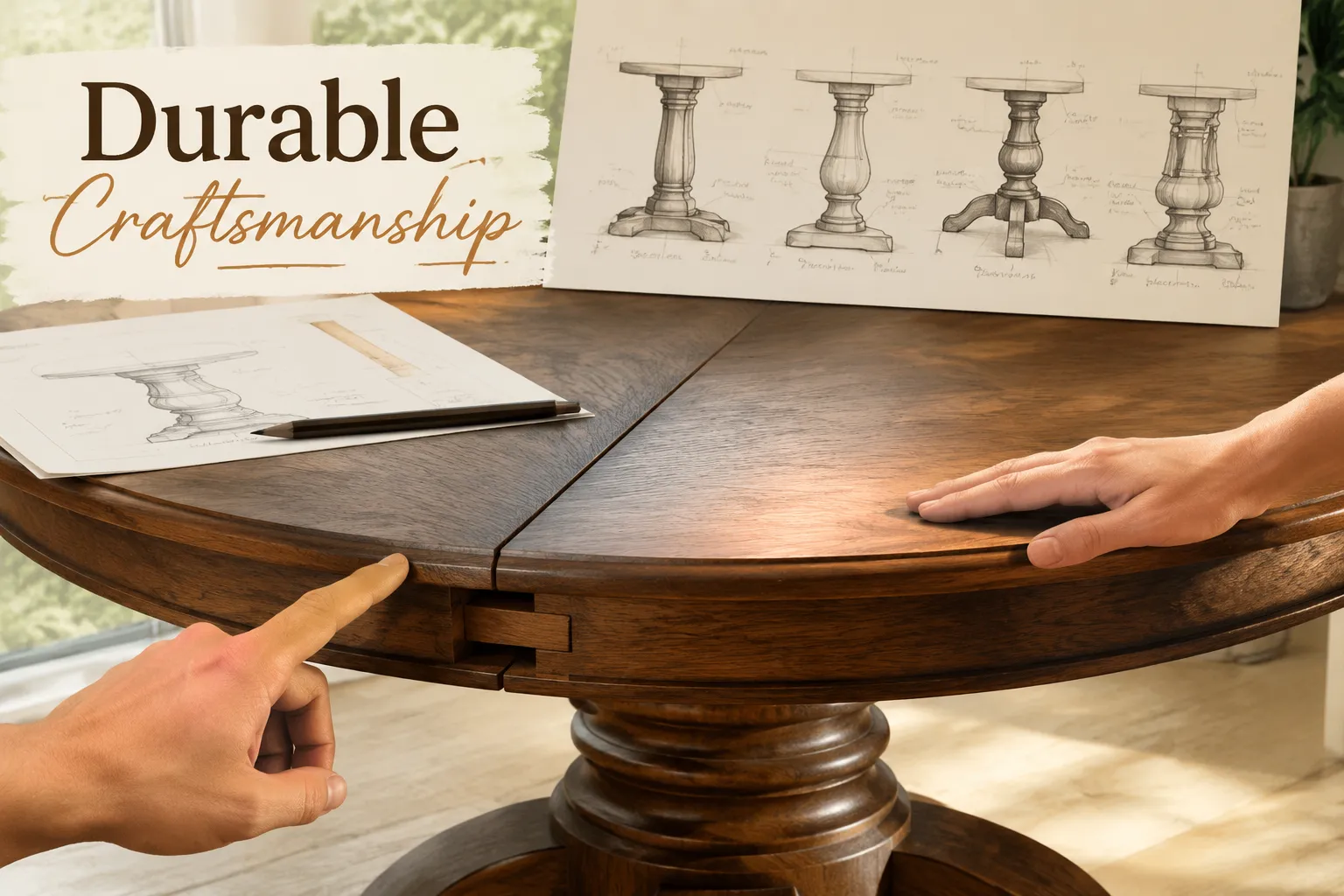
When purchasing Round Dining Room Tables: What to Look For When Buying a Table You Can Later Modify or Extend, the core principle is to invest in quality that allows for future adaptation. Think of your dining table not as a static piece, but as a long-term canvas for your evolving home decor and lifestyle. This means scrutinizing the fundamental elements of the table’s construction, material, and design.
Material Matters: Choosing Durable Wood for Longevity
The material of your round dining table is perhaps the most critical factor influencing its modify-ability and longevity. Solid wood is almost always the superior choice for tables intended for future modification or extension. Unlike veneer or particleboard, solid wood can be sanded, refinished, repaired, and even carved, offering endless possibilities for customization down the line.
Common Solid Wood Choices and Their Attributes:
| Wood Type | Durability | Workability for Modification | Aesthetic |
|---|---|---|---|
| Oak | Excellent | Good | Distinct grain, rustic to traditional |
| Maple | Excellent | Excellent | Fine grain, modern to contemporary |
| Cherry | Good | Excellent | Rich color, ages beautifully |
| Walnut | Good | Excellent | Dark, luxurious, distinctive grain |
| Ash | Very Good | Good | Similar to oak, lighter tone |
Hardwoods like oak, maple, and walnut are exceptionally durable and hold up well to the stresses of regular use and any subsequent modifications. They are less prone to warping or cracking, which is vital when considering adding leaves or replacing components. Softwoods like pine, while more affordable, are more susceptible to dents and scratches, making them less ideal for long-term modification projects.
Consider tables constructed from live edge wood slabs for a truly unique and durable base that can be easily refinished.
Construction and Joinery: The Backbone of Your Table
Beyond the material, the way a table is constructed directly impacts its stability and ability to be modified. High-quality construction involves robust joinery methods that ensure the table remains stable even after alterations.
- Leg Attachment: Look for tables where legs are securely attached with mortise-and-tenon joints, heavy-duty bolts, or interlocking hardware, rather than simple screws. This provides a solid base that can withstand the added weight or stress of extension leaves.
- Tabletop Thickness: A thicker tabletop (typically 1 inch or more for solid wood) offers greater stability and structural integrity. It also provides more material for sanding and refinishing multiple times over its lifespan.
- Underlying Support Structure: Inspect the apron (the frame directly beneath the tabletop) and any stretcher bars connecting the legs. A well-built apron with strong corner blocks contributes significantly to the table’s rigidity and prevents wobbling, especially when extended.
Poorly constructed tables, often identified by lightweight materials and flimsy hardware, are unlikely to endure the rigors of modification or provide a stable platform when extended.
Design Elements for Extendable and Modifiable Round Dining Room Tables
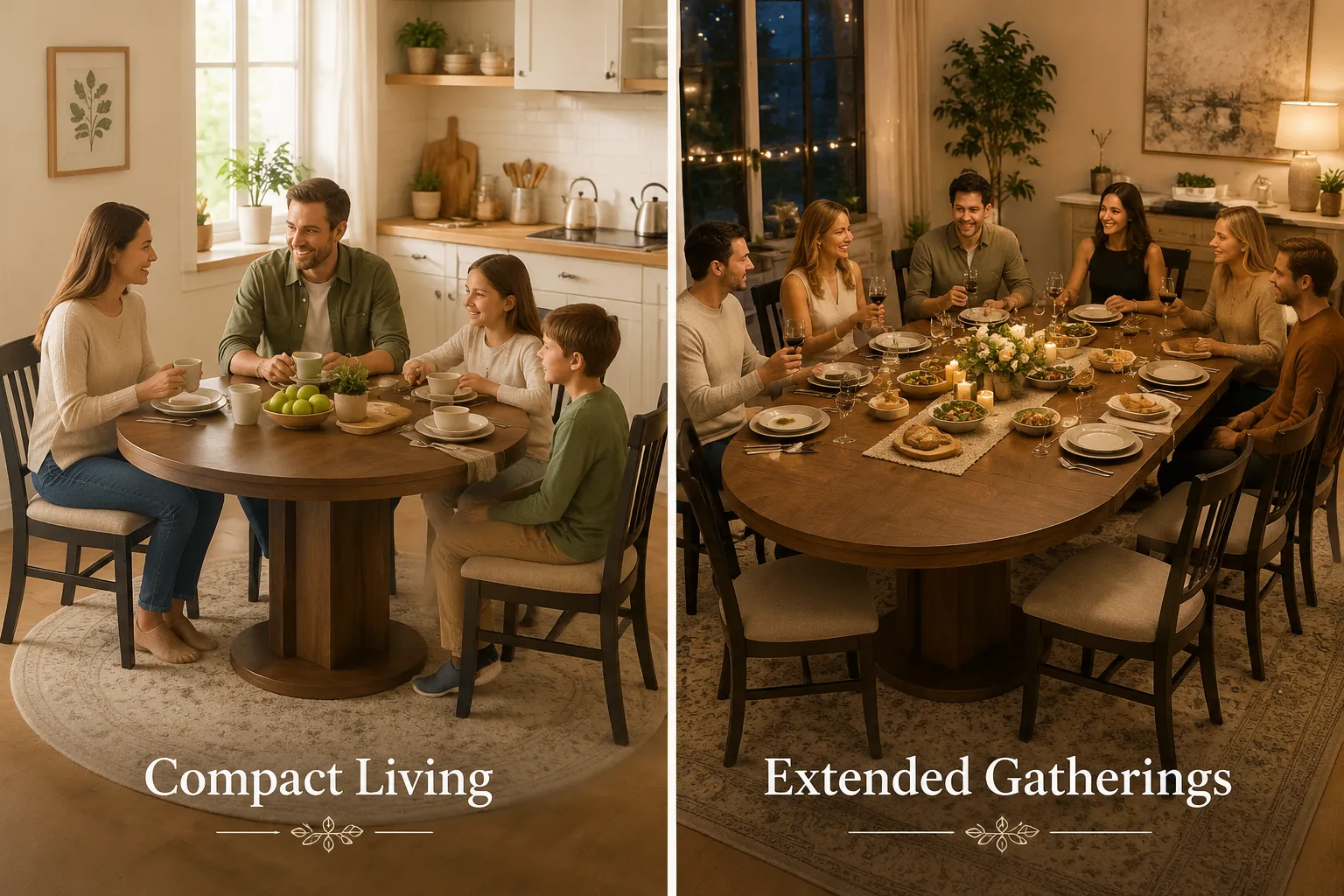
The design of your table, specifically how it accommodates extension and modification, is paramount for buyers seeking versatility. Understanding the different mechanisms and base styles will help you choose a table that not only fits your current space but also adapts gracefully to future needs.
Extension Mechanisms: Smooth Transitions for Growing Gatherings
For Round Dining Room Tables: What to Look For When Buying a Table You Can Later Modify or Extend, the extension mechanism is a key feature. Not all round tables extend, but for those that do, there are several common types:
- Butterfly Leaves: These leaves are stored within the table itself and fold out like a butterfly’s wings. They offer convenience as no external storage is needed, making them ideal for spontaneous extensions. Check the mechanism’s smoothness and durability.
- Self-Storing Leaves: Similar to butterfly leaves, these are stored internally but often slide or lift into place. Again, internal storage is a huge plus.
- Drop-In Leaves (Removable): These are separate pieces that fit into a central opening when the table is pulled apart. While they require external storage, they often provide the most stable extension and are common in solid wood tables. This style is often easier to fabricate additional leaves for later if you need to extend beyond the original design.
- Gear-Driven Slides: High-quality extendable tables often use metal gear-driven slides beneath the tabletop. These allow one person to effortlessly pull the table ends apart to insert leaves, ensuring smooth, synchronized movement. Test this mechanism for ease of use and stability.
Regardless of the mechanism, ensure that the leaf-locking system (pins, latches, or clips) is sturdy and prevents the table from sagging or separating once extended.
Base Styles: Enhancing Seating and Modification Potential
The table’s base plays a significant role in both aesthetics and functionality, especially concerning seating capacity and ease of modification.
- Pedestal Base: A central pedestal base is often the most practical choice for round dining tables, particularly those that extend. It eliminates the problem of table legs interfering with seating arrangements, allowing more chairs to be pulled up comfortably, even when the table is extended. This design also offers excellent stability and, for a DIY enthusiast, can be relatively easier to replace or upgrade than a complex four-leg system. Mastering wooden napkin holders can further enhance the look of such tables.
- Trestle Base: A trestle base, featuring two supports connected by a central beam, offers similar benefits to a pedestal in terms of seating flexibility. It can also provide a sturdy foundation for an extendable top.
- Four-Leg Base: While common, four-leg round tables can be less ideal for extensions unless the legs themselves slide apart with the tabletop. If the legs remain fixed, the extension can create awkward seating positions where guests straddle a leg.
When evaluating a table for future modification, consider how easily the base could be detached or replaced. A robust, well-designed base is key to supporting an extended top.
Preparing for Future Modifications and DIY Upgrades
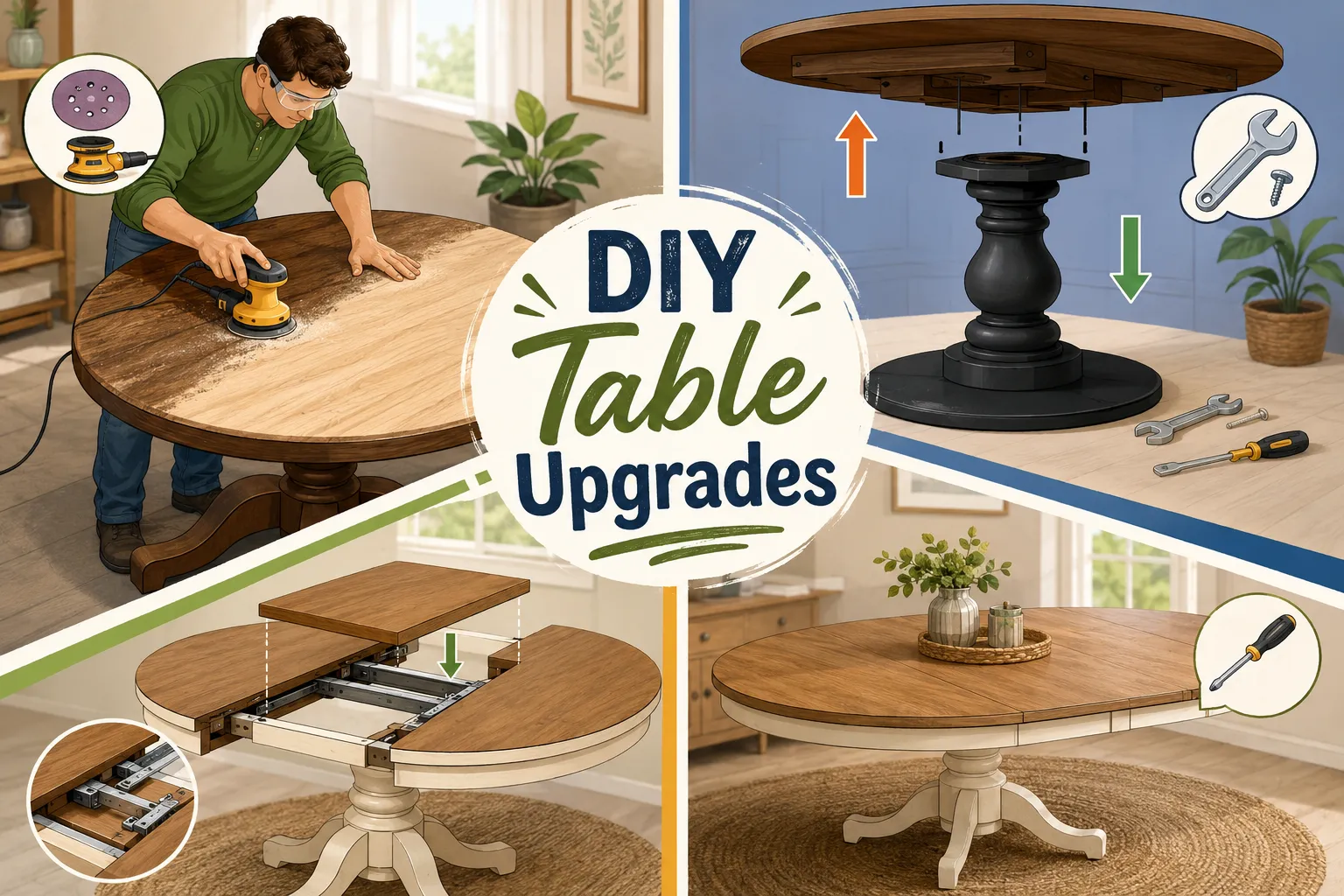
Purchasing a round dining table with an eye toward future modification or extension opens up a world of possibilities for personalization and longevity. Whether you plan to refinish the tabletop, replace the base, or add custom leaves, certain considerations upfront will simplify these projects later.
Refinishing and Repair Potential
Even the most durable table will show signs of wear over time. Choosing a table that can be easily refinished or repaired extends its life and allows you to update its look.
- Finish Type: A factory finish that can be stripped and reapplied is ideal. Some modern finishes are extremely durable but can be challenging to strip, making future refinishing a more daunting task. Consider tables with finishes that are known to be workable, such as lacquer, oil, or polyurethane. For inspiration, explore various dark wood finishing techniques or maple wood finishing techniques.
- Surface Condition: Inspect the tabletop for deep scratches, gouges, or veneer damage (if applicable). While minor flaws can be sanded out, significant damage to veneer can make refinishing impossible without replacing the entire top. Solid wood tops, conversely, offer a generous amount of material for repeated sanding.
- Color and Stain: If you plan to refinish, consider the wood’s natural color. Light woods like maple or ash can be stained almost any color, while darker woods like walnut offer fewer dramatic transformations without bleaching.
Adding Custom Leaves or Components
Sometimes, a table doesn’t come with extension leaves, or you might desire additional leaves beyond what was originally provided.
- Matching Wood: If you plan to add custom leaves, sourcing matching wood can be challenging. It’s often easier to purchase a table made from a common wood type (e.g., oak, maple) that’s readily available from lumber suppliers. Alternatively, embracing a contrasting wood for leaves can create a unique, modern aesthetic.
- Existing Mechanism Adaptation: If your table already has an extension mechanism, new leaves will need to precisely fit that system. Taking detailed measurements or even contacting the manufacturer for specifications will be essential.
- Fabricating New Mechanisms: For tables without existing extension capabilities, adding slides and creating custom leaves is a more advanced woodworking project. This would involve disassembling the tabletop, installing sturdy metal slides, and precisely cutting and matching new leaf sections. This kind of work is well within the realm of someone familiar with woodworking for beginners who wants to take on a larger project.
Base Swaps and Upgrades
Replacing the table base is an impactful modification that can completely change the table’s style and stability.
- Attachment Method: A base that attaches to the tabletop with bolts and threaded inserts (rather than just screws into the wood) will be much easier to remove and replace without damaging the tabletop.
- Pedestal Stability: If replacing a pedestal, ensure the new base offers sufficient weight and footprint to support the tabletop, especially when extended. A Pro-Tech 10 table saw can be an invaluable tool for fabricating a new, sturdy base.
- Design Compatibility: Consider how a new base will integrate with the tabletop’s existing aesthetic and the overall room design. You might explore a more minimalist base for a “warm minimalism” look.
Conclusion
Choosing the right round dining table in 2026 is an investment in your home’s flexibility and future style. By focusing on fundamental quality, solid wood construction, robust joinery, and well-designed extension mechanisms, you can acquire a piece that not only serves your immediate needs but also welcomes future modifications and extensions. Prioritize materials that can be refinished, scrutinize the base for stability and adaptability, and evaluate how easily leaves can be added or exchanged. A carefully selected round dining table can evolve from a compact everyday fixture to a grand gathering point, proving that smart initial choices pave the way for lasting satisfaction and endless customization possibilities.
SEO Meta Title: Round Dining Tables: Buy for Future Modify & Extend SEO Meta Description: Explore what to look for when buying round dining room tables in 2026, focusing on quality, extension mechanisms, and design for future modification or extension projects.