
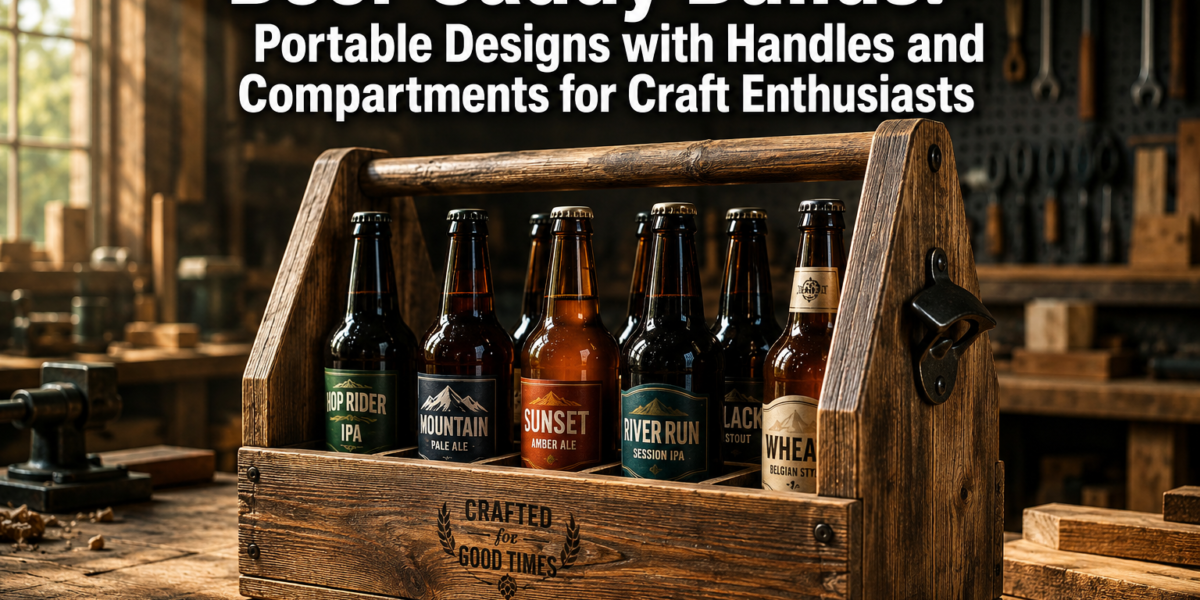
The craft beer market, valued at over $20 billion in 2025, continues its robust growth, fueling an increased demand for artisanal accessories that complement the enthusiast’s passion. Among these, the wooden beer caddy stands out as a quintessential item, marrying utility with bespoke craftsmanship. This article delves into “Beer Caddy Builds: Portable Designs with Handles and Compartments for Craft Enthusiasts,” offering insights into creating fun, functional carriers optimized for six-packs, featuring ergonomic handles and customizable engravings, using both power and hand tool methods for quick, sellable batches.
Key Takeaways
- Design for Portability and Protection: Effective beer caddies prioritize secure bottle compartments, comfortable handles, and durable construction to protect craft brews during transport.
- Material Selection Matters: Choosing the right wood, hardware, and finishes is crucial for both aesthetics and longevity, impacting the caddy’s appeal and resale value.
- Customization Enhances Value: Personalization through engraving, unique finishes, or integrated features like bottle openers significantly increases a caddy’s appeal to craft beer lovers.
- Efficient Production Techniques: Utilizing a combination of power and hand tools allows for efficient, high-quality batch production, making these builds ideal for small businesses and hobbyists alike.
- Target the Craft Enthusiast: Understanding the specific needs and desires of craft beer aficionados informs design choices, from compartment size to aesthetic details.
Foundations of Portable Beer Caddy Builds
Creating a truly functional and appealing beer caddy begins with solid design principles. A well-designed caddy isn’t just a box; it’s a statement piece that enhances the craft beer experience. The core challenge in “Beer Caddy Builds: Portable Designs with Handles and Compartments for Craft Enthusiasts” is to balance robust construction with elegant aesthetics and user-friendly features.
Essential Design Considerations
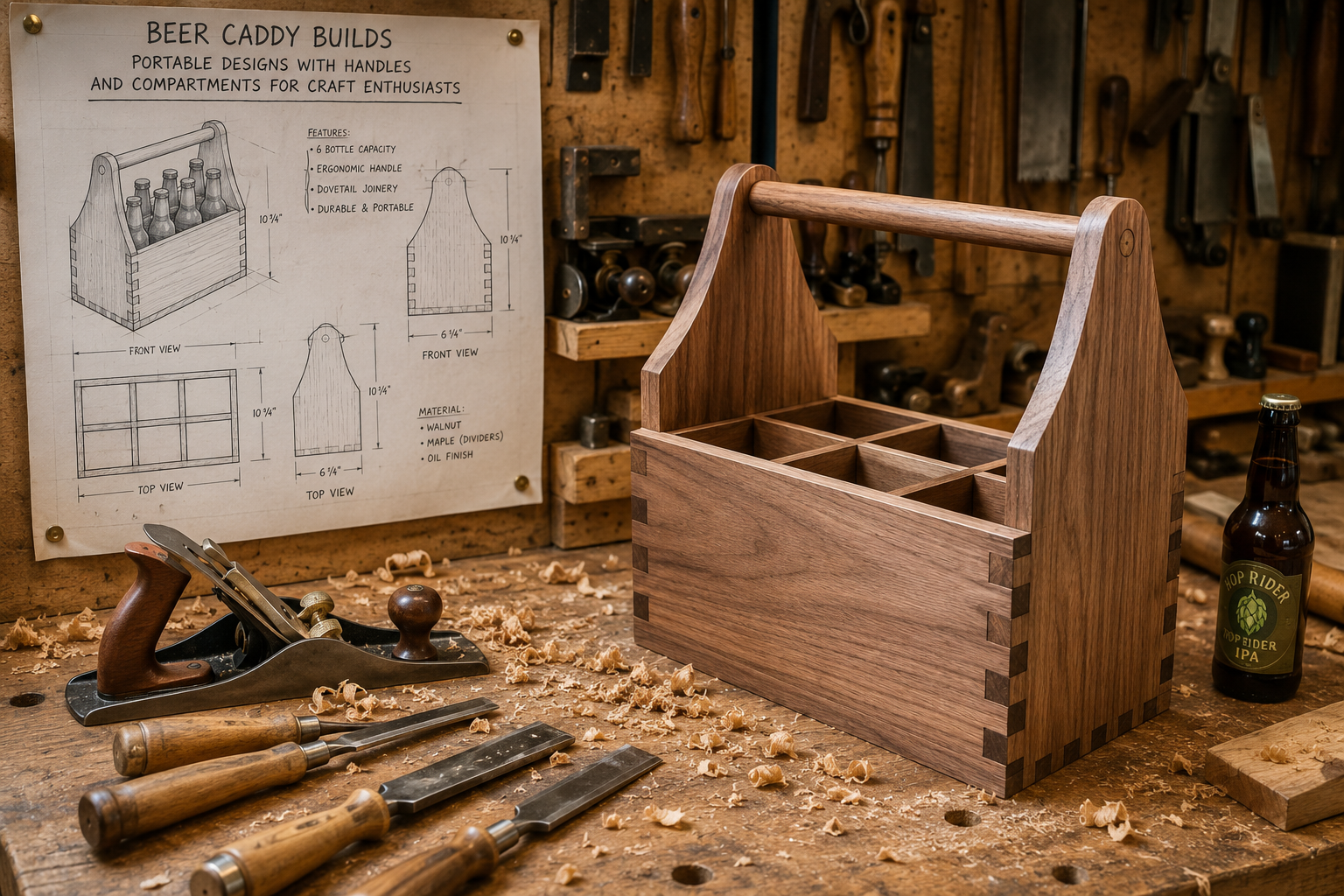
1. Capacity and Compartmentalization: Most beer caddies are designed for a standard six-pack of bottles or cans. This typically means six individual compartments, each sized to prevent bottles from clanking together. Standard beer bottles are roughly 2.5 to 3 inches in diameter, so compartments should accommodate this with a small buffer. For cans, the dimensions are slightly different, often requiring a snugger fit. Some designs might incorporate a removable divider for flexibility.
2. Ergonomic Handles: A comfortable handle is paramount for portability. Options range from simple routed handholds to more elaborate dowel handles. The material and finish of the handle contribute significantly to the user experience. Hardwoods like oak, maple, or walnut offer excellent durability and a premium feel. Consider the grip: a rounded profile is generally more comfortable than a sharp edge.
3. Durability and Stability: The caddy needs to withstand the weight of six full bottles, which can be considerable. Strong joinery is essential. Common choices include:
- Dovetail Joints: Known for their strength and aesthetic appeal, dovetail joints are ideal for the sides and bottom of the caddy, offering a premium look. For those looking to master this technique, exploring resources on mastering dovetail joinery can be highly beneficial.
- Box Joints: A simpler alternative to dovetails, offering good strength and a distinct visual pattern.
- Dado and Rabbet Joints: Excellent for securing the bottom panel and internal dividers, providing strong mechanical connections.
- Screws and Glue: While less elegant than traditional joinery, screws combined with quality wood glue can create a very strong assembly, especially when countersunk and plugged. For more on adhesives, refer to the ultimate guide to wood glue.
4. Material Selection: The choice of wood significantly influences the caddy’s final look and feel.
- Pine: Affordable, easy to work with, and takes stain well. Ideal for rustic or painted finishes.
- Poplar: A step up from pine, with a smoother grain and better dent resistance. Good for painted or natural finishes.
- Oak (Red or White): Extremely durable, with a prominent grain. Offers a classic, robust aesthetic.
- Maple: Hard and dense with a fine grain, excellent for smooth finishes and engravings.
- Walnut: Luxurious dark wood with a rich grain, perfect for high-end caddies.
Consider reclaimed wood for unique character and sustainability. Sourcing and restoring urban harvested and reclaimed wood can add a distinct narrative to your builds.
5. Finishes and Protection: A good finish protects the wood and enhances its beauty.
- Oil Finishes: Penetrate the wood, providing a natural look and feel, easy to repair.
- Polyurethane: Forms a durable, protective layer, available in various sheens.
- Varnish: Offers excellent protection against moisture and abrasion.
- Stains: Can alter the wood’s color to achieve desired aesthetic effects.
Remember that craft beer caddies are often exposed to condensation, so water-resistant finishes are important.
Crafting Your Beer Caddy: Tools and Techniques
Whether you’re a seasoned woodworker or just starting, a range of tools and techniques can be employed to create stunning “Beer Caddy Builds: Portable Designs with Handles and Compartments for Craft Enthusiasts.” The approach can be tailored to your available equipment and skill level, combining efficiency with precision.
Power Tool Methods for Batch Production
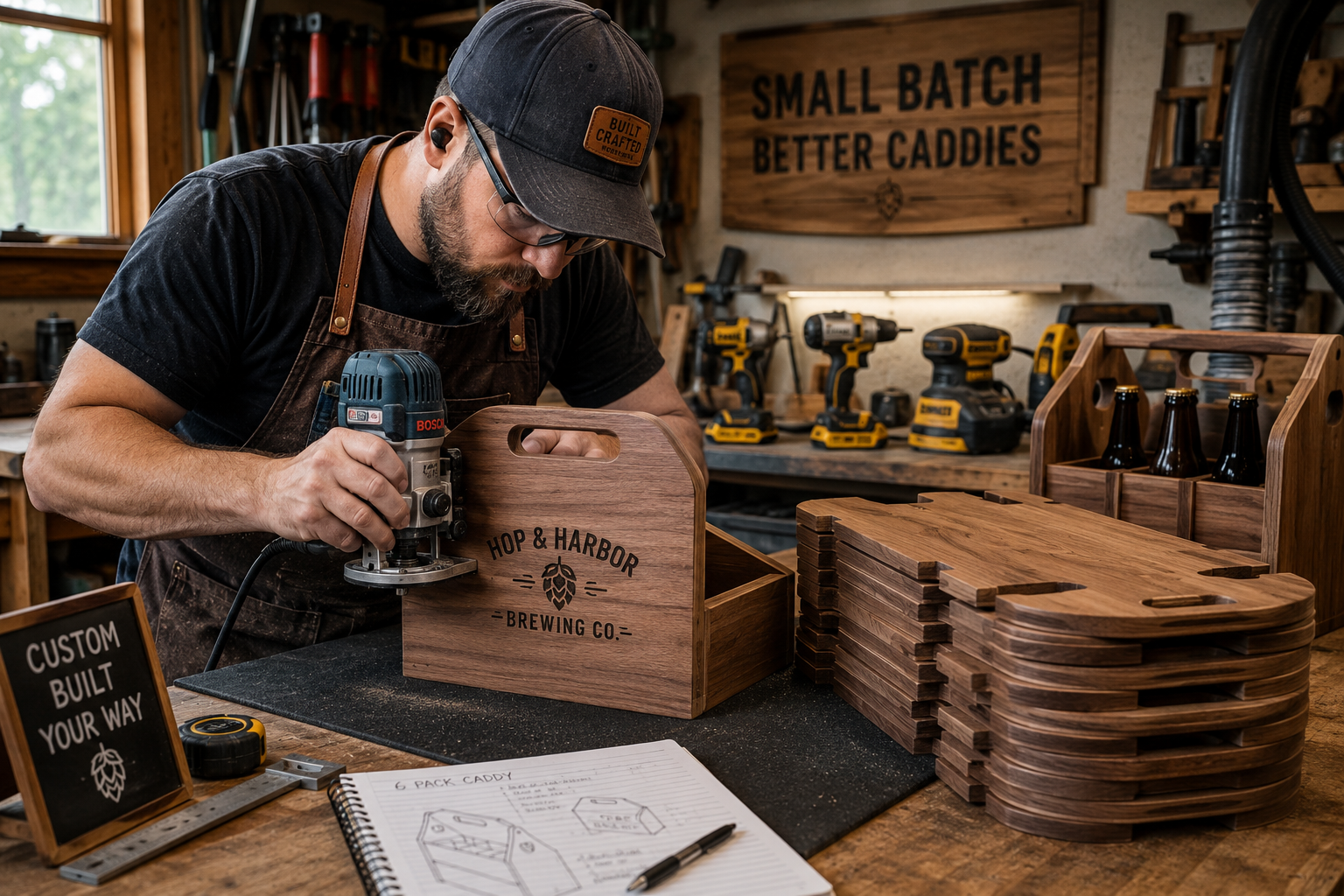
For those looking to produce multiple caddies, power tools offer speed and consistency.
1. Table Saw: A table saw is indispensable for accurately ripping boards to width and cross-cutting components to length. It ensures square, consistent cuts, crucial for tight-fitting joinery. For larger batches, a sled for cross-cutting can significantly improve efficiency and safety. For more on specific table saws, explore resources like Delta X5 Table Saw Overview.
2. Router: A router, either handheld or in a table, is invaluable for:
- Dadoes and Rabbets: Creating grooves and recesses for the bottom panel and dividers.
- Edge Profiling: Adding decorative edges or softening sharp corners on handles and caddy edges.
- Handle Creation: Routing an ergonomic profile for comfortable gripping.
- Engraving: With appropriate bits, a router can create personalized designs or logos directly onto the wood, a key aspect of customization.
3. Bandsaw: While not strictly necessary for every design, a bandsaw excels at cutting curves, making it ideal for unique handle shapes or decorative elements. Mastering the band saw can open up many design possibilities beyond straight lines.
4. Planer and Jointer: For starting with rough lumber, a planer and jointer are essential for milling wood to precise dimensions, ensuring flat, square surfaces for superior joinery.
Hand Tool Techniques for Artisanal Quality
Hand tools allow for a slower, more deliberate process, often yielding a higher degree of craftsmanship and character.
1. Hand Saws: Japanese pull saws or western-style panel saws are excellent for precise cross-cuts and rip cuts, especially for smaller components.
2. Chisels: Chisels are fundamental for refining joinery, cleaning out dadoes, and paring precise shoulders. A sharp set of chisels is critical. Learn more about sharpening woodworking chisels.
3. Hand Planes: Block planes and smoothing planes are invaluable for quickly bringing surfaces to a fine finish, beveling edges, and refining handle shapes, often eliminating the need for extensive sanding.
4. Layout Tools: Accurate marking gauges, squares, and measuring tapes are crucial for precise joinery and component dimensions, whether using hand or power tools.
Joinery Focus: Dovetails and Box Joints
For “Beer Caddy Builds: Portable Designs with Handles and Compartments for Craft Enthusiasts,” dovetails and box joints are frequently chosen for their strength and visual appeal.
Dovetail Joints:
- Hand-cut: A true test of skill, producing elegant and exceptionally strong joints. Requires careful marking, sawing, and chiseling.
- Router Jig: Jigs simplify the process, allowing for consistent and strong dovetails with a router, ideal for batch production.
Box Joints (Finger Joints):
- Table Saw Jig: A dedicated box joint jig for the table saw makes quick work of these interlocking finger joints, offering strong connections and a distinctive look.
Regardless of the chosen joinery method, careful measurement, precise cuts, and robust clamping during glue-up are essential for a strong and durable caddy.
Personalization and Advanced Features for Craft Enthusiasts
In a market driven by individuality, offering unique “Beer Caddy Builds: Portable Designs with Handles and Compartments for Craft Enthusiasts” through personalization and advanced features can significantly increase their appeal and value. This strategy caters directly to the discerning tastes of craft beer lovers who appreciate bespoke items.
Customization Options
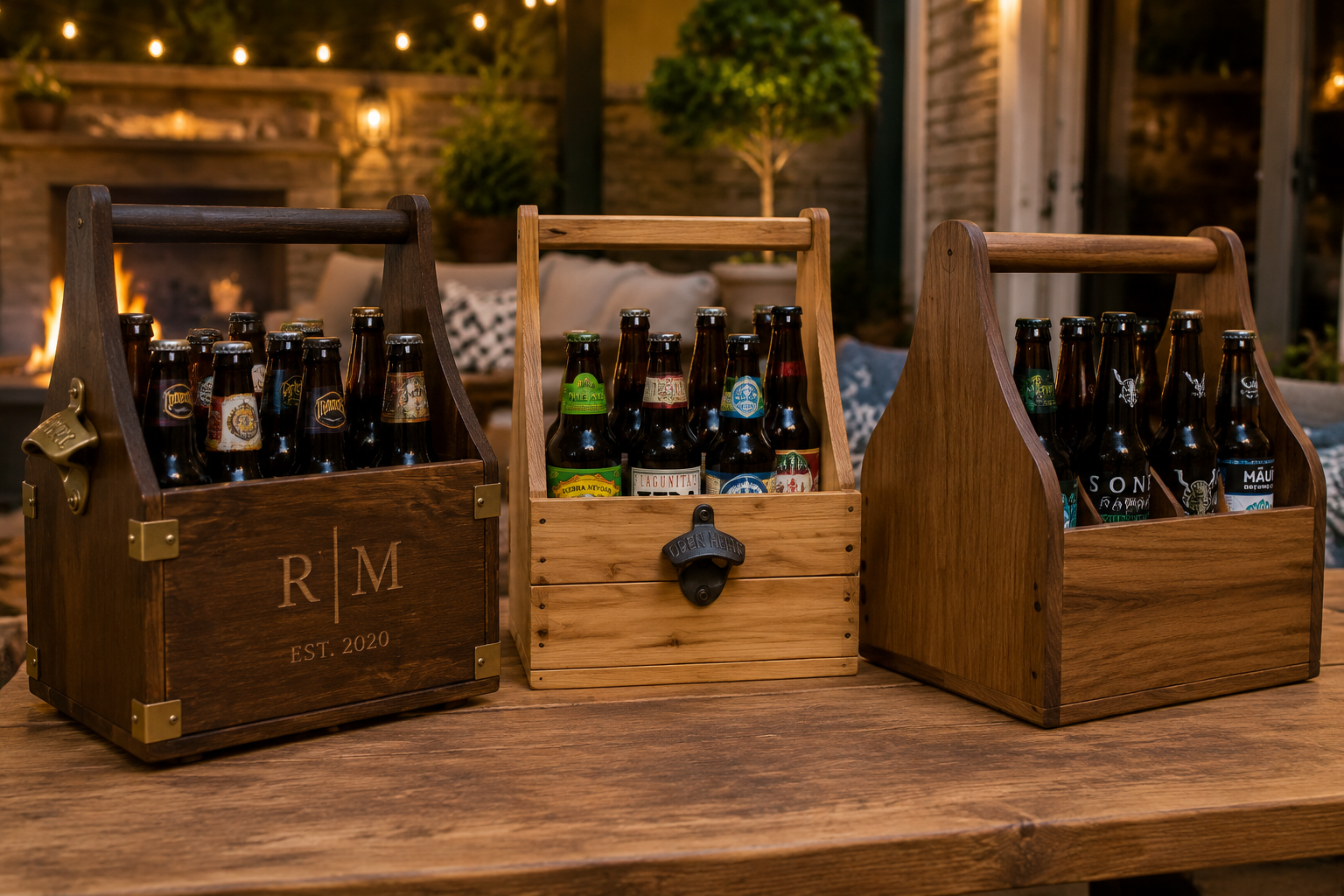
1. Engraving and Branding: This is perhaps the most impactful way to personalize a beer caddy.
- Laser Engraving: Offers precise, detailed designs, from initials and names to intricate logos or brewery names. Excellent for corporate gifts or personalized presents.
- Router Engraving: Achieves a more rustic, deeper cut. Handheld routers with engraving bits can be used, or a CNC router for automated precision.
- Branding Irons: For a classic, rustic touch, a branding iron can be used to burn a logo or initial into the wood.
2. Unique Finishes: Beyond standard stains and oils, consider finishes that tell a story.
- Distressed Finishes: Mimic aged wood, giving a vintage or rustic appeal.
- Milk Paint or Chalk Paint: Offer a matte, antique look with a wide range of colors.
- Two-Tone Finishes: Contrasting colors on different parts of the caddy (e.g., a dark handle with a lighter body) can create visual interest.
- Food-Safe Finishes: While not directly for consumption, these ensure no harmful chemicals come into contact with the bottles, appealing to health-conscious consumers.
3. Hardware Accents: The right hardware can elevate the caddy’s aesthetics and functionality.
- Brass or Copper Accents: Rivets, decorative screws, or corner protectors can add a touch of elegance or industrial charm.
- Integrated Bottle Openers: Mounting a sturdy bottle opener on the side of the caddy is a highly practical and appreciated feature for any beer enthusiast.
- Leather Straps: Instead of a wooden handle, a thick leather strap can provide a comfortable and stylish carrying solution.
Advanced Features for Enhanced Functionality
1. Integrated Cooler Compartments: For longer trips or warmer climates, a caddy with an insulated compartment (perhaps lined with a removable, waterproof insert) can keep beers chilled. This requires a larger design but adds significant value.
2. Storage for Tasting Glasses or Accessories: Some enthusiasts might appreciate a small, dedicated compartment for a set of tasting glasses, coasters, or a small note-taking pad for beer reviews.
3. Modular Designs: Consider a design where dividers can be removed or reconfigured to accommodate different bottle sizes or even other items, making the caddy more versatile. This aligns with principles of modular furniture design.
4. Magnetic Catches for Caps: A small magnet embedded in the side or bottom of the caddy can catch bottle caps, preventing them from falling to the ground after opening.
5. Display Features: For collectors, a caddy designed to elegantly display the labels of the craft beers, perhaps with slightly angled compartments, could be a compelling feature.
By focusing on these customization and advanced features, you can create “Beer Caddy Builds: Portable Designs with Handles and Compartments for Craft Enthusiasts” that are not only functional but also deeply personal and cherished. This approach allows for differentiation in the market and caters to the growing desire for unique, handcrafted goods. Consider exploring customization strategies for small woodcraft for efficient integration of these elements into your production.
Conclusion
The creation of “Beer Caddy Builds: Portable Designs with Handles and Compartments for Craft Enthusiasts” offers a rewarding venture for woodworkers, blending practical design with artisanal flair. From the initial selection of durable woods like oak and maple to the careful execution of strong joinery, each step contributes to a product that is both robust and aesthetically pleasing. The emphasis on ergonomic handles ensures comfort during transport, while customizable engravings and integrated features like bottle openers transform a simple carrier into a personalized statement piece.
By understanding the preferences of the craft beer community and employing efficient woodworking techniques—whether through precise power tool operations for batch production or the meticulous detail of hand tool craftsmanship—makers can consistently produce high-quality caddies. The market for unique, handcrafted accessories continues to thrive in 2026, making these builds not just a passion project but also a viable product for small businesses or individual sellers. Embrace the opportunity to combine functionality with personalized style, and you’ll craft caddies that truly resonate with craft enthusiasts.
SEO Meta Title: Beer Caddy Builds: Portable, Custom Designs for Craft Beer Lovers SEO Meta Description: Master 2026 Beer Caddy Builds with portable designs, ergonomic handles, and custom compartments. Perfect for craft beer enthusiasts.