
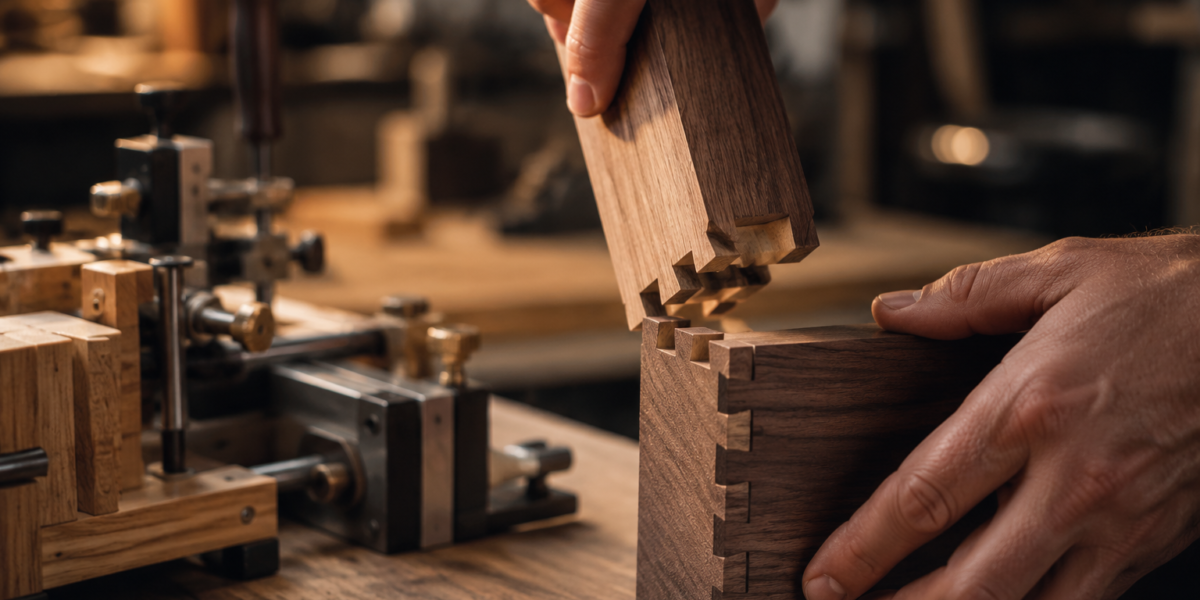
The average woodworker spends countless hours wrestling with measurements, battling inconsistent cuts, and struggling to replicate identical parts for their projects. What if there was a way to elevate your craft, reduce errors, and dramatically improve efficiency and safety, all while producing professional-grade results? The answer lies in Beyond the Workbench: Building Specialized Jigs and Fixtures for Precision Woodworking. By constructing essential aids for your workshop, from crosscut sleds and router jigs to tapering jigs and box joint jigs, you can transform your woodworking process, achieving unparalleled accuracy, consistent quality, and a safer working environment.
Key Takeaways
- Enhanced Accuracy and Repeatability: Specialized jigs and fixtures ensure precise cuts and joinery, allowing for identical parts and flawless assemblies.
- Increased Safety: Custom jigs guide tools safely through workpieces, minimizing kickback risks and protecting hands from blades and bits.
- Improved Efficiency: Repetitive tasks become faster and more consistent, saving time and reducing material waste.
- Expanded Project Capabilities: Complex operations like tapering, mortising, and intricate joinery become accessible even to intermediate woodworkers.
- Cost-Effective Solutions: Building your own jigs often proves more economical than purchasing commercial alternatives, allowing for customization to specific needs.
The Foundation of Precision: Crosscut Sleds and Table Saw Jigs
One of the first steps Beyond the Workbench: Building Specialized Jigs and Fixtures for Precision Woodworking is to master the table saw with custom accessories. The table saw, while versatile, can be made significantly safer and more accurate with the right jigs.
The Indispensable Crosscut Sled
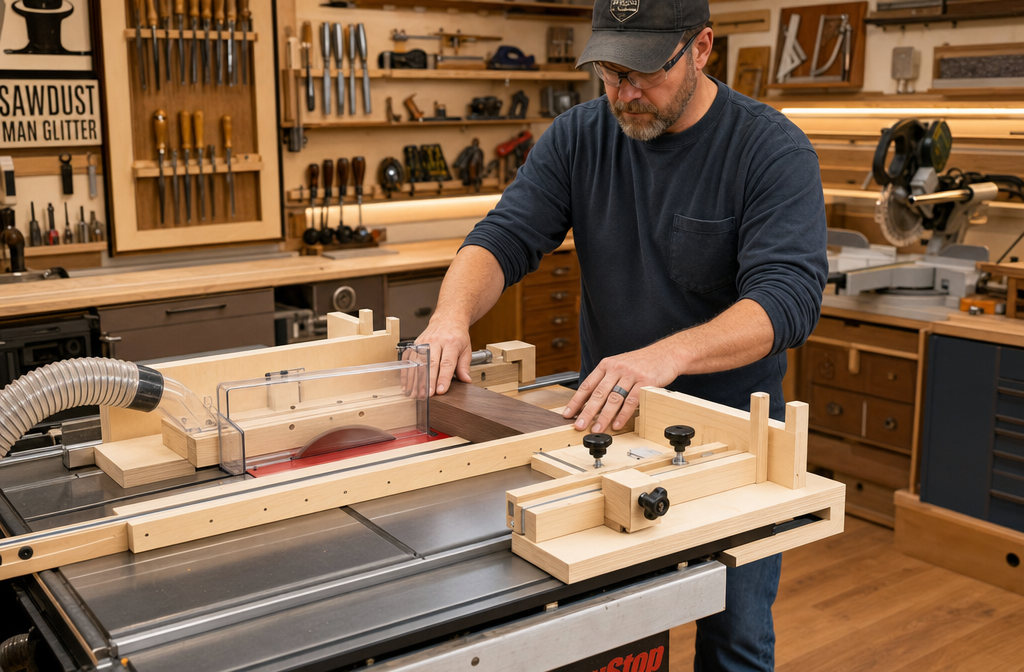
A crosscut sled is arguably the most fundamental jig for any woodworking shop. It allows for perfectly square and repeatable crosscuts on the table saw, far exceeding the accuracy of a standard miter gauge. A well-built sled features a large, flat base that rides in the saw’s miter slots, a robust fence, and often an integrated stop block system for consistent length cuts.
Key Components of a Crosscut Sled:
- Base: Typically made from high-quality plywood or MDF, offering a stable platform for your workpiece.
- Runners: Hardwood or phenolic strips that fit snugly into the table saw’s miter slots, ensuring smooth, parallel movement.
- Front and Rear Fences: Crucial for holding the workpiece securely and providing a reference edge for accurate cuts. The rear fence often incorporates a sacrificial strip.
- Hold-Down Clamps: Optional but highly recommended for securing smaller pieces or ensuring precise cuts on larger stock.
When building your crosscut sled, precision is paramount. Use a reliable square to align your fences, and consider adding a five-cut method calibration for ultimate accuracy. This process involves making five successive cuts and measuring the error to adjust the fence to perfect 90-degree alignment. For those looking to optimize their workspace, exploring building a compact and ergonomic workbench for small workshops can provide additional space for these essential jigs.
Beyond 90 Degrees: Angled Crosscut Sleds and Panel Sleds
While a basic 90-degree crosscut sled is essential, specialized versions can further enhance your capabilities. An angled crosscut sled is designed to make precise, repeatable cuts at a specific angle, often 45 degrees, which is invaluable for mitered boxes and frames.
For larger panels that are difficult to handle on a standard crosscut sled, a panel sled comes into its own. These are typically larger, designed to support full sheets of plywood or MDF, and often incorporate extra runners and longer fences to maintain stability and accuracy. This type of jig is critical for cabinet making and furniture construction where large, precise cuts are frequently required.
Benefits of Table Saw Jigs:
- Safety: Keeps hands away from the blade.
- Accuracy: Ensures square, parallel, and repeatable cuts.
- Versatility: Allows for cuts not easily done with standard accessories.
- Efficiency: Speeds up repetitive cutting tasks.
Mastering Routing Operations with Specialized Jigs and Fixtures
Routing is a versatile woodworking operation, but without proper guidance, achieving consistent, precise results can be challenging. This is where Beyond the Workbench: Building Specialized Jigs and Fixtures for Precision Woodworking truly shines, particularly for the router. Router jigs transform this handheld or table-mounted tool into a powerhouse of precision for joinery, edge profiling, and decorative work.
Essential Router Jigs for Diverse Applications
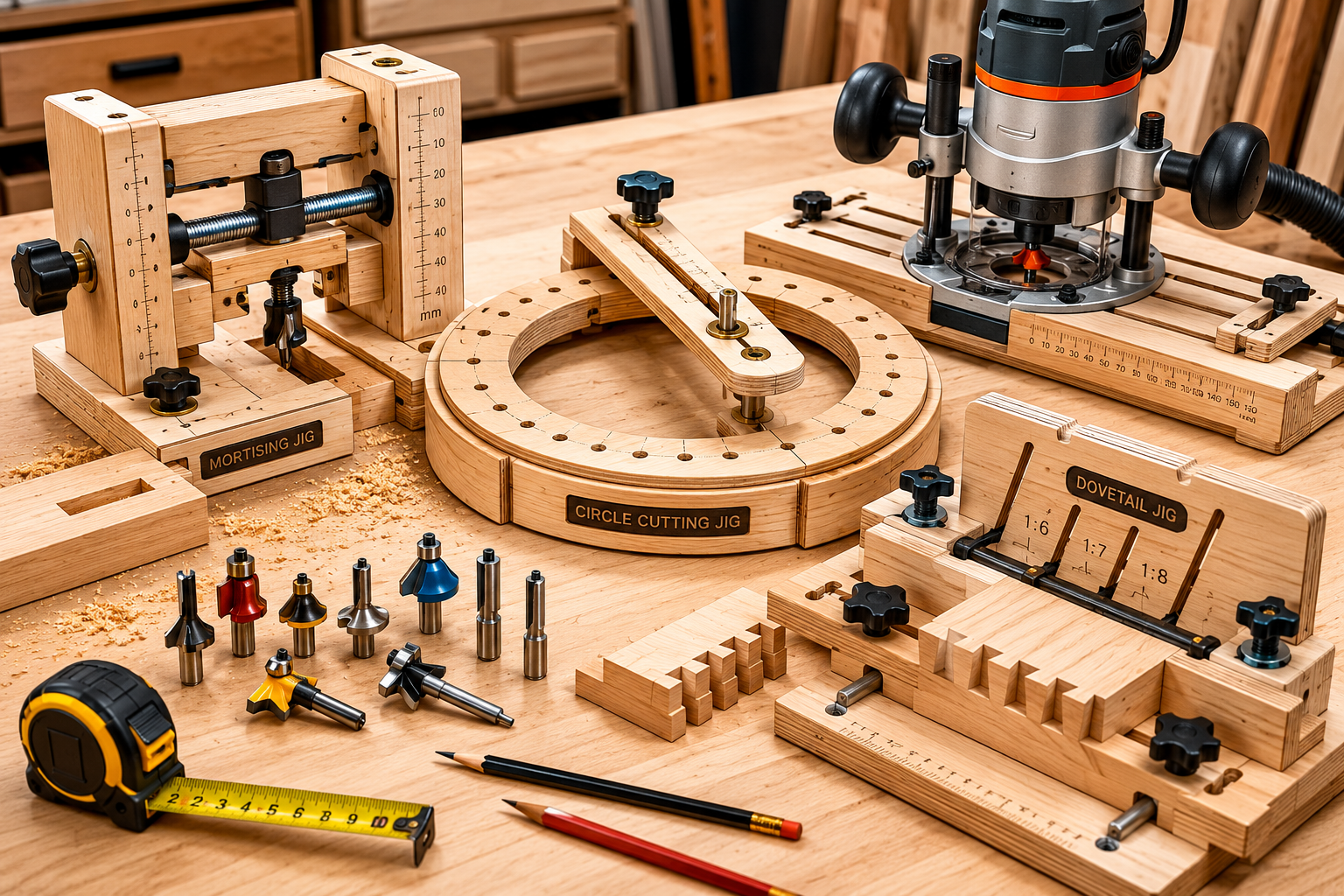
- Circle Cutting Jigs: These jigs allow your router to pivot around a fixed point, creating perfect circles or arcs of various diameters. They are indispensable for round tabletops, arched door panels, or decorative elements. The simplest versions use a pivot screw, while more advanced designs offer fine adjustment for exact radius control.
- Mortising Jigs: Creating clean, accurately sized mortises for mortise and tenon joints can be tedious and prone to error by hand. A dedicated mortising jig guides your router bit precisely, ensuring perfectly sized and aligned mortises every time. These often involve clamping the workpiece and guiding the router along a fixed track or template.
- Dovetail Jigs: While challenging to master by hand, router dovetail jigs make cutting precise dovetails relatively straightforward. They use templates to guide the router bit, producing clean, interlocking dovetail joints. These are particularly useful for drawer construction and fine furniture. For further exploration, consider our guide on mastering dovetail joinery for drawers: hand and router methods.
- Straight-Edge Guides: For perfectly straight dadoes, grooves, or edge profiling, a simple straight-edge guide clamped to your workpiece is invaluable. These can be custom-made from plywood or purchased as adjustable commercial versions.
Router Table Integration and Advanced Jigs
Many specialized router operations are best performed on a router table. A router table essentially turns your router upside down, allowing the workpiece to be guided over the bit, much like a spindle shaper. Integrating jigs with your router table further enhances its capabilities.
Router Table Jigs:
- Featherboards: Essential for safety and accuracy, featherboards apply consistent pressure to the workpiece against the fence and table, preventing kickback and ensuring straight cuts.
- Box Joint Jigs: A popular jig for creating strong, decorative box joints. These jigs utilize a pin or key that indexes the workpiece for precise, repeatable finger cuts. You can learn more about selecting the right tools for this on our page about the best router bit for box joints.
- Coping Sleds: Used for safely cutting the cope (end grain) profiles on rail and stile cabinet doors, these sleds hold the workpiece vertically and guide it through the router bit.
Choosing and using router tables is a skill in itself, maximizing precision and safety for various operations. Read our detailed guide on choosing and using router tables: maximizing precision and safety for edge profiling and joinery for more insights. The ability to build these custom jigs for your specific needs is a hallmark of truly skilled woodworking.
Specialized Jigs for Joinery, Tapering, and Repetitive Tasks
Moving Beyond the Workbench: Building Specialized Jigs and Fixtures for Precision Woodworking often involves tackling more complex joinery and shaping tasks. These jigs are designed to simplify intricate operations, allowing woodworkers to achieve consistent, professional results even on challenging projects.
Precision Joinery Jigs
Beyond dovetails and mortises, many other joinery techniques can benefit from specialized jigs:
- Tenoning Jigs: While a table saw can cut tenons, a dedicated tenoning jig holds the workpiece vertically against the fence and guides it safely through the blade, ensuring perfectly sized and square tenons. This is especially useful for chair and table construction where consistent tenons are critical for strong joints.
- Spline Jigs: Used to cut slots for reinforcing splines in miter joints, these jigs ensure accurate alignment and consistent depth, strengthening joints that might otherwise be weak.
- Domino Jigs (DIY Versions): For those without a dedicated Domino joiner, clever DIY jigs can be fashioned to create accurate mortises for loose tenons using a router or drill.
Tapering Jigs for Furniture and Design Elements
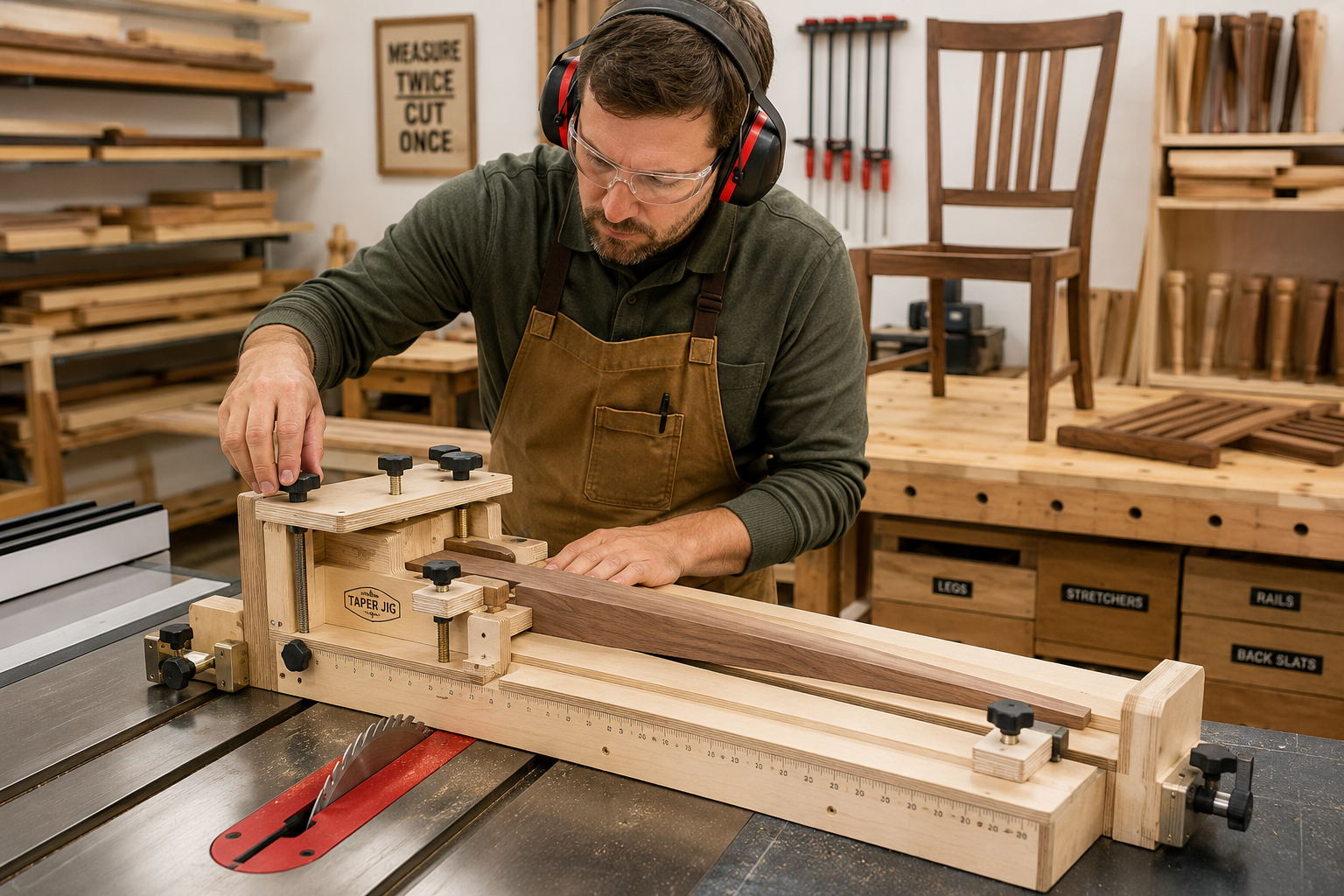
Tapering legs for tables, chairs, or other furniture pieces adds an elegant touch and can significantly elevate a project’s design. Achieving a consistent, clean taper without a jig can be difficult and dangerous.
A tapering jig holds the workpiece at the desired angle and guides it safely past the table saw blade. Most tapering jigs feature adjustable stops to set the start and end points of the taper, ensuring identical results for multiple pieces.
Steps for Building a Basic Tapering Jig:
- Select a flat, stable base: Plywood or MDF works well.
- Attach a fixed fence: This rides against the table saw fence.
- Create an adjustable fence: This pivots to set the desired taper angle.
- Add toggle clamps: Secure the workpiece firmly to prevent movement during the cut.
When designing furniture that incorporates such elements, it’s also important to understand how wood movement affects long-term stability. Our article, understanding wood movement: how to design and build furniture that lasts through seasonal changes, offers valuable insights.
Jigs for Repetitive and Specialized Tasks
- Drill Press Jigs: For drilling perfectly perpendicular holes or repeat hole patterns, drill press jigs are invaluable. These can include simple fences, stop blocks, or even more complex fixtures for drilling angled holes or precise dowel holes.
- Sanding Jigs: Consistent sanding of small parts or angled edges can be challenging. Custom sanding jigs can hold pieces securely at specific angles or guide them against a sanding drum or disc for repeatable results.
- Panel Raising Jigs: For creating raised panels for cabinet doors, special jigs are used with a router table or shaper to safely guide large panels through specialized bits.
- Edge Joining Jigs: While often done by hand, a dedicated jig can help ensure perfectly straight edges for glue-ups, especially for plywood. Check out our guide on edge joining plywood: best methods and tips for related information.
The beauty of building these jigs is that they can be tailored to your exact project needs. Whether you’re crafting custom workbenches or creating ergonomic workshop furniture, these aids are indispensable for precision. Learn more about creating ergonomic workshop furniture: building custom workbenches to further enhance your shop.
The Philosophy of Jig Building: Design, Materials, and Safety
The journey of Beyond the Workbench: Building Specialized Jigs and Fixtures for Precision Woodworking is not just about following plans; it’s about understanding the principles of design, selecting appropriate materials, and prioritizing safety. Each jig should be viewed as an extension of your tools, designed to enhance their capabilities while protecting the user.
Principles of Jig Design
- Simplicity and Effectiveness: A good jig solves a specific problem simply and efficiently. Avoid over-engineering.
- Accuracy and Repeatability: The primary goal is to ensure precise, consistent results every time.
- Safety: The jig should guide the tool and workpiece in a way that minimizes exposure to blades or bits and prevents kickback.
- Durability: While many jigs are made from inexpensive materials, they should be robust enough to withstand repeated use.
- Adjustability (where needed): For versatile jigs, incorporate mechanisms for easy and accurate adjustments.
- Clamping and Holding: Effective clamping ensures the workpiece remains stable during operation. Toggle clamps, cam clamps, and hold-downs are common solutions.
Material Selection for Jigs and Fixtures
The choice of material significantly impacts a jig’s performance and longevity.
- Plywood (Baltic Birch, Cabinet Grade): Excellent choice for many jigs due to its stability, strength, and flat surfaces. Baltic birch is particularly prized for its void-free core and consistent thickness.
- MDF (Medium-Density Fiberboard): Very flat and stable, ideal for sled bases and fences where absolute flatness is critical. However, it’s less resistant to moisture and edge damage than plywood.
- Hardwood: Suitable for runners, fences, and components requiring extra strength or wear resistance. Maple and oak are popular choices.
- Phenolic Resin: Extremely durable and stable, often used for miter slot runners due to its low friction and resistance to wear.
- Aluminum Extrusions: Increasingly popular for their rigidity, light weight, and compatibility with various clamping and fastening systems.
Prioritizing Safety in Jig Construction and Use
Safety must always be at the forefront when designing and using jigs.
- Keep Hands Clear: Design jigs so that your hands are never in the path of the blade or bit.
- Secure Workpiece: Always ensure the workpiece is firmly clamped or held by the jig. Loose workpieces are a major cause of accidents.
- Test and Inspect: Before making a cut on your project piece, always test the jig with scrap wood. Regularly inspect jigs for wear or damage.
- Guarding: Where possible, incorporate additional guards into your jig design to provide extra protection.
- Dust Collection: Jigs often create concentrated areas of dust. Consider how your jigs can integrate with your dust collection system for a cleaner and safer shop. Building a DIY smart workshop dust collection system can further enhance this.
- Proper Push Sticks and Blocks: Even with jigs, always use appropriate push sticks and blocks when feeding wood through saws and routers.
By adhering to these principles, woodworkers in 2026 can confidently build and utilize specialized jigs and fixtures to achieve a level of precision and safety that elevates their craft significantly.
Conclusion
Stepping Beyond the Workbench: Building Specialized Jigs and Fixtures for Precision Woodworking is not merely an optional upgrade; it’s a fundamental shift towards mastery and efficiency in the craft. From ensuring perfectly square crosscuts with a custom sled to crafting intricate joinery with dedicated router jigs, these workshop aids are the silent workhorses that empower woodworkers to achieve unparalleled accuracy, repeatability, and safety. The ability to design and construct your own jigs frees you from the limitations of off-the-shelf accessories, allowing for bespoke solutions tailored to your unique projects and workflow.
Embracing jig building transforms complex tasks into manageable, consistent operations, saving time, reducing material waste, and significantly elevating the quality of your finished pieces. As you venture into more ambitious projects, the knowledge and skills gained from building and using specialized jigs will become indispensable, unlocking new levels of creativity and precision.
Actionable Next Steps:
- Start Simple: Begin by building an essential jig like a crosscut sled for your table saw. Focus on precision and safety in its construction.
- Identify Needs: As you work on projects, pay attention to repetitive tasks or challenging cuts. This will reveal opportunities for new jigs.
- Research and Learn: Explore online resources, woodworking magazines, and books for jig plans and design inspiration.
- Prioritize Safety: Always build and use jigs with safety as the primary consideration. Wear appropriate personal protective equipment (PPE).
- Document Your Builds: Keep notes or sketches of your successful jig designs for future reference or modifications.
By committing to building specialized jigs and fixtures, you are investing in your woodworking future, transforming your workshop into a hub of precision and innovation in 2026 and beyond.
SEO Meta Title: Build Precision Woodworking Jigs: Beyond the Workbench SEO Meta Description: Elevate your craft in 2026! Learn to build specialized jigs & fixtures for woodworking, enhancing accuracy, safety, and efficiency.