

The perennial challenge for woodworkers and DIY enthusiasts isn’t always the complexity of a project, but the sheer lack of adequate workspace. Cramped garages, shared basements, or the need to take skills on the road often mean compromising on essential work surfaces. This article will guide you through Building a Portable Folding Workbench: Maximizing Functionality for Small Workshops and On-Site Projects, providing a robust solution that delivers ample workspace when needed and folds away for compact storage, perfect for any craftsman who values efficiency and versatility in 2026.
Key Takeaways
- Portable folding workbenches are essential for optimizing space in small workshops and facilitating on-site projects.
- Careful material selection, focusing on durability and weight, is crucial for both longevity and portability.
- Key design elements include a stable folding mechanism, integrated clamping solutions, and versatile storage.
- Customization allows the workbench to be tailored to specific tools and project requirements.
- Proper maintenance ensures the workbench remains functional and safe for years to come.
Designing Your Portable Folding Workbench: Maximizing Functionality
The core principle behind Building a Portable Folding Workbench: Maximizing Functionality for Small Workshops and On-Site Projects lies in intelligent design. A truly effective portable workbench isn’t just a flat surface that folds; it’s a carefully engineered workspace that supports a range of tasks while being easy to transport and store.
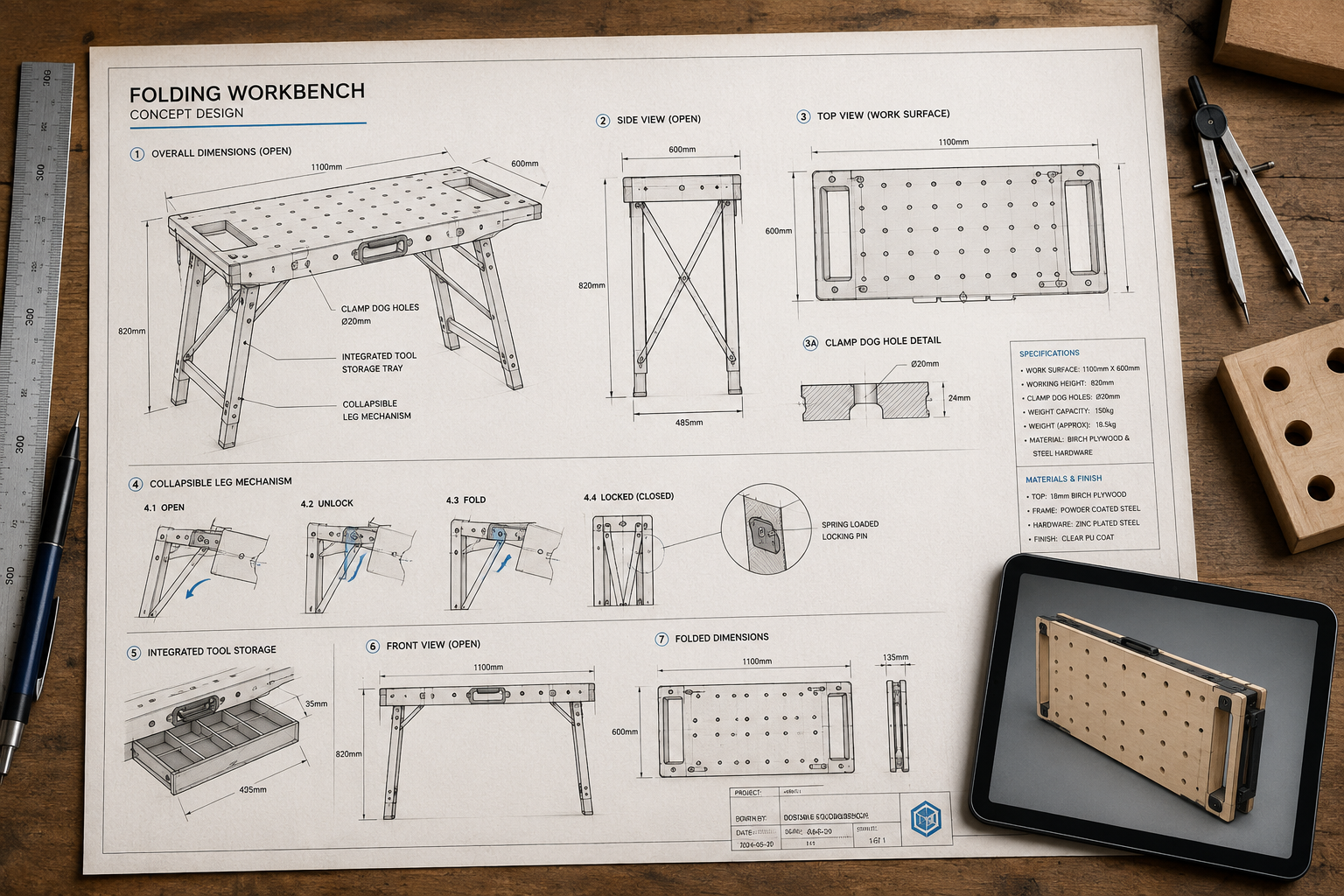
Essential Design Considerations
When planning your workbench, consider these critical elements:
- Work Surface Dimensions: Determine the ideal size for your most common projects. While larger offers more space, it also increases weight and folded size. A good compromise often involves a main surface with potential extensions.
- Folding Mechanism: This is the heart of portability. Common mechanisms include hinged legs that fold flat against the tabletop, or entire sections that collapse. Ensure the mechanism is robust, easy to operate, and locks securely in both open and closed positions.
- Stability: A wobbly workbench is a dangerous workbench. Design for maximum rigidity. Cross-bracing, robust leg attachments, and a wide stance are crucial. Consider adjustable feet for leveling on uneven surfaces, especially for on-site use.
- Weight: While sturdy, the workbench must be manageable enough for one person to move. Balance material choices with strength requirements. Plywood and lighter hardwoods are often preferred over dense hardwoods.
- Integrated Clamping Solutions: Maximizing functionality means more than just a flat top. Incorporate dog holes for bench dogs and F-clamps, or even a built-in vise mount. This significantly enhances the bench’s utility for securing workpieces.
- Storage and Tool Organization: Think beyond the surface. Can the workbench incorporate shelves, drawers, or pegboard sections that fold with it or are easily detachable? This keeps essential tools within reach and organized. For more ideas on efficient workshop organization, explore DIY Smart Workshop Storage Solutions: Maximizing Space and.
Material Selection for Durability and Portability
Choosing the right materials is paramount for a portable folding workbench.
- Plywood: High-quality Baltic birch or marine-grade plywood (¾” or 18mm) offers excellent strength-to-weight ratio and dimensional stability. It’s ideal for the top and structural components.
- Solid Wood: Hardwoods like maple, oak, or ash can be used for legs and critical stress points where extra rigidity is needed, but will add weight. Pine or fir can be used for lighter applications but may sacrifice some durability.
- Hardware: Heavy-duty hinges, latches, and bolts are non-negotiable. Look for corrosion-resistant options, especially if the bench will be used outdoors. Locking casters can be a valuable addition for mobility within a shop.
| Material Type | Pros | Cons | Best Use |
|---|---|---|---|
| Baltic Birch Plywood | Excellent strength-to-weight, stable, smooth surface, takes finishes well | More expensive than other plywoods | Workbench top, structural panels |
| Hardwood (Maple/Oak) | Extremely durable, rigid, long-lasting | Heavy, more difficult to work with, expensive | Legs, vise jaws, critical joinery |
| Aluminum Extrusions | Lightweight, strong, precise assembly, modular | Can be expensive, requires specialized fasteners | Frame, modular attachments, lighter duty legs |
| Steel Square Tubing | Very strong, durable, can be welded | Heavy, prone to rust if not treated, requires welding skills | Heavy-duty legs, frame for industrial applications |
Conceptualizing Your Build
Before cutting any material, sketch out your ideas. Create detailed drawings, focusing on how each component will interact during folding and setup. Consider mechanisms similar to a Murphy bed with an integrated desk, where compactness and ease of deployment are key. This planning phase will save time and material in the long run.
Construction Techniques for a Stable and Collapsible Design
Once your design is finalized, the construction phase requires precision and attention to detail. The goal is to create a workbench that is both robust for heavy tasks and effortless to fold and transport. For those interested in more general portable workbench designs, you can find further inspiration at Building a Portable Workbench: Designs for Small Spaces and On-the-Go.
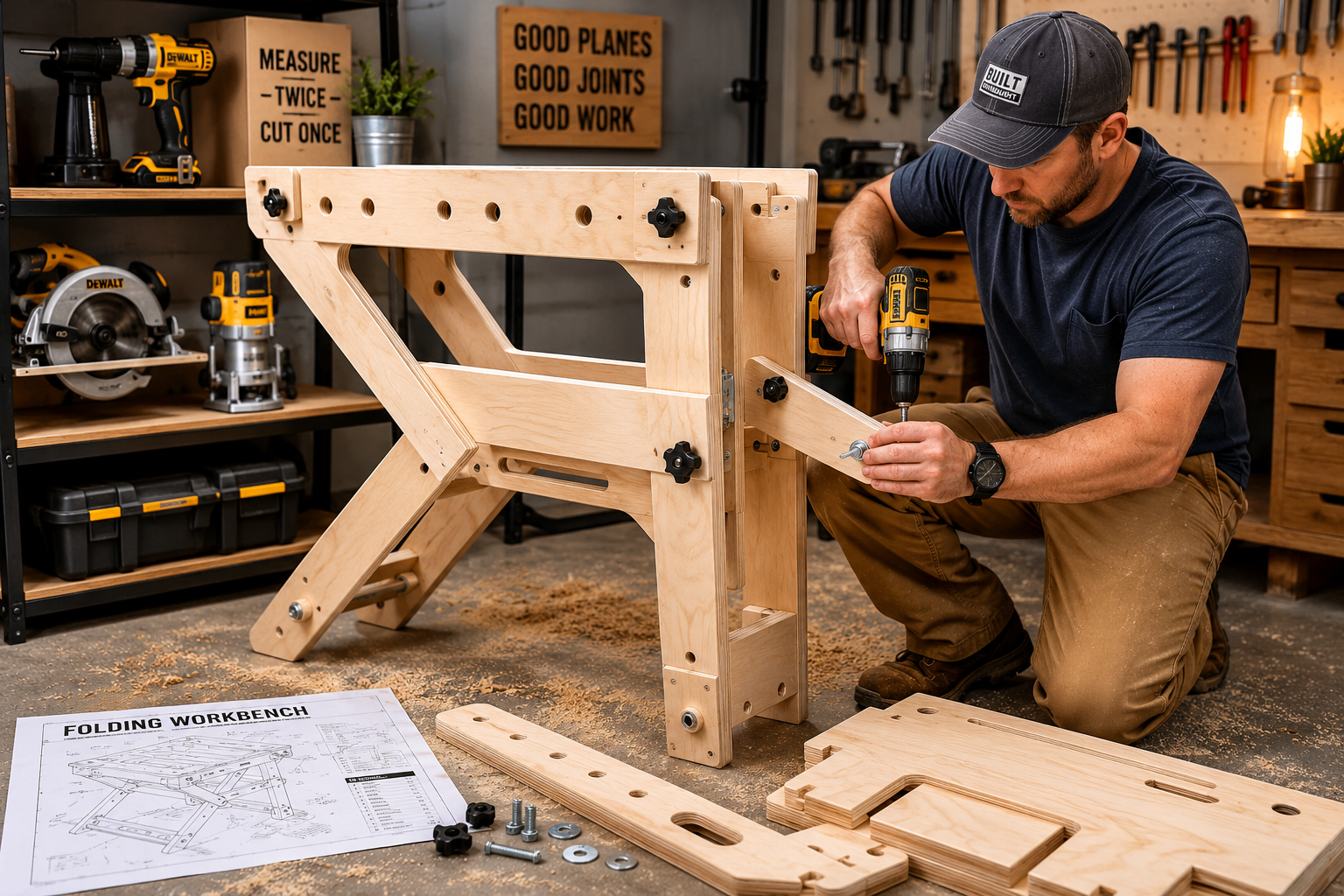
Building the Workbench Top
The workbench top is your primary work surface and needs to be flat, durable, and resilient.
- Material Preparation: Cut your plywood to the desired dimensions. If you’re using multiple layers for thickness, glue and screw them together, ensuring alignment. Use a good quality wood glue and plenty of clamps.
- Edge Banding: Protect the edges of your plywood top with solid wood edge banding. This prevents chipping and provides a more professional finish. Rout a slight chamfer or round-over on the top edges for comfort.
- Dog Holes: Drill an array of accurately spaced dog holes across the workbench top. These are critical for clamping workpieces. A common pattern uses holes spaced 4-6 inches apart, parallel to the edges. A Beginner’s Guide to Essential Woodworking Jigs can help with precise drilling.
- Integrated Vise (Optional): If incorporating a vise, carefully route out the necessary mortises and drill holes for mounting bolts. Ensure the vise does not interfere with the folding mechanism.
Constructing the Folding Leg System
The leg system is where the “folding” aspect truly shines. A secure and efficient folding mechanism is crucial.
- Hinged Legs: The most common design involves two pairs of legs hinged to the underside of the workbench top.
- Frame Assembly: Build two identical leg frames using solid wood or sturdy plywood. Use strong joinery like mortise and tenon, dadoes, or pocket screws for rigidity.
- Attachment: Attach these frames to the workbench top using heavy-duty piano hinges or multiple robust butt hinges. Ensure the hinges are recessed flush with the surface for smooth folding.
- Locking Mechanism: Design a reliable locking mechanism for when the legs are extended. This could be toggle clamps, sliding bolts, or a simple brace that swings into place and locks with a pin. Safety is paramount here; the legs must not collapse accidentally.
- Trestle-Style Folding: Some designs use a trestle base that separates into two folding halves. This can offer greater stability but might be more complex to build.
- Collapsible Sawhorse Style: For extreme portability, consider legs that detach entirely or fold into compact bundles, similar to heavy-duty sawhorses.
Enhancing Stability and Durability
Even with good design, small details can significantly impact the workbench’s stability and longevity.
- Cross-Bracing: Incorporate diagonal cross-braces between the legs when the workbench is open. These can be removable or designed to fold flat. They dramatically reduce wobble.
- Leveling Feet: Install adjustable leveling feet on the bottom of each leg. These are invaluable for creating a stable work surface on uneven terrain, whether in your workshop or at an on-site location.
- Reinforced Joints: Use metal brackets or corner braces in high-stress areas, especially where legs attach to the top or where folding mechanisms bear weight.
- Finish: Apply a durable finish to all wood surfaces to protect against moisture, chemicals, and wear. Polyurethane, lacquer, or a hard-wearing oil finish like tung oil are good choices. For different finishing techniques, explore articles like Mahogany Wood Finishing Techniques.
Customizing and Maximizing Your Workbench’s Utility
The true power of Building a Portable Folding Workbench: Maximizing Functionality for Small Workshops and On-Site Projects lies in tailoring it to your specific needs. A generic workbench serves its purpose, but a customized one becomes an indispensable extension of your craftsmanship.
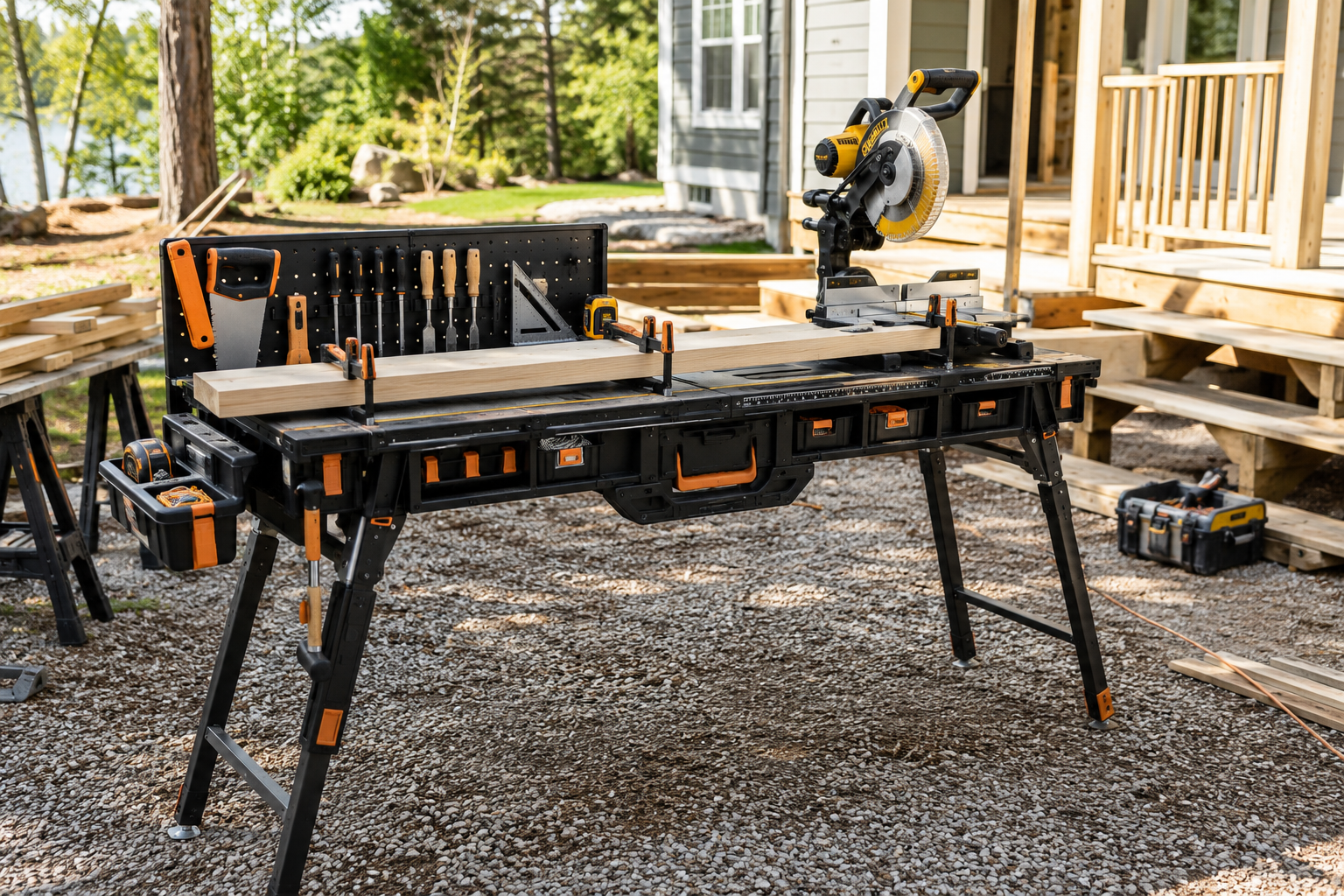
Adding Integrated Tool Storage
Efficient storage is vital for any workspace, especially a portable one.
- Sliding Trays or Drawers: Design shallow drawers or sliding trays that fit beneath the workbench top but above the folding legs. These can hold hand tools, fasteners, and measuring devices. Ensure they have secure latches to prevent contents from spilling during transport.
- Magnetic Strips: Embed magnetic strips into the side rails or underside of the top for quick access to small metal tools like chisels, screwdrivers, and hex keys.
- Pegboard Panels: Incorporate small, fold-out pegboard panels on the sides of the workbench. These can hold frequently used tools and accessories. They should fold flat against the main structure when not in use.
- Quick-Access Shelves: A small, open shelf beneath the top can store larger items. This shelf can be designed to slide out or fold up/down.
Integrating Clamping and Work-Holding Accessories
Beyond basic dog holes, consider these enhancements:
- Front Vise or End Vise: While adding weight, a dedicated woodworking vise provides unparalleled work-holding capability. Design a mount that allows the vise to be quickly attached and removed, or one that cleverly folds away.
- T-Track System: Install T-tracks into the workbench top. These allow for flexible clamping positions using T-track clamps, stops, and jigs. They are excellent for securing irregular shapes or for repetitive tasks.
- Bench Dogs and Holdfasts: Invest in a good set of bench dogs and holdfasts. These work in conjunction with your dog holes and can secure workpieces for planing, sanding, or routing.
- Router Table Integration: If you frequently use a router, consider building a section of the workbench top that can accept a router plate, effectively turning a portion of your portable bench into a portable router table. For more on this, consult Choosing and Using Router Tables: Maximizing Precision and Safety for.
Making it Mobile (Even When Folded)
- Heavy-Duty Casters: Install robust locking casters on one end of the workbench. When folded, the bench can then be tilted and rolled like a hand truck. Ensure the casters are appropriate for the workbench’s weight and the surfaces it will travel over.
- Carrying Handles: Attach sturdy handles to the sides or ends of the workbench to make lifting and carrying easier, particularly when navigating stairs or loading into a vehicle.
Future-Proofing and Maintenance
- Modular Design: Consider a modular design where certain attachments (like a router table insert or a vise mount) can be swapped out or upgraded. This allows your workbench to evolve with your needs.
- Regular Cleaning: Keep the workbench top clean of sawdust, glue, and paint. A clean surface is essential for accurate work.
- Hardware Checks: Periodically inspect all hinges, latches, bolts, and screws. Tighten anything that has loosened over time. Lubricate moving parts as needed.
- Surface Protection: If your workbench top sees heavy use, consider adding a sacrificial layer of hardboard or MDF that can be easily replaced when it becomes too worn.
Conclusion
Building a Portable Folding Workbench: Maximizing Functionality for Small Workshops and On-Site Projects is an investment in your efficiency and craftsmanship. By meticulously planning your design, carefully selecting materials, and employing sound construction techniques, you can create an indispensable tool that adapts to virtually any workspace challenge. Whether you’re navigating the tight confines of a home workshop in 2026 or taking your skills to various job sites, a well-designed portable workbench provides the stable, versatile platform you need to bring your woodworking visions to life. Take the time to customize it to your specific tools and workflow, and you’ll find it an invaluable asset for years to come.
Meta Title: Build a Portable Folding Workbench: Maximize Small Workshop Functionality Meta Description: Learn to build a portable folding workbench in 2026, maximizing functionality for small workshops and on-site projects with custom designs & smart storage.