

The average hobbyist or professional woodworker spends nearly an hour each day searching for misplaced tools, clearing cluttered workspaces, or wrestling with inefficient storage. This significant time drain underscores a critical need: Building Custom Storage Solutions for Specific Power Tools: Maximizing Workshop Efficiency. Tailored storage not only saves precious time but also enhances safety, prolongs tool life, and transforms a chaotic workshop into a productive haven. By focusing on design and build tailored solutions for common power tools like miter saws, table saws, and routers, workshops in 2026 can achieve unprecedented levels of organization, quick access, and integrated dust collection for an optimized workflow.
Key Takeaways
- Custom storage for specific power tools significantly reduces workshop clutter and search time.
- Integrating dust collection directly into storage solutions enhances safety and cleanliness.
- Tailored designs improve tool accessibility, prolong tool life, and prevent damage.
- Planning is crucial, involving tool measurements, workflow analysis, and material selection.
- Modular and mobile storage offers flexibility for evolving workshop needs.
The Foundation of Efficiency: Planning Your Custom Power Tool Storage
Before cutting the first piece of lumber, a thorough planning phase is essential for Building Custom Storage Solutions for Specific Power Tools: Maximizing Workshop Efficiency. This initial step determines the success and longevity of your storage units. Effective planning involves analyzing your current workshop layout, identifying specific tool requirements, and envisioning an optimized workflow.
Assessing Your Workshop and Tool Inventory
Begin by taking a comprehensive inventory of your power tools. Don’t just list them; measure their dimensions, note their accessories (blades, fences, wrenches), and consider their usage frequency. Tools like a miter saw or a table saw demand dedicated, often integrated, stations due to their size and frequent use, while a router might benefit from a mobile cart or a drawer system.
Consider the following for each power tool:
- Footprint and Dimensions: Exact measurements (height, width, depth) for the tool itself, plus any necessary clearance for operation (e.g., infeed/outfeed for a table saw, swing for a miter saw).
- Accessories: Where do blades, wrenches, jigs, and fences currently reside? How can they be stored with the tool for immediate access?
- Dust Collection Needs: Identify existing dust ports and consider how to integrate them into your new storage solution for efficient chip extraction.
- Power Requirements: Plan for convenient access to electrical outlets, perhaps integrating power strips into your design.
- Weight: Heavier tools require robust construction and potentially casters for mobility.
Next, analyze your workshop space. Where do these tools typically get used? What existing workbenches or storage units can be optimized or repurposed? Sketch out your workshop floor plan, noting fixed elements like windows, doors, and electrical outlets. This visual aid will help you map out potential locations for your custom storage solutions. For inspiration on fundamental workshop structures, consider reviewing resources on building a custom wood workbench.
Designing for Specific Tools and Workflow
Designing specific solutions goes beyond simply building a box. It’s about creating a harmonious environment where tools are always ready for action.
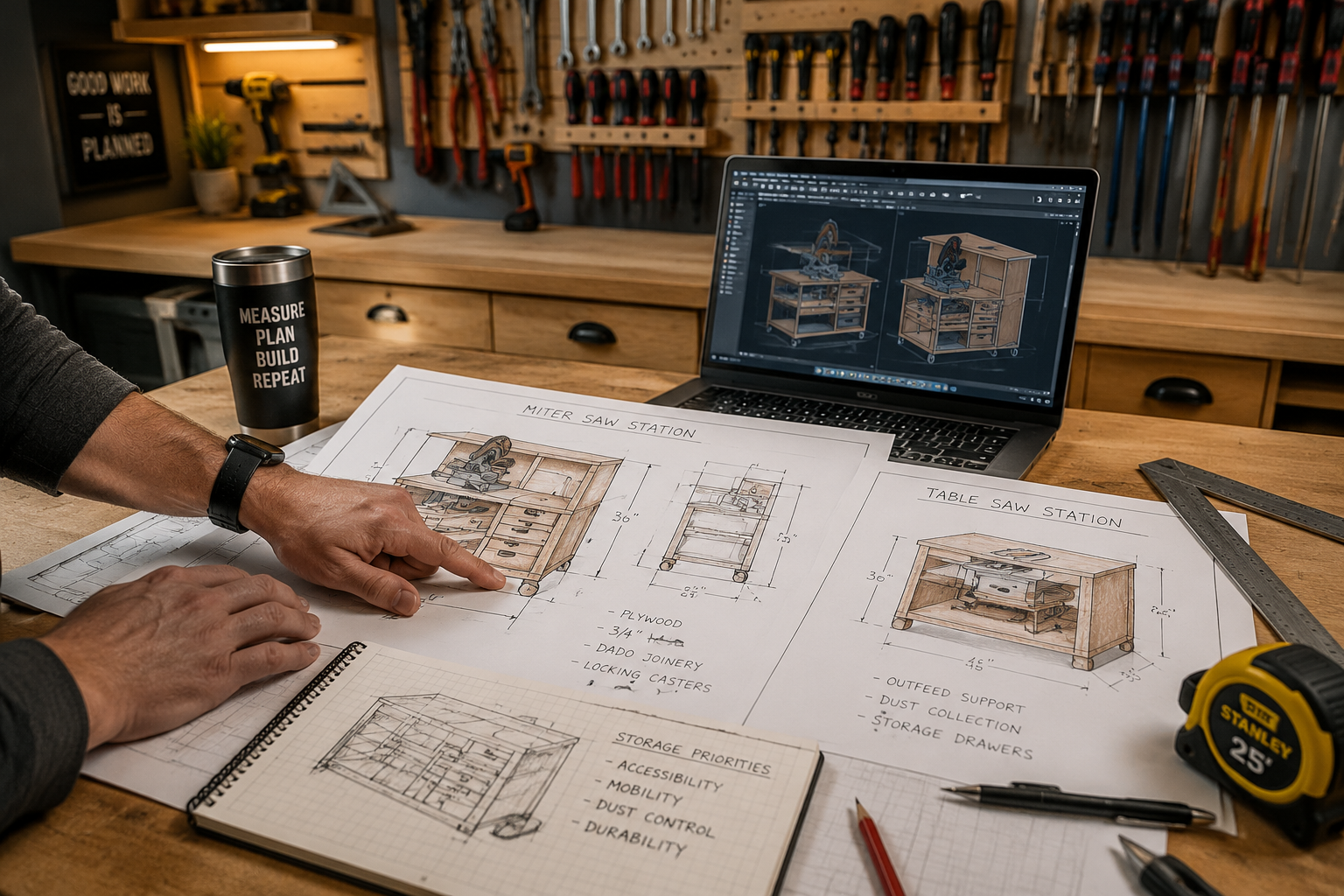
Miter Saw Station: A miter saw often benefits from a dedicated station that provides ample support for long workpieces.
- Integrated Fence: Design an adjustable fence system with stop blocks for repeatable cuts.
- Extension Wings: Foldable or pull-out extension wings significantly increase working surface without consuming permanent floor space.
- Under-bench Storage: Drawers or cabinets directly below the saw are ideal for storing blades, clamps, and measurement tools.
- Dust Hood: A custom dust hood positioned behind the saw can capture a substantial amount of sawdust, improving air quality and reducing cleanup.
Table Saw Cabinet: A table saw is often the heart of a woodworking shop. Custom storage can make it even more central and efficient.
- Outfeed Table Integration: A permanent or foldable outfeed table provides essential support for large panels.
- Router Table Combo: Integrating a router table into the extension wing of a table saw is a popular space-saving strategy, allowing shared fence use.
- Blade Storage: Dedicated slots or drawers for various saw blades protect them and keep them sharp.
- Dado Blade Set Storage: Organize dado sets with spacers for quick assembly.
- Sled and Jig Storage: Custom slots or hooks on the side or within the cabinet keep crosscut sleds, dado sleds, and push sticks readily accessible.
Router Storage: Routers, both fixed and handheld, benefit from specialized organization.
- Bit Trays: Custom-drilled trays or foam inserts protect delicate router bits and keep them organized by profile.
- Template Storage: Vertical slots or dedicated drawers for router templates ensure they are easily found and undamaged.
- Mobile Router Cart: A compact, mobile cart can house multiple routers (plunge, fixed-base, trim), their bits, and accessories, allowing the router station to move to the workpiece.
Remember to design for ergonomics. The height of your miter saw station or table saw outfeed should align with your main workbench height for seamless material transfer. Resources like “Creating Ergonomic Workshop Furniture” can provide further insights into optimizing your workspace for comfort and efficiency.
Building and Integrating Custom Solutions
Once your designs are finalized, the construction phase focuses on precision, durability, and thoughtful integration. This is where Building Custom Storage Solutions for Specific Power Tools: Maximizing Workshop Efficiency truly takes shape.
Material Selection and Construction Techniques
The choice of materials is crucial for the longevity and functionality of your custom storage.
- Plywood: High-quality Baltic birch or cabinet-grade plywood is excellent for carcases, drawers, and shelves due to its stability, strength, and smooth surfaces. For budget-friendly options, construction-grade plywood can be used for less visible components.
- MDF (Medium-Density Fiberboard): Ideal for router table tops due to its flatness and density, offering a smooth surface for workpieces. It’s also suitable for drawer bottoms or dust collection components.
- Solid Wood: Can be used for trim, drawer fronts, or specific functional elements where aesthetics or extreme durability are paramount.
- Hardware: Invest in quality drawer slides (full-extension for easy access), hinges, casters (locking, heavy-duty for mobile carts), and cabinet pulls.
Construction Techniques:
- Joinery: Robust joinery is essential. Pocket hole joinery is quick and strong for cabinet boxes. Dadoes and rabbets offer excellent strength for shelves and drawer construction. Dovetail joints, while more advanced, provide exceptional durability for high-use drawers. For guidance on specific joinery, consult resources like “Beginner’s Guide to Essential Woodworking Joints”.
- Dust Collection Integration: Plan routes for dust collection hoses. Create custom ports and plenums within your storage units to connect directly to the tool’s dust port and your main dust collection system. For mobile solutions, ensure that the dust hose can easily connect and disconnect or be permanently routed. A mobile dust collection cart can be an excellent companion to your fixed storage.
- Mobility: For tools that need to move, such as a router table or even a compact miter saw station, robust locking casters are invaluable. Design the base to be sturdy enough to handle the tool’s weight during movement and use. A portable workbench design might offer additional inspiration.
Examples of Integrated Storage Solutions
Let’s look at specific examples that highlight integrated design for Building Custom Storage Solutions for Specific Power Tools: Maximizing Workshop Efficiency.
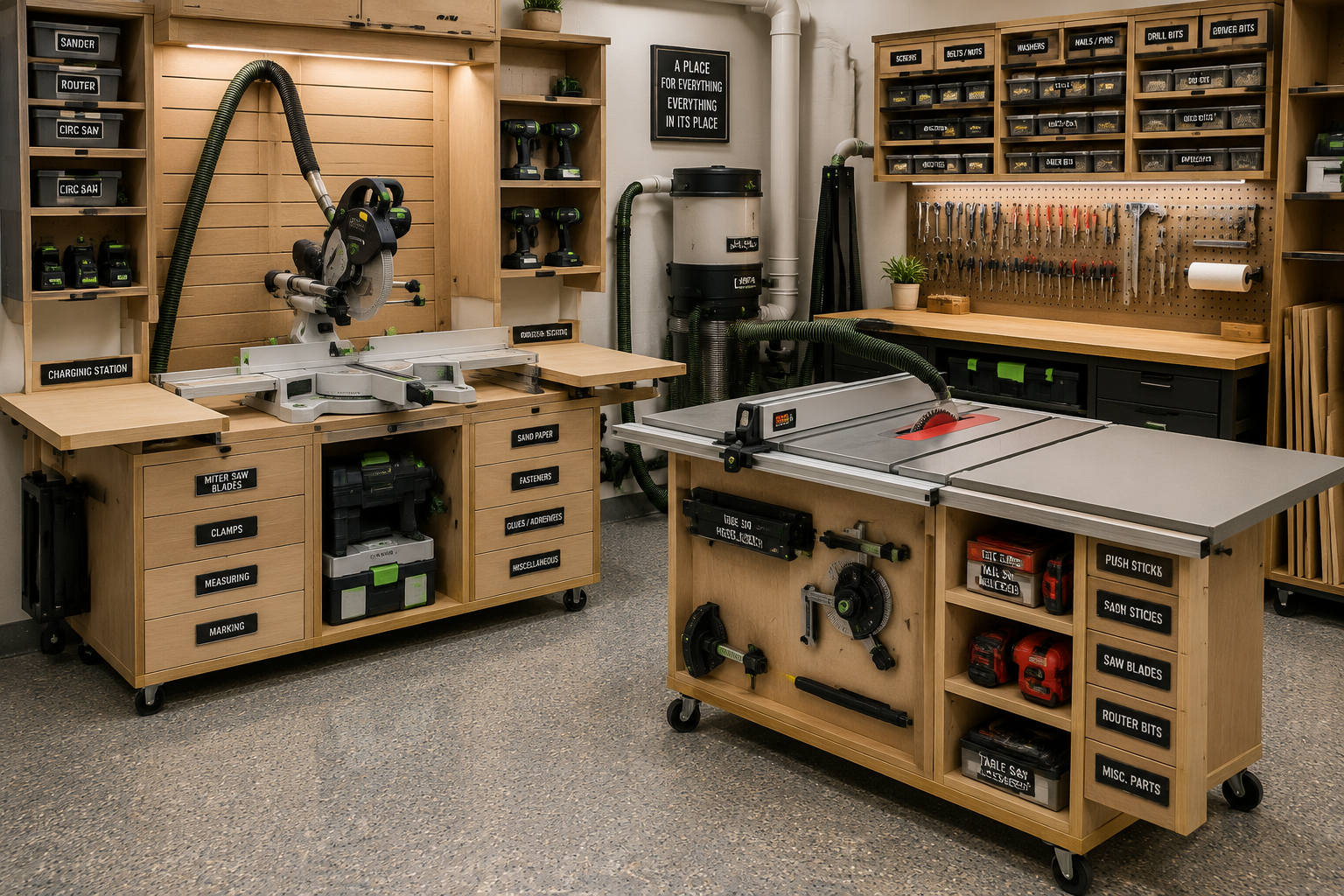
Integrated Miter Saw Station: Imagine a miter saw station built into a sturdy cabinet. The saw is set at an ergonomic height, flanked by long, foldable extension wings that can be deployed when cutting long stock. Below the saw, a series of shallow drawers hold various saw blades, angle finders, pencils, and safety glasses. On one side, vertical slots house custom miter saw jigs and stops. A custom-built dust hood directly behind the saw connects via a rigid duct to a central dust collection system, ensuring minimal airborne dust.
Router Table Workstation: Consider a dedicated router table, perhaps integrated into your table saw’s extension wing, or as a standalone unit. Below the router plate, a spacious cabinet features custom-drilled trays for hundreds of router bits, neatly organized by shank size and profile. Another drawer holds collets, wrenches, and router fences. The cabinet itself forms a sealed dust collection chamber, connecting to a shop vacuum or dust collector to capture fine dust generated during routing operations.
Benchtop Tool Cabinet: For smaller benchtop tools like sanders, drills, or grinders, a wall-mounted cabinet with custom compartments can be transformative. Each tool has its designated spot, often with a corresponding shelf or drawer for consumables like sandpaper or drill bits. Charging stations for cordless tools can be integrated into a specific compartment, ensuring batteries are always ready.
By integrating these features from the outset, you create a system where tools and accessories are not just stored, but are part of a seamless, efficient workflow.
Optimizing Workflow and Maintaining Your Custom Setup
The goal of Building Custom Storage Solutions for Specific Power Tools: Maximizing Workshop Efficiency extends beyond the build phase. It’s about creating a system that continually supports a productive and safe woodworking environment.
Enhancing Accessibility and Safety
Well-designed custom storage directly impacts accessibility and safety.
- Quick Access: Tools should be easy to retrieve and put away. Avoid designs that require excessive effort or moving other items. For frequently used hand tools that complement power tools, consider incorporating a pegboard or shadow board within your custom storage unit.
- Visibility: Clear labeling on drawers, shelves, and tool locations prevents unnecessary searching. Open shelving for often-used items can also be beneficial, provided it doesn’t lead to clutter.
- Safety Features: Ensure heavy tools are securely stored and won’t tip. Install safety catches on drawers holding sharp items or blades. Integrated dust collection is a primary safety feature, reducing airborne particulates that can cause respiratory issues and also minimizing fire hazards. Proper lighting around your custom stations also contributes significantly to safety.
- Ergonomics: As mentioned, design heights that minimize bending or reaching, particularly for frequently used tools. This focus on ergonomics prevents strain and fatigue, making woodworking more enjoyable and sustainable.
Maintenance and Future Expansion
Even the best custom storage requires ongoing maintenance and the flexibility for future expansion.
- Regular Cleaning: Periodically clean out drawers and shelves. Sawdust accumulation can hinder drawer slide operation or even become a fire hazard. Integrated dust collection systems need regular filter cleaning and bag emptying to remain effective.
- Inspection: Check drawer slides, hinges, and casters for wear and tear. Tighten loose fasteners and repair any damage promptly.
- Adaptability: Workshops evolve. Your custom storage should, ideally, have some degree of adaptability. Modular designs or systems built with adjustable shelves allow for reconfiguring as your tool collection changes or as you acquire new accessories.
- Modular Systems: Consider building your storage in modular sections that can be rearranged or expanded upon. For example, a base cabinet for a miter saw could be one module, with a separate, matching cabinet for additional storage that can be placed alongside it or elsewhere. This approach aligns with the principles of modular furniture design for woodworkers.
- Smart Upgrades: In 2026, smart workshop upgrades, such as integrating IoT sensors for dust collector activation or monitoring tool usage, can further enhance efficiency and maintenance schedules. Consider exploring options for DIY smart workshop upgrades.
By embracing these principles, your custom storage solutions become more than just places to put tools; they become integral components of a highly efficient, safe, and enjoyable woodworking experience.
Conclusion
Building Custom Storage Solutions for Specific Power Tools: Maximizing Workshop Efficiency is a transformative endeavor for any woodworker. It moves beyond merely organizing clutter to creating a meticulously designed system that enhances every aspect of your craft. From the initial detailed planning to the precision of construction and the ongoing maintenance, each step contributes to a workshop that operates with unparalleled fluidity and safety.
By tailoring storage to the unique needs of your miter saw, table saw, router, and other power tools, you reclaim wasted time, protect valuable equipment, and cultivate an environment where creativity can flourish unhindered by disarray. The integrated dust collection, ergonomic design, and strategic placement of tools and accessories collectively elevate your workshop from a mere workspace to a highly optimized production center. Embrace the process of designing and building these solutions in 2026, and experience the profound impact on your productivity and enjoyment of woodworking.
Actionable Next Steps:
- Inventory and Measure: Take stock of all your power tools and their accessories, noting precise dimensions.
- Sketch Your Space: Create a floor plan of your workshop and identify optimal locations for dedicated tool stations.
- Prioritize: Decide which power tools would benefit most from custom storage first.
- Design Details: Draft detailed plans, considering tool access, dust collection, and ergonomic height.
- Gather Materials: Select appropriate plywood, hardware, and fasteners for robust construction.
- Build Smart: Employ strong joinery and integrate dust collection and mobility features during construction.
- Implement and Refine: Install your new storage, load your tools, and make small adjustments for ultimate efficiency.
References
- Payson, E. (2018). The Woodworker’s Guide to Shop Storage: 45+ Building Projects. Fox Chapel Publishing.
- Schwarz, C. (2012). The Anarchist’s Tool Chest. Lost Art Press.
- Fine Woodworking Magazine. (Accessed 2026). Shop Organization & Storage Articles. The Taunton Press.
SEO Meta Title: Custom Power Tool Storage: Maximize Workshop Efficiency in 2026 SEO Meta Description: Transform your workshop in 2026 with custom storage solutions for miter saws, table saws, and routers. Boost efficiency, safety, and organization.