
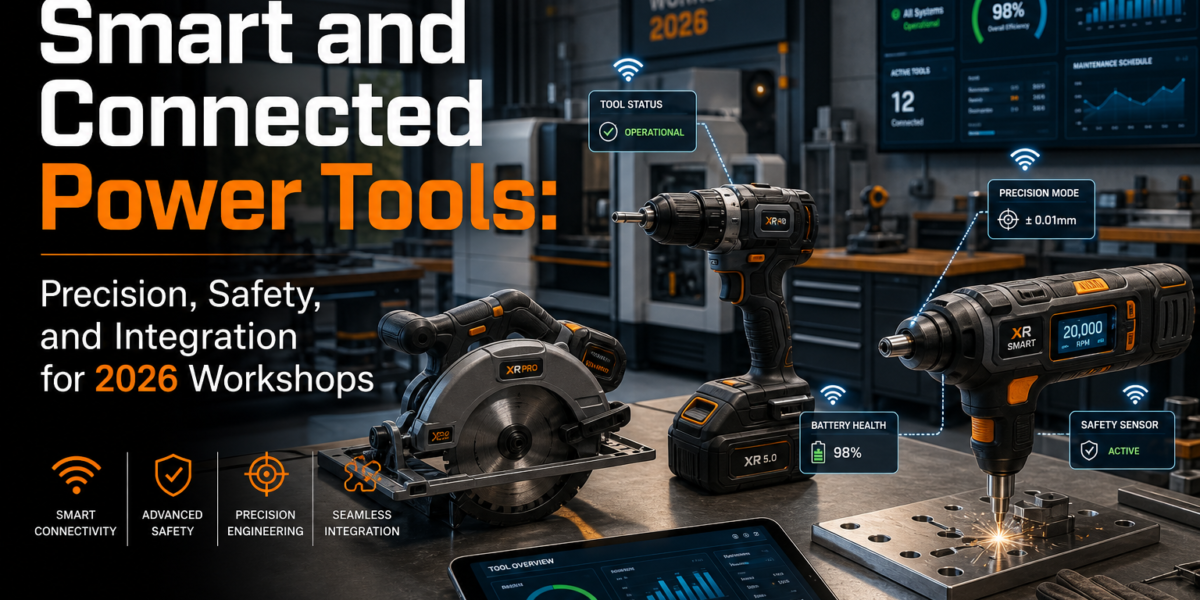
Despite substantial advancements in power tool technology over the past decade, a surprising number of workshops in 2026 still operate with tools that lack the integrated intelligence now standard in other industries. This oversight represents a missed opportunity for hobbyists and semi-professional makers to dramatically enhance their precision, safety, and overall workshop efficiency. The advent of “Smart and Connected Power Tools: Precision, Safety, and Integration for 2026 Workshops” is not merely an incremental upgrade; it is a fundamental shift in how we interact with our tools, transforming the crafting process from reactive to proactive, and significantly boosting the return on investment for any serious maker.
Key Takeaways
- Smart and connected power tools enhance precision through digital feedback, automated adjustments, and integration with project designs.
- Advanced safety features like automatic shut-offs and proximity sensors drastically reduce accident risks in the workshop.
- Seamless integration with digital platforms and other smart workshop systems streamlines workflows and improves project management.
- Investing in these technologies offers a compelling ROI for both hobbyists and professionals through increased efficiency, reduced material waste, and improved output quality.
- The transition to a smart workshop involves understanding tool capabilities, leveraging connectivity, and adopting new practices for optimal performance.
The Evolution of Precision: Smart and Connected Power Tools
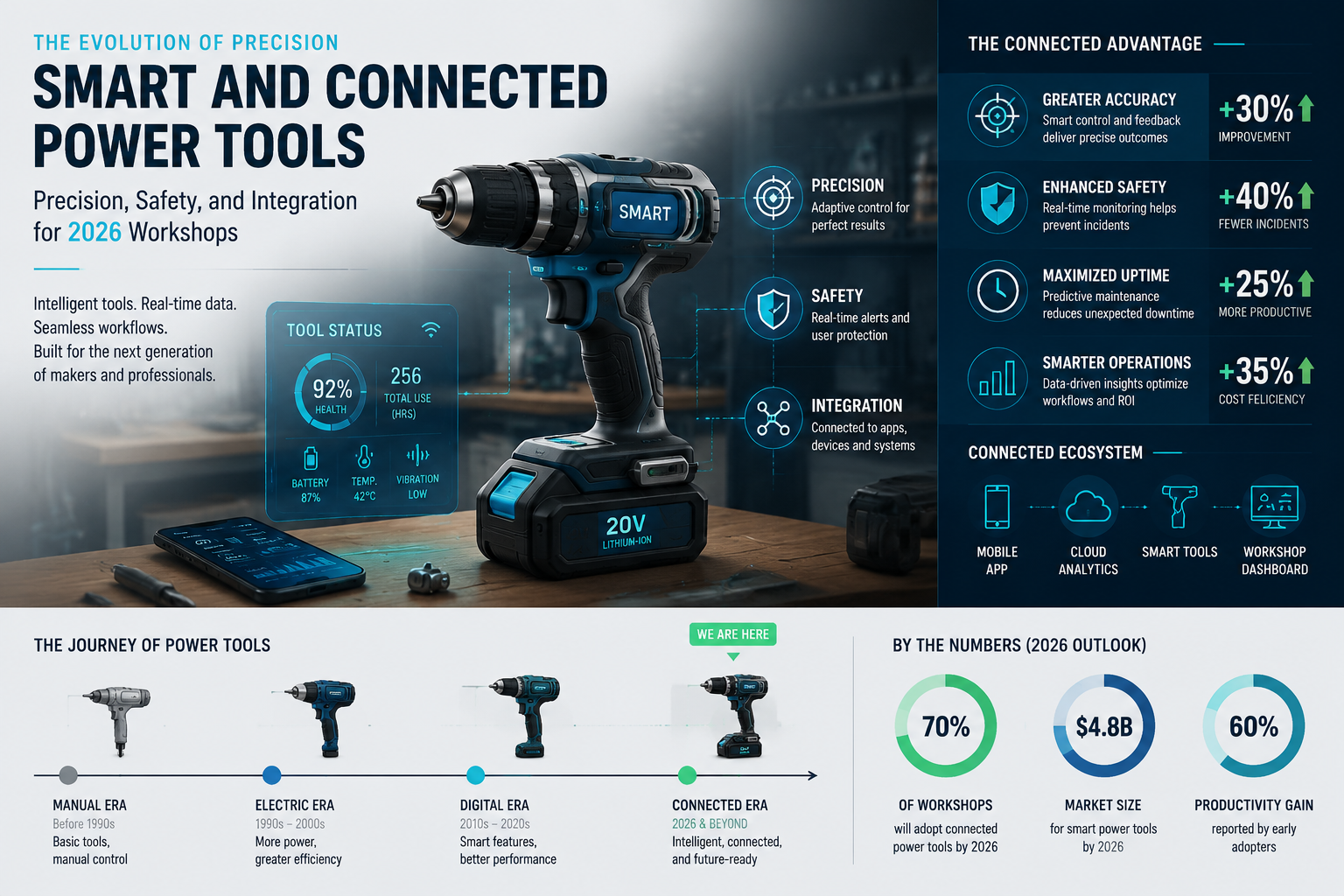
The core promise of “Smart and Connected Power Tools: Precision, Safety, and Integration for 2026 Workshops” lies in their ability to deliver unparalleled precision. Traditional power tools, while effective, often rely on manual measurements and human judgment, introducing variables that can compromise accuracy. Smart tools, however, leverage integrated sensors, microprocessors, and connectivity to achieve consistent, repeatable results.
Consider a smart miter saw. Instead of manually setting angles and relying on visual cues, a connected saw can receive exact cut specifications directly from a digital project plan on a tablet or computer. Its internal sensors constantly monitor the blade’s position, ensuring the angle is precisely maintained throughout the cut. Some advanced models can even compensate for slight material imperfections, or integrate with a digital fence system for exact repeatable cuts. This level of digital-to-physical translation minimizes human error, making complex joinery or repetitive cuts significantly more accurate.
For instance, a smart router could automatically adjust its depth and speed based on the material being worked on and the desired profile, reducing tear-out and ensuring a clean, consistent edge every time. This is a considerable leap from manually adjusting dials and relying on test cuts. The real-time data provided by these tools—such as depth, speed, and even motor load—can be invaluable for honing techniques and achieving professional finishes, especially when working on intricate projects like decorative wood projects.
Digital Feedback and Automated Adjustments
The ability of smart tools to provide instant, actionable feedback is a game-changer for precision. A smart drill, for example, can indicate optimal speed and torque for different materials and fastener types, preventing stripped screws or damaged workpieces. Some models even feature integrated depth stops that can be digitally programmed, ensuring every hole is drilled to the exact required depth. This is particularly useful in applications requiring precision joinery, such as “Mastering Dovetail Joints with Hand Tools: A Step-by-Step Guide for Flawless Wood Joinery” or when preparing components for “Mastering Dovetail Drawers for Cabinets: Hand-Cut and Router Jigs for Seamless Furniture Integration.”
Beyond simple feedback, many smart tools offer automated adjustments. A smart orbital sander might detect the presence of uneven surfaces and automatically increase its oscillation to remove more material, then dial back its aggression for finer finishing. This not only improves precision but also reduces the effort and time required to achieve a flawless surface.
Enhanced Safety: A New Era of Workshop Security
Safety has always been paramount in any workshop, and power tools, by their very nature, carry inherent risks. “Smart and Connected Power Tools: Precision, Safety, and Integration for 2026 Workshops” are leading a revolution in hazard prevention, significantly reducing the potential for accidents. These innovations move beyond passive safety features to active, intelligent systems that protect the user.
One of the most impactful safety advancements is the integration of advanced sensor technology. Table saws, for example, can now incorporate systems that detect contact with flesh and instantly stop the blade, often retracting it within milliseconds. While such technology has existed for some time, its integration into a wider range of tools and its increasing affordability are making it a standard feature in 2026. Similarly, smart routers may include proximity sensors that prevent accidental activation if hands are too close to the bit, or automatically retract the bit if sensing an obstruction other than the workpiece. For more on router safety, see “Mastering the Router Table: Essential Jigs, Safety, and Advanced Techniques for Precision Joinery and Edges.”

Proactive Hazard Prevention and User Monitoring
The connectivity aspect of smart tools also plays a crucial role in safety. Imagine a tool that can monitor its own operational health, alerting the user to potential malfunctions like an overheating motor or a dull blade, which could lead to kickback or other hazards. Some systems can even track user fatigue or improper posture, offering gentle reminders to take breaks or adjust their working position, contributing to a more ergonomic workshop environment as discussed in “Creating Ergonomic Workshop Furniture: Building Custom Workbenches.”
Furthermore, smart tools can be integrated with broader workshop safety systems. For example, a smart dust collector could automatically activate when a connected saw is turned on, or even adjust its suction power based on the tool’s activity. This ensures optimal air quality and reduces exposure to harmful airborne particles, a critical aspect of workshop health highlighted in “Building a DIY Smart Workshop Dust Collection System: Integrating IoT Sensors for Automated Air Quality and Tool Activation.”
Key Smart Tool Safety Features
- Automatic Blade/Bit Stop: Instantaneous halt or retraction upon sensing flesh or foreign objects.
- Proximity Sensors: Prevents tool activation if hands are too close to dangerous parts.
- Overload Protection: Shuts down the tool to prevent damage or overheating.
- Digital Lockout: Prevents unauthorized use or operation by inexperienced individuals.
- Integrated Lighting: Improves visibility on the cutting line or work area, reducing shadows and errors.
- Real-time Diagnostics: Alerts users to potential mechanical issues or maintenance needs before they become hazardous.
Seamless Integration and ROI for 2026 Workshops
The true power of “Smart and Connected Power Tools: Precision, Safety, and Integration for 2026 Workshops” fully materializes when these individual tools are integrated into a cohesive digital ecosystem. This seamless integration transforms a collection of individual machines into a smart workshop, optimizing workflow, reducing waste, and ultimately providing a significant return on investment for both hobbyists and professionals.
In a fully integrated smart workshop, project plans created in CAD software can be directly uploaded to multiple tools. A design for a custom bookshelf, for instance, could send cutting lists to a smart panel saw, drilling patterns to a smart drill press, and routing profiles to a smart router. This eliminates manual transcription, reduces setup time, and minimizes costly errors. When considering projects like “Building a Custom Wood Workbench: Design Considerations and Step-by-Step Plans for a Sturdy, Functional Foundation” or “High-Demand Woodworking Projects for 2026: Coffee Tables,” the efficiency gains are substantial.
Workflow Optimization and Data-Driven Decisions
Connectivity also extends to inventory and maintenance. Smart tools can track their own usage, alerting users when blades need sharpening or when routine maintenance is due. This predictive maintenance prevents unexpected downtime and extends the lifespan of expensive equipment. Furthermore, tracking tool usage can inform decisions about replacement cycles or even provide data for warranty claims.
For hobbyists, the ROI might manifest in reduced material waste due to fewer errors, the satisfaction of consistently high-quality output, and the ability to tackle more complex projects with confidence. For semi-professional makers selling their crafts, these efficiencies directly translate to increased profitability. Faster project completion, lower defect rates, and reduced labor mean higher margins and greater customer satisfaction. The ability to prototype and produce items for “Crafting Custom Wooden Gifts for the Holiday Season: Profitable Projects with Minimal Tools” or “Building Statement Furniture Pieces: Designing and Constructing Coffee Tables, Benches, and Console Tables that Sell for $500 in 2026” becomes significantly more efficient.
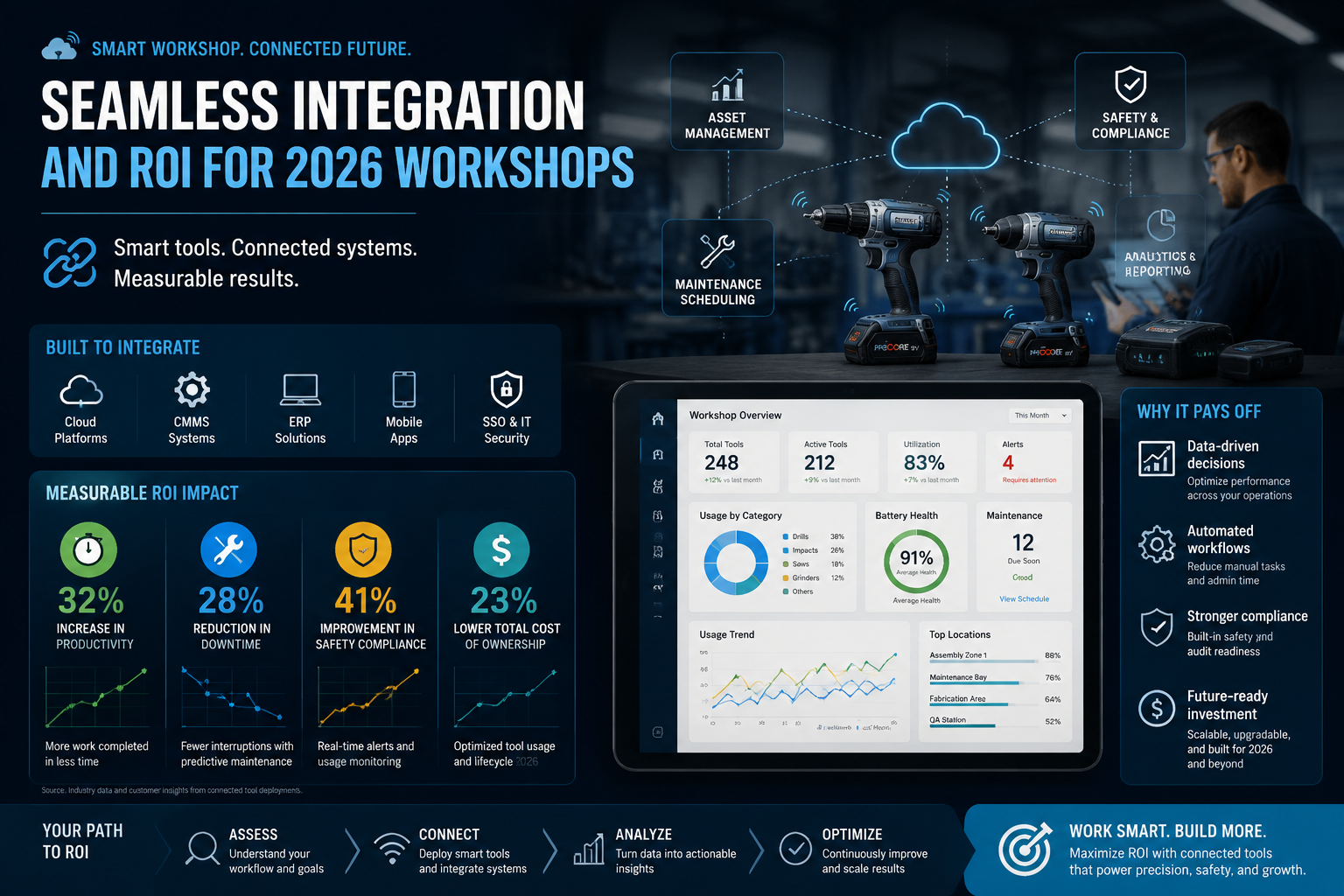
The initial investment in smart tools might be higher than traditional counterparts, but the long-term benefits in precision, safety, and efficiency quickly justify the cost. The time saved on setup, rework, and troubleshooting, coupled with the reduction in wasted materials, compounds over time. Moreover, the enhanced safety features translate to fewer accidents, reducing potential medical costs and lost work time. This ROI analysis makes a compelling case for adopting smart tools in any serious woodworking or crafting operation in 2026.
Benefits of Workshop Integration
| Feature | Traditional Workshop Benefit | Smart Workshop Benefit |
|---|---|---|
| Project Setup | Manual measurements, manual tool adjustments | Digital plan transfer, automated tool configuration, faster setup |
| Precision | Relies on user skill, prone to human error | Digital feedback, automated adjustments, consistent results |
| Safety | Passive guards, user vigilance | Active sensors, automatic shut-offs, proactive alerts |
| Maintenance | Scheduled checks, reactive repairs | Predictive maintenance, usage tracking, extended tool life |
| Material Waste | Higher due to errors, rework | Reduced significantly by accuracy and error prevention |
| Workflow | Disconnected processes, manual data transfer | Seamless digital integration, automated task sequences |
| ROI | Primarily through tool longevity | Enhanced efficiency, reduced waste, improved output, accident prevention |
Conclusion
The landscape of woodworking and crafting workshops is rapidly evolving, with “Smart and Connected Power Tools: Precision, Safety, and Integration for 2026 Workshops” at the forefront of this transformation. These intelligent tools are more than just gadgets; they are fundamental improvements that offer unprecedented levels of accuracy, robust safety mechanisms, and seamless integration into modern digital workflows. For anyone serious about their craft, whether a dedicated hobbyist or a semi-professional maker, embracing this technology is no longer a luxury but a strategic imperative.
The investment in smart power tools yields tangible returns: projects are completed with greater precision, reducing costly errors and material waste. The inherent safety features provide peace of mind, protecting against common workshop accidents. Furthermore, the ability to integrate these tools with digital design and project management platforms streamlines every aspect of the creative process, allowing makers to achieve more in less time. As we move further into 2026, the smart workshop isn’t a futuristic concept; it’s the current standard for efficiency, safety, and masterful craftsmanship. Start exploring how these tools can elevate your workshop and your craft today.
SEO Meta Title: Smart & Connected Power Tools for 2026 Workshops SEO Meta Description: Explore smart and connected power tools for your 2026 workshop. Enhance precision, boost safety, and integrate workflows for ultimate efficiency and ROI.