

The perception that carpenters and woodworkers exist in entirely separate professional realms often overlooks the fundamental skills that bridge their crafts. While a carpenter might build the skeletal framework of a home and a woodworker crafts an heirloom cabinet, the core competencies of precise measurement, material understanding, and structural integrity are shared. This article, “Carpenters vs. Woodworkers: Understanding Carpentry Skills That Boost Your Furniture-Making Projects,” aims to clarify the distinctions, highlight the overlaps, and, crucially, demonstrate how foundational carpentry expertise can significantly elevate the quality and durability of your fine woodworking endeavors in 2026.
Key Takeaways
- Carpenters focus on structural stability, efficiency, and on-site construction, often with rougher materials.
- Woodworkers emphasize precision, aesthetics, and intricate joinery for finished pieces like furniture.
- Core carpentry skills like accurate measuring, square cuts, and understanding wood movement are vital for furniture-making.
- Applying structural thinking from carpentry ensures furniture pieces are robust and long-lasting.
- Embracing a carpenter’s efficiency in initial stages can streamline woodworking projects without sacrificing finish quality.
Carpenters vs. Woodworkers: Defining the Trades
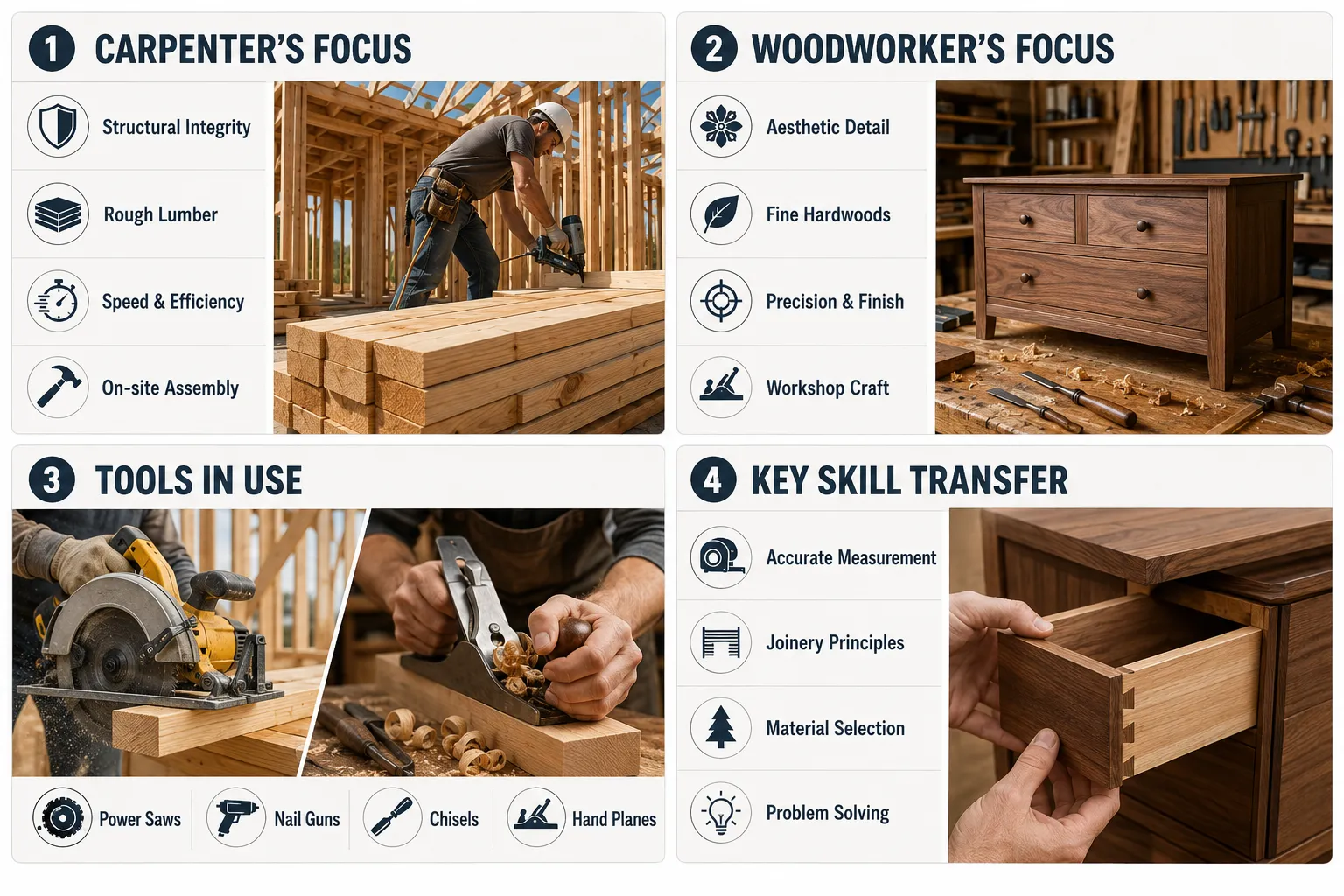
The terms “carpenter” and “woodworker” are often used interchangeably, leading to confusion about the distinct skills and applications of each trade. While both work with wood, their primary objectives, tools, and typical projects differ significantly. Understanding these differences is the first step in appreciating how carpentry skills can enrich furniture-making.
A carpenter is typically involved in the construction and renovation of buildings. Their work is often structural, focusing on framing, roofing, flooring, and installing doors and windows. Carpenters prioritize stability, load-bearing capacity, and efficiency in construction. They work with a wide range of materials, including engineered wood products, dimensional lumber (often rougher cuts), and sometimes even metal or concrete elements integrated with wood. Their tools often lean towards power tools designed for speed and repetition, such as circular saws, miter saws, nail guns, and impact drivers. A carpenter’s output is usually part of a larger structure, where the aesthetics might be secondary to functionality and structural integrity.
Conversely, a woodworker generally crafts smaller, more refined objects, with a strong emphasis on aesthetics, joinery, and finish. Their projects include furniture, cabinetry, decorative items, and artistic pieces. Woodworkers work predominantly with solid hardwoods and high-quality sheet goods, selecting materials not just for strength but for grain pattern, color, and workability. Precision is paramount, often measured in fractions of a millimeter. Their toolkit includes a balance of hand tools, chisels, hand planes, marking gauges, and precision power tools like table saws, routers, and jointers. The final product is often a standalone item, judged on its craftsmanship, visual appeal, and durability.
In essence, carpentry is often about building the house, while woodworking is about furnishing it. However, the foundational understanding of wood, its properties, and how to manipulate it remains a common thread. The journey from rough framing to a meticulously crafted table requires a nuanced approach, but the core principles of working accurately with wood are universal.
Essential Carpentry Skills That Boost Your Furniture-Making Projects
For the aspiring or experienced furniture maker, consciously integrating certain carpentry skills can dramatically improve the quality, stability, and efficiency of their projects. These aren’t just “rough” skills; they are the bedrock of accurate and durable wood construction.
1. Precision in Measurement and Layout
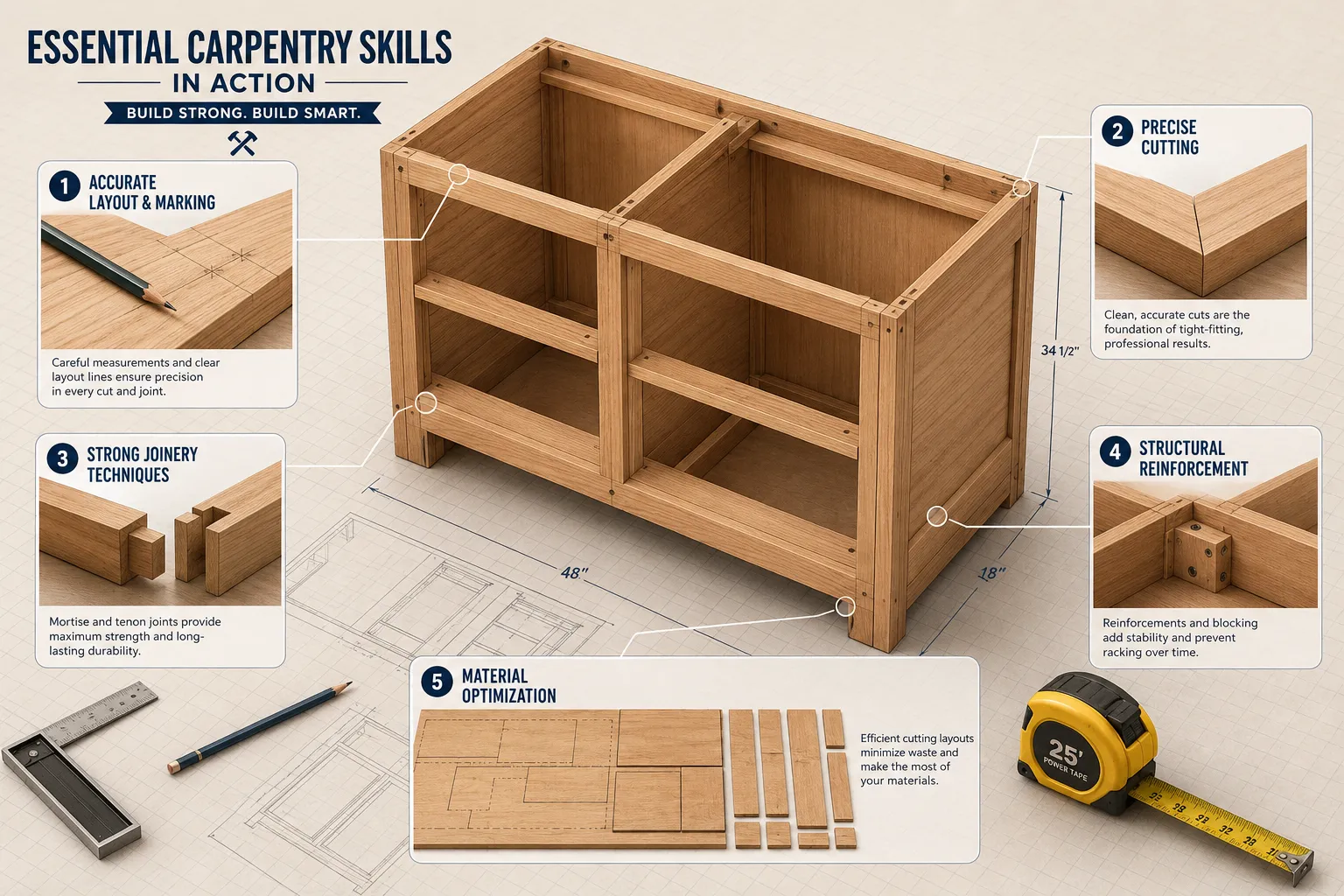
One of the most critical skills a carpenter masters is precise measurement and accurate layout. In framing, being off by an eighth of an inch can lead to significant issues down the line. This meticulous approach translates directly to furniture making. A slight inaccuracy in measuring a table leg or a cabinet side will throw off the entire piece.
- Reading a Tape Measure: Carpenters are masters of reading a tape measure quickly and accurately, down to 1/32nd of an inch. Developing this same level of proficiency prevents cumulative errors.
- Square and Plumb: Understanding how to check for square and plumb is fundamental. A carpenter ensures walls are plumb (vertical) and corners are square (90 degrees). For furniture, this means ensuring your cabinet boxes are perfectly square and your table legs are truly plumb. Using a reliable woodworking square is non-negotiable.
- Layout Techniques: From snapping chalk lines to using a story pole, carpenters employ various layout techniques to transfer dimensions efficiently and accurately. Furniture makers can adapt these to mark out complex joinery or multiple identical parts.
2. Understanding Structural Integrity and Load Bearing
Carpenters are constantly thinking about how a structure will hold up against gravity, wind, and daily use. This involves understanding stress points, weight distribution, and the appropriate joinery or fasteners for a given application. Applying this “structural thinking” to furniture is vital for creating pieces that last.
- Joinery for Strength: While woodworkers excel at intricate joinery for aesthetic appeal (like hand tool joinery for visible wood joints), carpenters also rely on strong, simple joints and mechanical fasteners for robustness. Understanding how different joints resist racking, shear, and compression forces is key.
- Material Selection for Stress: Carpenters choose wood species and grades based on their structural properties. This knowledge informs a woodworker’s choice, for example, between a strong hardwood like oak for a chair frame and a more decorative, but softer, wood for a tabletop veneer. For more on this, explore wood species selection for visible joinery.
- Reinforcement: Carpenters use various methods to reinforce connections, from blocking to gussets. Furniture makers can apply similar principles to add hidden strength to critical joints, ensuring a piece can withstand years of use.
3. Efficient Cutting and Material Optimization
Time is money in carpentry, leading to highly efficient cutting practices and minimal waste. Furniture makers can learn from this mindset, especially when dealing with expensive hardwoods or live edge wood projects.
- Optimized Cut Lists: Carpenters often generate detailed cut lists to maximize yield from lumber. This skill is invaluable for minimizing waste in the furniture shop, especially when cutting multiple parts from expensive boards.
- Controlled Power Tool Use: Carpenters are adept at handling powerful tools like circular saws and miter saws for precise, repeatable cuts. Mastering these tools ensures square edges and accurate dimensions, which are foundational for tight-fitting joinery in furniture.
- Stock Preparation: While woodworkers might plane and joint wood to perfection for aesthetic reasons, carpenters focus on getting stock straight and true for assembly, a necessary first step regardless of the project’s scale or intricacy. This initial preparation ensures subsequent joinery and assembly are accurate.
4. Problem-Solving and Adaptability On-Site
Carpentry often involves encountering unexpected challenges on a job site, uneven foundations, warped lumber, or design changes. This fosters a strong problem-solving mindset and adaptability.
- Troubleshooting: When a joint doesn’t fit perfectly or a panel warps, drawing on a carpenter’s problem-solving approach helps diagnose the root cause and devise effective solutions.
- Working with Imperfections: Not all wood is perfect. Carpenters are skilled at working with less-than-ideal materials, selecting the best parts, and strategically placing defects where they won’t compromise strength or appearance. This skill is particularly useful when working with reclaimed wood restoration or budget-friendly materials.
- Sequencing and Assembly: Carpenters plan their assembly sequence to ensure efficiency and structural integrity. Applying this foresight to furniture projects can prevent frustrating reworks and ensure a smooth build process.
By embracing these carpentry principles, furniture makers can build pieces that are not only beautiful but also inherently strong, stable, and designed to endure.
Integrating Carpentry Techniques for Durable Furniture
Applying carpentry techniques in your furniture-making projects isn’t about compromising on fine craftsmanship; it’s about building a robust foundation. Many of the techniques carpenters use for building houses can be scaled down and refined for fine furniture, enhancing both durability and longevity.
Consider the humble table. A carpenter would think about how the legs are connected to the apron, ensuring the structure can withstand lateral forces and vertical loads without racking or wobbling. For a woodworker, this translates to selecting appropriate joinery techniques like mortise and tenon or dovetails, but also ensuring that the proportions and connections are inherently strong, not just aesthetically pleasing.
Practical Applications
- Framing Techniques for Carcases: Think of a cabinet or chest of drawers as a small “building.” Carpenters frame walls; woodworkers frame carcases. Applying principles of framing, such as ensuring all corners are truly square and that internal dividers or shelves contribute to the overall rigidity, makes for a much stronger final product. This is particularly relevant when building modular wood storage systems where strength and interchangeability are key.
- Sub-Assemblies for Strength: Carpenters often build sub-assemblies (e.g., wall sections) on the ground before raising them. This approach can be used in furniture making by constructing smaller, precise components (like drawer boxes or door frames) that are then integrated into the main structure, ensuring accuracy and strength at each stage.
- Using Fasteners Strategically: While fine woodworking often minimizes visible fasteners, carpenters are masters of using screws, nails, and bolts for maximum strength. For hidden areas, structural components, or temporary clamping, knowing how and when to use woodworking screws or other fasteners can provide immense structural integrity without detracting from the aesthetic. The choice of wood glue also plays a crucial role here.
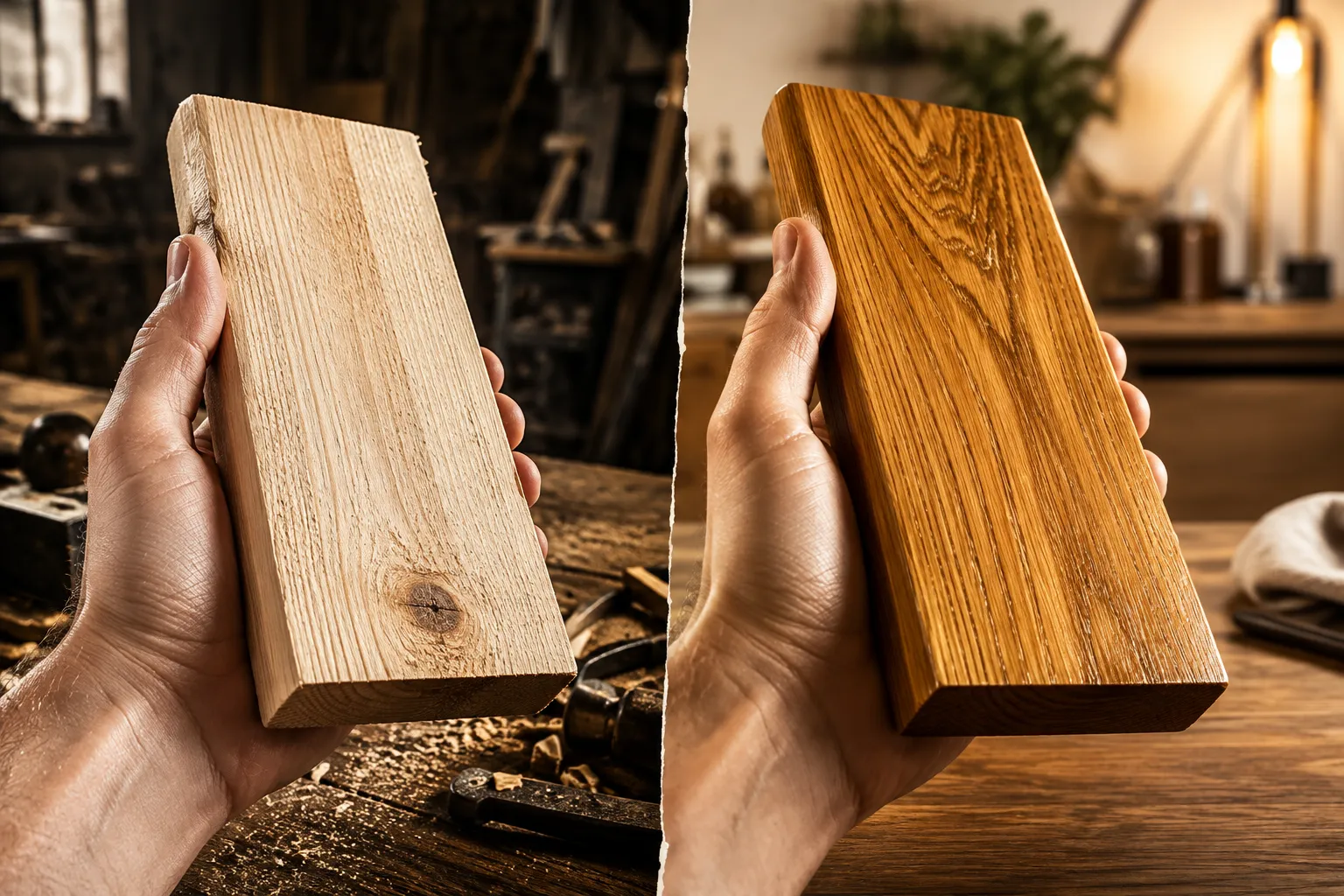
- Surface Preparation and Finishing for Longevity: Carpenters understand that proper surface preparation protects wood from the elements. While the scale differs, the principle holds for furniture. A well-sanded and appropriately finished piece of furniture will resist wear, moisture, and temperature changes much better. Techniques used for larger structural projects can inform the selection and application of wood finishing techniques for furniture, ensuring not just beauty but also durability.
By adopting a carpenter’s pragmatic approach to structural integrity and combining it with a woodworker’s passion for precision and aesthetics, you can create furniture that stands the test of time, both functionally and visually.
Conclusion
The distinction between carpenters and woodworkers, while clear in their primary focus, should not overshadow the invaluable overlap in their core competencies. For anyone engaged in furniture-making, consciously integrating the foundational carpentry skills, from uncompromising precision in measurement and layout to a deep understanding of structural mechanics and efficient material handling, can be a game-changer. These aren’t just skills for framing houses; they are the bedrock upon which truly durable, stable, and long-lasting furniture is built.
In 2026, as makers continue to seek ways to elevate their craft, looking to the pragmatic wisdom of carpentry offers a powerful advantage. By combining the carpenter’s structural foresight with the woodworker’s meticulous attention to detail, you equip yourself to create pieces that are not only beautiful but also robust enough to become heirlooms. Embrace the full spectrum of woodcraft, and watch your furniture-making projects transform with enhanced strength and enduring quality.
References
- Fine Woodworking Magazine. (2023). Understanding Wood Movement. Taunton Press.
- Green, S. (2021). The Essential Woodworker. Popular Woodworking Books.
- Peters, R. (2019). Working Wood: The Art and Skill of Fine Joinery. Fox Chapel Publishing.
SEO Meta Title: Carpenters vs. Woodworkers: Boost Furniture with Carpentry Skills SEO Meta Description: Explore the differences between carpenters and woodworkers and learn how essential carpentry skills like precision and structural thinking can elevate your furniture-making projects in 2026.