
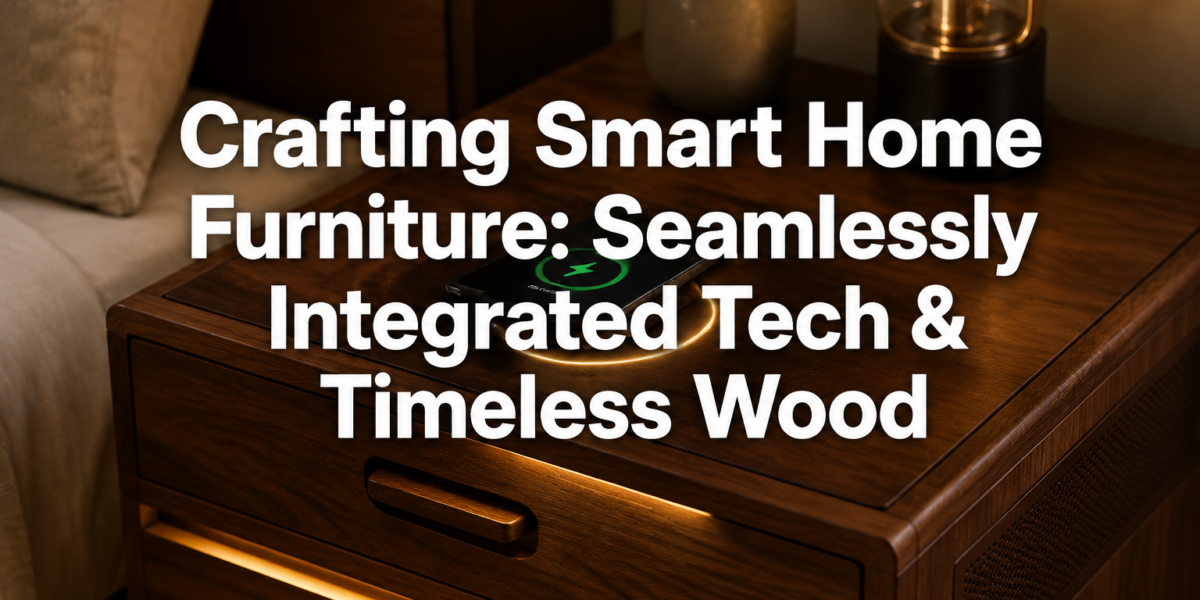
The relentless march of technology often leaves a trail of tangled wires, bulky devices, and mismatched aesthetics in its wake. But what if the future of smart living didn’t mean sacrificing the warmth and elegance of natural materials? Discover how to seamlessly blend modern technology into custom-built wooden furniture, creating pieces that offer convenience, aesthetic appeal, and smart functionality like inductive charging and ambient lighting. This article delves into the intricate process of Crafting Smart Home Furniture: Integrating Wireless Charging, Hidden Speakers, and LED Lighting into Custom Wood Pieces, transforming everyday items into intelligent, indispensable elements of the modern home in 2026.
Key Takeaways
- Seamless Integration: Smart home features like wireless charging, hidden speakers, and LED lighting can be discreetly integrated into custom wood furniture, preserving aesthetic appeal.
- Design-First Approach: Planning is crucial; consider technology placement, wire management, and component size during the initial furniture design phase.
- Material Compatibility: Wood type, thickness, and finish significantly impact the performance and visibility of integrated tech.
- DIY Potential: While requiring precision, many aspects of smart furniture crafting are achievable for skilled DIY enthusiasts and woodworkers.
- Enhanced Living: Custom smart furniture elevates convenience, reduces clutter, and adds a unique, personalized touch to any living space.
The Vision: Blending Form, Function, and Future with Integrated Technology
The modern home demands more than just beauty; it craves efficiency, connectivity, and a clutter-free existence. This is where the art of Crafting Smart Home Furniture: Integrating Wireless Charging, Hidden Speakers, and LED Lighting into Custom Wood Pieces truly shines. Imagine a bedside table that charges your phone simply by placing it down, a coffee table that provides rich, room-filling sound without visible speakers, or shelves that cast a warm, customizable glow. This isn’t science fiction; it’s the present reality achievable through thoughtful design and skilled woodworking.
The challenge lies in marrying the organic beauty of wood with the precise demands of electronics. Wood, being a natural material, expands and contracts with changes in humidity and temperature, a factor that must be considered when embedding sensitive components. The goal is to make the technology disappear, leaving only the warmth of the wood and the convenience of its integrated features. This requires a deep understanding of both woodworking techniques and basic electronics.
Wireless Charging: Power Without the Plug
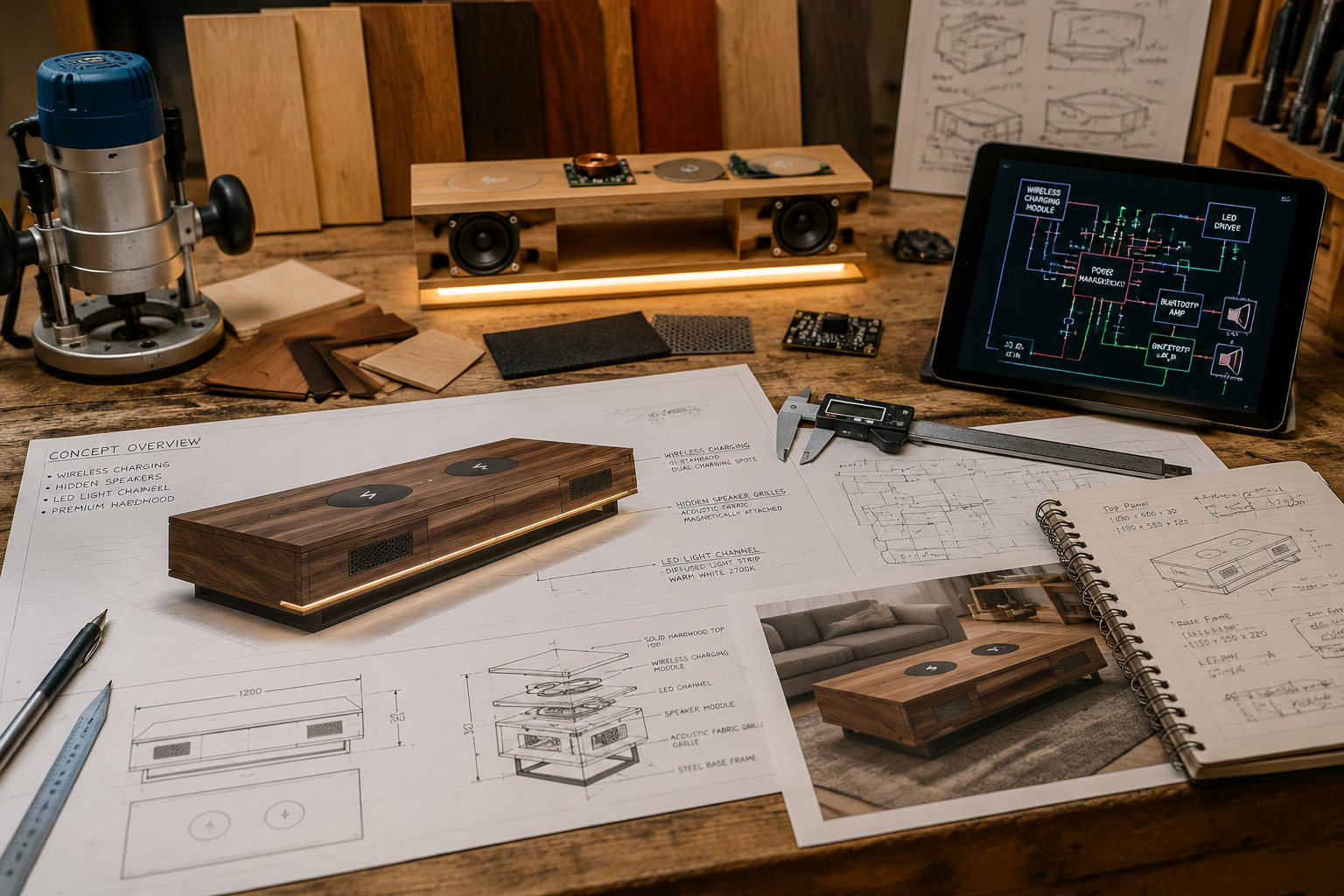
Wireless charging, specifically inductive charging using the Qi standard, is perhaps the most requested smart furniture feature. It eliminates the need for unsightly cables and chargers, providing a clean surface ready to power up compatible devices.
Key Considerations for Integration:
- Coil Placement: The charging coil must be precisely positioned directly beneath the charging surface. Marking the sweet spot on the furniture’s exterior is crucial for user convenience.
- Wood Thickness: Inductive charging works best through thinner materials. Optimal wood thickness for reliable charging is typically 3-10mm (1/8 to 3/8 inch). Thicker wood may require more powerful (and potentially larger) coils or a slight recess in the wood from underneath.
- Routering: A router is essential for creating a snug cavity for the charging coil. Ensure the router bit size matches the coil’s dimensions.
- Heat Management: While modern charging coils are efficient, prolonged charging can generate some heat. Designing for proper ventilation or selecting coils with built-in thermal protection is advisable.
- Power Source: Most wireless chargers require a USB power source, which needs to be routed discreetly within the furniture. Consider integrating a USB power adapter inside a hidden compartment.
Example Application: A nightstand with a subtle etched circle indicating the charging spot, or a desk where the charging zone is seamlessly integrated into the work surface. For detailed guidance on concealing tech, refer to our article on “DIY Smart Home Integration with Custom Wooden Enclosures: Concealing”.
Integrating Audio: The Magic of Hidden Speakers
Nothing breaks a clean aesthetic like a bulky speaker. Embedding speakers directly into furniture offers a minimalist audio solution, perfect for ambient music, podcasts, or discreet home theater setups. The challenge is ensuring good sound quality from concealed drivers.
Types of Hidden Speaker Solutions:
- Exciters/Transducers: These small devices turn any flat surface (like a table top or cabinet door) into a speaker. They vibrate the wood itself, producing sound.
- Pros: Truly invisible, easy to install.
- Cons: Sound quality can be limited, best for ambient background audio rather than critical listening. Wood type significantly affects sound.
- Discreet Grille Speakers: Small, high-quality full-range speakers can be mounted behind a fabric grille or a finely perforated wood panel.
- Pros: Better sound quality than exciters, still largely hidden.
- Cons: Requires careful acoustic design for the enclosure, visible (though subtle) grille.
Design and Acoustic Considerations:
- Enclosure Design: For optimal sound, speakers need proper enclosures. This means building a sealed or ported box within the furniture, accounting for speaker volume requirements.
- Grille Material: Acoustically transparent fabric or thin, CNC-perforated wood (e.g., a custom wooden record player console) allows sound to pass while concealing the speaker.
- Amplification: Hidden speakers will require an amplifier, which also needs to be discreetly housed and managed for power and connectivity. Bluetooth amplifiers are a popular choice.
- Vibration Isolation: Consider mounting speakers on isolation pads to prevent unwanted vibrations from affecting the furniture structure.
Table: Comparison of Hidden Speaker Options
| Feature | Exciters/Transducers | Discreet Grille Speakers |
|---|---|---|
| Visibility | Completely invisible | Minimal (subtle grille) |
| Sound Quality | Ambient, surface-dependent | Good to excellent, depending on speaker choice & enclosure |
| Installation Ease | Very easy | Moderate (requires enclosure, grille work) |
| Best Use Case | Background music, unobtrusive audio | Primary audio, richer soundscapes |
| Material Impact | Highly sensitive to wood type and thickness | Less sensitive, but grille material is key |
Illuminating Spaces: The Art of Integrated LED Lighting
LED lighting offers immense versatility, from subtle accent glows to functional task lighting, all while being incredibly energy-efficient and long-lasting. Integrating LEDs into custom wood furniture can define spaces, highlight details, and create dynamic ambiances.
Integration Techniques:
- Recessed Channels: Route narrow channels into the wood to embed LED strips flush with the surface. This creates a clean, architectural look.
- Diffusion: Use LED diffusers (opal acrylic strips or channels) to soften the light and eliminate visible “hot spots” from individual LEDs, creating a continuous line of light.
- Edge Lighting: Embed LEDs along the edges of shelves or panels to create a glowing effect, particularly striking on translucent materials or to highlight grain patterns.
- Backlighting: Mount LED strips behind panels or inside open compartments to create a halo effect or illuminate objects stored within.
Control and Power:
- Smart Control: Integrate smart LED controllers (Wi-Fi or Bluetooth) that allow control via smartphone apps, voice assistants, or smart home hubs. This enables dimming, color changes (RGBW), and scheduling.
- Power Supply: LEDs require a low-voltage DC power supply (typically 12V or 24V), which must be housed discreetly within the furniture, along with any control modules.
- Wiring Management: Plan your wire runs carefully to conceal them entirely, using routed channels or hidden compartments. Proper wire management is crucial for safety and aesthetics, a principle that extends to other projects like building custom monitor stands.
Design Considerations for Smart Furniture
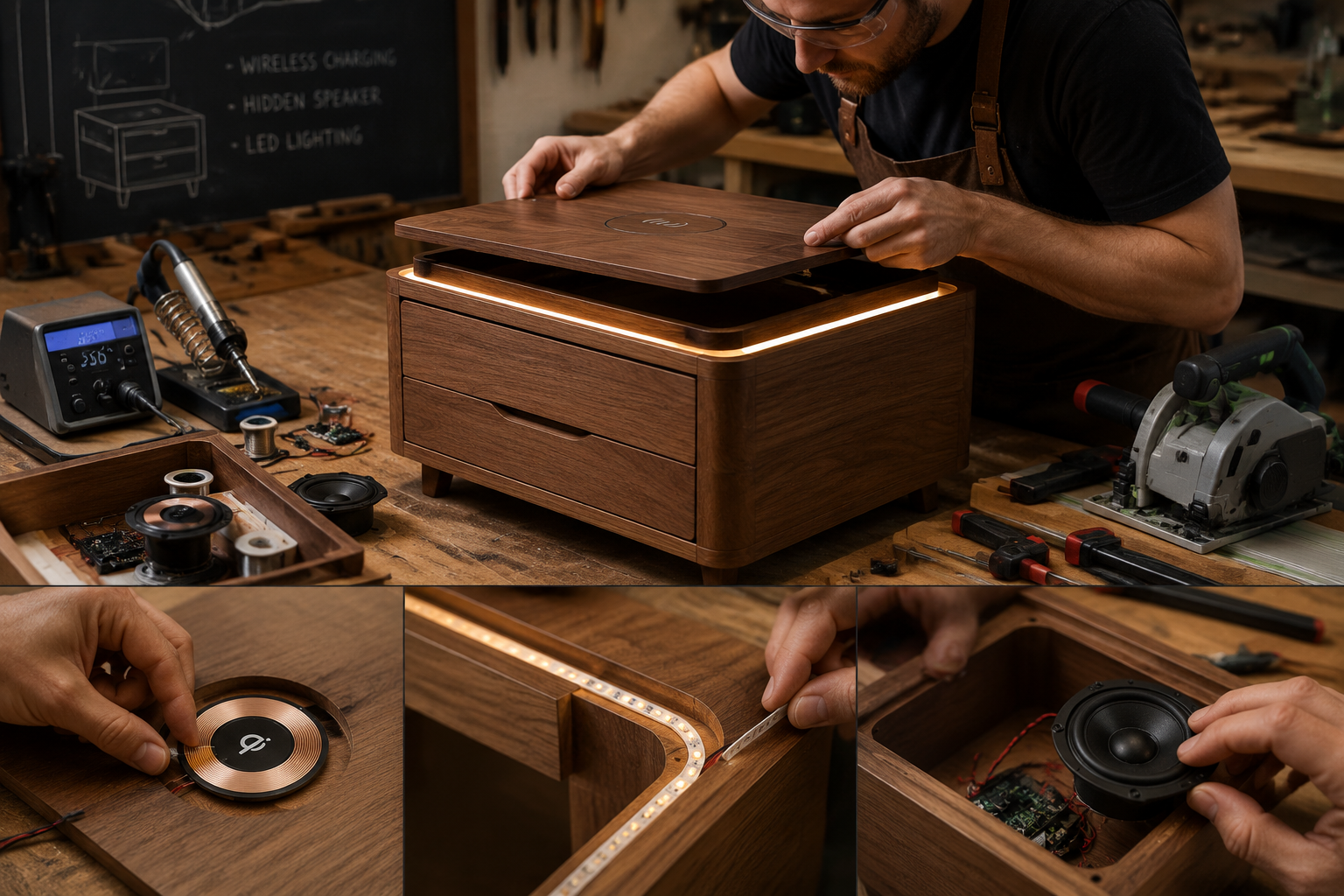
Successful smart furniture isn’t just about sticking technology into wood; it’s about thoughtful design that anticipates user needs and respects the inherent properties of the materials.
Material Selection:
- Wood Species: Dense hardwoods like oak, maple, and walnut offer durability and a beautiful finish. Consider how the wood’s grain and color will complement the integrated technology. For example, a lighter wood might allow more visibility for subtle LED glows.
- Finish: A durable finish like polyurethane or Danish oil protects the wood and components. Consider unique wood finishing techniques to enhance the overall aesthetic.
- Wood Movement: Remember that wood expands and contracts. Ensure that embedded electronic components have a small amount of clearance or are mounted in a way that accommodates this movement, preventing stress on circuit boards or wires. Understanding wood movement is paramount for longevity.
Tools and Techniques:
- Precision Routing: A router with various bits is indispensable for creating accurate cavities for charging coils, speaker enclosures, and LED channels.
- Joinery: Strong, stable joinery is critical for the structural integrity of smart furniture, especially when components might add weight or require secure mounting.
- Wiring & Soldering: Basic electronics skills, including soldering and wire stripping, are necessary for connecting power supplies, controllers, and components.
- CAD Software: For complex designs, computer-aided design (CAD) software can help visualize component placement and wire runs before cutting wood.
Safety First:
- Always disconnect power before working on electrical components.
- Ensure all wiring is properly insulated and secured.
- Use appropriate heat-shrinks and cable management to prevent shorts or hazards.
- Consider surge protection for sensitive electronics.
Project Ideas and Inspiration
The possibilities for Crafting Smart Home Furniture: Integrating Wireless Charging, Hidden Speakers, and LED Lighting into Custom Wood Pieces are virtually endless.
- Smart Bedside Table: Wireless charging pad, hidden Bluetooth speaker for soothing sounds, LED strip beneath for soft ambient floor lighting.
- Tech-Integrated Desk: Multiple wireless charging zones, recessed LED task lighting, hidden speakers for a clean workspace. Perhaps even a custom modular storage system for the workshop where this desk is built.
- Media Console: Hidden speakers for surround sound, subtle LED backlighting behind a TV, wireless charging spots on top for remote controls and tablets. Consider also building a custom wooden record player console for a vintage-meets-modern aesthetic.
- Floating Shelves with Integrated Lighting: Custom floating shelves can be transformed with embedded LED strips that illuminate artwork or decor, controlled by a smart dimmer.
- Coffee Table with Ambient Lighting & Charging: A living room centerpiece featuring discreet charging pads and subtle LED strips that can change color to match the mood or occasion.
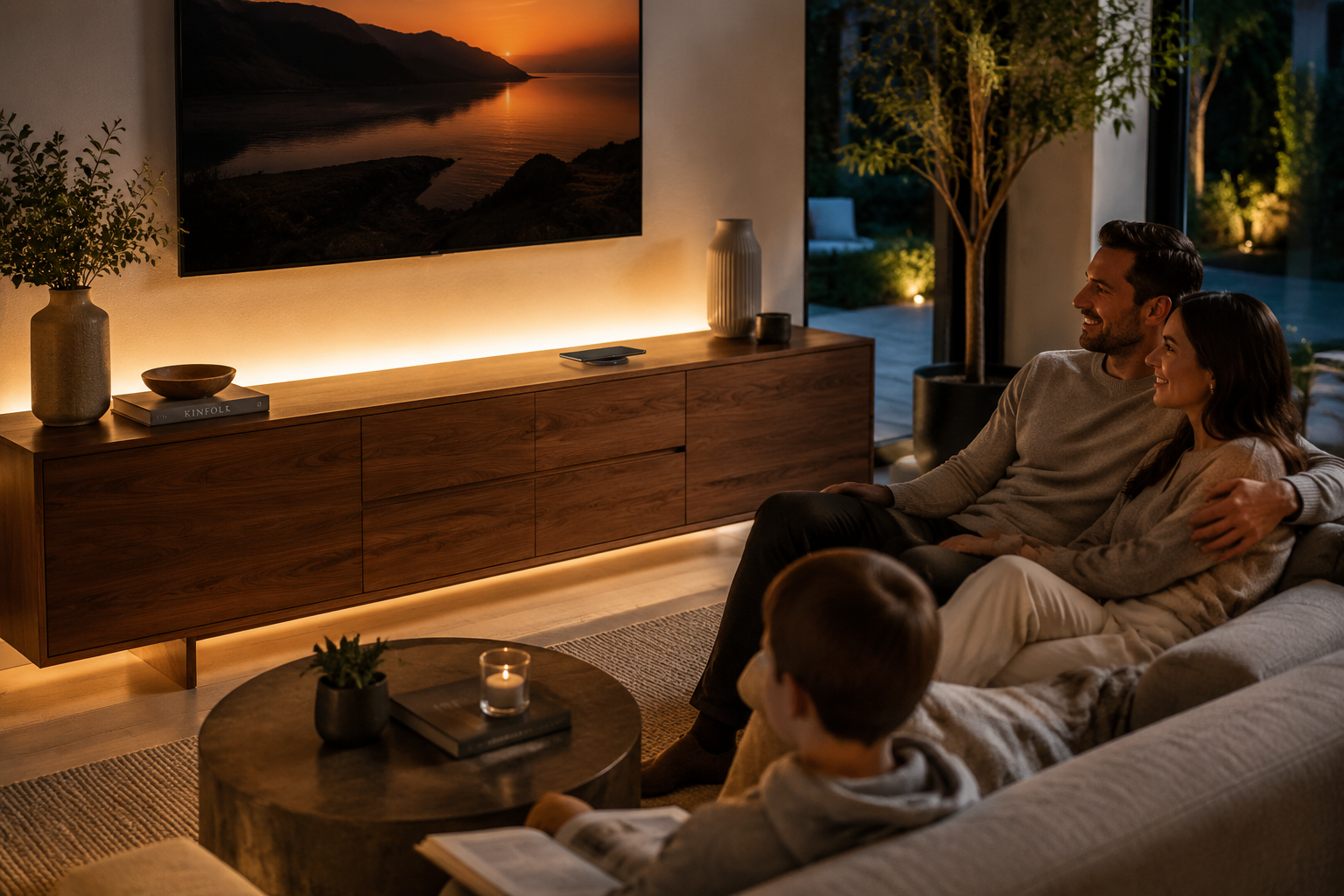
The appeal of custom smart furniture lies in its ability to offer tailored solutions that off-the-shelf products simply cannot. It allows for a cohesive aesthetic, eliminates clutter, and brings a new level of functionality to beloved wooden pieces.
Conclusion
The convergence of traditional woodworking and modern smart home technology is not just a trend; it’s an evolution in home design. Crafting Smart Home Furniture: Integrating Wireless Charging, Hidden Speakers, and LED Lighting into Custom Wood Pieces empowers woodworkers and DIY enthusiasts to create truly unique, functional, and beautiful items that elevate the living experience. By carefully planning, understanding material properties, and mastering precision techniques, anyone can transform a simple piece of wood into an intelligent hub.
As technology continues to shrink and become more versatile, the opportunities for seamless integration into custom wood pieces will only grow. Embrace the challenge, hone your skills, and start envisioning the smart furniture that will define your home in 2026 and beyond. The future is here, and it’s beautifully handcrafted.
Next Steps:
- Start Small: Begin with a simple project, like a small charging pad integrated into a wooden coaster or a simple LED-lit shelf, to gain experience.
- Research Components: Familiarize yourself with different wireless charging modules, mini-speakers, and LED strips, paying attention to their power requirements and dimensions.
- Practice Precision: Work on your routing and joinery skills. Precision is key when embedding electronic components.
- Design with Purpose: Always consider the end-user experience. Where will the charging spot be most convenient? How will the light enhance the space?