
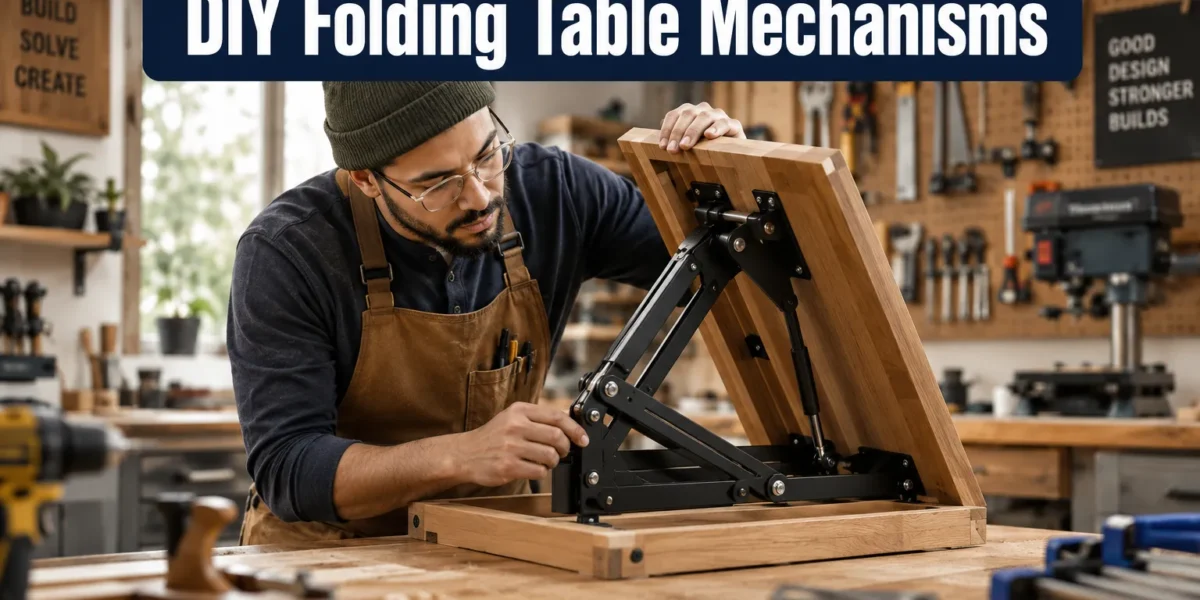
The average household in 2026 possesses increasingly limited space, driving a surge in demand for adaptable furniture solutions. For makers, this translates into a compelling challenge: designing and constructing tables that are not only functional and aesthetically pleasing but also possess the inherent strength and reliability of their fixed counterparts, yet fold away when not needed. Understanding the intricate engineering behind effective DIY Folding and Collapsible Table Mechanisms: Hardware, Locks, and Strength Tips for Makers is paramount to creating furniture that meets these modern demands. This article delves into the critical components and design considerations that empower you to build robust, space-saving tables with confidence.
Key Takeaways
- Proper hardware selection (hinges, braces, slides) is crucial for the stability and functionality of folding and collapsible tables.
- Effective locking mechanisms are essential to ensure the table remains securely open during use, preventing accidental collapse.
- Material choice, joinery techniques, and structural reinforcement significantly impact the load-bearing capacity and longevity of a DIY folding table.
- Always consider the intended use and anticipated load when designing and selecting components for your folding table project.
- Safety in design and construction is non-negotiable, requiring careful attention to pinch points and secure operation.
Understanding Basic Folding and Collapsible Table Hardware
The foundation of any successful DIY folding or collapsible table project lies in the selection and integration of appropriate hardware. This hardware dictates how the table moves, locks, and ultimately, how robust it will be. Ignoring these details can lead to wobbly, unreliable, or even dangerous tables.
Types of Hinges
Hinges are the most fundamental component in a folding design, allowing parts of the table to pivot. Their type and placement are critical to both function and durability.
- Butt Hinges: Common and versatile, butt hinges are recessed into the edges of two components, creating a strong, flush joint. They are excellent for folding tabletops (e.g., a drop-leaf design) or for attaching folding legs to a tabletop frame. For heavier tables, choose larger hinges with thicker gauges and longer screws for maximum hold.
- Piano Hinges (Continuous Hinges): These hinges run the entire length of the joint, distributing stress evenly across a wide area. They are ideal for applications where significant support is needed along a long edge, such as a full folding tabletop or a long drop-leaf. Their continuous nature also prevents small gaps, offering a cleaner aesthetic.
- Folding Leg Hinges/Brackets: Specifically designed for table legs, these mechanisms typically feature a spring-loaded or manual locking pin that secures the leg in both the open and folded positions. They are central to DIY Folding and Collapsible Table Mechanisms: Hardware, Locks, and Strength Tips for Makers, offering a quick and reliable way to deploy and store legs. Ensure they are rated for the weight of your table and its intended load.
Braces and Supports
Beyond hinges, various braces and supports provide additional stability and ensure the table can bear weight without collapsing.
- Folding Braces: These are often triangular metal supports that pivot to brace a leg or a tabletop extension when the table is open. They lock into place and are released by a simple lever or button. They are indispensable for tables requiring extra rigidity.
- Drop-Leaf Supports: Mechanisms designed to support extensions of a tabletop, often seen in dining tables or craft tables. They can range from simple pivoting wooden arms to more complex metal slides that extend and lock.
- Wall-Mount Brackets: For tables that fold flat against a wall, robust wall-mount brackets are essential. These typically include a sturdy frame that attaches securely to wall studs and a mechanism allowing the table surface to pivot up and down, locking in the horizontal position. Building a DIY Folding Console Table: Maximizing Space and provides excellent examples of these applications.
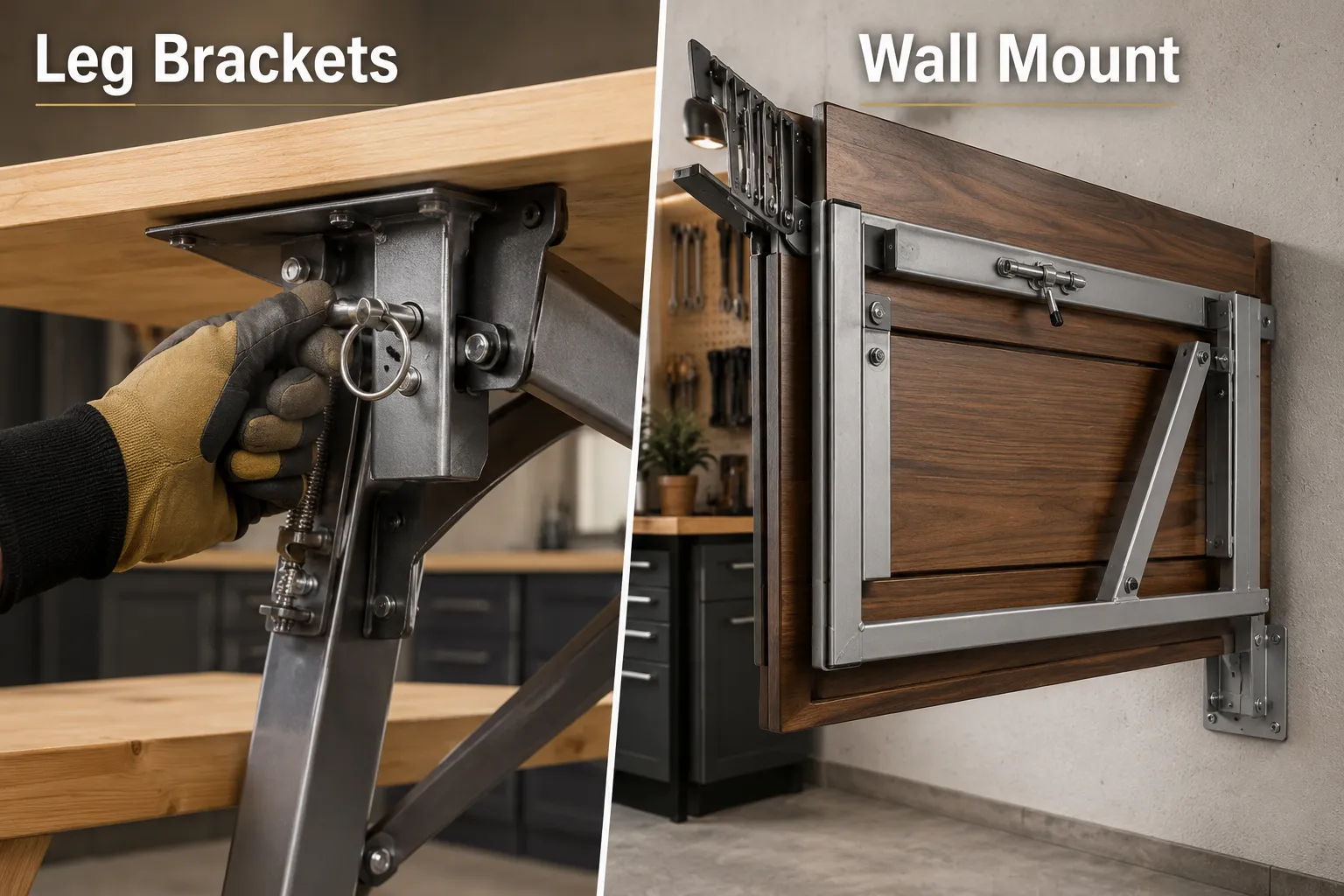
Table: Common Hardware for Folding Tables
| Hardware Type | Primary Function | Key Consideration | Best Application |
|---|---|---|---|
| Butt Hinge | Pivoting components, flush joint | Gauge, screw length, material | Drop-leaf sections, smaller folding legs |
| Piano Hinge | Continuous support, even stress distribution | Length, material, pin diameter | Full folding tabletops, workbench extensions |
| Folding Leg Bracket | Securing legs in open/closed positions | Load rating, locking mechanism type | Portable workbenches, craft tables |
| Folding Brace | Adding rigidity to legs or extensions | Material strength, ease of release | Heavy-duty work tables, dining table leaves |
| Wall-Mount Bracket | Securing table to wall, pivot function | Wall stud compatibility, load capacity | Space-saving desks, laundry room folding tables |
Locking Mechanisms: Ensuring Stability and Safety
A table that folds is only useful if it stays open reliably when in use. This is where effective locking mechanisms come into play. A poorly secured table can lead to property damage or serious injury.
Types of Locks for Folding Tables
The choice of lock depends on the design of the table, its intended use, and the level of security required.
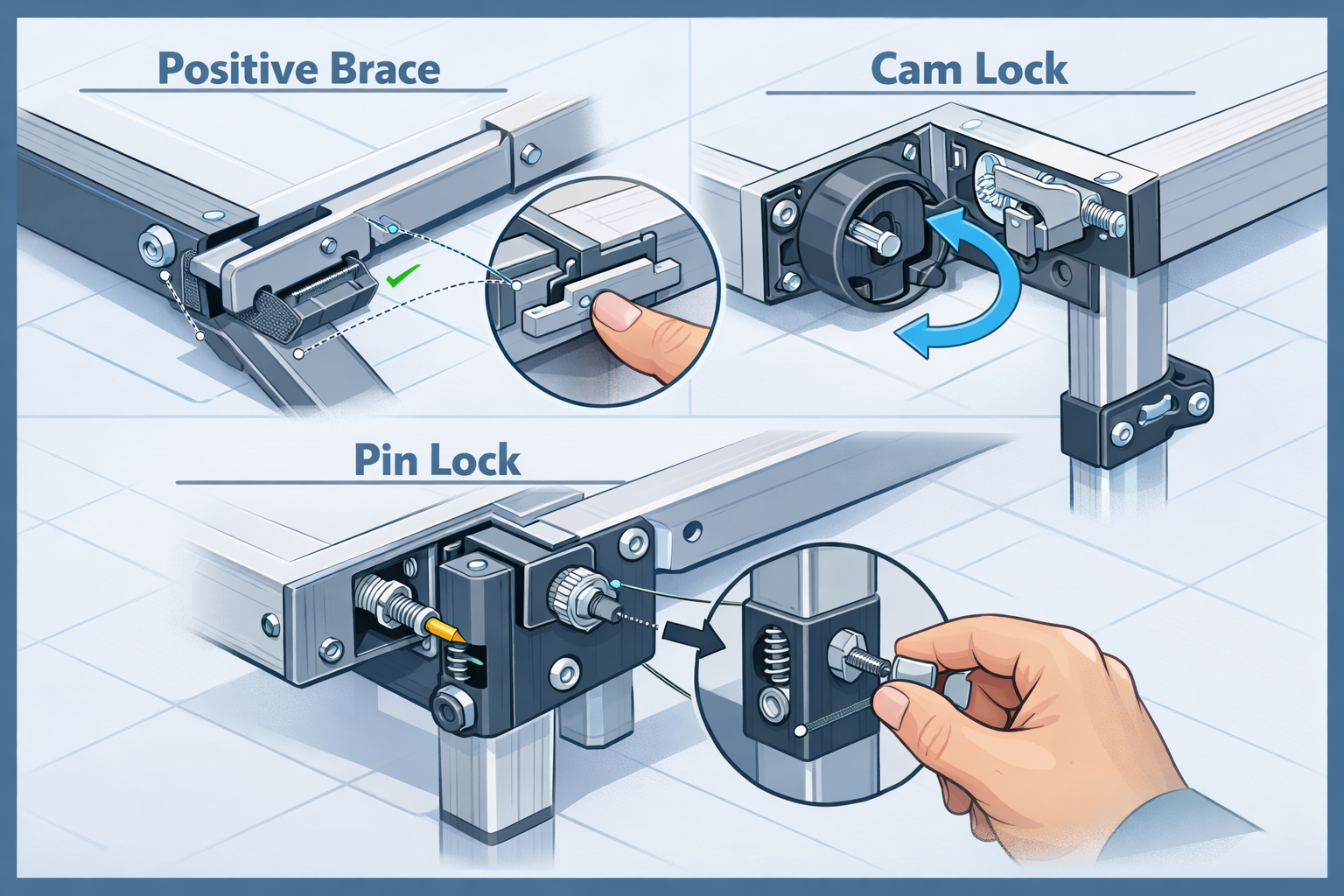
- Spring-Loaded Pin Locks: Often integrated into folding leg brackets, these pins retract against a spring to allow movement and then snap into a hole or recess to lock the leg in place. They offer quick, one-handed operation. Ensure the pin is robust and the receiving hole is precisely drilled for a snug fit.
- Cam Locks: These involve a rotating cam that engages with a mating part to create a secure lock. They are less common for primary leg locking but can be effective for securing extension leaves or auxiliary supports.
- Positive Locking Braces: These are typically metal or heavy-duty plastic braces that pivot into an over-center position, creating a very strong, stable lock. They are released by a lever or button. Look for designs that prevent accidental release.
- Gravity Locks: Some simple folding designs rely on gravity to hold components in place, especially for legs that splay outwards. While effective for light loads, they generally offer less security than positive locking mechanisms.
- Toggle Latches/Hasp Locks: These can be added as secondary security measures, particularly for folding tabletops or when transporting a collapsed table. They provide an extra layer of reassurance against unintended unfolding.
Integrating Locks for Enhanced Safety
When incorporating locking mechanisms, consider the following:
- Redundancy: For heavy-duty tables or those supporting valuable items, consider using more than one locking mechanism. For example, a folding leg bracket with a spring pin and a secondary folding brace.
- Accessibility: Locks should be easy to engage and disengage, but not so easy that they can be accidentally triggered. Position them thoughtfully.
- Pinch Point Avoidance: Design the folding action to minimize pinch points when engaging or releasing locks. Smooth edges and clear operating instructions are critical.
- Material Compatibility: Ensure the locking hardware is compatible with your table’s materials (wood, metal, composites). For wooden components, pre-drilling pilot holes for screws is essential to prevent splitting and ensure strong attachment.
“A well-designed folding table is a triumph of clever engineering. Its true strength lies not just in the materials, but in the seamless, secure operation of its moving parts.”
For makers tackling projects like a DIY Folding Work Table: How to Build a Space-Saving Workshop or Craft, understanding these mechanisms is crucial for both functionality and user confidence.
Strength Tips and Structural Considerations for Makers
Building a strong folding table goes beyond simply attaching hardware. It involves thoughtful design, material selection, and robust joinery. The goal is to create a structure that resists racking, bowing, and collapsing under load. This is the heart of DIY Folding and Collapsible Table Mechanisms: Hardware, Locks, and Strength Tips for Makers.
Material Selection
The materials you choose directly impact the table’s strength, weight, and aesthetics.
- Wood: Plywood (especially Baltic birch or good quality hardwood plywood) offers excellent stability and strength-to-weight ratio for tabletops. Solid hardwoods provide superior durability and appearance but can be heavier. For legs and frames, select dense hardwoods like oak, maple, or ash, which resist compression and impact better than softer woods.
- Metal: Steel tubing or angle iron can provide exceptional strength for frames and legs, often allowing for thinner profiles. Aluminum offers a lighter-weight alternative, though with less ultimate strength. Using metal for critical structural components, especially for the main frame or leg assemblies, can significantly enhance stability.
- Fasteners: High-quality screws (e.g., construction screws, lag screws) are paramount. Avoid drywall screws, which are brittle. Use appropriate lengths to ensure deep penetration without piercing through. For critical joints, consider through-bolts with washers and nuts for maximum shear strength.
Joinery Techniques for Stability
Even with excellent materials, weak joints will compromise the table’s integrity.
- Mortise and Tenon Joints: While more labor-intensive, these traditional woodworking joints offer incredible strength and resistance to racking for fixed parts of the frame. They are ideal for connecting rails to legs in a non-folding section.
- Domino or Dowel Joints: These are excellent alternatives to mortise and tenons for strong, aligned joints, particularly when attaching frame members.
- Pocket Hole Joinery: A popular choice for DIYers, pocket holes create strong, hidden joints quickly. Use them for connecting frame members or attaching aprons to tabletops, but ensure you use enough screws for the anticipated load.
- Reinforcement Blocks: Adding triangular blocks of wood in corners where legs meet aprons or frames can dramatically increase rigidity and prevent racking. Use glue and screws for these.
Reinforcement and Load Distribution
Effective reinforcement ensures the table can handle its intended load without bowing or breaking.
- Aprons and Skirts: A perimeter frame (apron or skirt) under the tabletop significantly stiffens the entire structure and distributes the load to the legs. Ensure aprons are deep enough and securely attached to both the tabletop and the legs.
- Cross Bracing: For folding legs, diagonal cross bracing between opposing legs (e.g., using a “X” or “A” frame design) greatly enhances lateral stability, preventing wobble. This is particularly important for taller tables.
- Leg Thickness and Splay: Thicker legs inherently provide more strength. Additionally, legs that splay outwards slightly from the tabletop base offer a wider footprint, increasing stability against tipping.
- Corner Gussets: Metal or plywood gussets added to the inside corners of the frame can prevent racking and strengthen joints.
- Center Support: For long tabletops, an additional folding leg or a central support mechanism can prevent sagging in the middle.
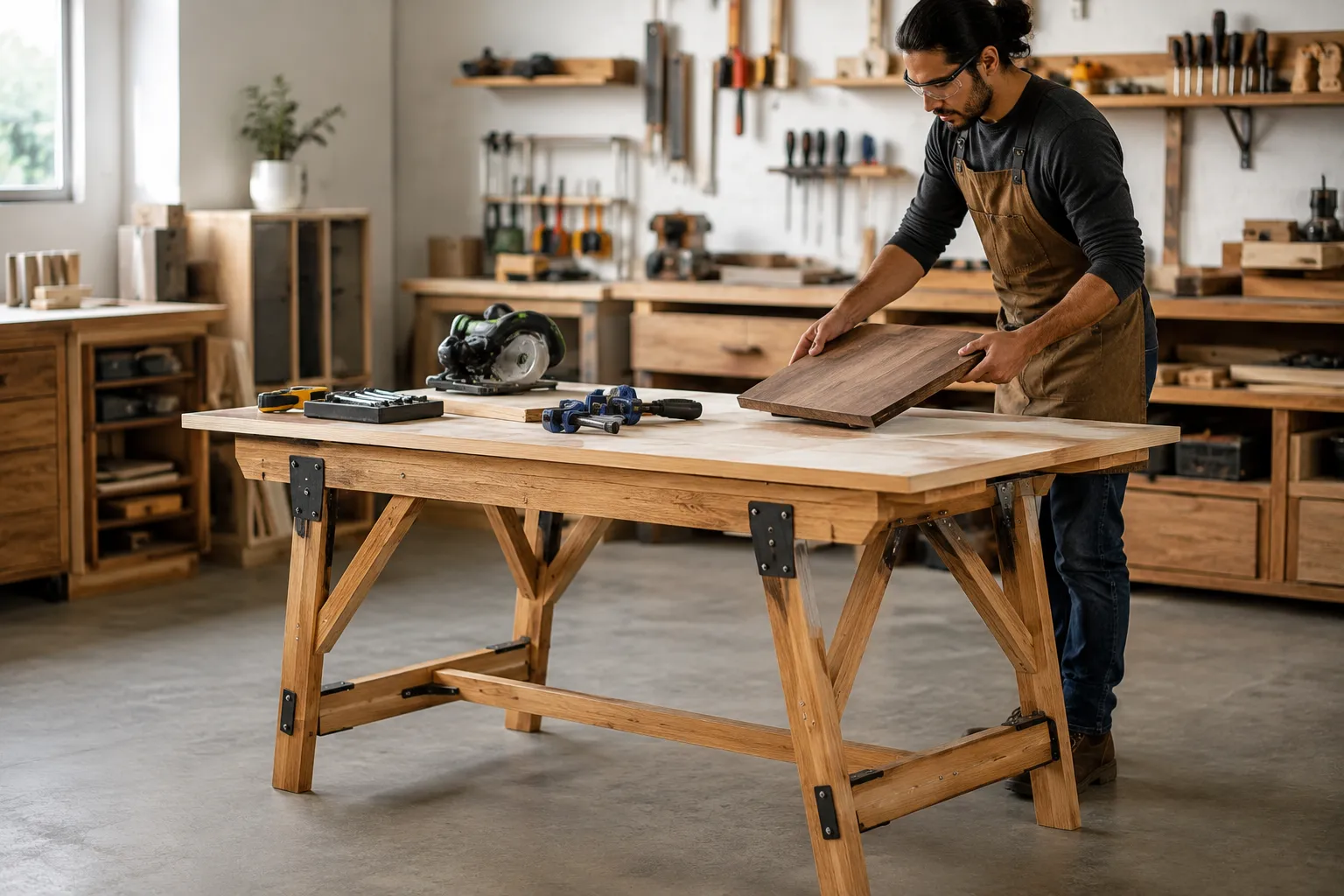
Consider the principles behind strong and stable structures when embarking on projects like Folding Collapsible Tables for Craft Fairs and Market Booths: Build. Even simple designs can benefit from an understanding of structural integrity. For more advanced ideas, exploring DIY Folding and Expandable Work Tables: EPL-Style Space-Saving can provide inspiration for complex, robust systems.
Conclusion
The art of crafting a reliable DIY folding or collapsible table lies in a meticulous understanding of its underlying mechanisms. From selecting robust hinges and powerful locking hardware to employing sound structural engineering principles, every decision contributes to the table’s safety, functionality, and longevity. As a maker in 2026, embracing these core principles of hardware integration, secure locking, and thoughtful strength design will elevate your projects from mere folding surfaces to truly dependable, space-saving furniture solutions.
By carefully considering the intended use, anticipated load, and environmental factors, you can design and build tables that not only meet your needs but exceed expectations in terms of stability and durability. Always prioritize safety in your design and construction process, ensuring all mechanisms operate smoothly and securely. Armed with these insights, you are now better equipped to tackle your next folding table project with confidence, creating pieces that are both practical and resilient.