
The journey from meticulously carving a small wooden bird to constructing a robust dining table might seem like a vast chasm, yet the foundational skills are remarkably similar. Many aspiring woodworkers often wonder if their existing ‘craft’ abilities, honed in smaller, decorative projects, genuinely translate into the larger, more structural demands of furniture making. The answer is a resounding yes; the very precision, patience, and material understanding cultivated in crafting are the bedrock upon which sophisticated furniture projects are built in 2026. This article explores how ‘From Craft to Furniture: How ‘Craft’ Skills Translate into Real Woodworking Projects’ by detailing the direct applications and natural progression of these fundamental aptitudes.
Key Takeaways
- Foundational Skills Are Universal: Core craft skills like accurate measuring, precise cutting, effective joining, and meticulous finishing are directly transferable from small decorative items to large furniture pieces.
- Progressive Learning: Woodworking is a continuous learning curve, where mastering basic craft projects builds the confidence and technical proficiency needed for more complex furniture construction.
- Tool Familiarity is Key: Understanding both hand and power tools in simpler craft contexts prepares one for their more demanding use in furniture projects, emphasizing safety and efficiency.
- Design and Problem-Solving: Craft projects hone design thinking and problem-solving abilities, crucial for tackling the structural and aesthetic challenges of furniture design.
- Finishing Excellence: The attention to detail in finishing small crafts directly impacts the durability and aesthetic appeal of finished furniture, ensuring longevity and beauty.
The Foundation: How Core Craft Skills Underpin Furniture Making
At its heart, woodworking, whether for a decorative box or a grand armoire, relies on a universal set of skills. The idea that “From Craft to Furniture: How ‘Craft’ Skills Translate into Real Woodworking Projects” is not merely a theoretical concept but a practical reality rooted in these shared fundamentals.
Precision in Measurement and Marking
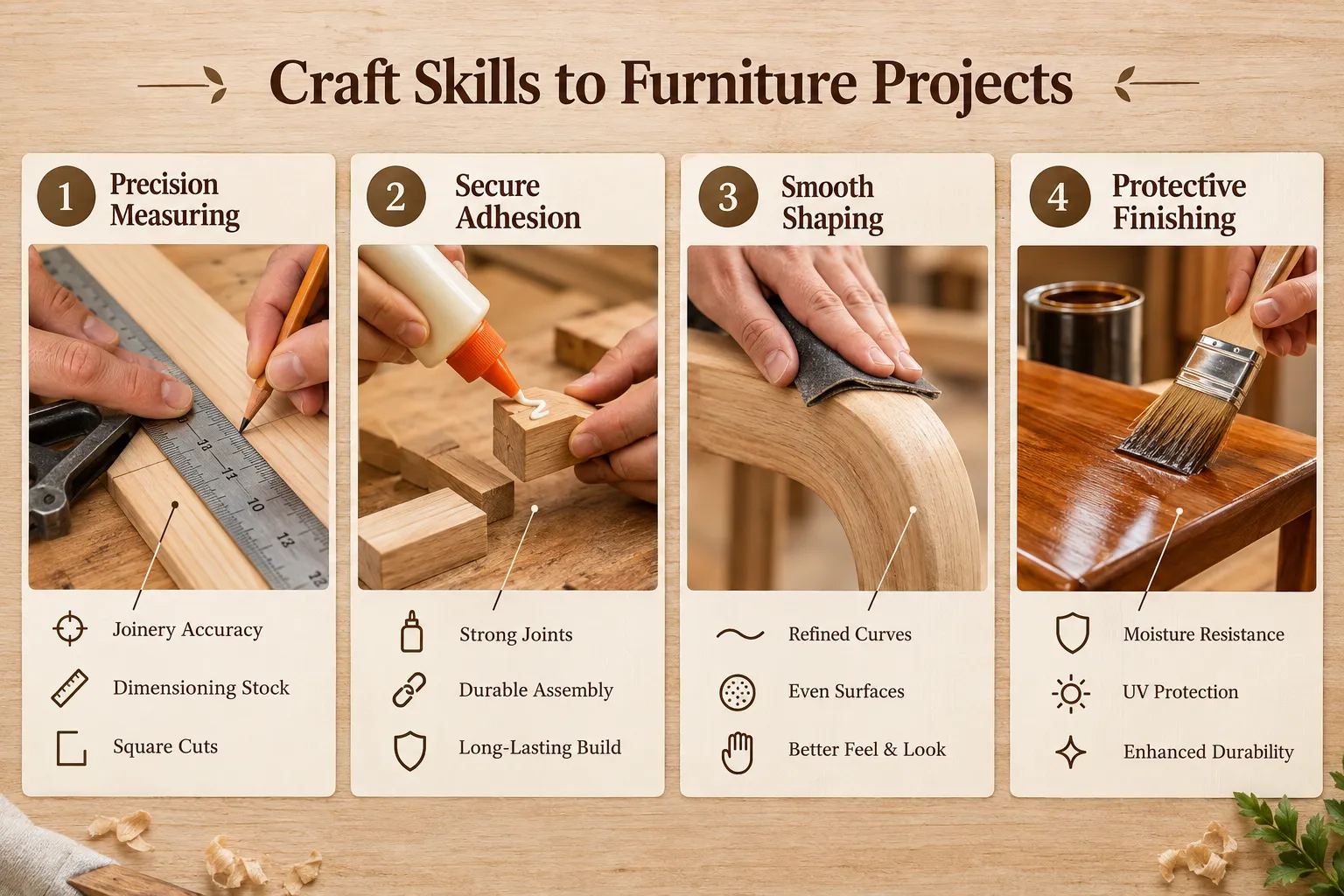
Imagine needing to cut a piece of wood for a small, intricate inlay. The accuracy required to ensure a perfect fit is paramount. This same dedication to precision is vital when dimensioning lumber for a table leg or a cabinet door. A slight mismeasurement in a small craft piece might be a minor aesthetic flaw, but in furniture, it can lead to wobbly structures, ill-fitting joints, and ultimately, project failure. Learning to use a ruler, tape measure, marking gauge, and square correctly on simpler projects instills the discipline necessary for larger, structural components. Understanding fractions, decimals, and the importance of repeated checks before cutting are habits formed early in craft that pay dividends in furniture.
Mastering Cutting Techniques
Whether using a hand saw for a dovetail joint on a jewelry box or a table saw for ripping a large board for a tabletop, the principles of accurate cutting remain the same:
- Steady Hand: Maintaining a consistent cutting line.
- Correct Blade Selection: Choosing the right blade for the material and cut type.
- Safety First: Always prioritizing personal safety.
Beginners often start with simple cuts for picture frames or small shelves. These initial experiences build muscle memory and confidence. As projects scale up to furniture, the tools might change from a coping saw to a Delta Homecraft Band Saw for intricate curves, or a hand saw to a power miter saw for joinery, but the core skill of guiding the blade precisely remains constant.
Effective Joining Methods
Joining pieces of wood is the backbone of any woodworking project. From a simple butt joint secured with glue and nails in a craft item to complex mortise and tenon joints in a robust chair, the understanding of how wood interacts and holds together is crucial. Craft projects often introduce foundational joinery:
- Butt Joints: Basic, but teach gluing and clamping.
- Rabbets and Dados: Demonstrate how to create interlocking grooves for strength.
- Dovetails (simple): Introduce the challenges of intricate interlocking shapes.
These early exposures to joinery provide a practical understanding of wood movement, grain direction, and the importance of tight, strong connections. When moving to furniture, these same principles are applied, albeit often with more sophisticated tools and larger components. For instance, a strong understanding of wood glue and clamping techniques, perfected on small boxes, is directly transferable to assembling a durable kitchen island.
The Art of Surface Preparation and Finishing
A beautifully carved spoon feels smooth and inviting because of careful sanding and finishing. This meticulous attention to surface quality is equally, if not more, important in furniture. A well-finished piece of furniture is not only aesthetically pleasing but also protected from wear and tear. Craft projects teach the essential steps:
- Sanding Progression: Moving through grits from coarse to fine.
- Grain Raising: Understanding how water-based finishes can lift wood fibers.
- Application Techniques: Learning to apply stains, oils, and varnishes evenly.
These skills are directly applied when working on larger surfaces, ensuring a consistent, durable, and attractive finish. Whether it’s a decorative bowl or a dining table, the final finish makes a significant impact on the perceived quality and longevity of the piece.
Stepping Up: Bridging the Gap From Craft to Furniture
The transition from small craft items to larger, functional furniture is less a leap and more a gradual ascent, fueled by accumulated skills and a growing understanding of material and structural integrity. The question of “From Craft to Furniture: How ‘Craft’ Skills Translate into Real Woodworking Projects” naturally leads to how one practically makes this transition.
Incremental Project Difficulty
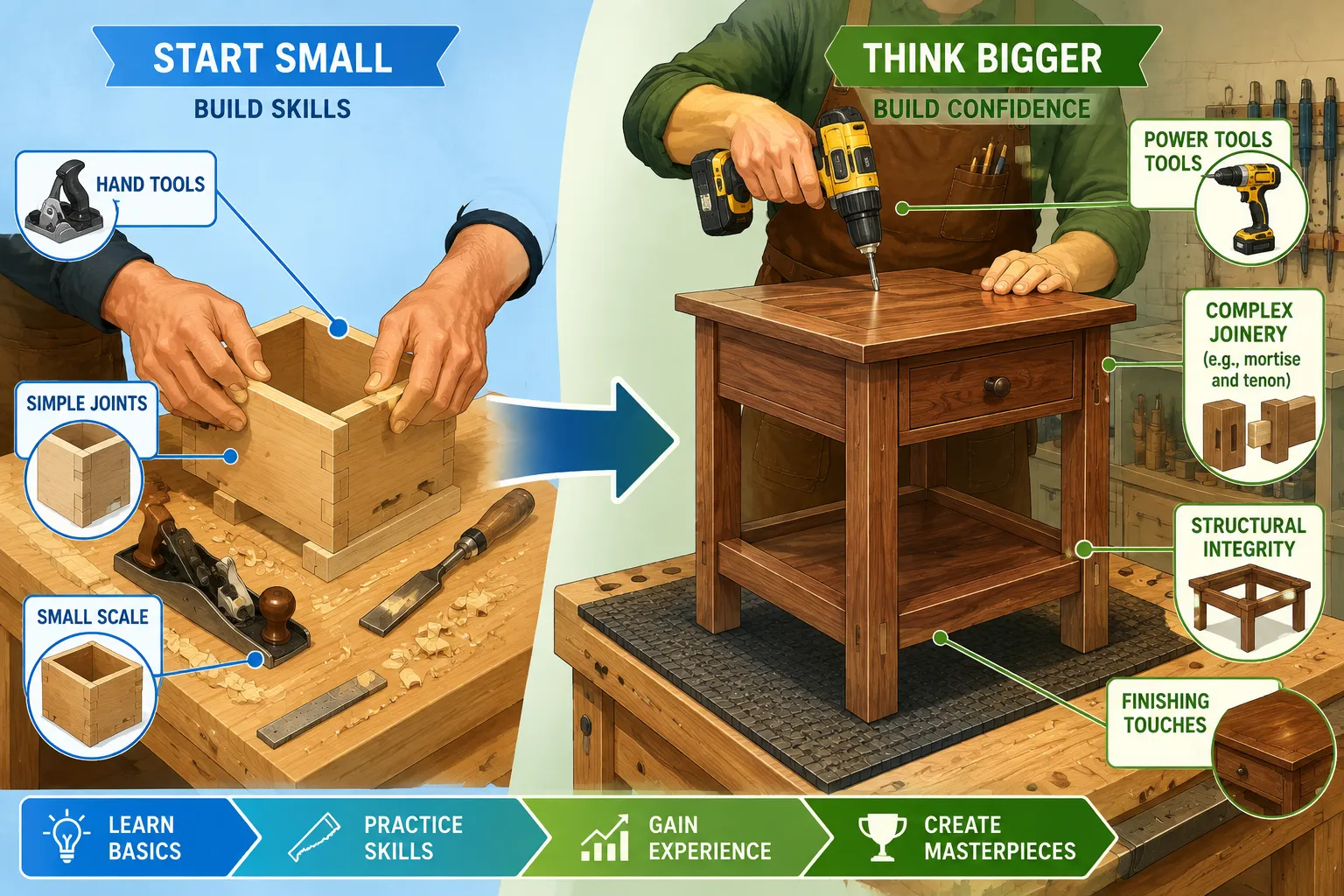
Think of it as a woodworking ladder. Small craft projects are the bottom rungs, building confidence. Each successful project unlocks new techniques and deeper understanding.
| Project Type | Craft Skills Utilized | Key Learning |
|---|---|---|
| Small Ornaments | Carving, shaping, sanding | Fine motor control, detail work |
| Picture Frames | Measuring, miter cuts, simple joinery | Precision angles, assembly, gluing |
| Small Boxes | Rabbet/dado joints, panel fitting, lids | Enclosures, structural integrity, fit |
| Shelves/Hooks | Wall mounting, load bearing, simple assembly | Practical application, weight distribution |
| Stools/Side Tables | Leg joinery, stability, larger assemblies | Structural design, stability, larger scale |
| Cabinets/Desks | Case construction, drawers, doors, complex joinery | Multi-component assembly, functional design |
Starting with projects like simple wooden coasters or small carved items can introduce hand tool use and basic finishing. Progressing to a wooden box might involve basic joinery like finger joints or half-laps. These projects, though small, demand precision, which is directly transferable to building more substantial items like a coffee table or a bookcase.
Developing Design and Planning Skills
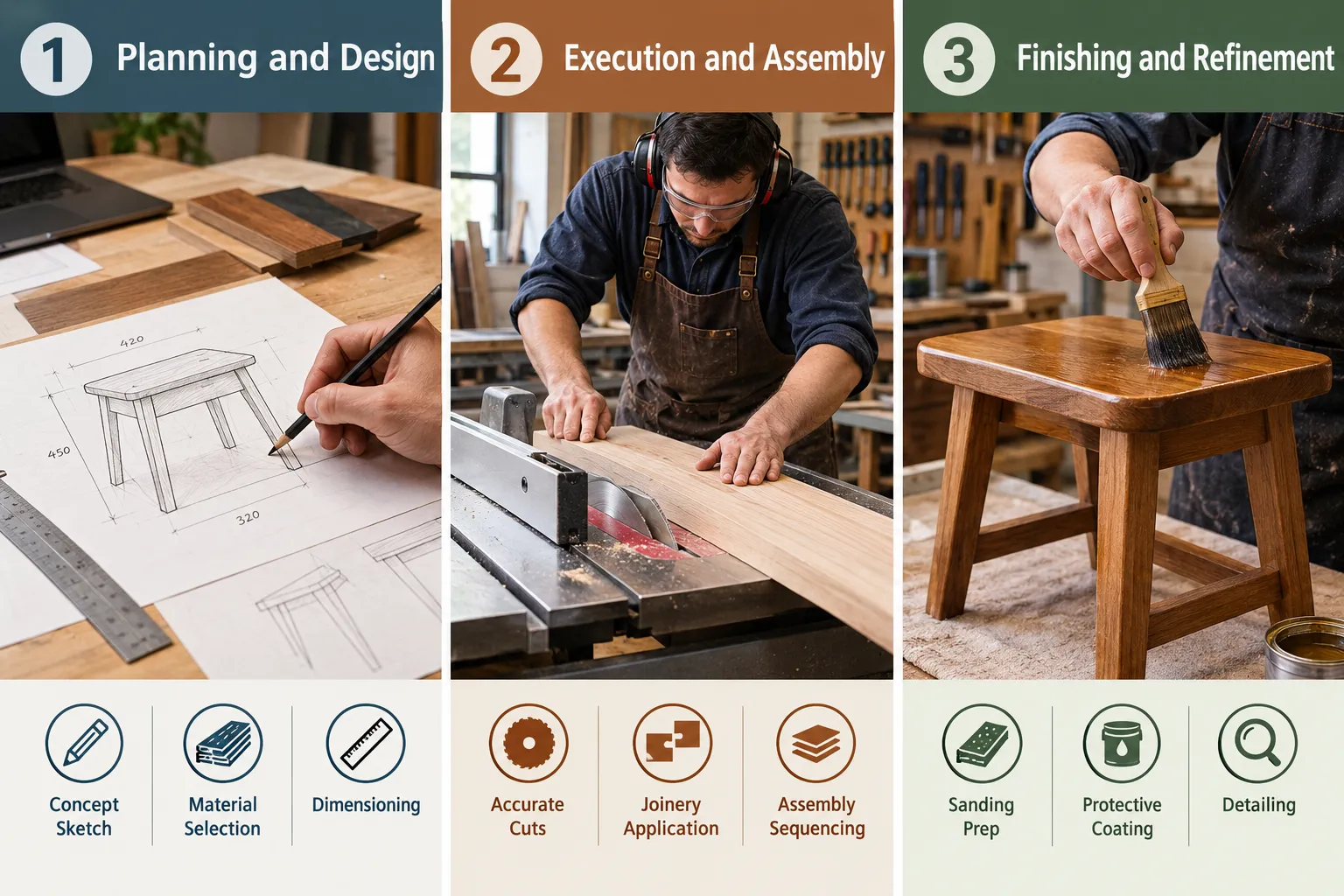
Craft projects, even simple ones, require a degree of design and planning. How will the pieces fit together? What dimensions are needed? What finish will enhance the wood’s natural beauty? These questions become significantly more complex when building furniture.
- Sketching and Dimensioning: Laying out a plan on paper, calculating material needs.
- Material Selection: Choosing the right wood species for the aesthetic and structural requirements. For instance, creating a live edge wood slab tabletop requires understanding how to stabilize and finish such a unique piece.
- Joinery Decisions: Selecting appropriate joints for strength and appearance.
The experience gained from planning a small project, troubleshooting issues, and seeing it through to completion builds a crucial skillset for designing a functional and aesthetically pleasing piece of furniture. It also teaches the importance of iteration and refinement, as rarely does a complex project go exactly according to the first plan. This iterative process is also relevant when building a DIY smart home automation hub from wood, integrating complex elements into a wooden structure.
Expanding Tool Proficiency
As projects grow in scale, so does the need for different tools. While craft often relies heavily on hand tools and smaller power tools, furniture making introduces larger, more powerful machinery.
- Hand Planes: Learning to use a traditional hand plane on small projects provides a tactile understanding of wood grain and surface preparation. This translates to surfacing larger boards for tabletops.
- Table Saws: Moving from cutting small pieces on a miter saw to safely and accurately ripping and crosscutting larger stock on a table saw is a significant step.
- Routers: Using a router for decorative edges on a small plaque prepares one for cutting dados for shelves or shaping edges on cabinet doors. For those looking to expand into digital fabrication, getting started with CNC routers for small woodshops can further bridge the gap between craft and high-precision furniture making.
The confidence and competency built using smaller tools in a craft context are essential for safely and effectively operating larger machinery needed for furniture. Always remember to prioritize safety and understand the specific operation of each tool.
Advanced Applications: Craftsmanship in Complex Furniture Projects
The ultimate manifestation of “From Craft to Furniture: How ‘Craft’ Skills Translate into Real Woodworking Projects” is seen in the creation of complex, high-quality furniture pieces. Here, the accumulated knowledge from countless smaller projects converges, allowing for both structural integrity and refined aesthetics.
Structural Integrity and Load Bearing
Furniture must be functional and durable. A small decorative carving doesn’t need to support weight, but a chair, table, or cabinet does. The precision of joinery, the selection of appropriate wood species, and the thoughtful design of load-bearing elements become critical. Experience from simple projects teaches:
- Joint Strength: Understanding which joints are best for specific stress points.
- Wood Grain Direction: How to orient wood for maximum strength and stability.
- Fastener Use: Appropriate use of screws, dowels, or biscuits in conjunction with glue for reinforcement.
These understandings, cultivated through smaller constructions, are scaled up and applied to ensure a furniture piece can withstand daily use for years to come. For instance, building a sturdy DIY outdoor wood pizza oven stand draws heavily on these structural considerations.
Aesthetic Refinement and Detail
Beyond basic functionality, high-quality furniture distinguishes itself through refined aesthetics. This is where the artistry developed in craft truly shines.
- Decorative Elements: Incorporating intricate carvings, inlays, or Japanese Kumiko panels into furniture designs elevates the piece.
- Biophilic Design: Applying principles learned from crafting natural forms to create biophilic design elements in furniture enhances its connection to nature.
- Finishing Excellence: The mastery of mahogany wood finishing techniques or achieving a flawless polish on any wood species, perfected on small samples, ensures a furniture piece looks its best. The careful application of finishes like Danish Oil vs. Linseed Oil can highlight grain and protect surfaces.
The ability to create smooth transitions, consistent surfaces, and visually appealing forms is a direct outgrowth of the detail-oriented mindset fostered by craft projects. Each carefully sanded edge, perfectly aligned joint, and evenly applied finish contributes to the overall beauty and perceived value of the furniture. This attention to detail can also be seen in the nuanced application of finishing reclaimed wood to highlight its unique character.
Problem-Solving and Adaptability
Every woodworking project, especially furniture, presents unexpected challenges. A warped board, a miscut piece, or a design flaw requires creative problem-solving. The experience gained from adapting and correcting errors on smaller craft items builds resilience and ingenuity. When a joint doesn’t quite fit on a large cabinet, the woodworker who has grappled with similar issues on smaller scales is better equipped to diagnose the problem and find an effective solution. This adaptability is invaluable for completing ambitious furniture projects successfully.
Conclusion
The journey from creating a simple wooden carving to constructing an heirloom-quality dining table is a testament to the cumulative power of craft skills. “From Craft to Furniture: How ‘Craft’ Skills Translate into Real Woodworking Projects” is not just about scaling up; it’s about refining fundamental abilities, expanding technical knowledge, and cultivating a deep understanding of wood itself. Every precise cut, every strong joint, and every smooth finish learned on a small project contributes directly to the success of a larger one. For anyone looking to move beyond simple crafts into the rewarding world of furniture making in 2026, rest assured that the skills you already possess are your most valuable tools. Embrace the learning curve, start with manageable projects, and incrementally challenge yourself. The transition is natural, empowering, and ultimately, deeply satisfying.
SEO Meta Title: From Craft to Furniture: Skills for Woodworking Projects SEO Meta Description: Learn how basic craft skills like measuring, cutting, and finishing directly translate into building functional woodworking projects and furniture in 2026.