
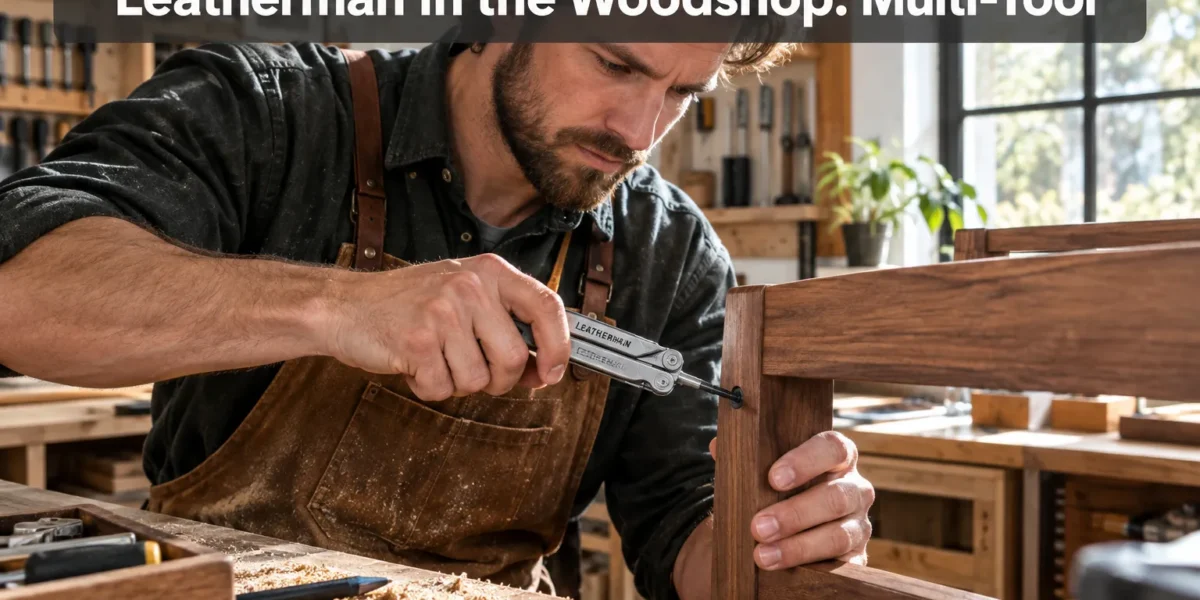
The average woodworker spends countless hours meticulously crafting furniture in the controlled environment of their shop. However, the true test of skill and preparedness often arrives during the assembly, installation, or, inevitably, the on-site repair phases. It’s in these dynamic, sometimes unpredictable, environments that a compact, versatile tool becomes not just handy, but truly indispensable. This article, “Leatherman in the Woodshop: 25 Multi-Tool Uses for Assembly, Installations, and On-Site Furniture Repairs,” explores how a Leatherman-style multi-tool can bridge the gap between a full toolbox and the critical needs of a woodworker on the go in 2026.
Key Takeaways
- A Leatherman multi-tool streamlines workflow during furniture assembly and installation by consolidating essential functions.
- Its compact size makes it ideal for on-site repairs, allowing for quick adjustments without a full toolbox.
- Specific tools like pliers, screwdrivers, knives, and files on a multi-tool are vital for various woodworking tasks.
- Safety is paramount; always use the correct multi-tool feature for the job and follow proper tool handling guidelines.
- Integrating a multi-tool enhances efficiency, reduces trips back to the shop, and solves unexpected challenges during projects.
The Indispensable Role of a Leatherman in Woodworking
Imagine arriving at a client’s home for a furniture installation, only to discover a slight misalignment or a loose screw. Hauling an entire toolbox upstairs for one small adjustment is inefficient and unprofessional. This is where the true value of a Leatherman multi-tool shines. For woodworkers, both professionals and dedicated hobbyists, the multi-tool transforms into a portable workshop, offering a surprising array of functionalities for tasks beyond the main shop. From the initial assembly of custom pieces to the delicate touches of on-site installation and the immediate needs of unexpected repairs, a multi-tool provides a practical, efficient solution. 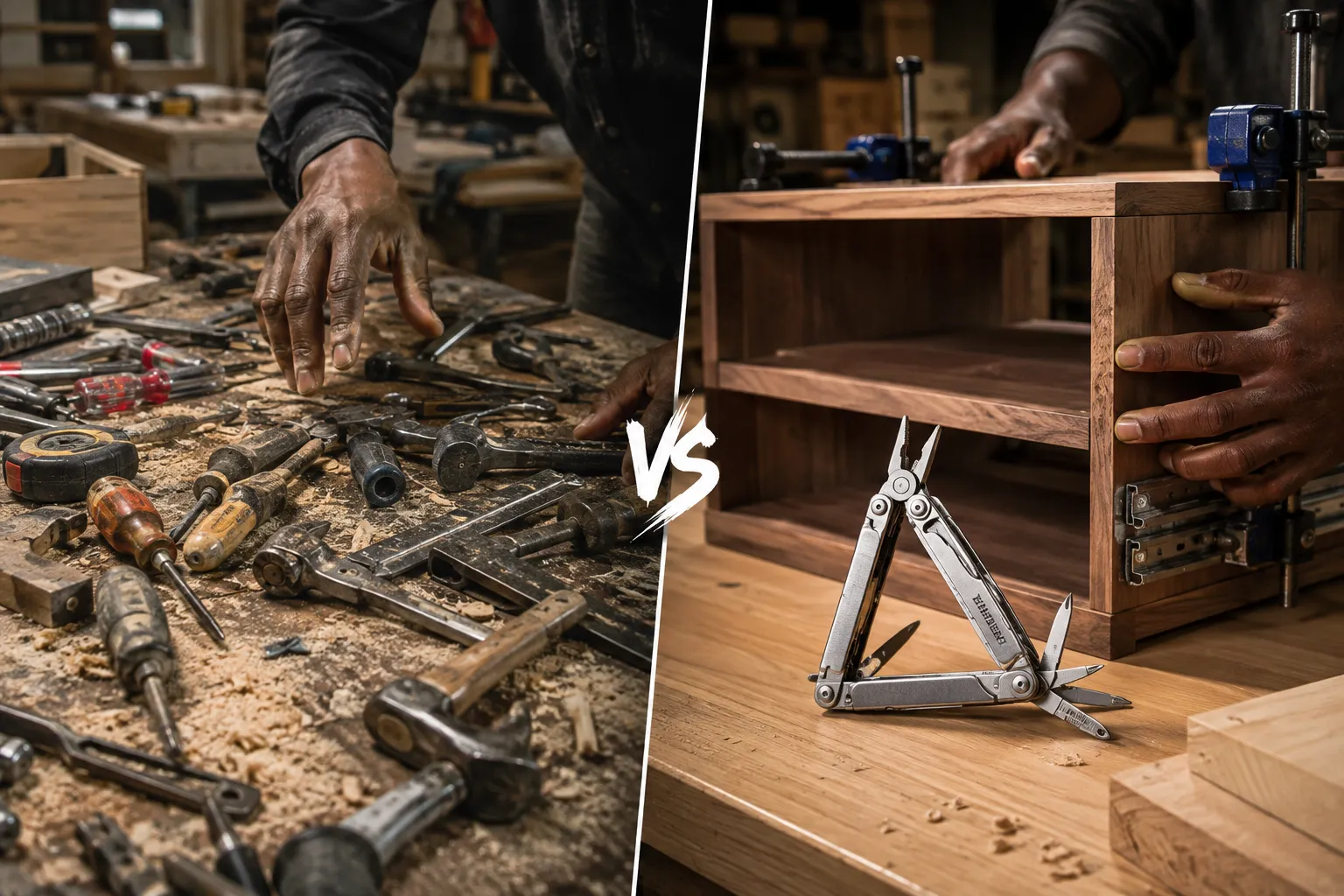
A high-quality multi-tool, such as those made by Leatherman, is engineered for durability and precision, housing multiple instruments within a single, ergonomic frame. This singular device often contains pliers, wire cutters, various screwdrivers, a knife blade, a saw, a file, and sometimes even an awl or ruler. Its compact nature means it can live comfortably in a pocket, on a belt, or in a small project bag, always at the ready. In 2026, as woodworking projects become increasingly complex and client expectations rise, the ability to make quick, precise adjustments on-site is more valuable than ever.
Leatherman in the Woodshop: 25 Multi-Tool Uses for Assembly
Assembling furniture, whether it’s a shop project or a client commission, often involves a series of repetitive and sometimes unexpected tasks. A multi-tool can significantly speed up this process and resolve minor hurdles without interrupting the flow to grab a dedicated tool.
Here are 10 key uses during the assembly phase:
- Tightening Fasteners: The most obvious use. Integrated screwdrivers (Phillips and flathead) are perfect for securing hinges, drawer slides, and other hardware.
- Adjusting Hardware: Pliers are invaluable for gently bending or straightening minor hardware components, such as drawer pull posts or small brackets, ensuring a perfect fit.
- Wire Cutting: For projects involving electrical components, such as custom lighting in built-in shelving or custom wooden charging stations, the wire cutters are essential for trimming leads.
- Marking Pilot Holes: The awl tool (if present) can be used to score or mark precise pilot hole locations on wood, especially useful when working with delicate veneers or tight spaces.
- Light Sawing: For quick, small cuts, like trimming a dowel flush or removing a tiny projection that interferes with fit, the small saw blade is surprisingly effective.
- Scraping Glue Squeeze-Out: A flathead screwdriver or the blunt edge of a blade can carefully scrape away excess glue that has squeezed out during clamping, preventing it from drying and becoming a larger issue.
- Measuring Small Distances: Many multi-tools include a small ruler marked on the handle, perfect for quick measurements of hardware placement or joint depth.
- Opening Packaging: Before assembly can even begin, the knife blade is perfect for opening boxes of hardware, sandpaper, or other supplies.
- Filing Edges: The file tool can smooth sharp edges on metal hardware or gently ease a tight-fitting wooden component.
- Removing Splinters: A sharp knife blade or needle-nose pliers can carefully remove small splinters encountered during handling, preventing discomfort and potential injury.
Efficiency Boost During Assembly
The ability to switch between tools seamlessly without walking to a toolbox means fewer interruptions and a more focused workflow. This efficiency is particularly noticeable when assembling multiple identical units or complex custom pieces like mastering dovetail drawers for cabinets. The multi-tool acts as an extension of the woodworker’s hand, always ready for the next micro-adjustment.
Leatherman in the Woodshop: 25 Multi-Tool Uses for Installations
On-site installations present their own unique challenges. The environment is often unfamiliar, space can be limited, and unexpected issues invariably arise. A multi-tool is a woodworker’s best friend in these scenarios, providing immediate solutions for common installation hiccups. 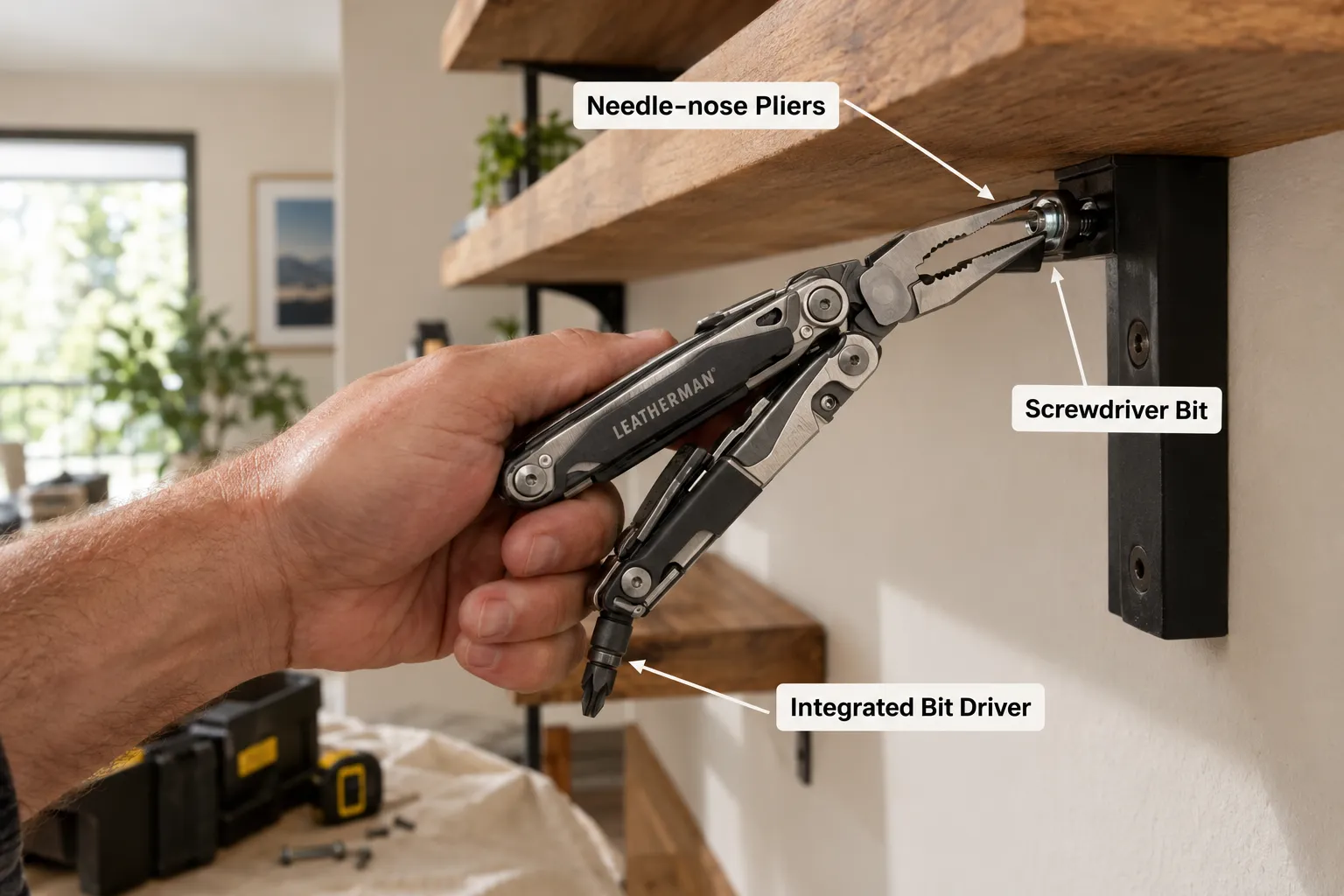
Here are 10 critical uses during the installation phase:
- Leveling Adjustments: Many multi-tools feature a small ruler or a straight edge. While not a true level, it can assist in visually checking small gaps or ensuring hardware is plumb.
- Minor Trim Adjustments: The knife blade can precisely trim small pieces of wood veneer or excess caulk/filler, ensuring clean lines where the furniture meets walls or other surfaces.
- Anchoring Hardware: Screwdrivers are essential for securing mounting brackets for custom floating shelves or cabinets, often encountering existing wall anchors that need adjustment.
- Wire Stripping: For installations involving integrated lighting or smart home components (like a DIY smart home automation hub from wood), the wire cutters can double as basic wire strippers for low-voltage wiring.
- Pry Bar for Minor Adjustments: A sturdy flathead screwdriver or the blunt end of the multi-tool can act as a mini pry bar to carefully nudge components into position or remove small shims.
- Removing Obstructions: The knife or pliers can be used to clear small debris (e.g., drywall fragments, old caulk) from mounting surfaces, ensuring a flush fit.
- Tightening Electrical Faceplates: If installing built-in furniture that integrates with existing outlets, the screwdriver is perfect for tightening faceplate screws.
- Opening Paint Cans/Sealants: The can opener (if available) can quickly open small cans of touch-up paint or tubes of sealant without needing a dedicated opener.
- Cutting Zip Ties/Banding: Many furniture pieces arrive banded or secured with zip ties. The knife or scissors (if present) makes quick work of these.
- Cleaning Up Edges: After installation, the file or blade can clean up any minor burrs or sharp points on exposed metal hardware or wood edges.
Navigating the Installation Environment
Installations require adaptability. Having a versatile tool eliminates the need to return to the truck or shop for a forgotten wrench or a specific screwdriver size. This not only saves time but also maintains a professional appearance, demonstrating preparedness for any situation.
On-Site Furniture Repairs: Leatherman’s Lifesaving Uses
Even the most carefully crafted furniture can suffer minor damage or require adjustments over time. On-site repairs demand a quick, precise, and often discreet approach. A Leatherman multi-tool excels in this domain, providing solutions for common ailments without requiring a full repair kit. 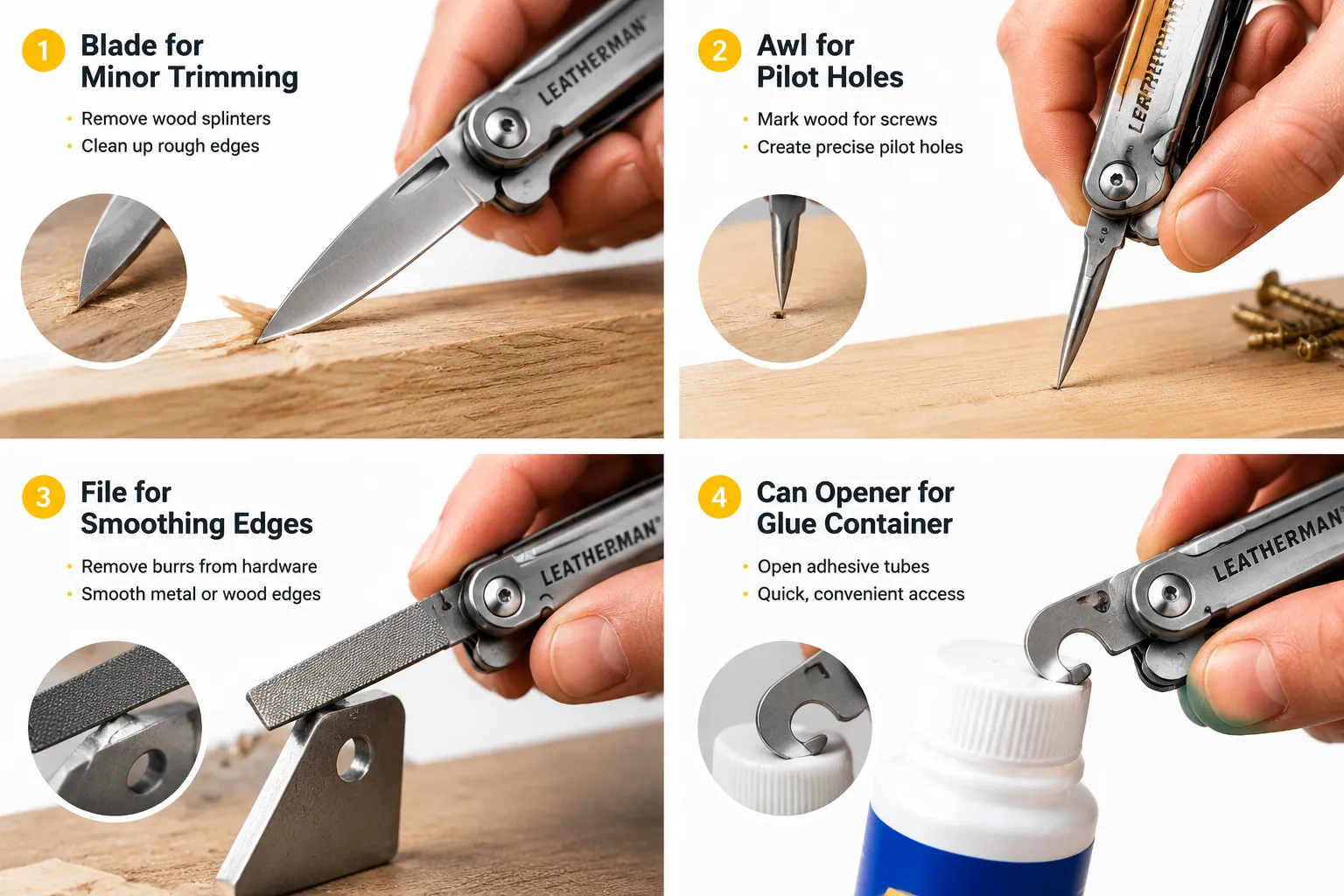
Here are 5 vital uses for on-site furniture repairs:
- Tightening Loose Screws: The most common repair. Screwdrivers quickly secure wobbly hinges, drawer pulls, or connecting bolts that have worked their way loose.
- Re-aligning Bent Hardware: Pliers can delicately straighten a bent hinge pin or a slightly twisted bracket, restoring functionality and appearance.
- Trimming Delaminated Veneer: A sharp knife blade can carefully trim a small, lifted edge of veneer, preparing it for re-gluing and preventing further damage.
- Smoothing Rough Spots: The file can gently smooth out a small burr on a metal edge or a tiny rough spot on a wood surface, preventing snags or scratches.
- Removing Stripped Screws (with care): In some cases, the pliers can grip the head of a partially stripped screw to rotate and remove it, allowing for replacement.
Beyond the Workbench: Safety and Maintenance
While incredibly versatile, a multi-tool is not a replacement for full-sized, dedicated tools when heavy-duty work is required. It excels at light to medium-duty tasks and provides emergency solutions.
Safety Considerations:
- Choose the Right Tool: Always use the appropriate tool for the job. Do not force a screwdriver to pry if a dedicated pry bar is needed.
- Secure Grip: Ensure a firm grip on the multi-tool and the workpiece to prevent slips and injuries.
- Blade Care: Keep knife blades sharp and clean. A dull blade is more dangerous than a sharp one.
- Eye Protection: Always wear appropriate eye protection, especially when making cuts, filing, or dealing with flying debris.
Multi-Tool Maintenance:
Regular cleaning and lubrication are essential to keep your Leatherman functioning optimally. Dust, sawdust, and grime can accumulate in the pivots, hindering operation. A simple wipe-down and occasional drop of light oil will extend its lifespan and ensure it’s always ready for your next woodworking challenge.
Conclusion
The Leatherman multi-tool is far more than just a gadget; it’s a strategic asset for any woodworker facing the dynamic realities of assembly, installation, and on-site repairs. In 2026, where precision and efficiency are paramount, the ability to carry a versatile arsenal of tools in a compact form factor offers unparalleled convenience and problem-solving capability. By integrating a multi-tool into your workflow, you’ll find yourself better prepared for unforeseen challenges, reducing downtime, enhancing professionalism, and ultimately delivering higher quality results. Embrace the adaptability of a Leatherman, and transform your on-site woodworking experiences.
SEO Meta Title: Leatherman Multi-Tool: 25 Woodshop Uses for Assembly & Repairs SEO Meta Description: Discover 25 Leatherman multi-tool uses for woodworkers in 2026. Perfect for furniture assembly, on-site installations, and quick repairs. Boost efficiency now.