
The average fine art and craft fair exhibitor reported annual sales ranging from $10,000 to over $50,000 in 2023, with small, high-value items often making up a significant portion of these earnings. For woodworkers, this statistic underscores a potent market: the design and construction of detailed small boxes and trays that emphasize fine joinery, wood selection, and finishing. These are not merely decorative items; they are heirloom-quality small projects that command premium prices, consistently selling well at craft shows and online. This guide explores the intricate details, techniques, and market strategies for creating exceptional Handcrafted Jewelry Boxes and Serving Trays: Building Heirloom-Quality Small Projects That Command Premium Prices.
Key Takeaways
- Heirloom-quality small projects like jewelry boxes and serving trays offer significant profit margins due to demand for fine craftsmanship.
- Material selection, precise joinery (dovetails, splined miters), and superior finishing are crucial for commanding premium prices.
- Effective marketing involves high-quality photography, compelling storytelling, and strategic pricing that reflects the intrinsic value.
- Customization options and batch production workflows can enhance efficiency and appeal to a broader customer base.
- Focusing on design uniqueness and functional elegance elevates these items from simple crafts to desirable art pieces.
The Craft of Heirloom Quality: Material Selection and Design for Handcrafted Jewelry Boxes and Serving Trays
Achieving “heirloom quality” in woodworking is less about scale and more about meticulous attention to detail, starting with the very foundation: material selection. For Handcrafted Jewelry Boxes and Serving Trays: Building Heirloom-Quality Small Projects That Command Premium Prices, the choice of wood is paramount.
Selecting Premium Woods and Materials
The aesthetic and tactile experience of a wooden project begins with its material. For jewelry boxes and serving trays, beauty, durability, and workability are key.
- Exotic Hardwoods: Woods like Wenge, Padauk, Purpleheart, and Macassar Ebony offer striking colors and grain patterns. They are dense, stable, and take a fine finish, instantly elevating a piece’s perceived value. However, they can be challenging to work with and may require specialized tools.
- Domestic Hardwoods: Cherry, Walnut, Maple, and Oak are excellent choices.
- Cherry develops a rich, reddish-brown patina over time. It’s stable and carves well.
- Walnut boasts deep, chocolate-brown tones and a distinctive grain, making it a classic choice for fine furniture and boxes.
- Maple offers a light, creamy color, often with striking figure (curly, bird’s eye, quilted). It provides a beautiful contrast when paired with darker woods.
- Oak (especially White Oak) is known for its strength and prominent grain, which can be quarter-sawn to reveal striking ray fleck.
Beyond the primary wood, consider complementary materials:
- Lining Materials: Velvet, suede, or silk liners protect precious contents within jewelry boxes. Choose high-quality, durable fabrics.
- Hardware: Solid brass hinges, stays, and latches add a touch of elegance and ensure longevity. Avoid flimsy, inexpensive hardware.
- Accent Woods/Inlays: Thin strips of contrasting wood or mother-of-pearl, abalone, or even metal inlays can provide exquisite decorative details.
Essential Joinery Techniques for Durability and Aesthetics
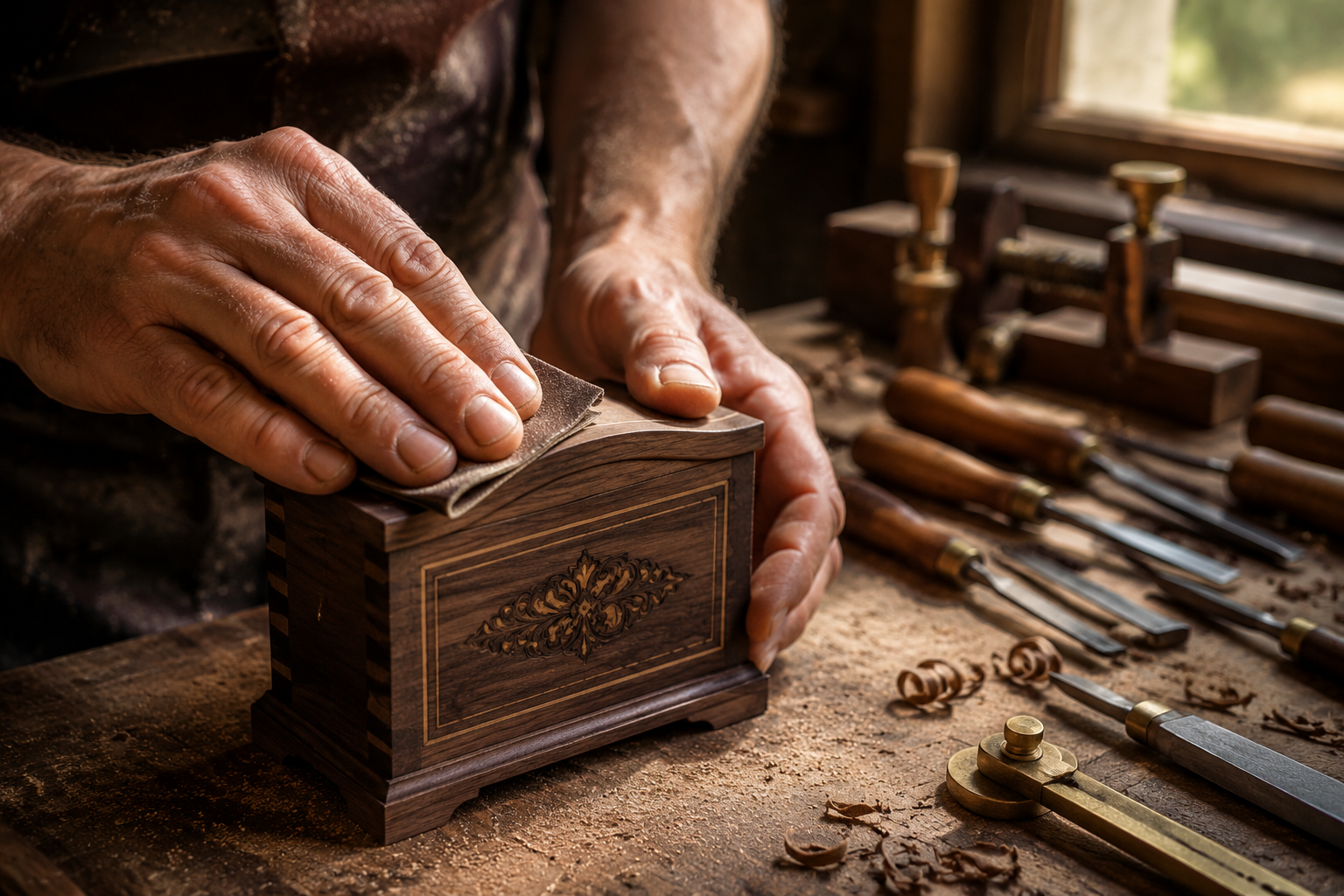
The type of joinery used significantly impacts both the strength and visual appeal of your projects. For heirloom-quality items, hand-cut joints are often preferred, showcasing true craftsmanship.
For Jewelry Boxes:
- Dovetail Joints: The gold standard for box construction. Hand-cut dovetails are a hallmark of fine woodworking, offering unparalleled strength and beauty. They demonstrate a high level of skill. For guidance on achieving precision, explore techniques for wooden storage chests with hinged lids.
- Mitered with Splines: Provides a clean, seamless exterior appearance with added strength from internal splines (keys) made of contrasting wood.
- Box Joints (Finger Joints): A strong and decorative option, often machine-made but can be hand-cut for a more rustic aesthetic.
For Serving Trays:
- Dado and Rabbet Joints: Commonly used for attaching the bottom panel of a tray to the sides.
- Mitered Corners with Splines: Similar to jewelry boxes, this creates a clean corner joint reinforced with splines for strength.
- Mortise and Tenon: For more robust tray designs, especially those with thicker rails or integrated handles.
Precision in cutting these joints is non-negotiable. Even a slight gap can detract from the heirloom quality and reduce the perceived value.
Design Principles for Premium Appeal
The design of Handcrafted Jewelry Boxes and Serving Trays: Building Heirloom-Quality Small Projects That Command Premium Prices should balance functionality with sophisticated aesthetics.
- Proportion and Balance: Adhere to classical design principles. The golden ratio or rule of thirds can guide dimensions for visually pleasing results.
- Simplicity and Elegance: Often, less is more. Clean lines and thoughtful detailing can speak volumes. Over-ornamentation can detract from the natural beauty of the wood.
- Ergonomics and Functionality: For serving trays, comfortable handles and a stable base are essential. For jewelry boxes, consider:
- Compartmentalization: Custom-fitted dividers for rings, earrings, necklaces.
- Hidden Compartments: Adds an element of surprise and luxury.
- Removable Trays: Increases versatility and storage capacity.
- Finish Selection: The finish protects the wood and enhances its appearance.
- Oil Finishes (e.g., tung oil, linseed oil): Penetrate the wood, providing a natural, warm glow and enhancing the grain. Requires multiple coats and buffing.
- Varnishes/Polyurethanes: Offer durable protection and a range of sheens from satin to high gloss. Apply thinly and evenly for best results.
- Shellac: A traditional finish that provides a beautiful luster, especially for French polish applications.
- Waxes: Often used over other finishes to add depth and a silky smooth feel.
Consider the journey of creating these small, high-value items, similar to the attention given to customization strategies for mass-producing small woodcraft.
Marketing and Pricing Your Heirloom Woodcraft in 2026
Building exquisite pieces is only half the journey. To command premium prices, effective marketing and strategic pricing are indispensable for Handcrafted Jewelry Boxes and Serving Trays: Building Heirloom-Quality Small Projects That Command Premium Prices.
Crafting a Compelling Brand Story
Customers buying premium handmade goods are often looking for more than just an item; they seek a story, a connection to the artisan, and the provenance of the piece.
- Highlight Your Process: Share details about your craftsmanship. Are the dovetails hand-cut? What special techniques do you employ?
- Emphasize Material Sourcing: Did you use sustainably harvested wood? Is it reclaimed? People value ethical and unique sourcing. Our guide on sustainable wood sourcing offers excellent insights.
- Narrate the “Heirloom” Aspect: Explain why these pieces are built to last generations. Talk about durability, timeless design, and the potential for these items to become cherished family treasures.
- Personal Connection: Share your passion for woodworking. What inspires you? This personal touch creates an emotional bond with potential buyers.
Photography That Sells Premium Products
High-quality photography is non-negotiable for selling premium woodcraft online or in promotional materials.
- Lighting is Key: Use natural, diffused light to showcase the wood’s true color and grain. Avoid harsh shadows or overexposed areas.
- Multiple Angles: Capture the piece from various perspectives—top, side, interior, and close-ups of joinery or special features.
- Contextual Shots: Show the jewelry box on a dresser or the serving tray laden with appetizers. This helps customers envision the item in their own homes.
- Detail Shots: Highlight the fine craftsmanship—a perfectly smooth finish, intricate inlay, or the precise fit of a lid.
- Professional Backgrounds: Use clean, uncluttered backgrounds that complement the wood without distracting from the product. A simple, elegant surface or a subtle textured fabric works well.
Pricing Strategies for Premium Woodcraft
Pricing your Handcrafted Jewelry Boxes and Serving Trays: Building Heirloom-Quality Small Projects That Command Premium Prices requires careful consideration to reflect their true value and your skill.
| Cost Component | Description |
|---|---|
| Material Costs | Wood, hardware, lining, glue, sandpaper, finish. Track every consumable. |
| Labor Costs | Your hourly rate (factor in experience and skill) multiplied by hours spent. |
| Overhead Costs | Workshop rent, utilities, tool maintenance, marketing, website fees. |
| Markup for Profit | Typically 2-3x material + labor, but varies based on market and perceived value. |
Strategies for Premium Pricing:
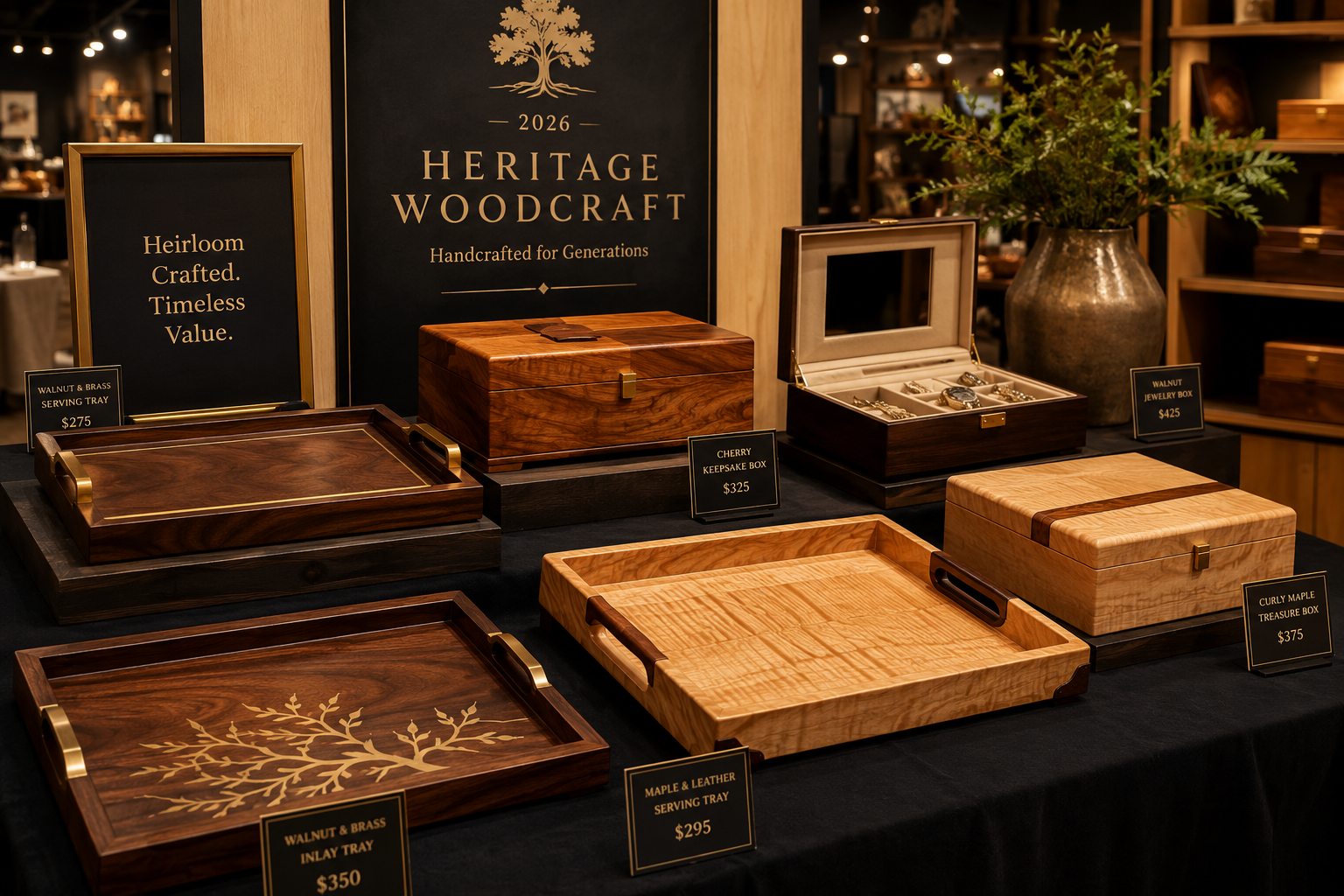
- Value-Based Pricing: Price reflects the perceived value to the customer, not just your costs. A unique design, rare wood, or exceptional craftsmanship justifies a higher price.
- Competitive Analysis: Research what similar heirloom-quality items sell for. Position your products at the higher end if your quality warrants it.
- Tiered Pricing: Offer a range of products—some simpler, some highly elaborate—to cater to different budgets while still maintaining premium quality across the board.
- Limited Editions/Commissions: Creating exclusive pieces or offering custom commissions can significantly increase perceived value and pricing.
Remember, customers paying premium prices expect premium quality in every aspect, from the product itself to the packaging and customer service. For other high-demand projects, consider our guide on high-demand woodworking projects for 2026.
Scaling Production and Customization Strategies
While heirloom quality suggests bespoke, one-off pieces, there are intelligent ways to scale production and offer customization without sacrificing the premium feel for Handcrafted Jewelry Boxes and Serving Trays: Building Heirloom-Quality Small Projects That Command Premium Prices.
Batch Production Workflows for Efficiency
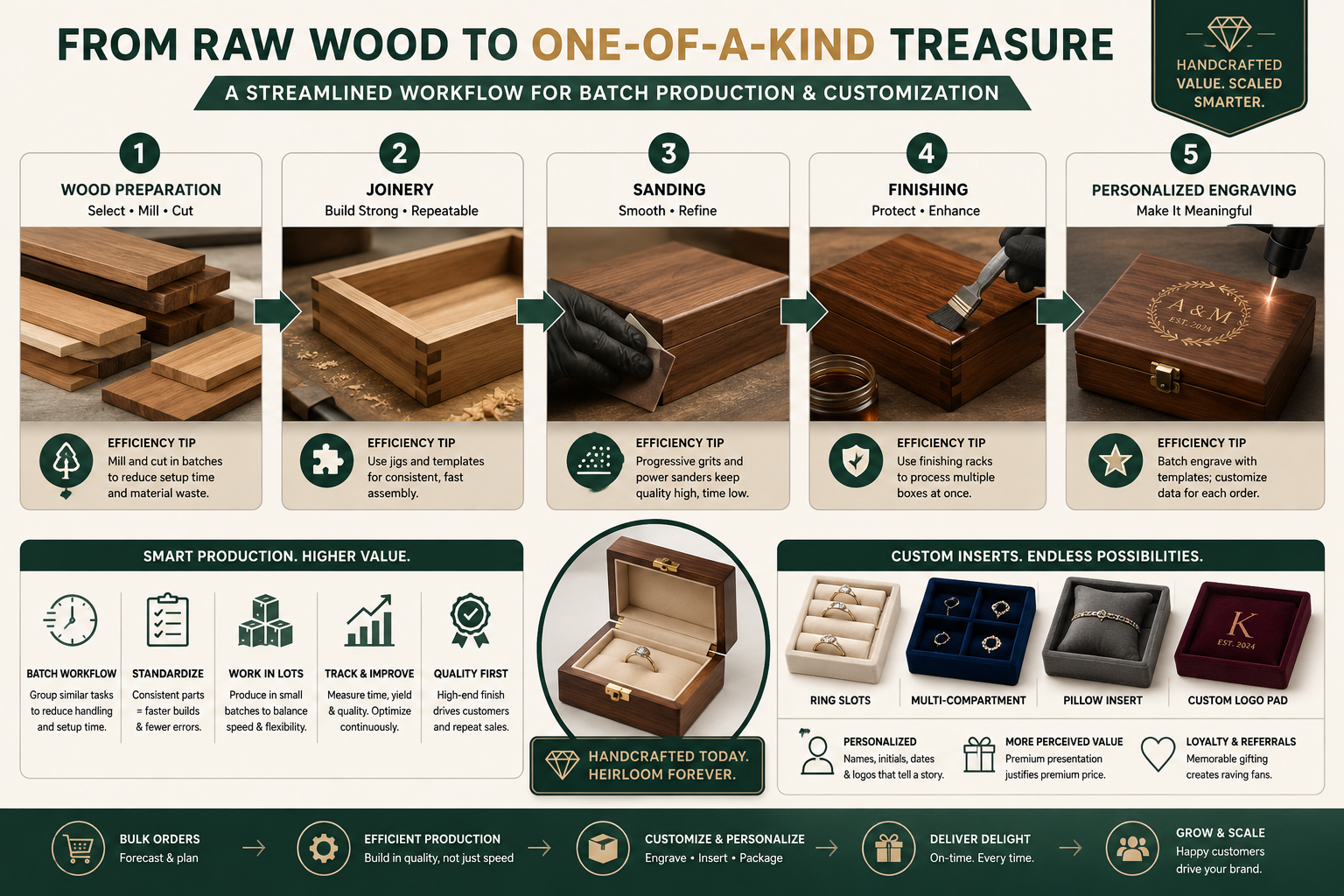
Creating multiple identical or similar pieces in batches can significantly improve efficiency.
- Standardized Designs: Develop a few core designs for jewelry boxes and serving trays that can be repeated. These become your “signature” items.
- Templates and Jigs: Invest time in creating precise templates and jigs for cutting components (e.g., box sides, dadoes, miters). This ensures consistency and speeds up repetitive tasks.
- Sequential Operations: Break down the project into stages (cutting, joinery, sanding, finishing). Perform all cuts for a batch, then all joinery, and so on. This minimizes tool changes and setup time.
- Power Tool Mastery: Efficient use of power tools is critical. Mastering the table saw for precise cuts, the router for dados and decorative edges, and sanders for immaculate finishes will accelerate your workflow. Our article on power tool mastery for decorative wood projects provides valuable insights.
- Finishing Station: Set up a dedicated finishing area to streamline the application of oils, varnishes, or lacquers, allowing for proper drying between coats for multiple pieces simultaneously.
Offering Customization to Enhance Value
Customization is a powerful way to justify premium pricing and cater to individual customer preferences.
- Wood Selection: Allow customers to choose from a curated selection of premium hardwoods.
- Lining Options: Offer different colors or types of velvet, suede, or leather for jewelry box interiors.
- Engraving and Personalization: Laser engraving names, dates, or custom messages adds immense sentimental value. This is a common strategy in customization strategies for mass-producing small woodcraft.
- Internal Configurations: For jewelry boxes, offer options for drawer inserts, ring rolls, or compartmentalization layouts. Explore ideas from wooden jewelry organizers.
- Hardware Choices: Provide a selection of high-quality brass or nickel-plated hardware.
- Size and Dimension Adjustments: For certain designs, offer slight variations in size to fit specific needs (e.g., a serving tray for a particular ottoman).
Managing customization effectively requires clear communication with clients, precise order tracking, and a system for documenting specific requests to ensure accuracy.
Quality Control at Every Stage
Maintaining heirloom quality during scaled production or customization demands rigorous quality control.
- Pre-Assembly Inspection: Check all cut components for accuracy and perfection before assembly. Rework any flawed pieces.
- Joint Fit Check: Ensure all joints are tight and precise before applying glue. Gaps are unacceptable in premium work.
- Sanding Protocol: Implement a meticulous sanding schedule, progressing through grits to achieve a flawless surface before finishing. Any imperfections will be magnified by the finish.
- Finishing Inspection: After each coat of finish, inspect for dust nibs, drips, or unevenness. Address issues before applying the next coat.
- Final Review: Before packaging, conduct a comprehensive review of the finished piece, checking all aesthetic and functional aspects. This is the last chance to ensure it meets your heirloom quality standards.
Conclusion
Building Handcrafted Jewelry Boxes and Serving Trays: Building Heirloom-Quality Small Projects That Command Premium Prices is a rewarding endeavor that combines artistic expression with a keen understanding of market demand. By focusing on superior material selection, employing precise joinery techniques, and executing flawless finishes, woodworkers can create pieces that are not only beautiful and functional but also destined to become cherished family heirlooms. Strategic marketing, compelling storytelling, and intelligent pricing will ensure these exquisite creations find their way to appreciative buyers willing to pay for genuine craftsmanship. Embrace the challenge of crafting these small treasures, refine your skills, and position your work at the pinnacle of artisanal excellence in 2026.
SEO Meta Title: Handcrafted Jewelry Boxes & Serving Trays: Heirloom Woodcraft Guide SEO Meta Description: Master building heirloom-quality handcrafted jewelry boxes and serving trays in 2026. Learn design, joinery, and marketing to command premium prices.