
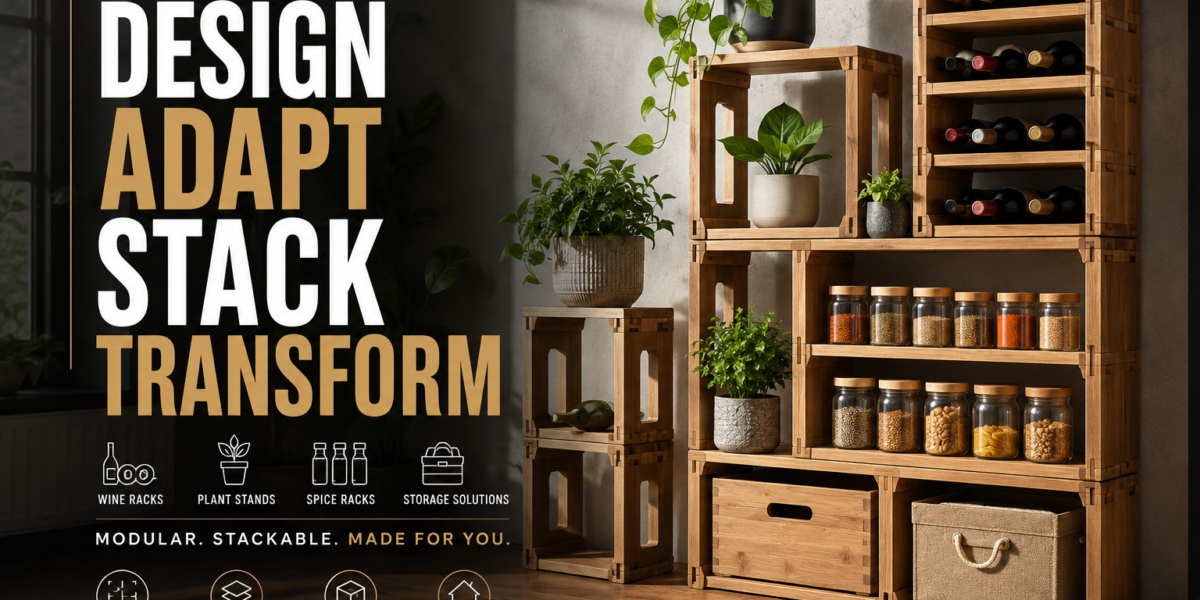
The average household in 2026 demands greater flexibility from its furnishings, a shift driven by smaller living spaces, frequent moves, and a desire for personalized aesthetics. This presents a unique opportunity for woodworkers to elevate their craft beyond static pieces and embrace the strategic design of modular and stackable solutions. By focusing on Designing Modular and Stackable Woodcraft: Creating Wine Racks, Plant Stands, Spice Racks, and Storage Solutions That Adapt to Different Spaces and Customer Needs, artisans can not only increase product versatility but also justify higher price points and tap into a broader market. This approach transforms individual items into adaptable systems, empowering customers to reconfigure, expand, and personalize their storage, ultimately enhancing the product’s perceived value and longevity.
Key Takeaways
- Modular and stackable designs significantly increase product versatility, allowing customers to adapt solutions to changing needs and spaces.
- Standardized components and repeatable joinery are crucial for scalable production and consistent quality in modular woodcraft.
- Design for user-friendliness, ensuring easy assembly, disassembly, and reconfiguration without specialized tools.
- Marketing should emphasize adaptability, customization, and sustainability to appeal to modern consumers.
- Offering complementary accessories and expansion kits provides ongoing revenue opportunities and enhances customer satisfaction.
Understanding the Principles of Modular and Stackable Woodcraft
Modular design in woodworking refers to creating individual components or “modules” that can be combined in various ways to form a larger, cohesive unit. Stackable design, a subset of modularity, focuses on units that can be placed directly on top of one another, often interlocking for stability. The core principle driving Designing Modular and Stackable Woodcraft: Creating Wine Racks, Plant Stands, Spice Racks, and Storage Solutions That Adapt to Different Spaces and Customer Needs is interchangeability and scalability.
This means a single component—perhaps a simple wooden cube—could serve as the base for a plant stand, stack with others to form a wine rack, or integrate into a larger storage unit. The strategic advantage lies in meeting diverse customer needs with a limited set of standardized components, streamlining production, and inventory management for the woodworker.
Core Design Elements for Modularity
Successful modular woodcraft hinges on meticulous planning and attention to several key design elements:
- Standardized Dimensions: All modules must adhere to consistent dimensions (length, width, height) or a system of proportional dimensions. This ensures that any module can fit with any other compatible module. For example, if a base unit is 12 inches square, a stacking unit must also be 12 inches square to align perfectly.
- Repeatable Joinery: The connections between modules need to be strong, secure, and easy to execute. This could involve simple dowels and holes, interlocking dados and rabbets, specialized hardware, or even magnetic connections. The goal is easy assembly and disassembly without compromising structural integrity.
- Material Selection: Woods known for stability and durability, such as oak, maple, or walnut, are excellent choices. Consider the finished look, weight, and environmental impact of the chosen material. Sourcing reclaimed and salvaged wood can add unique character and appeal.
- Aesthetic Cohesion: Even when reconfigured, the assembled units should maintain a pleasing and consistent aesthetic. This involves consistent wood finishes, edge treatments, and design language across all modules. For insights into warm minimalism in woodworking, which often aligns well with modular designs, consider exploring relevant resources.
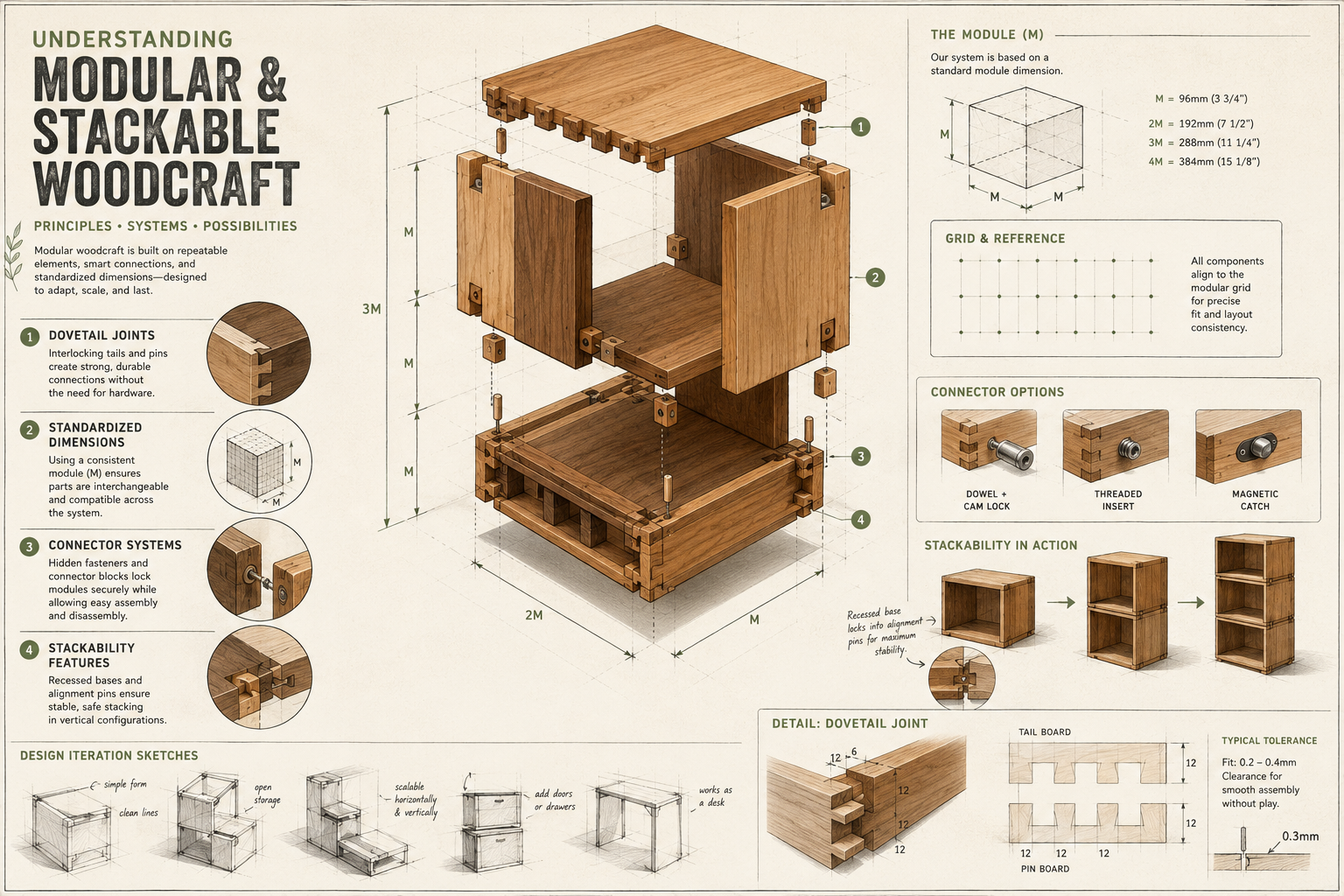 Image: Diagram of modular wooden components and various stacking configurations.
Benefits for Woodworkers and Customers
| Benefit for Woodworkers | Benefit for Customers |
|---|---|
| Increased Sales Volume: Broad appeal. | Customization: Tailor solutions to exact needs. |
| Reduced Inventory Complexity: Fewer SKUs. | Adaptability: Reconfigure as needs change. |
| Streamlined Production: Repeatable processes. | Space Efficiency: Optimize small or awkward spaces. |
| Higher Price Points: Perceived value of a “system.” | Longevity: Pieces grow and adapt with them. |
| Brand Loyalty: Encourages repeat purchases. | Sustainability: Less likely to discard and replace. |
By designing with modularity in mind, woodworkers move beyond creating standalone pieces and instead craft systems that offer enduring value and functionality.
Designing Specific Modular and Stackable Woodcraft: Wine Racks, Plant Stands, and Spice Racks
The beauty of modular design lies in its versatility across different product categories. Here, we delve into applying these principles to create popular items like wine racks, plant stands, and spice racks, demonstrating how Designing Modular and Stackable Woodcraft: Creating Wine Racks, Plant Stands, Spice Racks, and Storage Solutions That Adapt to Different Spaces and Customer Needs can translate into practical, marketable products.
Modular and Stackable Wine Racks
Wine racks are prime candidates for modularity. Customers often start with a small collection and expand over time.
- Design Concept: Develop individual modules that hold a fixed number of bottles (e.g., 6 or 12). These modules can then be stacked vertically or horizontally.
- Joinery: Consider using interlocking slots or pegs that ensure stability when stacked. Mortise and tenon or dado joints can provide robust connections, especially if modules need to bear significant weight. Alternatively, specialized metal fasteners can offer a sleek, modern look and easy assembly. For inspiration on DIY wooden wine racks, explore various design aesthetics.
- Materials: Hardwoods like oak, cherry, or mahogany are ideal for their strength and aesthetic appeal. Pine or poplar can be used for a more rustic or budget-friendly option.
- Variations: Offer modules with different depths for various bottle sizes or even a module with a small shelf on top for accessories.
Modular and Stackable Plant Stands
With the surge in indoor gardening, customizable plant stands are in high demand.
- Design Concept: Create basic stand units—perhaps a simple square or rectangular frame with a top surface. These units should be stackable to create tiered displays or connectable side-by-side for a wider surface.
- Joinery: Dovetail joints for aesthetic strength or simple dowel and bolt systems for easy disassembly are effective. Consider adding small, non-slip feet or interlocking tabs for stability when stacked on various surfaces. DIY wooden plant stands provide further inspiration.
- Materials: Moisture-resistant woods like cedar or teak are excellent for plant stands, though sealed hardwoods also perform well. Consider natural oils or varnishes for finishes to protect against water damage.
- Variations: Design different heights of basic units, or units with integrated drainage trays. Offer connecting shelves that span between two base units.
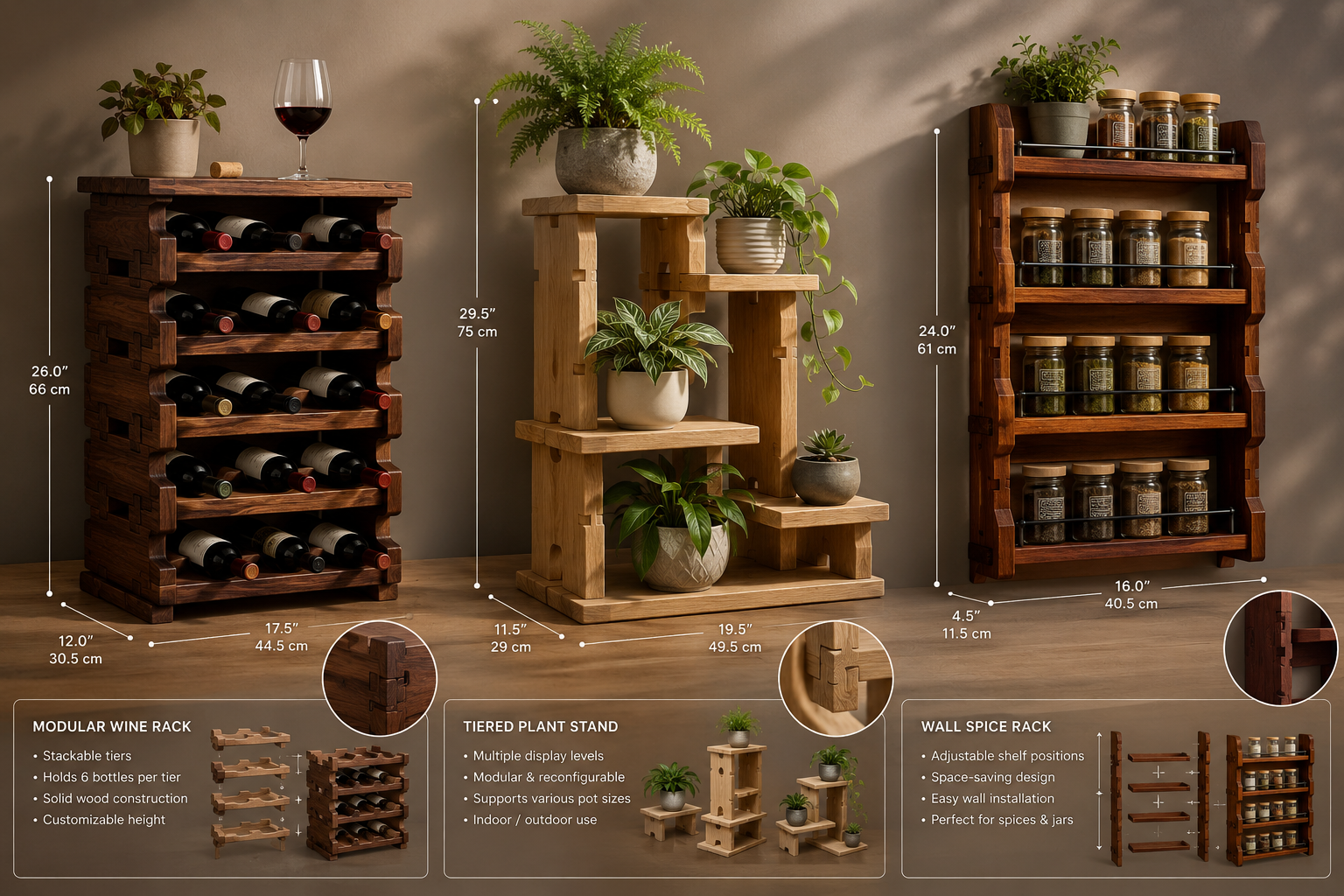 Image: Comparison of a traditional plant stand versus a versatile modular plant stand system in different configurations.
Modular and Stackable Spice Racks
Kitchen organization is another area where modularity shines, especially for items like spice racks.
- Design Concept: Develop individual compartments or trays that fit a standard spice jar. These units can be stacked, placed side-by-side, or even designed to fit into drawers or cabinets.
- Joinery: Simple friction fits, small dowels, or magnetic connections can work well here, as weight is less of a concern. The emphasis should be on easy access and reordering.
- Materials: Lighter woods like bamboo or maple work well. A food-safe finish is essential.
- Variations: Design modules for different jar sizes, pull-out drawer inserts, or units that can be wall-mounted. For additional inspiration, consider exploring spice racks that sell and the various designs available.
Expanding to General Storage Solutions and Market Appeal
The principles of Designing Modular and Stackable Woodcraft: Creating Wine Racks, Plant Stands, Spice Racks, and Storage Solutions That Adapt to Different Spaces and Customer Needs extend far beyond these specific items. General storage solutions, workshop organizers, and even home office systems can greatly benefit from this approach, broadening market appeal and product offerings.
General Modular Storage Solutions
Think beyond specialized racks to versatile storage cubes, shelves, and drawers that can be combined in countless ways.
- Cubes and Open Shelves: Design a standard cube unit that can serve as a standalone shelf, be stacked to form a bookcase, or fitted with drawers or doors. Consider different opening styles for visual interest.
- Drawer Units: Create standalone drawer modules that can be inserted into open cube frames or stacked as a chest of drawers. Consistency in external dimensions is key.
- Connecting Hardware: Beyond traditional joinery, explore discreet metal connectors, cam locks, or even magnetic systems that allow for tool-free assembly and reconfiguration. This significantly enhances user experience.
- Applications: These general modules are perfect for living rooms, bedrooms, and even children’s rooms, offering adaptable storage that can evolve with changing needs. For example, a set of cubes might initially store toys, then become a book display, and eventually function as clothing storage. Consider building modular wood storage systems for small workshops as a testament to the versatility of this approach.
- Market Appeal: Emphasize the long-term value. Customers are less likely to discard well-made modular furniture, as it can always find a new purpose or configuration. This speaks to a growing consumer demand for sustainable, lasting products.
Marketing and Pricing Modular Woodcraft
Marketing modular woodcraft requires highlighting its unique advantages:
- Versatility and Adaptability: Showcase multiple configurations in product photos and videos. Demonstrate how a single set of modules can function as a wine rack, then a plant stand, then general shelving.
- Customization: Emphasize that customers are not just buying a product, but a system they can personalize. Offer customization options for wood type, finish, and module combinations.
- Space-Saving Solutions: Appeal to those in smaller homes or apartments who need efficient, flexible storage.
- Longevity and Sustainability: Position modular pieces as an investment that will grow and change with the customer, reducing waste.
- Expandability: Clearly communicate that customers can start small and add modules later, fostering repeat business.
Pricing should reflect the enhanced value proposition. While individual modules might seem more expensive than a basic, fixed unit, the ability to reconfigure, expand, and adapt justifies a premium. Consider offering starter kits, expansion packs, and individual modules, providing customers with flexible purchasing options. Providing clear assembly instructions and potentially even design software or guides for customers to plan their configurations can further enhance the product experience. For inspiration on creating multi-functional pieces, explore resources on modular furniture design for woodworkers.
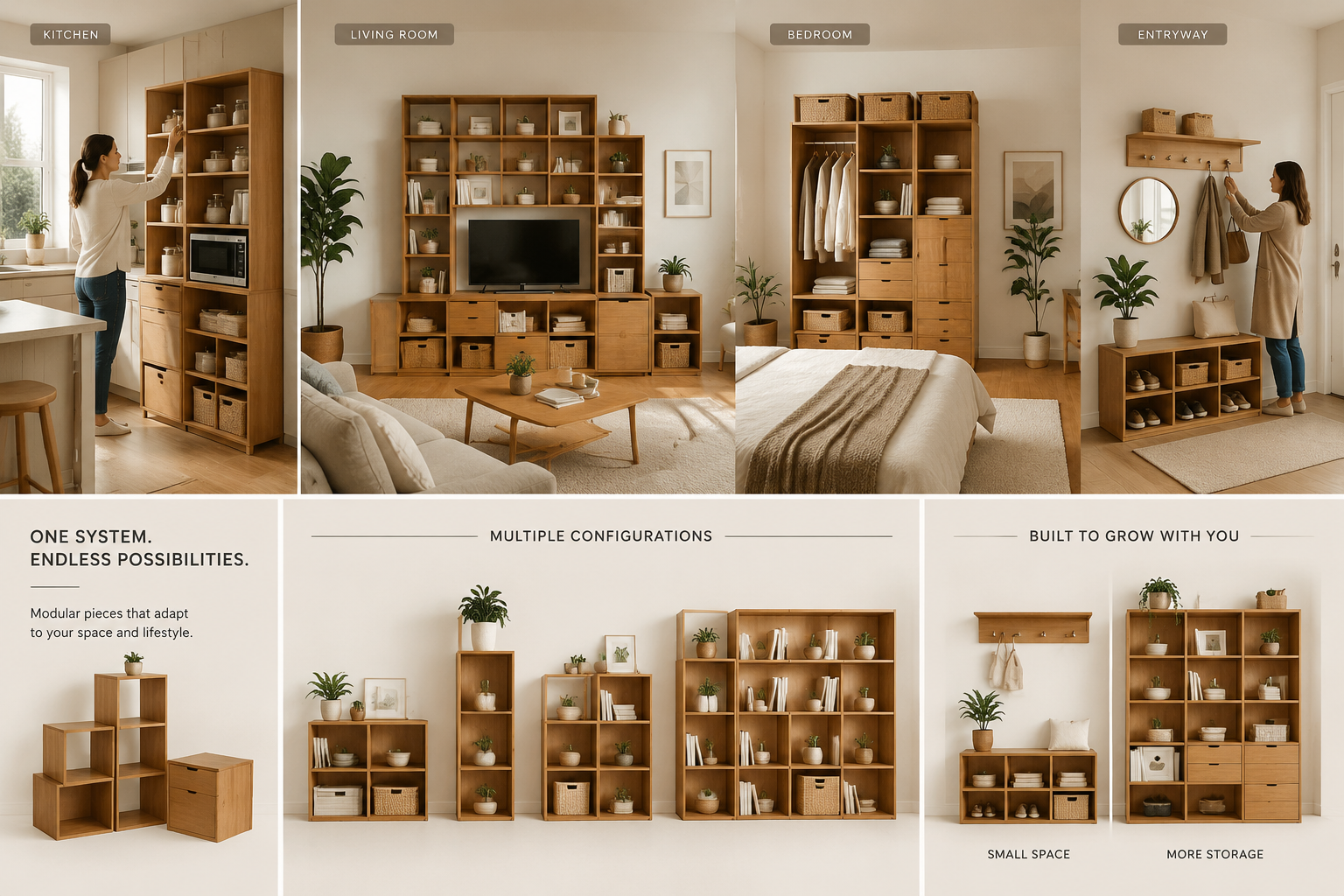 Image: Modular wooden spice rack in a modern kitchen, flanked by other stackable wooden storage boxes, emphasizing elegant organization.
Conclusion
Designing Modular and Stackable Woodcraft: Creating Wine Racks, Plant Stands, Spice Racks, and Storage Solutions That Adapt to Different Spaces and Customer Needs is not merely a design trend; it’s a strategic shift that aligns perfectly with modern consumer demands for adaptability, sustainability, and personalization. By embracing standardized components, intelligent joinery, and a focus on functional versatility, woodworkers can create products that not only meet diverse needs but also offer a compelling value proposition that justifies higher price points and fosters enduring customer loyalty. In 2026, the woodworker who can offer a dynamic system of storage, rather than just individual pieces, will undoubtedly capture a significant market advantage.
Actionable Next Steps:
- Start Small: Begin by designing a single, multi-purpose module that can serve at least two different functions (e.g., a small cube that can stack or integrate into a larger piece).
- Standardize: Document precise dimensions and joinery methods for your modular system to ensure consistency.
- Prototype: Build prototypes using different wood types and connection methods to test stability, ease of assembly, and aesthetics.
- Market Strategically: Develop marketing materials that clearly showcase the versatility and various configurations of your modular products.
- Gather Feedback: Engage with early customers to understand their experiences and identify opportunities for improvement or expansion in your modular product lines.
SEO Meta Title: Modular Woodcraft: Wine Racks, Plant Stands & Storage Solutions SEO Meta Description: Design adaptable woodcraft like wine racks, plant stands, and spice racks. Create modular storage solutions that fit any space and customer need in 2026.