
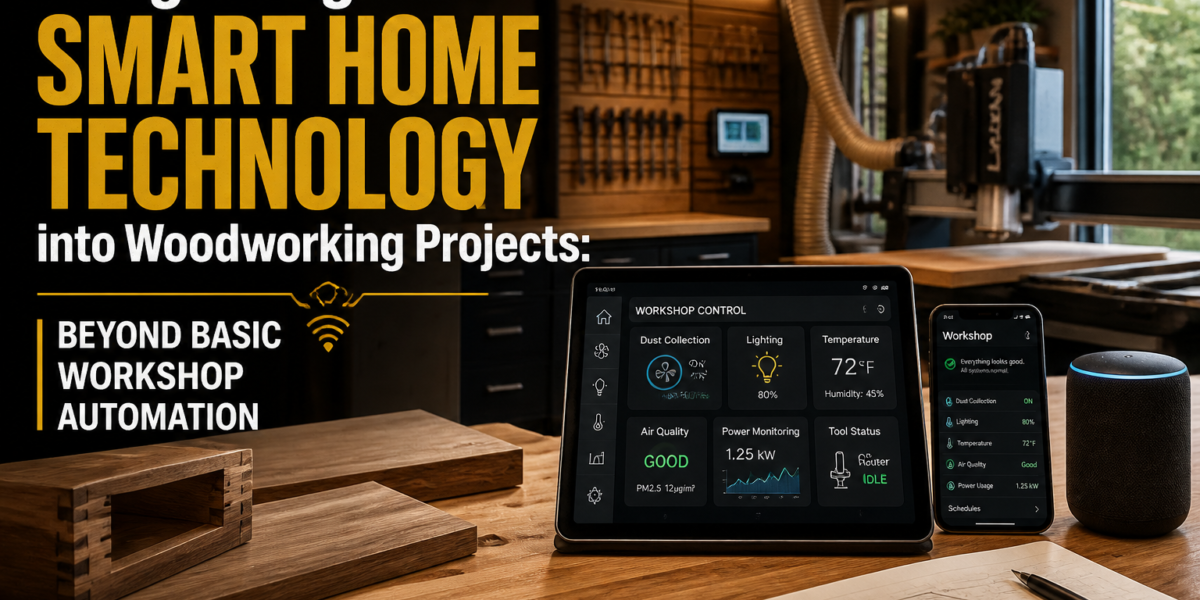
The woodworking landscape is undergoing a profound transformation. No longer confined to manual processes and simple power tools, the modern workshop is evolving into a smart, interconnected ecosystem. According to recent industry reports, the global smart home market is projected to reach over $380 billion by 2026, and a significant portion of this growth stems from creative applications extending beyond conventional household convenience. This surge opens unprecedented opportunities for woodworkers to elevate their craft, moving past basic workshop automation to embrace sophisticated integration. We’re talking about more than just smart plugs; this is about leveraging AI for lumber inventory, voice control for precise tool settings, and augmented reality for project visualization. This article delves into the exciting realm of Integrating Smart Home Technology into Woodworking Projects: Beyond Basic Workshop Automation, exploring advanced applications that will redefine efficiency, precision, and creativity in the wood shop and beyond.
Key Takeaways
- Smart home technology offers advanced applications for woodworking beyond simple automation, including AI-driven inventory and voice-controlled tools.
- AI and IoT can significantly enhance workshop efficiency, safety, and precision.
- Integrating smart tech into finished woodworking projects creates functional and aesthetically pleasing smart furniture and solutions.
- Security and data privacy are crucial considerations when implementing smart workshop solutions.
- The future of woodworking involves a blend of traditional craftsmanship with cutting-edge smart home innovation.
AI-Driven Inventory, Voice Control, and Precision Automation in the Workshop
The traditional image of a woodworker meticulously cataloging lumber by hand is rapidly becoming a relic of the past. Advanced smart home technology, particularly Artificial Intelligence (AI) and the Internet of Things (IoT), is revolutionizing workshop management and operation. Integrating Smart Home Technology into Woodworking Projects: Beyond Basic Workshop Automation means harnessing these powerful tools to optimize every step of the process.

Smart Lumber Inventory Management
One of the most time-consuming aspects of woodworking is managing lumber inventory. Knowing precisely what materials are on hand, where they are stored, and their exact dimensions and species can make or break a project’s timeline and budget. Here’s how smart technology can help:
- RFID Tagging and Scanning: Each piece of lumber can be equipped with a small, inexpensive RFID (Radio-Frequency Identification) tag. As new wood enters the workshop, a quick scan logs its details (species, dimensions, purchase date, cost) into a central database.
- AI-Powered Optimization: AI algorithms can analyze your project plans against your current inventory. Need a 12-foot section of 8/4 cherry? The system can instantly tell you if you have it, where it’s located, and even suggest the most efficient cut to minimize waste. This can drastically reduce material costs and planning time.
- Automated Reordering: When a certain lumber stock falls below a predefined threshold, the system can automatically flag it for reorder or even generate a purchase order to your preferred supplier.
- Environmental Monitoring: Integrating smart sensors for temperature and humidity ensures your lumber is stored in optimal conditions, preventing warping and checking, and preserving its quality.
Voice-Controlled Tool Presets and Machine Operation
Imagine walking into your workshop and, with a simple voice command, setting your table saw’s blade height, your router’s depth, or your planer’s cut thickness. This isn’t science fiction; it’s a tangible benefit of Integrating Smart Home Technology into Woodworking Projects: Beyond Basic Workshop Automation.
- Smart Power Switches & Relays: By connecting power tools to smart switches and relays, specific machines can be activated or deactivated remotely or via voice commands. While direct voice control for every precise setting might still be emerging for all tools, core functionalities like “Alexa, turn on the dust collector” or “Hey Google, activate the shop lights” are readily available.
- Customizable Presets: For tools with digital readouts or electronically controlled settings, custom integrations can allow woodworkers to save common settings (e.g., specific dado stack widths, router bit depths for a certain joint) and recall them with a verbal cue. This dramatically reduces setup time and minimizes human error.
- Safety Protocols: Voice commands can also be integrated with safety features. “Emergency stop” commands linked to smart kill switches can immediately power down critical machinery, adding an extra layer of safety to the workshop environment. For enhanced workshop safety and efficiency, explore DIY Smart Workshop Upgrades: Integrating AI and IoT for Enhanced Precision and Safety.
Augmented Reality for Project Visualization and Design
Augmented Reality (AR) tools are transforming the design phase of woodworking projects. Before even making the first cut, woodworkers can now visualize their creations in a real-world context.
- Virtual Prototyping: Using AR applications on tablets or smart glasses, a woodworker can overlay a 3D model of a designed piece onto the actual space where it will reside. This allows for immediate assessment of scale, proportion, and aesthetic fit within a room.
- Interactive Blueprints: AR can project cut lines, joinery details, and assembly instructions directly onto the raw material or workbench, acting as a dynamic, interactive blueprint. This reduces the need for constant measurement and marking, improving accuracy.
- Client Collaboration: For custom projects, AR allows clients to preview designs in their own homes, making real-time adjustments and approvals, streamlining the design process significantly.
Integrating Smart Home Functionality into Finished Woodworking Projects
The convergence of woodworking and smart home technology extends beyond the workshop itself. It’s also about crafting wooden pieces that seamlessly house, conceal, and interact with smart devices, turning functional items into smart furniture. This aspect truly showcases Integrating Smart Home Technology into Woodworking Projects: Beyond Basic Workshop Automation.
Smart Furniture Design: Beyond Hiding Wires
The goal here isn’t just to hide unsightly wires; it’s to create pieces where the smart technology is an integral, often invisible, part of the design and function.
- Hidden Charging Stations: Design nightstands, coffee tables, or desks with integrated wireless charging pads, concealed USB ports, or even motorized compartments that reveal charging docks. For popular designs, consider our insights on High-Demand Woodworking Projects for 2026: Coffee Tables, Wine Racks, and Clocks.
- Acoustically Optimized Speaker Enclosures: Build custom wooden enclosures for smart speakers (like Amazon Echo or Google Home) that enhance their sound quality while blending seamlessly into the décor. Think about acoustic baffling and resonance chambers crafted from fine hardwoods.
- Integrated Lighting Solutions: Incorporate LED strips or smart bulbs directly into shelving units, display cabinets, or headboards. These can be voice-controlled, app-controlled, or even responsive to ambient light conditions, adding both functionality and ambiance.
- Motorized Components: Imagine a wooden media console where a TV silently glides up from a hidden compartment, or a liquor cabinet that opens with a smart lock. These projects require precision joinery and careful integration of small motors and smart control modules.
- Discreet Sensor Integration: Embed motion sensors, temperature sensors, or humidity sensors into wooden furniture pieces. For instance, a wooden coat rack could have an integrated sensor that triggers smart lighting when someone enters the entryway, or a wine rack with a temperature sensor linked to a smart thermostat.
For inspiration on how to stylishly embed technology, check out DIY Smart Home Integration with Custom Woodwork: Hiding Tech with Style.
Examples of Smart Woodworking Projects
| Project Type | Smart Integration | Key Woodworking Skills Required |
|---|---|---|
| Smart Nightstand | Wireless charging, USB ports, motion-activated light | Joinery (dovetails, dados), routing for ports, veneering |
| Media Console | Motorized TV lift, concealed speakers, cable management | Cabinetry, precision sizing, power tool usage (router, table saw) |
| Smart Desk | Integrated smart display, ergonomic height adjustment | Desk construction, cable routing, sensor installation |
| Custom Record Player Console | Hidden smart speaker, ambient lighting, controlled turntable | Fine cabinetry, sound dampening, internal component mounting. See Crafting Custom Wooden Record Player Consoles: Integrating Modern Audio with Mid-Century Design. |
| Kitchen Organizer | Tablet holder, smart recipe display, timed reminders | Box construction, joinery, routing for screen mounts |
| Wooden Wall Clock | Smart display, Wi-Fi connectivity, app control | Precision cutting, fine joinery, mechanism housing. Refer to DIY Wooden Wall Clocks: Precision Joinery and Modern Designs. |
This table illustrates the vast potential for Integrating Smart Home Technology into Woodworking Projects: Beyond Basic Workshop Automation. Each project combines traditional woodworking craftsmanship with cutting-edge electronics to create unique and highly functional pieces for the modern home.
Challenges, Security, and Future Trends in Smart Woodworking
While the potential for Integrating Smart Home Technology into Woodworking Projects: Beyond Basic Workshop Automation is immense, it’s important to acknowledge the challenges, particularly regarding security, and to look ahead at emerging trends.

Navigating the Challenges
- Technical Skill Gap: Woodworkers may need to acquire new skills in basic electronics, programming (for custom integrations), and network configuration. Resources like online tutorials, community forums, and specialized courses can bridge this gap.
- Complexity of Integration: Merging diverse smart home ecosystems (e.g., Apple HomeKit, Google Home, Amazon Alexa) can be complex. Choosing compatible devices and platforms is crucial.
- Cost of Implementation: Advanced smart technology can be an investment. Carefully evaluate the return on investment in terms of efficiency gains and enhanced project value.
- Maintenance and Obsolescence: Smart devices evolve rapidly. Designing projects that allow for easy upgrades or replacements of integrated tech components is a smart long-term strategy.
Security and Data Privacy Considerations
As more aspects of woodworking—from inventory to machine control—become digital, security and data privacy become paramount.
- Network Security: Secure your workshop’s Wi-Fi network with strong passwords and regular updates. Consider segmenting your network if critical systems are involved.
- Device Security: Always change default passwords on smart devices. Keep firmware updated to patch vulnerabilities.
- Data Protection: Be mindful of what data your smart systems are collecting. For inventory systems, ensure sensitive business information (like material costs) is encrypted and backed up.
- Physical Security: Smart locks and surveillance cameras can protect valuable tools and materials, but ensure these systems themselves are secure against unauthorized access.
Future Trends in Smart Woodworking
The intersection of woodworking and smart technology is still in its early stages, with exciting developments on the horizon for 2026 and beyond.
- AI-Powered Design Assistants: Imagine AI suggesting optimal wood species based on project requirements, or even generating novel furniture designs based on your preferences.
- Robotics and Cobots: Collaborative robots (cobots) could assist with repetitive tasks like sanding or applying finishes, working alongside human woodworkers to boost productivity and reduce strain.
- Advanced Sensor Networks: Beyond humidity, future sensors could monitor tool wear, vibration patterns (for predictive maintenance), or even wood stress during carving, offering real-time feedback to optimize processes.
- Sustainable Smart Materials: Development of new wood-based composites with integrated smart properties, such as self-healing surfaces or embedded data transfer capabilities, will open up new creative avenues.
- Decentralized Smart Workshop Management: Blockchain technology could potentially secure lumber provenance, track material lifecycle, and even manage payment for custom projects, creating transparent and efficient supply chains.
The future of woodworking is undeniably smart. By embracing these technologies, woodworkers can not only enhance their traditional craft but also unlock new levels of creativity, efficiency, and safety.
Conclusion
The journey of Integrating Smart Home Technology into Woodworking Projects: Beyond Basic Workshop Automation is not just about adopting new gadgets; it’s about reimagining the craft itself. From AI-driven inventory management that optimizes material use and reduces waste to voice-controlled tool presets that enhance precision and safety, and augmented reality that transforms project visualization, the modern woodworker has an unparalleled arsenal of tools at their disposal. Furthermore, the ability to seamlessly integrate smart home functionality into finished pieces elevates woodworking from a craft to an art form that directly enhances daily living.
While challenges exist in terms of technical skill acquisition and security, the benefits far outweigh the hurdles. By staying informed about emerging trends and prioritizing thoughtful integration, woodworkers can position themselves at the forefront of this exciting evolution. The workshop of 2026 is an intelligent hub where traditional skills meet cutting-edge innovation, creating a new era of possibilities for every artisan.
Actionable Next Steps
- Start Small: Begin with accessible smart home integrations like smart plugs for dust collectors or smart lighting in your workshop.
- Educate Yourself: Invest time in learning about basic electronics, IoT principles, and simple programming or automation platforms.
- Experiment with AR: Download an AR app for design and try visualizing your next project in 3D.
- Plan Smart Projects: On your next furniture build, consider how you might discreetly integrate a charging port, smart lighting, or a hidden compartment for a smart device.
- Prioritize Security: Implement strong passwords and keep all smart devices updated to protect your workshop and data.