
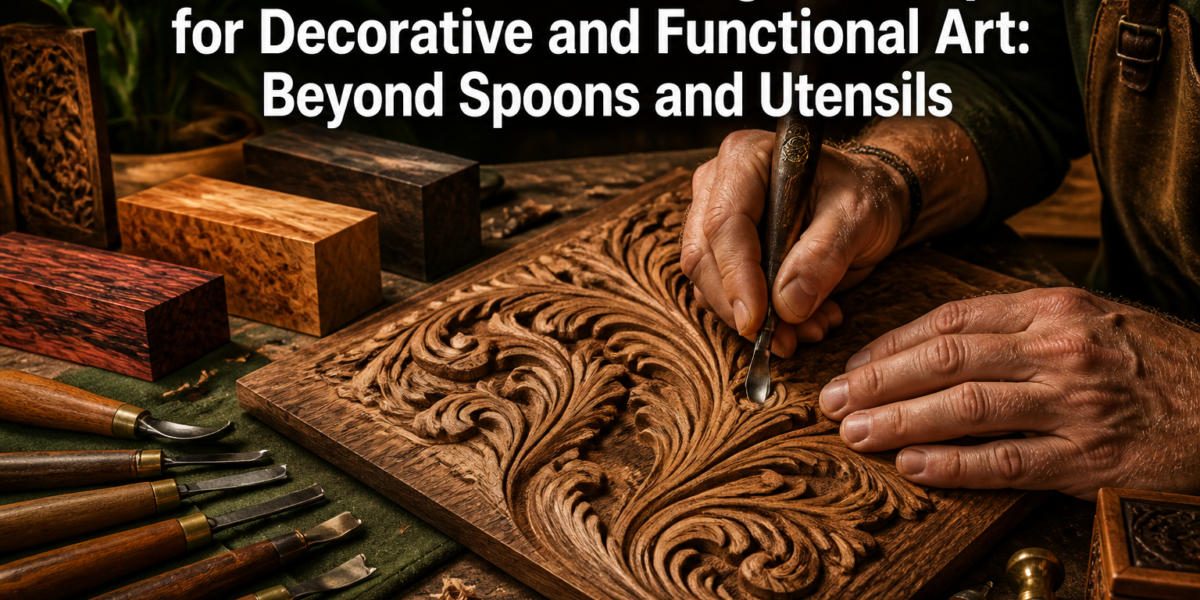
In the realm of woodworking, carving extends far beyond the rudimentary crafting of spoons and simple utensils, evolving into an intricate art form capable of producing breathtaking decorative panels, complex architectural details, and unique functional pieces. With nearly 40% of serious woodworkers in 2026 reporting an interest in diversifying their craft beyond basic joinery, the demand for specialized wood carving knowledge has never been higher. This article delves into advanced wood carving techniques for decorative and functional art, providing an expert guide for those ready to elevate their skills and explore the sophisticated possibilities of the craft.
Key Takeaways
- Specialized Tools are Essential: Advanced carving demands a diverse toolkit including specific gouges, V-tools, and power carving instruments, each meticulously sharpened for precision.
- Mastery of Diverse Techniques: Chip carving, relief carving, and sculptural carving offer distinct artistic avenues, requiring unique approaches to depth, texture, and form.
- Strategic Wood Selection: Choosing the right wood (e.g., basswood for detail, walnut for richness) is crucial for both the carving process and the final aesthetic.
- Finishing Enhances Artistry: Proper finishing techniques, from oiling to French polishing, protect the work and highlight the intricate details of the carving.
- Beyond Decoration: Advanced carving extends to functional art, incorporating complex designs into everyday objects and architectural elements.
Essential Tools and Wood Selection for Advanced Carving
Venturing into advanced wood carving techniques for decorative and functional art necessitates a precise understanding of specialized tools and the nuanced characteristics of different wood species. The generic tools used for basic projects are simply insufficient for the intricate details and varied textures required in high-level carving.
The Advanced Carver’s Toolkit
Precision is paramount in advanced carving, demanding a diverse array of hand tools and, increasingly, power carving equipment.
Hand Tools:
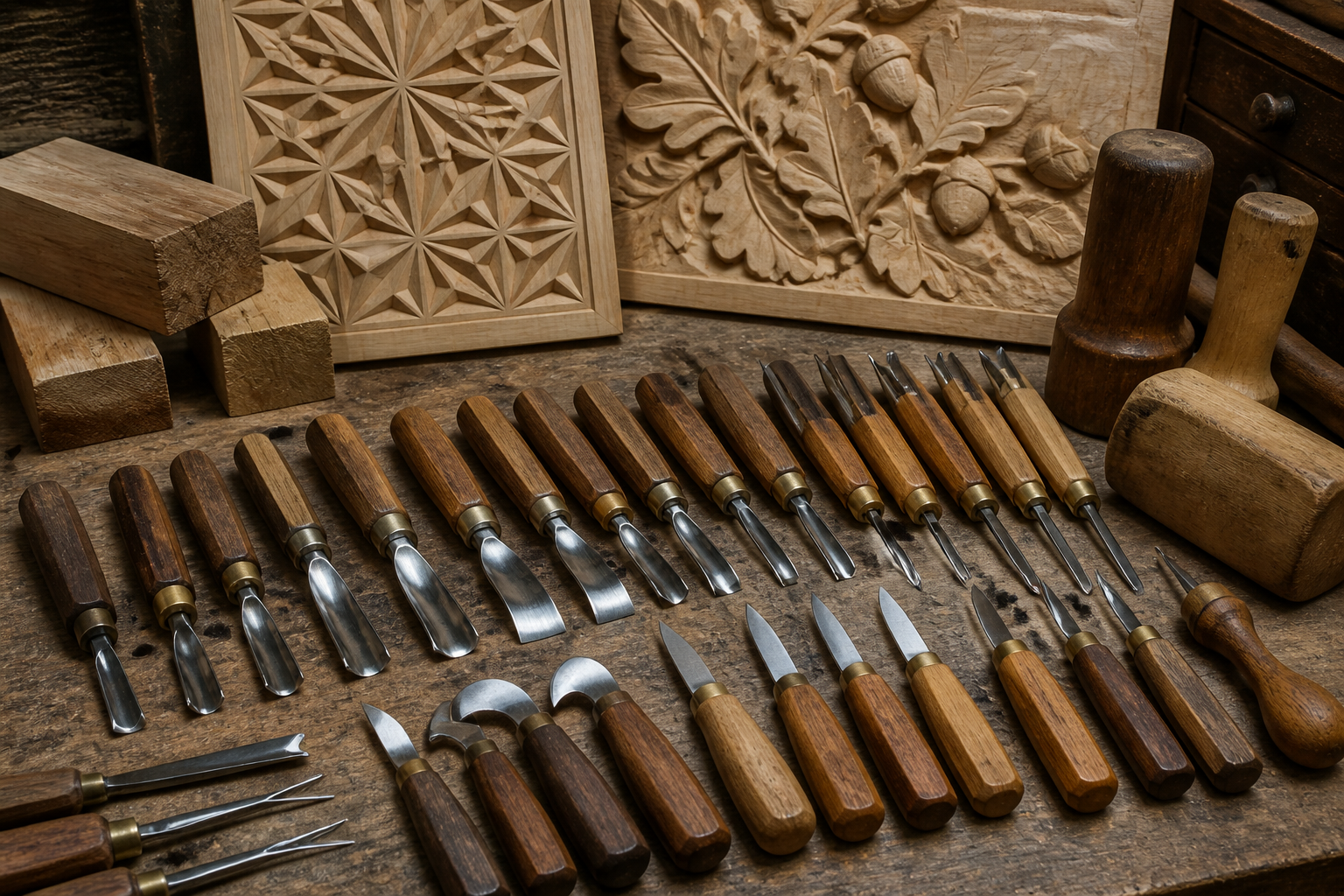
- Gouges: These are the workhorses, available in various sweeps (the curve of the cutting edge) and widths. From shallow sweeps for delicate details to deep sweeps for removing significant material, a comprehensive set is crucial. Understanding the different profiles—flat, shallow, medium, and deep—allows a carver to control the contour and depth of cuts.
- V-tools: Indispensable for creating crisp lines, outlining designs, and cutting sharp angles. Like gouges, they come in different angles (e.g., 60-degree, 90-degree) for varied line work.
- Chisels: While common in general woodworking, carving chisels are often shorter, sturdier, and designed for specific tasks like flattening backgrounds or creating defined edges.
- Knives: Detail knives, chip carving knives, and sloyd knives are specialized for fine cuts, intricate patterns, and controlled removal of small slivers of wood.
- Mallets: Used with gouges for heavier cuts, providing the necessary force without damaging the tool or the hand. Carving mallets are typically round or barrel-shaped, offering balanced striking.
Power Carving Tools: For efficiency and specific effects, power tools are increasingly integrated into advanced carving.
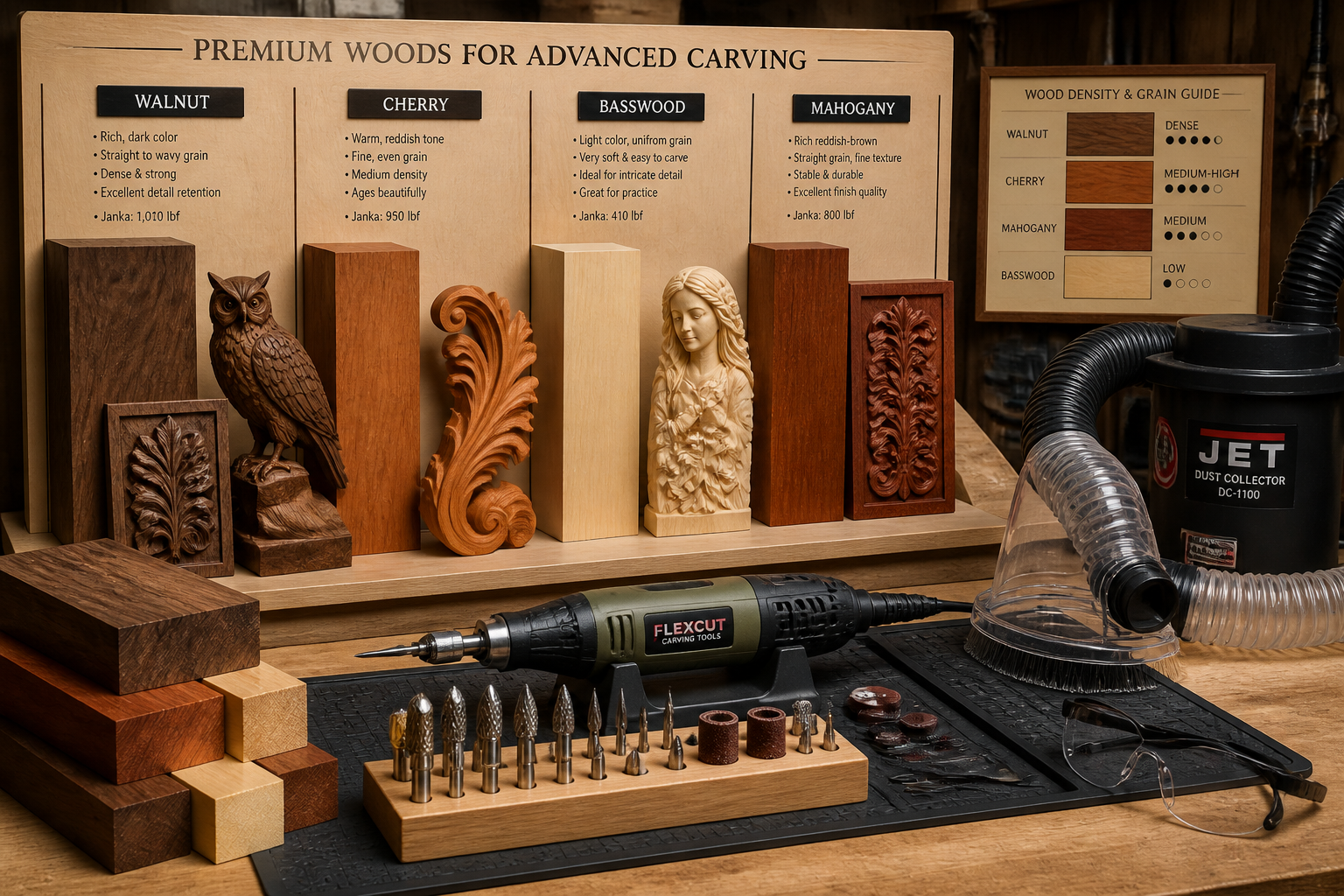
- Rotary Tools: Equipped with a wide range of burrs and bits, these tools excel at fine detail, shaping, and even texturing. They are particularly useful for intricate undercuts and smooth transitions.
- Angle Grinders with Carving Discs: For rapid material removal and shaping larger forms, specialized carving discs on an angle grinder can drastically speed up the initial stages of a sculptural piece.
- Flexible Shaft Grinders: Offering precision and power, these tools provide a good balance between a rotary tool and a heavier grinder, ideal for detailed shaping on medium to large projects.
Regardless of the tool type, consistent sharpening is non-negotiable. A dull tool is dangerous and produces subpar results. For expert advice on maintaining your edges, consult resources like The Ultimate Guide to Sharpening Woodworking Chisels and Planes.
( )
)
Choosing the Right Wood for Your Vision
The wood itself is a fundamental component of the carving process, influencing everything from ease of cutting to the final aesthetic.
| Wood Type | Characteristics | Best For |
|---|---|---|
| Basswood | Soft, fine, even grain, light color, takes detail well | Chip carving, intricate relief carving, highly detailed decorative pieces |
| Mahogany | Medium hardness, rich reddish-brown, stable, open grain | Architectural carvings, larger relief panels, furniture components |
| Walnut | Medium hardness, beautiful dark grain, durable | Sculptural pieces, functional art (e.g., boxes), decorative panels |
| Cherry | Medium hardness, smooth grain, develops rich patina | Fine detail work, functional art, decorative accents |
| Oak | Hard, distinct open grain, very durable | Robust architectural elements, rustic carvings |
When selecting wood, consider:
- Grain Direction: Always carve with the grain where possible, or across it with caution. Carving against the grain often leads to tear-out.
- Density and Hardness: Softer woods are easier for beginners and fine detail, while harder woods offer durability and a more defined finish but require more effort and sharper tools.
- Figure and Color: The natural beauty of the wood’s grain and color should complement the design. For example, the dark, rich tones of walnut can add depth to a sculptural piece.
For projects aiming for organic curves and contemporary designs, understanding Green Woodworking Techniques can be invaluable, as unseasoned wood behaves differently under the carving tool.
Mastering Advanced Wood Carving Techniques for Decorative and Functional Art
Moving beyond basic cuts, advanced wood carving techniques for decorative and functional art involve a blend of precision, artistic vision, and a deep understanding of wood’s behavior. The focus shifts from simple shaping to creating depth, texture, and complex forms that engage the viewer.
Chip Carving: Precision and Pattern
Chip carving is a distinctive style characterized by geometric patterns created by removing small “chips” of wood with specialized knives. It’s often found on decorative boxes, platters, and furniture accents.
Key Principles:
- Knives: Requires a specific chip carving knife with a short, stiff blade, often angled.
- Marking: Precise layout with pencils and templates is crucial. Lines define the edges of the chips.
- Cuts: Typically involves two types of cuts: a plunging cut to define the deepest part of the chip, and a slicing cut that meets the plunge cut, allowing the chip to pop out cleanly.
- Patterns: Common patterns include triangles, squares, curved motifs, and rosettes. The interplay of light and shadow on the carved surface creates visual interest.
Chip carving demands extreme control and a steady hand. The beauty lies in the uniformity and crispness of the edges. For smaller decorative items like custom Wooden Key Holders or Crafting Wooden Candle Holders, chip carving can add exquisite, intricate detail.
Relief Carving: Depth and Dimension on Flat Surfaces
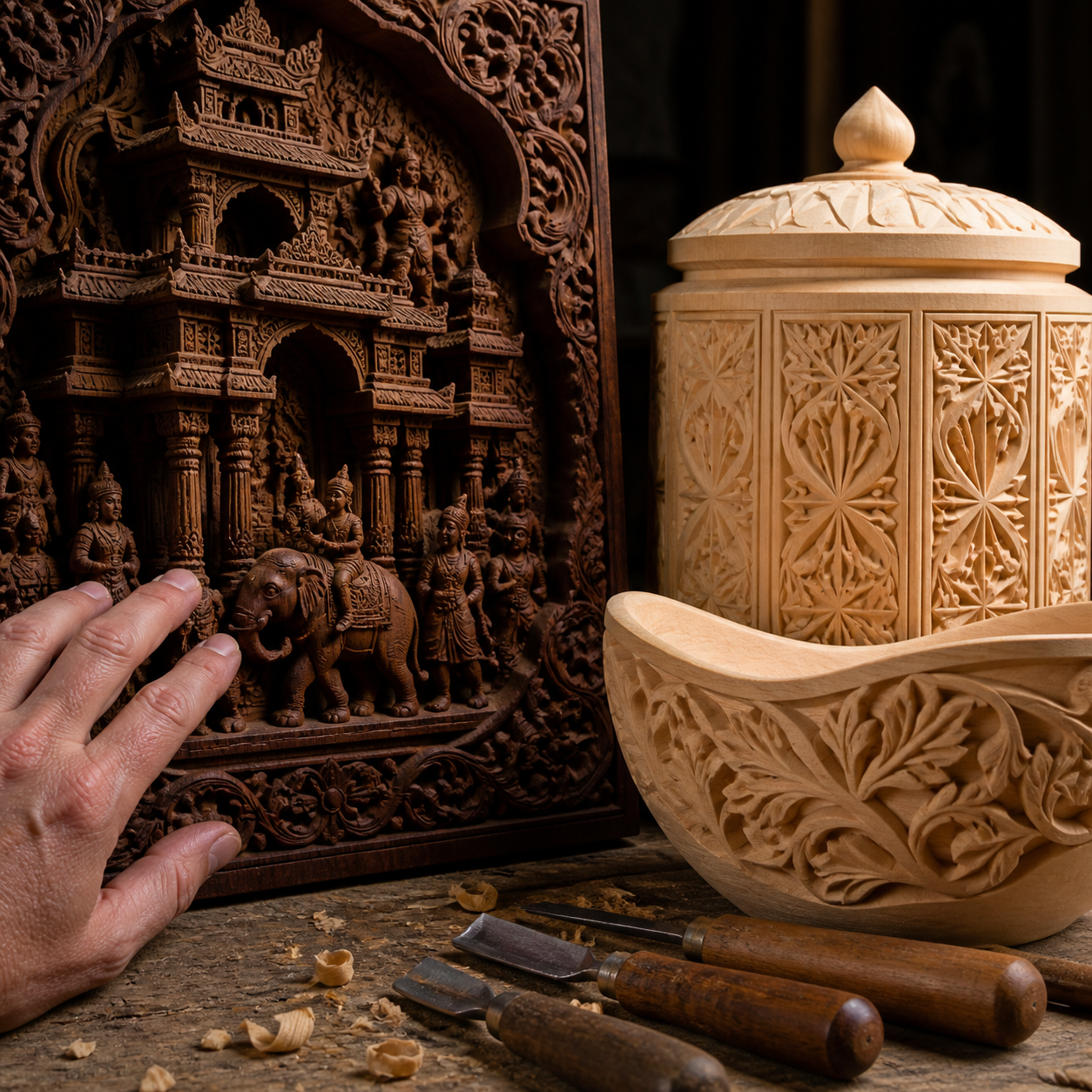
Relief carving brings three-dimensional images out from a flat background. The illusion of depth is created by varying the height of the carved elements.
Types of Relief:
- Bas-relief (Low Relief): The projection from the background is minimal, often just a slight raising of the image. Think of a coin’s design.
- Alto-relief (High Relief): Figures project significantly from the background, sometimes almost entirely detaching, maintaining only a small connection to the base. This creates dramatic shadows and deep textures.
- Incised Relief: The design is cut into the surface, rather than rising above it. The highest points are level with the original surface.
Process:
- Design Transfer: The chosen design is transferred onto the wood surface.
- Outline: The primary outlines are cut using V-tools or shallow gouges.
- Background Removal: Material is carefully removed from around the design to establish the lowest plane.
- Shaping and Modeling: The design elements are gradually shaped and refined, establishing varying depths and contours.
- Detailing: Fine details are added, and textures are introduced using smaller gouges and detail knives.
Relief carving is highly versatile, used for decorative panels, furniture doors, and architectural elements. A prime example might be a carved panel on a custom Wooden Bookends project, adding significant artistic value.
( )
)
Sculptural (In-the-Round) Carving: Full Three-Dimensional Form
Sculptural carving, also known as carving in-the-round, involves creating a freestanding three-dimensional object that can be viewed from all sides. This is where functional art truly shines, transforming a block of wood into a statuette, a vessel, or an intricate animal figure.
Approach:
- Block-out: The initial, rough shape is established, removing large amounts of material to define the overall form. This often involves power carving tools or larger gouges.
- Rough Shaping: The main masses and proportions are refined, moving closer to the final form.
- Refinement: Details begin to emerge, and the various planes and curves of the sculpture are smoothed and articulated.
- Detailing and Texturing: Fine tools are used to add delicate features, texture surfaces (e.g., fur, fabric folds), and bring the piece to life.
Sculptural carving demands an understanding of form, anatomy, and how light interacts with surfaces. It’s a journey from a raw block to a fully realized object. Creating a unique DIY Wooden Birdhouse with carved elements, or even a Mastering Wooden Beer Caddy Builds with sculpted handles, can fall into this category, blending utility with artistic expression.
Finishing and Advanced Presentation for Carved Art
The final presentation of advanced wood carving techniques for decorative and functional art is as crucial as the carving itself. Proper finishing not only protects the wood but also enhances the intricate details, grain, and overall aesthetic appeal of the piece. In 2026, the emphasis is on finishes that highlight the natural beauty of the wood while providing durability.
Essential Finishing Techniques
The choice of finish depends on the wood type, the intended use (decorative vs. functional), and the desired aesthetic.
- Oils (Tung Oil, Linseed Oil, Danish Oil): These penetrate the wood fibers, enhancing the natural grain and providing a warm, subtle luster. They are excellent for revealing the depth of a carved surface and offer a natural, tactile feel. Multiple thin coats are typically applied, with sanding between coats for a silky-smooth finish. They are particularly suitable for functional items where a durable, repairable finish is desired.
- Waxes (Beeswax, Carnauba Wax): Often used in conjunction with oil finishes or directly on raw wood (especially for very fine, detailed carvings), waxes provide a protective layer and a soft sheen. They are easy to apply and buff, giving a natural, soft glow that doesn’t obscure details.
- Shellac: A natural resin, shellac creates a beautiful, clear finish that can be French polished for a high-gloss, traditional look. It dries quickly and is excellent for sealing wood before other finishes. Its delicate nature makes it best suited for purely decorative pieces or items not subjected to heavy wear.
- Polyurethane/Varnish: For functional art that requires robust protection (e.g., carved table legs, outdoor pieces), polyurethane or varnish offers a hard, durable, and water-resistant surface. These finishes come in various sheens from matte to high gloss. While highly protective, they can sometimes obscure fine details if applied too thickly. For more unique approaches to wood finishing, explore various options like Unique Wood Finishing Techniques or High-Gloss Wood Finishing Techniques.
Regardless of the finish chosen, thorough sanding is paramount. Start with coarser grits and progressively move to finer ones, ensuring all tool marks are removed. Dust removal between coats is also critical for a flawless finish.
( )
)
Presenting Your Masterpiece
The way a carved piece is presented can significantly impact its perceived value and aesthetic appeal.
- Mounting: For relief carvings, consider custom framing or mounting on a contrasting wooden backer board to make the piece stand out. Sculptural pieces might benefit from a simple, elegant base that complements the carving without distracting from it.
- Lighting: Strategic lighting can dramatically enhance carved art by highlighting its textures, contours, and the interplay of light and shadow. Spotlights or carefully placed ambient lighting can bring out the three-dimensionality of the work.
- Context: For functional art, integrate the piece seamlessly into its intended environment. A beautifully carved architectural detail should blend with the overall design of a room, while a sculpted vessel should be placed where its form and function are appreciated.
Exploring different finishes, from natural oils to more complex antique or distressed looks, can further elevate your work. Resources on Antique Wood Finishing Techniques or Distressed Wood Finishing Techniques can offer inspiration for achieving specific stylistic effects. Understanding how to apply these effectively is key to ensuring your carved art makes a lasting impression.
Conclusion
The journey into advanced wood carving techniques for decorative and functional art is one of continuous learning and artistic growth. By mastering specialized tools, understanding the nuances of wood, and applying a range of intricate carving methods, woodworkers can transcend the ordinary and create pieces of lasting beauty and significance. From the precise geometry of chip carving to the dynamic depths of relief work and the full forms of sculptural art, the possibilities are virtually limitless.
As you embark on or continue this advanced path in 2026, remember that patience, practice, and a keen eye for detail are your most valuable assets. Don’t shy away from experimenting with new tools, exploring different wood species, and pushing the boundaries of your creativity. The satisfaction of transforming a raw block of wood into a sophisticated piece of art, whether a delicate decorative panel or a robust architectural detail, is one of woodworking’s most profound rewards. Continue to hone your skills, refine your vision, and let your hands bring the extraordinary to life.
SEO Meta Title: Master Advanced Wood Carving Techniques for Decorative Art SEO Meta Description: Go beyond basics! Explore advanced wood carving techniques for decorative and functional art in 2026, from chip carving to sculptural mastery.