

Forests cover roughly 31% of the Earth’s land area, yet deforestation continues at an alarming rate, threatening biodiversity and exacerbating climate change. For conscientious woodworkers, the choice of materials extends far beyond aesthetics and durability; it’s a moral imperative. This comprehensive guide, “Sustainable Wood Sourcing and Eco-Friendly Finishing: A Guide for Conscientious Woodworkers,” explores the critical aspects of ethical material procurement and environmentally responsible finishing techniques, empowering artisans to craft with purpose in 2026.
Key Takeaways
- Prioritize Certified Wood: Look for certifications like FSC and SFI to ensure wood comes from responsibly managed forests.
- Embrace Reclaimed and Salvaged Materials: These options reduce demand for new timber and minimize waste.
- Explore Urban Logging: Utilizing trees removed for municipal reasons offers a local, sustainable resource.
- Choose Low-VOC Finishes: Water-based, natural oil, and shellac finishes reduce harmful emissions and improve workshop safety.
- Understand Finish Properties: Match the finish to your project’s intended use for optimal durability and appearance while maintaining eco-friendliness.
The Foundation: Sustainable Wood Sourcing in 2026
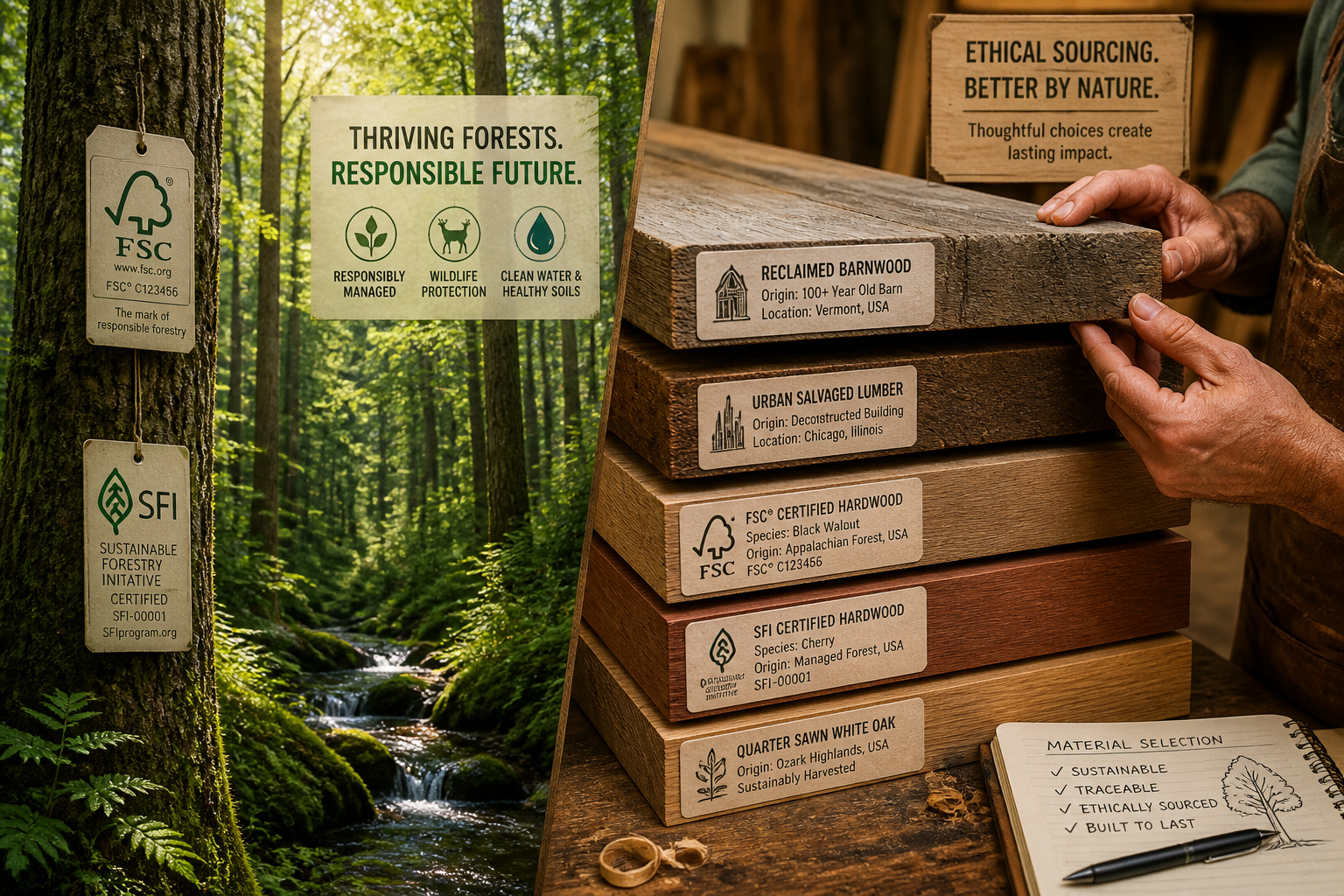
The journey to responsible woodworking begins long before the first cut. Sourcing sustainable wood is about making informed choices that support forest health, protect ecosystems, and promote ethical labor practices. In 2026, several pathways exist for conscientious woodworkers to acquire materials without compromising their values.
Certified Wood: A Mark of Responsibility
Certification programs provide a transparent way to ensure wood originates from forests managed according to strict environmental and social standards.
Forest Stewardship Council (FSC)
The FSC is a globally recognized non-profit organization promoting responsible forest management. Wood carrying the FSC label guarantees:
- Forest operations meet rigorous environmental, social, and economic standards.
- Harvesting practices protect biodiversity, water quality, and wildlife habitats.
- Indigenous peoples’ rights are respected.
- Workers receive fair wages and safe working conditions.
When purchasing FSC-certified wood, woodworkers can be confident they are not contributing to deforestation or illegal logging. Always verify the certification number with your supplier.
Sustainable Forestry Initiative (SFI)
SFI is another prominent certification program, primarily active in North America. While its standards differ slightly from FSC, SFI also promotes sustainable forest management, focusing on:
- Protecting water quality.
- Conserving biodiversity.
- Responsible harvesting practices.
- Ensuring forest health and productivity.
Both FSC and SFI offer valuable frameworks for sustainable wood sourcing. Understanding the nuances of each can help woodworkers choose the certification that aligns best with their specific values and project needs. For a deeper dive into these options, consider reading “Sustainable Wood Sourcing for the Modern Woodworker: Beyond Reclaimed” – https://woodcraftwiz.com/sustainable-wood-sourcing-for-the-modern-woodworker-beyond-reclaimed-to-urban-logging-certified-forests/.
Beyond New Growth: Reclaimed, Salvaged, and Urban Lumber
Reducing demand for newly harvested timber is a cornerstone of sustainable woodworking. Embracing alternatives like reclaimed, salvaged, and urban-sourced wood offers unique character and a significant environmental benefit.
Reclaimed Wood
Reclaimed wood is material recovered from old buildings, barns, factories, and other structures slated for demolition or renovation. Its benefits include:
- Reduced Deforestation: Less demand for new trees.
- Unique Aesthetics: Often features rich patina, nail holes, and historical character.
- Enhanced Stability: Old-growth timber is typically more stable and dense than rapidly grown new wood.
- Lower Carbon Footprint: Avoids the energy expenditure of harvesting, milling, and transporting new lumber.
Sourcing reclaimed wood requires careful inspection for embedded metal, rot, and pests. Check out “Sourcing Reclaimed and Salvaged Wood: Quality Assessment, Re” – https://woodcraftwiz.com/sourcing-reclaimed-and-salvaged-wood-quality-assessment-restoration-and-safe-handling/ for practical tips.
Salvaged Wood
Salvaged wood comes from trees that have fallen naturally due to storms, disease, or old age, or those cleared for development projects. This wood would otherwise be wasted. Key considerations:
- Local Sourcing: Often available from local arborists, sawmills, or even municipal tree removal services.
- Diverse Species: Provides access to species not typically available through traditional lumberyards.
- Inconsistent Supply: Availability can be unpredictable.
Urban Logging
Urban logging involves harvesting trees removed from urban and suburban areas due to construction, disease, or hazard. This practice transforms what would be waste into valuable timber.
- Minimizes Waste: Diverts logs from landfills or chippers.
- Supports Local Economies: Often involves local sawmills and wood processors.
- Unique Wood: Urban trees can yield impressive slabs and unique grain patterns.
“Every piece of reclaimed or urban-sourced wood tells a story, offering woodworkers a chance to create new history while honoring the old.”
Fair Trade and Ethical Practices
Beyond environmental impact, sustainable sourcing also considers the social impact of wood production. Seek out suppliers committed to fair trade practices, ensuring equitable compensation and safe working conditions for those involved in harvesting and processing timber, particularly in developing countries. Look for transparent supply chains and inquire about the ethical policies of your chosen lumber dealers.
Eco-Friendly Finishing: Protecting Your Project and the Planet

Once the wood is sourced and the project is built, the final step – finishing – presents another opportunity for environmental responsibility. Traditional finishes often contain high levels of Volatile Organic Compounds (VOCs), which contribute to air pollution and can be harmful to human health. Thankfully, a growing array of eco-friendly alternatives provides durable, beautiful, and safe finishes for any woodworking project.
Understanding VOCs and Their Impact
VOCs are chemicals that become gases at room temperature. They are commonly found in paints, varnishes, and many conventional wood finishes.
- Health Risks: Exposure can cause headaches, dizziness, respiratory issues, and long-term health problems.
- Environmental Impact: VOCs contribute to ground-level ozone (smog) and can be greenhouse gases.
Choosing low-VOC or zero-VOC finishes significantly reduces these risks, creating a healthier workshop and a cleaner environment.
Types of Eco-Friendly Wood Finishes
Water-Based Finishes
Water-based polyurethanes, lacquers, and stains have become incredibly popular due to their low VOC content, quick drying times, and easy cleanup with water.
- Polyurethane (Water-Based): Offers excellent durability and abrasion resistance, ideal for furniture, flooring, and other high-wear items.
- Lacquers (Water-Based): Dries quickly to a hard, clear finish. Great for decorative pieces.
- Stains (Water-Based): Provides color without harsh fumes, often with good penetration.
For detailed application techniques, especially in humid conditions, consider resources on sprayable water-based polyurethane or applying polyurethane in high humidity.
Natural Oil Finishes
Derived from plant oils like linseed, tung, and hemp, these finishes penetrate the wood fibers, enhancing the natural grain and providing a rich, warm look.
- Linseed Oil: A classic, natural finish that offers good protection and a beautiful satin sheen. It cures slowly and requires multiple thin coats. See Danish Oil vs. Linseed: The Ultimate Wood Finishing Guide.
- Tung Oil: Similar to linseed but often harder and more water-resistant.
- Hemp Oil: A food-safe, non-toxic option perfect for cutting boards and wooden toys.
Natural oils are easy to apply and repair but offer less surface protection than polyurethanes. They are excellent for projects where a natural feel and easy maintenance are prioritized.
Waxes
Natural waxes like beeswax and carnauba wax provide a soft, luxurious sheen and offer some protection against moisture. They are often used as a topcoat over oil finishes or for decorative pieces.
- Beeswax: Food-safe and offers a beautiful, low-sheen finish.
- Carnauba Wax: A harder wax, providing more durable protection and higher sheen.
Shellac
A natural resin secreted by lac bugs, shellac is dissolved in denatured alcohol. It’s an excellent sealer, fast-drying, and food-safe.
- Key Uses: Often used as a sealer, a barrier coat between incompatible finishes, or as a traditional clear finish, especially for antique restoration.
- Food Safety: Once cured, shellac is considered food-safe, making it suitable for children’s toys and bowls.
Milk Paint
Historically made from milk protein (casein), lime, and natural pigments, modern milk paints are often made with synthetic casein or plant-based proteins. They offer a durable, matte finish with vibrant colors, perfect for a rustic or farmhouse aesthetic.
- Versatility: Can be used to create distressed or antique looks.
- Low VOC: Most modern formulations are low-VOC and non-toxic.
Best Practices for Eco-Friendly Finishing
- Ventilation: Even with low-VOC finishes, always ensure good ventilation in your workshop.
- Minimal Waste: Apply thin coats to avoid excess product and reduce drying time.
- Proper Disposal: Dispose of rags and leftover finishes according to local environmental regulations. Rags soaked in oil finishes can spontaneously combust, so lay them flat to dry or soak them in water before disposal.
- Project Suitability: Match the finish to the project’s use. A cutting board needs a food-safe oil, while a dining table requires a more durable, water-resistant finish like a water-based polyurethane. For durable food-safe finishes, see the ultimate guide to wooden cutting boards.
- Longevity: A well-chosen, durable finish means your woodworking project will last longer, further contributing to sustainability by reducing the need for replacements.
The Holistic Approach: Integrating Sustainability into Every Project
Integrating sustainable wood sourcing and eco-friendly finishing into your woodworking process is more than just selecting materials; it’s a holistic approach that impacts every stage of creation, from design to longevity.
Design for Durability and Repairability
A truly sustainable woodworking project is one that lasts. Design pieces that are:
- Robust: Built to withstand daily use for generations.
- Timeless: Aesthetics that won’t quickly go out of style.
- Repairable: Constructed in a way that allows for components to be replaced or repaired rather than discarded.
- Adaptable: Consider modular designs or pieces that can serve multiple functions, like a mastering shelf woodworking project that can be reconfigured.
Reducing Waste in the Workshop
Minimizing waste during the cutting and shaping process is another critical aspect of conscientious woodworking.
- Efficient Layout: Plan cuts carefully to maximize yield from each board.
- Utilize Offcuts: Save smaller pieces for future projects. Scrap wood can be turned into profitable micro-projects like coasters, small boxes, or wooden candle holders.
- Dust Collection: Implement effective dust collection systems to capture sawdust, which can sometimes be composted or used as animal bedding, rather than sent to a landfill. Building a mobile dust collection cart can greatly assist in this.
- Tool Maintenance: Keeping your tools sharp and well-maintained ensures clean, accurate cuts, reducing material waste and improving safety. This applies to everything from essential hand tools to power tool mastery.
Educating Your Clients and Community
As a conscientious woodworker, you have the opportunity to educate others about the importance of sustainable choices.
- Transparency: Be open about your sourcing and finishing practices.
- Highlight Benefits: Explain the environmental and health benefits of certified wood and eco-friendly finishes.
- Value Proposition: Position sustainability as a key value of your craftsmanship, appealing to a growing market of environmentally conscious consumers.
By making deliberate choices at every stage, woodworkers can create beautiful, lasting pieces that tell a story of responsibility and respect for both nature and future generations.
Conclusion
In 2026, the conscientious woodworker plays a vital role in fostering a more sustainable future. By carefully choosing materials from certified forests, embracing reclaimed and urban-sourced lumber, and opting for eco-friendly finishes, artisans contribute positively to environmental health and ethical practices. This “Sustainable Wood Sourcing and Eco-Friendly Finishing: A Guide for Conscientious Woodworkers” provides a roadmap for making informed decisions that not only elevate the quality and story of your craft but also safeguard our planet’s precious resources. Embrace these principles, and your woodworking will resonate with both beauty and purpose.
Actionable Next Steps:
- Audit Your Suppliers: Research your current wood suppliers. Do they offer certified or reclaimed options? Inquire about their sustainability practices.
- Experiment with Finishes: Purchase small quantities of different eco-friendly finishes (water-based poly, natural oils, shellac) and test them on scrap wood to find what works best for your projects and aesthetic.
- Join a Local Woodworking Community: Connect with other woodworkers who prioritize sustainability. Share tips on sourcing and finishing.
- Educate Yourself Continuously: Stay updated on new certifications, eco-friendly product developments, and best practices in sustainable forestry.