
The pursuit of perfection in woodworking often boils down to the integrity of its joints. Imagine a joinery system that effortlessly combines the strength of a traditional mortise and tenon with the speed and accuracy of modern power tools, drastically reducing layout time and eliminating the need for complex jigs. This is precisely what the Festool Domino joiner offers, revolutionizing how woodworkers approach furniture and cabinet making. By Mastering the Domino Joiner: Precision Joinery for Furniture and Cabinet Making, artisans can unlock unparalleled efficiency and create robust, aesthetically pleasing projects with remarkable consistency. In 2026, this tool remains a cornerstone for achieving professional-grade results, transforming intricate joinery into a streamlined, repeatable process for both seasoned pros and ambitious hobbyists.
Key Takeaways
- The Festool Domino joiner offers a fast, precise, and strong alternative to traditional mortise and tenon joints.
- Selecting the correct Domino tenon size is crucial for joint strength and project aesthetics.
- Advanced techniques, such as using various jigs and understanding offset settings, expand the Domino’s versatility.
- Regular maintenance and proper cutter care are essential for maintaining the joiner’s accuracy and longevity.
- The Domino system simplifies complex joinery tasks, making professional-quality furniture and cabinets more accessible.
Understanding the Festool Domino System for Precision Joinery
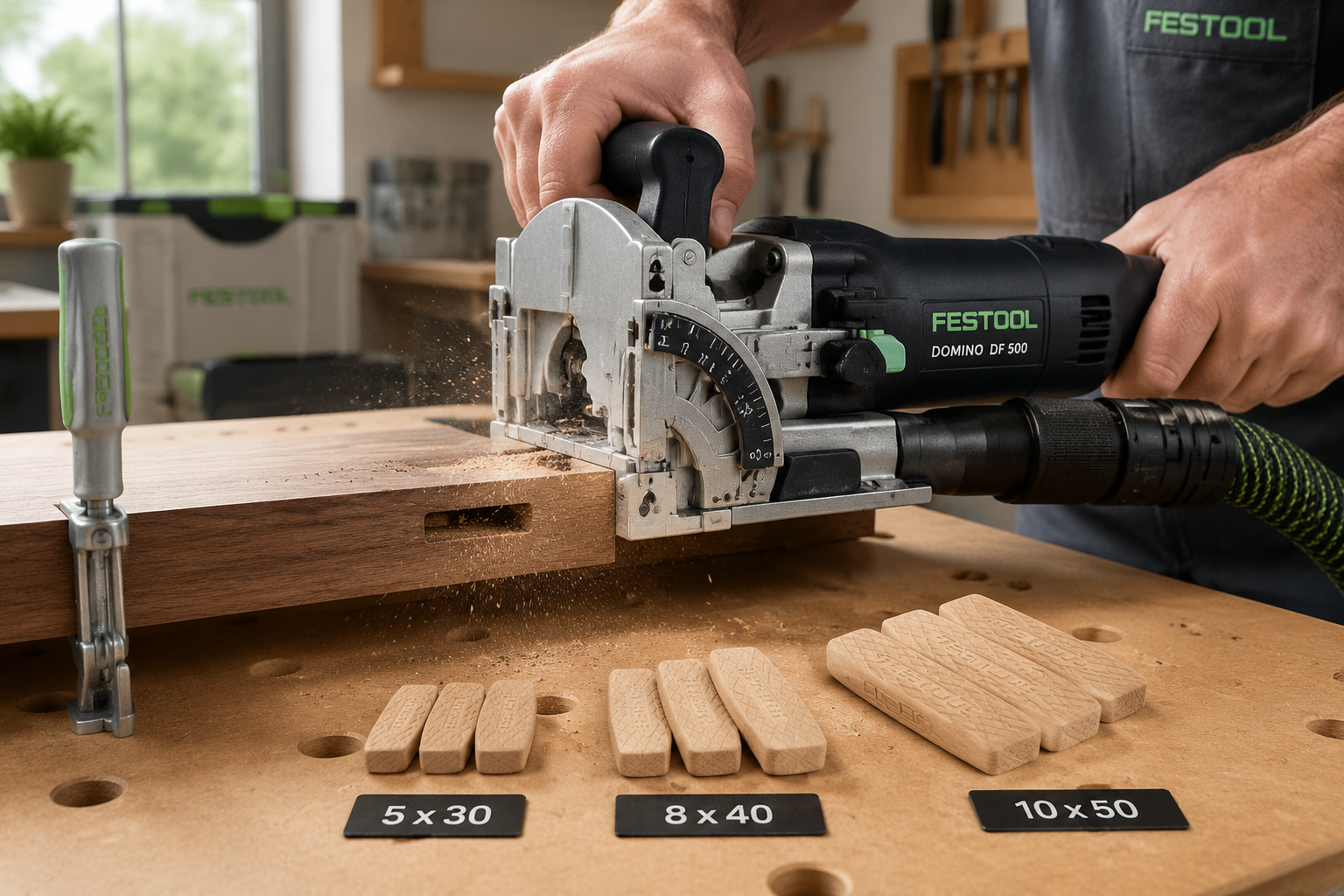 At its core, the Festool Domino system is an innovative loose-tenon joinery solution. Unlike biscuit joiners, which use compressed wood biscuits that swell with glue for strength, the Domino creates perfectly sized mortises to accept pre-formed, dense Beech or Sipo tenons. These tenons are dimensionally stable and offer significantly more surface area for glue adhesion, resulting in joints that rival or even surpass the strength of traditional mortise and tenons. The tool itself is engineered for incredible accuracy, featuring a unique oscillating spindle that plunges and rotates to create precise, chip-free mortises.
Components of the Domino System
The primary components include:
- Domino Joiner: The handheld tool that cuts the mortises. Festool offers two main models: the DF 500 (more compact for smaller projects) and the DF 700 XL (larger, for heavy-duty applications).
- Domino Cutters: Interchangeable spiral cutters available in various diameters (e.g., 4mm, 5mm, 6mm, 8mm, 10mm, 12mm, 14mm). These determine the mortise width.
- Domino Tenons: Pre-milled, fluted loose tenons in corresponding sizes and lengths, made from Beech or weather-resistant Sipo wood.
- Accessories: Including trim stops, cross stops, support brackets, and specialized drilling attachments for angled or curved work.
Why Choose the Domino Joiner for Furniture and Cabinet Making?
The advantages of incorporating the Domino joiner into your workshop are numerous:
- Speed and Efficiency: Layout time is dramatically reduced compared to hand-cut mortises or even router jigs. A joint can be marked and cut in seconds.
- Precision: The tool’s ingenious fence system and depth stops ensure consistent, repeatable mortises, resulting in perfectly flush and square joints.
- Strength: The large glue surface area and stable tenon material create incredibly robust connections, ideal for structural components in furniture and cabinets.
- Versatility: Capable of joining a wide array of materials and joint types, from face frames and panel glue-ups to complex miter joints and casework.
- Repeatability: Once the settings are dialed in, identical joints can be reproduced with ease, a significant benefit for batch production or multi-component projects.
Consider the application in building sturdy pieces like custom bookshelves or robust cabinet frames, where joint integrity is paramount. For example, when building a simple wooden bookshelf, the Domino joiner can quickly create strong, invisible joints for shelf supports, ensuring long-term stability without visible fasteners.
Essential Settings and Basic Operation
To begin Mastering the Domino Joiner: Precision Joinery for Furniture and Cabinet Making, understanding its basic settings is crucial:
- Cutter Selection: Choose the cutter size that matches your desired tenon width. A general rule is to use a tenon approximately 1/3 to 2/3 the thickness of your material.
- Mortise Depth: Set the depth stop to accommodate the tenon length. The tenon should penetrate both workpieces by at least half its length.
- Mortise Width: The Domino allows for three mortise width settings: narrow (fixed), medium (a few tenths of a millimeter wider), and wide (slightly more slop).
- Narrow: For perfect alignment and fixed joints (e.g., solid panel glue-ups).
- Medium/Wide: Provides a small amount of play for easier assembly, especially when multiple tenons are used, or for slight adjustment before clamping.
- Fence Angle: Adjustable from 0° to 90° for angled joints.
- Stop Positions: The Domino features various stops and pins that reference off the edge or face of the workpiece, ensuring accurate mortise placement.
A common application is edge joining plywood for larger panels. The Domino ensures perfect alignment, creating strong, flat surfaces. For more techniques on maximizing your material, consider exploring methods for edge joining plywood.
Advanced Domino Joinery Techniques and Applications
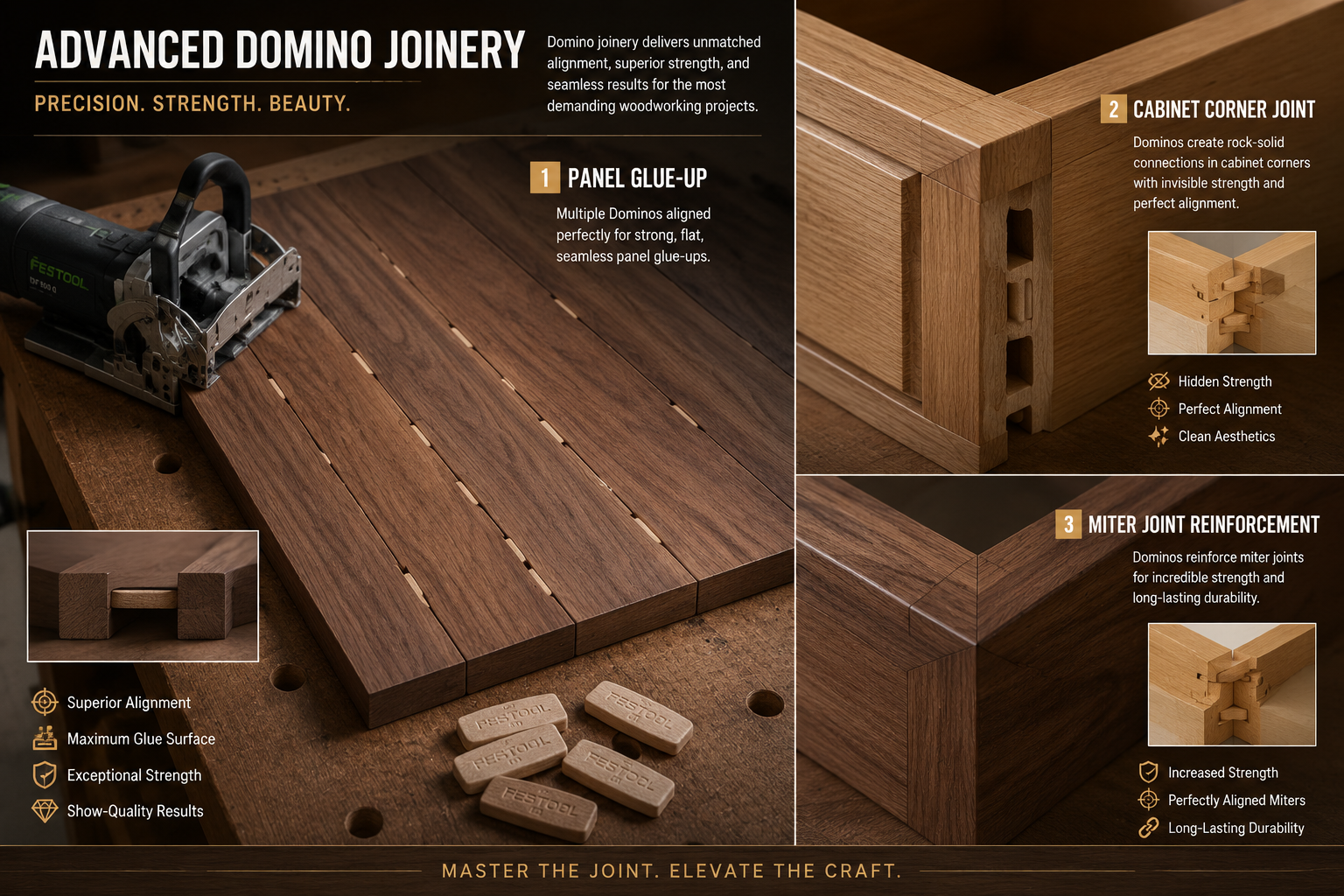 Beyond basic butt joints, the Domino joiner truly shines in its ability to tackle more complex joinery with ease. Advanced techniques leverage the tool’s precision and a few clever tricks to create invisible, powerful connections for a wide range of furniture and cabinet projects.
Frame and Panel Construction
For classic frame and panel doors or cabinet sides, the Domino streamlines the process of connecting rails and stiles.
- Rail and Stile Joints: Instead of traditional cope and stick, the Domino creates strong, fast joints. Use a medium or wide mortise setting on one side to allow for slight expansion/contraction of the panel.
- Floating Panels: Create grooves for floating panels using a router table or specialized slot cutter. The Domino tenons reinforce the frame without interfering with the panel’s movement.
Miter Joints with Domino Reinforcement
Miter joints, while aesthetically pleasing, can be fragile. Reinforcing them with Dominos significantly increases their strength and resistance to racking.
- Cut Miters: Prepare your 45-degree cuts on both workpieces.
- Set Domino Angle: Adjust the Domino fence to 45 degrees.
- Cut Mortises: Reference the Domino off the outside edge of the miter. Use narrower tenons (e.g., 5mm or 6mm) for smaller stock, or larger for thicker material. Ensure the depth settings don’t blow out the opposing face.
- Assembly: Glue and insert tenons. The Dominos provide both strength and exceptional alignment during clamping. This technique is invaluable for sturdy picture frames or cabinet trim.
Carcase Construction and Cabinetry
The Domino is a powerhouse for building cabinet carcasses and drawers.
- Butt Joints for Boxes: For simple box construction, butt joints reinforced with Dominos are quick and exceptionally strong.
- Divider and Shelf Supports: Create mortises for fixed shelves or vertical dividers, ensuring robust support. For adjustable shelves, consider a different system, but fixed internal structures benefit greatly from Domino joints. Explore more on mastering shelf woodworking.
- Face Frame Assembly: Dominoes excel at joining face frame components, creating tight, invisible joints without pocket screws or biscuit joiners. The narrow setting is perfect for maintaining flush surfaces.
- Drawer Construction: While dovetails are traditional for drawers, Dominos offer a fast and strong alternative, especially for utility drawers or those where dovetails aren’t desired. For more on dovetails, refer to Mastering Dovetail Drawers for Cabinets.
Creating Offset Joints and Compound Angles
With additional accessories, the Domino’s capabilities expand further:
- Offset Mortises: Use the adjustable fence or specialized trim stops to create offset mortises, useful for joinery involving varying material thicknesses or specific aesthetic requirements.
- Compound Miters: For complex projects like octagonal boxes or specialized moldings, the Domino’s adjustable fence (up to 90 degrees) combined with angle calculations allows for precise mortises on compound mitered pieces.
Mastering these techniques transforms the Domino from a simple joinery tool into a versatile workhorse, enhancing the quality and efficiency of furniture and cabinet production.
Maintenance and Troubleshooting for Consistent Performance
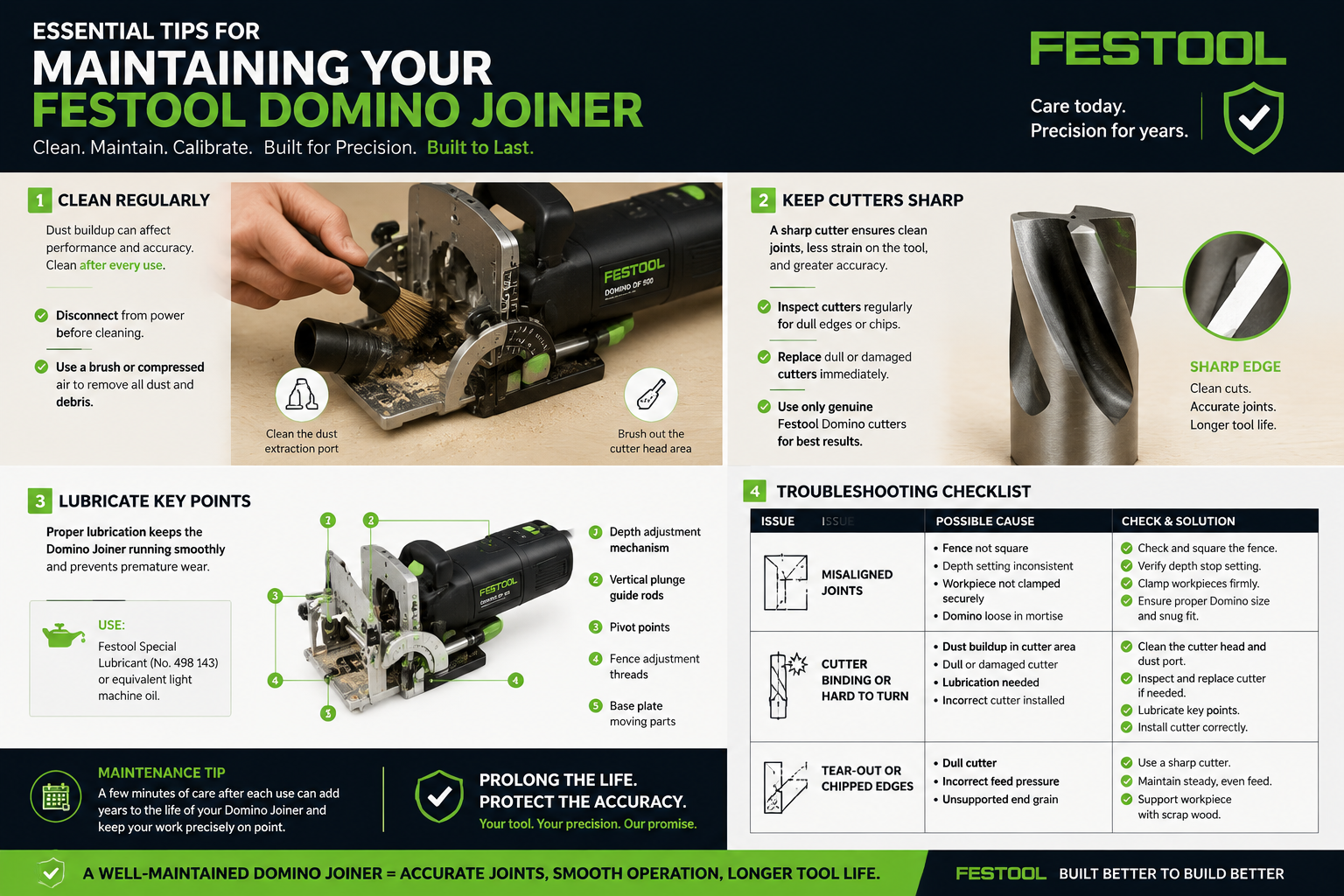 Consistent precision from your Festool Domino joiner hinges on proper maintenance and the ability to troubleshoot common issues. Neglecting your tool can lead to inaccurate joints, reduced efficiency, and premature wear. In 2026, investing time in care will ensure your Domino remains a reliable partner for Mastering the Domino Joiner: Precision Joinery for Furniture and Cabinet Making.
Essential Maintenance Practices
Regular maintenance ensures optimal performance and extends the lifespan of your Domino joiner.
- Cleaning: After each use, thoroughly clean the tool.
- Dust Extraction Port: Ensure it’s clear of sawdust and debris. A clogged port reduces dust collection efficiency and can affect cutter performance.
- Cutter Area: Remove the cutter and clean out any trapped sawdust around the spindle and oscillating mechanism. A small brush or compressed air can be helpful.
- Fence and Stops: Wipe down the fence, depth stops, and reference pins to prevent sawdust buildup from affecting accuracy.
- Cutter Care: The sharpness of your Domino cutter directly impacts joint quality.
- Inspect Regularly: Check cutters for dullness or damage. A dull cutter will produce fuzzy, burnt, or inaccurate mortises.
- Replace or Sharpen: Replace dull cutters promptly. While some cutters can be professionally sharpened, it’s often more practical to replace them given their cost.
- Proper Storage: Store cutters in their original cases or a dedicated container to protect their sharp edges.
- Lubrication: Refer to your Festool manual for specific lubrication points. Generally, the oscillating spindle mechanism may require occasional light lubrication (e.g., dry lubricant or specific Festool grease) to ensure smooth operation. Avoid over-lubricating, which can attract sawdust.
- Cord and Plug Inspection: Regularly check the power cord for cuts, fraying, or damage, and the plug for bent prongs. Replace damaged cords immediately for safety.
Common Troubleshooting Scenarios
Even with meticulous care, issues can arise. Here are solutions to common Domino joiner problems:
| Problem | Possible Cause | Solution |
|---|---|---|
| Fuzzy or Burnt Mortises | Dull cutter, incorrect feed rate | Replace or sharpen cutter. Reduce feed rate, especially in hardwoods. Ensure dust extraction is working efficiently. |
| Mortises not Square/Parallel | Misaligned fence, debris on reference surface | Check fence for squareness to the baseplate and adjust if necessary. Clean workpiece edges and Domino reference surfaces. Ensure workpiece is clamped securely. |
| Tenons too Loose/Tight | Incorrect mortise width setting, inaccurate cutter | Adjust the mortise width setting (narrow, medium, wide). Ensure the correct size cutter for your tenons is installed and that the cutter is not worn down excessively. Calibrate depth stop if needed. |
| Dust Collection Ineffective | Clogged port, loose hose, damaged bag | Clear the dust extraction port and internal channels. Check hose connection for tightness. Inspect dust bag (if used) for damage or fullness; empty or replace. |
| Tool Vibrates Excessively | Loose cutter, worn bearings, unbalanced cutter | Ensure cutter is securely tightened. Check for play in the spindle; if excessive, professional service may be needed. Inspect cutter for damage that could cause imbalance. |
| Inconsistent Mortise Depth | Loose depth stop, debris in depth mechanism | Securely tighten the depth stop knob. Clean any sawdust or debris from the depth stop mechanism. Calibrate depth setting against a known reference. |
For more detailed troubleshooting or repairs, always consult the Festool user manual or an authorized Festool service center. Investing in proper care and understanding these common issues will keep your Domino joiner performing at its best for years to come.
Bringing Precision to Life: Projects and Beyond
The capabilities of the Festool Domino joiner extend far beyond simple joints, empowering woodworkers to construct diverse and complex projects with remarkable precision and structural integrity. Mastering the Domino Joiner: Precision Joinery for Furniture and Cabinet Making opens doors to a new level of craftsmanship, allowing for both the strength required for daily use and the clean aesthetics demanded by discerning clients.
Furniture Making Excellence
For furniture builders, the Domino joiner is an indispensable tool that simplifies many challenging aspects of construction:
- Table and Chair Construction: Building sturdy tables and chairs often relies on robust mortise and tenon joints. The Domino streamlines the creation of these critical connections for legs, aprons, and stretchers, ensuring stability and longevity.
- Wardrobes and Dressers: For large casework, such as wardrobes and dressers, Dominos provide strong, invisible joints for carcass assembly, drawer slides, and interior partitions. This leads to furniture that not only looks professional but also stands the test of time against daily wear and tear.
- Custom Desks and Office Furniture: Creating ergonomic workshop furniture or bespoke office desks benefits immensely from the Domino’s precision. Stable surfaces and strong leg assemblies are crucial. Consider combining Domino techniques with designs for DIY Home Office Ergonomics to build integrated, functional pieces.
- Beds and Headboards: From headboards to bed frames, the Domino ensures robust connections capable of handling significant loads and repeated stress, providing a secure and quiet sleeping environment. For innovative designs, explore ideas for DIY Wooden Headboards.
Cabinet Making Mastery
In cabinet making, the Domino’s speed and accuracy directly translate to higher quality and faster production times:
- Kitchen and Bathroom Cabinets: Whether for face frames, cabinet boxes, or attaching decorative panels, the Domino delivers strong, tight joints. This is crucial for cabinets that must withstand moisture, heavy use, and often, significant weight from stored items.
- Built-in Units: For custom built-in shelving, entertainment centers, or wall units, the Domino simplifies the process of joining large panels and creating flush surfaces, essential for a seamless integrated look.
- Specialty Cabinets: From wine racks to spice racks, precision joinery ensures these specialized units are both functional and aesthetically pleasing. The Domino helps achieve tight-fitting components, which is vital for both stability and presentation. For inspiration, see Spice Racks That Sell.
Exploring Aesthetic and Structural Advantages
The key advantage of the Domino system is its ability to create invisible joints that are incredibly strong. This allows woodworkers to prioritize clean lines and aesthetic beauty without compromising structural integrity.
- Seamless Appearances: By hiding the joinery, the focus remains on the wood grain, the finish, and the overall design, creating a more refined and professional product. This aligns well with principles of Warm Minimalism in Woodworking.
- Durability and Longevity: The large surface area for glue adhesion, combined with the stable tenons, produces joints that are highly resistant to racking and shear forces, ensuring that furniture and cabinets endure for generations.
- Design Freedom: With the confidence that the joints will be strong and precise, woodworkers have more freedom to experiment with innovative designs and complex geometries, pushing the boundaries of traditional woodworking.
By integrating the Domino joiner into their workflow, woodworkers can elevate their craft, producing pieces that are not only structurally superior but also visually stunning, embodying the true spirit of precision joinery.
Conclusion
The Festool Domino joiner stands as a testament to innovation in woodworking, offering an unparalleled blend of speed, precision, and strength for furniture and cabinet making. From basic butt joints to complex miter reinforcement and robust carcase construction, Mastering the Domino Joiner: Precision Joinery for Furniture and Cabinet Making empowers artisans to achieve professional-grade results with remarkable efficiency.
By understanding its fundamental operations, selecting the appropriate tenons, and exploring advanced techniques, woodworkers can unlock the full potential of this exceptional tool. Moreover, committing to regular maintenance and proactive troubleshooting ensures that your Domino remains a reliable workhorse in your shop for years to come. In 2026, the demand for high-quality, durable, and aesthetically pleasing woodworking remains strong, and the Domino joiner provides a definitive pathway to meeting that demand.
Actionable Next Steps:
- Invest in Training: If new to the Domino, consider online tutorials or a local workshop to fully grasp its capabilities.
- Practice: Start with simple projects like boxes or small frames to build confidence and muscle memory before tackling complex furniture pieces.
- Expand Your Tenon Collection: Experiment with various tenon sizes and types (Beech vs. Sipo) to understand their specific applications and strengths.
- Explore Accessories: Look into specialized stops and jigs that can further enhance the Domino’s versatility for your specific projects.
- Prioritize Maintenance: Implement a routine cleaning and cutter care schedule to ensure consistent accuracy and extend the life of your tool.
By embracing these steps, woodworkers can truly master the Domino system, transforming their joinery processes and elevating the quality of every furniture and cabinet piece they create.
SEO Meta Title: Mastering Domino Joiner: Precision for Furniture & Cabinets SEO Meta Description: Unlock precision joinery in 2026 with the Festool Domino. Learn operations, tenon selection, advanced techniques, and maintenance for furniture and cabinet making.