

The average person spends over 70,000 hours in their living room over a lifetime, making it arguably the most critical space for comfort and functionality in a home. Choosing the right coffee table is not merely a decorative decision; it profoundly impacts traffic flow, safety, and the overall aesthetic of this central gathering area. When considering Round Coffee Tables vs. Square: How to Choose the Right Shape and Size for Your Living Room, the choice extends beyond personal preference to practical considerations of space, lifestyle, and design harmony.
Key Takeaways
- Consider Traffic Flow and Safety: Round tables promote smoother movement and are safer for homes with children, while square tables define zones and work well with structured layouts.
- Match Table to Sofa Layout: Square tables complement L-shaped or large sectionals, providing ample surface area. Round tables often pair best with symmetrical sofa and armchair arrangements or smaller spaces.
- Assess Room Dimensions: Smaller rooms benefit from round tables to avoid a cramped feel, whereas larger rooms can accommodate either, with square tables offering a substantial anchor.
- Evaluate Your Lifestyle: Busy households with kids and pets benefit from the forgiving edges of round tables. More formal or adult-centric spaces might prefer the defined lines of a square table.
- Prioritize Functionality: Think about how you’ll use the table, for drinks, storage, games, or decor, to inform your choice of size and features like shelving or drawers.
Navigating Traffic Flow and Prioritizing Safety in Your Living Room
The shape of your coffee table significantly dictates how people move through your living room. An often-overlooked aspect, traffic flow, is crucial for both comfort and accident prevention. When comparing Round Coffee Tables vs. Square: How to Choose the Right Shape and Size for Your Living Room, safety, especially in homes with children or pets, frequently tips the scales.
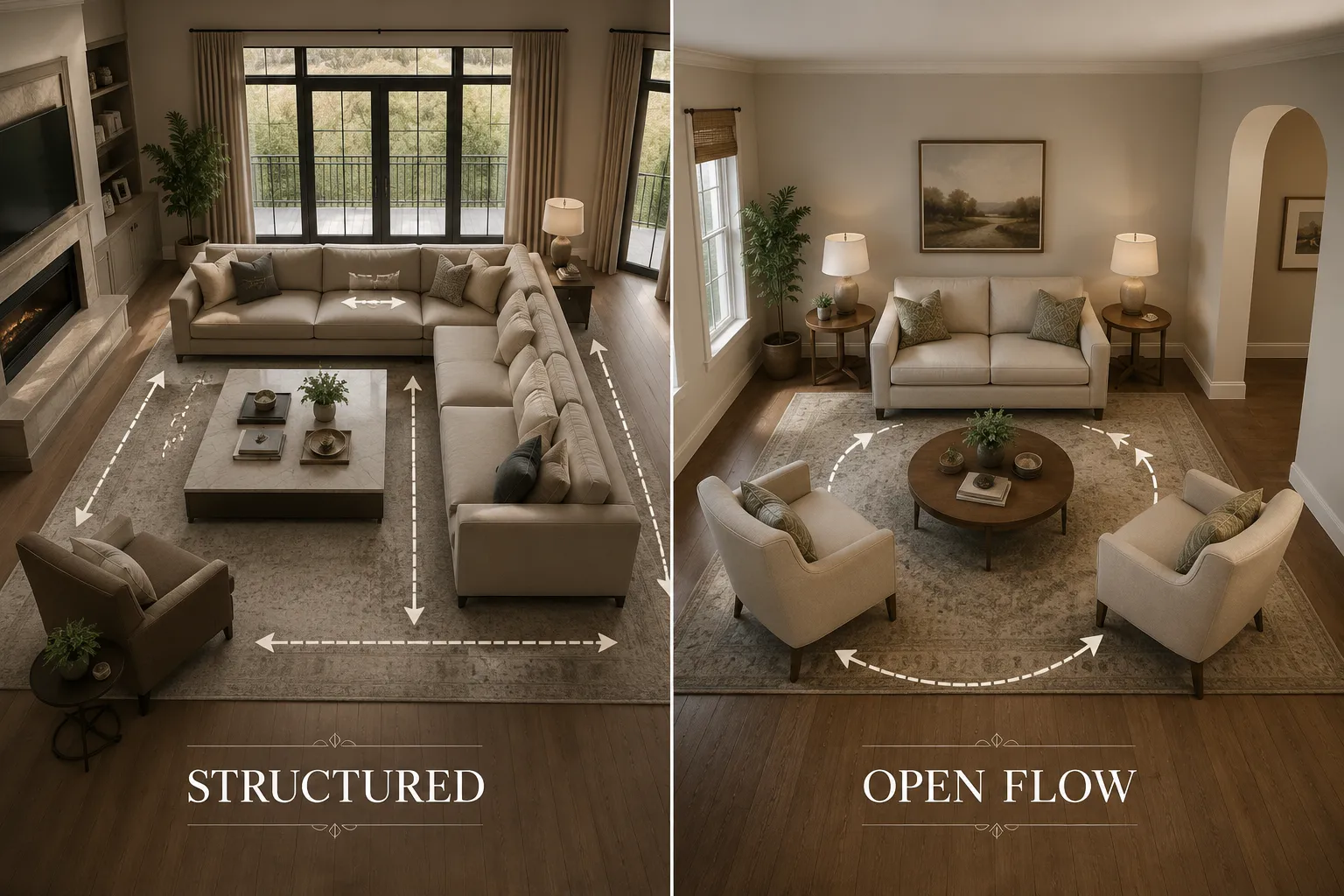
Round coffee tables, with their absence of sharp corners, inherently offer a softer, more forgiving presence in a room. This is a significant advantage in households with young children who are learning to walk or are prone to active play. The curved edges minimize the risk of bumps, scrapes, and more serious injuries that can occur when colliding with a sharp corner. This smooth, continuous edge also contributes to a more fluid traffic pattern around the table. People can navigate around it more easily without having to consciously avoid corners, leading to a more natural and unobstructed flow of movement. This can be particularly beneficial in smaller living rooms or spaces with high foot traffic.

Square coffee tables, on the other hand, feature defined corners and straight lines. While these provide a distinct, architectural look, they can pose a safety hazard, especially for toddlers. In terms of traffic flow, square tables tend to create more defined pathways. Guests might consciously walk around the table, rather than alongside it, as the corners act as subtle barriers. This isn’t necessarily a drawback; in some structured living room layouts, this can help delineate zones and maintain order. However, it’s a factor to consider if your living room is already tight on space or if ease of movement is a top priority.
For families prioritizing child safety without sacrificing style, there are hybrid options or design considerations for square tables. Edge protectors can be temporarily applied to sharp corners, or you might opt for square tables with rounded or beveled edges, softening the impact zone. Material also plays a role; a square wooden table, for example, might be less forgiving than one with a softer, upholstered top.
Consider the practical implications of daily use. A round table’s continuous surface can feel more communal, encouraging people to gather around it. A square table often presents four distinct sides, which might feel more individualistic in how people interact with it.
“The coffee table isn’t just furniture; it’s a navigational beacon. A round table smooths the journey, while a square table grounds the experience, each shaping how we move and interact within our most intimate spaces.”
Matching Your Coffee Table to Sofa Layout and Room Dimensions
The synergy between your coffee table and your sofa is paramount for a cohesive and functional living room. The shape and size of your coffee table should complement not only your sofa’s configuration but also the overall dimensions and layout of the room. This thoughtful pairing is key when evaluating Round Coffee Tables vs. Square: How to Choose the Right Shape and Size for Your Living Room.
Sofa Layout Considerations
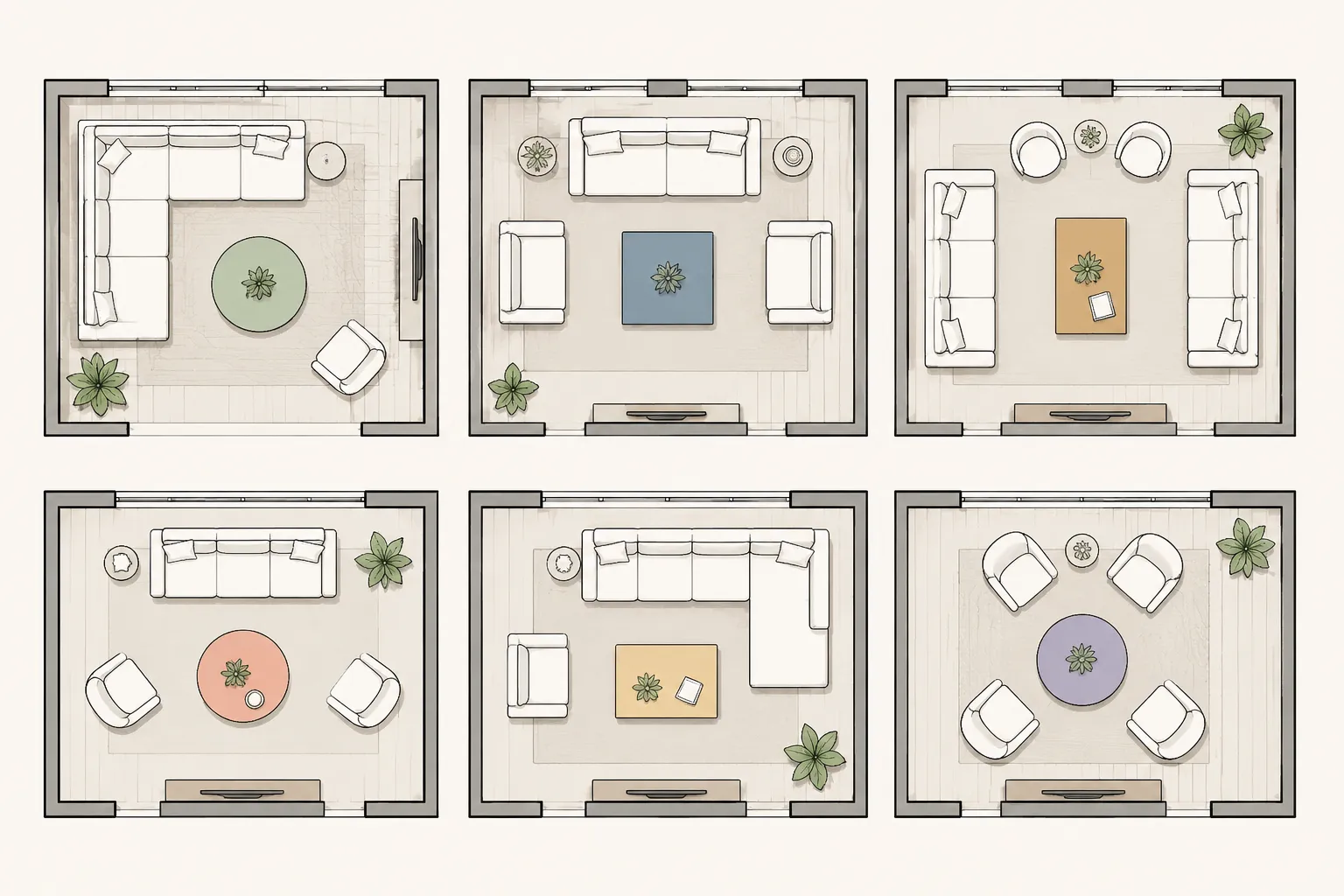
- L-Shaped Sectionals: For large L-shaped sectionals, a square coffee table is often the most suitable choice. Its robust shape provides accessible surface area for all seated guests along both arms of the sectional. A round table might feel dwarfed or leave guests at the far end of the sectional without a convenient place for drinks or snacks. When building custom furniture like a sectional, consider how your coffee table will integrate with the overall design. Check out our guide on Beginner’s Guide to Essential Woodworking Joints: When to Use Which for tips on constructing sturdy pieces.
- Symmetrical Sofas with Armchairs: If you have a traditional sofa paired with two armchairs facing it, a round coffee table often works beautifully. It creates a central, communal focal point that softens the otherwise linear arrangement of the seating. The circular flow encourages conversation and allows equal access from all seating positions.
- Two Sofas Facing Each Other: Similar to the symmetrical sofa and armchair setup, two sofas facing each other often benefit from a round or oval coffee table. The round shape helps to bridge the gap between the two seating elements, fostering a sense of connection and conversational ease.
- Chaise Sectionals: For sectionals with a single chaise lounge, both round and square tables can work. A square table can provide a grounded anchor at the corner where the chaise meets the main sofa. A round table can soften the angularity of the sectional, offering a pleasant contrast.
Room Dimensions and Scale
- Smaller Living Rooms: In compact spaces, round coffee tables are often preferred. Their curved edges visually occupy less space and prevent the room from feeling too “boxy” or cluttered. The lack of sharp corners also allows for easier movement in tight quarters. A table that is too large or too square can overwhelm a small room. For DIY enthusiasts looking to save space with other furniture, consider options like DIY Smart Workshop Storage Solutions: Maximizing Space and.
- Larger Living Rooms: Expansive living rooms can comfortably accommodate either round or square coffee tables. A large square table can serve as a strong central anchor, defining the seating area within a grander space. A generously sized round table can also command attention and create a sophisticated focal point. In large open-plan spaces, where you might have multiple seating zones, varying coffee table shapes can add visual interest without conflicting.
- Traffic Flow and Walkways: Regardless of room size, aim for at least 18 inches of clearance between the coffee table and the surrounding seating. This ensures comfortable legroom and easy access. In high-traffic areas, increasing this to 24-30 inches can prevent bottlenecks. A round table, by virtue of its curved path, might visually enhance this sense of openness.
When selecting materials, keep in mind how different finishes affect perception. A glass top, for instance, can make either shape feel lighter and less imposing, while a solid wood top, perhaps from a live edge slab selection, will have a more substantial presence.
Optimizing for Functionality and Aesthetic Appeal
Beyond safety and spatial dynamics, the ultimate choice between round and square coffee tables boils down to the specific functionality you require and the aesthetic you wish to achieve. This section delves into how different table shapes cater to various needs and design styles, further guiding your decision for Round Coffee Tables vs. Square: How to Choose the Right Shape and Size for Your Living Room.
Functionality: What Will You Do With It?
Your lifestyle should heavily influence your coffee table selection.
- Entertainment Hub: If your coffee table frequently hosts board games, puzzles, or multiple serving dishes for entertaining, a larger square or rectangular table offers more expansive and stable surface area. The defined edges of a square table can make it easier to organize items and provide individual spaces for guests.
- Drinks and Remote Control: For a simpler function, holding drinks, remotes, and perhaps a book, both round and square tables are equally capable. However, the exact placement of items might feel more natural on one over the other. Round tables might encourage a more casual, shared placement of items.
- Storage Needs: Many coffee tables, regardless of shape, come with built-in storage, such as drawers or shelves. If storage is a priority, consider how the chosen shape integrates these features. Square tables often have more straightforward designs for integrated drawers beneath the top. For custom storage solutions, explore ideas from Building Modular Wood Storage Systems for Small Workshops: Maximizing which can inspire smaller-scale applications for furniture.
- Displaying Decor: If you plan to use your coffee table primarily for displaying decorative items, books, or flowers, consider how the table’s shape frames these elements. A round table can create a soft, organic display, while a square table offers a more structured, gallery-like presentation.
Aesthetic Appeal and Design Styles
The shape of your coffee table can dramatically impact the overall mood and style of your living room.
- Modern and Contemporary: Both round and square tables fit well within modern and contemporary aesthetics. Square tables with clean lines, minimalist designs, and materials like glass, metal, or concrete often echo the structured simplicity of these styles. Round tables, particularly those with slim bases or unique materials, can introduce a softer, sculptural element.
- Traditional and Classic: In traditional settings, square or rectangular tables with ornate details, carved legs, or rich wood finishes are common. However, a classic round pedestal table can also evoke a timeless elegance, particularly in a formal sitting area. For those interested in woodworking, techniques like those found in Advanced Wood Carving Techniques for Decorative Furniture Accents can add bespoke detail to traditional pieces.
- Bohemian and Eclectic: Round tables, especially those made from natural materials like rattan, woven textures, or live edge wood, often align well with bohemian or eclectic interiors. Their organic shape contributes to a relaxed, free-flowing vibe.
- Industrial: Square or rectangular tables crafted from distressed wood, metal, and reclaimed materials are staples of industrial design, offering a raw, functional aesthetic.
Scale and Proportion
Finally, always consider the scale and proportion of the coffee table relative to your other furniture. A table that is too large or too small for its surroundings will feel off-balance.
- Height: A general rule of thumb is that the coffee table should be roughly the same height as your sofa cushions, or no more than 1-2 inches lower or higher.
- Length/Diameter: The length of a rectangular or square coffee table should be approximately two-thirds the length of your sofa. For round tables, ensure its diameter allows for the recommended 18-inch clearance from surrounding seating while still providing ample surface area. For more detailed insights into dimensions for various furniture pieces, you might find our guide on Mastering the Router Table: Beyond Basic Edges for Precision Joinery helpful for custom builds.
Ultimately, the best coffee table for your living room is one that not only looks good but also serves your practical needs, fits harmoniously with your space, and contributes positively to your daily life in 2026.
Conclusion
Choosing between round and square coffee tables is a nuanced decision that balances aesthetics with practical considerations like traffic flow, safety, and compatibility with your existing furniture. For homes with active children or limited space, round tables offer a gentle, forgiving presence and promote smoother movement. Their softer lines can also contribute to a more relaxed and communal atmosphere. Conversely, square tables provide a strong, defined anchor for larger sectionals or more structured living room layouts, offering ample surface area for entertaining or display.
Before making your final selection, meticulously measure your living room and visualize how each shape will integrate with your sofa and other furniture. Consider your daily habits: do you frequently host game nights, or is your coffee table primarily a spot for remotes and a decorative accent? By carefully evaluating these factors against the unique characteristics of both round and square designs, you can confidently choose a coffee table that not only enhances the beauty of your living room but also significantly improves its functionality and comfort in 2026.
SEO Meta Title: Round vs. Square Coffee Tables: Choose Right Size & Shape SEO Meta Description: Decide between round and square coffee tables for your living room. Learn how to pick the best shape and size for traffic flow, safety, and style in 2026.