

The average family hosts over five significant outdoor gatherings annually, yet many struggle with inadequate or cumbersome seating arrangements. In 2026, the demand for versatile outdoor furniture that adapts to varying group sizes and storage constraints is higher than ever. This guide explores innovative picnic table plans for family gatherings, focusing specifically on modular and collapsible designs that are not only practical but also accessible for beginner woodworkers using power tools. The emphasis here is on sturdy leg joinery and portable setups, ensuring durability and ease of storage in small workshops.
Key Takeaways
- Modular and collapsible picnic tables offer unparalleled versatility for family gatherings of any size.
- Beginner woodworkers can successfully tackle these projects using common power tools and straightforward joinery techniques.
- Sturdy leg joinery, often involving simple mortise and tenon or robust bolted connections, is crucial for stability and longevity.
- Portable designs prioritize ease of assembly, disassembly, and compact storage, ideal for small workshops or limited outdoor spaces.
- Careful material selection and appropriate finishes ensure durability against outdoor elements and frequent use.
The Versatility of Modular and Collapsible Picnic Table Designs
The appeal of a picnic table extends beyond its primary function; it becomes a focal point for shared meals, celebrations, and outdoor leisure. However, traditional, fixed picnic tables often present challenges with storage, transportation, and adaptability. This is where “Picnic Table Plans for Family Gatherings: Modular and Collapsible Designs” truly shines. Modular designs allow for expansion or reconfiguration, meaning a small table for a casual dinner can transform into a grand banquet setup for a holiday gathering. Collapsible designs, on the other hand, address the perennial problem of space, enabling tables to be folded down or disassembled for compact storage when not in use.
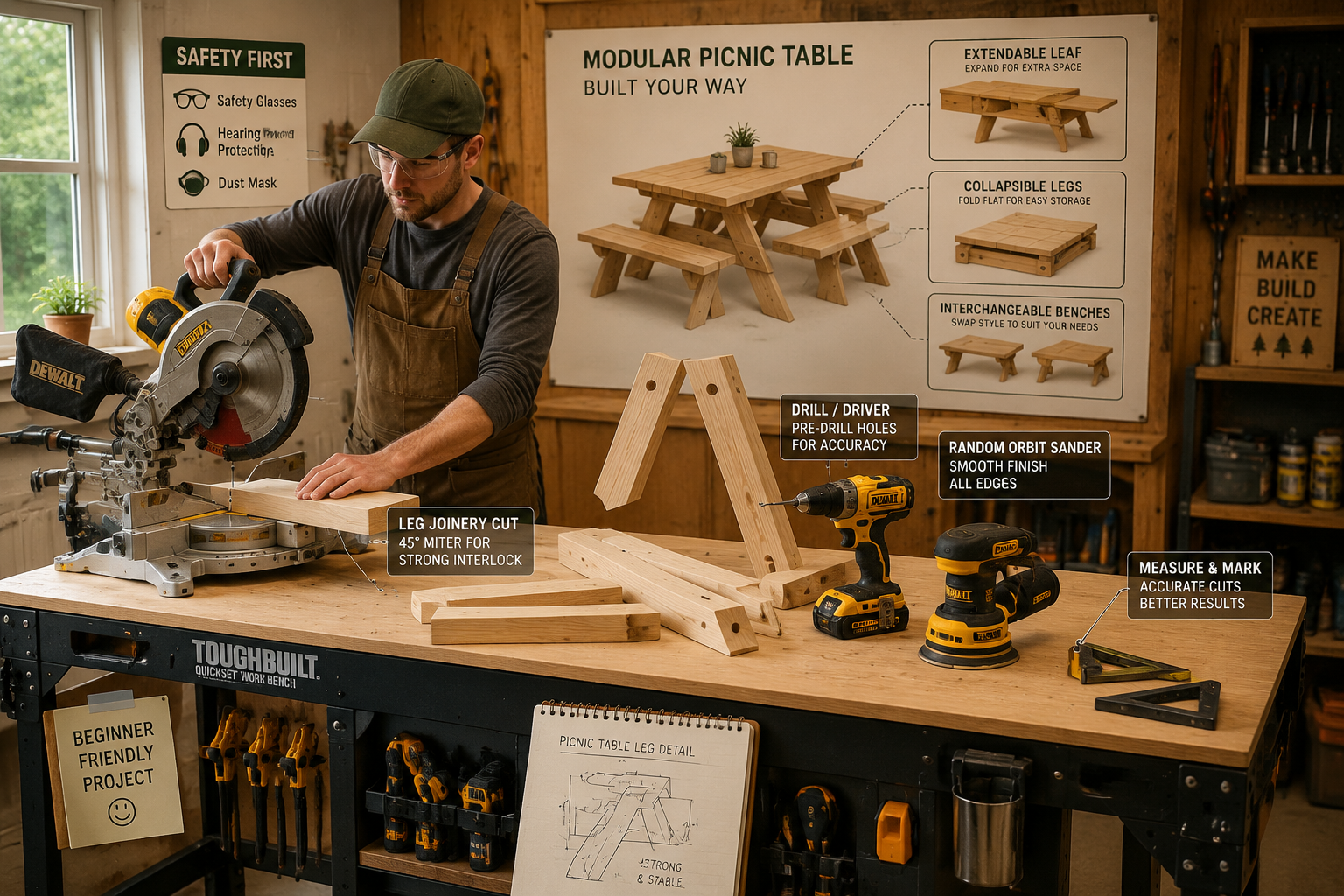
For the aspiring woodworker, these projects offer an excellent opportunity to hone skills with power tools. Building a portable workbench, for example, can significantly enhance the efficiency of such projects, providing a stable platform for cutting and assembly. Focus on designs that incorporate straightforward power tool techniques, such as repetitive cuts with a miter saw, precise drilling, and controlled sanding. This approach makes the project achievable even for those with limited experience.
Why Choose Modular and Collapsible?
- Adaptability: Easily change the table’s length or configuration to suit different group sizes. Add extension leaves for larger crowds or remove sections for intimate gatherings.
- Space-Saving: Collapsible legs or detachable tops allow for compact storage in garages, sheds, or smaller workshops, a significant advantage over bulky, fixed tables.
- Portability: Designs often feature lighter components or easy-to-handle sections, making transportation to different outdoor locations simpler.
- Customization: The modular nature means you can customize materials, finishes, and even add features like integrated coolers or umbrella stands.
- Durability: Despite their flexible nature, these designs can be incredibly robust, especially when built with strong joinery and quality materials.
When planning, consider the types of family gatherings you anticipate. Do you need a picnic table that regularly expands from four seats to twelve? Or is a sturdy, yet foldable, six-seater more appropriate for occasional use? Understanding these needs will guide your selection of “Picnic Table Plans for Family Gatherings: Modular and Collapsible Designs.” For those interested in expanding their woodworking repertoire, consider exploring modular furniture design for woodworkers for broader applications.
Essential Design Considerations and Beginner-Friendly Techniques
Creating effective “Picnic Table Plans for Family Gatherings: Modular and Collapsible Designs” requires careful consideration of structural integrity, ease of assembly, and material suitability. For beginner woodworkers, simplifying joinery and construction steps while maintaining strength is paramount.
Robust Joinery for Stability
The foundation of any sturdy picnic table lies in its joinery, especially for the legs. For modular and collapsible designs, the connections must be strong enough to withstand significant weight and repeated setup/takedown, yet simple enough for DIY construction.
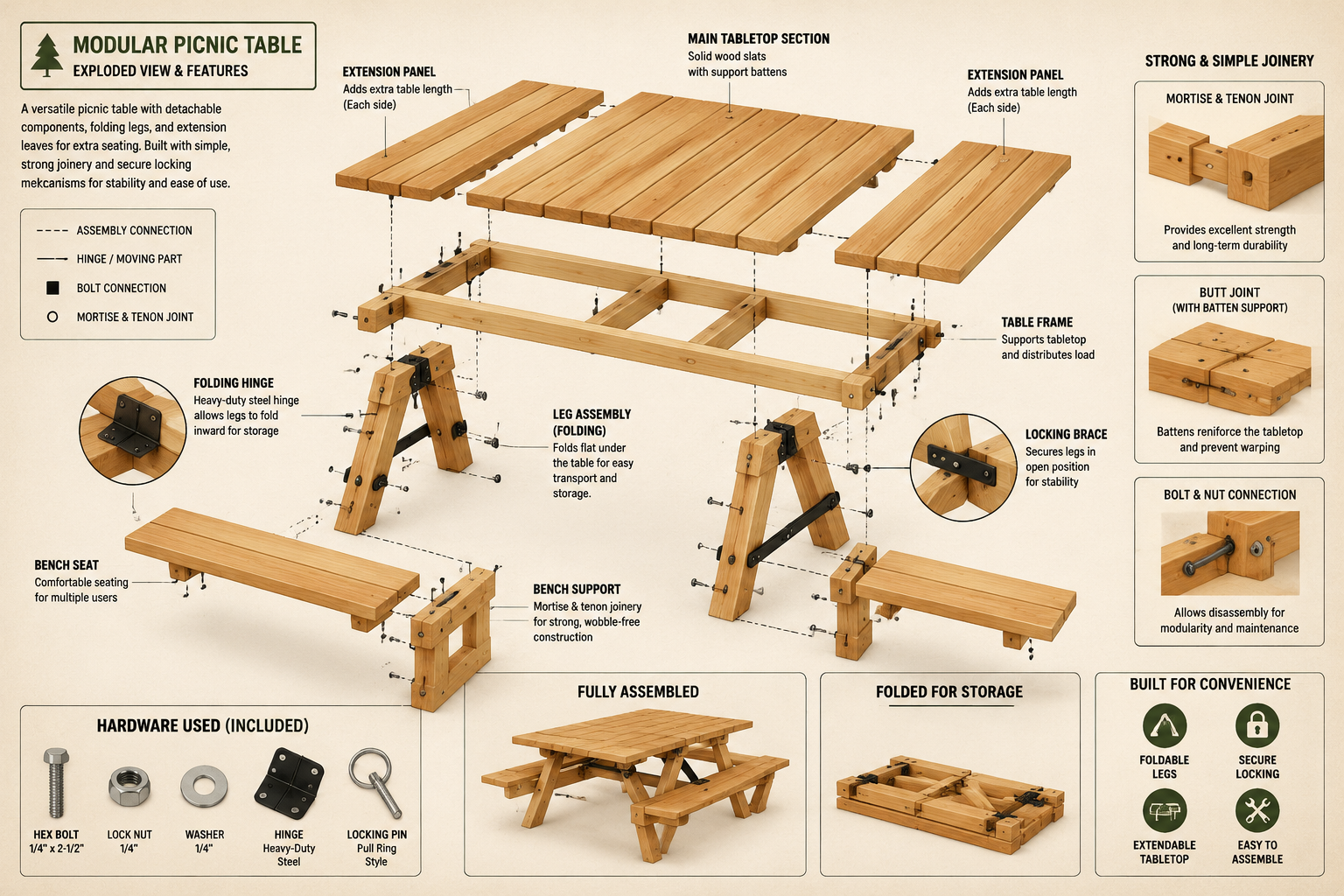
- Bolted Connections: This is a highly recommended method for beginners. Using carriage bolts, washers, and nuts through pre-drilled holes creates incredibly strong, reversible joints. This is ideal for attaching legs to tabletops or constructing a sturdy A-frame leg assembly that can be detached.
- Mortise and Tenon (Simplified): While traditional mortise and tenon joints can be complex, simplified versions can be achieved with a drill press and chisel, or even a router. For collapsible designs, a “loose tenon” secured with bolts or pins can offer strength without the demanding precision of traditional joinery. These joints are excellent for creating durable leg frames.
- Reinforced Butt Joints: For components like bench seats or tabletop extensions, butt joints reinforced with wood glue and screws, or even external metal plates, can provide adequate strength. Pocket hole joinery is another excellent beginner-friendly option for strong, hidden connections.
Table 1: Common Joinery Techniques for Modular Picnic Tables
| Joinery Type | Description | Recommended Use | Beginner-Friendly Rating |
|---|---|---|---|
| Bolted Connections | Uses bolts, washers, and nuts for strong, detachable joints. | Leg-to-tabletop, frame assembly, securing collapsible elements. | Excellent |
| Simplified Mortise/Tenon | Basic dadoes or grooves fitted with tenons, often secured with bolts or pins. | Leg frame construction, connecting stretcher bars. | Good |
| Pocket Hole Joinery | Angled screw holes create strong, hidden joints. | Attaching tabletop planks, bench seats, or strengthening frame sections. | Excellent |
| Hinges & Latches | Essential hardware for folding mechanisms and securing modular sections. | Collapsible legs, folding tabletops, connecting extension leaves. | Excellent |
Material Selection
For outdoor furniture like picnic tables, material choice significantly impacts durability and lifespan.
- Wood Type: Pressure-treated pine is cost-effective and resistant to rot and insects, though it may require specific finishing. Cedar and redwood offer natural resistance to decay and are aesthetically pleasing, but come at a higher cost. Hardwoods like oak or cypress offer superior durability but are heavier and more challenging to work with.
- Hardware: Opt for galvanized, stainless steel, or exterior-grade hardware to prevent rust and corrosion, especially for bolts, screws, hinges, and latches.
- Finishes: A good exterior-grade stain or paint, along with a waterproof sealant, is essential to protect the wood from UV rays, moisture, and temperature fluctuations.
Consider how these projects can lead to other profitable woodworking ventures. Many of the skills developed here, such as working with durable designs and advanced joinery techniques, are transferable to projects like building picnic tables for outdoor gatherings more generally.
Building and Finishing Your Modular and Collapsible Picnic Table
The actual construction process for “Picnic Table Plans for Family Gatherings: Modular and Collapsible Designs” involves a series of logical steps, even for beginners. Precision in cutting and assembly is key, but with the right tools and approach, the process is rewarding.
Step-by-Step Construction Overview
- Measure and Cut All Components: Begin by accurately measuring and cutting all lumber pieces according to your chosen plans. A miter saw or circular saw with a guide will be invaluable here. Label each piece to avoid confusion during assembly.
- Pre-Drill Holes: For all bolted or screwed connections, pre-drilling pilot holes is crucial. This prevents wood splitting and ensures cleaner, stronger joints. Use a drill press for perfectly perpendicular holes when possible, especially for leg joinery.
- Assemble Leg Frames: Construct the primary leg assemblies first. For collapsible designs, this often involves creating A-frames or X-frames that pivot. Utilize robust bolted connections at pivot points and for fixed cross-bracing.
- Construct Tabletop and Bench Sections: Assemble the individual planks for the tabletop and bench seats. Pocket hole joinery is excellent here for hidden, strong connections. Ensure these sections are dimensioned to accommodate any modular extensions.
- Integrate Collapsible/Modular Mechanisms: Attach hinges for folding legs or incorporate locking mechanisms for extension leaves. Test these components frequently during assembly to ensure smooth operation. For examples of sophisticated mechanisms, look at designs for ultimate DIY end tables, which often feature adaptable elements.
- Sanding: Once the main structure is assembled, thoroughly sand all surfaces. Start with a coarser grit (e.g., 80-100) to remove imperfections, then move to finer grits (e.g., 150-220) for a smooth finish. This is particularly important for surfaces that will be in contact with people and food.
- Finishing: Apply your chosen exterior-grade finish. This typically involves a wood conditioner (optional, but recommended for even stain absorption), stain, and then several coats of a waterproof sealant or spar varnish. Allow adequate drying time between coats.
Tips for Success
- Work Safely: Always wear appropriate personal protective equipment (PPE), including safety glasses, hearing protection, and gloves. Familiarize yourself with all power tool safety guidelines.
- Use Jigs: Simple jigs can dramatically improve accuracy and repeatability, especially for repetitive cuts or drilling. Consider investing in or building a basic router table for consistent edge work or dado cuts.
- Test Fit: Before final fastening, dry-fit components to ensure everything aligns correctly. This helps catch errors early and avoids rework.
- Consider Portability: If the table will be moved frequently, design features like integrated handles or lighter section weights can be beneficial. For workshops, a mobile dust collection cart can significantly improve air quality and organization during these projects.
- Embrace Imperfections: As a beginner, minor imperfections are part of the learning process. Focus on strong, functional construction first, and precision will come with practice.
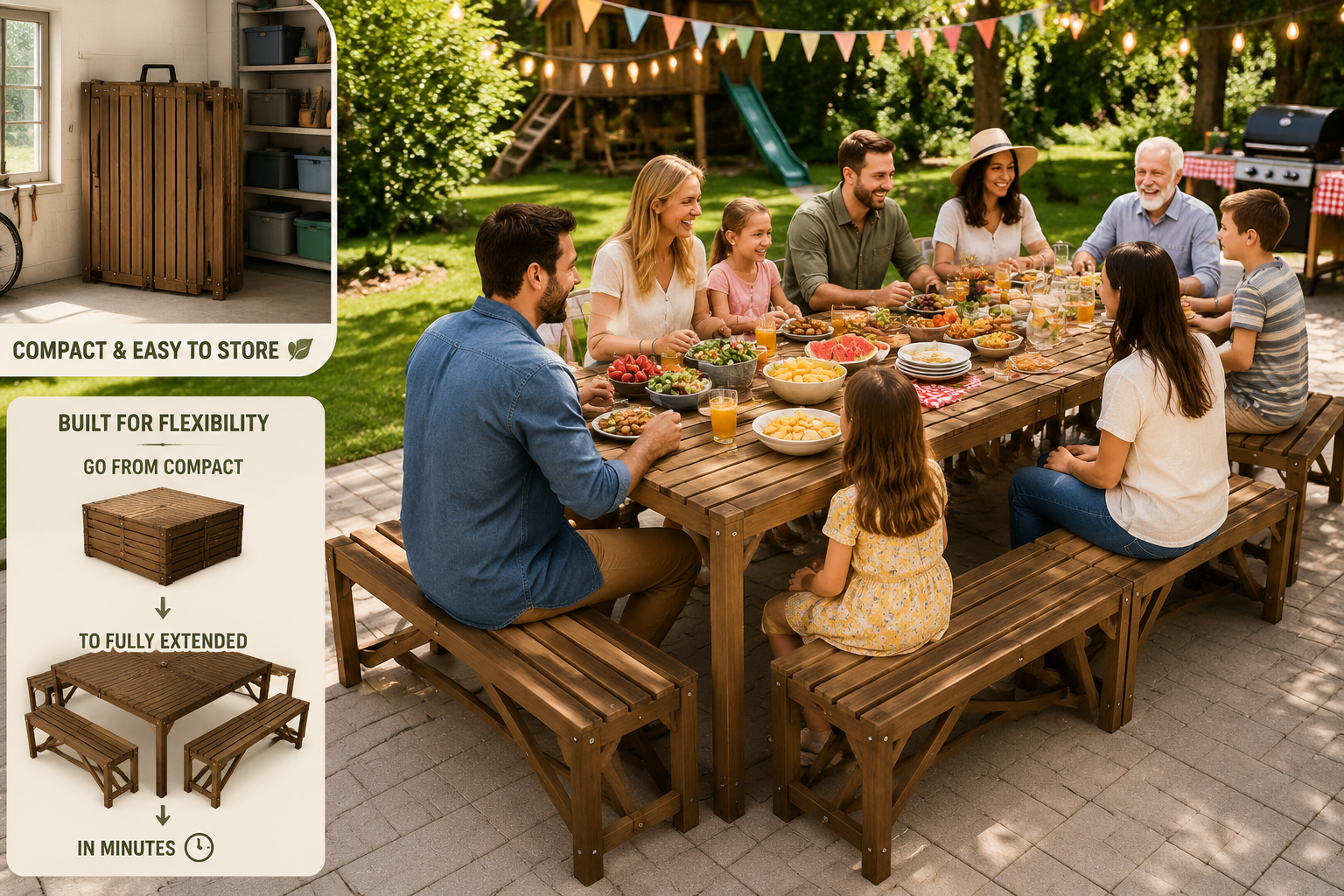
By following these guidelines, even novice woodworkers can successfully complete “Picnic Table Plans for Family Gatherings: Modular and Collapsible Designs” that are both durable and highly functional. The satisfaction of building a custom piece of furniture that serves your family for years is immense, and the skills acquired are invaluable for future projects.
Conclusion
Building a modular and collapsible picnic table is an exceptionally rewarding project for any woodworker, particularly for those looking to expand their skills with power tools. These designs offer unmatched versatility for family gatherings in 2026, adapting effortlessly from small intimate meals to large celebrations, while also addressing the practical challenges of storage and portability. By focusing on sturdy leg joinery—achieved through beginner-friendly techniques like bolted connections and simplified mortise and tenon—and selecting durable, weather-resistant materials, you can create a piece of furniture that is both functional and long-lasting.
The process, from cutting lumber to applying the final finish, reinforces fundamental woodworking principles and provides a tangible outcome that enhances outdoor living spaces. This endeavor not only produces a practical item but also builds confidence and expertise, paving the way for more complex projects. Whether you are a seasoned craftsman or just starting out, embracing “Picnic Table Plans for Family Gatherings: Modular and Collapsible Designs” will equip you with valuable skills and a versatile piece of furniture ready for countless memories.
Actionable Next Steps:
- Select Your Plan: Research and choose a modular or collapsible picnic table plan that aligns with your skill level, desired features, and available space.
- Gather Materials & Tools: Create a comprehensive list of lumber, hardware, and finishes. Ensure you have the necessary power tools, especially a miter saw, drill, and sander.
- Start Small: If new to woodworking, consider practicing basic joinery techniques on scrap wood before cutting your final pieces.
- Prioritize Safety: Always wear appropriate safety gear and follow tool manufacturer guidelines.
- Build and Enjoy: Take your time, focus on precision, and relish the process of bringing your custom picnic table to life for your family gatherings.
SEO Meta Title: Build Modular & Collapsible Picnic Tables for Family Gatherings SEO Meta Description: Explore durable, beginner-friendly picnic table plans for family gatherings in 2026. Discover modular and collapsible designs for easy storage and versatile use.