
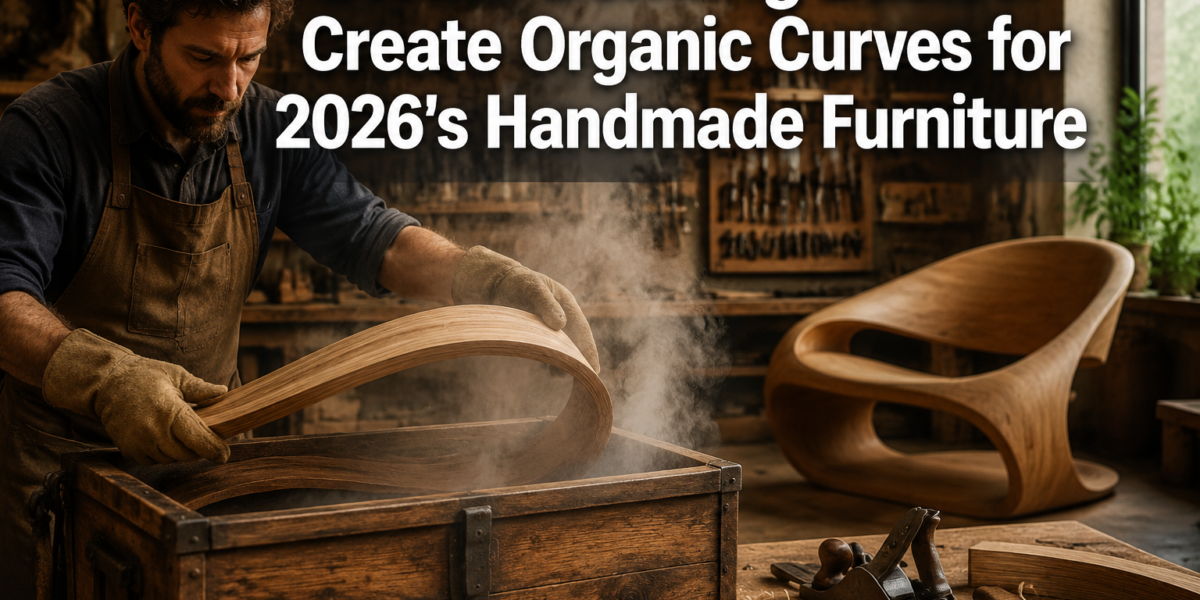
The resurgence of “green woodworking” techniques offers a powerful antidote to the angular monotony often found in mass-produced furniture. In 2026, woodworkers are increasingly embracing age-old methods to infuse their creations with unique, organic forms. Among these, steam bending stands out as a transformative skill, allowing artisans to sculpt wood into sweeping curves and intricate designs without the need for complex laminations or excessive waste. This comprehensive guide, Steam Bending Basics: Create Organic Curves for 2026’s Handmade Furniture, delves into the fundamental principles, essential equipment, and practical steps required to master this rewarding craft. We will explore how softening wood fibers with steam unlocks its inherent flexibility, paving the way for stunning live-edge accents and modular pieces that command attention and value.
Key Takeaways
- Steam bending is a traditional woodworking technique that uses heat and moisture to plasticize wood, allowing it to be bent into permanent curves.
- Selecting the right wood species and ensuring proper moisture content are critical for successful bending results.
- Building an effective steam box and bending forms can be achieved with relatively simple tools and materials for a home workshop setup.
- Safety precautions, including proper PPE and understanding steam hazards, are essential throughout the process.
- Steam-bent components offer unique design possibilities, enhancing the organic aesthetic and value of handmade furniture in 2026.
Understanding the Science Behind Steam Bending Basics: Create Organic Curves for 2026’s Handmade Furniture
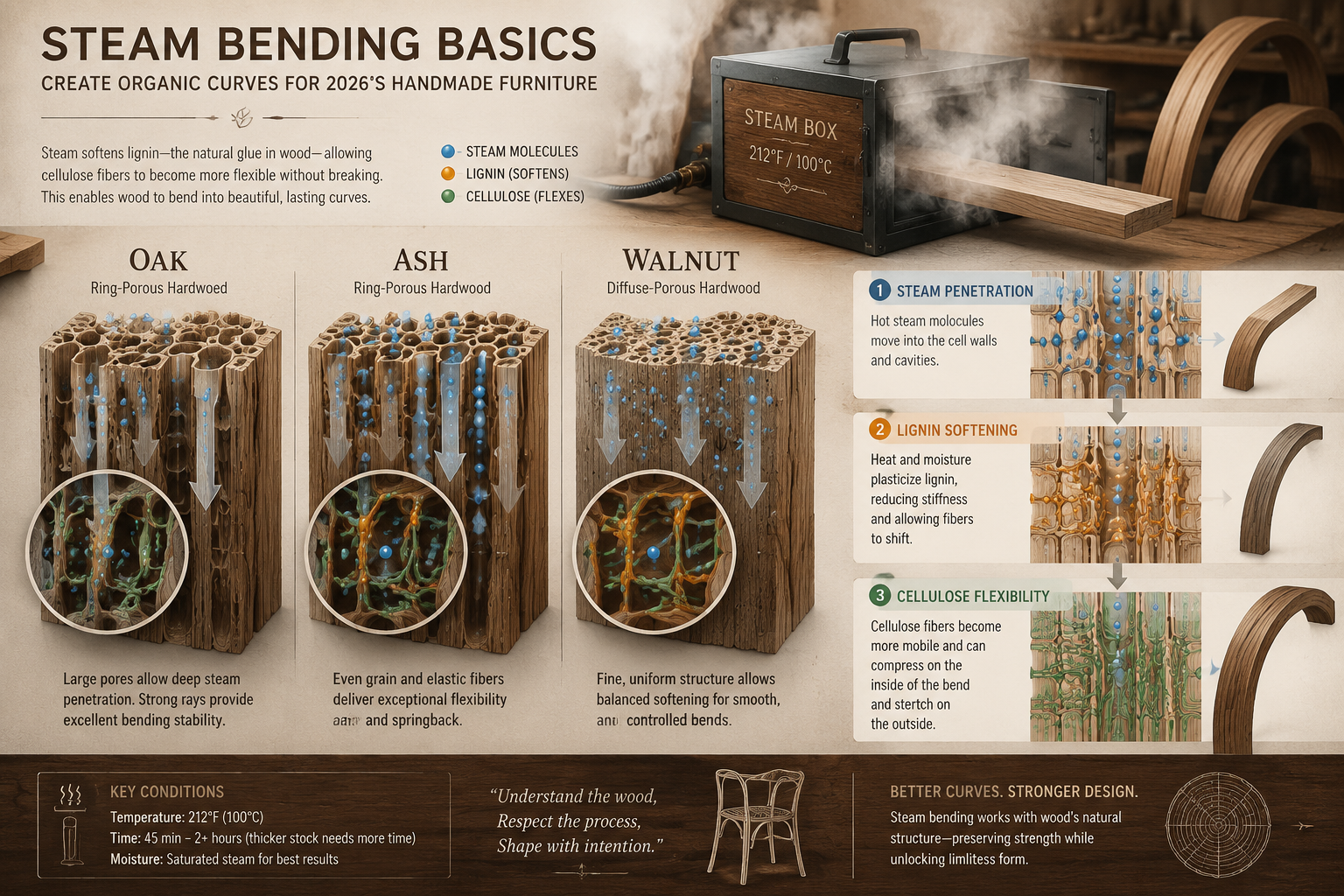
At its core, steam bending is a marvel of material science applied to natural resources. Wood, fundamentally, is composed of cellulose fibers bound together by lignin. Lignin acts as a natural glue, giving wood its rigidity. When exposed to heat and moisture, specifically steam, the lignin softens and becomes plastic, allowing the cellulose fibers to slide past each other without breaking. This temporary flexibility is what enables wood to be bent into new shapes. As the wood cools and dries in its new form, the lignin hardens again, “setting” the curve permanently.
Several factors influence the success of steam bending:
- Wood Species: Not all woods bend equally well. Hardwoods generally perform better due to their denser cell structure and higher lignin content. Excellent choices include:
- Oak (Red and White): Known for its exceptional bending properties and classic aesthetic.
- Ash: Very flexible with good strength, often used for tool handles and chairs.
- Walnut: Bends moderately well, offering rich color.
- Maple: Good for moderate bends, providing a clean, light finish.
- Cherry: Bends well and offers beautiful reddish-brown hues.
- Softer woods like pine and fir are generally unsuitable as their cellular structure tends to crush or tear rather than bend smoothly.
- Grain Orientation: Straight-grained wood free of knots and irregularities is crucial. Interlocked or wildly figured grain will likely fracture during bending. Quarter-sawn lumber often yields the best results.
- Moisture Content: The wood must be green (freshly cut) or thoroughly air-dried and then saturated. The ideal moisture content is typically above 25-30%. Dry kiln-dried lumber can be re-hydrated by soaking, but green wood offers the best results.
Understanding these scientific principles is the first step in mastering Steam Bending Basics: Create Organic Curves for 2026’s Handmade Furniture. It informs wood selection and preparation, directly impacting the quality of your finished bends.
The Role of Green Woodworking in Modern Designs
The focus on “green woodworking” (working with unseasoned, or “green,” wood) is central to successful steam bending and aligns perfectly with contemporary furniture trends prioritizing sustainability and organic aesthetics. Green wood is inherently more flexible because its fibers are fully saturated with water. This high moisture content facilitates the plasticization of lignin much more effectively than re-hydrated dry wood. For designers aiming to incorporate live-edge accents or fluid, natural lines into their 2026 furniture pieces, sourcing and working with green wood through techniques like steam bending is invaluable. This approach minimizes the energy footprint associated with kiln drying and connects the artisan more directly to the raw material. To learn more about shaping living wood, explore Green Woodworking Techniques: Shaping Living Wood for Organic Curves and Contemporary Designs.
Essential Equipment and Setup for Steam Bending Basics: Create Organic Curves for 2026’s Handmade Furniture
Successfully implementing Steam Bending Basics: Create Organic Curves for 2026’s Handmade Furniture requires a few key pieces of equipment. While professional setups can be elaborate, a functional and safe home workshop can be established with readily available materials.
The Steam Box
The steam box is the heart of the operation. Its purpose is to evenly heat the wood to a consistent temperature, typically around 212°F (100°C), while keeping it saturated with steam.
Construction Considerations:
- Material: Plywood, insulated PVC pipe, or even a repurposed metal drum can work. Ensure it’s sealed to retain steam and heat.
- Size: The box should be large enough to accommodate the longest and thickest pieces you plan to bend, with about 1 inch of clearance around the wood for steam circulation.
- Steam Source: A wallpaper steamer, an electric kettle with a hose adapter, or a propane burner heating a pot of water can serve as a steam generator. The steam inlet should be at the bottom, and a small vent hole should be at the top to allow circulation and prevent pressure buildup.
- Drainage: A small drain hole at the bottom will prevent water accumulation.
- Support: Internal supports should keep the wood off the bottom of the box, allowing steam to circulate all around it.
Safety Note: Always operate your steam box in a well-ventilated area. Steam can cause severe burns, and depending on the steam source, carbon monoxide poisoning is a risk if combustion occurs indoors without ventilation.
Bending Forms and Clamping Mechanisms
Once steamed, the wood must be quickly transferred to a bending form and clamped securely.
- Bending Forms (Molds): These are typically made from plywood, MDF, or solid wood. They must be rigid and precisely shaped to the desired curve. Consider making your forms slightly tighter than the final desired curve, as some spring-back (the wood relaxing slightly from its bent shape) is inevitable.
- Straps: A metal bending strap, often made of mild steel, placed on the outside (tension side) of the bend is critical. This strap prevents the wood from fracturing on the outside edge while the inside (compression side) compresses. The strap is usually held in place by end blocks that brace against the wood’s ends.
- Clamps: A variety of clamps (bar clamps, pipe clamps, C-clamps) will be needed to secure the wood tightly to the form and apply pressure along the entire bend.
For projects like “Building Statement Furniture Pieces: Designing and Construct,” steam bending allows for unique, flowing elements that truly differentiate your work. The precision offered by a well-designed bending form and strap system is paramount for achieving professional results.
The Steam Bending Process: Step-by-Step for 2026’s Handmade Furniture
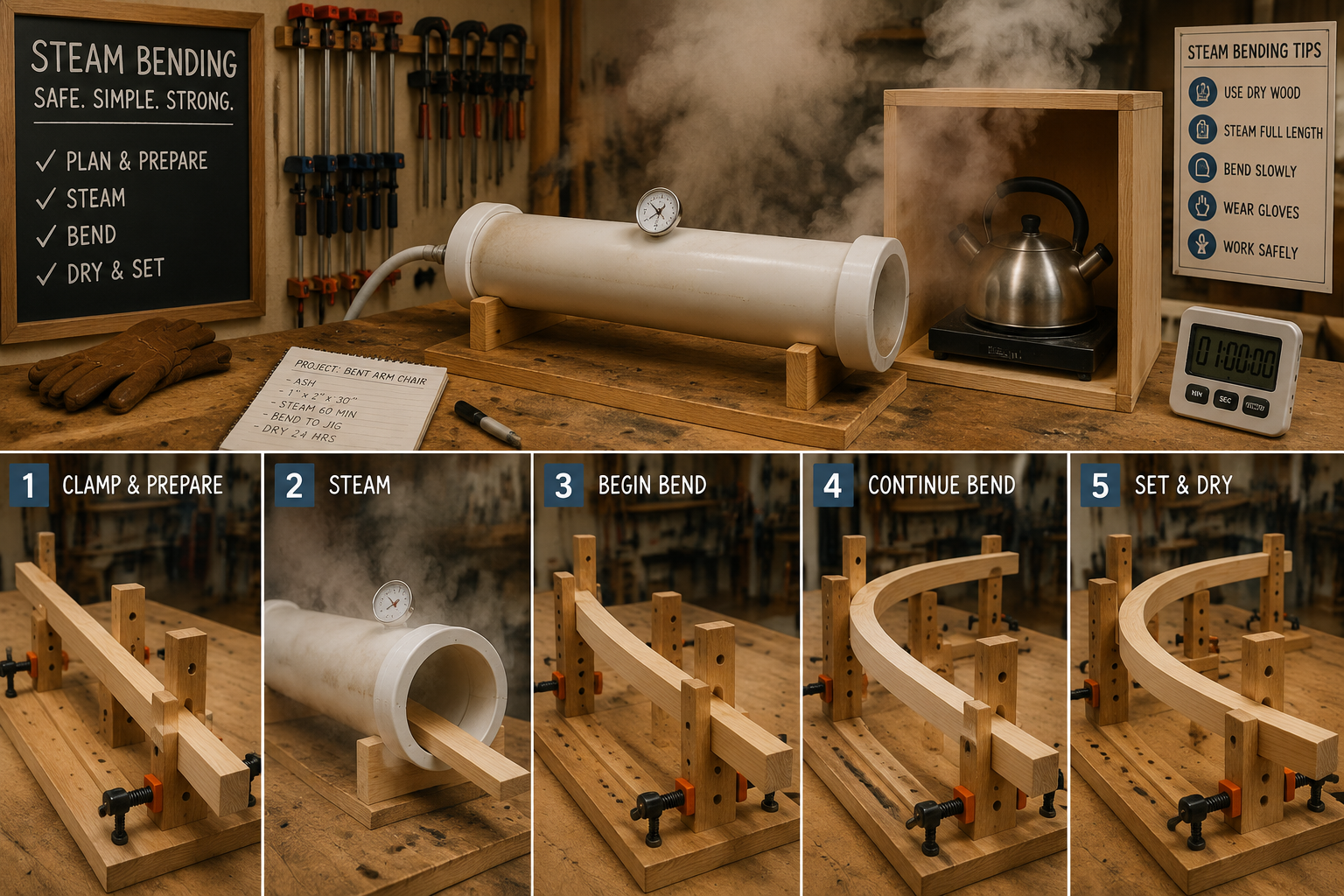
Executing the steam bending process demands careful timing and attention to detail. Follow these steps to successfully create organic curves for your 2026 furniture projects.
1. Wood Preparation
- Selection: Choose a suitable wood species with straight grain, free of knots, checks, or other defects. Green wood is preferred.
- Dimensioning: Cut the wood to the approximate length and thickness required for your project. Allow for extra length for clamping and trimming later. Thicker pieces require longer steaming times.
- Pre-bend Soaking (Optional): If using air-dried or kiln-dried wood, soak it in water for several days to weeks to increase its moisture content.
2. Steaming the Wood
- Heat the Steam Box: Start your steam generator and allow the steam box to reach a steady temperature (212°F or 100°C).
- Load the Wood: Place the prepared wood into the steam box, ensuring good steam circulation around all surfaces.
- Steaming Time: A general rule of thumb is 1 hour of steaming time per inch of wood thickness. For example, a 1-inch thick board would steam for 1 hour. Thicker woods might require longer.
- Maintain Temperature: Keep the steam generator running consistently to maintain the internal temperature of the box.
3. Bending and Clamping
- Work Quickly: Once the steaming time is complete, remove the wood from the steam box and immediately transfer it to your bending form. The wood will begin to cool and stiffen rapidly.
- Position the Bending Strap: Place the metal bending strap securely on the outside of the curve, with the end blocks bracing against the ends of the wood. This strap is crucial for preventing tension-side failures.
- Bend and Clamp: Gradually bend the wood around the form, working from one end to the other, or from the center outwards, depending on the curve. Use numerous clamps to secure the wood tightly to the form, ensuring there are no gaps. Apply firm, even pressure.
- Over-bend (Optional): If you anticipate significant spring-back, you might consider slightly over-bending the wood beyond the final desired curve.
4. Drying and Curing
- Keep Clamped: Allow the wood to cool and dry thoroughly while still clamped to the form. This can take several days to several weeks, depending on wood thickness, species, and ambient humidity. Rushing this stage can lead to spring-back or cracking.
- Monitor for Cracks: Inspect the wood periodically for any signs of cracking or delamination.
- Controlled Drying: Some woodworkers opt for controlled drying environments to manage the moisture content reduction more precisely, reducing stress on the wood.
5. Finishing Touches
- Unclamp and Trim: Once fully dry, unclamp the wood from the form. It should retain its new curved shape. Trim the ends and edges to their final dimensions.
- Sanding and Finishing: Sand the bent piece smooth and apply your chosen finish. Steam-bent wood integrates beautifully into various furniture styles, from minimalist to rustic. Consider how these organic elements can elevate projects discussed in “High-Demand Woodworking Projects for 2026: Coffee Tables, Wine Racks, and Clocks.”
By mastering these Steam Bending Basics: Create Organic Curves for 2026’s Handmade Furniture, you unlock a new dimension in woodworking, allowing for fluid designs that stand out in any collection.
Advanced Considerations and Design Integration for 2026’s Handmade Furniture
Moving beyond the basics, there are several advanced techniques and design considerations that can further enhance your steam bending capabilities and elevate your 2026 handmade furniture.
Compound Bends and Multiple Radii
While a simple single-plane curve is a great starting point, experienced woodworkers can achieve compound bends (curves in more than one plane) by carefully designing sophisticated bending forms. This often involves multiple forms or a series of bends. Similarly, creating pieces with varying radii along a single length of wood adds complexity and visual interest. These techniques require more precise form design and often specialized clamping systems.
Addressing Spring-Back
Spring-back is the natural tendency of bent wood to partially return to its original shape after being unclamped. The amount of spring-back varies depending on wood species, thickness, moisture content, and the severity of the bend. Anticipating and compensating for spring-back is crucial:
- Over-bending: As mentioned, designing forms that slightly exceed the desired final curve.
- Retention: Ensuring the wood is fully dry and cured on the form is the best defense against excessive spring-back.
- Trial and Error: Keeping detailed notes on your bending attempts (wood species, dimensions, steaming time, form radius) will help you predict spring-back for future projects.
Integrating Steam-Bent Components into Modern Furniture
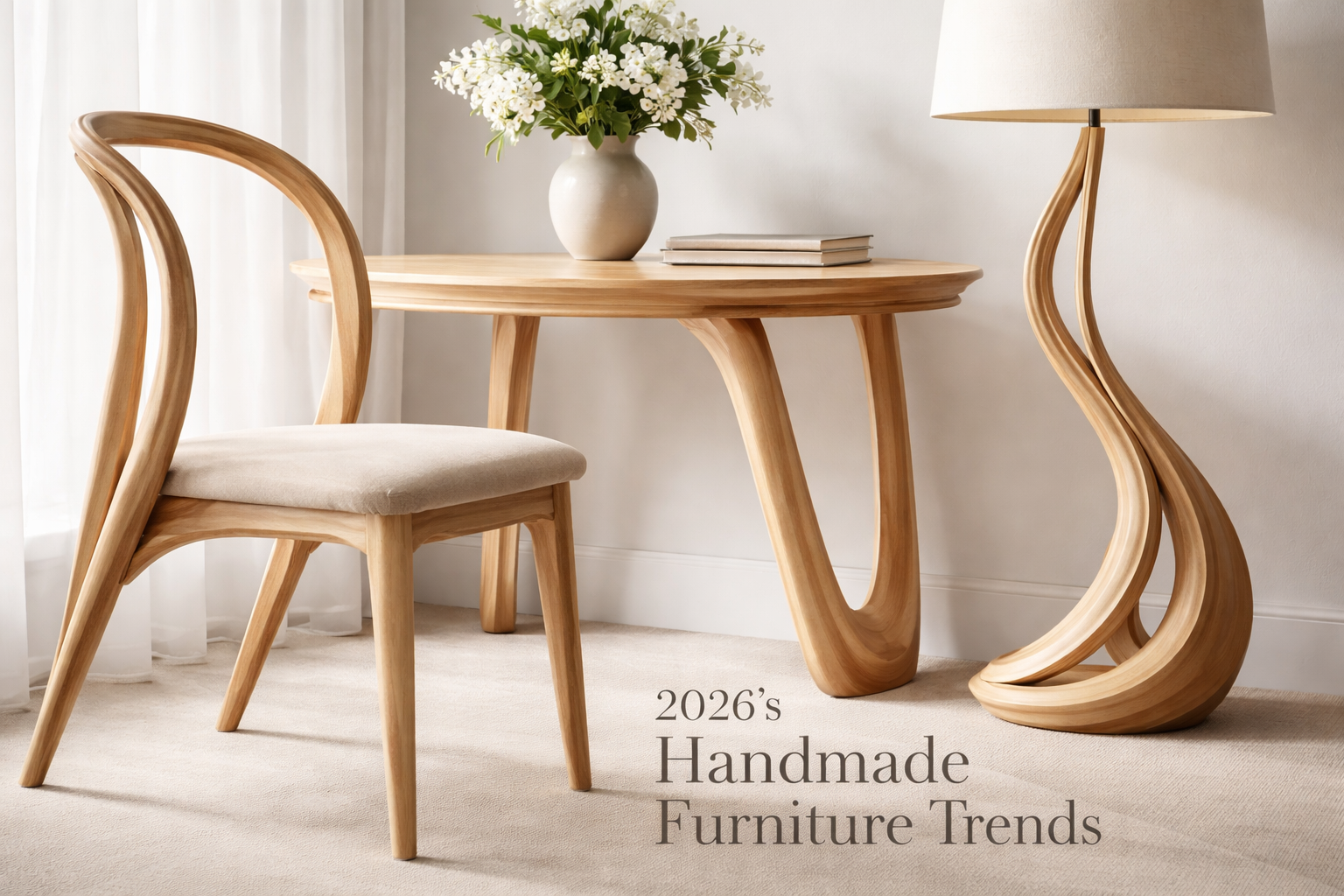
The organic curves created by steam bending are perfectly suited for the clean lines and natural aesthetics popular in 2026 furniture design.
- Chairs and Seating: Elegant curved backs, armrests, and legs can dramatically improve ergonomics and visual appeal.
- Tables: Flowing table legs, curved aprons, or even bent wood accents on tabletops provide a sophisticated touch. Think about how these could transform a statement furniture piece.
- Cabinetry and Storage: Curved door fronts or cabinet elements add a sculptural quality that breaks away from traditional boxy designs.
- Decorative Elements: Lampshades, wall art, or even elements within a custom woodworking nightstand can incorporate subtle or dramatic curves.
Steam bending offers an avenue to create furniture that feels both timeless and distinctly contemporary, embracing natural forms while showcasing exceptional craftsmanship.
Conclusion
Mastering Steam Bending Basics: Create Organic Curves for 2026’s Handmade Furniture opens up a world of creative possibilities for woodworkers. This ancient technique, revived through a modern understanding of material science and practical application, allows for the creation of unique, flowing designs that are impossible to achieve through conventional cutting and laminating methods. From selecting the right wood and constructing an effective steam box to meticulously bending and curing your pieces, each step in the process demands patience and precision. The reward is furniture imbued with an organic elegance and structural integrity that truly stands apart. As the demand for bespoke, handcrafted items continues to grow, integrating steam-bent elements into your 2026 projects will undoubtedly elevate their aesthetic appeal and market value, connecting traditional craftsmanship with contemporary design sensibilities. Embrace the steam, and let the wood bend to your artistic vision.
SEO Meta Title: Steam Bending Basics: Organic Curves for 2026 Furniture SEO Meta Description: Master steam bending basics to create stunning organic curves for your 2026 handmade furniture. Learn wood selection, steam box setup, and bending techniques.