
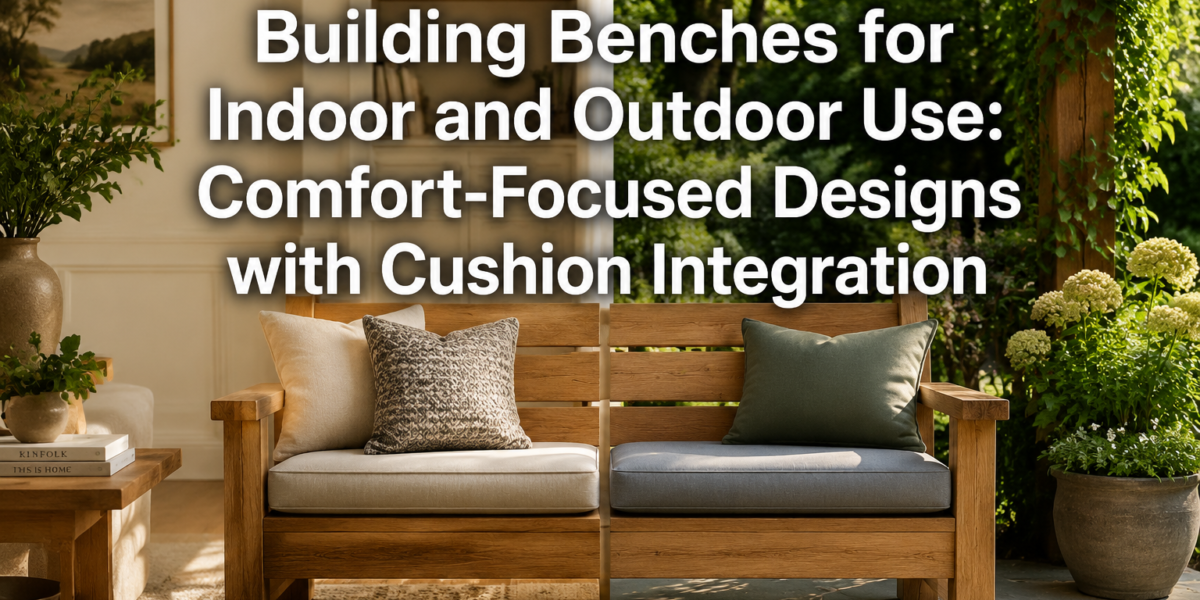
The average household in 2026 relies on flexible, multi-functional furniture more than ever before. Benches, often overlooked as simple seating, are undergoing a significant transformation, evolving into versatile, comfort-focused pieces integral to both indoor aesthetics and outdoor leisure. Building Benches for Indoor and Outdoor Use: Comfort-Focused Designs with Cushion Integration represents an opportunity for DIY enthusiasts and woodworkers to craft not just a seat, but a bespoke centerpiece that enhances any living space. This article will guide you through designing and constructing benches that prioritize ergonomics and style, ensuring they are as comfortable as they are durable, with a keen focus on integrating plush cushions for an elevated experience.
Key Takeaways
- Versatile Design Principles: Learn to design benches suitable for various indoor and outdoor environments, emphasizing adaptability and aesthetic harmony.
- Structural Integrity: Master essential joinery techniques and material selection to ensure your bench is sturdy and long-lasting, regardless of its intended use.
- Power Tool Efficiency: Utilize power tools effectively for precise cuts and efficient assembly, making complex projects manageable for DIYers.
- Cushion Integration: Discover methods for seamlessly incorporating comfortable, durable cushions, transforming a simple bench into a luxurious seating option.
- Finishing for Longevity: Understand the importance of appropriate finishes to protect your bench from environmental elements and wear, preserving its beauty for years to come.
Foundations of Building Benches for Indoor and Outdoor Use: Comfort-Focused Designs with Cushion Integration
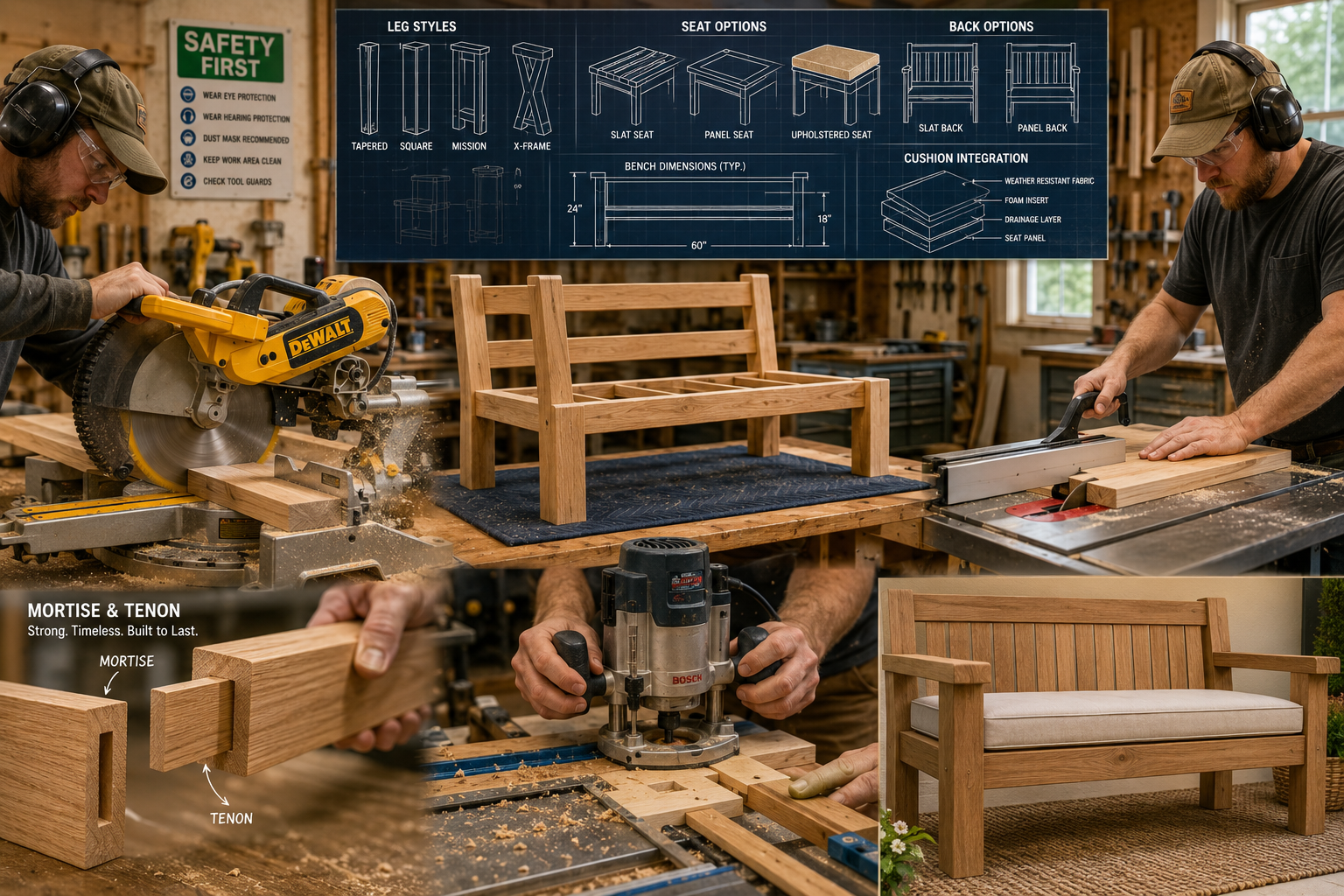
The journey to crafting a comfortable and aesthetically pleasing bench begins with a solid understanding of design principles, material selection, and robust construction techniques. Whether destined for a bustling entryway, a quiet reading nook, or a sun-drenched patio, the core elements remain consistent: stability, durability, and ergonomic considerations.
Design Considerations: From Concept to Blueprint
Before making the first cut, a well-thought-out design is paramount. Consider the bench’s primary function and placement. An entryway bench might prioritize shoe storage and a comfortable spot to put on shoes, while an outdoor dining bench needs to withstand the elements and provide comfortable seating for extended periods.
Dimensions:
- Height: A standard seating height is typically 18-20 inches (45-50 cm) from the floor to the top of the seat. This allows for comfortable sitting with feet flat on the ground.
- Depth: A seat depth of 15-18 inches (38-45 cm) is generally comfortable. For benches with backrests, this can vary, but ensuring enough depth for cushions is key.
- Length: This is highly variable, depending on the space and the number of people you wish to accommodate. A good rule of thumb is 24-30 inches (60-75 cm) per person.
Style and Aesthetics: The bench’s style should complement its surroundings.
- Modern: Clean lines, minimal ornamentation, often utilizing lighter woods or painted finishes.
- Rustic/Farmhouse: Distressed finishes, robust joinery, reclaimed wood, and natural imperfections.
- Traditional: More ornate details, classic wood types like oak or cherry, and intricate profiles.
- Contemporary: A blend of styles, often incorporating mixed materials like wood and metal, focusing on unique forms.
Cushion Integration: The most crucial aspect for comfort-focused designs.
- Recessed Seats: Design the bench seat with a slight recess or lip to hold cushions in place, preventing them from sliding.
- Removable Panels: For outdoor use, consider a design where seat panels can be easily removed to store cushions during inclement weather.
- Attached Cushions: While less flexible, permanently attaching cushions or using ties/velcro can create a unified look.
Material Selection: Wood, Fasteners, and Finishes
The choice of materials dictates both the bench’s appearance and its longevity, especially for outdoor applications.
Wood Species:
- Indoor: Almost any stable hardwood or softwood can be used. Popular choices include:
- Pine: Affordable, easy to work with, but softer and prone to dents.
- Poplar: Affordable hardwood, good for painting.
- Oak (Red or White): Durable, strong, attractive grain, but harder to work.
- Maple: Very durable, fine grain, excellent for smooth finishes.
- Outdoor: Requires woods with natural resistance to rot, insects, and moisture.
- Cedar: Naturally rot and insect resistant, lightweight, pleasant aroma.
- Redwood: Similar to cedar in properties, beautiful color, but more expensive.
- Teak: The gold standard for outdoor furniture – extremely durable, weather-resistant, and beautiful, but very costly.
- Pressure-Treated Lumber: Economical and durable, but typically less attractive and contains chemicals.
- Ipe/Cumaru: Dense tropical hardwoods, highly durable and beautiful, but very hard to work with and expensive.
For general woodworking projects and sourcing materials, you might find valuable insights in articles such as Sourcing Reclaimed and Salvaged Wood: Quality Assessment, Restoration, and Safe Handling.
Fasteners and Adhesives:
- Screws: Exterior-grade screws (stainless steel or galvanized) for outdoor benches to prevent rust. Interior screws for indoor benches. Predrill pilot holes to prevent splitting.
- Wood Glue: High-quality waterproof wood glue (e.g., Titebond III) is essential for strong, durable joints, especially for outdoor pieces.
- Pocket Hole Screws: A popular method for strong, hidden joints, often used with a Kreg jig.
Finishes: Finishes protect the wood and enhance its appearance.
- Indoor:
- Polyurethane (Water or Oil-Based): Durable, protective, comes in various sheens.
- Varnish: Offers excellent protection and durability, often used for fine furniture.
- Oil Finishes (Danish Oil, Tung Oil, Linseed Oil): Penetrate the wood, providing a natural look and feel, but less protective against wear than film-forming finishes. For more on oil finishes, consider Danish Oil vs. Linseed: The Ultimate Wood Finishing Guide.
- Outdoor:
- Exterior Varnish/Marine Varnish: Highly durable, UV resistant, and waterproof.
- Deck Stains/Sealants: Offer good protection against moisture and UV rays, often contain mildewcides.
- Exterior Oil Finishes: Need regular reapplication but penetrate deeply to protect wood from within.
Constructing Sturdy Benches with Power Tools and Joinery
Efficiently Building Benches for Indoor and Outdoor Use: Comfort-Focused Designs with Cushion Integration relies heavily on precision and strong joinery. Power tools can significantly speed up the process and improve accuracy, while proper joinery ensures the bench’s longevity and stability.
Essential Power Tools and Their Applications
A well-equipped workshop with the right power tools makes bench building a rewarding experience.
- Table Saw: Indispensable for ripping boards to width and cross-cutting larger pieces. Essential for dimensioning lumber accurately.
- Miter Saw: Excellent for precise cross-cuts and angle cuts for legs and rails. A sliding miter saw offers greater capacity.
- Router: Used for shaping edges, creating decorative profiles, or cutting dadoes and rabbets for joinery. Mastering the Router Table: Essential Jigs, Safety, and Advanced Techniques for Precision Joinery and Edges can provide deeper insight.
- Drill/Driver: For drilling pilot holes, driving screws, and using pocket hole jigs.
- Orbital Sander: Speeds up the sanding process, crucial for a smooth, splinter-free finish.
For those looking to set up their workspace for such projects, consider guides like Building a Custom Wood Workbench: Design Considerations and Step-by-Step Plans for a Sturdy, Functional Foundation or Building a Compact and Ergonomic Workbench for Small Workshops: Maximizing Space and Efficiency.
Joinery Techniques for Stability
The strength of your bench lies in its joints. Choose appropriate joinery for both structural integrity and aesthetic appeal.
Common Joinery for Bench Construction:
- Mortise and Tenon: A classic, incredibly strong joint perfect for attaching legs to rails. It involves cutting a slot (mortise) into one piece and a projecting tongue (tenon) on the end of another to fit snugly.
- Dado and Rabbet Joints: Ideal for attaching seat supports or dividing panels. A dado is a groove cut across the grain, while a rabbet is a groove cut along the edge.
- Pocket Hole Joinery: A fast and effective method for creating strong, concealed joints, especially useful for attaching aprons to legs or connecting seat slats. While popular, ensure proper screw length and glue for maximum strength.
- Half-Lap Joints: Where two pieces of wood are notched to half their thickness and overlapped, creating a flush joint. Good for leg stretchers or frame construction.
- Bridle Joints: Similar to mortise and tenon but with an open-ended mortise, offering good strength and a clean look, often used for connecting top rails to legs.
When constructing the frame, focus on creating square and plumb assemblies. Use clamps generously during glue-up to ensure tight joints.
Crafting Legs and Seat Designs
Leg Designs:
- Straight Legs: Simplest to construct, often tapered for a more refined look.
- Splayed Legs: Angled outwards for a mid-century modern aesthetic, requiring compound angle cuts.
- Trestle Legs: A-frame or cross-leg designs that offer a sturdy and often decorative base.
- Box Legs: Fully enclosed rectangular or square frames that provide significant stability and a contemporary feel.
Seat Designs:
- Slatted Seat: Common for outdoor benches, allowing water drainage. Ensure even spacing and comfortable edge profiles.
- Solid Slab Seat: Offers a robust, continuous surface. Often used for rustic or live-edge designs.
- Frame and Panel Seat: A robust method where a frame encloses a panel (plywood or solid wood), often used for upholstered seating.
- Recessed Seat Frame: Design the top edge of the bench frame slightly higher than the interior support, creating a natural lip to hold cushions in place. This prevents cushions from sliding off during use.
Integrating Cushions and Finishing for Longevity
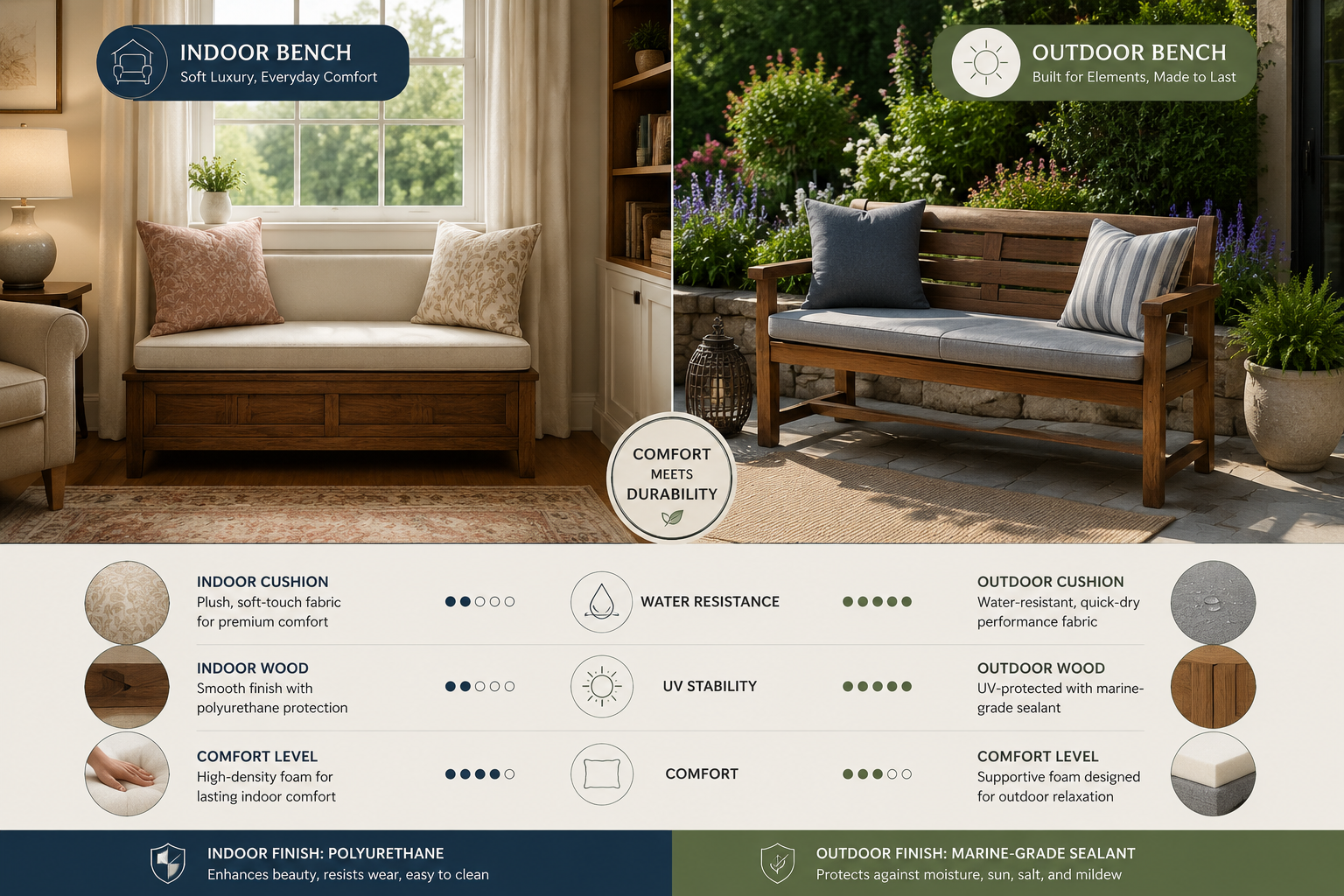
The true comfort in Building Benches for Indoor and Outdoor Use: Comfort-Focused Designs with Cushion Integration comes from the cushions. Thoughtful design not only enhances comfort but also contributes to the bench’s overall aesthetic and usability.
Designing and Selecting Cushions
Cushions transform a hard surface into an inviting seat. The choice of materials impacts both comfort and durability.
Foam Core:
- Density: Higher density foam (e.g., 1.8-2.2 lb/ft³) offers better support and longevity. For outdoor benches, quick-drying open-cell foam is ideal.
- Thickness: 2-4 inches (5-10 cm) is standard for comfortable seating. Thicker foam provides more luxury.
- Wrap: Dacron or polyester batting wrapped around the foam adds softness, fills out the cushion cover, and helps prevent foam degradation.
Fabric Selection:
- Indoor:
- Upholstery Fabric: Wide range of colors, patterns, and textures. Consider durability ratings (double rubs) for high-traffic areas.
- Natural Fibers: Cotton, linen for breathability and a soft feel.
- Synthetics: Polyester, acrylic for stain resistance and durability.
- Outdoor:
- Sunbrella or Other Acrylics: Excellent UV resistance, fade-proof, mildew resistant, and easy to clean.
- Polyester (Treated): More affordable than acrylics, but ensure it’s specifically treated for outdoor use (water-resistant, UV stable).
- Marine-Grade Vinyl: Extremely durable and waterproof, but can get hot in direct sun.
Consider adding zippers to cushion covers for easy removal and cleaning. For outdoor cushions, ensure they are designed to shed water and resist mildew.
Methods for Cushion Integration
Seamless integration ensures the cushions stay in place and look part of the bench, rather than an afterthought.
- Recessed Seat: As mentioned, designing a slight lip around the seat perimeter is highly effective. The cushion simply drops into the recess.
- Velcro/Snaps: Attach strips of outdoor-grade Velcro or snaps to the bottom of the cushion and corresponding areas on the bench seat. This allows for easy removal.
- Ties: Sew fabric ties onto the back corners of the cushion and tie them around the backrest or legs of the bench.
- Non-Slip Grippers: Use rubberized non-slip mats or grippers placed under the cushions for basic stability.
- Upholstered Directly: For a permanent, integrated look, the bench frame can be fully upholstered, often done with foam padding attached directly to the wooden frame before fabric application.
Finishing Touches and Maintenance
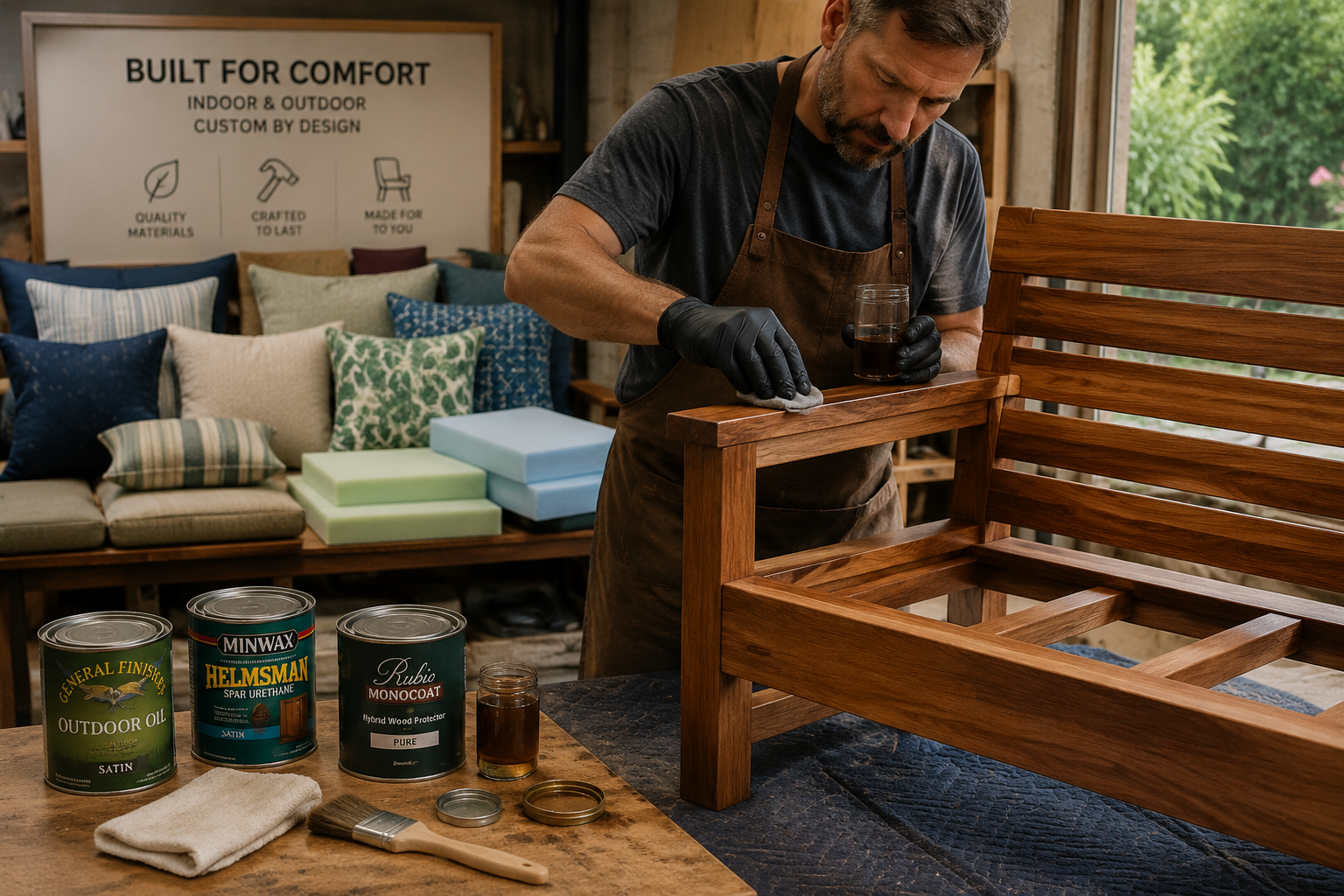
A proper finish protects your hard work and ensures the bench remains beautiful for years.
- Sanding: Thorough sanding is critical. Start with coarse grit (80-100) and progressively move to finer grits (180-220, or even 320 for a silky smooth finish).
- Cleaning: Remove all dust before applying any finish. A tack cloth or compressed air works well.
- Application: Apply finishes according to manufacturer instructions. Multiple thin coats are always better than one thick coat. Lightly sand between coats if recommended.
- Curing: Allow ample time for the finish to fully cure before heavy use or placing cushions.
Maintenance for Longevity:
- Indoor Benches: Dust regularly, wipe spills immediately, and periodically clean cushions according to fabric care instructions.
- Outdoor Benches:
- Regular Cleaning: Wash with mild soap and water to remove dirt, pollen, and mildew.
- Reapplication of Finish: Outdoor finishes typically need reapplication every 1-3 years, depending on exposure. Inspect annually.
- Cushion Care: Store outdoor cushions when not in use or during harsh weather to extend their life. Clean them regularly to prevent mold and mildew growth.
- Winter Storage: In colder climates, consider moving outdoor benches into a shed or garage for the winter.
By following these steps, you will not only create a functional piece of furniture but also a comfortable and durable asset to your home, truly embodying the goal of Building Benches for Indoor and Outdoor Use: Comfort-Focused Designs with Cushion Integration.
Conclusion
Building Benches for Indoor and Outdoor Use: Comfort-Focused Designs with Cushion Integration is a project that rewards patience, precision, and a keen eye for detail. By understanding the foundational design principles, selecting appropriate materials, leveraging the power of modern tools, and mastering essential joinery, you can craft truly versatile and enduring pieces of furniture. The integration of comfortable, durable cushions elevates a simple bench into an inviting haven, whether it’s an elegant addition to your living room or a resilient retreat on your patio.
As you embark on your next woodworking endeavor, remember that meticulous planning, careful execution, and thoughtful finishing are the cornerstones of success. Your custom-built bench will not only serve its practical purpose but also stand as a testament to your craftsmanship, providing comfort and style for years to come.
Actionable Next Steps:
- Sketch Your Design: Begin with a detailed sketch, considering dimensions, style, and how cushions will integrate.
- Select Your Wood: Based on indoor or outdoor use, choose a wood species that aligns with your durability and aesthetic needs.
- Gather Your Tools: Ensure you have the necessary power tools and safety equipment for accurate and efficient construction.
- Practice Joinery: If new to certain joints, practice on scrap pieces before cutting your primary lumber.
- Source Cushions: Decide whether to DIY cushion covers or purchase custom ones, keeping foam and fabric requirements in mind.
- Apply Appropriate Finish: Protect your creation with a finish suited for its environment, ensuring longevity and ease of maintenance.
References
- Kreg Tool Company. (n.d.). Pocket-Hole Joinery Basics. Retrieved from https://www.kregtool.com/support/pocket-hole-joinery-basics.aspx
- Wood Magazine. (n.d.). Wood Finishes Explained. Retrieved from https://www.woodmagazine.com/materials-guide/finishes/wood-finishes-explained
SEO Meta Title: Building Benches: Indoor & Outdoor Comfort with Cushions SEO Meta Description: Craft custom indoor & outdoor benches in 2026! Master comfort-focused designs, joinery, and cushion integration for durable, stylish seating.