
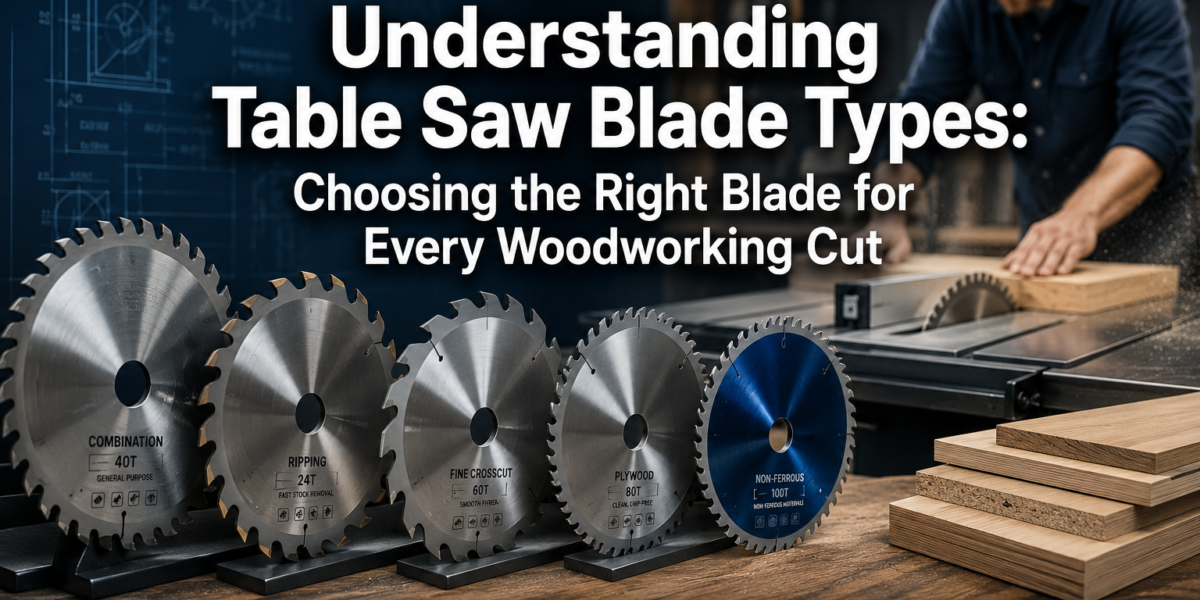
The difference between a flawlessly smooth cut and a splintered mess on your woodworking project often boils down to a single component: the table saw blade. Even with a top-of-the-line table saw, an incorrect blade choice can ruin expensive material and compromise the integrity of your work. This article is dedicated to Understanding Table Saw Blade Types: Choosing the Right Blade for Every Woodworking Cut, providing a comprehensive guide for woodworkers of all skill levels to navigate the myriad options and achieve superior results in 2026.
Key Takeaways
- Table saw blades are specialized tools, each designed for optimal performance in specific cutting applications like ripping, crosscutting, or joinery.
- Blade characteristics such as tooth count, grind type (ATB, FTG, TCG), hook angle, and material significantly impact cut quality and efficiency.
- Matching the blade to the material and type of cut is crucial for safety, reducing tear-out, and extending blade life.
- Combination blades offer versatility for general-purpose use, but dedicated blades excel for specific, high-quality finishes.
- Proper blade maintenance, including cleaning and sharpening, ensures consistent performance and longevity.
Demystifying Table Saw Blade Anatomy and Terminology
To truly master Understanding Table Saw Blade Types: Choosing the Right Blade for Every Woodworking Cut, it’s essential to grasp the fundamental components and terminology that define each blade’s performance. Blades are not just simple discs of metal; they are engineered tools with specific features tailored for distinct tasks.
Blade Diameter and Arbor Size
The diameter of a table saw blade is typically 10 inches or 12 inches for most standard saws, though smaller portable saws might use 8.25-inch blades, and larger industrial saws might employ larger diameters. Always match the blade diameter to your saw’s specifications. The arbor hole, the central opening in the blade, must also match your saw’s arbor shaft, which is usually 5/8 inch for most common table saws. Incorrect sizing can lead to dangerous imbalances and poor cuts.
Tooth Count and Its Impact
The number of teeth on a blade is one of the most significant indicators of its intended use and cut quality.
- Low Tooth Count (10-24 teeth): These blades typically have large gullets (the space between teeth) which are excellent for efficient chip removal. They are ideal for ripping (cutting along the grain) thick, softwoods where speed and aggressive material removal are prioritized over a perfectly smooth finish. The fewer teeth reduce friction and heat buildup during long rip cuts.
- Medium Tooth Count (40-60 teeth): Often found on combination blades, these offer a balance between ripping and crosscutting. They provide a decent finish for most general-purpose cuts and are a good starting point for a versatile workshop.
- High Tooth Count (60-80+ teeth): Blades with many teeth have smaller gullets, which results in slower cutting but a much smoother, finer finish. They are preferred for crosscutting (cutting across the grain) hardwoods, plywood, laminates, and other sheet goods where tear-out prevention and precision are paramount.
Tooth Grind Types
The shape and angle of the cutting edge of each tooth, known as the tooth grind, significantly affect how the blade interacts with the wood.
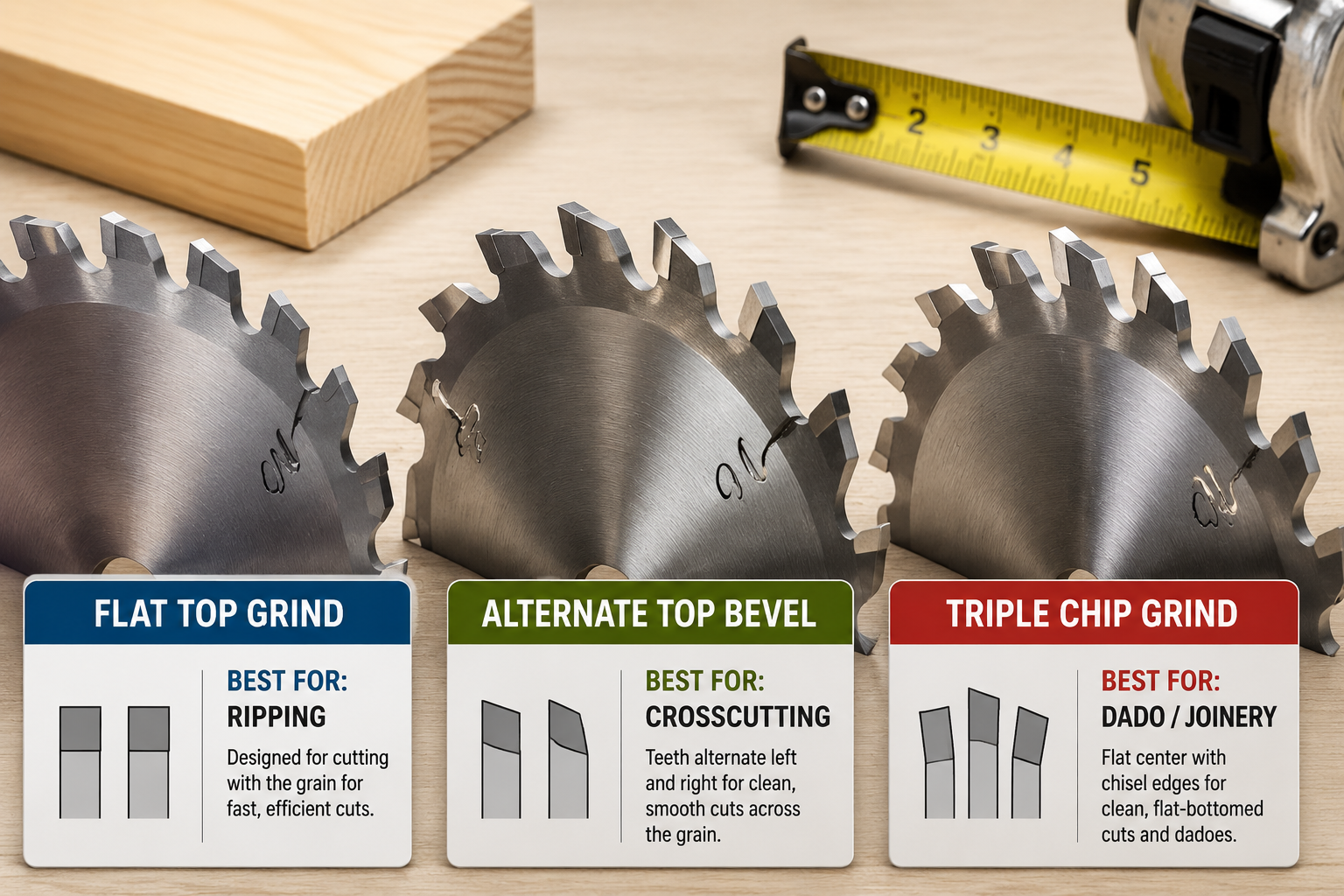
- Flat Top Grind (FTG): Each tooth is flat on top, like a chisel. FTG blades are very aggressive and efficient at removing material, making them ideal for ripping solid wood. They leave a flat-bottomed kerf, which is also useful for creating dadoes and rabbets with specialized dado sets.
- Alternate Top Bevel (ATB): The top of each tooth is beveled at an angle, alternating from left to right. This creates a knife-like shearing action that excels at crosscutting, preventing splintering and producing clean edges on hardwoods, plywood, and melamine. Most general-purpose and crosscut blades use an ATB grind.
- Triple Chip Grind (TCG): Often found on blades designed for cutting plastics, laminates, and non-ferrous metals, TCG blades feature alternating teeth where one tooth has a flat top and chamfered corners (the “trap” tooth), followed by a lower, beveled tooth that cleans out the corners. This design reduces impact and heat, minimizing chipping on brittle materials.
- Combination (ATBR/Combination): These blades combine elements of FTG and ATB teeth in repeating patterns, often a group of ATB teeth followed by a single FTG raker tooth. This allows them to perform both ripping and crosscutting reasonably well, making them popular all-around blades for many woodworkers.
Hook Angle
The hook angle refers to the angle of the tooth’s leading edge relative to the blade’s center.
- Positive Hook Angle (10-20 degrees): Teeth lean forward, aggressively pulling the wood into the blade. This provides faster, more efficient cutting for ripping solid wood but increases the risk of kickback, particularly on softer woods.
- Negative Hook Angle (-2 to -5 degrees): Teeth lean backward, pushing the wood away from the blade. This results in a slower, safer cut, reducing kickback risk, and is ideal for miter saws, radial arm saws, and some sliding table saws, especially when cutting delicate materials like laminates or aluminum.
- Zero Hook Angle: Teeth are perpendicular to the blade’s radius. This offers a balanced approach, often seen in combination blades.
Knowing these characteristics is the first step in Understanding Table Saw Blade Types: Choosing the Right Blade for Every Woodworking Cut effectively.
Specialized Table Saw Blade Types for Precision Woodworking
Beyond the basic characteristics, a variety of specialized table saw blades are engineered for particular applications, allowing woodworkers to achieve highly specific results with maximum efficiency and quality.
Ripping Blades
Ripping blades are designed for cutting with the grain of the wood. They typically have:
- Low Tooth Count (10-30 teeth): This allows for aggressive material removal and prevents the blade from overheating when making long cuts through thick stock.
- FTG (Flat Top Grind): The flat teeth cut cleanly along the grain, leaving a flat-bottomed kerf.
- Large Gullets: Essential for clearing sawdust and chips rapidly, reducing friction and ensuring a clean cut path.
- Positive Hook Angle: Aggressively pulls the material through, aiding in faster cuts.
For detailed information on handling wood, including sourcing and preparing materials for cuts, consider reading about sourcing reclaimed and salvaged wood.
Crosscut Blades
Crosscut blades are optimized for cutting across the grain, where preventing tear-out is paramount. They feature:
- High Tooth Count (60-80+ teeth): More teeth mean more frequent, shallower cuts, resulting in a smoother finish and significantly reduced splintering.
- ATB (Alternate Top Bevel) or Hi-ATB (High Alternate Top Bevel): The alternating bevels create a shearing action that severs wood fibers cleanly, leaving crisp edges.
- Smaller Gullets: Sufficient for the finer dust produced by crosscutting, though less efficient for heavy ripping.
- Slightly Negative or Zero Hook Angle: Reduces the aggressiveness, making the cut safer and preventing the blade from “climbing” the wood.
Combination Blades
As their name suggests, combination blades aim to do both ripping and crosscutting well. They typically have:
- Medium Tooth Count (40-60 teeth): A compromise between the low count of ripping blades and the high count of crosscut blades.
- Combination Grind: Often a repeating pattern of 4-5 ATB teeth followed by a single FTG raker tooth. The ATB teeth handle the crosscutting duties, while the FTG tooth helps clear the kerf during ripping.
- Moderate Hook Angle (often 0 to mildly positive): Provides a balance of aggression and safety.
A good combination blade can be a versatile workhorse for a home shop, especially when space or budget limits the number of specialized blades. For general woodworking projects, from building a custom workbench to crafting bespoke furniture, a quality combination blade can handle most tasks effectively. Learn more about building a custom wood workbench for your shop.
Dado Sets
A dado set is a specialized type of blade assembly used to cut dadoes (flat-bottomed grooves) and rabbets.
- Components: A typical dado set includes two outer saw blades (often ATB for clean shoulders), and several chippers (FTG teeth) that fit between them to vary the width of the cut.
- Application: Essential for joinery like shelves, cabinet frames, and other applications requiring precise grooves. Using a dedicated dado set is far superior to making multiple passes with a standard blade for wider grooves.
- Sizes: Common dado sets can cut widths from 1/8 inch to 13/16 inch or more.
For intricate joinery beyond simple dadoes, explore techniques like mastering dovetail joints with hand tools.
Plywood and Melamine Blades
These blades are specifically designed to minimize chipping and tear-out on delicate, often brittle, sheet goods.
- High Tooth Count (80-100 teeth): Provides very shallow, fine cuts.
- TCG (Triple Chip Grind) or Hi-ATB: TCG is excellent for laminates and melamine, while Hi-ATB works well for veneered plywood. Both grinds reduce the impact on the material surface.
- Negative Hook Angle: Crucial for controlling the cut and preventing aggressive grabbing, which can lead to chipping.
Blade Materials, Coatings, and Maintenance for Optimal Performance
The longevity and consistent performance of your table saw blades depend significantly on the materials they are made from, any protective coatings applied, and diligent maintenance practices. Understanding Table Saw Blade Types: Choosing the Right Blade for Every Woodworking Cut also includes appreciating these factors.
Blade Materials: Steel vs. Carbide
Historically, blades were made of high-carbon steel. While still available, especially for specialized uses or very thin kerf blades, carbide-tipped blades dominate the market today.
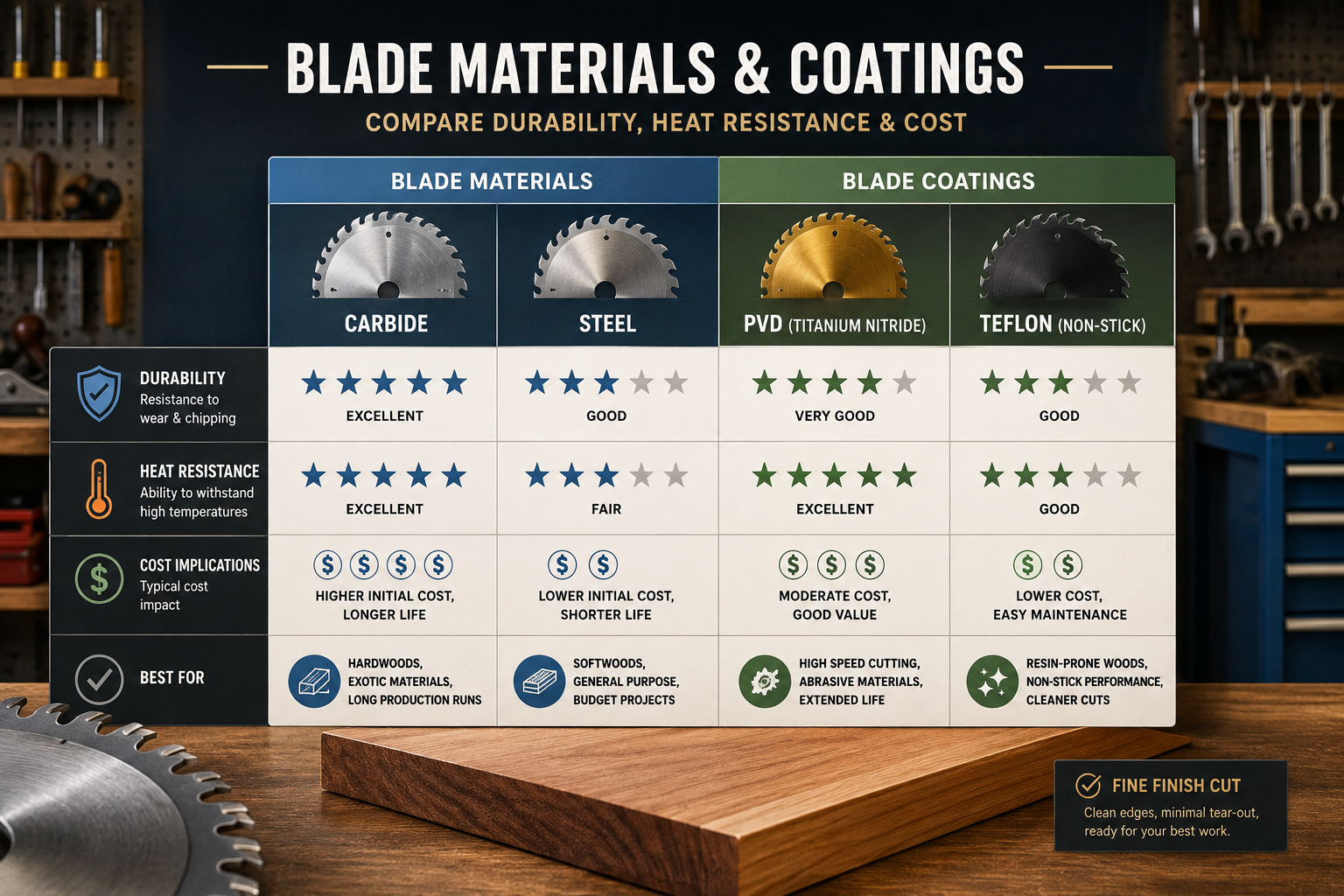
- Steel Blades: Less expensive initially, but they dull much faster, especially when cutting hardwoods or engineered materials. They require more frequent sharpening.
- Carbide-Tipped Blades: These blades have small inserts of tungsten carbide brazed to the steel body of each tooth. Carbide is significantly harder and more abrasion-resistant than steel, allowing carbide-tipped blades to stay sharp much longer. They are more expensive upfront but offer superior durability and cut quality, making them the standard choice for most serious woodworkers in 2026.
Coatings for Enhanced Performance
Many modern table saw blades feature specialized coatings designed to improve performance and longevity.
- Friction-Reducing Coatings (e.g., Teflon, Perma-Shield, specific PTFE compounds): These slick coatings reduce friction and heat buildup during cutting. This minimizes resin and pitch accumulation, making blades easier to clean and preventing burning on the wood surface. Reduced friction also allows for smoother feeding and longer blade life.
- Corrosion-Resistant Coatings: Some blades are coated to prevent rust and corrosion, which is particularly useful in humid environments or for blades stored for extended periods.
Blade Kerf
The kerf is the width of the cut made by the blade.
- Standard Kerf (typically 1/8 inch or 3.2mm): Common for most general-purpose and dedicated blades.
- Thin Kerf (typically 3/32 inch or 2.4mm): These blades remove less material, which means less waste and less strain on your table saw’s motor. They are popular for underpowered saws or when conserving expensive lumber. However, thin kerf blades are more prone to deflection if not used carefully or if the saw is not properly aligned. It’s crucial to use a suitable blade stabilizer if your saw supports it, and never force the cut.
Maintenance and Care
Proper maintenance is critical for getting the most out of your table saw blades.
- Cleaning: Wood resins and pitch build up on blade surfaces and teeth, leading to increased friction, burning, and dulling. Regular cleaning with a dedicated blade cleaner (like oven cleaner or specialized pitch remover) and a brass brush is essential. Always wear gloves and eye protection.
- Sharpening: Even carbide blades eventually dull. A sharp blade cuts more efficiently, produces less tear-out, and is safer to use. While some skilled individuals might attempt to sharpen steel blades, carbide-tipped blades require professional sharpening services due to the precision needed for the carbide tips. A good sharpening service can extend the life of a quality blade significantly.
- Storage: Store blades properly in cases, sleeves, or on a dedicated blade rack to protect the delicate carbide teeth from damage.
- Inspection: Regularly inspect your blades for bent teeth, missing carbide tips, or body damage. A damaged blade can be dangerous and produce poor cuts.
Investing in high-quality blades and maintaining them properly is a fundamental aspect of Understanding Table Saw Blade Types: Choosing the Right Blade for Every Woodworking Cut. This approach not only ensures beautiful results but also extends the life of your valuable tools and materials. For broader insights into maintaining woodworking tools, refer to our guide on restoring vintage woodworking hand tools.
Choosing the Right Blade for Your Specific Needs
Selecting the optimal table saw blade for each project requires a systematic approach, considering the material, the type of cut, and the desired finish. This section details how to apply your knowledge of Understanding Table Saw Blade Types: Choosing the Right Blade for Every Woodworking Cut to real-world scenarios in your workshop in 2026.
Matching Blade to Material
The material you are cutting is the primary determinant for blade choice.
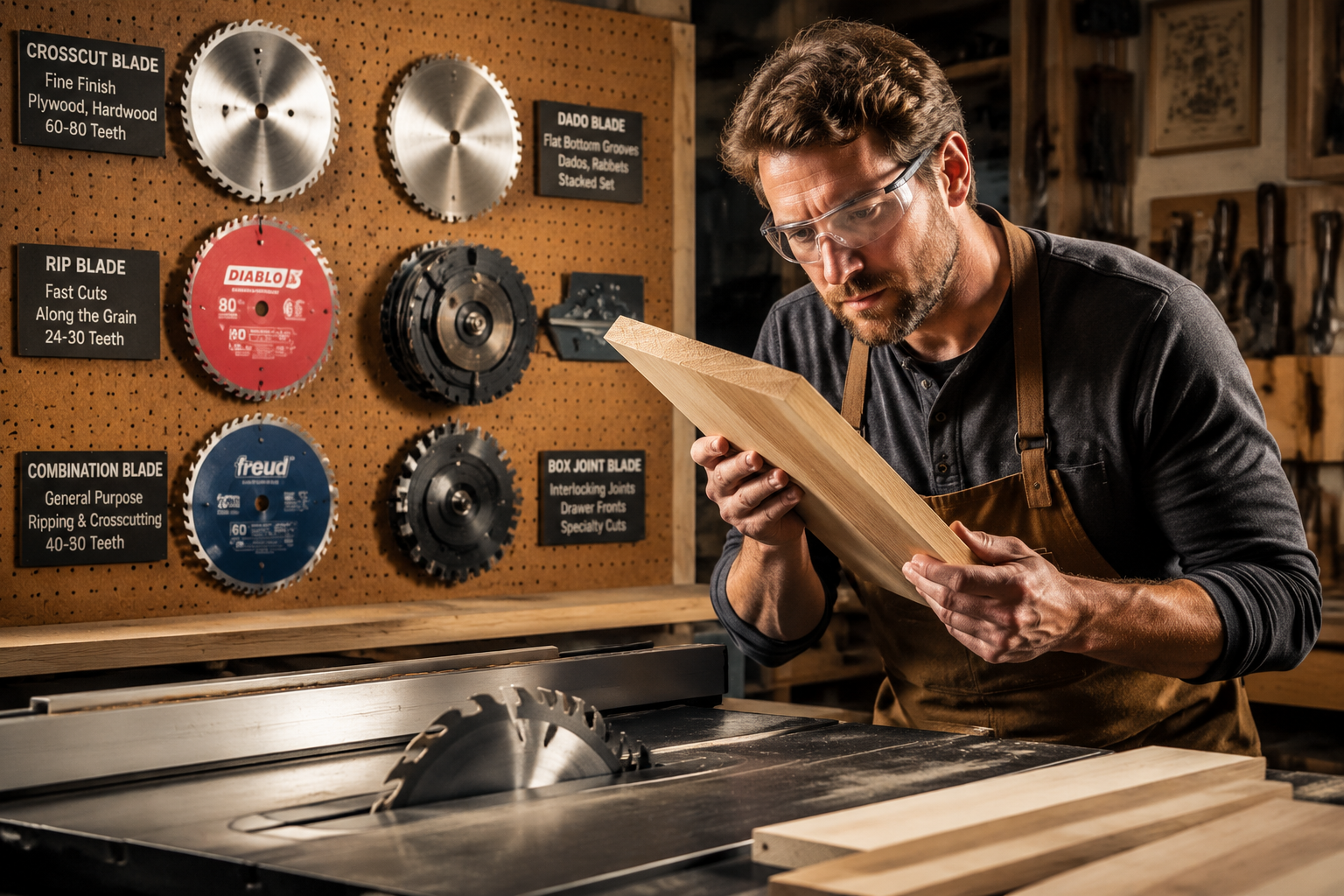
- Solid Hardwoods (Oak, Maple, Walnut): For ripping, a 24-30 tooth FTG blade with a positive hook angle is best for efficient material removal. For crosscutting, a 60-80 tooth ATB or Hi-ATB blade with a slight negative or zero hook angle will prevent tear-out and leave a glue-line ready finish.
- Softwoods (Pine, Poplar, Fir): Ripping can be done with a 24-tooth FTG blade. Crosscutting often benefits from a 40-60 tooth ATB combination blade for a good balance of speed and finish quality. An 80-tooth crosscut blade would also yield excellent results for fine finishing.
- Plywood (Hardwood Veneered): These materials are notorious for tear-out. An 80-tooth ATB or Hi-ATB blade with a high tooth count and possibly a negative hook angle is highly recommended to minimize chipping on the delicate veneers. A thin kerf blade can also reduce splintering.
- Melamine and Laminates: A TCG (Triple Chip Grind) blade with a high tooth count (80+) and a negative hook angle is the go-to for these brittle materials. The TCG prevents chipping and produces clean, chip-free edges.
- Plastics (Acrylic, Polycarbonate): Similar to laminates, plastics benefit from a TCG blade with a very high tooth count and a negative hook angle to prevent melting and chipping. Feed rate should be slow and consistent.
Matching Blade to Cut Type
Once you know your material, consider the specific cut you need to make.
- Ripping Long Stock: Use a low-tooth-count (24-30T) FTG ripping blade. This will allow for fast, efficient cuts along the grain without excessive heat buildup or strain on your saw.
- Precision Crosscuts: For cuts across the grain where minimal tear-out is critical (e.g., cutting cabinet parts or frame pieces), an 80-tooth ATB or Hi-ATB crosscut blade is ideal.
- Dadoes and Rabbets: A dedicated dado set is indispensable for these cuts, providing flat-bottomed, precise grooves for joinery.
- General Purpose Cuts: If you primarily work with solid wood and need a versatile blade that can handle both ripping and crosscutting reasonably well without changing blades constantly, a 40-60 tooth combination blade is your best option. While it won’t provide the absolute finest finish of a dedicated blade, it’s excellent for everyday shop tasks.
- Fine Joinery: For crafting projects that demand the highest level of precision and clean lines, such as dovetail drawers or custom furniture pieces, choosing the most appropriate dedicated blade (high tooth count for crosscuts, dedicated dado set for grooves) is non-negotiable. Learn more about building custom knife blocks or ultimate DIY end tables with dovetail drawers which require such precision.
When to Upgrade or Invest in a Specialized Blade
While a good combination blade is versatile, there are clear signs it’s time to invest in specialized blades:
- Frequent Tear-Out: If your general-purpose blade consistently leaves splintered edges, especially on plywood or crosscuts, a dedicated crosscut or plywood blade will significantly improve your results.
- Burning Wood: If your blade is burning the wood during ripping, it might be dull, or you might be using a blade with too many teeth for ripping, creating excessive friction. A dedicated ripping blade will solve this.
- Inconsistent Dadoes: If your dadoes are not perfectly flat-bottomed or have shoulders that are not clean, a proper dado set is the answer.
- Working with Delicate Materials: Cutting melamine, laminates, or acrylics demands a TCG blade to prevent costly material damage.
By taking these considerations into account, you can confidently make informed decisions, ensuring you have the right blade for every woodworking cut, leading to higher quality projects and a more efficient, enjoyable woodworking experience. For complex projects requiring precise material handling and shaping, leveraging tools like a router table in conjunction with your table saw is also invaluable; consider choosing and using router tables for advanced techniques.
Conclusion
Mastering the art of woodworking goes beyond just owning a table saw; it fundamentally relies on Understanding Table Saw Blade Types: Choosing the Right Blade for Every Woodworking Cut. The choice of blade, influenced by its tooth count, grind type, hook angle, and material, directly dictates the quality, efficiency, and safety of your work. In 2026, with an abundance of blade options available, an informed selection is more critical than ever to achieve professional-grade results and prevent material waste.
By differentiating between ripping, crosscut, combination, and specialized blades like dado sets or those for delicate sheet goods, woodworkers can precisely match the tool to the task. Remember that investing in quality blades and committing to their proper maintenance, including regular cleaning, professional sharpening, and careful storage, will not only extend their lifespan but also consistently deliver the clean, precise cuts your projects demand. Ultimately, a well-chosen blade is an extension of your skill, transforming raw lumber into finely crafted pieces with confidence and accuracy.
Next Steps:
- Assess Your Current Blades: Inventory the blades you currently own. Do they align with the types of projects you typically undertake?
- Identify Project Needs: Before your next project, clearly define the primary cuts (ripping, crosscutting, dadoes) and materials involved.
- Invest Wisely: Consider purchasing one or two dedicated blades (e.g., a quality ripping blade and a fine-finish crosscut blade) to complement your general-purpose combination blade.
- Prioritize Maintenance: Establish a routine for cleaning your blades after significant use and locate a reputable professional sharpening service for when they eventually dull.
Meta Title: Table Saw Blade Types: Choosing the Right Blade for Every Cut Meta Description: Demystify table saw blades. Learn about types, tooth counts, and materials to choose the optimal blade for ripping, crosscutting, and joinery in 2026.