

Imagine a piece of bespoke furniture, not merely assembled from milled lumber, but boasting sculptural elements, intricate textures, or a dramatic live-edge feature that traditional hand tools or even stationary machinery would struggle to achieve. This level of artistic expression, often overlooked, is precisely where Husqvarna chainsaws for fine woodworking shine, extending far beyond the common perception of merely milling logs for furniture slabs. While powerful for breaking down raw timber, these versatile tools, when paired with the right accessories and techniques, open a world of precision cutting, shaping, and even carving for unique furniture components and artistic pieces in 2026.
Key Takeaways
- Husqvarna chainsaws, with appropriate modifications and techniques, offer significant advantages for detailed fine woodworking beyond initial log milling.
- Specialized bars, chains, and safety gear are crucial for achieving precision cuts and ensuring user safety.
- Advanced techniques like plunge cutting, carving, and texturing can be mastered to create unique furniture components and artistic pieces.
- Choosing the right Husqvarna model, whether electric or gas-powered, depends on project scale, desired precision, and workspace environment.
- Integrating chainsaw work with traditional hand tools and stationary machines unlocks creative possibilities for complex designs.
Redefining Precision: Husqvarna Chainsaws for Fine Woodworking
The image of a chainsaw often conjures up scenarios of felling trees or rough-cutting firewood. However, Husqvarna, a brand synonymous with robust outdoor power equipment, offers a range of chainsaws and accessories that, with skill and adaptation, transform into formidable tools for fine woodworking. This isn’t about replacing your chisels or carving knives entirely, but rather about leveraging power, speed, and unique cutting geometries to achieve results that would be arduous or impossible with conventional methods. The application of Husqvarna chainsaws for fine woodworking extends the creative potential of woodworkers, allowing them to sculpt, hollow, and texture wood with an efficiency unparalleled by other tools.
The key to this versatility lies in understanding the tool’s capabilities and limitations, and then outfitting it appropriately. Standard ripping chains and long bars are excellent for breaking down large logs into slabs, an important first step for many furniture makers working with raw timber. However, for finer work, the focus shifts to smaller, more agile saws, specialized carving bars, and precise cutting techniques. This approach allows woodworkers to create organic shapes, deep textures, and intricate details that can become focal points in furniture design, pushing the boundaries of what’s possible in the craft.
Choosing the Right Husqvarna Model for Detailed Work
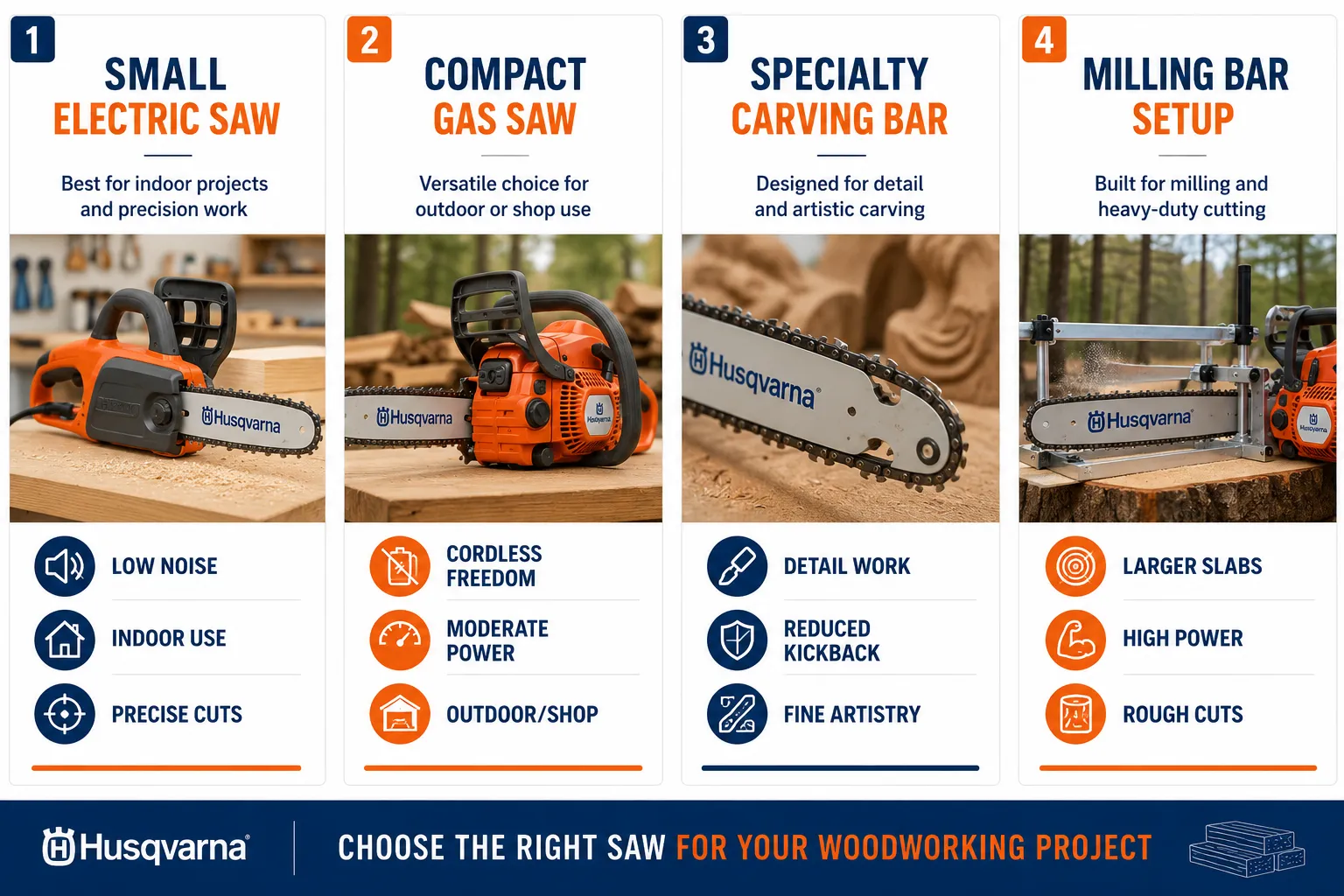
Selecting the appropriate Husqvarna chainsaw is the first critical step. While larger, more powerful models are ideal for initial log breakdown, fine woodworking demands agility and control.
- Smaller Gas-Powered Saws: Models like the Husqvarna 120 Mark II or 130 offer a good balance of power and maneuverability. Their lighter weight and smaller engine displacement make them easier to handle for sustained periods and allow for more controlled cuts. These are excellent for larger sculptural elements or shaping substantial components.
- Electric/Battery-Powered Saws: For ultimate precision, lower noise, and indoor use, Husqvarna’s electric or battery-powered options (e.g., 120i, 325iLK) are often preferred. They produce no exhaust fumes, offer instant start-up, and some models provide variable speed control, which is highly beneficial for delicate work. The reduced vibration and quiet operation also contribute to a more pleasant and safer working environment, particularly when focusing on intricate details.
Beyond the powerhead, the cutting attachment is paramount. Traditional bars are designed for general felling and bucking. For fine woodworking, consider these specialized options:
- Carving Bars (Dime Tip/Pencil Nosed): These are perhaps the most important accessory for detailed work. Carving bars have a much smaller radius at the tip, often no wider than a dime or pencil. This reduced tip allows for extremely tight turns, precise plunge cuts, and delicate shaping without the aggressive kickback associated with standard bar tips. They are indispensable for creating intricate forms, hollowing out bowls, or sculpting figures.
- Smaller Gauge Chains: Pairing a carving bar with a smaller gauge (e.g., .043″ or .050″) chain further enhances precision. These chains create a narrower kerf, removing less material and allowing for cleaner, more delicate cuts.
- Ripping Chains (for Slabs): While our focus is beyond milling, it’s worth noting that if you do process your own slabs, a dedicated ripping chain (designed to cut parallel to the grain) significantly improves efficiency and produces smoother surfaces compared to a standard cross-cutting chain.
For projects that start with raw timber, understanding live edge slab selection and preparation is crucial, even when using chainsaws for more refined work later on.
Advanced Techniques for Shaping and Carving Wood
Mastering Husqvarna chainsaws for fine woodworking requires more than just pointing and cutting. It involves developing specific techniques that prioritize control, precision, and safety. The inherent power of a chainsaw demands respect and a methodical approach, especially when working on pieces that will become part of a finished furniture item.
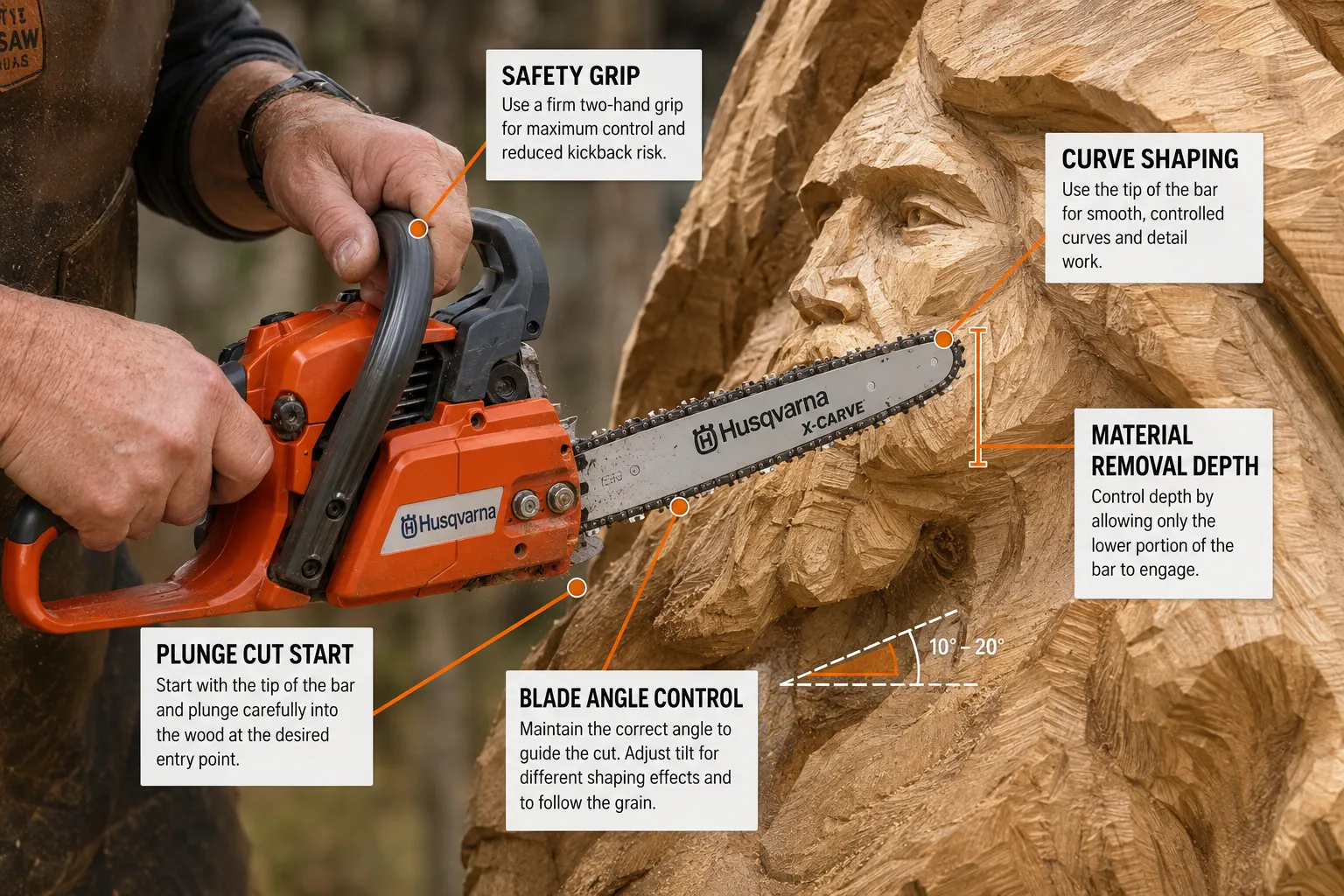
One fundamental technique is plunge cutting, where the tip of the bar is deliberately inserted into the wood. With a standard bar, this is incredibly dangerous due to kickback. However, with a carving bar’s dime tip, controlled plunge cuts become possible, allowing for internal shaping, hollowing, and creating recessed areas that would be challenging with other tools. This technique is invaluable for carving bowls, sculpting chair seats, or creating negative space in artistic pieces.
Another powerful application is shaping curves and organic forms. By gradually tilting and rotating the chainsaw with a carving bar, woodworkers can “draw” sweeping curves and intricate contours directly into the wood. This is particularly effective for designing ergonomic chair backs, sculptural table bases, or flowing architectural details. The speed at which large amounts of material can be removed and shaped is a significant advantage over hand tools.
Texturing and Surface Finishing with a Chainsaw
Beyond shaping, chainsaws can also be used for creative texturing and surface finishing. By lightly touching the moving chain to the surface of the wood, a skilled artisan can create unique patterns, ripples, and distressed looks that add character and depth to a piece. This could range from subtle, undulating marks that catch the light to aggressive gouges for a rustic or industrial aesthetic. When considering the essential guide to wood species for beginner furniture makers, think about how different grain patterns and hardness levels will react to these texturing techniques.
| Technique | Application | Husqvarna Benefit | Safety Considerations |
|---|---|---|---|
| Plunge Cutting | Hollowing, internal shaping, recessed features | Carving bar enables controlled entry | Extreme caution, proper grip, secure workpiece |
| Curve Shaping | Ergonomic forms, sculptural elements, flowing lines | Rapid material removal, unique organic contours | Smooth, consistent movements, maintain balance |
| Detail Carving | Fine lines, intricate designs, artistic flourishes | Dime tip allows tight turns and precision | Light touch, minimal pressure, constant awareness |
| Surface Texturing | Rustic finishes, ripple patterns, distressed looks | Quick application, distinct marks | Shallow passes, avoid digging in, eye protection |
| Precision Trimming | Squaring edges of rough-cut slabs, tenon shoulders | Fast and accurate with guides/jigs | Use of guides and clamps, careful measurement |
Safety cannot be overstated when using chainsaws for fine work. Always wear appropriate personal protective equipment (PPE), including hearing protection, eye protection, sturdy gloves, and chainsaw chaps. The workpiece must be securely clamped or braced to prevent movement. Employing essential woodworking jigs can drastically improve accuracy and safety. Furthermore, always maintain a firm two-hand grip, be aware of kickback zones, and keep bystanders at a safe distance.
Integrating Chainsaw Work into Fine Furniture Making
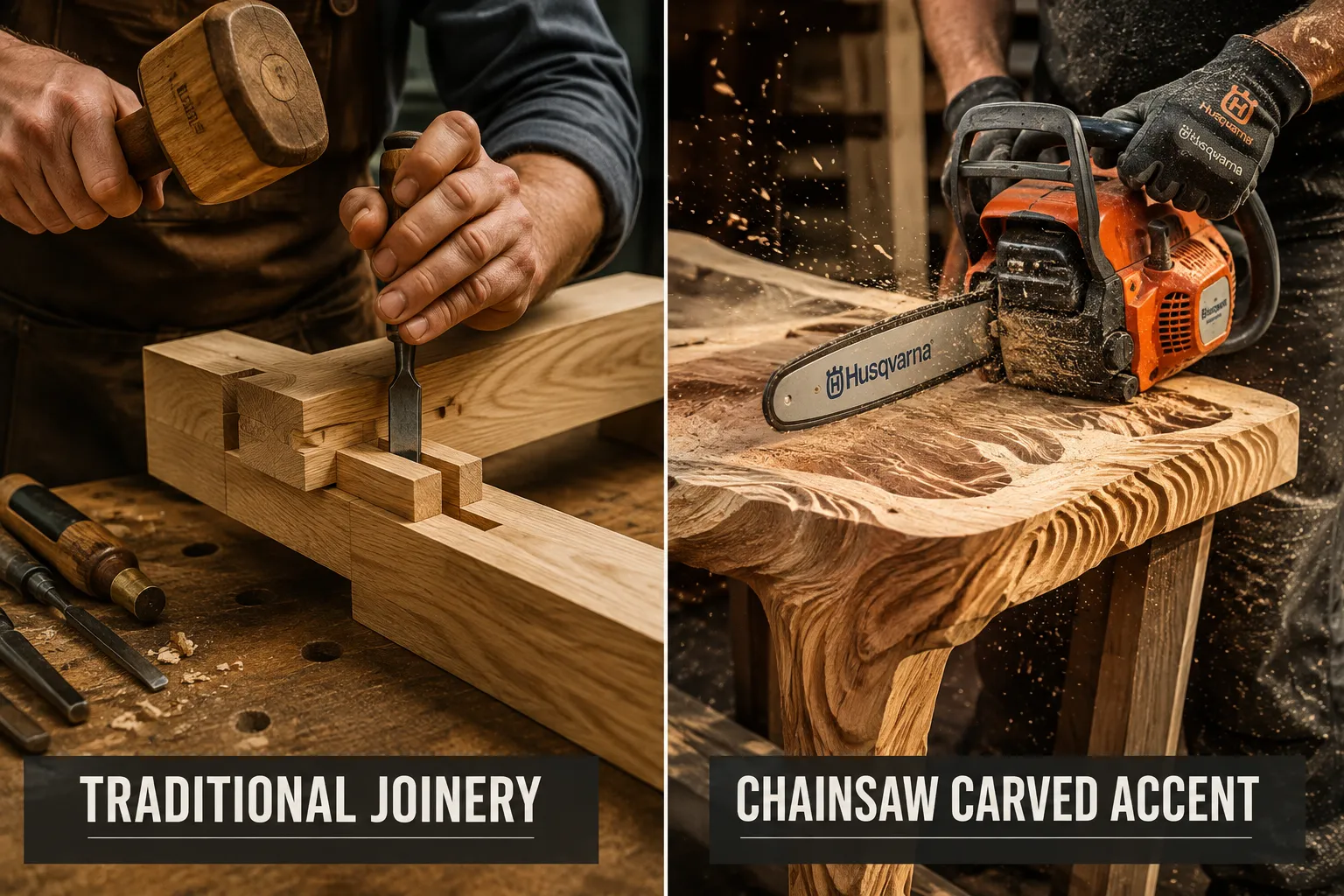
The true artistry of using Husqvarna chainsaws for fine woodworking emerges when these techniques are integrated seamlessly into the broader furniture-making process. Rather than being a standalone method, chainsaw work can complement traditional hand tools and stationary machines, allowing woodworkers to tackle projects with greater ambition and efficiency. This holistic approach combines the raw power and unique capabilities of the chainsaw with the refined precision of chisels, planes, and sanding equipment.
Consider a large, live-edge dining table. While the initial slab might be milled with a chainsaw, the edges can then be refined and shaped further using a carving bar to create dynamic, flowing contours that enhance the natural beauty of the wood. Legs or bases could feature chainsaw-carved sculptural elements, adding a dramatic flair that distinguishes the piece. Once the chainsaw has defined the overall form and texture, the piece transitions to more traditional methods for final smoothing, joinery (like beginners guide to hand cut mortise and tenon joints), and finishing.
Case Studies: Beyond the Ordinary
- Sculpted Seating: Chairs with seats hollowed and shaped for ergonomic comfort can be rapidly prototyped or fully produced using a carving chainsaw, followed by detailed sanding.
- Organic Table Bases: Instead of traditional turned or square legs, chainsaw-carved bases can mimic natural root systems or abstract forms, providing a unique foundation for tabletops.
- Decorative Panels: Wall art or integrated panels within cabinetry can feature deep, textured patterns or relief carvings created efficiently with a chainsaw.
- Artistic Accents: Small, standalone sculptural elements or embellishments can be carved and incorporated into larger furniture pieces, offering intricate detail and visual interest.
For those building statement furniture pieces, the ability to add unique, chainsaw-carved elements can significantly elevate the design and perceived value. The rough, aggressive marks left by the chainsaw can even be embraced as part of the aesthetic, contrasting beautifully with polished, smooth surfaces elsewhere on the piece. This juxtaposition creates a dynamic tension that is highly appealing in contemporary and rustic design.
The advent of compact, powerful, and increasingly precise Husqvarna chainsaws, particularly battery-powered models, means that even a small workshop can accommodate these tools. For those building a compact multi-functional woodworking bench for apartment dwellers, a small electric chainsaw with a carving bar offers creative potential without requiring a vast outdoor space or extensive ventilation.
The final steps involve extensive sanding, which, after chainsaw work, will be more demanding than usual. Start with aggressive grits to remove the deepest chainsaw marks, progressively moving to finer grits to achieve a desired smoothness. Understanding beyond basic sanding: achieving a flawless finish is crucial for transforming a chainsaw-carved piece into a refined work of art.
Conclusion
The notion that Husqvarna chainsaws are solely for the arduous task of felling trees or roughly processing timber is an outdated one. In 2026, a growing number of fine woodworkers are embracing these powerful tools for their precision, speed, and unique capabilities in shaping, carving, and texturing wood. From sculpting intricate chair seats to creating dramatic organic table bases or decorative panels, Husqvarna chainsaws, when paired with specialized carving bars and practiced techniques, offer an expansive palette for artistic expression that goes far beyond milling logs for furniture slabs.
For any woodworker looking to push the boundaries of their craft, explore new aesthetics, or simply work with greater efficiency on larger or more complex forms, investing in a suitable Husqvarna chainsaw and dedicating time to mastering its use for fine work can be a transformative step. Remember to prioritize safety above all else, equip yourself with the right accessories, and approach each cut with deliberate precision. By doing so, you can unlock a new dimension of creativity, allowing your woodworking projects to move from functional to truly sculptural and unique.
References
- Husqvarna. (n.d.). Chainsaws. Retrieved from https://www.husqvarna.com/us/chainsaws/
- Stihl Inc. (n.d.). Carving with a Chain Saw. Retrieved from https://www.stihlusa.com/stihlnews/carving-with-a-chain-saw/
SEO Meta Title: Husqvarna Chainsaws: Precision for Fine Woodworking & Carving
SEO Meta Description: Explore how Husqvarna chainsaws excel in fine woodworking beyond milling logs. Learn techniques for carving, shaping, and texturing wood for unique furniture and art in 2026.