
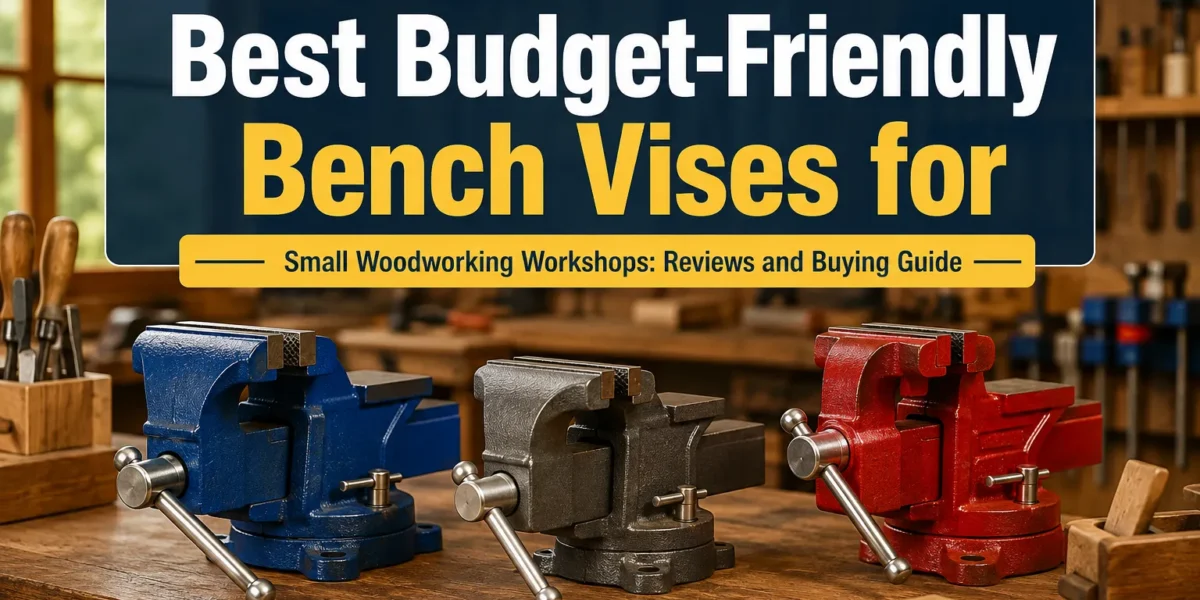
Even with a constrained budget, the pursuit of precision and stability in a small woodworking workshop remains a cornerstone for quality craftsmanship. Many aspiring woodworkers believe that a reliable bench vise is an expensive luxury, often overlooking the robust, budget-friendly options available today. This article will help you navigate the landscape of affordable clamping solutions, providing detailed reviews and a comprehensive buying guide to find the Best Budget-Friendly Bench Vises for Small Woodworking Workshops: Reviews and Buying Guide in 2026. Investing wisely in a foundational tool like a bench vise ensures safety, accuracy, and efficiency without draining your workshop funds.
Key Takeaways
- Essential Stability: A bench vise is crucial for securely holding workpieces, improving safety and precision in small woodworking projects.
- Budget Doesn’t Mean Low Quality: Many affordable vises offer excellent durability and functionality suitable for small workshops.
- Key Features Matter: Consider jaw width, opening capacity, mounting style, and material when choosing a budget-friendly option.
- Types Vary: Woodworking vises, machinist vises (adaptable), and quick-release vises each offer distinct advantages for different tasks.
- Maintenance Extends Life: Regular cleaning and lubrication are vital for maximizing the lifespan and performance of any bench vise, especially budget models.
Understanding the Importance of a Bench Vise in Small Woodworking Workshops
For any woodworker, regardless of experience level, a sturdy bench vise is more than just an accessory; it’s a fundamental requirement. In a small woodworking workshop, where space is often at a premium, a well-chosen vise becomes even more critical. It acts as an extra set of hands, securely clamping your workpiece so you can saw, plane, chisel, or sand with both hands free and full control. Without a reliable vise, many common woodworking tasks become cumbersome, less accurate, and potentially unsafe.
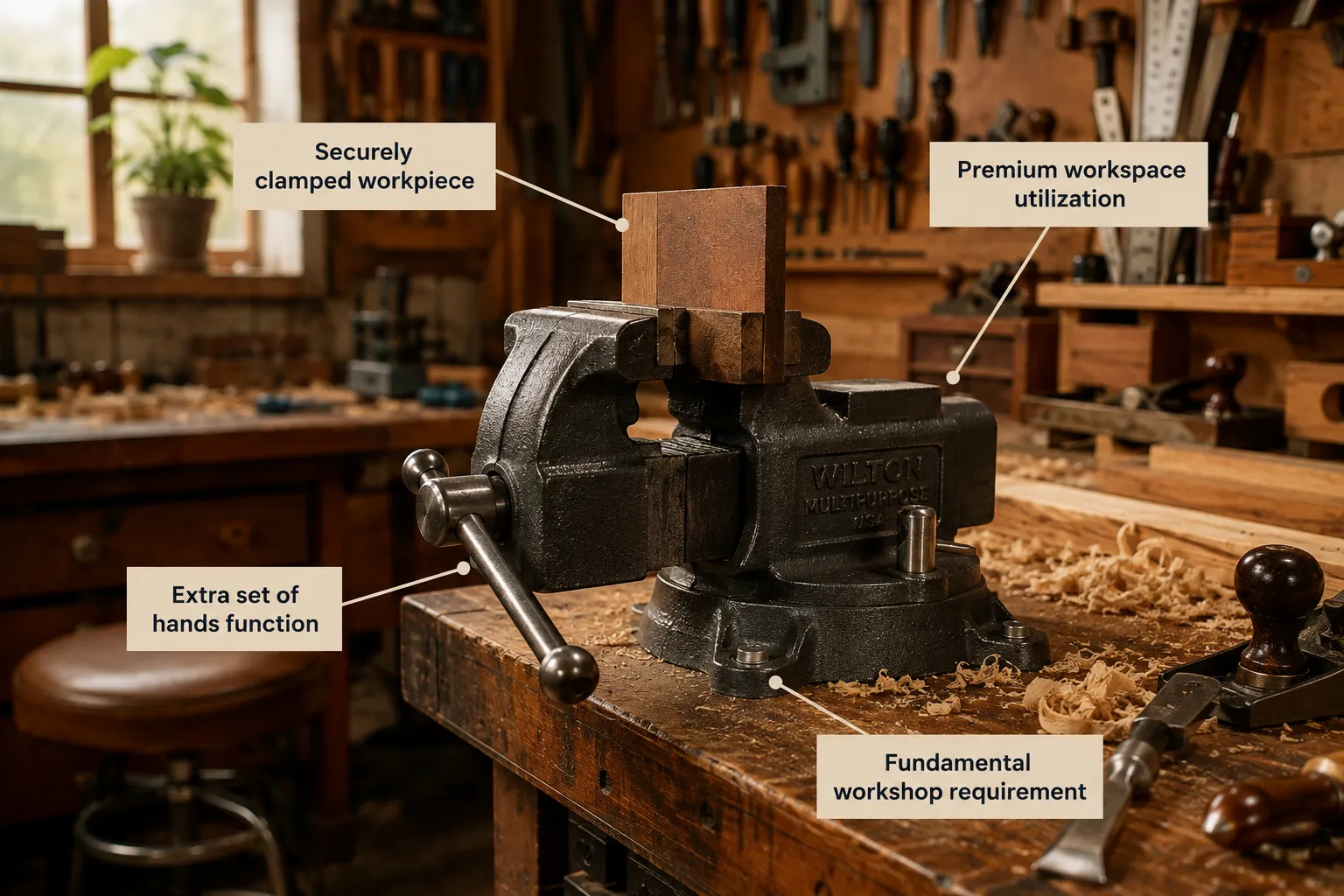
A quality vise provides the necessary rigidity to prevent wood from shifting under force, which is essential for precise cuts and clean joinery. Imagine trying to hand-plane a board without it being firmly held, the risk of slippage, inaccurate cuts, and even injury increases significantly. For those setting up their first workshop or looking to upgrade existing tools, identifying the Best Budget-Friendly Bench Vises for Small Woodworking Workshops: Reviews and Buying Guide is paramount. It ensures you establish a strong foundation for your projects without overspending.
Types of Bench Vises Suitable for Woodworking
While there’s a vast array of vises available, certain types are better suited for the specific demands of woodworking, particularly in a small workshop setting where versatility and compactness are valued. Understanding the distinctions will help you make an informed decision.
- Woodworking Vise (Front Vise/End Vise): This is the traditional choice for woodworkers. Typically mounted flush with the workbench surface, it features wooden or padded metal jaws to prevent marring the workpiece. Front vises are excellent for edge-clamping boards for planing or routing, while end vises are ideal for holding longer boards on their faces for mortising or dovetailing.
- Pros: Designed specifically for wood, less likely to mar surfaces, often has dog holes for clamping wider pieces with bench dogs.
- Cons: Can be more expensive than general-purpose vises, less versatile for metalwork.
- Machinist Vise (Adaptable for Woodworking): While primarily designed for metalwork, a sturdy machinist vise can be adapted for woodworking. These vises are known for their heavy-duty construction and strong clamping force. Many come with swivel bases, offering flexibility in workpiece orientation. To protect wood, soft jaw covers (magnetic or bolt-on) are essential.
- Pros: Extremely durable, high clamping force, versatile for other shop tasks, often more affordable for robust build quality.
- Cons: Metal jaws require padding for wood, can be overkill for light tasks, typically heavier.
- Quick-Release Vise: A variation often found in woodworking vises, the quick-release mechanism allows the movable jaw to slide freely without turning the handle, until a slight turn engages the screw. This saves significant time when clamping and unclamping pieces of varying sizes.
- Pros: Extremely efficient for repetitive tasks, fast adjustments.
- Cons: Can sometimes be less robust than standard screw-only vises in budget models.
- Face Vise: Often integrated into a workbench, a face vise clamps workpieces against the workbench face itself. They are excellent for holding wide panels or larger assemblies.
- Pros: Strong holding power for large pieces, becomes part of the workbench structure.
- Cons: Can be more complex to install, may require a dedicated workbench design.
For small workshops, a combination of a woodworking vise or an adaptable machinist vise with soft jaws often provides the best balance of functionality and budget. Remember, even with the Best Folding Tables for Woodworking and DIY: Comparing or a custom-built bench, a vise needs to be securely mounted. Consider consulting guides like “Building Your First DIY Heavy-Duty Workbench: A Step-by-Step Guide to” for optimal integration.
Critical Features for Budget-Friendly Bench Vises
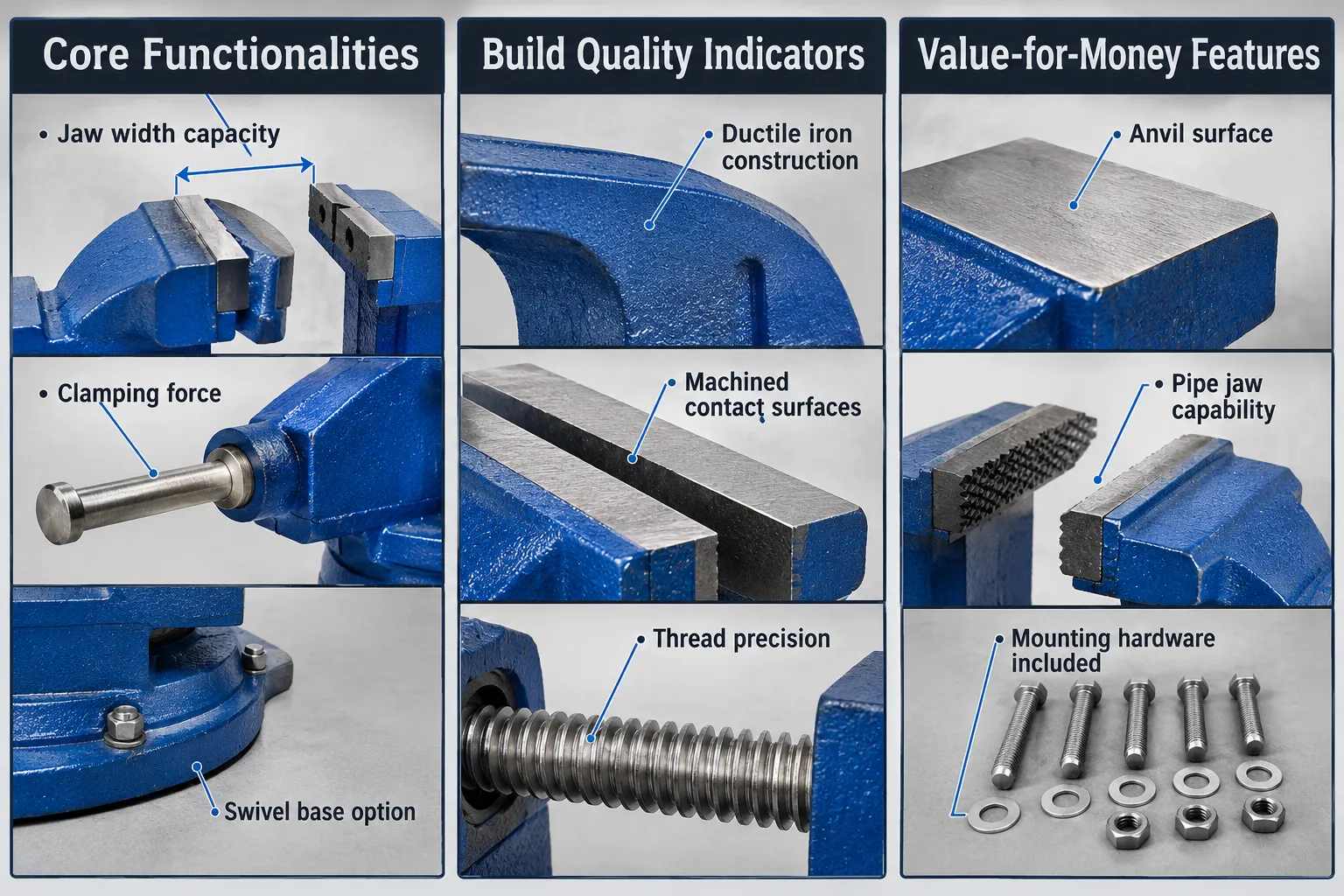
When searching for the Best Budget-Friendly Bench Vises for Small Woodworking Workshops: Reviews and Buying Guide, it’s easy to get sidetracked by flashy features. However, focusing on core functionalities and build quality will ensure you get the most value for your money. A budget-friendly vise should still be reliable, durable, and capable of handling the tasks required in a small woodworking setup.
Construction Material and Durability
The material a vise is made from directly impacts its strength, longevity, and overall performance.
- Cast Iron: The most common material for bench vises.
- Gray Cast Iron: Affordable and generally sufficient for light to medium-duty woodworking. It’s strong under compression but can be brittle under impact or extreme force. Look for reputable brands that use quality castings.
- Ductile Iron: A stronger, more impact-resistant form of cast iron. It’s often found in slightly higher-priced budget models and offers a significant upgrade in durability without a huge price jump.
- Steel: Less common in budget woodworking vises due to higher cost, but offers superior strength and resilience. If you find a steel vise within your budget, it’s often a good investment.
Recommendation: For budget options, ductile iron is preferable. If only gray cast iron is available, ensure it’s from a reputable manufacturer with good reviews regarding casting quality.
Jaw Width and Opening Capacity
These dimensions dictate the size of the workpieces you can effectively clamp.
- Jaw Width: For small woodworking projects, a jaw width of 6 to 7 inches is often ideal. It provides enough surface area to hold boards securely without being overly bulky for a compact workbench.
- Opening Capacity: This refers to how wide the jaws can open. An opening of 6 to 8 inches is usually sufficient for most small woodworking tasks, allowing you to clamp standard dimensional lumber. If you plan to work with thicker stock or glue-ups, a larger opening might be beneficial.
Tip: Always check the actual opening capacity, as it might differ slightly from the jaw width.
Mounting Options
How the vise attaches to your workbench affects its stability and your workflow.
- Permanent Mount (Bolted): The most secure option. The vise is bolted directly through your workbench. This provides maximum stability and is highly recommended for any serious woodworking. Ensure your workbench is robust enough to handle the stresses. For ideas on optimizing your workshop space, check out “Efficient Small Workshop Layouts For 2026 Mobile Tool Stations And Dust Collection Upgrades.”
- Clamp-On Mount: Less common for dedicated woodworking vises, but sometimes found on smaller, portable models. These are secured to the edge of a workbench with a built-in clamp.
- Pros: Portable, easy to attach/remove.
- Cons: Less stable, prone to wiggling under heavy work, not ideal for precision tasks.
Recommendation: Prioritize a bolt-on vise for stability and safety, even in a small workshop.
Smoothness of Operation and Clamping Force
A vise is only effective if it can be easily operated and holds work securely.
- Lead Screw and Guide Rods: Look for vises with smoothly machined lead screws and guide rods. Rough or poorly finished components will lead to jerky operation and faster wear. A large, comfortable handle also makes tightening easier.
- Clamping Force: The vise should be able to hold a workpiece without slipping, even under significant force from planing or chiseling. While budget vises may not match the clamping power of high-end models, they should still be sufficient for typical woodworking tasks. Avoid vises that feel flimsy or struggle to grip.
Pro Tip: Lubricate the lead screw regularly with a dry lubricant or paraffin wax to ensure smooth operation and extend the life of the vise.
Top Budget-Friendly Bench Vises: Reviews for 2026
Finding the Best Budget-Friendly Bench Vises for Small Woodworking Workshops: Reviews and Buying Guide means balancing cost with critical performance features. We’ve evaluated several popular options that consistently deliver good value for money, making them excellent choices for small workshops.
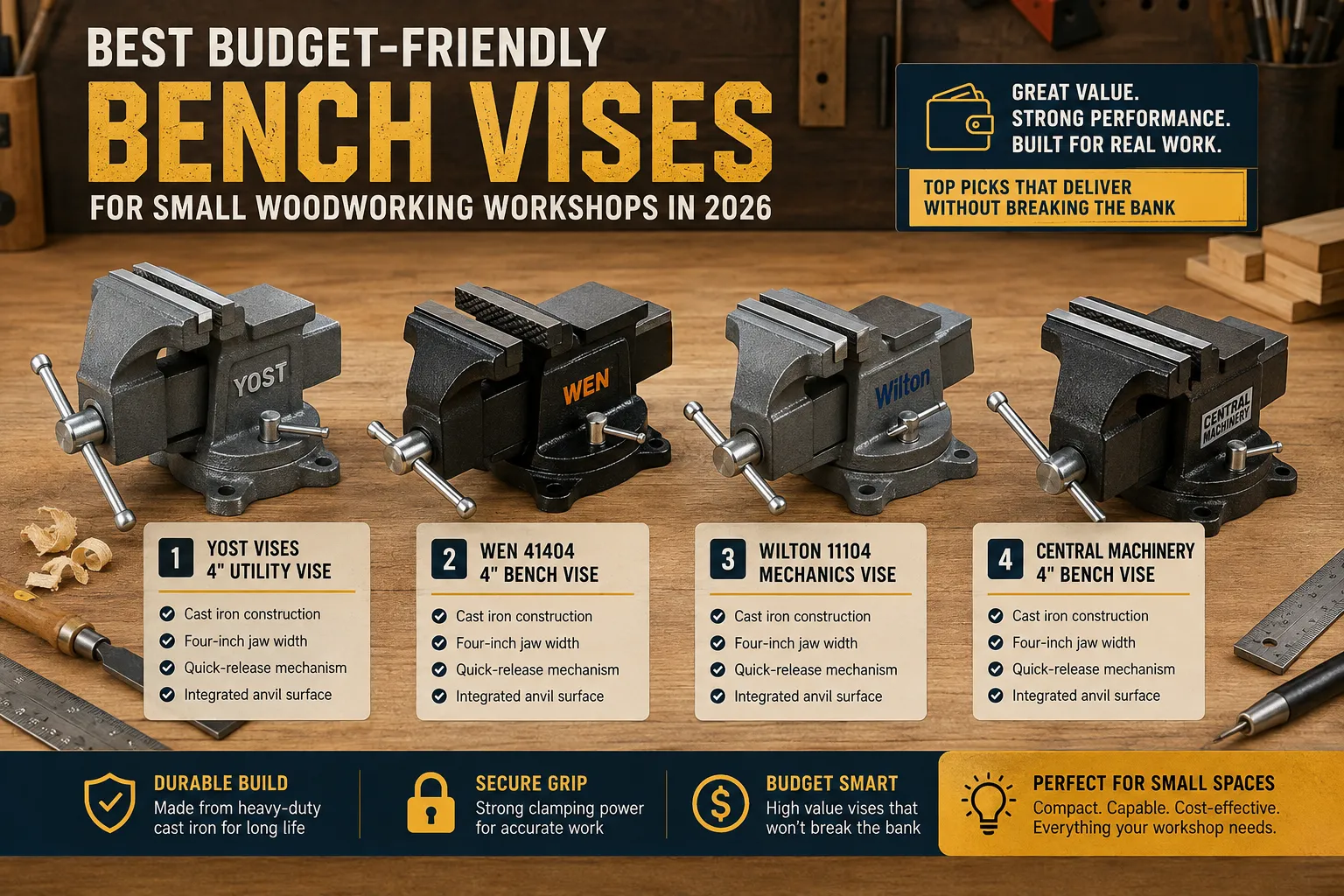
Yost LV-4 Home Vise
The Yost LV-4 is a highly popular choice for those seeking a versatile and affordable vise. While often categorized as a general-purpose vise, its robust construction and swivel base make it adaptable for woodworking with proper care.
- Key Features:
- Construction: Ductile iron construction, making it much stronger and more durable than typical gray cast iron budget vises.
- Jaw Width & Opening: Features a 4.5-inch jaw width and a decent opening, suitable for many small to medium woodworking tasks.
- Mounting: Swivel base allows for 360-degree rotation, which is incredibly useful for positioning workpieces at various angles. It bolts securely to a workbench.
- Additional Features: Includes an integrated anvil, handy for light metalwork or striking components, though woodworkers should use caution.
- Pros: Excellent value for money due to ductile iron, versatile swivel base, durable.
- Cons: Requires soft jaws (purchased separately or DIY wood pads) to protect wood, jaw width might be limiting for very wide boards.
- Ideal for: Woodworkers who need a sturdy, versatile vise for both wood and occasional metalwork, and who are willing to add soft jaw protection.
WEN 4.5-Inch Cast Iron Bench Vise
The WEN bench vise is another strong contender in the budget category, known for its solid construction and practical features.
- Key Features:
- Construction: Made from robust cast iron, designed for reliable clamping force.
- Jaw Width & Opening: Offers a 4.5-inch jaw width and a substantial opening, providing ample capacity for various woodworking projects.
- Mounting: Features a 270-degree swivel base, allowing for flexible positioning. Secure bolt-down design.
- Additional Features: Hardened steel jaws with a diamond pattern for grip (again, use soft jaws for wood), and a large anvil surface.
- Pros: Strong clamping, good value, swivel base, sturdy for the price point.
- Cons: Cast iron (likely gray) means it’s less impact resistant than ductile iron, standard jaws will mark wood without protection.
- Ideal for: Woodworkers seeking a dependable, affordable vise for general clamping, especially when paired with DIY wooden jaw pads.
Wilton 11104 Wilton LX40 4-Inch Light-Duty Bench Vise
Wilton is a respected name in vises, and their LX40 offers a light-duty, yet surprisingly capable option for small workshops on a budget.
- Key Features:
- Construction: Durable cast iron body, engineered for stable performance.
- Jaw Width & Opening: 4-inch jaw width, which is slightly smaller but still effective for many smaller projects, and a good opening capacity.
- Mounting: Features a 120-degree swivel base for angled work. Designed for secure bolt-down installation.
- Additional Features: Includes a prominent anvil surface.
- Pros: Reputable brand quality, sturdy enough for small projects, compact size suitable for very tight spaces.
- Cons: Jaw width may be limiting for larger pieces, typically a higher price point for its size compared to others.
- Ideal for: Beginners or those with very limited space who prioritize a known brand and plan to work primarily on smaller items or detailed Handcrafted Jewelry Boxes And Serving Trays Building Heirloom Quality Small Projects That Command Premium Prices.
IRWIN Tools Record General Purpose Vise (6-Inch)
While sometimes slightly above the strict “budget” threshold, the IRWIN Record General Purpose Vise, especially the 6-inch model, is often considered a benchmark for quality and durability at a reasonable price. Its design is rooted in traditional British Record vises, known for their robust build.
- Key Features:
- Construction: High-quality gray iron castings, well-machined components.
- Jaw Width & Opening: 6-inch jaws and a generous opening, providing excellent capacity for a wide range of woodworking tasks.
- Mounting: Fixed base (some models offer swivel) for maximum rigidity once bolted down.
- Additional Features: Often features an integrated anvil and a well-machined lead screw for smooth operation.
- Pros: Excellent build quality for the price, superior clamping force, durable.
- Cons: Can be at the upper end of a “budget” for some, heavier and larger than some alternatives.
- Ideal for: Woodworkers who can stretch their budget slightly for a long-lasting, reliable vise that handles medium to large projects in a small workshop, and want something that feels truly substantial.
The choice among these options for the Best Budget-Friendly Bench Vises for Small Woodworking Workshops: Reviews and Buying Guide ultimately depends on your specific needs, the size of your projects, and your exact budget. Remember to factor in the cost of soft jaws or materials to make them for any general-purpose vise.
Buying Guide: Making the Right Choice
Selecting the Best Budget-Friendly Bench Vises for Small Woodworking Workshops: Reviews and Buying Guide requires a systematic approach. Beyond the specific models, understanding the nuances of how to evaluate a vise will empower you to make an informed decision that suits your workshop and budget.
Assessing Your Woodworking Needs
Before you even look at specific vises, take stock of your typical projects and workflow.
- Project Size: Are you mainly working on small items like Quick Woodworking Projects That Sell: 10 Beginner Builds Under a or intricate joinery, or do you occasionally tackle larger pieces like small tables or shelves? This will influence the required jaw width and opening capacity.
- Type of Work: Will you be doing a lot of hand planing, chiseling, or delicate carving? Different tasks demand varying levels of stability and jaw protection. If precise joinery is a focus, consider how the vise integrates with Beginners Guide To Hand Cut Joinery Classic Joints Adapted For Modern Workshop Workflows.
- Workshop Space: Is your space truly tiny, or do you have a bit more room? A more compact vise might be necessary for very confined areas, influencing choices between fixed and swivel bases.
Setting a Realistic Budget
“Budget-friendly” can mean different things to different people. For bench vises, a realistic budget for a good entry-level or mid-range option typically falls between $50 and $150 in 2026. Going too low might result in a flimsy tool that frustrates more than it helps.
- Consider Long-Term Value: Sometimes spending an extra $20-$30 on a ductile iron vise versus a cheaper gray cast iron one can translate into years of extended service. This is often a better investment than having to replace a cheaper vise within a year or two.
- Factor in Accessories: Remember to budget for soft jaws if you choose a general-purpose vise. You can buy magnetic soft jaws or easily make wooden ones from scrap wood.
Reading Reviews and User Feedback
Online reviews and user testimonials are invaluable when evaluating budget tools.
- Look for Consistency: Pay attention to recurring comments about a product’s strengths and weaknesses. If multiple users report issues with a particular component (e.g., a sticky screw, loose swivel), it’s a red flag.
- Focus on Relevant Use Cases: Search for reviews from other woodworkers or DIY enthusiasts, as their experiences will be most relevant to your needs. A machinist’s review, while valid, might emphasize different qualities.
- Check for Durability Over Time: Some reviews provide long-term feedback, which is crucial for assessing how a budget vise holds up after extended use.
Essential Maintenance for Longevity
Even the Best Budget-Friendly Bench Vises for Small Woodworking Workshops benefit from proper care to ensure they last.
- Regular Cleaning: Sawdust and debris can clog the lead screw and guide rods. Use a brush and compressed air to keep these areas clean.
- Lubrication: Periodically apply a dry lubricant (like graphite or paraffin wax) to the lead screw and guide rods. Avoid grease or oil if you work near wood projects that will be finished, as these can transfer to the wood and cause finishing problems.
- Inspection: Routinely check all mounting bolts for tightness and inspect the vise for any signs of wear or damage. Tighten bolts as needed.
By carefully considering your needs, setting a realistic budget, and prioritizing durable construction with smooth operation, you can confidently select a bench vise that will serve your small woodworking workshop well for years to come.
Alternative Clamping Solutions for Small Workshops
While a bench vise is indispensable, small woodworking workshops often benefit from a range of clamping solutions to tackle various project demands, especially when space and budget are limited. These alternatives can supplement or, in some cases, temporarily substitute for a dedicated bench vise.
F-Clamps and C-Clamps
These are the workhorses of any woodworking shop.
- F-Clamps: Also known as bar clamps, F-clamps offer quick adjustments and good clamping pressure. They are ideal for edge-gluing panels, holding assemblies while glue dries, or securing workpieces to a workbench.
- C-Clamps: Known for their deep throat and strong clamping force, C-clamps are excellent for holding smaller pieces or clamping odd shapes.
- Benefits: Versatile, relatively inexpensive, come in various sizes.
- Limitations: Can be slower to adjust than a vise, may require multiple clamps for larger pieces, can obstruct work due to their body.
Quick-Grip Clamps (Bar Clamps)
These clamps are designed for speed and ease of use, often allowing for one-handed operation.
- Features: Trigger-style release and tightening, often convertible to spreaders.
- Benefits: Extremely fast clamping, useful for quick setups, can apply moderate pressure.
- Limitations: Generally provide less clamping force than F-clamps or vises, and jaw pads may not always be large enough for every application.
Bench Dogs and Holdfasts
These traditional workholding tools work in conjunction with holes in your workbench.
- Bench Dogs: Small pegs that fit into holes on the workbench top. They hold a workpiece against a fixed stop or another dog, especially useful for planing long boards. Many woodworking vises incorporate dog holes into their movable jaw.
- Holdfasts: Simple L-shaped tools that secure a workpiece to the benchtop through friction. They are inserted into dog holes and struck with a mallet to create a strong hold.
- Benefits: Excellent for clamping large, flat panels to the bench, don’t obstruct the workpiece from the sides.
- Limitations: Requires a workbench with dog holes (a DIY friendly feature for many workbench builds), can be less precise for certain tasks than a vise.
- For example, if you are building a Building A Portable Woodworking Assembly Table With Integrated Clamping And Storage Solutions, incorporating dog holes from the start is a wise move.
Clamp Vise Attachments
Some manufacturers offer portable clamp vise attachments that can be temporarily mounted to a workbench or even a sawhorse.
- Features: Often small, lightweight vises that clamp onto an existing surface.
- Benefits: Highly portable, suitable for temporary setups or very small projects.
- Limitations: Limited clamping force and stability compared to a bolted-down vise.
While these alternatives are valuable, none fully replace the dedicated, rock-solid stability and versatile clamping of a properly mounted bench vise, especially for precision work. They serve best as complementary tools to expand your workholding capabilities in a small woodworking workshop. Even with excellent hand tools like those discussed in “Essential Hand Tools For Every Woodworker A Comprehensive Guide To Selection Sharpening And Maintenance“, a solid workholding setup is key.
Conclusion
Equipping a small woodworking workshop with essential tools doesn’t require an exorbitant budget. A high-quality, budget-friendly bench vise is an investment that pays dividends in safety, precision, and efficiency for countless projects. By focusing on critical features like ductile iron construction, appropriate jaw width, secure mounting, and smooth operation, woodworkers can find a dependable vise without breaking the bank.
The reviews of models like the Yost LV-4, WEN Cast Iron Bench Vise, Wilton LX40, and the IRWIN Record General Purpose Vise demonstrate that excellent value and performance are attainable. Remember that proper maintenance, regular cleaning and lubrication, will extend the life of even the most affordable vise, ensuring it remains a steadfast partner in your woodworking endeavors for years to come. Don’t let a tight budget deter you from acquiring this foundational tool; with careful consideration and research, the Best Budget-Friendly Bench Vises for Small Woodworking Workshops: Reviews and Buying Guide will lead you to the ideal choice for your space and craft.
Actionable Next Steps:
- Assess Your Needs: Review your typical projects and determine the necessary jaw width, opening capacity, and primary tasks for your vise.
- Set a Budget: Establish a realistic price range, remembering to factor in any potential accessories like soft jaws.
- Read User Reviews: Consult online feedback for the models discussed and others that catch your eye, paying attention to long-term durability.
- Prioritize Quality: Opt for ductile iron over gray cast iron if possible, or choose a reputable brand for cast iron models.
- Plan for Installation: Ensure your workbench is suitable for a bolt-down vise, and gather the necessary hardware for a secure mount.
References
- Duvall, M. (2012). Woodworking Vises for the Small Shop. Woodworkers Journal.
- Fine Woodworking Magazine. (2021). Essential Vises for Your Workbench. Taunton Press.
- Schwartz, J. (2016). The Anarchist’s Workbench. Lost Art Press.