

The transition from creating a single, exquisite wooden piece to manufacturing a small batch of production-ready goods presents a unique set of challenges, particularly in the realm of finishing. While the initial handcrafted appeal is paramount for artisan manufacturers, a truly professional and scalable operation demands finishes that are not only beautiful but also durable, consistent, and efficient to apply. This article explores essential strategies and techniques for [Wood Finishing for Artisan Manufacturers: Achieving Production-Ready Finishes for Small Batch Goods] in 2026, bridging the gap between bespoke craftsmanship and streamlined production.
Key Takeaways
- Consistency is Crucial: Production-ready finishes require uniformity in appearance, durability, and application across all units in a batch, moving beyond the variability acceptable for one-off pieces.
- Surface Preparation is Paramount: Proper sanding and conditioning are non-negotiable foundations for any high-quality, repeatable finish, regardless of the chosen topcoat.
- Efficiency Through Systemization: Implementing suitable application methods (e.g., HVLP spraying) and establishing a structured workflow can significantly reduce finishing time and improve consistency.
- Durability Meets Aesthetics: Selecting finishes that offer both visual appeal and robust protection is vital for products intended for sale and regular use, ensuring customer satisfaction.
- Ventilation and Safety: Adequate ventilation and personal protective equipment are essential, especially when scaling up finishing processes, to protect health and maintain a clean environment.
Understanding Production-Ready Finishes for Artisan Woodwork
For artisan manufacturers, “production-ready” means more than just a piece that looks good. It signifies a finish that is consistent across an entire batch, durable enough for its intended use, and applied efficiently without compromising quality. This contrasts sharply with the often slower, more individualistic approach taken for one-off custom pieces. When scaling up, even slightly, every minute saved in finishing multiplies across dozens or hundreds of items, directly impacting profitability and delivery schedules.
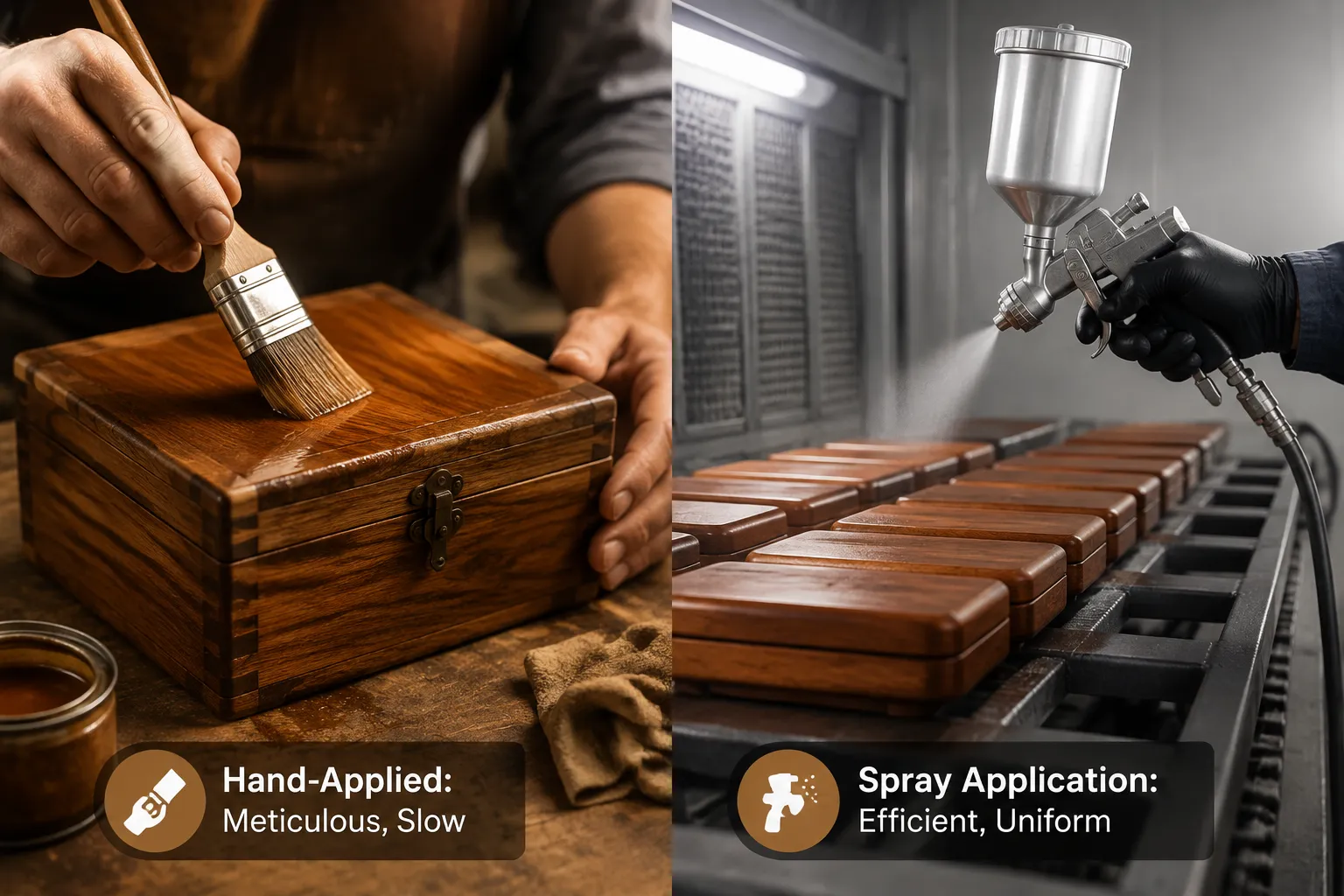
The goal is to achieve a factory-like consistency and resilience, without losing the handmade charm that defines artisan goods. This involves a critical assessment of traditional finishing methods versus more industrialized approaches. While hand-rubbed oil finishes offer a beautiful, tactile experience, they can be labor-intensive and challenging to reproduce identically across multiple units. Conversely, a spray-applied lacquer might offer superior durability and speed but requires careful technique to avoid a “mass-produced” look.
Achieving a production-ready finish begins long before the first drop of finish is applied. It starts with meticulous surface preparation. Irregularities in sanding, inconsistent grain raising, or lingering glue residue will be magnified by any finish, especially when striving for uniformity. Investing time in proper sanding, using progressive grits and finishing techniques is fundamental.
Key Considerations for Production Readiness:
- Repeatability: Can the same finish be achieved on the next batch of goods with predictable results? This demands standardized processes, controlled environments, and consistent material usage.
- Durability: Will the finish withstand typical wear and tear for its intended purpose? A decorative item needs less robust protection than a cutting board or a frequently handled piece of furniture.
- Cure Time: How quickly does the finish dry and cure to a usable state? Longer cure times can bottleneck production, requiring more space and delaying shipping.
- Cost-Effectiveness: Does the chosen finishing system balance material cost, labor, and equipment investment with the desired quality and production volume?
- Aesthetics: Does the finish enhance the wood’s natural beauty or apply the desired color/texture without detracting from the artisan quality?
Selecting the Right Finishing System for Small Batch Production
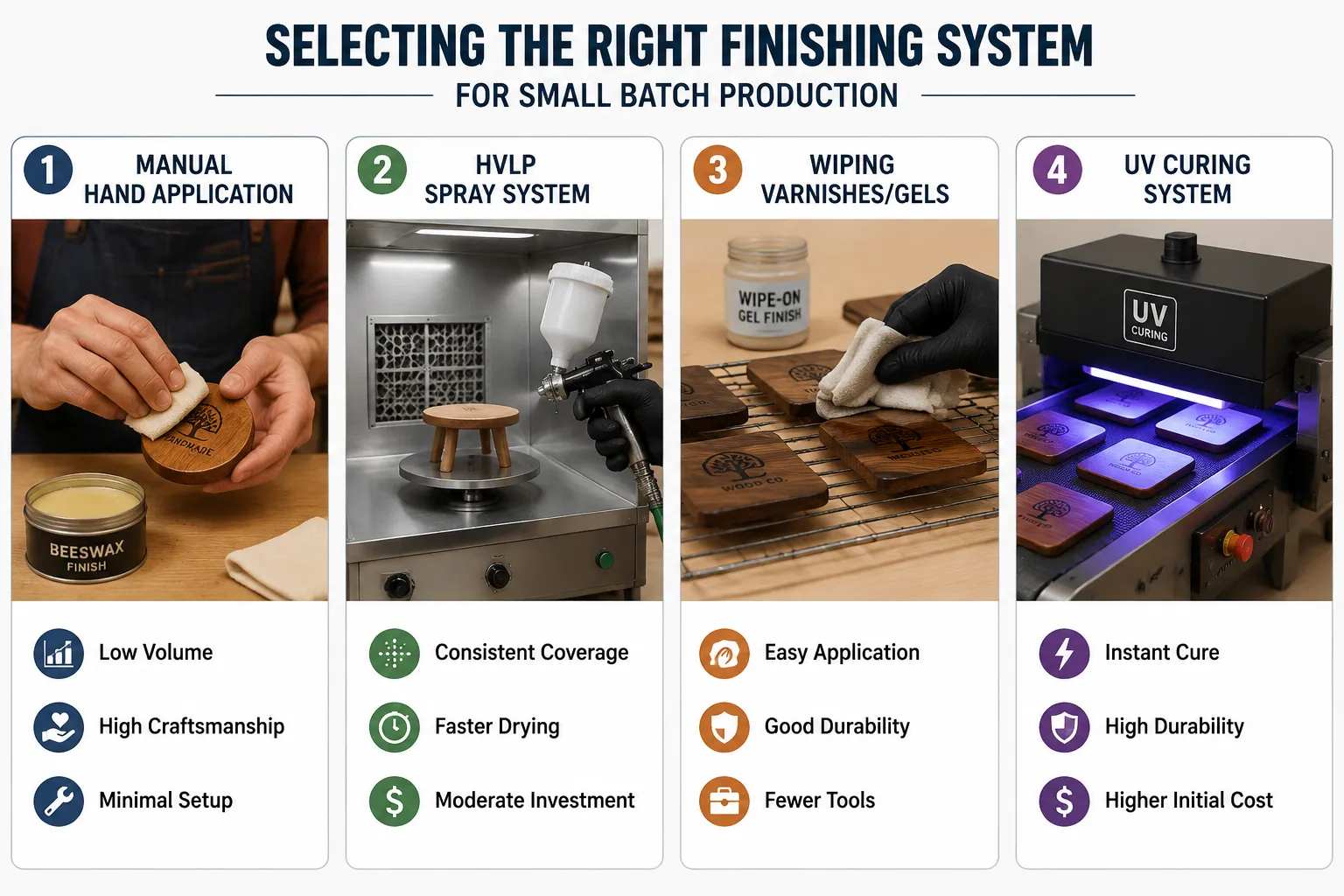
Choosing the appropriate finishing system is paramount for artisan manufacturers aiming for efficient small-batch production. The decision hinges on factors like desired aesthetic, durability requirements, production volume, budget, and available workspace. Different finishes and application methods offer distinct advantages.
Common Finishing Systems and Their Suitability:
Hand-Rubbed Oils and Waxes:
- Pros: Deep, natural look; easy repairability; low initial investment; excellent for accentuating wood grain. Ideal for budget-friendly wood finishing achieving professional results with oils waxes and shellac.
- Cons: Time-consuming application; often require multiple coats; slower cure times; less durable for high-traffic items compared to film-building finishes.
- Best For: Low-volume, high-value items where a natural, tactile feel is prioritized, such as decorative objects, small boxes, or specialized cutting boards.
Brushed or Wiped Varnishes and Polyurethanes:
- Pros: Good durability; relatively easy application for small, flat surfaces; provides a protective film.
- Cons: Can show brush marks; prone to dust nibs; inconsistent application can lead to uneven sheen; slower drying than spray methods.
- Best For: Slightly higher volume than oils, where a protective film is needed but spray equipment isn’t feasible, such as small shelves or picture frames.
HVLP (High Volume Low Pressure) Spray Systems:
- Pros: Fast, consistent, smooth application; excellent for complex shapes; minimal overspray and material waste; can apply a wide range of finishes (lacquers, varnishes, water-based coatings).
- Cons: Higher initial equipment cost; requires a dedicated spray booth or well-ventilated area; learning curve for proper technique.
- Best For: Most small-batch artisan production, offering the best balance of speed, consistency, and quality for items like small furniture, wooden toys, or custom kitchenware. This is often the first step towards scaling finishing operations.
Pre-Catalyzed Lacquers and Conversion Varnishes:
- Pros: Very durable; fast drying and curing; excellent clarity and build; ideal for high-wear items.
- Cons: Require spray application; specific safety precautions (ventilation, respirators); limited pot life once catalyzed; more challenging to repair.
- Best For: Artisan goods requiring industrial-level durability, such as dining table tops, high-use cabinetry components, or commercial display pieces.
Water-Based Finishes:
- Pros: Low VOCs (volatile organic compounds), easier cleanup with water, less odor, fast drying between coats.
- Cons: Can raise wood grain, may require more coats for durability, sometimes less forgiving to apply than solvent-based options.
- Best For: Environmentally conscious manufacturers, or those working in shared spaces where fumes are a concern. Ideal for children’s toys or kitchen items where food safety is a priority.
Implementing a Finishing System
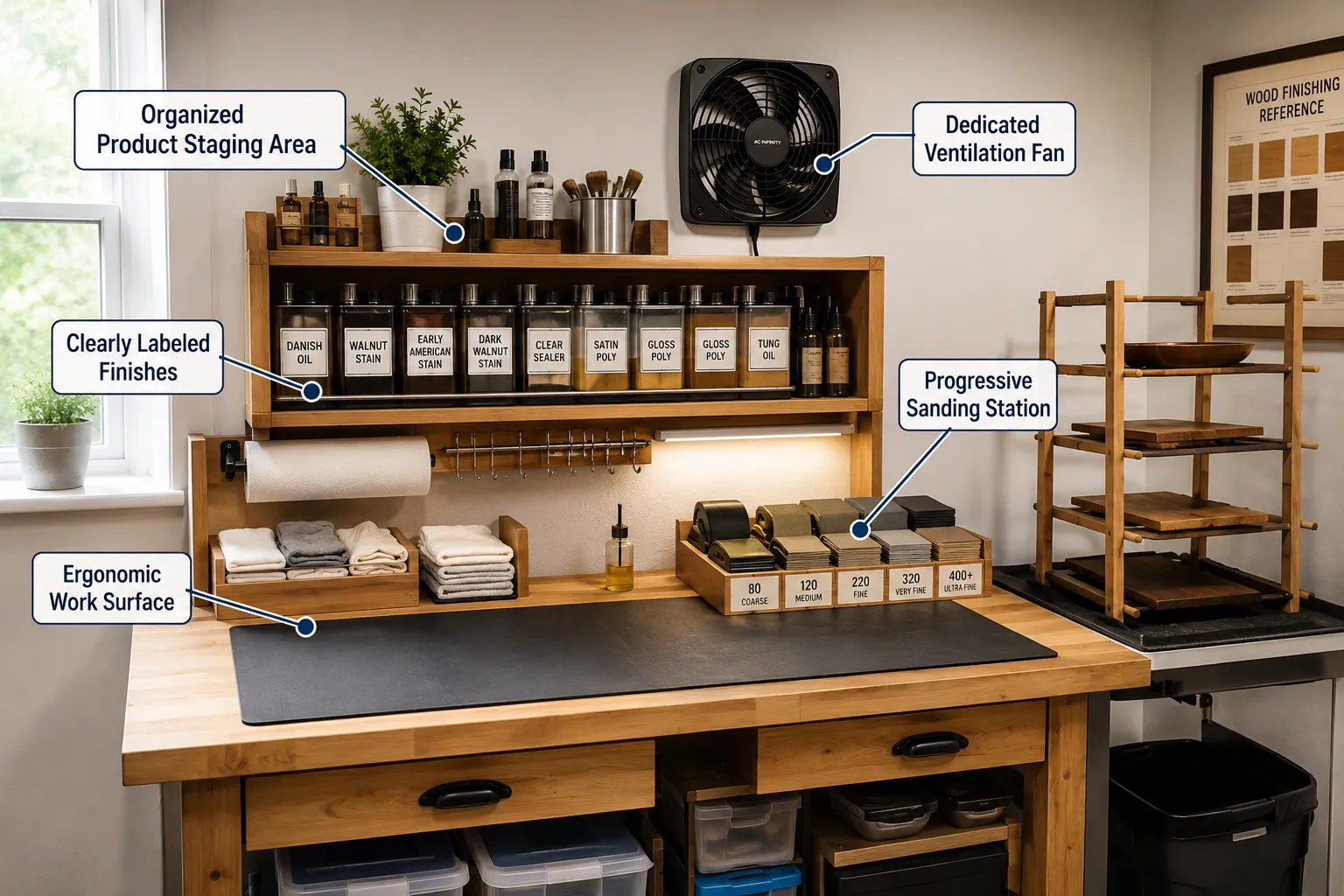
When moving from one-off to small-batch production, consider a dedicated finishing area. This doesn’t need to be a large, industrial space but rather a section optimized for efficiency and cleanliness. A basic setup might include:
- Prep Station: For final sanding, dusting, and wiping.
- Application Area: A simple DIY compact entryway organizer could inspire clever storage for tools and materials. Even a DIY spray booth (with proper exhaust and filtration) can dramatically improve finish quality and health safety.
- Drying Rack: A system to hold multiple pieces without contact, ensuring even drying and preventing marks.
- Storage: Organized, sealed storage for finishes, sandpaper, and rags to prevent contamination and spoilage. Check out ideas for building modular wood storage systems for small workshops to maximize space.
Investing in an HVLP system is often the most impactful step for small-batch manufacturers. It provides professional results quickly and consistently, allowing for a wider range of finishes and a significant boost in production capacity compared to hand application.
Optimizing Your Finishing Workflow for Consistency and Speed
Efficiency in [Wood Finishing for Artisan Manufacturers: Achieving Production-Ready Finishes for Small Batch Goods] is not solely about the finish itself, but also about the workflow that supports it. A well-designed workflow ensures consistency, minimizes waste, and maximizes throughput for small batches. This involves standardization, smart tool usage, and a structured approach to each step.
Standardizing Processes
The cornerstone of production-ready finishing is standardization. This means:
- Recipe-Based Finishing: Documenting the exact steps, products, ratios, and drying times for each finish. For example: “Base Coat: 1 part Waterlox Original, 2 parts mineral spirits, wipe on, dry 24 hours. Top Coat: 3 coats Waterlox Original, wipe on, 12 hours dry between coats, light scuff sand with 400 grit before final coat.”
- Consistent Surface Prep: Mandate a specific sanding sequence (e.g., 120-180-220 grit) for all similar items. This ensures uniform absorption of stains and sealers. More details can be found in our article on Beyond Basic Sanding Achieving A Flawless Finish With Progressive Grits And Finishing Techniques.
- Environmental Control: While often challenging in smaller shops, maintaining consistent temperature and humidity helps finishes dry and cure predictably. A dedicated, clean finishing space is ideal.
Smart Application Techniques
- HVLP Spraying: As discussed, HVLP is a game-changer for speed and consistency. Mastering spray technique (overlapping passes, correct distance, consistent speed) is crucial to avoid runs, sags, and uneven coats. Practice on scrap pieces to dial in settings before finishing actual products.
- Wiping Finishes: If using wiping varnishes or oils, develop a standardized wiping method. Use consistent pressure and direction. Employ lint-free cloths and dispose of them properly to prevent spontaneous combustion.
- Drying Racks and Carts: Design or purchase drying racks that allow multiple pieces to cure simultaneously without touching each other or collecting dust. Rotary drying racks can maximize space in a compact workshop.
- Batching: Finish similar items together. This allows for continuous application, reducing setup and cleanup time between different finish types or colors.
Quality Control and Troubleshooting
- Mid-Process Inspection: Implement checkpoints to inspect surfaces after sanding, after sealing, and between topcoats. Catching issues early saves significant rework.
- Lighting: Use good, consistent lighting in your finishing area. Overhead lights combined with side lighting (raking light) will reveal imperfections like dust nibs, sanding scratches, or uneven sheen that might be missed under ambient light.
- Test Pieces: Always have a test piece of the same wood species available to test stain colors or finish compatibility before applying to your actual products.
- Dust Control: Dust is the enemy of a good finish. Implement measures like dust collection during sanding, dedicated dust-free finishing rooms (even a temporary plastic enclosure), and tack rags before applying finish.
- Ventilation and Safety: This cannot be overstressed. Proper ventilation is critical for health and safety, especially when using solvent-based finishes. Wear appropriate respirators, gloves, and eye protection. Ensure proper disposal of chemical waste.
By systematically approaching each stage of the finishing process, artisan manufacturers can achieve the consistency and durability expected of production-ready goods, all while maintaining the unique aesthetic and quality that defines their craft. This thoughtful integration of process and product is key to sustainable growth in 2026.
Conclusion
For artisan manufacturers, the journey from crafting individual masterpieces to producing consistent, high-quality small batches demands a strategic evolution in finishing techniques. Achieving “production-ready” finishes for small batch goods isn’t about sacrificing the artisanal touch, but rather about streamlining the process to enhance efficiency, consistency, and durability. By embracing standardized workflows, investing in appropriate application systems like HVLP sprayers, and prioritizing meticulous surface preparation, woodworkers can bridge the gap between bespoke craftsmanship and scalable production. This approach ensures that every piece leaving the workshop not only carries the unique signature of the artisan but also meets the high standards of a market demanding both beauty and resilience. Looking ahead in 2026, those who master this blend of craft and efficiency will be best positioned for success.
Actionable Next Steps:
- Audit Your Current Process: Document every step of your existing finishing process for a typical small batch. Identify bottlenecks, inconsistencies, and areas for improvement.
- Invest in Surface Preparation: Re-evaluate your sanding protocol. Ensure you are using appropriate grits and techniques for a flawless foundation. Consider a dedicated dust collection system.
- Explore HVLP Systems: Research and consider investing in a compact HVLP spray system and a small, well-ventilated spray booth. This can be the single most impactful upgrade for consistency and speed.
- Standardize Your “Recipes”: Create detailed instructions for each finish type you offer, including product names, dilutions, application methods, and drying times.
- Prioritize Safety and Ventilation: Ensure your finishing area has adequate ventilation and always use appropriate personal protective equipment (respirators, gloves, eye protection).
SEO Meta Title: Wood Finishing for Artisans: Production-Ready Finishes (2026) SEO Meta Description: Master wood finishing for artisan manufacturing in 2026. Achieve production-ready finishes for small-batch goods with expert techniques, tools, and workflows.