

The perception that structural woodworking techniques are solely the domain of house framing vastly undervalues the intricate engineering required for high-quality interior installations. In fact, creating robust custom built-ins and integrated furniture demands a sophisticated understanding of load distribution, material properties, and precise joinery far beyond basic stud and sheathing assemblies. This article delves into advanced Wood Construction Techniques: Structural Methods for Custom Built-ins and Integrated Furniture, providing an authoritative guide for craftspeople seeking to elevate their interior woodworking projects in 2026.
Key Takeaways
- Custom built-ins require sophisticated structural design, considering weight, material, and integration.
- Advanced joinery (e.g., mortise and tenon, dovetails) provides superior strength and aesthetics compared to basic fasteners.
- Effective anchorage to existing wall structures is paramount for the stability and safety of integrated furniture.
- Understanding wood movement and selecting appropriate materials are critical for long-term durability.
- Integrated furniture enhances space utility and aesthetic cohesion, demanding precise measurement and installation.
Foundation First: Designing for Structural Integrity in Custom Built-ins
The longevity and functionality of custom built-ins and integrated furniture hinge on meticulous structural design. Unlike freestanding pieces, built-ins become an integral part of the home’s architecture, subject to different stresses and requirements. Wood Construction Techniques: Structural Methods for Custom Built-ins and Integrated Furniture begin long before the first cut, with a comprehensive understanding of the intended purpose, anticipated loads, and the properties of the chosen wood.
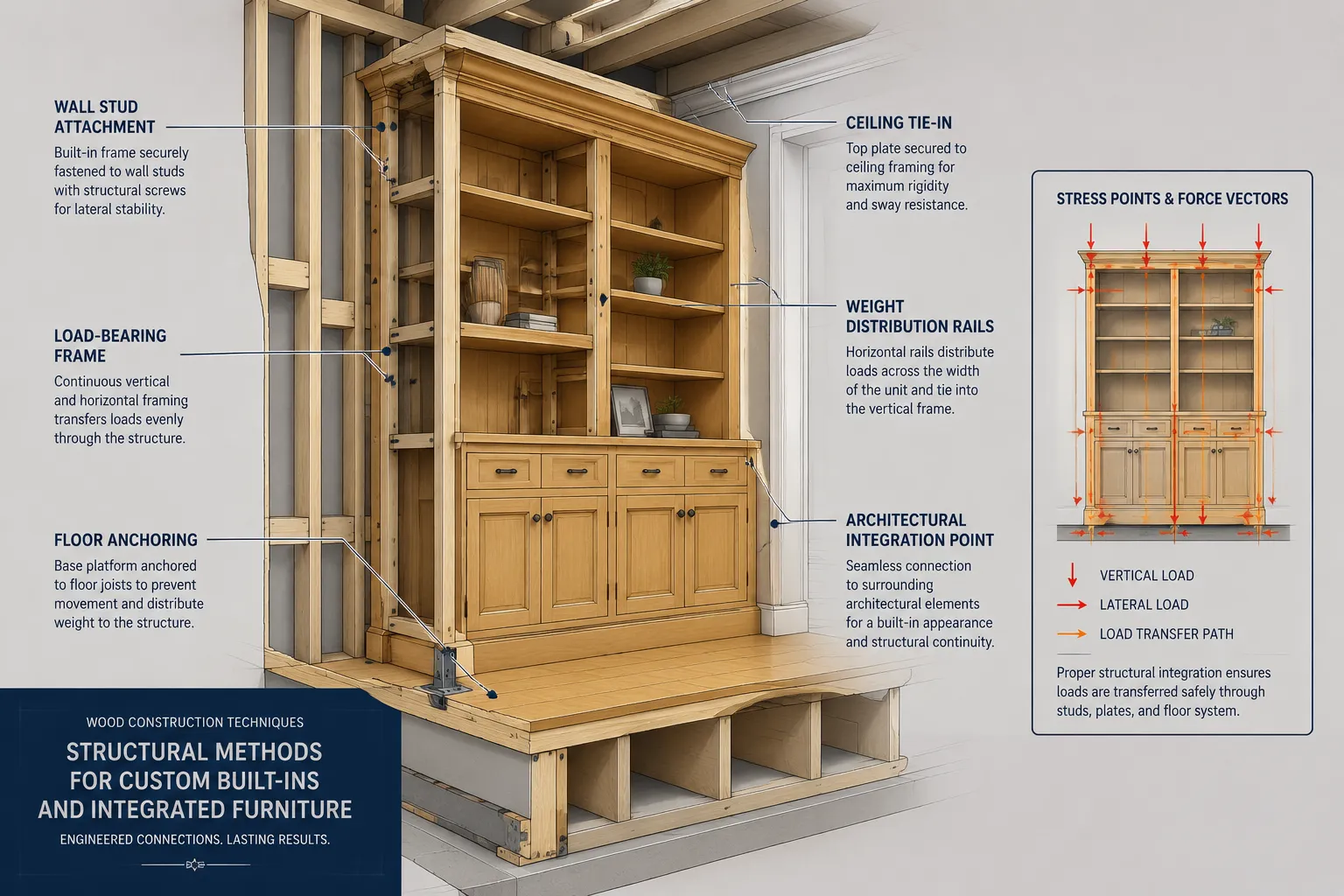
Consider a large bookshelf unit designed to hold hundreds of pounds of books. Its shelves and carcass must be engineered to resist bowing, racking, and sheer forces. This involves selecting appropriate wood species for strength and stability, such as oak, maple, or high-grade plywood, and then employing joinery methods that distribute weight effectively. Similarly, a built-in entertainment center housing heavy electronics requires robust internal support systems and secure attachment points.
Material Selection for Strength and Stability
The choice of material significantly impacts structural integrity. Solid wood, plywood, and MDF each offer distinct advantages and disadvantages:
- Solid Wood: Offers superior strength and beauty, but is prone to movement (expansion and contraction) with changes in humidity. This necessitates joinery that accommodates such movement.
- Plywood: Highly stable, resisting warping and shrinking due to its cross-grain laminate construction. Excellent for large panels, backs, and structural components. High-quality Baltic birch or marine-grade plywood are particularly strong.
- Medium-Density Fiberboard (MDF): Very stable and uniform, ideal for painted finishes. However, it lacks the screw-holding power and sheer strength of solid wood or plywood, making it less suitable for primary structural elements that bear heavy loads without reinforcement.
A common practice in structural built-in construction is to use a combination of these materials. For instance, solid wood for face frames and edges for durability and aesthetics, high-grade plywood for shelves and cabinet boxes, and MDF for door panels or decorative elements where stability and a smooth finish are prioritized. For discussions on specific wood types, consider exploring articles like Sourcing And Selecting Reclaimed Urban Lumber Finding Character Rich Materials For High End Woodworking Projects.
Essential Joinery for Durable Built-ins
Beyond simple butt joints and screws, robust joinery is the cornerstone of structural integrity in custom woodworking. These methods create mechanical bonds that are often stronger than the wood itself, distributing stress across a larger surface area and resisting forces in multiple directions.
Here are key structural joinery techniques:
- Mortise and Tenon Joints: A classic choice for creating strong, rigid frames (e.g., face frames, door frames). A rectangular tenon on one piece fits snugly into a corresponding mortise (hole) on another, often secured with glue and sometimes pegs.
- Dovetail Joints: Renowned for their exceptional tensile strength, making them ideal for drawer boxes and carcass construction. The interlocking “tail” and “pin” shapes resist pulling apart.
- Dado and Rabbet Joints: Excellent for supporting shelves and securing cabinet backs. A dado is a groove cut across the grain, while a rabbet is a groove cut along the edge or end of a board. These provide significant surface area for gluing and prevent racking.
- Pocket Hole Joinery: While often considered a simpler method, pocket holes, when used correctly with appropriate screws and glue, can provide strong joints for cabinet carcasses, face frames, and attaching components, especially when speed and hidden fasteners are desired. However, for maximum structural performance under heavy loads, traditional joinery is often preferred or used in conjunction with pocket holes.
- Biscuit and Domino Joints: These systems use small, oval-shaped (biscuits) or rectangular (dominos) tenons inserted into corresponding slots cut in mating pieces. They offer excellent alignment and add significant strength, particularly for panel glue-ups and carcass construction.
The decision of which joinery to employ depends on the specific component’s function, the anticipated load, and aesthetic considerations. Often, a combination of these techniques is used within a single built-in unit.
Advanced Structural Methods for Integrated Furniture and Millwork
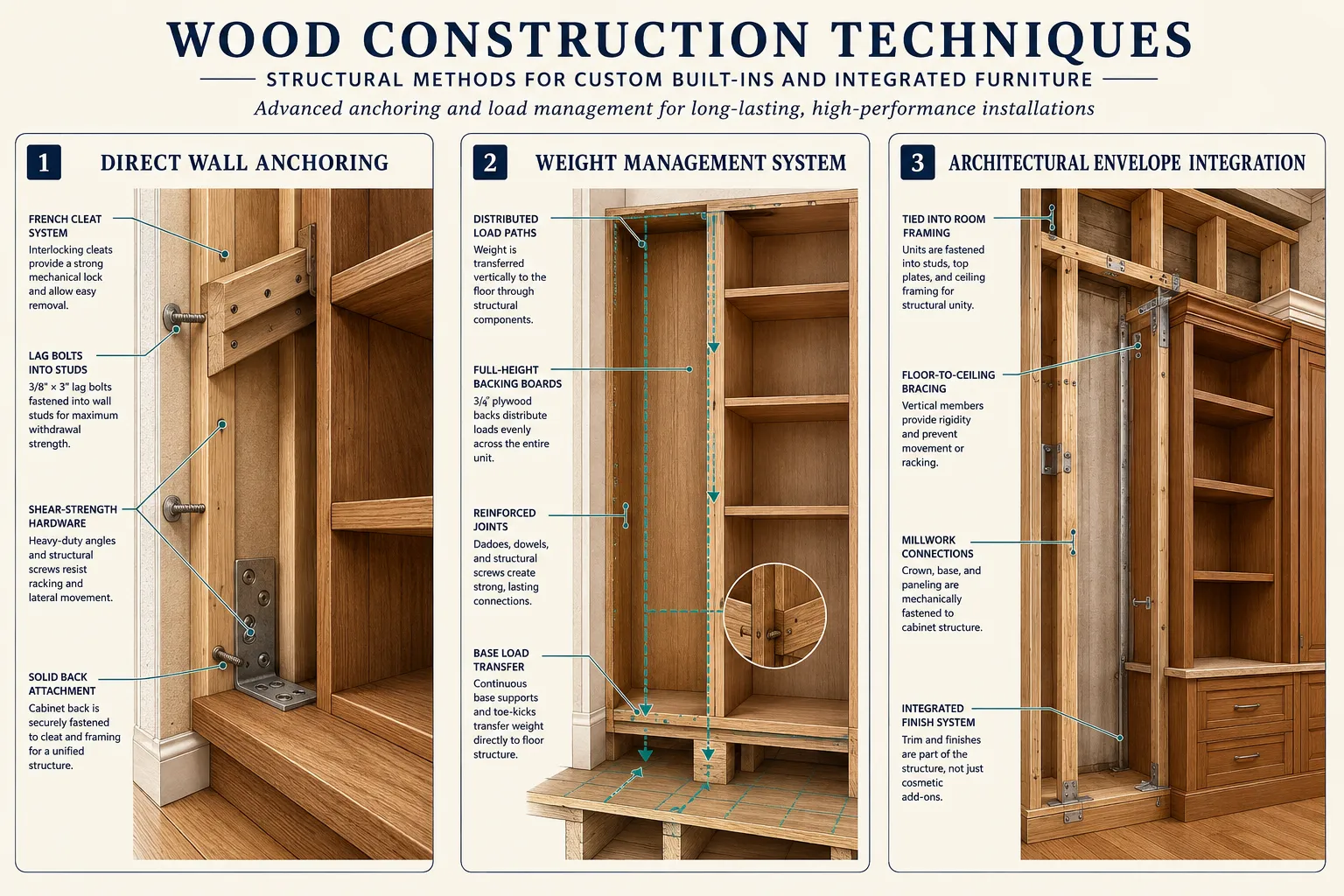
Integrating furniture into the architectural envelope of a room requires more than just pushing a cabinet against a wall. It demands advanced Wood Construction Techniques: Structural Methods for Custom Built-ins and Integrated Furniture that effectively anchor units, manage weight, and account for the dynamic nature of both wood and existing structures. The goal is a seamless, immovable, and durable installation.
Anchoring and Support Systems
Proper anchoring is critical for safety and stability, especially for tall units, cantilevered elements, or shelves holding heavy items. This goes beyond simply screwing into drywall.
- Wall Cleats and Ledger Boards: For long runs of cabinetry or heavy shelves, a continuous cleat or ledger board securely fastened into wall studs (or blocking if available) provides robust support along the entire length. The built-in unit then rests on and/or is fastened to this cleat.
- Direct-to-Stud Fastening: Wherever possible, structural components of the built-in should be screwed directly into wall studs. Locating studs accurately using a stud finder is essential. Long, coarse-threaded screws (e.g., construction screws) are preferred for strong bite into framing lumber.
- Blocking and Reinforcement: In new construction or during renovations, adding internal blocking within wall cavities provides solid attachment points exactly where needed for built-ins, eliminating reliance on individual studs.
- Adjustable Leveling Feet/Bases: For floor-standing units, incorporating adjustable leveling feet or building a precisely leveled base frame ensures the built-in is plumb and level, compensating for uneven floors. This prevents stress on the carcass and ensures doors and drawers operate smoothly.
Robust methods for hidden fasteners are gaining popularity for a clean, modern aesthetic, as discussed in “Robust Floating Shelves With Hidden Fasteners Power Tool Techniques For 2026 Warm Minimalism”. These techniques are vital for ensuring the built-in appears to be a natural extension of the wall.
Managing Wood Movement and Environmental Factors
Wood is a hygroscopic material, meaning it absorbs and releases moisture, causing it to expand and contract. Failing to account for this movement can lead to warping, cracking, and joint failure over time.
- Floating Panels: For large panels within frame-and-panel construction (like cabinet doors or back panels), securing them in a way that allows them to “float” within grooves prevents them from splitting when they shrink or expanding and blowing out the frame.
- Breadboard Ends: Often used on tabletops or wide panels, breadboard ends are attached in a way that prevents warping while still allowing the main panel to expand and contract across its width.
- Acclimation: Allowing wood to acclimate to the environment of the installation site for several days or weeks before cutting and assembly can significantly reduce post-installation movement.
- Climate Control: Maintaining stable humidity and temperature within the home helps minimize wood movement.
Integrated Lighting and Wire Management
Modern built-ins often incorporate lighting and electronics, requiring forethought in their structural design for wire concealment and future accessibility.
- Raceways and Channels: Creating dedicated channels or raceways within the carcass or behind the back panels allows for neat routing of wires and cables.
- Access Panels: Discreetly placed access panels can facilitate future wiring changes or maintenance without dismantling the entire unit.
- Venting: For components that generate heat (e.g., AV receivers), ensuring adequate ventilation within enclosed cabinets is crucial to prevent overheating and prolong equipment life. For more on integrating technology, see [Building A Diy Smart Home Automation Hub From Wood Integrating Raspberry Pi And Custom Joinery](https://woodcraftwiz.com/building-a-diy-smart-home-automation-hub-from-wood-integrating-raspberry Pi And Custom Joinery).
Installation and Finishing for Long-Term Performance
The final stages of installation and finishing are equally critical to the structural performance and longevity of custom built-ins and integrated furniture. Precision in these steps ensures that the crafted unit performs as designed and withstands daily use.
Precise Installation Techniques
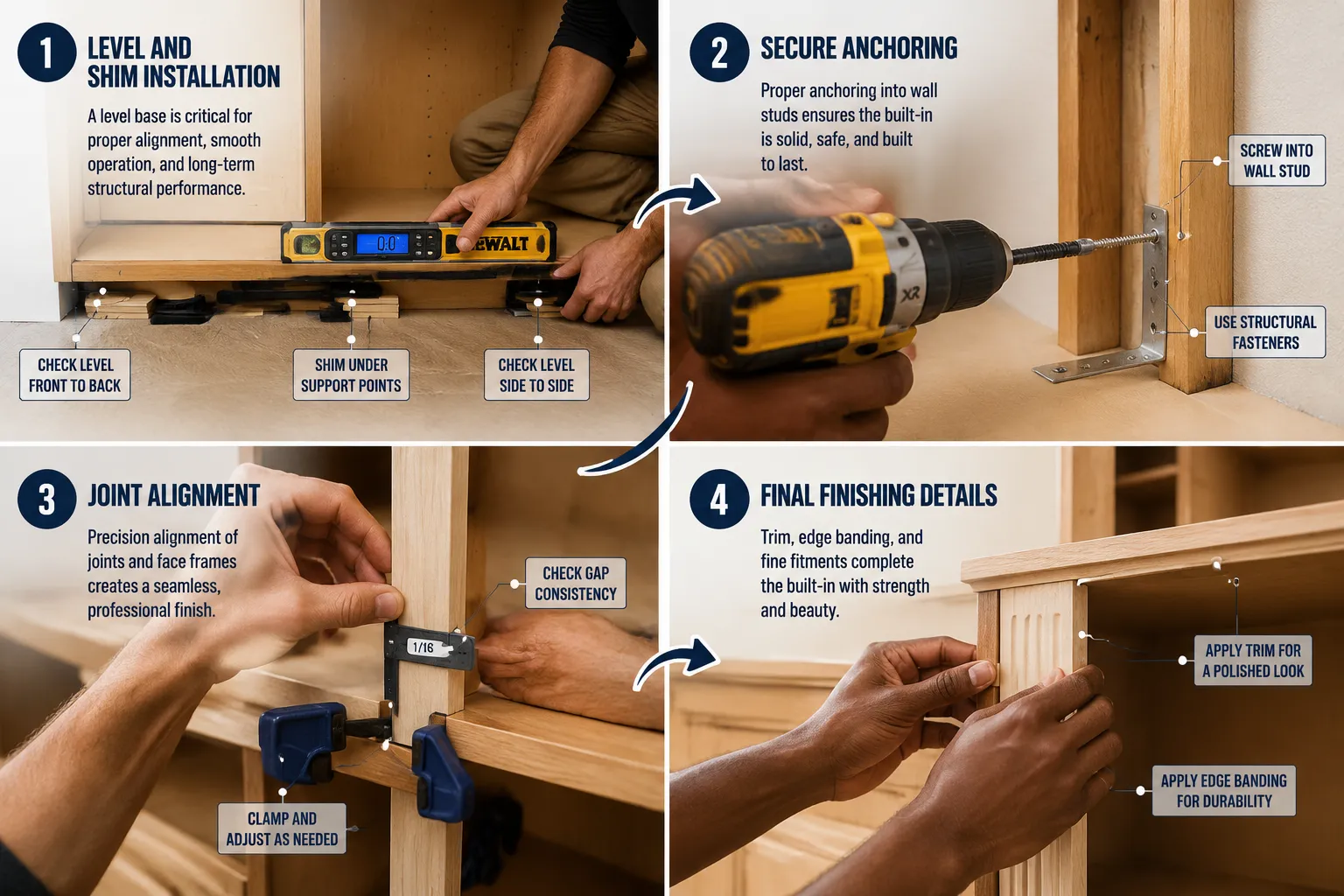
Even the most well-built unit can fail if improperly installed. Precision is paramount.
- Leveling and Plumbing: Before permanently fastening, ensure all components are perfectly level and plumb. Using shims and a long level or laser level is crucial. Slight inaccuracies here can lead to binding doors, drawers that drift open, and a visually unappealing result.
- Scribing: Where a built-in meets an uneven wall or ceiling, scribing involves precisely shaping the edge of the built-in to match the contour of the existing surface. This creates a seamless, gap-free appearance and contributes to the structural integration, often secured with a combination of glue and small fasteners.
- Caulking and Sealing: Once installed, gaps between the built-in and existing walls or ceilings can be filled with paintable caulk to further integrate the piece and seal against dust.
Wood Finishing for Protection and Aesthetics
While not directly a structural method, a high-quality finish protects the wood from moisture, wear, and UV damage, thereby contributing to the long-term structural integrity by minimizing wood movement and degradation.
- Moisture Resistance: Finishes like polyurethane, lacquer, and certain oils create a barrier that slows moisture absorption and release, helping to stabilize the wood.
- Durability: Hard-wearing finishes protect surfaces from scratches and abrasions, preserving the aesthetic and physical integrity of the built-in.
- UV Protection: Finishes with UV inhibitors help prevent wood from fading or changing color over time, particularly for built-ins exposed to sunlight.
Detailed information on various finishes can be found in resources such as Wood Finishing Techniques or for specialized aesthetics, High Gloss Wood Finishing Techniques. The proper application of these finishes can greatly enhance the lifespan and appearance of your custom creations.
Maintenance and Longevity
Ongoing maintenance plays a role in sustaining the structural integrity of custom built-ins. Regular dusting, avoiding harsh cleaners, and addressing any signs of wear or damage promptly can significantly extend the life of the piece. Understanding wood’s characteristics and respecting its natural movement will ensure these intricate installations remain beautiful and functional for decades.
Conclusion
The construction of custom built-ins and integrated furniture represents the pinnacle of interior woodworking, demanding a comprehensive mastery of Wood Construction Techniques: Structural Methods for Custom Built-ins and Integrated Furniture. From the initial design phase, through careful material selection and advanced joinery, to precise installation and protective finishing, each step contributes to the creation of robust, functional, and aesthetically integrated pieces that enhance living spaces. In 2026, as homeowners increasingly seek personalized and optimized interiors, the demand for skilled craftspeople capable of executing these complex projects will continue to grow. By embracing these advanced structural methods, woodworkers can ensure their custom creations stand as enduring testaments to craftsmanship and thoughtful design.
For those looking to expand their woodworking expertise further, exploring topics like Mastering The Router Sled Precision Joinery And Flattening Techniques For Any Workshop or The Ultimate Guide To Wood Glue Choosing The Right Adhesive For Every Woodworking Joint And Project will provide valuable insights into precision and material adhesion, crucial elements for advanced structural woodworking projects.
References
- Fine Woodworking. (2020). Joints & Joinery: 24 Essential Woodworking Joints. Taunton Press.
- Paine, D. (2014). The Complete Illustrated Guide to Joinery. The Taunton Press.
- Schuttner, S. (2015). Building Cabinets, Bookcases & Shelves. The Taunton Press.