
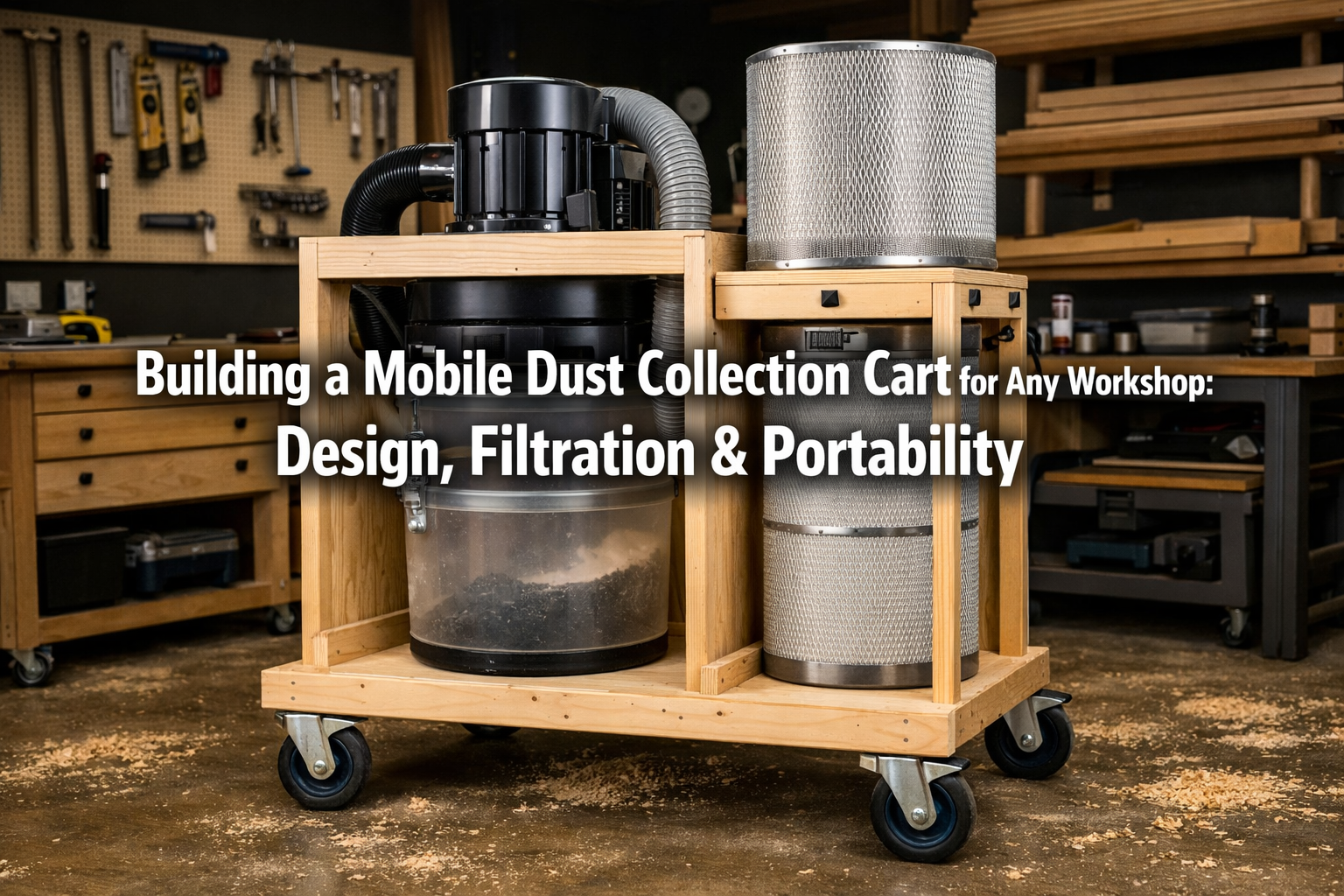
Dust is the silent enemy of every woodworking shop. It compromises air quality, obscures visibility, and can even damage sensitive equipment. For woodworkers in small to medium-sized workshops, a stationary dust collection system is often impractical or too costly. This article will guide you through Building a Mobile Dust Collection Cart for Any Workshop: Design, Filtration & Portability, allowing you to design and construct a highly efficient, portable dust collection cart that can be easily moved between machines, featuring advanced filtration options and space-saving designs.
This comprehensive guide focuses on empowering you to create a customized solution that not only tackles airborne particles but also enhances the overall efficiency and safety of your workspace in 2026.
Key Takeaways
- Custom Design for Efficiency: Tailor your cart’s dimensions and layout to perfectly fit your existing dust collector and workshop space, maximizing effectiveness and maneuverability.
- Superior Filtration is Paramount: Incorporate multi-stage filtration, including cyclonic separation and high-MERV filters, to capture even the finest dust particles and ensure clean air.
- Mobility for Versatility: Utilize robust, lockable swivel casters and ergonomic handles to effortlessly move the cart between different woodworking machines.
- Sound Damping & Storage: Integrate sound-deadening materials and smart storage solutions for hoses, fittings, and accessories to maintain a quiet, organized environment.
- Safety & Maintenance: Design for easy filter access and regular cleaning to maintain peak performance and prolong the life of your dust collection system.
Strategic Design & Planning for a Mobile Dust Collection Cart
The foundation of an effective mobile dust collection system begins with meticulous design and planning. Before cutting any wood, consider your workshop’s unique layout, the specific dust collector you own (or plan to acquire), and your primary woodworking machines. Building a Mobile Dust Collection Cart for Any Workshop: Design, Filtration & Portability requires a thoughtful approach to ensure it integrates seamlessly into your workflow.
{{IMG_SLOT_1}}
Assessing Your Workshop and Equipment
Begin by inventorying your existing dust collection unit. Note its dimensions (height, width, depth), motor size (HP), and inlet/outlet port sizes. This information is crucial for sizing the cart correctly. Next, identify the machines you’ll be connecting the cart to: table saw, planer, jointer, sander, router table, etc. Measure the distance from the dust ports on these machines to the floor and consider the typical working positions.
Consider the following:
- Space Constraints: How much floor space can you dedicate to the cart? Will it need to fit under a workbench or into a tight corner when not in use?
- Maneuverability: What type of floor does your workshop have? Smooth concrete, rough wood, or uneven surfaces will influence your choice of casters. How frequently will you move it, and between how many machines?
- Hose Management: Plan for convenient storage of hoses and fittings. Will they hang on the cart or be stored separately?
Essential Design Elements
A well-designed cart incorporates several key features to maximize functionality and longevity.
Frame Construction
The cart’s frame should be robust. Plywood (¾” or 18mm Baltic birch or construction grade) is an excellent choice due to its stability and strength. MDF can also be used but may require more bracing. For inspiration on sturdy wooden constructions, consider exploring guides on Building Picnic Tables for Outdoor Gatherings: Durable Desig or Modular Furniture Design for Woodworkers: Building Multi-Fun for joinery techniques.
- Materials: ¾” plywood is recommended for the main structure. Consider using 2×4 lumber for internal framing if your dust collector is particularly heavy.
- Joinery: Dadoes, rabbets, screws, and glue are your allies for strong joints. Pocket holes can also be effective for assembly.
- Dimensions: Design the cart to snuggly hold your dust collector, minimizing wasted space but allowing for airflow around the motor if needed. Ensure sufficient clearance for filter changes and bag emptying.
Portability Features
This is where the “mobile” in mobile dust collection truly shines.
- Casters: Invest in heavy-duty, lockable swivel casters. At least 4-inch diameter wheels are recommended for easy movement over minor obstructions. Two swivel casters and two fixed casters can offer better control, or four swivel casters for maximum maneuverability in tight spaces. Consider rubber or polyurethane wheels for quieter operation and floor protection.
- Handles: Integrate sturdy handles at a comfortable height for pushing and pulling the cart. These can be simple cutouts in the plywood or commercially available handles.
- Weight Distribution: Design the cart to keep the center of gravity low, especially if your dust collector unit is top-heavy. This prevents tipping during movement.
Optimizing Layout for Components
Think about how your dust collector, separator (if any), and filtration components will be arranged.
| Component | Placement Consideration |
|---|---|
| Dust Collector Unit | Centered for stability; ensure proper ventilation for the motor. |
| Separator (e.g., Cyclone) | Typically mounted above the dust bin, often integrated into the cart’s structure to save space. |
| Collection Bin/Drum | Easily accessible for emptying. A pull-out drawer or hinged access panel works well. |
| Filtration System | Position for easy removal and cleaning. Dedicated space for a pleated filter and potentially a secondary filter. |
| Hose Storage | Hooks, clips, or a small shelf for keeping hoses organized and readily available. |
For more ideas on integrating functionality into shop projects, check out articles like Turning Shop Scraps into Design Features: Mixed-Wood Techniq or Maximizing Profit from Scrap Wood: High-Demand Micro-Project.
Advanced Filtration and Air Quality Management
While mobility is key, the effectiveness of your dust collection cart ultimately hinges on its ability to filter fine dust. Building a Mobile Dust Collection Cart for Any Workshop: Design, Filtration & Portability means prioritizing air quality. Standard dust collector bags often only capture larger chips and leave harmful fine dust airborne. An advanced filtration system protects your health and extends the life of your equipment.
{{IMG_SLOT_2}}
The Importance of Multi-Stage Filtration
A single-stage dust collector, especially those with basic cloth bags, is insufficient for capturing fine particulate matter (PM2.5), which is the most dangerous to lung health. A multi-stage approach is crucial.
Primary Separation (Cyclone/Thien Baffle): This is the first line of defense. A cyclone or Thien baffle separator effectively removes most of the larger chips and heavier dust before it even reaches the dust collector’s impeller and main filter. This protects the impeller from damage, dramatically reduces the load on your main filter, and keeps the airflow high.
- Cyclone: Highly efficient, creating a vortex that drops heavy particles into a collection drum.
- Thien Baffle: A simpler, often DIY-friendly design that uses a horizontal baffle plate to achieve separation.
“Investing in a good primary separator is arguably the single best upgrade you can make to any dust collection system, mobile or stationary. It significantly extends filter life and maintains consistent suction.”
Fine Filtration (Canister/Pleated Filter): After primary separation, the remaining fine dust passes through a high-efficiency filter.
- MERV Rating: Look for filters with a MERV (Minimum Efficiency Reporting Value) rating of 12 or higher. MERV 13 is excellent for capturing very fine particles (0.3-1.0 microns). HEPA filters (MERV 17-20 equivalent) offer the highest level of filtration but may restrict airflow more.
- Pleated Canister Filters: These offer a large surface area for filtration in a compact space, making them ideal for mobile carts. They are often cleanable with an internal shaker mechanism or compressed air (outside the shop).
Integrating Filtration Components into the Cart
Your cart design should allow for seamless integration of these components.
- Dedicated Space: Create a specific bay for your primary separator and ensure your dust collector’s filter canister has adequate clearance for installation and removal.
- Airtight Connections: All connections between components (hoses, ducts, bins) must be airtight to prevent dust leaks and maintain optimal suction. Use clamps, silicone caulk, or foam gaskets.
- Easy Access for Maintenance: Filters will eventually clog and need cleaning or replacement. Design access panels or hinged doors that allow for easy removal of filters and emptying of collection bins. A good design might involve a sliding shelf for the collection drum.
Enhancing Airflow and Reducing Noise
- Smooth Ducting: Minimize sharp bends and use rigid ducting where possible. Flex hose should be kept to a minimum and stretched taut to prevent turbulence. The interior surface of your ducting should be as smooth as possible.
- Hose Adapters: Plan for a variety of adapters to connect to different machine ports. Magnetic blast gates can be very convenient for quickly switching suction between tools.
- Sound Damping: Dust collectors can be noisy. Consider lining the interior of your cart with acoustic foam panels or mass loaded vinyl to reduce noise levels. This improves the workshop environment and makes working near the cart more comfortable.
For further reading on workshop optimization, consider insights from DIY Wooden Knife Blocks: Custom Designs for Modern Kitchens which discusses thoughtful design for utility, or Sourcing and Selecting Reclaimed Urban Lumber: Finding Chara for material selection principles.
Portability, Ergonomics, and Shop Integration
The final stage of Building a Mobile Dust Collection Cart for Any Workshop: Design, Filtration & Portability focuses on maximizing its usability and ensuring it fits perfectly into your workshop ecosystem. A powerful dust collector is only effective if it’s easy to deploy and operate.
{{IMG_SLOT_3}}
Enhancing Portability and Maneuverability
- Caster Selection: Reiterate the importance of choosing the right casters. For heavier units, consider larger diameter casters (6-inch or more) with a higher weight rating. Polyurethane wheels are often a good balance of durability, quietness, and floor protection. Swivel casters on all four corners offer maximum flexibility, but lockable ones are essential to prevent the cart from moving during operation.
- Ergonomic Handles: Beyond simple cutouts, consider adding a sturdy, well-placed handle bar. This can be made from a wooden dowel, metal pipe, or even an old broomstick secured firmly. The height should be comfortable for pushing and pulling without stooping.
- Cord Management: Integrate a cord wrap or reel into the cart design to keep the power cord tidy and prevent tripping hazards. A dedicated outlet on the cart itself can also be convenient if your dust collector is plugged into an extension cord.
Smart Storage and Accessories
A mobile dust collection cart isn’t just about the collector; it’s a mobile workstation for dust management.
- Hose and Fitting Storage: Dedicate specific areas for storing your dust collection hoses and adapters. Hooks on the sides, a small shelf, or even a section of PVC pipe can keep hoses coiled and readily accessible. This also helps in keeping your workshop tidy, a concept sometimes explored in Ultimate DIY End Tables: Versatile Designs from Nightstands when considering integrated storage.
- Blast Gate Organization: If you use multiple blast gates, consider a labeled storage solution on the cart itself.
- Tool Caddies/Shelves: Small shelves or caddies on the cart can hold frequently used items like tape measures, pencils, safety glasses, or even a small brush and dustpan for immediate clean-up.
Integrating with Your Workshop Workflow
Think about how the cart will move around your specific machines.
- Dedicated Parking Spot: Plan a “home” for your cart when it’s not in use. This could be a corner, against a wall, or tucked under a workbench.
- Machine Compatibility: Ensure the cart’s height and hose connections align well with your various woodworking machines. Consider making adjustable hose connections or using flexible hose adapters to accommodate different port heights.
- Power Connectivity: If possible, locate outlets conveniently for the dust collector. You might even consider installing a remote-control switch for your dust collector, allowing you to turn it on and off from any machine without walking back to the cart.
By thoughtfully planning the portability, ergonomics, and integration of your mobile dust collection cart, you transform it from a mere utility item into an indispensable, user-friendly asset for your workshop. This attention to detail ensures the cart not only performs its primary function but also enhances your overall woodworking experience.
Conclusion
Building a Mobile Dust Collection Cart for Any Workshop: Design, Filtration & Portability is an empowering project that dramatically improves your woodworking environment. By carefully considering the design, investing in superior multi-stage filtration, and prioritizing portability and ergonomic features, you create a customized solution that addresses the unique challenges of dust management in a small to medium-sized workshop. This project not only leads to a cleaner, safer, and more organized workspace but also protects your health and prolongs the life of your valuable woodworking machinery.
Begin by assessing your needs, sketch out a detailed plan, select appropriate materials, and meticulously assemble your cart. Remember that attention to airtight connections, easy maintenance access, and robust casters will pay dividends in long-term performance and user satisfaction. Embrace the process, and you’ll soon enjoy a woodworking experience free from the pervasive nuisance of dust.
Actionable Next Steps:
- Measure Your Equipment: Take precise measurements of your dust collector and the dust ports on all your woodworking machines.
- Sketch Your Design: Create a detailed drawing of your cart, including dimensions, component placement, and caster locations.
- Source Materials: Purchase high-quality plywood, casters, filtration components (cyclone/Thien baffle, MERV 12+ filter), and sound-damping materials.
- Build and Test: Follow your design, paying close attention to joinery and airtight seals. Test the cart’s mobility and dust collection efficiency with various machines.
References
- Fine Woodworking. (2020). Dust Collection Upgrades. Taunton Press.
- Wood Magazine. (2021). Building a Better Dust Collector Cart. Meredith Corporation.
- The Wood Whisperer. (2019). Dust Collection Essentials. Marc Spagnuolo.