
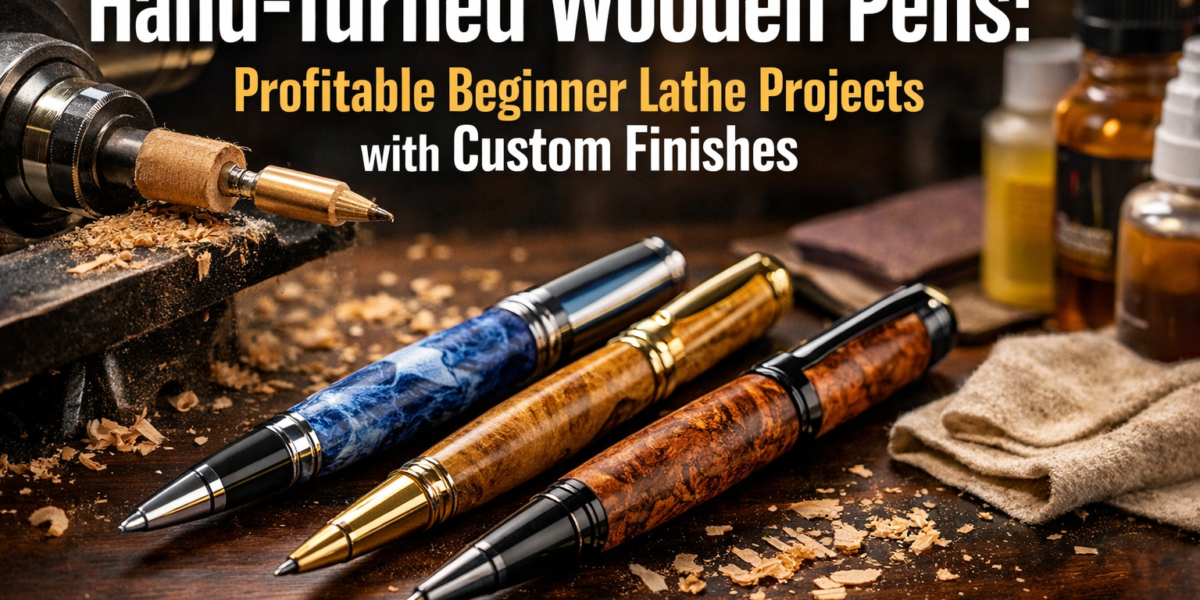
In 2023, the global custom wood product market was valued at an estimated $70 billion, a testament to the enduring appeal of handcrafted wooden items. Within this thriving niche, Hand-Turned Wooden Pens: Profitable Beginner Lathe Projects with Custom Finishes stand out as an exceptionally accessible entry point for new woodturners. These elegant writing instruments not only offer a fulfilling creative outlet but also boast significant profit margins, making them ideal for those seeking to transform a hobby into a lucrative small business. This article delves into the step-by-step techniques for turning pens from pen blanks using basic lathes, covering crucial aspects from material selection and design choices (slimline vs. custom) to the application of food-safe finishes, making them perfect for gifting or sale at markets.
Key Takeaways
- Hand-turned wooden pens offer a low-cost, high-profit entry into woodworking with minimal tools.
- Beginners can master basic lathe operations quickly to produce beautiful, marketable pens.
- Material selection, from exotic woods to acrylics, provides endless customization opportunities.
- Proper finishing techniques, including food-safe options, are crucial for durability and marketability.
- Pens are small, easy to ship, and highly desirable, making them excellent craft market sellers.
Mastering the Basics: Getting Started with Hand-Turned Wooden Pens
Embarking on the journey of creating hand-turned wooden pens is a rewarding experience that combines precision craftsmanship with artistic expression. For beginners, the process is surprisingly straightforward, requiring a modest investment in equipment and materials. The core of this craft lies in understanding your tools, selecting the right blanks, and diligently following the turning steps.
Essential Equipment for Pen Turning
To begin turning pens, a small wood lathe is the most significant investment, but many affordable and compact models are available that are perfect for this scale of work.
Table: Essential Pen Turning Equipment
| Equipment Item | Purpose | Key Considerations for Beginners |
|---|---|---|
| Benchtop Wood Lathe | Rotates the pen blank for shaping. | Look for variable speed, capacity for small projects. |
| Pen Mandrel | Holds the pen blanks securely on the lathe. | Ensure it matches your lathe’s Morse taper. |
| Lathe Chisels/Gouges | Shapes the wood blank (e.g., roughing gouge, spindle gouge). | High-speed steel (HSS) is durable. Start with a basic set. |
| Drill Press | Drills precise, straight holes through the pen blank. | Essential for clean, centered holes; avoids wobbling. |
| Pen Blanks | The raw material (wood, acrylic, hybrid). | Start with softer woods like maple or cherry. |
| Pen Kits | Metal components (tubes, nib, clip) for the pen mechanism. | Slimline kits are excellent for beginners. |
| Barrel Trimmer | Squares the ends of the pen blank after drilling. | Ensures a flush fit with pen kit components. |
| Sanding Supplies | Various grits of sandpaper (150 to 1200+). | Achieve a smooth surface before finishing. |
| Finishing Products | Oils, waxes, friction polishes. | Choose based on desired look, durability, and safety. |
| Safety Gear | Face shield, dust mask, safety glasses. | Non-negotiable for personal protection. |
For those new to woodturning, understanding the basics of lathe operation is paramount. A comprehensive guide like Introduction to Wood Turning for Beginners: Mastering Basic Lathe can provide a solid foundation.
Choosing Your Materials: Wood Blanks and Pen Kits
The beauty of Hand-Turned Wooden Pens: Profitable Beginner Lathe Projects with Custom Finishes lies in the vast array of materials available.
- Wood Blanks: These come in countless species, each with unique grain patterns and colors.
- Domestic Woods: Maple, cherry, walnut, oak are excellent for beginners due to their availability and ease of turning.
- Exotic Woods: Bocote, Purpleheart, Padauk, Ebony offer stunning visual appeal but can be harder or more brittle. They often command higher prices.
- Stabilized Woods: Wood infused with resin for added density and stability, great for tricky grains.
- Acrylic Blanks: Offer vibrant colors, swirls, and patterns not possible with natural wood. They turn differently than wood but produce striking results.
- Hybrid Blanks: Combinations of wood and resin, merging the best of both worlds.
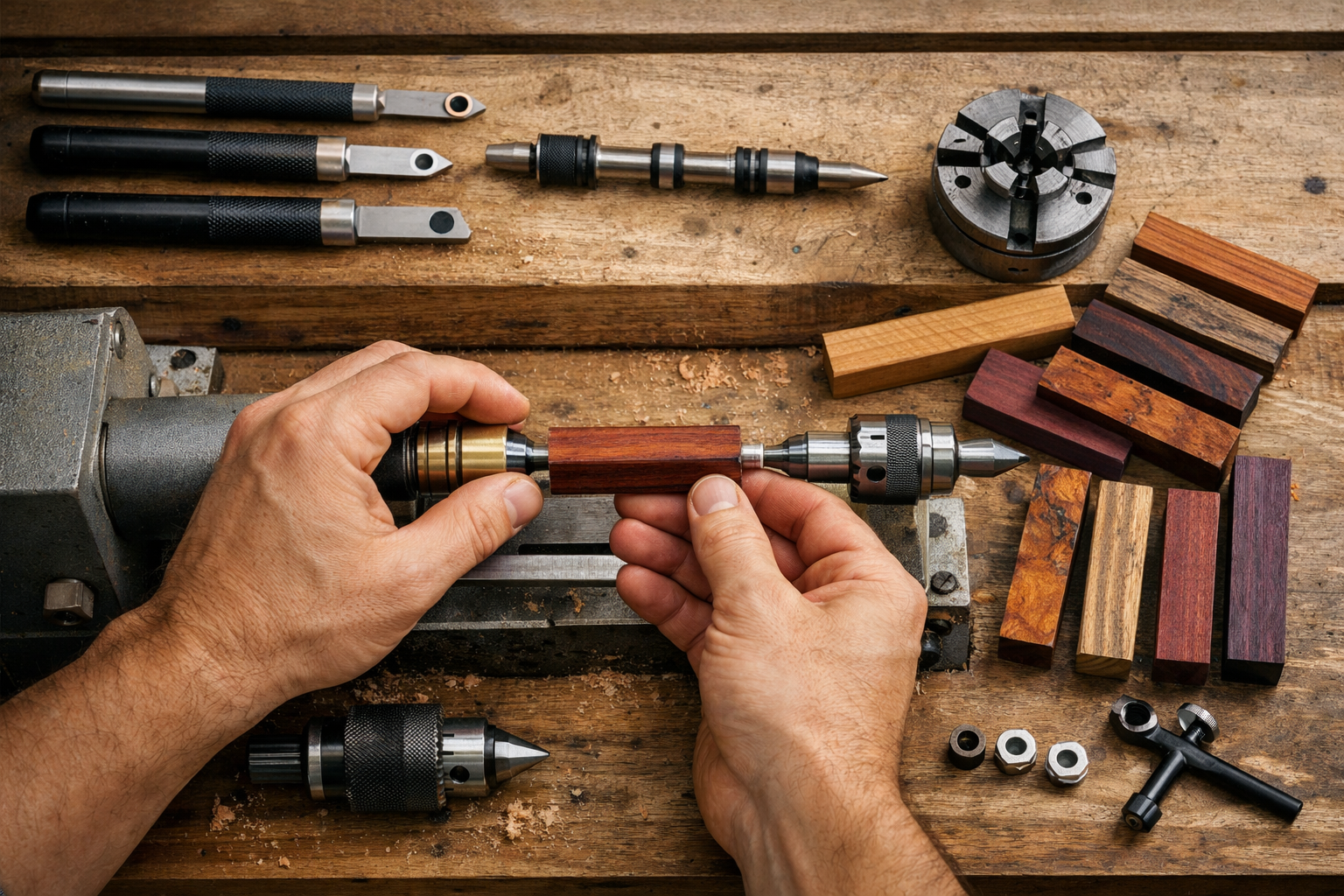 Pen Kits: These contain all the metal components required for the pen’s functionality.
- Slimline Kits: The most common and easiest for beginners. They are slender and come in various finishes (chrome, gold, gunmetal).
- Mid-Range Kits: Offer slightly larger diameters and often more robust mechanisms (e.g., Sierra, Wall Street II).
- Custom Kits: Larger, heavier, and more intricate, allowing for broader design variations.
When selecting materials, consider your target market if you plan to sell. Entry-level slimline pens made from beautiful domestic woods can be very appealing and profitable.
Step-by-Step Pen Turning: From Blank to Beautiful Finish
The process of turning a pen, while requiring precision, is highly repeatable and gratifying. Each step contributes to the final aesthetic and functionality of your hand-turned wooden pens.
Preparing the Pen Blank
- Cut the Blank: Cut your chosen pen blank slightly longer than the brass tubes supplied with your pen kit.
- Drill the Hole: Using a drill press, carefully drill a centered hole lengthwise through each section of your blank. This hole must precisely match the diameter of your brass tubes. Proper drilling is critical for a straight pen.
- Glue in Brass Tubes: Apply a strong adhesive (like CA glue or epoxy) to the brass tubes and insert them into the drilled holes in your blanks. Ensure good coverage and let it dry completely.
- Square the Ends: Once the glue is dry, use a barrel trimmer or a sanding disc on your drill press to carefully square the ends of the blanks down to the brass tube. This ensures the pen components fit together perfectly without gaps.
Turning on the Lathe
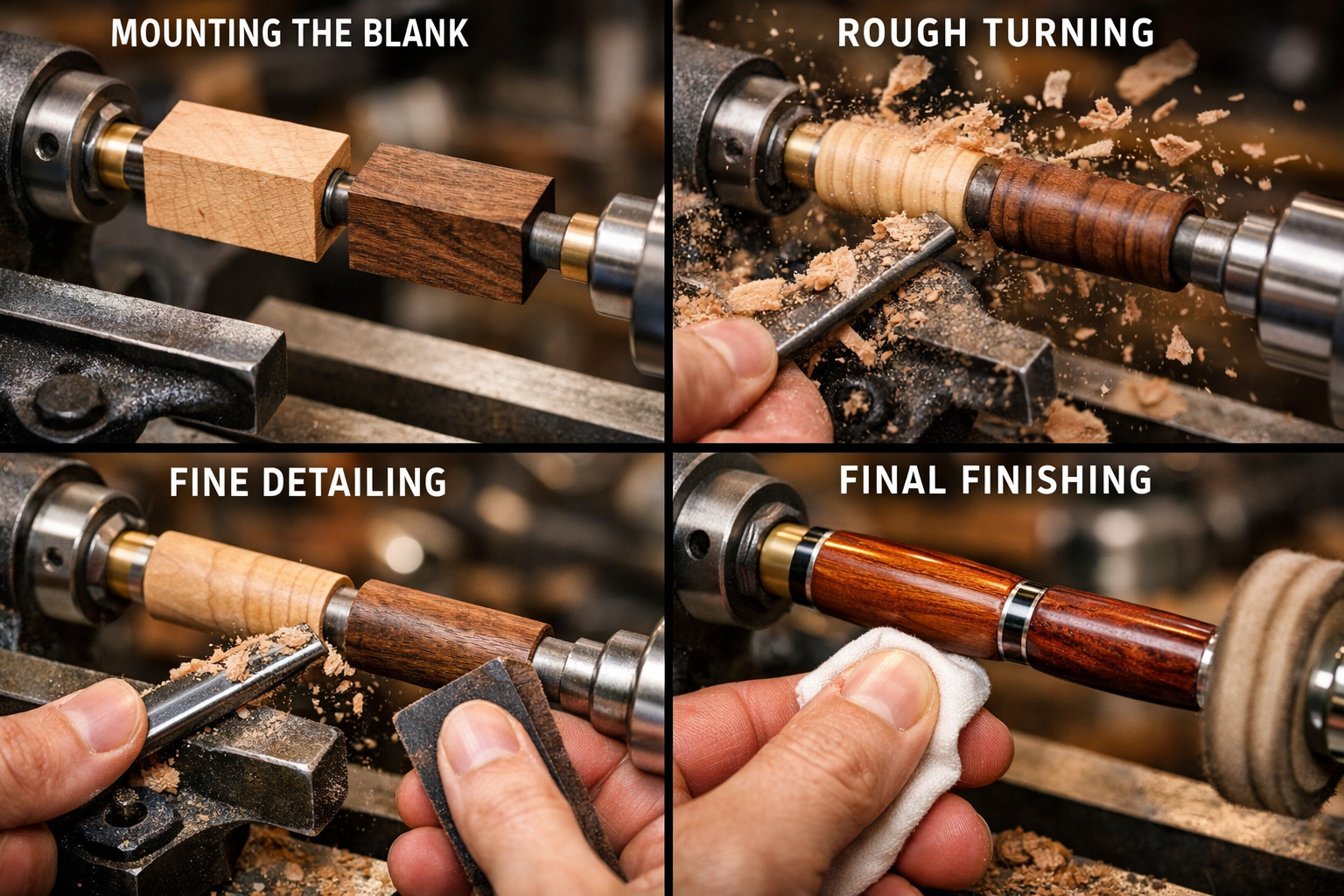
- Mount on Mandrel: Slide the prepared blanks onto the pen mandrel, separated by bushings that match the diameter of your pen kit. Secure the assembly on the lathe.
- Rough Shaping: Start the lathe at a moderate speed and use a roughing gouge or spindle gouge to carefully remove material, bringing the blank closer to the shape of the bushings. Take light passes to avoid tear-out.
- Fine Shaping: Switch to finer tools, like a detail gouge, to refine the shape. Aim for a smooth curve or straight taper, matching the bushings’ diameter at the ends. This is where your creativity comes into play for custom designs, going beyond the basic slimline shape.
- Sanding: Once the desired shape is achieved, begin sanding. Start with coarse sandpaper (around 150-180 grit) and gradually work your way through finer grits (up to 400-600 grit, and even 1000-1200 grit if desired). Sanding removes tool marks and prepares the wood for finishing. Proper sanding is key to a flawless finish.
Applying Custom Finishes: Durability and Appeal
The finish you apply is what truly brings out the character of the wood and protects it. For Hand-Turned Wooden Pens: Profitable Beginner Lathe Projects with Custom Finishes, the finish is paramount.
- Friction Polish: A popular choice for beginners, applied while the pen is still on the lathe. It’s a quick-drying, shellac-based finish that creates a high-gloss, durable surface. Many friction polishes are food-safe once cured, making them suitable for items that might be handled frequently.
- CA (Cyanoacrylate) Finish: This involves applying multiple thin coats of super glue, then sanding and polishing. It creates an incredibly durable, high-gloss, plastic-like finish that is highly resistant to scratches and moisture. Once fully cured, CA glue is generally considered food-safe, providing excellent protection for lasting pens.
- Oil Finishes (e.g., Tung Oil, Danish Oil): These penetrate the wood, enhancing the natural grain and providing a more subtle, natural look. Multiple coats are typically required, with drying time between each. They offer good protection and are often food-safe once cured.
- Wax Finishes: Can be applied alone for a soft luster or over other finishes for added protection and shine. Carnauba wax is a common choice. Many waxes are food-safe.
Always check the manufacturer’s specifications for specific food-safe claims and proper curing times, especially when crafting items intended for gifts or sale.
Profitable Pathways: Selling Your Hand-Turned Wooden Pens
Beyond the joy of creation, the potential for profit makes Hand-Turned Wooden Pens: Profitable Beginner Lathe Projects with Custom Finishes an attractive venture for woodworkers. Their small size, high perceived value, and ease of customization contribute to their marketability.
Market Appeal and Pricing Strategies
Hand-turned pens make excellent gifts for graduations, promotions, birthdays, or as corporate tokens. Their unique, handcrafted nature sets them apart from mass-produced alternatives.
- Target Audience: Professionals, students, collectors, gift-givers.
- Customization: Offering personalization through wood choice, pen kit finish, or even laser engraving can significantly increase perceived value and profit margins.
- Pricing:
- Cost-Plus: Calculate your material costs (blank + kit + sandpaper + finish) and add a markup for your labor and desired profit.
- Value-Based: Price based on the perceived value of exotic woods, intricate designs, or high-end pen kits.
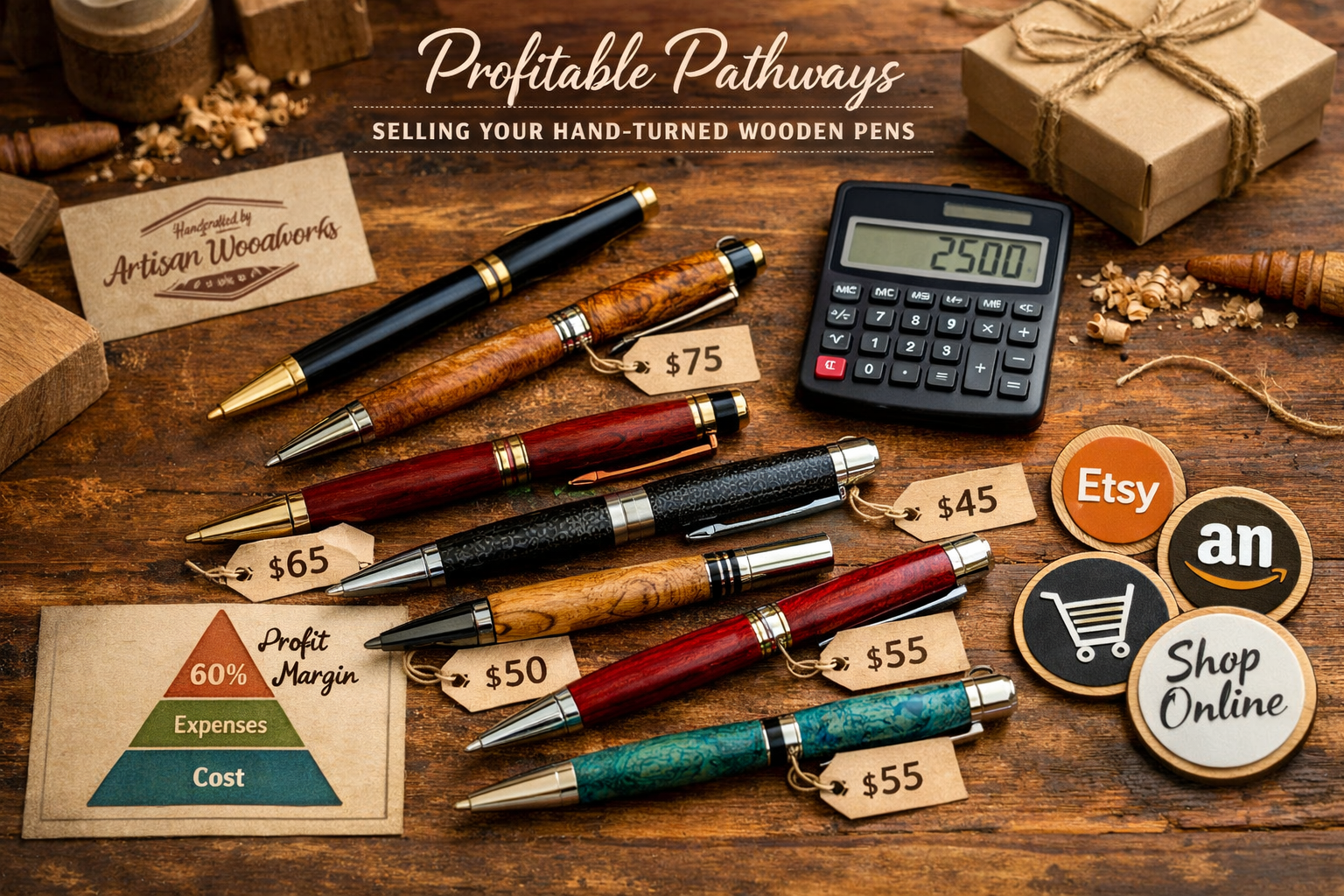
- Market Research: Look at similar handmade pens online (Etsy, craft shows) to understand competitive pricing. Slimline pens might sell for $25-$50, while exotic wood or custom-designed pens can fetch $75-$150 or more.
Consider packaging your pens in elegant boxes or sleeves to enhance their gift appeal. These small touches elevate the product and justify a higher price point. For more ideas on profitable small woodworking projects, explore Profitable Woodworking for Beginners: Building and Selling H.
Selling Channels: From Online to Local Markets
The versatility and compact nature of hand-turned pens make them suitable for a variety of sales channels.
- Online Marketplaces: Platforms like Etsy, Shopify, and local craft websites are excellent for reaching a broad audience. High-quality photography and detailed descriptions are essential here.
- Craft Fairs and Local Markets: These venues allow direct interaction with customers, enabling you to share the story behind your craftsmanship. Pens are easy to transport and display. Check out https://woodcraftwiz.com/woodworking-projects-that-sell-a-beginners-guide-to-profitable-craft-show-items/ for tips on selling at craft shows.
- Boutiques and Gift Shops: Consignment agreements with local stores can provide a steady sales stream without the need for constant market attendance.
- Corporate Gifting: Offer custom-engraved pens for businesses seeking unique client or employee gifts.
Pens, being small and relatively lightweight, are also incredibly cost-effective to ship, further boosting their profitability for online sales. This contrasts sharply with larger items like furniture, making pens a truly low-overhead product.
The Art of the Custom Finish: Ensuring Longevity and Beauty
The final finish is not merely aesthetic; it’s a critical component of the pen’s longevity and tactile experience. A well-applied, durable finish protects the wood from oils, moisture, and wear, ensuring that your Hand-Turned Wooden Pens: Profitable Beginner Lathe Projects with Custom Finishes remain beautiful for years.
- Buffing and Polishing: After the finish has cured, a final buffing with carnauba wax or a specialized polishing compound can bring out an extraordinary shine and smooth feel.
- Maintenance Instructions: Consider including a small card with your pens, offering simple care instructions (e.g., “Wipe with a soft cloth,” “Avoid harsh chemicals”) to help customers maintain their pen’s beauty.
- Food-Safe Considerations: While not directly for consumption, items that are handled frequently, especially by children, benefit from finishes that are certified food-safe. This adds a layer of trust and marketability. Examples include mineral oil, certain tung oils, and waxes.
 By focusing on quality finishes, you elevate your product from a simple craft item to a treasured keepsake, fostering customer loyalty and repeat business.
Conclusion
The world of Hand-Turned Wooden Pens: Profitable Beginner Lathe Projects with Custom Finishes offers an exceptional blend of creative satisfaction and financial opportunity. From the first cut of the pen blank to the final polish, each step in the turning process is an opportunity to craft a unique, high-quality item. For beginners, the relatively low entry cost for tools and materials, coupled with the high demand for custom, handcrafted goods, makes pen turning an ideal woodworking venture for 2026.
By mastering basic lathe operations, experimenting with diverse wood species and pen kits, and applying durable, beautiful finishes, you can create products that not only delight their owners but also establish a profitable side business or full-time craft enterprise. The ease of shipping and broad market appeal further cement hand-turned pens as a top choice for aspiring woodpreneurs. Start turning today, and unlock the potential of these small, yet profoundly impactful, creations.