

The aroma of freshly cut wood, a scent as old as civilization itself, often signals the birth of a masterpiece. Yet, beneath the surface of every exquisite furniture piece lies a fundamental decision: the choice of wood species. With countless options available, from the robust familiarity of oak to the exotic allure of wenge, discerning the perfect material for your next project can feel overwhelming. This ultimate guide to wood species for furniture making: properties, aesthetics, and best uses, aims to demystify this critical selection process. By understanding the inherent qualities of each timber, woodworkers in 2026 can elevate their craft, ensuring durability, enhancing beauty, and optimizing the functional elegance of their creations.
Key Takeaways
- Properties are Paramount: Wood species differ significantly in hardness, stability, and workability, directly impacting a furniture piece’s durability and the ease of its construction.
- Aesthetics Drive Design: Grain patterns, color, and natural luster are unique to each wood, influencing the overall visual appeal and style of the finished furniture.
- Best Use Dictates Choice: Matching the wood’s characteristics to the furniture’s intended function (e.g., a robust dining table vs. a delicate jewelry box) is crucial for longevity and satisfaction.
- Sustainability Matters: Consider the environmental impact of your wood choices, opting for sustainably sourced or reclaimed materials where possible.
- Finishing Enhances: The chosen finish can dramatically alter a wood’s appearance and protection, making it an integral part of the species selection process.
Understanding Wood Properties: The Foundation of Furniture Making
The performance and longevity of any furniture piece hinge significantly on the inherent properties of the wood used. These characteristics dictate not only how the wood behaves during construction but also its resilience and appearance over time. When exploring The Ultimate Guide to Wood Species for Furniture Making: Properties, Aesthetics, and Best Uses, understanding these fundamentals is crucial.
Hardness and Durability
Wood hardness is often measured by the Janka Hardness Test, which quantifies the force required to embed a steel ball halfway into the wood. A higher Janka rating indicates greater resistance to dents, scratches, and wear, making it a critical factor for high-traffic furniture like dining tables or flooring.
- Hardwoods: Generally deciduous trees, hardwoods are denser and typically have higher Janka ratings. Examples include Oak, Maple, Walnut, and Cherry. They are preferred for furniture that needs to withstand significant use.
- Softwoods: Typically coniferous trees, softwoods like Pine, Fir, and Cedar are less dense and more prone to denting. While suitable for certain applications (e.g., rustic furniture, hidden structural components), they are less ideal for surfaces that see heavy use.
Beyond hardness, durability encompasses a wood’s resistance to decay, insect infestation, and dimensional stability. Some woods naturally possess oils or compounds that resist pests and rot, making them excellent choices for outdoor furniture.
Stability and Workability
Dimensional Stability refers to how much a wood species expands and contracts with changes in humidity. All wood moves, but some species are far more stable than others. Understanding wood movement is vital for designing and building furniture that remains structurally sound and visually appealing without warping, cracking, or splitting. Quartersawn lumber is often more stable than flatsawn, regardless of species, due to the orientation of its growth rings.
Workability describes how easy a wood is to cut, plane, sand, glue, and finish.
- Ease of Machining: Some woods cut cleanly with minimal tear-out, while others are prone to splintering or dulling tools quickly due to their density or grain structure.
- Gluing and Finishing: Porous woods may absorb glue and finish differently than denser species. The natural oils in some exotic woods can also interfere with adhesion or drying times, requiring special preparation.
A wood that is both stable and workable allows for finer craftsmanship, such as mastering dovetail joints which demand precision.
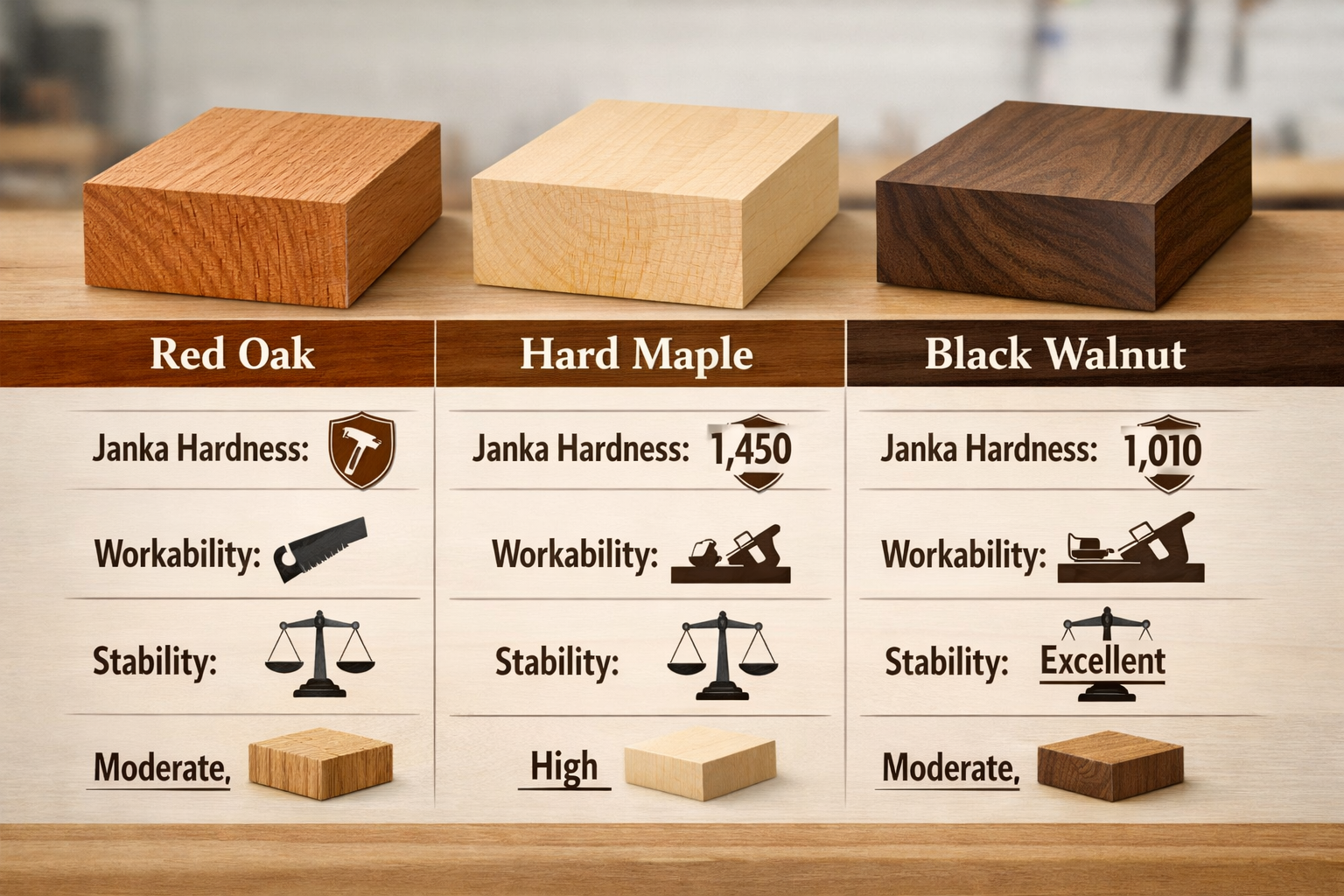
Table 1: Common Furniture Woods – Properties at a Glance
| Wood Species | Janka Hardness (lbf) | Stability | Workability | Common Uses |
|---|---|---|---|---|
| Red Oak | 1290 | Good | Good | Tables, Chairs, Cabinets |
| Hard Maple | 1450 | Good | Good | Tabletops, Dressers, Flooring |
| Black Walnut | 1010 | Excellent | Excellent | Fine Furniture, Veneer, Carving |
| Cherry | 950 | Very Good | Excellent | Dressers, Cabinets, Decorative items |
| Ash | 1320 | Good | Good | Chairs, Benches, Sports equipment |
| Pine (Southern Yellow) | 690 | Fair | Very Good | Rustic Furniture, Shelving, Hidden parts |
| Poplar | 540 | Good | Very Good | Painted furniture, Drawer boxes |
Aesthetics: The Visual Language of Wood
While properties determine functionality, aesthetics define the soul of a furniture piece. The Ultimate Guide to Wood Species for Furniture Making: Properties, Aesthetics, and Best Uses wouldn’t be complete without a deep dive into how visual elements like grain, color, and texture influence design and perceived value.
Grain Patterns and Texture
The grain of wood refers to the alignment, texture, and appearance of the wood fibers. It’s often the most distinctive visual feature of a particular species.
- Straight Grain: Fibers run parallel, creating a clean, uniform look (e.g., Cherry, Maple).
- Irregular/Interlocked Grain: Fibers grow in various directions, creating complex, often wavy or curly patterns (e.g., Mahogany, some Oaks). This can make surfacing more challenging but yields stunning results.
- Figure: Special grain patterns like “fiddleback,” “curly,” “quilted,” or “bird’s eye” are highly prized for their unique beauty and are often used in premium furniture or musical instruments.
- Texture: This refers to the coarseness or fineness of the wood fibers. Fine-textured woods like Maple feel smooth to the touch, while coarse-textured woods like Oak have a more open, pronounced feel.
Matching the grain pattern and texture to the desired aesthetic is key. A sleek, modern piece might benefit from the uniform look of maple, while a rustic or traditional design could embrace the bold grain of oak or ash. For more character-rich materials, consider sourcing and selecting reclaimed urban lumber.
Color and Luster
Wood color is incredibly diverse, ranging from nearly white to deep black, with countless shades of red, brown, and gold in between.
- Light Woods: Maple, Ash, Birch. These offer a clean, bright aesthetic and are often chosen for modern, minimalist designs. They also take stains well, allowing for a wide range of color customization.
- Medium Woods: Oak, Cherry, Beech. These provide warmth and versatility, fitting into various design styles from traditional to transitional. Cherry is renowned for developing a rich, darker patina over time, a desirable characteristic for many.
- Dark Woods: Walnut, Mahogany, Wenge. These exude elegance and luxury. Walnut, with its rich chocolate-brown hues, is a perennial favorite for fine furniture.
Luster refers to how light reflects off the wood surface. Some woods have a natural sheen or glow (e.g., Mahogany, many exotic species), which can be enhanced with appropriate finishes. The interplay of color, grain, and luster is what gives each wood its unique visual personality.
Table 2: Aesthetic Characteristics of Popular Wood Species
| Wood Species | Primary Color | Typical Grain Pattern | Luster | Aesthetic Notes |
|---|---|---|---|---|
| Red Oak | Light to Medium Brown | Pronounced, open, straight | Moderate | Strong presence, classic, versatile |
| Hard Maple | Creamy White to Light Brown | Subtle, tight, often straight | Low to Moderate | Clean, modern, takes stain well |
| Black Walnut | Rich Chocolate Brown | Straight, sometimes wavy/curly | Moderate | Luxurious, elegant, darkens with age |
| Cherry | Pinkish-Brown to Reddish-Brown | Fine, subtle, straight | Moderate | Warms and darkens to rich red over time |
| Mahogany | Reddish-Brown | Straight to interlocked, ribbons | High | Classic, formal, rich, often lustrous |
| Ash | Creamy White to Light Brown | Bold, open, similar to oak | Moderate | Modern, often used for ‘blonde’ furniture |
| Wenge | Very Dark Brown to Black | Straight, pronounced streaks | Low | Dramatic, contemporary, exotic |
Best Uses and Considerations for Furniture Making Projects
Choosing the right wood goes beyond just liking its look or knowing its hardness; it’s about matching the material to the project’s specific demands. The Ultimate Guide to Wood Species for Furniture Making: Properties, Aesthetics, and Best Uses culminates in understanding practical applications.
Pairing Wood with Furniture Type
- Dining Tables and Chairs: Require highly durable, stable woods that resist dents and wear. Red Oak, Hard Maple, Ash, and Walnut are excellent choices. Their strength ensures stability for woodworking dining chairs and tables that see daily use.
- Cabinets and Case Goods: Stability is paramount to prevent doors and drawers from binding. Maple, Cherry, Poplar (for painted applications), and Baltic Birch plywood are common. For intricate joinery like dovetail drawers, workability is also a key consideration.
- Decorative Pieces and Carvings: Woods with fine, uniform grain and good carving properties are preferred. Walnut, Cherry, Mahogany, and Basswood are excellent for intricate work, offering crisp details. Consider these for projects like handcrafted wooden wall clocks.
- Outdoor Furniture: Must withstand the elements. Naturally rot-resistant woods like Teak, Cedar, Redwood, and Ipe are superior. Treated Pine is a more economical alternative but requires regular maintenance. For building picnic tables, durability is key.
- Live Edge Furniture: Requires species that offer large, interesting slabs with distinct grain and often includes natural imperfections. Walnut, Maple, Oak, and exotic woods are popular. Learn more about live edge slab selection and preparation.
Sustainable Sourcing and Cost Implications
In 2026, responsible woodworking increasingly emphasizes sustainable sourcing. Look for certifications from organizations like the Forest Stewardship Council (FSC) to ensure wood comes from responsibly managed forests. Reclaimed wood, salvaged from old buildings or furniture, is another excellent sustainable option that adds unique character.
Cost varies significantly between species. Common domestic hardwoods like Oak and Maple are generally more affordable than premium species like Walnut or Cherry. Exotic woods, especially those imported, tend to be the most expensive due to rarity, shipping costs, and demand. Budget plays a crucial role in material selection, but remember that investing in higher quality wood can lead to a more durable and valuable finished product.
Finishing Considerations
The finish chosen for your furniture piece can dramatically alter its appearance and protect it from wear, moisture, and UV damage.
- Natural Beauty: Many woods, like Walnut and Cherry, are stunning with just a clear oil or varnish that enhances their natural color and grain.
- Staining: Lighter, open-grained woods like Oak and Ash take stains well, allowing for a vast array of color transformations. Maple can be challenging to stain evenly without proper conditioning.
- Painting: Poplar, MDF, and Plywood are excellent substrates for painted furniture, offering smooth, uniform surfaces.
Experimenting with different finishes on scrap pieces of your chosen wood is always recommended to achieve the desired look and ensure compatibility. For more insights on this, explore cool wood finishing techniques.
![Workbench with wood and tools](data:image/png;base64,iVBORw0KGgoAAAANSUhEUAAAAEAAAABACAYAAACqJHChAAAACXBIWXMAAAsTAAALEwEAmpwYAAABsklEQVR4nO2aQQrDMAyG7//IzkL+iU3gB/R60oK+z4i0x7eWpGmG0L3mXvIBx3HcU2MRExEReZc4Q3w/Q/w/RfxPRPw8jA+YF9uJ/5X0Yk26D4eGgX96N2N+NBM0B9jM6iK0x3d3YvE/XlQZ+E+S4R9hN+fC9QZ/eK/Lh/fB+V5i+V3ifhP9l3iE2x/f+k7C/Pj2t+c/1iL+x/F9n+f/F/Pj2t+c/1iL+x/F9n+f/F/Pj2t+c/1iL+x/F9n+f/F/Pj2t+c/1iL+x/F9n+f/F/Pj2t+c/1iL+x/F9n+f/F/Pj2t+c/1iL+x/F9n+f/F/Pj2t+c/1iL+x/F9n+f/F/Pj2t+c/1iL+x/F9n+f/F/Pj2t+c/1iL+x/F9n+f/F/Pj2t+c/1iL+x/F9n+f/F/Pj2t+c/1iL+x/F9n+f/F/Pj2t+c/1iL+x/F9n+f/F/Pj2t+c/1iL+x/F9n+f/F/Pj2t+c/1iL+x/F9n+f/F/Pj2t+c/1iL+x/F9n+f/F/Pj2t+c/1iL+x/F9n+f/F/Pj2t+c/1iL+x/F9n+f/F/Pj2t+c/1iL+x/F9n+f/F/Pj2t+c/1iL+x/F9n+f/F/Pj2t+c/1iL+x/F9n+f/F/Pj2t+c/1iL+x/F9n+f/F/Pj2t+c/1iL+x/F9n+f/F/Pj2t+c/1iL+x/F9n+f/F/Pj2t+c/1iL+x/F9n+f/F/Pj2t+c/1iL+x/F9n+f/F/Pj2t+c/1iL+x/F9n+f/F/Pj2t+c/1iL+x/F9n+f/F/Pj2t+c/1iL+x/F9n+f/F/Pj2t+c/1iL+x/F9n+f/F/Pj2t+c/1iL+x/F9n+f/F/Pj2t+c/1iL+x/F9n+f/F/Pj2t+c/1iL+x/F9n+f/F/Pj2t+c/1iL+x/F9n+f/F/Pj2t+c/1iL+x/F9n+f/F/Pj2t+c/1iL+x/F9n+f/F/Pj2t+c/1iL+x/F9n+f/F/Pj2t+c/1iL+x/F9n+f/F/Pj2t+c/1iL+x/F9n+f/F/Pj2t+c/1iL+x/F9n+f/F/Pj2t+c/1iL+x/F9n+f/F/Pj2t+c/1iL+x/F9n+f/F/Pj2t+c/1iL+x/F9n+f/F/Pj2t+c/1iL+x/F9n+f/F/Pj2t+c/1iL+x/F9n+f/F/Pj2t+c/1iL+x/F9n+f/F/Pj2t+c/1iL+x/F9n+f/F/Pj2t+c/1iL+x/F9n+f/F/Pj2t+c/1iL+x/F9n+f/F/Pj2t+c/1iL+x/F9n+f/F/Pj2t+c/1iL+x/F9n+f/F/Pj2t+c/1iL+x/F9n+f/F/Pj2t+c/1iL+x/F9n+f/F/Pj2t+c/1iL+x/F9n+f/F/Pj2t+c/1iL+x/F9n+f/F/Pj2t+c/1iL+x/F9n+f/F/Pj2t+c/1iL+x/F9n+f/F/Pj2t+c/1iL+x/F9n+f/F/Pj2t+c/1iL+x/F9n+f/F/Pj2t+c/1iL+x/F9n+f/F/Pj2t+c/1iL+x/F9n+f/F/Pj2t+c/1iL+x/F9n+f/F/Pj2t+c/1iL+x/F9n+f/F/Pj2t+c/1iL+x/F9n+f/F/Pj2t+c/1iL+x/F9n+f/F/Pj2t+c/1iL+x/F9n+f/F/Pj2t+c/1iL+x/F9n+f/F/Pj2t+c/1iL+x/F9n+f/F/Pj2t+c/1iL+x/F9n+f/F/Pj2t+c/1iL+x/F9n+f/F/Pj2t+c/1iL+x/F9n+f/F/Pj2t+c/1iL+x/F9n+f/F/Pj2t+c/1iL+x/F9n+f/F/Pj2t+c/1iL+x/F9n+f/F/Pj2t+c/1iL+x/F9n+f/F/Pj2t+c/1iL+x/F9n+f/F/Pj2t+c/1iL+x/F9n+f/F/Pj2t+c/1iL+x/F9n+f/F/Pj2t+c/1iL+x/F9n+f/F/Pj2t+c/1iL+x/F9n+f/F/Pj2t+c/1iL+x/F9n+f/F/Pj2t+c/1iL+x/F9n+f/F/Pj2t+c/1iL+x/F9n+f/F/Pj2t+c/1iL+x/F9n+f/F/Pj2t+c/1iL+x/F9n+f/F/Pj2t+c/1iL+x/F9n+f/F/Pj2t+c/1iL+x/F9n+f/F/Pj2t+c/1iL+x/F9n+f/F/Pj2t+c/1iL+x/F9n+f/F/Pj2t+c/1iL+x/F9n+f/F/Pj2t+c/1iL+x/F9n+f/F/Pj2t+c/1iL+x/F9n+f/F/Pj2t+c/1iL+x/F9n+f/F/Pj2t+c/1iL+x/F9n+f/F/Pj2t+c/1iL+x/F9n+f/F/Pj2t+c/1iL+x/F9n+f/F/Pj2t+c/1iL+x/F9n+f/F/Pj2t+c/1iL+x/F9n+f/F/Pj2t+c/1iL+x/F9n+f/F/Pj2t+c/1iL+x/F9n+f/F/Pj2t+c/1iL+x/F9n+f/F/Pj2t+c/1iL+x/F9n+f/F/Pj2t+c/1iL+x/F9n+f/F/Pj2t+c/1iL+x/F9n+f/F/Pj2t+c/1iL+x/F9n+f/F/Pj2t+c/1iL+x/F9n+f/F/Pj2t+c/1iL+x/F9n+f/F/Pj2t+c/1iL+x/F9n+f/F/Pj2t+c/1iL+x/F9n+f/F/Pj2t+c/1iL+x/F9n+f/F/Pj2t+c/1iL+x/F9n+f/F/Pj2t+c/1iL+x/F9n+f/F/Pj2t+c/1iL+x/F9n+f/F/Pj2t+c/1iL+x/F9n+f/F/Pj2t+c/1iL+x/F9n+f/F/Pj2t+c/1iL+x/F9n+f/F/Pj2t+c/1iL+x/F9n+f/F/Pj2t+c/1iL+x/F9n+f/F/Pj2t+c/1iL+x/F9n+f/F/Pj2t+c/1iL+x/F9n+f/F/Pj2t+c/1iL+x/F9n+f/F/Pj2t+c/1iL+x/F9n+f/F/Pj2t+c/1iL+x/F9n+f/F/Pj2t+c/1iL+x/F9n+f/F/Pj2t+c/1iL+x/F9n+f/F/Pj2t+c/1iL+x/F9n+f/F/Pj2t+c/1iL+x/F9n+f/F/Pj2t+c/1iL+x/F9n+f/F/Pj2t+c/1iL+x/F9n+f/F/Pj2t+c/1iL+x/F9n+f/F/Pj2t+c/1iL+x/F9n+f/F/Pj2t+c/1iL+x/F9n+f/F/Pj2t+c/1iL+x/F9n+f/F/Pj2t+c/1iL+x/F9n+f/F/Pj2t+c/1iL+x/F9n+f/F/Pj2t+c/1iL+x/F9n+f/F/Pj2t+c/1iL+x/F9n+f/F/Pj2t+c/1iL+x/F9n+f/F/Pj2t+c/1iL+x/F9n+f/F/Pj2t+c/1iL+x/F9n+f/F/Pj2t+c/1iL+x/F9n+f/F/Pj2t+c/1iL+x/F9n+f/F/Pj2t+c/1iL+x/F9n+f/F/Pj2t+c/1iL+x/F9n+f/F/Pj2t+c/1iL+x/F9n+f/F/Pj2t+c/1iL+x/F9n+f/F/Pj2t+c/1iL+x/F9n+f/F/Pj2t+c/1iL+x/F9n+f/F/Pj2t+c/1iL+x/F9n+f/F/Pj2t+c/1iL+x/F9n+f/F/Pj2t+c/1iL+x/F9n+f/F/Pj2t+c/1iL+x/F9n+f/F/Pj2t+c/1iL+x/F9n+f/F/Pj2t+c/1iL+x/F9n+f/F/Pj2t+c/1iL+x/F9n+f/F/Pj2t+c/1iL+x/F9n+f/F/Pj2t+c/1iL+x/F9n+f/F/Pj2t+c/1iL+x/F9n+f/F/Pj2t+c/1iL+x/F9n+f/F/Pj2t+c/1iL+x/F9n+f/F/Pj2t+c/1iL+x/F9n+f/F/Pj2t+c/1iL+x/F9n+f/F/Pj2t+c/1iL+x/F9n+f/F/Pj2t+c/1iL+x/F9n+f/F/Pj2t+c/1iL+x/F9n+f/F/Pj2t+c/1iL+x/F9n+f/F/Pj2t+c/1iL+x/F9n+f/F/Pj2t+c/1iL+x/F9n+f/F/Pj2t+c/1iL+x/F9n+f/F/Pj2t+c/1iL+x/F9n+f/F/Pj2t+c/1iL+x/F9n+f/F/Pj2t+c/1iL+x/F9n+f/F/Pj2t+c/1iL+x/F9n+f/F/Pj2t+c/1iL+x/F9n+f/F/Pj2t+c/1iL+x/F9n+f/F/Pj2t+c/1iL+x/F9n+f/F/Pj2t+c/1iL+x/F9n+f/F/Pj2t+c/1iL+x/F9n+f/F/Pj2t+c/1iL+x/F9n+f/F/Pj2t+c/1iL+x/F9n+f/F/Pj2t+c/1iL+x/F9n+f/F/Pj2t+c/1iL+x/F9n+f/F/Pj2t+c/1iL+x/F9n+f/F/Pj2t+c/1iL+x/F9n+f/F/Pj2t+c/1iL+x/F9n+f/F/Pj2t+c/1iL+x/F9n+f/F/Pj2t+c/1iL+x/F9n+f/F/Pj2t+c/1iL+x/F9n+f/F/Pj2t+c/1iL+x/F9n+f/F/Pj2t+c/1iL+x/F9n+f/F/Pj2t+c/1iL+x/F9n+f/F/Pj2t+c/1iL+x/F9n+f/F/Pj2t+c/1iL+x/F9n+f/F/Pj2t+c/1iL+x/F9n+f/F/Pj2t+c/1iL+x/F9n+f/F/Pj2t+c/1iL+x/F9n+f/F/Pj2t+c/1iL+x/F9n+f/F/Pj2t+c/1iL+x/F9n+f/F/Pj2t+c/1iL+x/F9n+f/F/Pj2t+c/1iL+x/F9n+f/F/Pj2t+c/1iL+x/F9n+f/F/Pj2t+c/1iL+x/F9n+f/F/Pj2t+c/1iL+x/F9n+f/F/Pj2t+c/1iL+x/F9n+f/F/Pj2t+c/1iL+x/F9n+f/F/Pj2t+c/1iL+x/F9n+f/F/Pj2t+c/1iL+x/F9n+f/F/Pj2t+c/1iL+x/F9n+f/F/Pj2t+c/1iL+x/F9n+f/F/Pj2t+c/1iL+x/F9n+f/F/Pj2t+c/1iL+x/F9n+f/F/Pj2t+c/1iL+x/F9n+f/F/Pj2t+c/1iL+x/F9n+f/F/Pj2t+c/1iL+x/F9n+f/F/Pj2t+c/1iL+x/F9n+f/F/Pj2t+c/1iL+x/F9n+f/F/Pj2t+c/1iL+x/F9n+f/F/Pj2t+c/1iL+x/F9n+f/F/Pj2t+c/1iL+x/F9n+f/F/Pj2t+c/1iL+x/F9n+f/F/Pj2t+c/1iL+x/F9n+f/F/Pj2t+c/1iL+x/F9n+f/F/Pj2t+c/1iL+x/F9n+f/F/Pj2t+c/1iL+x/F9n+f/F/Pj2t+c/1iL+x/F9n+f/F/Pj2t+c/1iL+x/F9n+f/F/Pj2t+c/1iL+x/F9n+f/F/Pj2t+c/1iL+x/F9n+f/F/Pj2t+c/1iL+x/F9n+f/F/Pj2t+c/1iL+x/F9n+f/F/Pj2t+c/1iL+x/F9n+f/F/Pj2t+c/1iL+x/F9n+f/F/Pj2t+c/1iL+x/F9n+f/F/Pj2t+c/1iL+x/F9n+f/F/Pj2t+c/1iL+x/F9n+f/F/Pj2t+c/1iL+x/F9n+f/F/Pj2t+c/1iL+x/F9n+f/F/Pj2t+c/1iL+x/F9n+f/F/Pj2t+c/1iL+x/F9n+f/F/Pj2t+c/1iL+x/F9n+f/F/Pj2t+c/1iL+x/F9n+f/F/Pj2t+c/1iL+x/F9n+f/F/Pj2t+c/1iL+x/F9n+f/F/Pj2t+c/1iL+x/F9n+f/F/Pj2t+c/1iL+x/F9n+f/F/Pj2t+c/1iL+x/F9n+f/F/Pj2t+c/1iL+x/F9n+f/F/Pj2t+c/1iL+x/F9n+f/F/Pj2t+c/1iL+x/F9n+f/F/Pj2t+c/1iL+x/F9n+f/F/Pj2t+c/1iL+x/F9n+f/F/Pj2t+c/1iL+x/F9n+f/F/Pj2t+c/1iL+x/F9n+f/F/Pj2t+c/1iL+x/F9n+f/F/Pj2t+c/1iL+x/F9n+f/F/Pj2t+c/1iL+x/F9n+f/F/Pj2t+c/1iL+x/F9n+f/F/Pj2t+c/1iL+x/F9n+f/F/Pj2t+c/1iL+x/F9n+f/F/Pj2t+c/1iL+x/F9n+f/F/Pj2t+c/1iL+x/F9n+f/F/Pj2t+c/1iL+x/F9n+f/F/Pj2t+c/1iL+x/F9n+f/F/Pj2t+c/1iL+x/F9n+f/F/Pj2t+c/1iL+x/F9n+f/F/Pj2t+c/1iL+x/F9n+f/F/Pj2t+c/1iL+x/F9n+f/F/Pj2t+c/1iL+x/F9n+f/F/Pj2t+c/1iL+x/F9n+f/F/Pj2t+c/1iL+x/F9n+f/F/Pj2t+c/1iL+x/F9n+f/F/Pj2t+c/1iL+x/F9n+f/F/Pj2t+c/1iL+x/F9n+f/F/Pj2t+c/1iL+x/F9n+f/F/Pj2t+c/1iL+x/F9n+f/F/Pj2t+c/1iL+x/F9n+f/F/Pj2t+c/1iL+x/F9n+f/F/Pj2t+c/1iL+x/F9n+f/F/Pj2t+c/1iL+x/F9n+f/F/Pj2t+c/1iL+x/F9n+f/F/Pj2t+c/1iL+x/F9n+f/F/Pj2t+c/1iL+x/F9n+f/F/Pj2t+c/1iL+x/F9n+f/F/Pj2t+c/1iL+x/F9n+f/F/Pj2t+c/1iL+x/F9n+f/F/Pj2t+c/1iL+x/F9n+f/F/Pj2t+c/1iL+x/F9n+f/F/Pj2t+c/1iL+x/F9n+f/F/Pj2t+c/1iL+x/F9n+f/F/Pj2t+c/1iL+x/F9n+f/F/Pj2t+c/1iL+x/F9n+f/F/Pj2t+c/1iL+x/F9n+f/F/Pj2t+c/1iL+x/F9n+f/F/Pj2t+c/1iL+x/F9n+f/F/Pj2t+c/1iL+x/F9n+f/F/Pj2t+c/1iL+x/F9n+f/F/Pj2t+c/1iL+x/F9n+f/F/Pj2t+c/1iL+x/F9n+f/F/Pj2t+c/1iL+x/F9n+f/F/Pj2t+c/1iL+x/F9n+f/F/Pj2t+c/1iL+x/F9n+f/F/Pj2t+c/1iL+x/F9n+f/F/Pj2t+c/1iL+x/F9n+f/F/Pj2t+c/1iL+x/F9n+f/F/Pj2t+c/1iL+x/F9n+f/F/Pj2t+c/1iL+x/F9n+f/F/Pj2t+c/1iL+x/F9n+f/F/Pj2t+c/1iL+x/F9n+f/F/Pj2t+c/1iL+x/F9n+f/F/Pj2t+c/1iL+x/F9n+f/F/Pj2t+c/1iL+x/F9n+f/F/Pj2t+c/1iL+x/F9n+f/F/Pj2t+c/1iL+x/F9n+f/F/Pj2t+c/1iL+x/F9n+f/F/Pj2t+c/1iL+x/F9n+f/F/Pj2t+c/1iL+x/F9n+f/F/Pj2t+c/1iL+x/F9n+f/F/Pj2t+c/1iL+x/F9n+f/F/Pj2t+c/1iL+x/F9n+f/F/Pj2t+c/1iL+x/F9n+f/F/Pj2t+c/1iL+x/F9n+f/F/Pj2t+c/1iL+x/F9n+f/F/Pj2t+c/1iL+x/F9n+f/F/Pj2t+c/1iL+x/F9n+f/F/Pj2t+c/1iL+x/F9n+f/F/Pj2t+c/1iL+x/F9n+f/F/Pj2t+c/1iL+x/F9n+f/F/Pj2t+c/1iL+x/F9n+f/F/Pj2t+c/1iL+x/F9n+f/F/Pj2t+c/1iL+x/F9n+f/F/Pj2t+c/1iL+x/F9n+f/F/Pj2t+c/1iL+x/F9n+f/F/Pj2t+c/1iL+x/F9n+f/F/Pj2t+c/1iL+x/F9n+f/F/Pj2t+c/1iL+x/F9n+f/F/Pj2t+c/1iL+x/F9n+f/F/Pj2t+c/1iL+x/F9n+f/F/Pj2t+c/1iL+x/F9n+f/F/Pj2t+c/1iL+x/F9n+f/F/Pj2t+c/1iL+x/F9n+f/F/Pj2t+c/1iL+x/F9n+f/F/Pj2t+c/1iL+x/F9n+f/F/Pj2t+c/1iL+x/F9n+f/F/Pj2t+c/1iL+x/F9n+f/F/Pj2t+c/1iL+x/F9n+f/F/Pj2t+c/1iL+x/F9n+f/F/Pj2t+c/1iL+x/F9n+f/F/Pj2t+c/1iL+x/F9n+f/F/Pj2t+c/1iL+x/F9n+f/F/Pj2t+c/1iL+x/F9n+f/F/Pj2t+c/1iL+x/F9n+f/F/Pj2t+c/1iL+x/F9n+f/F/Pj2t+c/1iL+x/F9n+f/F/Pj2t+c/1iL+x/F9n+f/F/Pj2t+c/1iL+x/F9n+f/F/Pj2t+c/1iL+x/F9n+f/F/Pj2t+c/1iL+x/F9n+f/F/Pj2t+c/1iL+x/F9n+f/F/Pj2t+c/1iL+x/F9n+f/F/Pj2t+c/1iL+x/F9n+f/F/Pj2t+c/1iL+x/F9n+f/F/Pj2t+c/1iL+x/F9n+f/F/Pj2t+c/1iL+x/F9n+f/F/Pj2t+c/1iL+x/F9n+f/F/Pj2t+c/1iL+x/F9n+f/F/Pj2t+c/1iL+x/F9n+f/F/Pj2t+c/1iL+x/F9n+f/F/Pj2t+c/1iL+x/F9n+f/F/Pj2t+c/1iL+x/F9n+f/F/Pj2t+c/1iL+x/F9n+f/F/Pj2t+c/1iL+x/F9n+f/F/Pj2t+c/1iL+x/F9n+f/F/Pj2t+c/1iL+x/F9n+f/F/Pj2t+c/1iL+x/F9n+f/F/Pj2t+c/1iL+x/F9n+f/F/Pj2t+c/1iL+x/F9n+f/F/Pj2t+c/1iL+x/F9n+f/F/Pj2t+c/1iL+x/F9n+f/F/Pj2t+c/1iL+x/F9n+f/F/Pj2t+c/1iL+x/F9n+f/F/Pj2t+c/1iL+x/F9n+f/F/Pj2t+c/1iL+x/F9n+f/F/Pj2t+c/1iL+x/F9n+f/F/Pj2t+c/1iL+x/F9n+f/F/Pj2t+c/1iL+x/F9n+f/F/Pj2t+c/1iL+x/F9n+f/F/Pj2t+c/1iL+x/F9n+f/F/Pj2t+c/1iL+x/F9n+f/F/Pj2t+c/1iL+x/F9n+f/F/Pj2t+c/1iL+x/F9n+f/F/Pj2t+c/1iL+x/F9n+f/F/Pj2t+c/1iL+x/F9n+f/F/Pj2t+c/1iL+x/F9n+f/F/Pj2t+c/1iL+x/F9n+f/F/Pj2t+c/1iL+x/F9n+f/F/Pj2t+c/1iL+x/F9n+f/F/Pj2t+c/1iL+x/F9n+f/F/Pj2t+c/1iL+x/F9n+f/F/Pj2t+c/1iL+x/F9n+f/F/Pj2t+c/1iL+x/F9n+f/F/Pj2t+c/1iL+x/F9n+f/F/Pj2t+c/1iL+x/F9n+f/F/Pj2t+c/1iL+x/F9n+f/F/Pj2t+c/1iL+x/F9n+f/F/Pj2t+c/1iL+x/F9n+f/F/Pj2t+c/1iL+x/F9n+f/F/Pj2t+c/1iL+x/F9n+f/F/Pj2t+c/1iL+x/F9n+f/F/Pj2t+c/1iL+x/F9n+f/F/Pj2t+c/1iL+x/F9n+f/F/Pj2t+c/1iL+x/F9n+f/F/Pj2t+c/1iL+x/F9n+f/F/Pj2t+c/1iL+x/F9n+f/F/Pj2t+c/1iL+x/F9n+f/F/Pj2t+c/1iL+x/F9n+f/F/Pj2t+c/1iL+x/F9n+f/F/Pj2t+c/1iL+x/F9n+f/F/Pj2t+c/1iL+x/F9n+f/F/Pj2t+c/1iL+x/F9n+f/F/Pj2t+c/1iL+x/F9n+f/F/Pj2t+c/1iL+x/F9n+f/F/Pj2t+c/1iL+x/F9n+f/F/Pj2t+c/1iL+x/F9n+f/F/Pj2t+c/1iL+x/F9n+f/F/Pj2t+c/1iL+x/F9n+f/F/Pj2t+c/1iL+x/F9n+f/F/Pj2t+c/1iL+x/F9n+f/F/Pj2t+c/1iL+x/F9n+f/F/Pj2t+c/1iL+x/F9n+f/F/Pj2t+c/1iL+x/F9n+f/F/Pj2t+c/1iL+x/F9n+f/F/Pj2t+c/1iL+x/F9n+f/F/Pj2t+c/1iL+x/F9n+f/F/Pj2t+c/1iL+x/F9n+f/F/Pj2t+c/1iL+x/F9n+f/F/Pj2t+c/1iL+x/F9n+f/F/Pj2t+c/1iL+x/F9n+f/F/Pj2t+c/1iL+x/F9n+f/F/Pj2t+c/1iL+x/F9n+f/F/Pj2t+c/1iL+x/F9n+f/F/Pj2t+c/1iL+x/F9n+f/F/Pj2t+c/1iL+x/F9n+f/F/Pj2t+c/1iL+x/F9n+f/F/Pj2t+c/1iL+x/F9n+f/F/Pj2t+c/1iL+x/F9n+f/F/Pj2t+c/1iL+x/F9n+f/F/Pj2t+c/1iL+x/F9n+f/F/Pj2t+c/1iL+x/F9n+f/F/Pj2t+c/1iL+x/F9n+f/F/Pj2t+c/1iL+x/F9n+f/F/Pj2t+c/1iL+x/F9n+f/F/Pj2t+c/1iL+x/F9n+f/F/Pj2t+c/1iL+x/F9n+f/F/Pj2t+c/1iL+x/F9n+f/F/Pj2t+c/1iL+x/F9n+f/F/Pj2t+c/1iL+x/F9n+f/F/Pj2t+c/1iL+x/F9n+f/F/Pj2t+c/1iL+x/F9n+f/F/Pj2t+c/1iL+x/F9n+f/F/Pj2t+c/1iL+x/F9n+f/F/Pj2t+c/1iL+x/F9n+f/F/Pj2t+c/1iL+x/F9n+f/F/Pj2t+c/1iL+x/F9n+f/F/Pj2t+c/1iL+x/F9n+f/F/Pj2t+c/1iL+x/F9n+f/F/Pj2t+c/1iL+x/F9n+f/F/Pj2t+c/1iL+x/F9n+f/F/Pj2t+c/1iL+x/F9n+f/F/Pj2t+c/1iL+x/F9n+f/F/Pj2t+c/1iL+x/F9n+f/F/Pj2t+c/1iL+x/F9n+f/F/Pj2t+c/1iL+x/F9n+f/F/Pj2t+c/1iL+x/F9n+f/F/Pj2t+c/1iL+x/F9n+f/F/Pj2t+c/1iL+x/F9n+f/F/Pj2t+c/1iL+x/F9n+f/F/Pj2t+c/1iL+x/F9n+f/F/Pj2t+c/1iL+x/F9n+f/F/Pj2t+c/1iL+x/F9n+f/F/Pj2t+c/1iL+x/F9n+f/F/Pj2t+c/1iL+x/F9n+f/F/Pj2t+c/1iL+x/F9n+f/F/Pj2t+c/1iL+x/F9n+f/F/Pj2t+c/1iL+x/F9n+f/F/Pj2t+c/1iL+x/F9n+f/F/Pj2t+c/1iL+x/F9n+f/F/Pj2t+c/1iL+x/F9n+f/F/Pj2t+c/1iL+x/F9n+f/F/Pj2t+c/1iL+x/F9n+f/F/Pj2t+c/1iL+x/F9n+f/F/Pj2t+c/1iL+x/F9n+f/F/Pj2t+c/1iL+x/F9n+f/F/Pj2t+c/1iL+x/F9n+f/F/Pj2t+c/1iL+x/F9n+f/F/Pj2t+c/1iL+x/F9n+f/F/Pj2t+c/1iL+x/F9n+f/F/Pj2t+c/1iL+x/F9n+f/F/Pj2t+c/1iL+x/F9n+f/F/Pj2t+c/1iL+x/F9n+f/F/Pj2t+c/1iL+x/F9n+f/F/Pj2t+c/1iL+x/F9n+f/F/Pj2t+c/1iL+x/F9n+f/F/Pj2t+c/1iL+x/F9n+f/F/Pj2t+c/1iL+x/F9n+f/F/Pj2t+c/1iL+x/F9n+f/F/Pj2t+c/1iL+x/F9n+f/F/Pj2t+c/1iL+x/F9n+f/F/Pj2t+c/1iL+x/F9n+f/F/Pj2t+c/1iL+x/F9n+f/F/Pj2t+c/1iL+x/F9n+f/F/Pj2t+c/1iL+x/F9n+f/F/Pj2t+c/1iL+x/F9n+f/F/Pj2t+c/1iL+x/F9n+f/F/Pj2t+c/1iL+x/F9n+f/F/Pj2t+c/1iL+x/F9n+f/F/Pj2t+c/1iL+x/F9n+f/F/Pj2t+c/1iL+x/F9n+f/F/Pj2t+c/1iL+x/F9n+f/F/Pj2t+c/1iL+x/F9n+f/F/Pj2t+c/1iL+x/F9n+f/F/Pj2t+c/1iL+x/F9n+f/F/Pj2t+c/1iL+x/F9n+f/F/Pj2t+c/1iL+x/F9n+f/F/Pj2t+c/1iL+x/F9n+f/F/Pj2t+c/1iL+x/F9n+f/F/Pj2t+c/1iL+x/F9n+f/F/Pj2t+c/1iL+x/F9n+f/F/Pj2t+c/1iL+x/F9n+f/F/Pj2t+c/1iL+x/F9n+f/F/Pj2t+c/1iL+x/F9n+f/F/Pj2t+c/1iL+x/F9n+f/F/Pj2t+c/1iL+x/F9n+f/F/Pj2t+c/1iL+x/F9n+f/F/Pj2t+c/1iL+x/F9n+f/F/Pj2t+c/1iL+x/F9n+f/F/Pj2t+c/1iL+x/F9n+f/F/Pj2t+c/1iL+x/F9n+f/F/Pj2t+c/1iL+x/F9n+f/F/Pj2t+c/1iL+x/F9n+f/F/Pj2t+c/1iL+x/F9n+f/F/Pj2t+c/1iL+x/F9n+f/F/Pj2t+c/1iL+x/F9n+f/F/Pj2t+c/1iL+x/F9n+f/F/Pj2t+c/1iL+x/F9n+f/F/Pj2t+c/1iL+x/F9n+f/F/Pj2t+c/1iL+x/F9n+f/F/Pj2t+c/1iL+x/F9n+f/F/Pj2t+c/1iL+x/F9n+f/F/Pj2t+c/1iL+x/F9n+f/F/Pj2t+c/1iL+x/F9n+f/F/Pj2t+c/1iL+x/F9n+f/F/Pj2t+c/1iL+x/F9n+f/F/Pj2t+c/1iL+x/F9n+f/F/Pj2t+c/1iL+x/F9n+f/F/Pj2t+c/1iL+x/F9n+f/F/Pj2t+c/1iL+x/F9n+f/F/Pj2t+c/1iL+x/F9n+f/F/Pj2t+c/1iL+x/F9n+f/F/Pj2t+c/1iL+x/F9n+f/F/Pj2t+c/1iL+x/F9n+f/F/Pj2t+c/1iL+x/F9n+f/F/Pj2t+c/1iL+x/F9n+f/F/Pj2t+c/1iL+x/F9n+f/F/Pj2t+c/1iL+x/F9n+f/F/Pj2t+c/1iL+x/F9n+f/F/Pj2t+c/1iL+x/F9n+f/F/Pj2t+c/1iL+x/F9n+f/F/Pj2t+c/1iL+x/F9n+f/F/Pj2t+c/1iL+x/F9n+f/F/Pj2t+c/1iL+x/F9n+f/F/Pj2t+c/1iL+x/F9n+f/F/Pj2t+c/1iL+x/F9n+f/F/Pj2t+c/1iL+x/F9n+f/F/Pj2t+c/1iL+x/F9n+f/F/Pj2t+c/1iL+x/F9n+f/F/Pj2t+c/1iL+x/F9n+f/F/Pj2t+c/1iL+x/F9n+f/F/Pj2t+c/1iL+x/F9n+f/F/Pj2t+c/1iL+x/F9n+f/F/Pj2t+c/1iL+x/F9n+f/F/Pj2t+c/1iL+x/F9n+f/F/Pj2t+c/1iL+x/F9n+f/F/Pj2t+c/1iL+x/F9n+f/F/Pj2t+c/1iL+x/F9n+f/F/Pj2t+c/1iL+x/F9n+f/F/Pj2t+c/1iL+x/F9n+f/F/Pj2t+c/1iL+x/F9n+f/F/Pj2t+c/1iL+x/F9n+f/F/Pj2t+c/1iL+x/F9n+f/F/Pj2t+c/1iL+x/F9n+f/F/Pj2t+c/1iL+x/F9n+f/F/Pj2t+c/1iL+x/F9n+f/F/Pj2t+c/1iL+x/F9n+f/F/Pj2t+c/1iL+x/F9n+f/F/Pj2t+c/1iL+x/F9n+f/F/Pj2t+c/1iL+x/F9n+f/F/Pj2t+c/1iL+x/F9n+f/F/Pj2t+c/1iL+x/F9n+f/F/Pj2t+c/1iL+x/F9n+f/F/Pj2t+c/1iL+x/F9n+f/F/Pj2t+c/1iL+x/F9n+f/F/Pj2t+c