
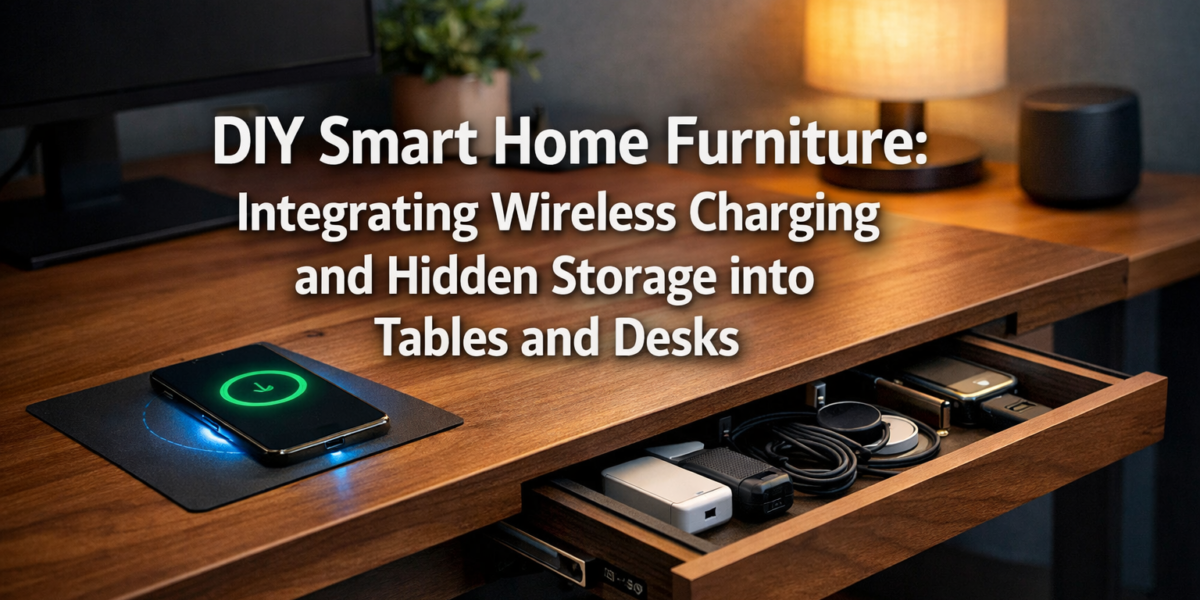
Less than 30% of homeowners effectively manage the tangled mess of cables, chargers, and small devices that clutter modern living spaces. This pervasive problem isn’t just an aesthetic issue; it can reduce productivity, create tripping hazards, and detract from the calming ambiance of a well-designed room. The solution, however, doesn’t always lie in buying pre-made “smart” furniture, which often comes with a hefty price tag and limited customization options. Instead, homeowners are discovering the power of DIY Smart Home Furniture: Integrating Wireless Charging and Hidden Storage into Tables and Desks, transforming ordinary pieces into intelligent, decluttering powerhouses perfectly tailored to their needs.
Key Takeaways
- Customization is Key: DIY allows for furniture that precisely fits your space and integrates specific smart features like wireless charging and hidden storage.
- Decluttering Benefits: Integrating storage and charging directly into furniture eliminates visible cables and devices, creating a cleaner aesthetic.
- Essential Components: Wireless charging modules, magnetic catches, and robust drawer slides are crucial for successful integration.
- Safety First: Proper planning, tool use, and electrical safety are paramount for any DIY smart furniture project.
- Elevated Living: Smart furniture enhances functionality, aesthetics, and the overall quality of your living and working environments in 2026.
The Appeal of DIY Smart Home Furniture: Integrating Wireless Charging and Hidden Storage into Tables and Desks
The concept of smart homes has moved beyond voice assistants and automated lighting. In 2026, it’s about seamlessly weaving technology into the very fabric of our living spaces. DIY Smart Home Furniture: Integrating Wireless Charging and Hidden Storage into Tables and Desks represents the next frontier in this evolution. It’s about creating furniture that not only serves its primary purpose but also intelligently manages our digital lives.
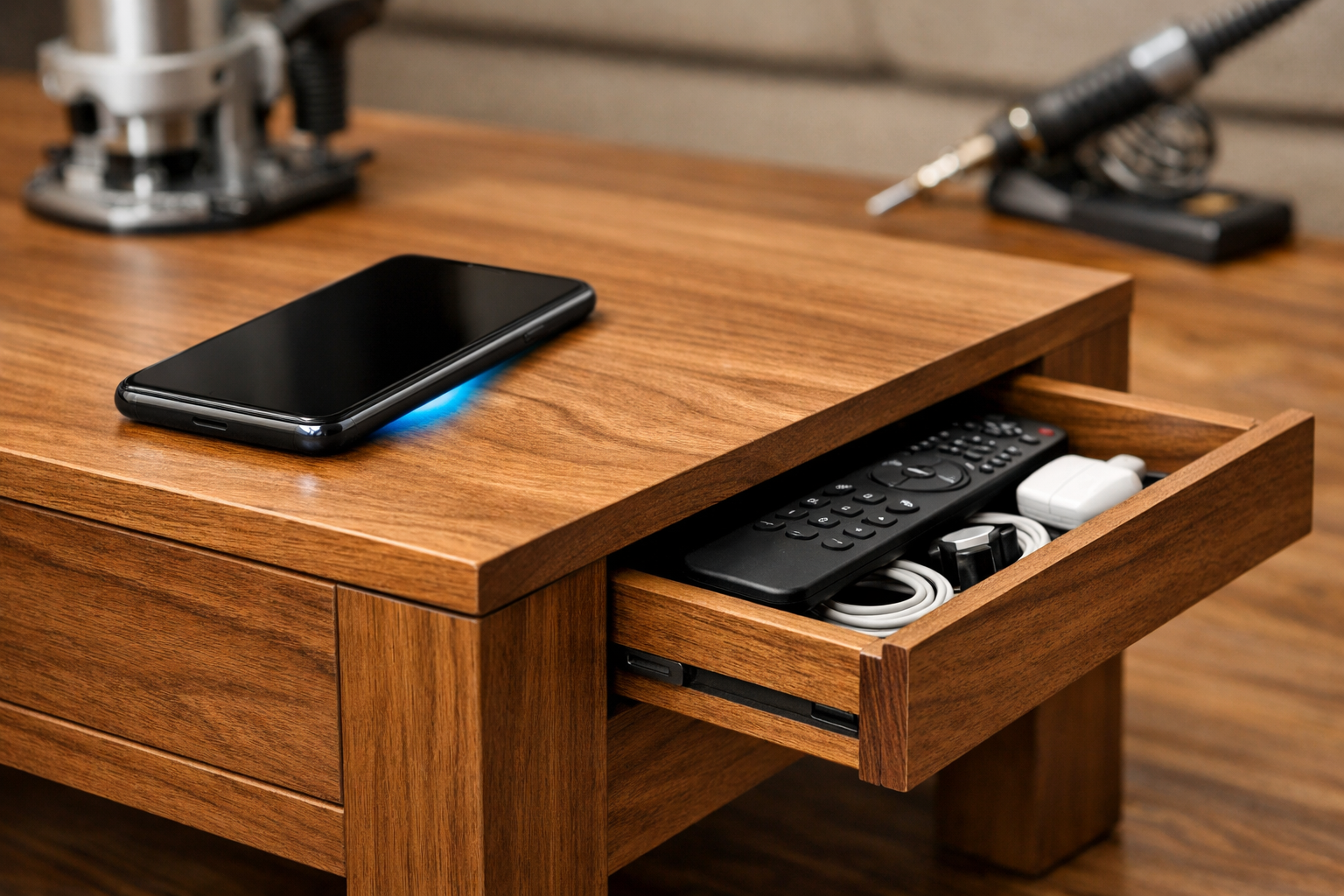
Consider the ubiquitous smartphone. We use it constantly, and it constantly needs charging. The traditional approach involves a cable draped across a desk or nightstand, often leading to a chaotic aesthetic. Wireless charging integrated directly into a tabletop eliminates this visual clutter, offering a convenient and sleek power solution. Similarly, the proliferation of smart remotes, tablets, and wearable devices demands organized storage that keeps them accessible yet out of sight. Hidden compartments, built into desks, coffee tables, or nightstands, provide the perfect solution, maintaining a minimalist and tidy environment.
This DIY approach offers several distinct advantages over purchasing commercially available smart furniture. First, it provides unparalleled customization. You choose the wood, the finish, the dimensions, and precisely where each smart feature is placed. This ensures the piece perfectly complements your existing decor and meets your specific functional requirements. Second, it’s often more cost-effective. By sourcing components and performing the labor yourself, you can achieve premium results without the premium price tag. Finally, there’s the immense satisfaction of crafting something functional and beautiful with your own hands – a truly smart addition to your home. This type of project often aligns with the principles of warm minimalism in woodworking, blending clean design with tactile, natural materials.
Why Integrate Smart Features Now?
In an increasingly connected world, our furniture needs to evolve. We no longer just sit at a desk; we work, charge devices, and store sensitive information there. Integrating wireless charging and hidden storage is not just a trend; it’s a practical necessity for modern living. It streamlines daily routines, improves aesthetics, and offers a more organized approach to managing technology.
The availability of compact, affordable smart components makes these projects more accessible than ever for DIY enthusiasts. From simple Qi wireless charging modules to sophisticated magnetic drawer locks, the market offers a wide array of options to bring your smart furniture vision to life. This convergence of accessible technology and woodworking skills makes 2026 an ideal time to embark on such projects.
)
Essential Components and Technologies for DIY Smart Home Furniture
Embarking on a DIY Smart Home Furniture: Integrating Wireless Charging and Hidden Storage into Tables and Desks project requires understanding the core components that make these transformations possible. The right selection of parts will determine both the functionality and the aesthetic success of your build.
Wireless Charging Modules
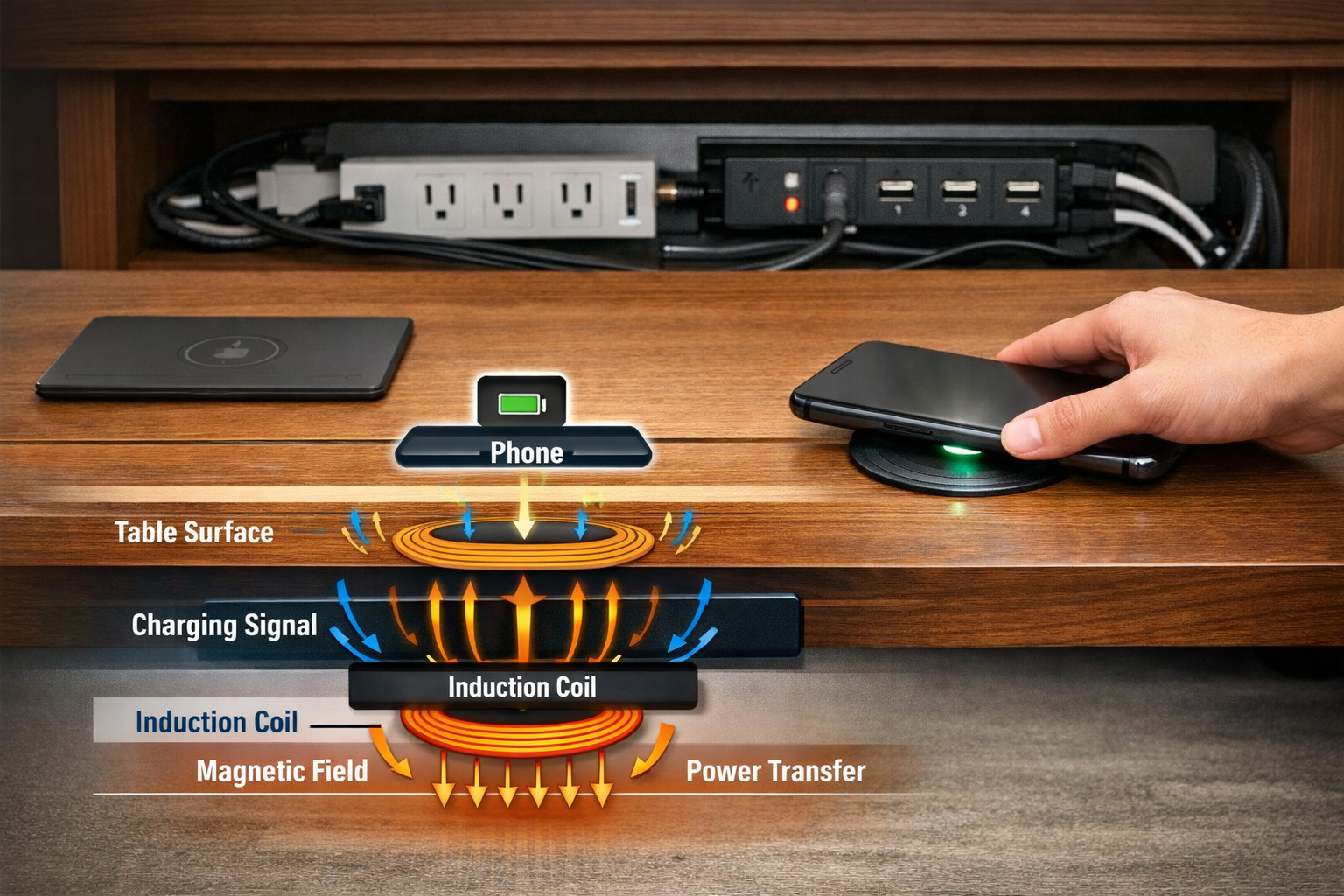
The heart of any wireless charging integration is the Qi wireless charging module. These modules typically consist of a transmitting coil and associated electronics. Key considerations include:
- Power Output: Most modules offer 5W, 7.5W (for iPhones), 10W, or 15W. Choose a power output compatible with your devices for efficient charging.
- Charging Distance: This refers to the maximum thickness of the material the module can charge through. For most tables and desks, 3-8mm is common, but some specialized modules can charge through up to 25mm of material. Always check the product specifications.
- Installation Method:
- Surface Mount: Sits on top of the furniture, visible.
- Recessed: Sunk into a routed pocket, flush with the surface.
- Under-Surface: Mounted underneath the tabletop, completely invisible from above. This is the most popular for sleek, integrated designs.
- Safety Features: Look for modules with over-temperature protection, over-voltage protection, and foreign object detection.
Table: Common Wireless Charging Module Types
| Feature | Standard Module (5-10W) | Fast Charge Module (15W) | Long-Distance Module (Specialty) |
|---|---|---|---|
| Max. Thickness | 3-8 mm | 3-8 mm | 10-25 mm |
| Cost | Economical | Moderate | Higher |
| Installation | Recessed or Under-Surface | Recessed or Under-Surface | Under-Surface |
| Best For | General charging, nightstands | Quick charges, desks | Thicker tabletops, unique builds |
| Visibility | Minimal (under-surface) to visible | Minimal (under-surface) to visible | Invisible |
Hidden Storage Mechanisms
Achieving seamless hidden storage involves clever design and the right hardware:
- Magnetic Catches: Ideal for small, light panels. They hold doors or panels flush and release with a gentle push or suction cup tool.
- Push-to-Open Slides: For drawers or heavier panels, these allow you to press the surface to release a spring-loaded mechanism, making handles unnecessary. These are perfect for creating mastering dovetail drawers for cabinets that appear handle-less.
- Secret Compartment Hinges: Specialized hinges that allow panels to pivot or slide out in unexpected ways.
- RFID/NFC Locks: For ultimate security and invisibility, these electronic locks require an RFID card or NFC-enabled device to open, keeping valuables truly hidden.
- Cable Management Solutions: Integrated channels, grommets, and cable ties are essential for keeping the wiring for your smart components neat and out of sight. This also helps with DIY smart home integration with custom wooden enclosures.
Power and Connectivity
Beyond the wireless charger, consider the overall power needs:
- USB Hubs: Integrate powered USB-A and USB-C ports for wired charging or connecting peripherals.
- Power Strips: Compact, surge-protected power strips can be concealed within compartments to power multiple devices.
- Smart Plugs/Outlets: If you want to integrate traditional outlets into a hidden compartment and control them via your smart home system, consider smart plugs or modular smart outlets.
Choosing high-quality, reliable components is crucial for the longevity and functionality of your DIY smart furniture project.
)
Designing and Building Your DIY Smart Home Furniture: Integrating Wireless Charging and Hidden Storage into Tables and Desks
The success of your DIY Smart Home Furniture: Integrating Wireless Charging and Hidden Storage into Tables and Desks project hinges on meticulous planning and careful execution. This section outlines the design considerations, tool requirements, and construction steps to guide you.
Design Phase: Conceptualization and Planning
Before cutting any wood, spend significant time in the design phase.
- Define Purpose and Placement:
- What type of furniture? (e.g., High-Demand Woodworking Projects for 2026: Coffee Tables, Wi, nightstand, desk, end table).
- Where will it be located? This dictates size, style, and power access.
- What specific devices will it charge/store?
- Sketch and Dimension:
- Create detailed sketches with precise dimensions for all components.
- Mark the exact locations for wireless charging pads, hidden compartments, and cable routing.
- Consider the depth required for under-surface charging modules and the internal dimensions needed for hidden storage.
- Material Selection:
- Wood: Hardwoods like oak, maple, or walnut offer durability and a premium look. Plywood or MDF can be used for hidden compartment interiors.
- Finish: Choose a finish that protects the wood and matches your aesthetic, considering the impact on wireless charging (thicker finishes might reduce efficiency).
- Component Sourcing: Purchase all wireless charging modules, drawer slides, hinges, and locks before construction begins. Having the physical components allows for precise measurements and test fittings.
Pull Quote: “The blueprint for smart furniture begins not with a saw, but with a thoughtful sketch.”
Tools and Techniques
A well-equipped workshop simplifies these projects.
- Essential Hand Tools: Tape measure, square, hand saw, chisels, screwdrivers, clamps. For more detail-oriented work, consider hand tool mastery for detail work.
- Power Tools:
- Table Saw or Circular Saw: For precise cuts of large panels. (Craftsman 137248 Table Saw Overview)
- Router: Indispensable for creating recesses for wireless chargers, dados for drawers, and decorative edges.
- Drill/Driver: For pilot holes and fastening.
- Jigsaw or Bandsaw: For cutting curves or intricate shapes.
- Orbital Sander: For smooth finishes.
- Specialized Tools (for smart integration): Soldering iron (for some wiring), multimeter (for testing electrical connections), hole saws (for cable grommets).
Construction Steps (General Outline)
- Cut and Prepare Wood: Cut all components to your design specifications. Ensure all edges are square and smooth.
- Create Recesses for Wireless Chargers:
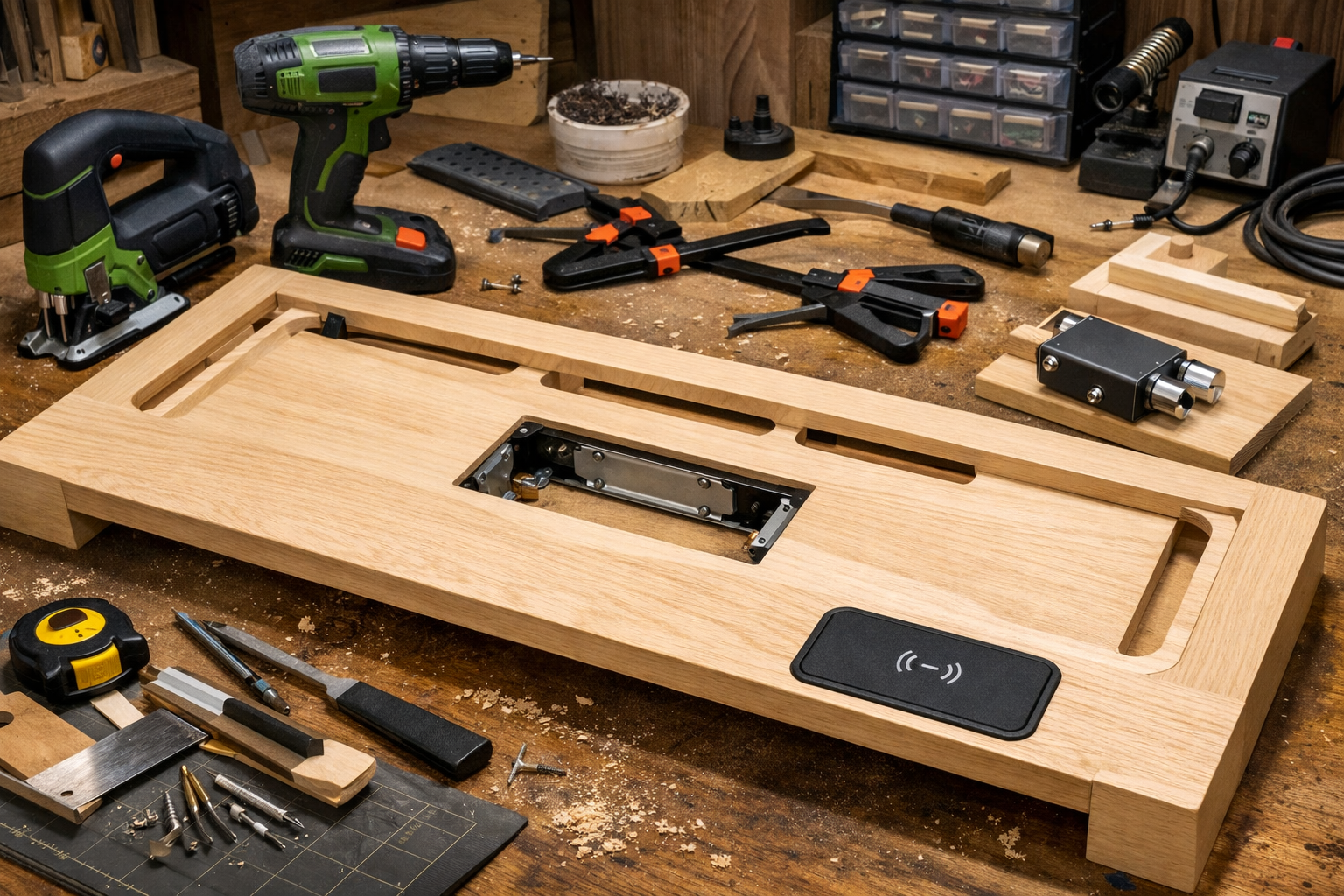
- Using a router with a template or a jig, carefully rout a pocket on the underside of the tabletop.
- The depth of the pocket should allow the wireless charging module to sit snugly, leaving only the desired material thickness above it.
- Test fit the module.
- Build Hidden Compartments:
- Construct the frame of the hidden compartment within the furniture’s structure.
- Integrate chosen hardware (e.g., push-to-open slides, magnetic catches) for the access panel or drawer.
- Ensure clearances are precise for smooth operation. You might find guidance in building wooden storage chests with hinged lids.
- Route Cable Channels: Use a router to create channels or grooves on the underside of the tabletop or within the furniture frame to guide and conceal all power cables for the wireless charger and any other integrated electronics.
- Assemble Furniture: Join all structural components using appropriate joinery techniques (e.g., screws, dowels, mortise and tenon).
- Install Electronics:
- Mount the wireless charging module into its routed pocket.
- Run cables through routed channels to a concealed power source (e.g., a hidden power strip or USB hub).
- Connect and test all electrical components before final sealing.
- Finishing: Sand all surfaces thoroughly, then apply your chosen stain, paint, or protective finish. Allow adequate drying time between coats.
Safety Note: Always wear appropriate personal protective equipment (PPE) like safety glasses, hearing protection, and dust masks. Follow all tool manufacturer instructions. When working with electricity, ensure power is disconnected before making any connections. If unsure, consult a qualified electrician.
)
Conclusion: Elevating Your Home with Smart DIY Furniture
The journey into DIY Smart Home Furniture: Integrating Wireless Charging and Hidden Storage into Tables and Desks offers a compelling blend of practicality, aesthetics, and personal satisfaction. In 2026, where technology increasingly permeates every aspect of our lives, the ability to custom-tailor our physical environment to accommodate and enhance this digital integration is invaluable.
By understanding the key components, employing careful design, and utilizing appropriate woodworking techniques, you can transform ordinary tables and desks into intelligent, clutter-free focal points within your home. These projects not only declutter surfaces and streamline device charging but also add a sophisticated, modern touch that reflects thoughtful craftsmanship and a forward-thinking approach to home living.
The true beauty of DIY lies in its empowerment. It’s about more than just saving money; it’s about creating a piece that precisely fits your unique needs and expresses your individual style. Whether it’s a coffee table that discreetly charges your smartphone while offering a hidden nook for remotes, or a desk that keeps all your work essentials powered and out of sight, these smart furniture solutions elevate daily experiences.
Actionable Next Steps:
- Start Small: Begin with a simpler project, like modifying an existing nightstand, to build confidence and refine your skills.
- Research Components: Explore various wireless charging modules and hidden storage hardware to find options that match your budget and functional requirements.
- Sketch Your Vision: Detail your design, including measurements, component placement, and cable routing, before making any cuts.
- Prioritize Safety: Always follow electrical safety guidelines and wear appropriate protective gear when working with tools.
- Embrace the Process: Enjoy the challenge and satisfaction of creating a truly unique and intelligent piece of furniture for your home.