

The average tensile strength of red oak can drop by over 50% when cut across its grain to achieve a curve, compared to the nearly unchanged strength of steam-bent red oak. This startling difference underscores why mastering The Art of Steam Bending Wood: Techniques for Creating Curved Furniture Components and Decorative Elements is not merely an aesthetic choice, but a fundamental principle of structural integrity and elegant design in woodworking. For centuries, artisans have harnessed the power of steam to transform rigid timber into graceful, sweeping forms, imbuing furniture and decorative pieces with unparalleled strength and organic beauty.
This comprehensive guide delves into the time-honored craft of steam bending, revealing the secrets behind selecting the right wood, constructing an effective steam box, and executing the bending process with precision. Whether crafting a resilient chair back, an elegant table leg, or intricate decorative accents, understanding these techniques elevates woodworking from simple assembly to true artistry.
Key Takeaways
- Wood Selection is Crucial: Not all wood species are suitable for steam bending; selecting species like oak, ash, or elm with straight grain is essential for success.
- Effective Steam Boxes are Simple: A well-designed, airtight steam box provides the consistent heat and moisture necessary to plasticize wood fibers.
- Speed and Pressure are Key: Wood must be bent quickly after steaming and held firmly in jigs until fully cooled and dried to retain its new shape.
- Bending Straps Enhance Results: Using a metal bending strap prevents the outer fibers of the wood from tearing during compression bending.
- Patience Ensures Success: The process requires careful preparation, precise timing, and patience during drying to prevent spring back and achieve lasting curves.
Understanding the Science and Benefits of Steam Bending Wood
At its core, steam bending is a process of changing wood’s cellular structure temporarily, allowing it to become pliable. Wood consists primarily of cellulose, hemicellulose, and lignin. Lignin, the natural glue that binds wood fibers together, softens when exposed to sufficient heat and moisture from steam. This “plasticizing” effect allows the wood to be compressed on its inner face and stretched on its outer face without breaking, unlike dry wood which would snap under such stress. Once shaped and allowed to cool and dry, the lignin hardens again, locking the wood into its new curved form.
The benefits of steam bending are manifold:
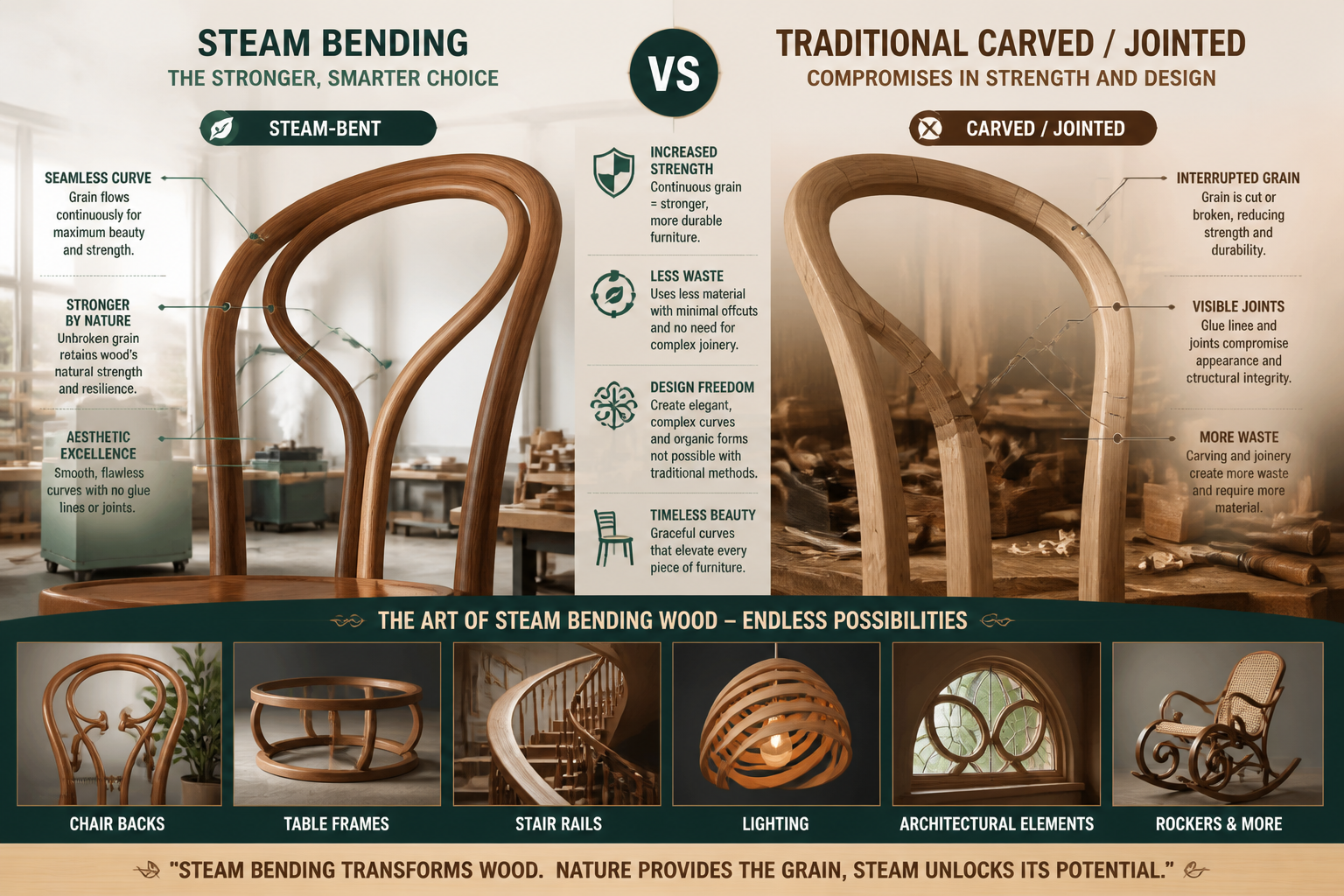
- Enhanced Strength: Unlike cutting curves from thick stock, which severs wood fibers and significantly weakens the component, steam bending maintains the continuous grain of the wood. This results in a component that is often stronger than its original straight form.
- Reduced Material Waste: Cutting curves from solid lumber generates a substantial amount of waste in the form of sawdust and offcuts. Steam bending allows for more efficient use of material, as thinner, longer pieces can be bent into shape. This aligns well with sustainable woodworking practices, making it a valuable technique for turning shop scraps into design features.
- Elegant Aesthetics: The continuous, unbroken grain following the curve creates an aesthetically pleasing, organic flow that is difficult, if not impossible, to replicate with joinery or carving.
- Cost-Effectiveness: Using thinner stock for bending can be less expensive than sourcing thick, clear lumber required for cutting curves.
- No Glue Lines: Unlike laminated bending, which involves gluing multiple thin layers together, steam bending creates a single, monolithic curved piece without visible glue lines, enhancing its natural beauty.
Choosing the right wood species is paramount for success in The Art of Steam Bending Wood: Techniques for Creating Curved Furniture Components and Decorative Elements. Hardwoods are generally more receptive to bending than softwoods. Excellent choices include:
- Oak (Red and White): Widely regarded as one of the best woods for bending due to its open grain structure and high lignin content.
- Ash: Very flexible and durable, making it ideal for tight curves.
- Elm: Known for its exceptional bending properties and resistance to splitting.
- Maple: Can be bent, but requires careful handling as it’s denser.
- Walnut: Bends reasonably well, offering beautiful dark tones.
Woods to generally avoid for steam bending include those with interlocking grain, brittle characteristics, or very high resin content, such as many tropical hardwoods, pine, or spruce. The moisture content of the wood also plays a critical role; green wood (freshly cut) or air-dried wood with a moisture content between 20-30% bends significantly better than kiln-dried wood, which can be more brittle due to the drying process.
Building Your Steam Box and Mastering the Steaming Process
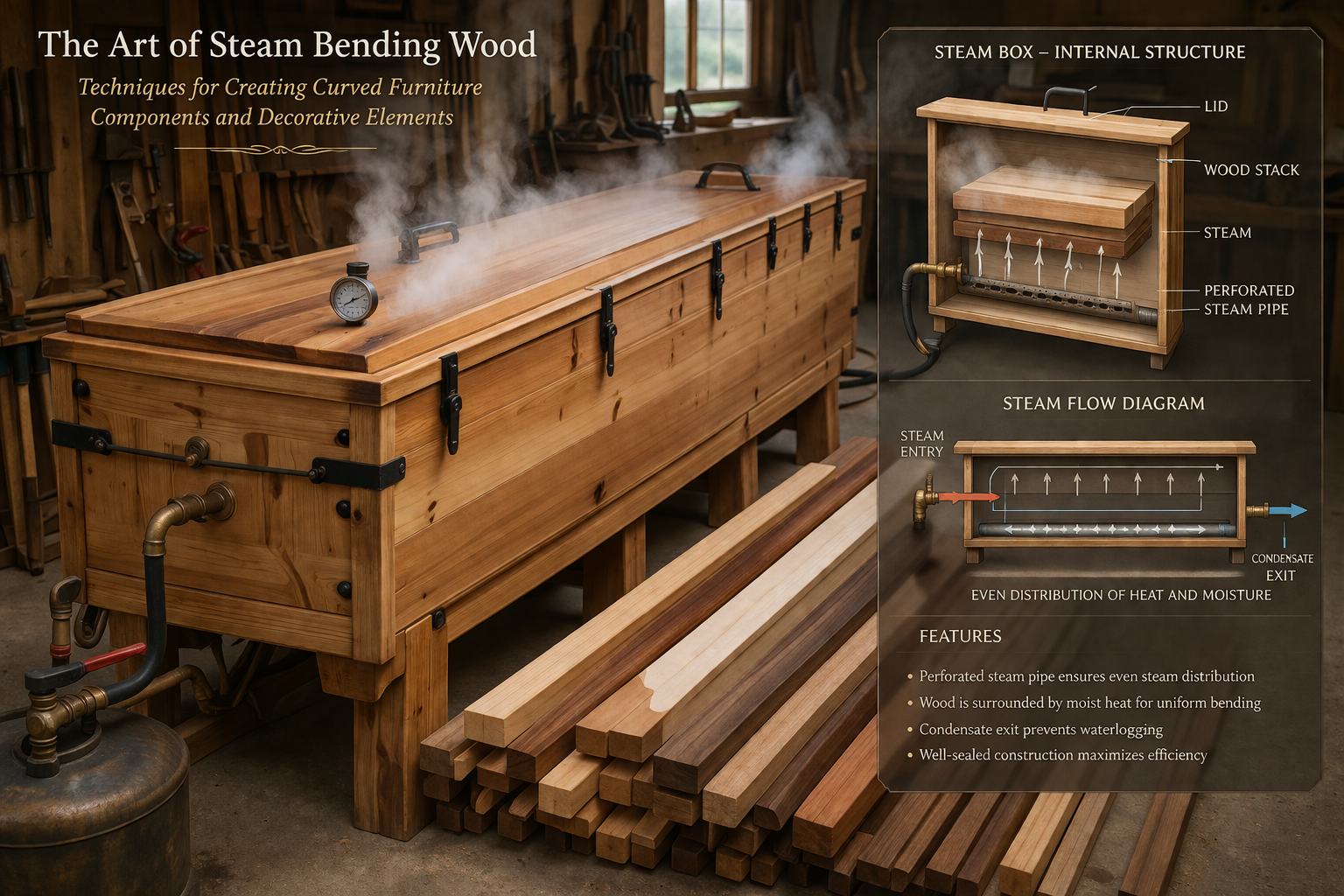
An effective steam box is the heart of steam bending. While designs can vary, the core principles remain consistent: it must contain steam efficiently, maintain a consistent temperature (ideally 212°F or 100°C), and be robust enough to withstand the heat and moisture.
Essential Components of a Steam Box
- Chamber: This is typically a long, enclosed box made from plywood, PVC, or even metal ductwork. The size depends on the length and volume of wood you plan to bend. For most furniture components, a chamber 4-8 feet long with an internal cross-section of 6×6 inches to 12×12 inches is sufficient.
- Steam Generator: A wallpaper steamer is an excellent, readily available, and safe option for generating steam. Industrial steam generators can also be used for larger operations.
- Steam Inlet: A pipe or hose from the generator feeds steam into one end of the box, usually at the bottom.
- Drain Hole: Positioned at the bottom of the opposite end to allow condensed water to escape, preventing the wood from soaking in hot water, which can degrade its fibers.
- Vents: Small holes (around 1/4 inch) at the top of the box, near the steam outlet, allow for air displacement and ensure a continuous flow of fresh, hot steam, preventing pressure buildup.
- Internal Supports: Dowels or battens inside the box keep the wood elevated, allowing steam to circulate freely around all surfaces.
Construction Tips for Your Steam Box:
- Material Choice: Exterior-grade plywood (CDX) or marine plywood is a good choice for wooden steam boxes due to its resistance to moisture. Seal all joints thoroughly with waterproof glue and caulk.
- Insulation: Insulating the exterior with fiberglass batting or foam board can help maintain internal temperature and reduce steaming time.
- Door/Lid: Design a door or lid that can be quickly and easily opened and closed, as speed is crucial once the wood is steamed. Simple latches or clamps work well.
The Steaming Process
Once your steam box is ready, the steaming process requires precision and patience:
- Preparation: Cut your wood pieces to the desired dimensions. Rough-sawn wood can be bent, but planed surfaces are easier to clean up later. Ensure the grain is as straight as possible.
- Loading: Place the wood pieces inside the steam box, ensuring they are separated by internal supports to allow even steam penetration.
- Steaming Time: A general rule of thumb is one hour of steaming time per inch of wood thickness. For example, a 1-inch thick piece of wood needs about 60 minutes. For thinner pieces, reduce the time accordingly, but err on the side of slightly longer rather than shorter.
- Monitoring: Keep an eye on the steam generator to ensure a consistent output. Steam should be continuously visible escaping from the vents.
- Readiness Test: While not always practical, some experienced woodworkers can tell by smell when the lignin has plasticized. The wood should feel hot and slightly “rubbery” when removed.
Bending Techniques and Essential Jigs for Curved Components
The actual bending process is a race against time, as the wood begins to cool and stiffen almost immediately after removal from the steam box. Success hinges on quick action, proper technique, and well-designed forms or jigs. This is where The Art of Steam Bending Wood: Techniques for Creating Curved Furniture Components and Decorative Elements truly comes alive.
Bending Straps: Your Best Friend
A bending strap is a crucial piece of equipment for all but the simplest bends. It’s typically a piece of spring steel or heavy-gauge metal strip, often lined with a thin plastic sheet (like Mylar) on the inside face.
How it works: When wood is bent, the outer fibers are put under tension, and the inner fibers under compression. The bending strap prevents the outer fibers from tearing and provides resistance to the inner fibers, forcing them to compress without buckling. This significantly increases the tightness of the curve you can achieve without fracturing the wood. The strap is held in place by end blocks or a fixed jig that prevents lengthwise expansion during compression.
Designing and Building Bending Forms (Jigs)
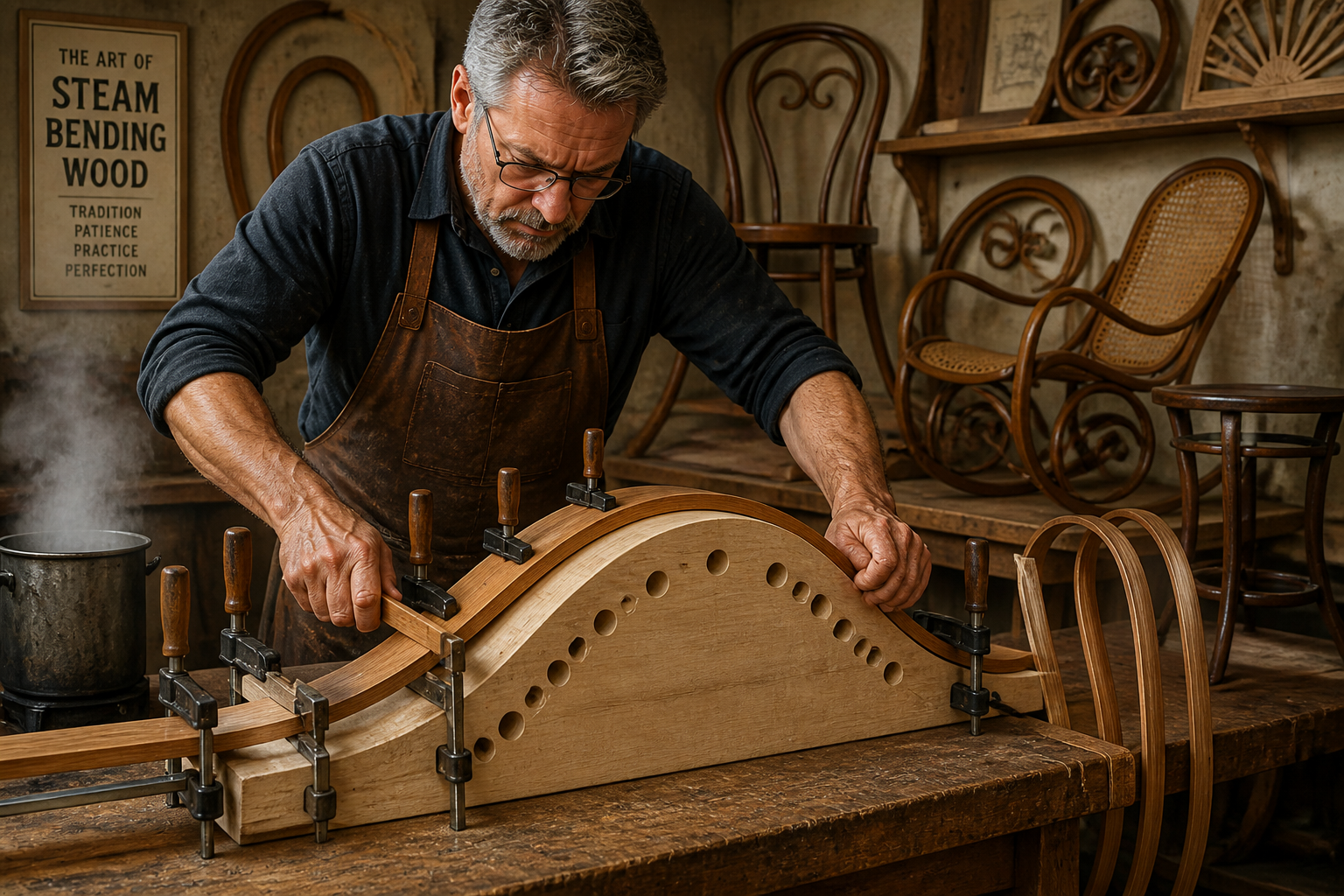
Bending forms, also known as jigs or molds, are what dictate the final shape of your bent wood. They can be made from plywood, MDF, or solid wood, and should be robust enough to withstand significant clamping pressure.
Key considerations for forms:
- Radius: The form’s curve must match the desired final radius of your component.
- Overbend: Account for “spring back” – the tendency of the wood to partially return to its original shape after being released from the form. The amount of overbend needed varies by wood species, thickness, and curve tightness, but 10-20% extra curvature is a good starting point.
- Clamping: Design the form with plenty of clamping points to hold the wood tightly against the curve. Use strong clamps, such as pipe clamps or quick-grip clamps. Consider how to incorporate the bending strap into your form’s design.
- Support: Ensure the form is well-supported to prevent it from deforming under pressure.
For creating ergonomic workshop furniture, designing custom bending jigs can be immensely helpful for repeated, consistent curves in chair backs or armrests.
The Bending Process Step-by-Step:
- Prepare the Form: Have your bending form, bending strap (if using), and all necessary clamps ready and within easy reach. Speed is critical.
- Remove Wood: Quickly but carefully remove the steamed wood from the steam box. Handle it with gloves, as it will be very hot.
- Position on Form: Immediately place the wood onto the bending form, ideally within 10-15 seconds. If using a bending strap, position the wood against the strap and align the end blocks.
- Apply Pressure: Begin bending the wood around the form, working from one end to the other. Apply firm, even pressure. If using a strap, use leverage or a second set of hands to bring the free end around.
- Clamp Securely: Clamp the wood firmly to the form at frequent intervals. Ensure there are no gaps between the wood and the form.
- Cool and Dry: Allow the wood to cool and dry thoroughly while still clamped to the form. This is the most crucial step to prevent spring back. Depending on wood thickness, humidity, and airflow, this can take several days to several weeks. Some woodworkers use forced air circulation to speed up drying, but avoid direct heat, which can cause cracking.
- Release and Inspect: Once fully dry, carefully release the clamps and remove the wood. Inspect for any cracks, splits, or areas of excessive spring back. Minor spring back can sometimes be corrected with another, shorter steaming session and re-clamping.
Advanced Techniques and Decorative Elements
Beyond basic curves, The Art of Steam Bending Wood: Techniques for Creating Curved Furniture Components and Decorative Elements can be extended to more complex forms.
- Compound Bends: Achieving curves in multiple planes (e.g., a chair back that curves both horizontally and vertically) requires carefully designed, multi-part forms and often multiple bending operations.
- Twists: With specific forms, wood can be twisted while being bent, adding another dimension to decorative elements.
- Segmented Bending: For very tight or complex curves, sometimes a single piece isn’t feasible. Steaming and bending shorter segments that are then joined (e.g., with scarf joints or finger joints) can achieve intricate designs, though this reintroduces glue lines.
- Decorative Accents: Steam bending is ideal for creating unique handles, decorative trim for cabinets, or flowing elements for wooden candle holders for ambient decor. The fluid lines add an organic touch to any project.
Consider the aesthetic impact of steam bending for custom wooden mantels. A subtly curved mantelpiece can soften the angularity of a fireplace, creating a more inviting focal point.
Conclusion: Embracing the Curves in Woodworking
Mastering The Art of Steam Bending Wood: Techniques for Creating Curved Furniture Components and Decorative Elements opens up a world of design possibilities, allowing woodworkers to create pieces that are not only visually stunning but also inherently strong and efficient in their use of materials. From the rustic charm of a Windsor chair to the sleek lines of modern furniture, the ability to coax rigid timber into graceful arcs and flowing forms is a testament to both scientific understanding and artistic vision.
This technique, while requiring careful preparation and a degree of patience, rewards the artisan with unique, high-quality results unmatched by other methods. As you refine your skills in wood selection, steam box construction, and precise bending, you’ll discover a profound satisfaction in transforming simple planks into elegant, functional works of art. Embrace the steam, master the bend, and let the natural beauty of curved wood elevate your next woodworking project. For those looking to expand their woodworking repertoire, exploring high-demand woodworking projects for 2026 that incorporate curved elements could prove particularly profitable and fulfilling.
Actionable Next Steps:
- Start Small: Begin with smaller, thinner pieces of easily bendable wood (like oak or ash) and simpler curves to build confidence.
- Build a Basic Steam Box: Construct a simple, effective steam box using readily available materials.
- Experiment with Forms: Design and build several basic bending forms for different radii.
- Document Your Process: Keep notes on wood species, thickness, steaming time, drying time, and amount of spring back to refine your technique.
- Explore Resources: Watch videos, read specialized books, and join woodworking forums to learn from experienced steam benders.
SEO Meta Title: Master Steam Bending: Crafting Curved Wood Furniture & Decor SEO Meta Description: Unlock The Art of Steam Bending Wood for strong, elegant curved furniture components & decorative elements. Learn techniques for wood selection, steam box building, & successful bending in 2026.