

The average acoustic guitar costs hundreds, if not thousands, of dollars, representing not just a financial investment, but often a deeply personal one. Yet, how many of these cherished instruments end up precariously leaning against a wall, or worse, stored in their cases collecting dust? The risk of damage, from tipping over to climate-induced warping, is a constant concern for musicians. This article delves into Crafting Acoustic Guitar Stands and Wall Mounts: Combining Wood Joinery with Instrument Protection, offering a comprehensive guide to designing and building elegant, functional, and protective solutions that blend the art of woodworking with the essential needs of instrument care. For both seasoned woodworkers and aspiring crafters in 2026, understanding the synergy between robust wood joinery and thoughtful instrument protection is paramount to creating accessories that truly honor the instrument.
Key Takeaways
- Prioritize Joinery Strength: Effective guitar stands and wall mounts rely on strong, stable wood joints like mortise and tenon or dovetails to ensure the instrument’s safety.
- Instrument Protection is Paramount: Critical design elements include non-reactive padding at all contact points, stable geometry to prevent tipping, and consideration for environmental factors.
- Wood Selection Matters: Choose stable, aesthetically pleasing woods and understand their interaction with finishes and environmental changes.
- Balance Aesthetics and Function: A well-crafted stand or mount serves as both a protective holder and an attractive display piece, enhancing the room’s decor.
- Customization Enhances Value: Tailoring designs to specific guitar models or personal preferences elevates the craft and utility of the finished product.
The Foundation of Security: Wood Joinery for Guitar Stands and Wall Mounts
The stability and durability of any wooden structure, especially one designed to hold a valuable instrument, hinge on the quality of its joinery. When Crafting Acoustic Guitar Stands and Wall Mounts: Combining Wood Joinery with Instrument Protection, the choice of joint directly impacts the piece’s ability to withstand stress, prevent wobbling, and ultimately, safeguard the guitar. Poorly executed joints can lead to catastrophic failures, making precision and appropriate joint selection crucial.
Essential Joinery Techniques for Stability
Several classic woodworking joints are ideal for the demanding requirements of guitar stands and wall mounts. Each offers unique advantages in strength, aesthetics, and ease of execution.
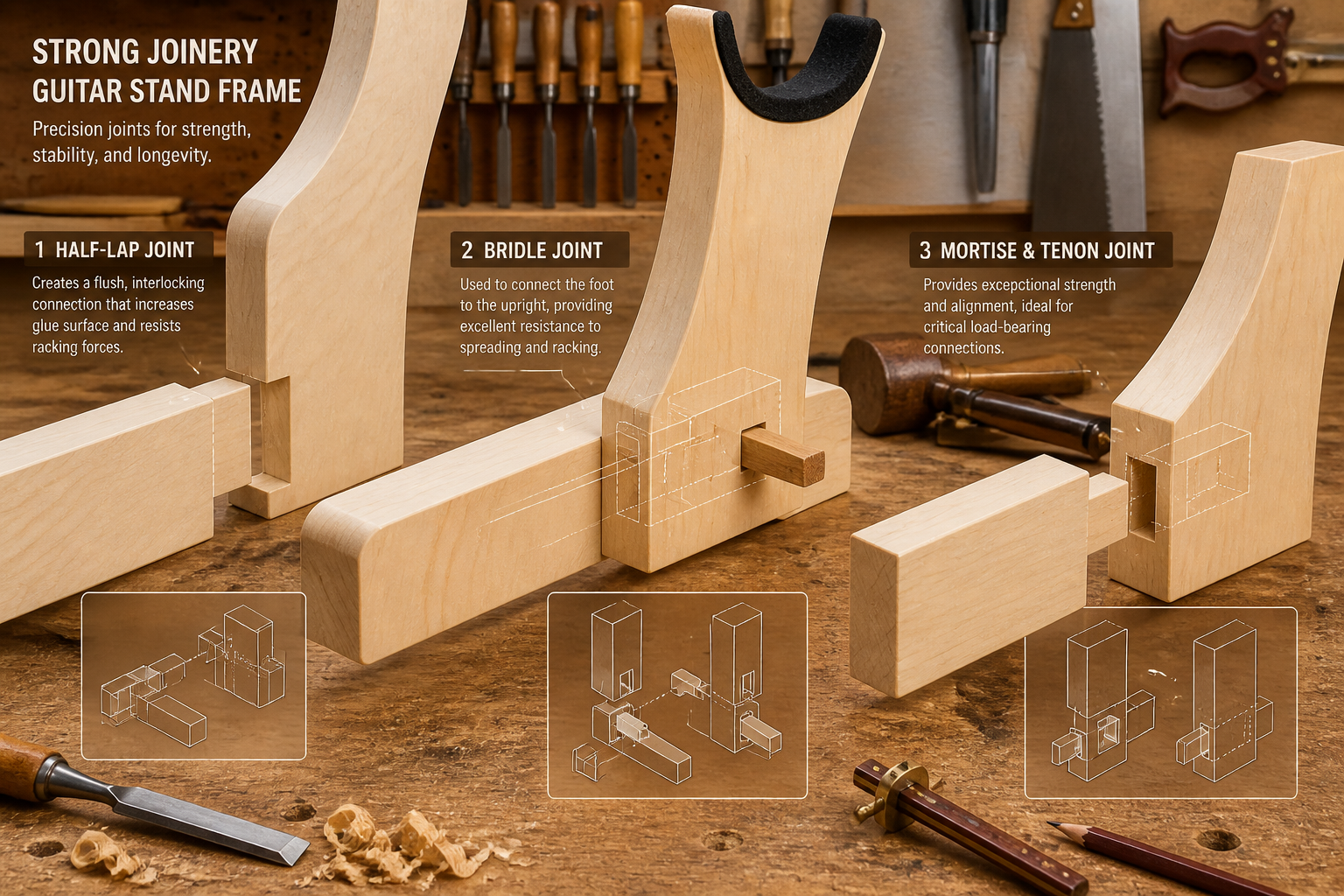
- Mortise and Tenon Joint: This is a quintessential furniture joint known for its exceptional strength and resistance to racking (sideways movement). It involves cutting a projection (tenon) on one piece that fits snugly into a cavity (mortise) on another. For guitar stands, this joint is perfect for connecting legs to rails, or uprights to the base, providing a rock-solid framework. Its deep mechanical interlock, especially when glued, offers superior long-term stability. For beginners looking to master foundational techniques, understanding various joints is key. See our Beginner’s Guide to Essential Woodworking Joints: When to Use Which for more insights.
- Dovetail Joint: While often seen in drawers, dovetails can be adapted for decorative and strong connections in certain parts of a stand, particularly where visual appeal is desired, such as connecting a base plate to uprights in a more artistic design. Their interlocking wedge shape provides immense resistance to pulling apart.
- Half-Lap Joint: A simpler yet effective joint where half the thickness of each piece is removed to create an overlapping connection. It’s suitable for non-critical structural points or where a thinner profile is desired, offering good surface area for glue.
- Bridle Joint: Similar to a mortise and tenon, but with the tenon spanning the full width of the mating piece, offering great strength, especially in tension. It’s excellent for connecting the top cross-member of a stand to its uprights.
- Pocket Hole Joinery: While often considered less traditional, pocket holes offer a strong and fast method for joining pieces, particularly for hobbyists. They are effective for hidden joints where maximum aesthetic purity isn’t the primary goal, but strength and quick assembly are valued. However, for maximum long-term resilience, especially in high-stress areas, traditional joinery often surpasses it.
Considerations for Wood Selection and Joint Integrity
The type of wood chosen plays a significant role in joinery success and overall stand performance. Hardwoods like maple, oak, walnut, or cherry are generally preferred for their density, stability, and aesthetic appeal. Softwoods can be used for lighter applications or where cost is a major factor, but may be more susceptible to denting or joint loosening over time.
- Wood Movement: Wood naturally expands and contracts with changes in humidity. Understanding this phenomenon is crucial when designing joints. Tight-fitting joints designed without accounting for wood movement can lead to cracking or failure. Our guide on Understanding Wood Movement: How to Design and Build Furniture That provides deeper context.
- Glue Selection: The strength of a joint is not solely dependent on the wood and cut; the adhesive used is equally important. High-quality wood glue, correctly applied, creates a bond often stronger than the wood itself. Learn more about optimal adhesives in The Ultimate Guide to Wood Glue: Choosing the Right Adhesive for.
- Clamping: Proper clamping pressure during glue-up ensures maximum adhesion and a strong, tight joint. Insufficient clamping is a common cause of joint failure.
By focusing on precise cuts, appropriate joinery, and careful material selection, woodworkers can create a foundation of security for their acoustic guitar stands and wall mounts.
Protecting Your Investment: Instrument Safety and Design Elements
Beyond strong joinery, the paramount consideration when Crafting Acoustic Guitar Stands and Wall Mounts: Combining Wood Joinery with Instrument Protection is the direct interaction with the instrument itself. A beautiful, sturdy stand is useless if it inadvertently scratches, dents, or chemically reacts with a guitar’s delicate finish. Thoughtful design elements are crucial to ensure comprehensive instrument protection.
Key Protective Features
Every point of contact between the stand/mount and the guitar must be carefully designed to prevent damage.
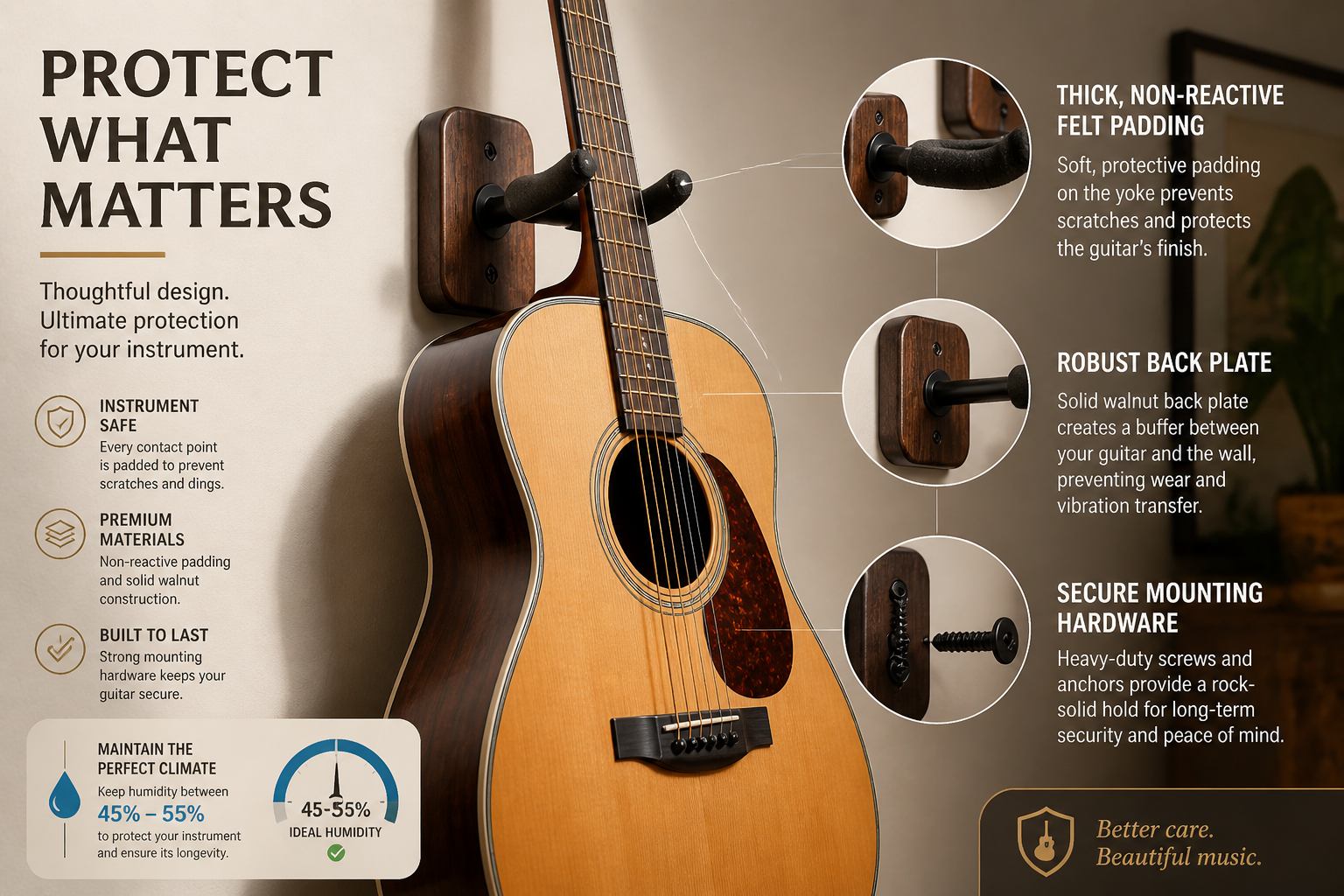
- Non-Reactive Padding: This is perhaps the most critical element. Guitar finishes, especially nitrocellulose lacquers common on many acoustic guitars, can react negatively with certain plastics, rubbers, and even some foams, leading to permanent discoloration or “melted” spots.
- Recommended Materials: High-density, non-reactive felt (wool felt is excellent), natural cork, or specific instrument-safe foam are ideal. Ensure the material is tested or certified as safe for guitar finishes.
- Application: All surfaces that come into direct contact with the guitar’s neck, headstock, back, or body must be covered with this protective padding. This includes the yoke (neck cradle), body support arms, and any back-support points.
- Stable Geometry: For floor stands, stability is non-negotiable.
- Wide Base: A broad footprint prevents tipping. The center of gravity of the stand-plus-guitar system should be well within the base perimeter.
- Angled Supports: Design supports that cradle the guitar securely, preventing it from sliding or shifting. A slight backward lean often provides the best balance.
- Weight Distribution: Ensure the stand distributes the guitar’s weight evenly, avoiding pressure points that could warp the wood over time.
- Wall Mount Security: Wall mounts offer space-saving benefits but require stringent installation and design for safety.
- Secure Fastening: Wall mounts must be anchored directly into wall studs using appropriate hardware (long screws, toggles for drywall if studs aren’t available). Failure to do so risks the entire mount and guitar falling.
- Angled Yoke: The yoke should hold the guitar’s headstock at a slight backward angle, utilizing gravity to keep it secure.
- Clearance: Ensure sufficient clearance from the wall to prevent the guitar’s back from rubbing or hitting the surface.
- Strap Locks/Safety Guards: Some wall mounts include locking mechanisms or rubber gates on the yoke to prevent the guitar from accidentally being bumped off.
Environmental Considerations
Beyond physical protection, the environment where a guitar is stored profoundly impacts its longevity.
- Humidity and Temperature: Acoustic guitars are highly susceptible to changes in humidity and temperature. Extreme dryness can cause wood to shrink and crack, while excessive humidity can lead to swelling and warping.
- Ideal Range: Maintain a relative humidity of 45-55% and a temperature of 70-75°F (21-24°C).
- Monitoring: Consider integrating hygrometers into your display area to monitor conditions. While a stand can’t control humidity, it allows for open-air display where humidifiers or dehumidifiers can be effective.
- Sunlight Exposure: Direct sunlight can cause finishes to fade, wood to dry out, and glue joints to weaken. Position stands and wall mounts away from windows or direct light sources.
By integrating these protective features and considering environmental factors, a handcrafted stand or wall mount transforms from a mere holder into a genuine guardian of the instrument.
Design and Aesthetics: Elevating the Craft of Guitar Storage
A truly exceptional acoustic guitar stand or wall mount transcends mere functionality; it becomes a piece of art in its own right, enhancing the aesthetic of any room while showcasing the instrument it holds. Crafting Acoustic Guitar Stands and Wall Mounts: Combining Wood Joinery with Instrument Protection involves a meticulous balance between structural integrity and visual appeal. This section explores design philosophies, material choices, and finishing techniques that elevate these woodworking projects.
Design Philosophies: From Minimalist to Ornate
The design approach for a guitar stand or wall mount can vary widely, catering to different tastes and interior styles.
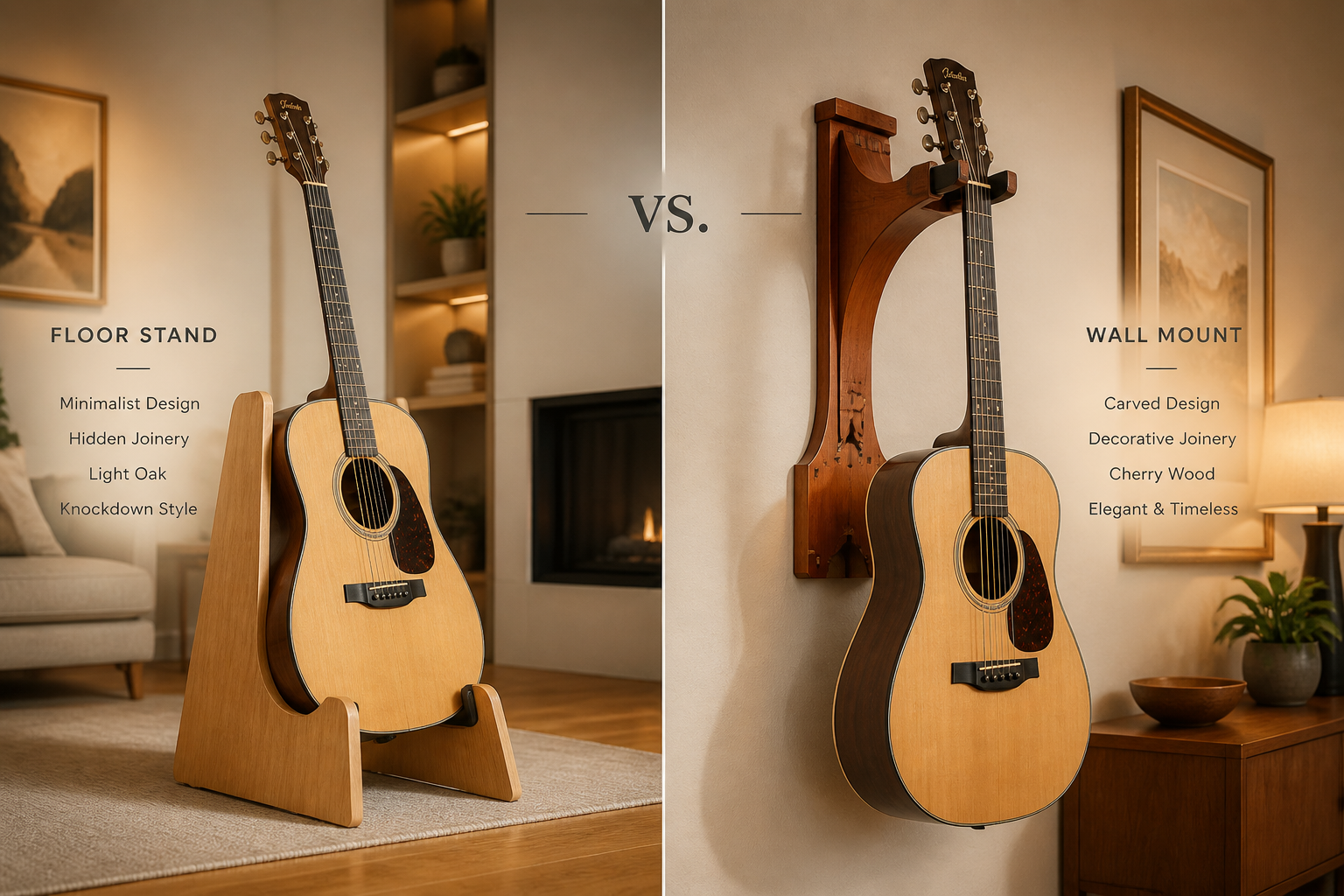
- Minimalist & Modern: Characterized by clean lines, geometric shapes, and often hidden joinery. The focus is on the guitar itself, with the stand providing understated support. Light-colored woods like maple or ash with a clear finish often suit this style. Consider designs that utilize fewer, thicker pieces of wood, emphasizing the material’s natural beauty.
- Classic & Traditional: Embraces more curves, visible traditional joinery (like dovetails or exposed mortise and tenons), and richer wood tones. Cherry, walnut, or mahogany are popular choices, often finished with oils or lacquers to bring out their depth. These designs can complement a study, music room, or living space with classic decor.
- Rustic & Organic: Utilizes natural edges, live edge slabs, or reclaimed wood. The design might incorporate natural wood features, emphasizing texture and a connection to nature. While less common for guitar stands due to the need for instrument-safe contact, a rustic base could support a modern yoke. For inspiration on incorporating natural wood elements, see our guide on Live Edge Slab Selection and Preparation: From Raw Material.
- Custom & Thematic: Tailoring the stand to a specific guitar model, a musician’s style, or a particular room theme. This allows for unique curves, inlays, or even specific wood choices that resonate with the owner.
Material Selection for Aesthetic Impact
The choice of wood greatly influences the finished look and feel.
- Hardwoods:
- Walnut: Rich, dark brown, elegant grain. Excellent for traditional or sophisticated modern designs.
- Cherry: Deep reddish-brown, often develops a beautiful patina over time. Warm and inviting.
- Maple: Light-colored, fine grain. Ideal for minimalist or contemporary styles, and can be stained effectively.
- Oak: Distinctive open grain, very durable. Good for rustic or traditional aesthetics.
- Exotic Woods: (Use with caution due to sustainability and cost) Offer unique colors and patterns, but ensure they are stable and non-reactive with finishes.
- Accent Materials: Incorporating small elements of metal (brass, stainless steel) or contrasting woods can add visual interest.
Finishing Techniques for Durability and Beauty
The finish protects the wood and enhances its appearance.
- Oils (Tung Oil, Linseed Oil): Penetrate the wood, offering a natural, matte to semi-gloss finish that highlights the grain. Easy to repair but less protective against moisture than film finishes.
- Varnishes & Lacquers: Create a durable, protective film on the surface. Available in various sheens, from satin to high gloss. These offer excellent moisture resistance. Ensure complete curing before instrument contact to avoid chemical reactions.
- Shellac: A natural, non-toxic finish that creates a beautiful, warm glow. It’s often used as a sealer or as a standalone finish.
- Stains: Used to alter the wood’s color, bringing out its grain or creating a uniform look. Always test stains on scrap wood first.
When designing, always visualize the finished product in its intended environment. Will it complement the guitar? Does it enhance the room? By integrating these design and aesthetic considerations, your handcrafted guitar stand or wall mount will not only be a functional safeguard but also a statement piece. For those venturing into more complex wooden items for display, projects like DIY Wooden Wall Clocks: Precision Joinery and Modern Designs can offer valuable experience in balancing utility with visual appeal.
Conclusion
Crafting Acoustic Guitar Stands and Wall Mounts: Combining Wood Joinery with Instrument Protection is a deeply rewarding endeavor that merges the precision of woodworking with the delicate art of instrument care. From selecting the right joinery to ensure unwavering stability, to meticulously choosing non-reactive padding that safeguards delicate finishes, every step in the process demands thoughtful consideration. These projects are more than just functional accessories; they are tributes to the instrument, elevating its presence while providing essential protection against the perils of accidental damage and environmental stressors.
As a woodworker in 2026, embracing this challenge allows you to hone advanced joinery skills, experiment with different wood species and finishes, and ultimately create something of lasting value for musicians. The satisfaction of seeing a beloved acoustic guitar displayed securely and beautifully on a stand or mount crafted with your own hands is unparalleled.
Actionable Next Steps:
- Research Designs: Explore various existing guitar stand and wall mount designs to gather inspiration and identify features you admire or wish to improve upon.
- Sketch and Plan: Before cutting, create detailed sketches or CAD drawings of your desired stand or mount, including dimensions, joinery types, and material choices.
- Source Materials Carefully: Select stable, aesthetically pleasing hardwoods. Crucially, acquire instrument-safe padding (felt, cork, or approved foam) before assembly.
- Practice Joinery: If new to certain joints, practice them on scrap wood until you achieve precise, strong connections.
- Build and Refine: Assemble your project with care, paying close attention to fit and finish. Test the stability and instrument fit thoroughly before full deployment.
- Consider Customization: Think about adding personal touches like engraved details or unique wood combinations to make your creation truly one-of-a-kind.
References
- Dunn, D. (2010). The Essential Woodworker: Tools, Hand Skills, and Methods. Taunton Press.
- Krenov, J. (1992). The Fine Art of Cabinetmaking. Taunton Press.
- Lashof, A. (2015). Wood Joints: The Complete Technical & Illustrated Guide. Guild of Master Craftsman Publications.
- Sloane, E. (1964). A Reverence for Wood. Dover Publications.
SEO Meta Title: Crafting Acoustic Guitar Stands: Wood Joinery & Protection SEO Meta Description: Learn to design and build elegant, protective wooden stands and wall mounts for acoustic guitars in 2026, combining strong wood joinery with instrument safety.