

In 2026, the demand for custom, artisan-crafted furniture with distinctive curves and organic forms continues to surge. Yet, achieving these fluid shapes in solid wood poses a fundamental challenge: wood’s inherent rigidity. Overcoming this requires a deep understanding of wood’s cellular structure and specialized techniques to coax it into elegant bends without fracturing. This article delves into Mastering Wood Bending Techniques: From Kerf Bending to Lamination for Contemporary Furniture Designs, exploring methods that empower woodworkers to transform linear timber into sculptural masterpieces, from subtle arcs to dramatic sweeps, for chairs, tables, and decorative elements that define modern spaces.
Key Takeaways
- Wood bending techniques allow the creation of complex curves and forms in furniture, expanding design possibilities beyond straight lines.
- Kerf bending achieves tight, angular bends by strategically removing material, making it suitable for practical applications like cabinet fronts.
- Lamination involves gluing thin wood strips around a form, offering superior strength, flexibility in curve design, and suitability for structural components.
- Steam bending, while briefly covered, uses heat and moisture to make wood pliable, ideal for solid wood components needing graceful, structural curves.
- Successful application of these techniques requires careful wood selection, precise preparation, and appropriate clamping and drying processes.
The Art and Science of Bending Wood: Kerf Bending for Sharp Angles
Achieving a curve in wood without cutting a separate piece and joining it fundamentally changes the aesthetic and structural integrity of a piece. Wood bending transforms a static material into a dynamic design element, opening doors to furniture that flows rather than simply sits. Among the various methods available, kerf bending stands out for its ability to create sharp, precise angles and tight radii, particularly useful in contemporary designs where clean lines and geometric forms are paramount.
Kerf bending involves making a series of cuts (kerfs) across the grain of a board, typically on the inside of the desired curve. These cuts remove material, effectively shortening the inside radius of the bend and allowing the wood to compress and flex. The uncut portion of the board then acts as a hinge, enabling the piece to bend. The depth, width, and spacing of these kerfs are crucial and directly impact the achievable bend radius and the final strength of the bent component.
Understanding Kerf Bending Mechanics
The principle behind kerf bending is straightforward: the more material removed from the inside of the bend, the tighter the curve that can be achieved. However, there’s a delicate balance. Too much material removal can weaken the piece excessively, while too little won’t allow the desired bend.
Key Considerations for Kerf Bending:
- Wood Species: Softer woods like pine and cedar are generally easier to kerf bend than hardwoods like oak or maple, which can splinter more readily. However, with careful technique, hardwoods can also be successfully kerfed.
- Kerf Depth: Cuts typically go 75-90% through the thickness of the board. The remaining solid wood on the outside of the curve provides the necessary strength and prevents the piece from breaking.
- Kerf Width: The width of the saw blade (kerf) dictates how much material is removed with each cut. Wider kerfs allow for tighter bends but also remove more wood, potentially weakening the piece.
- Kerf Spacing: Closely spaced kerfs result in a smoother curve, while wider spacing can lead to a more faceted, angular bend. Experimentation with scrap wood is essential to determine optimal spacing for your desired curve.
- Stabilization: After bending, the kerfs are often filled with adhesive, plywood, or thin strips of wood to stabilize the curve and add strength. This is particularly important for structural components.
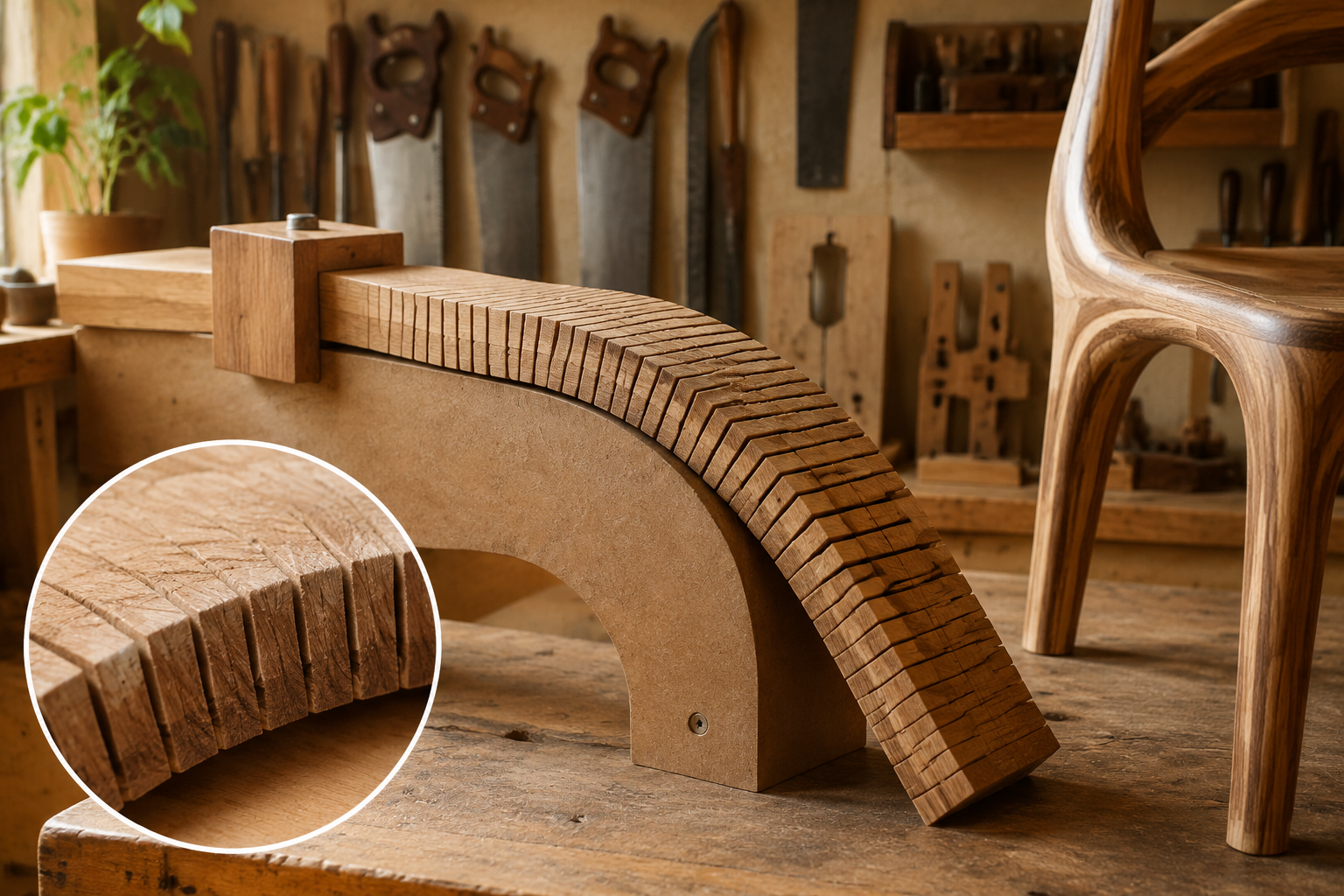
A common application of kerf bending is creating curved cabinet fronts, decorative panels, or even lamp shades. Imagine a sleek, modern credenza with a gently curved facade, or an avant-garde wall shelf that seemingly defies the rigidity of wood – these are often achieved with kerf bending. For intricate detail work or even creating engraved wooden coasters with custom designs that require a subtle curve, kerf bending can be an efficient method.
Pros and Cons of Kerf Bending
| Feature | Advantages | Disadvantages |
|---|---|---|
| Control | Precise control over bend radius and angle. | Requires careful calculation and execution of kerf cuts. |
| Strength | Can be strong if kerfs are properly reinforced. | Inherently weaker than solid or laminated bends before reinforcement. |
| Equipment | Requires standard woodworking tools (table saw, router, or band saw). | No specialized bending equipment needed. |
| Aesthetics | Can create unique, sometimes industrial, ribbed aesthetics or be hidden. | Kerfs may be visible if not filled or veneered, impacting aesthetics. |
| Applications | Excellent for decorative panels, non-structural curves, or tight corners. | Less suitable for high-stress structural components. |
For aspiring furniture makers focusing on contemporary designs, kerf bending offers a direct path to introducing curves without significant investment in specialized machinery. It’s a technique that marries precision with the inherent beauty of wood.
The Strength and Elegance of Lamination in Wood Bending
While kerf bending excels at producing controlled, often angular curves, wood lamination (also known as bent lamination) offers a different approach, yielding incredibly strong, graceful, and continuous curves. This method is a cornerstone for Mastering Wood Bending Techniques: From Kerf Bending to Lamination for Contemporary Furniture Designs, particularly for structural components like chair backs, table legs, or large architectural elements that require both aesthetic appeal and robust durability.
Lamination involves gluing together multiple thin strips of wood, known as laminates, around a pre-made form or mold. The thin strips are flexible enough to conform to the curve of the mold, and once the glue cures, the resulting composite piece becomes exceptionally strong and holds its shape permanently. This technique leverages the strength of each individual layer, distributing stress across the entire laminated piece.
The Lamination Process: Step-by-Step
- Form Creation: A precise mold or form is the most critical element. This form defines the final curve of your bent wood. It can be made from MDF, plywood, or even solid wood, accurately shaped and sanded smooth. For projects like building Adirondack chairs with curved backs, a strong, reusable form is invaluable.
- Wood Preparation:
- Species Selection: Woods like ash, oak, walnut, and cherry are excellent for lamination due to their strength and moderate flexibility.
- Milling Laminates: Stock is ripped into thin strips, typically 1/8″ to 1/4″ thick, depending on the wood species and desired bend radius. It’s essential that these strips are uniform in thickness and grain direction. Planing them smooth ensures good glue adhesion.
- Glue Application: A high-quality wood glue, such as a PVA wood glue or epoxy, is applied evenly to all mating surfaces of the laminates. Ensure complete coverage for maximum bond strength. Open time of the glue is a critical factor, especially for complex or large bends.
- Clamping and Bending: The glued strips are then carefully placed onto the form and clamped securely. It’s crucial to apply even pressure along the entire length of the bend to prevent gaps and ensure a tight bond. Cauls (shaped pieces of wood) can help distribute clamping pressure evenly.
- Curing and Finishing: The assembly is left clamped until the glue is fully cured (refer to glue manufacturer’s instructions). Once cured, the bent lamination is removed from the form, trimmed to final dimensions, and sanded smooth.
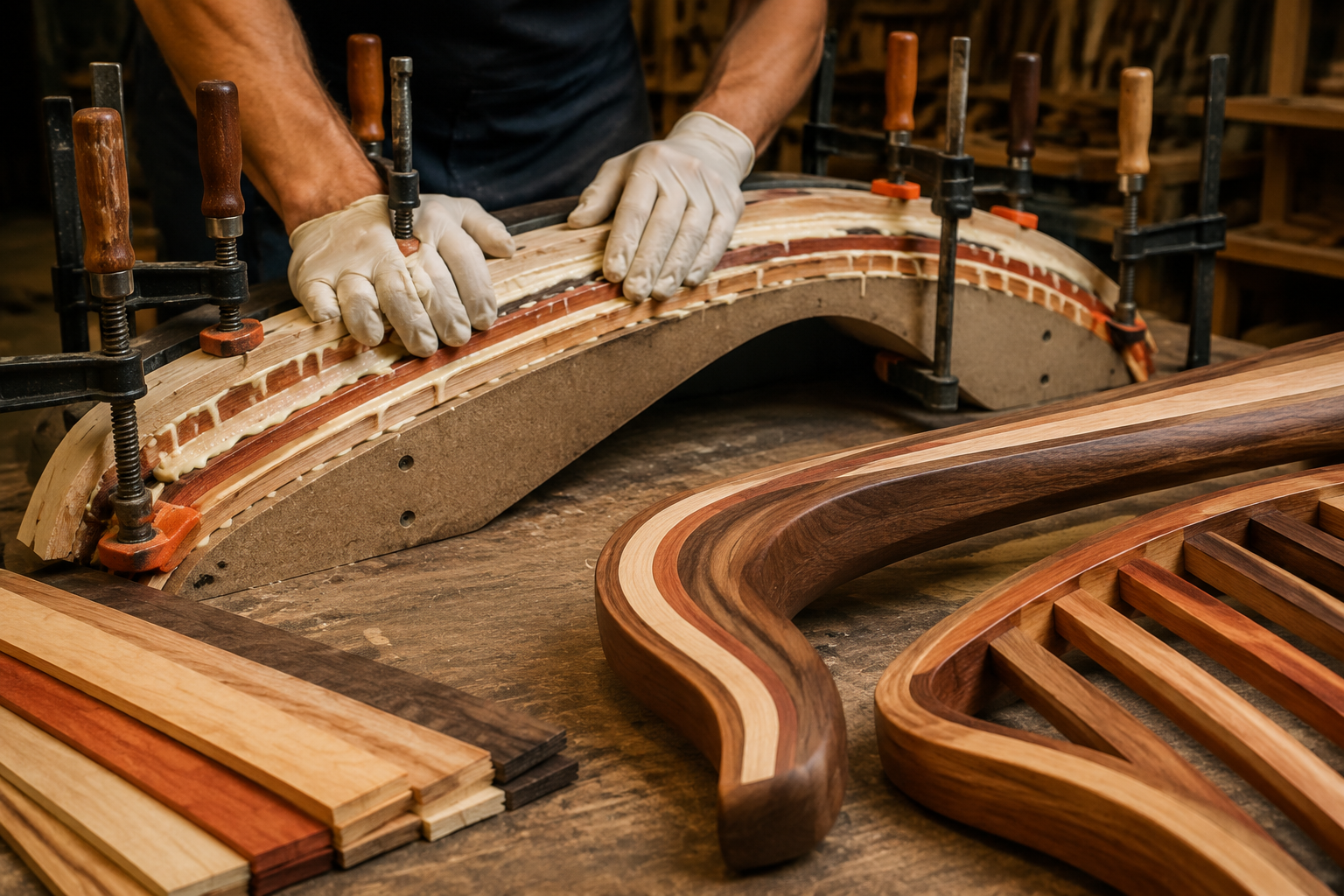
For designs requiring intricate or graceful curves, such as the arcs of a handcrafted wooden wall clock or the fluid lines of a minimalist chair, lamination offers unparalleled flexibility. It allows for curves that would be impossible or structurally unsound with solid wood bending.
Steam Bending: A Brief Comparison
While the focus here is on lamination and kerf bending, it’s worth a brief mention of steam bending. This traditional technique involves placing solid wood in a steam box to heat and moisturize it, making the fibers pliable. The softened wood is then quickly bent around a form and clamped until dry.
Steam Bending Characteristics:
- Solid Wood: Works with a single piece of solid wood, maintaining grain continuity.
- Strength: Retains much of the original wood’s strength.
- Skill & Equipment: Requires a steam box and specialized forms, along with quick, decisive action.
- Limitations: Limited to certain wood species and bend radii; spring back (wood wanting to return to its original shape) is a significant factor.
Both lamination and steam bending are vital for Mastering Wood Bending Techniques: From Kerf Bending to Lamination for Contemporary Furniture Designs, but they cater to different needs. Lamination provides more control over intricate curves and offers superior strength, especially when multiple layers of different wood species are used for aesthetic effect.
Designing Contemporary Furniture with Advanced Bending Techniques
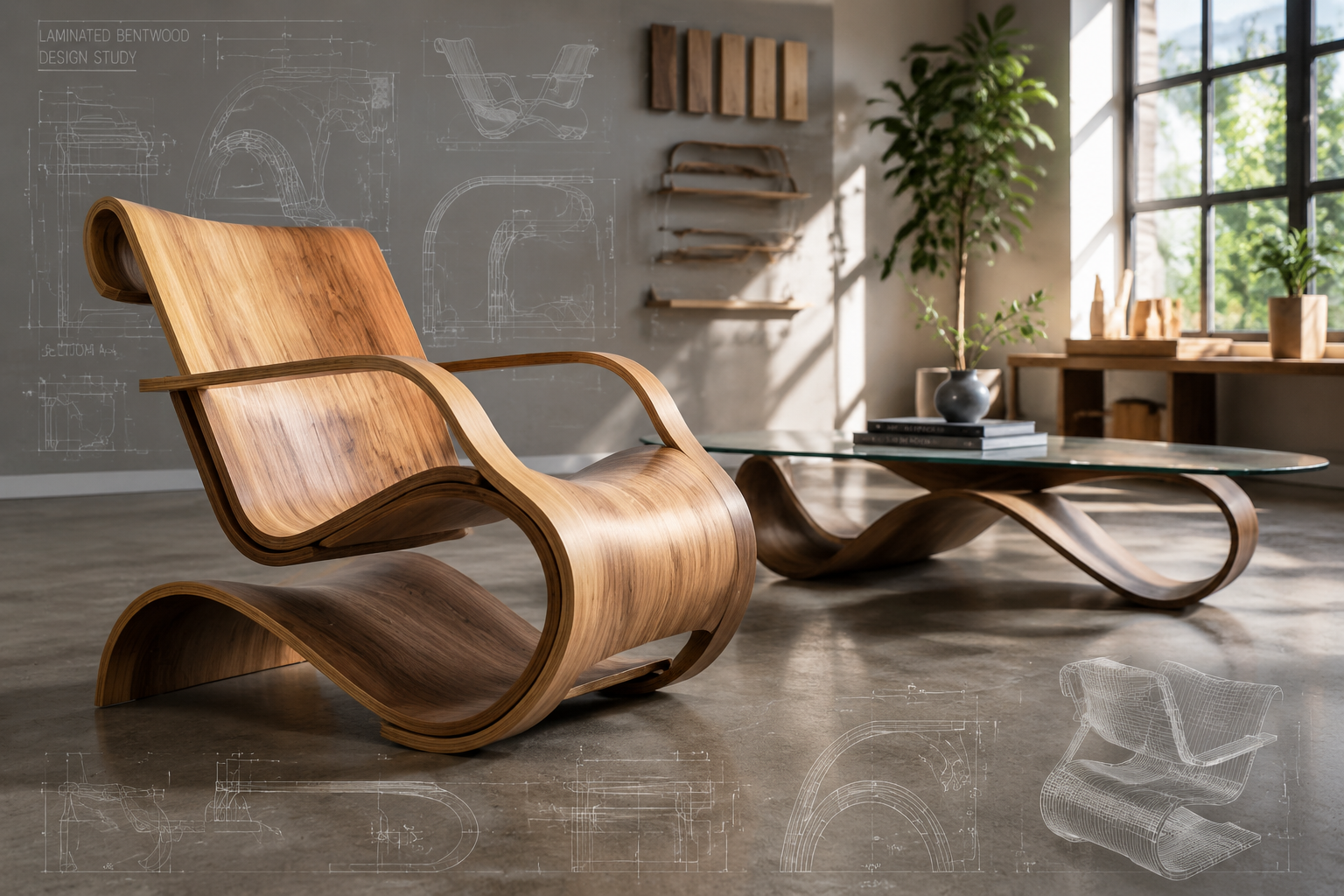
The true power of Mastering Wood Bending Techniques: From Kerf Bending to Lamination for Contemporary Furniture Designs lies in their application to create truly innovative and ergonomic furniture. In 2026, designers are increasingly leveraging these methods to craft pieces that are not only functional but also sculptural and visually striking. From chairs that cradle the body to tables with flowing bases, bentwood elements infuse warmth, elegance, and a sense of movement into modern interiors.
When designing furniture with bent wood, several factors come into play:
- Ergonomics: Curved components can conform more naturally to the human body, enhancing comfort in chairs and benches. Think of a perfectly curved backrest that supports the spine, or an armrest that flows seamlessly from the chair’s frame.
- Aesthetics: The absence of visible joints in a continuous curve creates a clean, sophisticated look. Laminated curves, in particular, can highlight the beautiful layering of different wood species, adding a unique visual texture. This complements modern minimalist and organic design trends.
- Structural Integrity: Properly executed bent lamination results in incredibly strong components, often stronger than an equivalent piece cut from solid wood, as the grain follows the curve without being cut across. This allows for lighter, more delicate-looking structures that maintain durability.
- Material Efficiency: While it might seem counterintuitive, using thin laminates can sometimes be more efficient, especially when dealing with expensive or rare woods, as smaller pieces can be joined to create larger forms.
- Design Freedom: These techniques free designers from the constraints of straight lines and right angles. This allows for organic shapes, fluid transitions, and a more artistic approach to furniture creation. For instance, creating a statement furniture piece with a dramatically curved base is far more achievable with lamination than with traditional joinery.
Practical Applications in Contemporary Furniture
Here’s how bent wood techniques are shaping modern furniture:
- Chairs: From elegant dining chairs with gently curved backrests to ergonomic office chairs with sculpted seats, bent lamination is ideal. The continuous grain of the bent parts ensures strength and comfort.
- Tables: Table bases can feature graceful, sweeping curves. Coffee tables might have bentwood legs that merge seamlessly into the top, or console tables can sport undulating forms. This method is even ideal for building end table mastery pieces that require a distinctive profile.
- Storage and Shelving: Curved shelves or cabinet doors add visual interest and soften rigid geometries. Kerf bending is often used for these applications where a tighter, more utilitarian bend is desired.
- Decorative Elements: Beyond core furniture, bent wood is perfect for creating unique lampshades, wall art, architectural screens, or even wooden candle holders for ambient decor that defy conventional forms.
As woodworkers and designers continue to push boundaries, the mastery of these bending techniques becomes increasingly critical. The ability to transform flat lumber into dynamic, curved forms not only elevates the aesthetic appeal of a piece but also enhances its functionality and structural integrity. Embracing these advanced methods allows for the creation of furniture that is both timeless and distinctly contemporary, shaping the future of woodworking.
Conclusion
The journey of Mastering Wood Bending Techniques: From Kerf Bending to Lamination for Contemporary Furniture Designs offers woodworkers and designers a powerful suite of skills to transcend traditional rectangular forms. Whether employing the precise, angular bends of kerf bending or the robust, elegant curves achieved through lamination, these methods unlock a new dimension of creativity in furniture design. The resulting pieces are not just functional objects but sculptural works of art that reflect a deep understanding of material science and craftsmanship.
As the aesthetics of 2026 continue to favor organic shapes, natural materials, and custom-made items, the demand for bentwood furniture will undoubtedly grow. By understanding the nuances of wood selection, preparation, and the specific mechanics of each bending technique, artisans can create durable, beautiful, and ergonomically superior furniture.
Actionable Next Steps
- Start Small: Begin with kerf bending on scrap wood to understand the relationship between kerf depth, width, and spacing and the resulting curve.
- Invest in Forms: For lamination, building accurate and sturdy forms is paramount. Start with simple curves before attempting complex shapes.
- Experiment with Woods: Different wood species react differently. Test various woods with both kerf bending and lamination to discover their unique properties.
- Refine Your Clamping: Even, consistent clamping pressure is critical for successful lamination. Invest in quality clamps and cauls.
- Study Design: Look at existing contemporary bentwood furniture for inspiration and to understand how curves are integrated into functional designs. Explore our guide on warm minimalism in woodworking for ideas on integrating these forms.
- Prioritize Safety: Always use appropriate personal protective equipment (PPE) when working with power tools for milling laminates or cutting kerfs.
Embrace the challenge and the immense satisfaction of transforming rigid planks into flowing forms, and elevate your woodworking craft to new artistic heights.
SEO Meta Title: Mastering Wood Bending: Kerf & Lamination for Modern Furniture SEO Meta Description: Explore mastering wood bending techniques like kerf bending and lamination to create elegant, contemporary furniture designs for chairs, tables, and decor in 2026.