
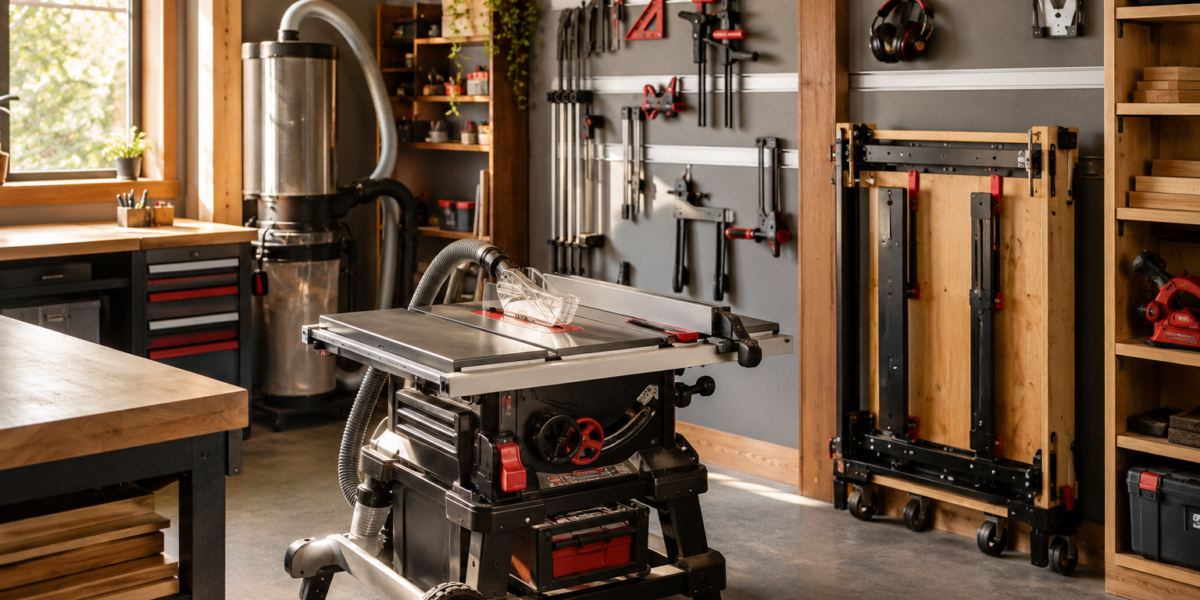
The perennial challenge for small workshop owners in 2026 isn’t a lack of ambition, but often a lack of space to realize that ambition efficiently. Many aspiring furniture makers and woodworkers face the dilemma of fitting essential machinery, materials, and workflow into cramped quarters. The solution isn’t always to find a bigger shop, but to ingeniously design and implement Efficient Small Workshop Layouts for 2026: Mobile Tool Stations and Dust Collection Upgrades that maximize every square inch. By prioritizing mobility, modularity, and robust dust management, even the most compact spaces can transform into highly productive, safe, and enjoyable creative hubs.
Key Takeaways
- Mobile tool stations, especially those integrated with foldable benches and track systems, are crucial for adapting small workshops to varied tasks and optimizing floor space.
- Investing in or upgrading to a high-efficiency dust collection system is paramount for health, safety, and maintaining a clean workspace in 2026.
- Smart storage solutions, including vertical and modular systems, significantly reduce clutter and improve workflow, making small workshops feel larger and more functional.
- Budget-friendly hacks for ventilation and organization can be just as effective as high-end solutions, making efficient layouts accessible to all.
- Careful planning and a focus on ergonomics can transform a restrictive small shop into a productive and comfortable environment for crafting furniture and other projects.
Maximizing Space with Mobile Tool Stations and Foldable Workbenches
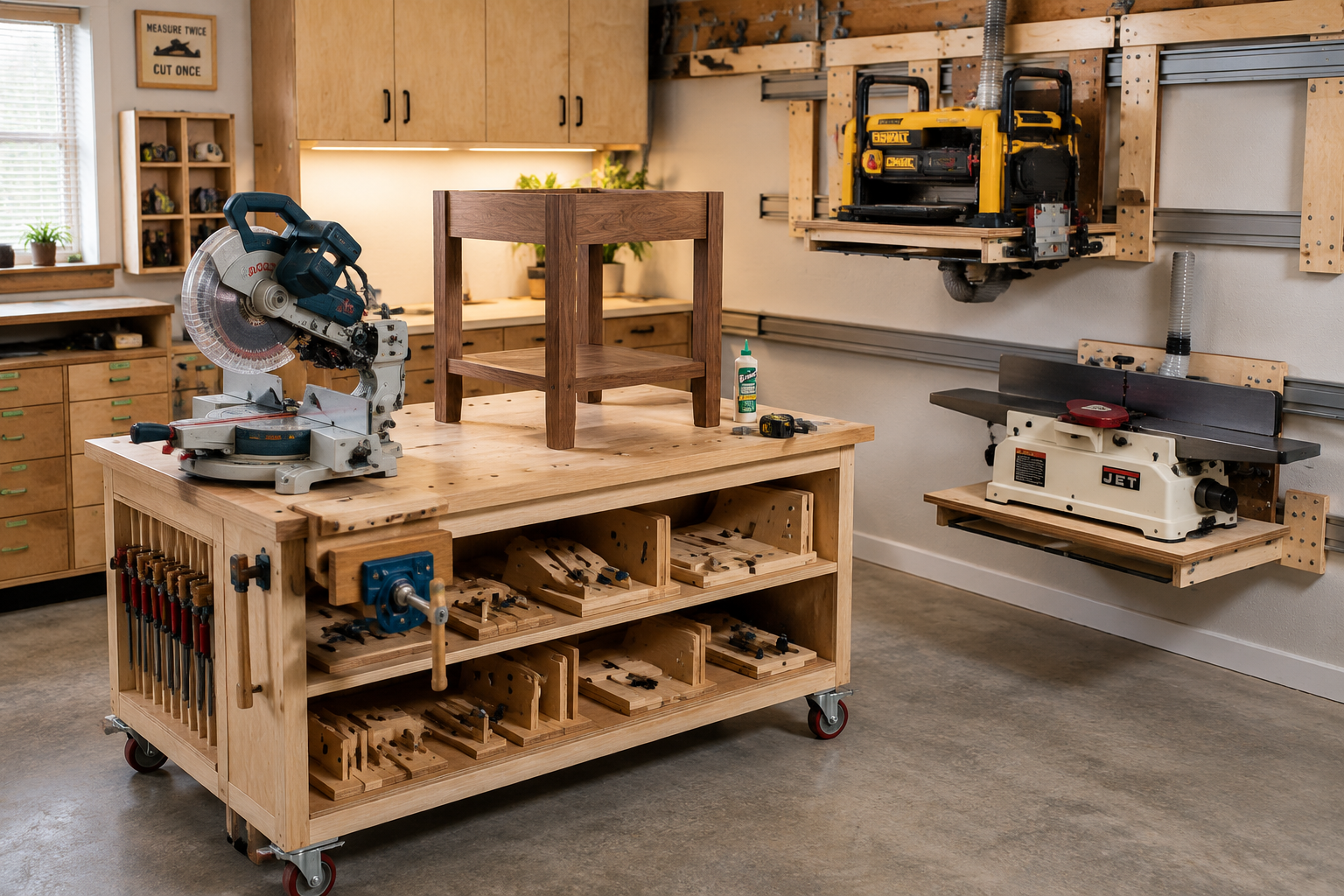
For furniture makers operating in confined spaces, static layouts are a luxury few can afford. The dynamic nature of woodworking projects—from dimensioning lumber to final assembly and finishing—demands a versatile workspace. This is where mobile tool stations and foldable workbenches become indispensable, forming the backbone of Efficient Small Workshop Layouts for 2026: Mobile Tool Stations and Dust Collection Upgrades.
The Power of Mobility: Caster-Equipped Tools
Imagine being able to reconfigure your entire workshop in minutes. This flexibility is achieved by outfitting most, if not all, major tools with heavy-duty, locking casters. A mobile table saw, for instance, can be rolled out into the center of the room for ripping long stock, then tucked away against a wall when not in use. Similarly, a mobile planer or jointer can share a common infeed/outfeed table, brought into position only when needed.
Consider the following tools for mobile integration:
- Table Saw: Essential for ripping and crosscutting. A mobile base allows for easy repositioning and offers additional storage underneath for accessories.
- Miter Saw Station: Often a space hog, a miter saw can be built into a dedicated mobile cart with folding wings for extended support. This cart can double as an assembly table when the saw is not in active use.
- Planer/Jointer: These machines require significant space for stock processing. Placing them on mobile bases lets them be stored out of the way and only brought out for milling operations.
- Drill Press: While smaller, a mobile drill press stand provides flexibility, allowing you to move it closer to an ongoing project rather than constantly moving the workpiece.
The key is to select casters that are robust enough for the weight of your tools and have reliable locking mechanisms to ensure stability during operation.
Integrating Tools with Track Systems
Beyond individual mobile bases, track systems offer a revolutionary way to manage power tools in a small workshop. Instead of dedicating floor space to stationary tools, imagine them suspended on a wall, ready to be deployed along a track. This approach is particularly effective for tools like sanders, routers, or even smaller bandsaws that don’t require immense stability during operation.
A well-designed track system can:
- Free up floor space: Tools are stored vertically against a wall.
- Improve access: Tools can be slid along the track to where they are needed, rather than moving the workpiece.
- Increase safety: Dedicated positions for tools reduce clutter and the risk of tripping over cords or machines.
For specific guidance on maximizing vertical space, our article on Smart Workshop Storage Solutions: Maximizing Small Spaces with provides further insights into modular systems that complement track setups.
Foldable Workbenches: The Ultimate Space Saver
A fixed, large workbench is often the centerpiece of a traditional workshop, but in a small space, it can become an immovable obstacle. Foldable workbenches offer a versatile alternative. These can range from simple wall-mounted designs that fold down when needed, to more elaborate mobile units with collapsible legs.
Types of Foldable Workbenches:
| Workbench Type | Description | Ideal Use Cases | Pros | Cons |
|---|---|---|---|---|
| Wall-Mounted Fold-Down | A sturdy tabletop hinged to the wall, folds flat when not in use. | Assembly, light hand tool work, gluing | Maximizes floor space, very compact | Less stable than fixed, limited weight capacity |
| Mobile with Collapsible Legs | A portable workbench on casters, legs fold inward for compact storage. | Finishing, temporary assembly, outdoor work | Flexible positioning, easy to store | Setup time, potential for less rigidity |
| Integrated into Tool Cart | Workbench surface is part of a mobile tool station (e.g., miter saw stand). | Multi-purpose use, tool-specific tasks | Highly efficient, tool and workspace in one unit | Design complexity, specific to tool |
For those looking to build their own, consider our guide on Building a Compact and Ergonomic Workbench for Small Workshops. This offers designs that integrate storage and mobility, making them perfect for Efficient Small Workshop Layouts for 2026: Mobile Tool Stations and Dust Collection Upgrades.
Dust Collection Upgrades: Health, Safety, and Cleanliness in 2026
Effective dust collection is non-negotiable in any woodworking environment, and its importance is amplified in small workshops. Fine wood dust is a health hazard, can interfere with tool performance, and makes for an unpleasant working experience. In 2026, advancing technology and a greater awareness of air quality make investing in robust dust collection upgrades a priority for Efficient Small Workshop Layouts for 2026: Mobile Tool Stations and Dust Collection Upgrades.
The Imperative of Dust Control
Wood dust, particularly from hardwoods and MDF, can cause respiratory problems, allergies, and even has carcinogenic properties. Beyond health, dust buildup can:
- Reduce Finish Quality: Dust settling on wet finishes can ruin a perfect surface.
- Damage Tools: Fine particles can clog motors, bearings, and lead to premature tool wear.
- Create Fire Hazards: Accumulated dust is highly combustible.
A comprehensive dust collection strategy involves source capture, ambient air filtration, and shop cleanup.
Advanced Dust Collection Systems for Small Spaces
Traditional large dust collectors can be cumbersome in a small shop. However, modern designs offer compact, powerful solutions:
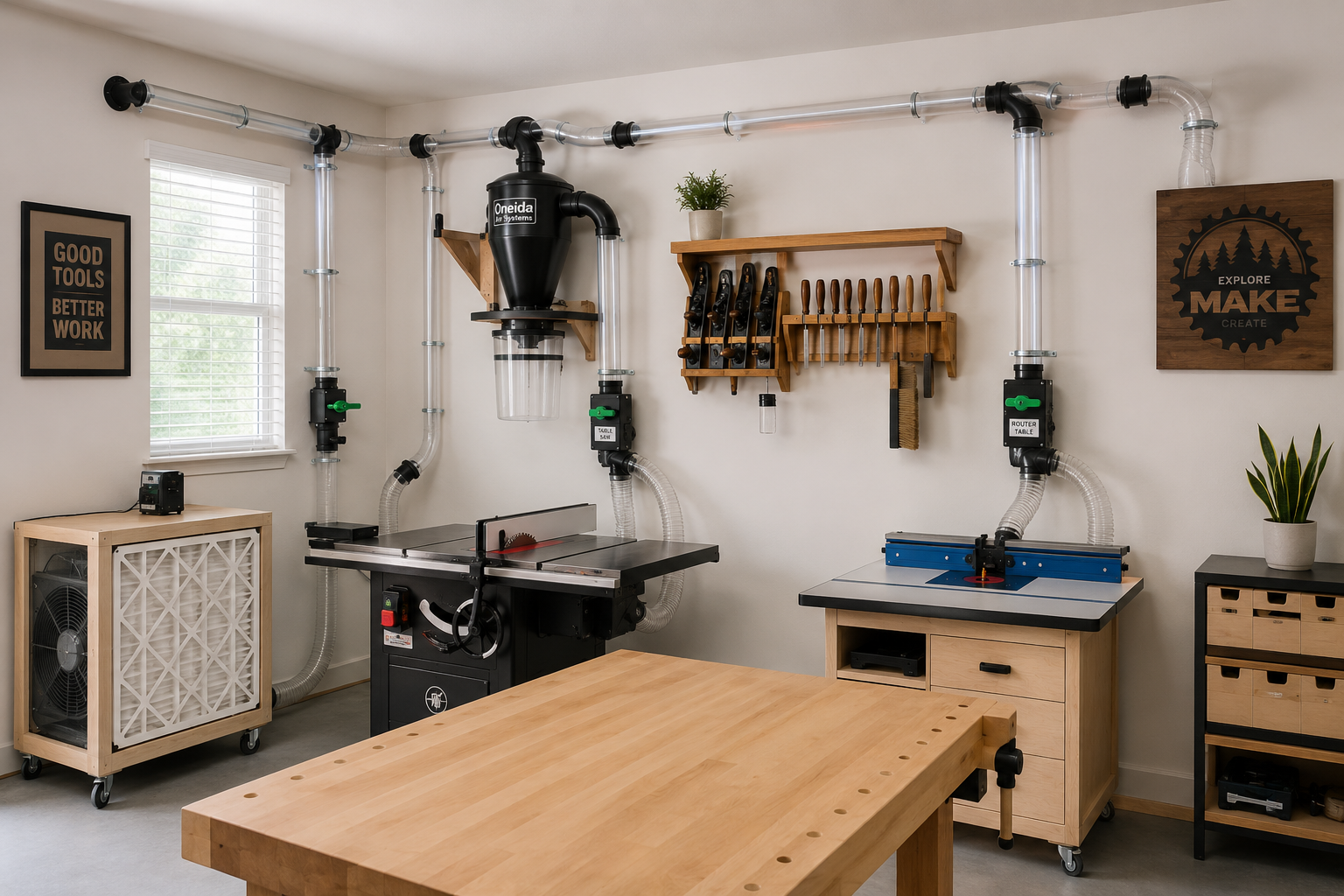
- Compact Cyclone Systems: These are highly efficient, separating larger chips from fine dust before it reaches the filter. This extends filter life and maintains consistent suction. Many compact cyclone units are now available on mobile carts, allowing them to be moved to various machines.
- Integrated Tool Dust Ports: Ensure all your power tools have effective dust ports. For tools with poor integrated collection, consider aftermarket shrouds or custom-built enclosures that funnel dust directly to your collector.
- Hose Management Systems: Flexible hoses running across the floor are tripping hazards. Consider ceiling-mounted hose reels or dedicated overhead ductwork with strategically placed drops and blast gates. Blast gates are essential for directing suction to only the tool in use, maximizing efficiency.
“A clean shop isn’t just about aesthetics; it’s about prolonging your tools’ life, ensuring your finishes are flawless, and most importantly, protecting your health.”
Budget-Friendly Dust Collection Hacks
Even on a tight budget, significant improvements can be made:
- DIY Cyclone Lid: For those with a shop vac, a simple cyclone lid placed on a separate drum can dramatically improve separation, preventing the shop vac filter from clogging quickly. This makes a shop vac a much more effective dust extractor.
- Box Fan Air Filter: A common and effective hack involves attaching a high-MERV furnace filter to the intake side of a powerful box fan. Positioned strategically, this can help filter airborne dust particles, improving overall air quality. Ensure the fan is securely placed and not drawing air directly from a dusty operation.
- Dedicated Shop Vacuum with HEPA Filter: For hand tools, routers, and sanding operations, a shop vacuum with a HEPA-rated filter is invaluable. Connect it directly to the tool’s dust port for immediate source capture.
- Magnetic Dust Collection Ports: These innovative attachments can be quickly moved between tools that lack dedicated dust ports, offering flexible collection for handheld sanders or routers.
Implementing even a few of these upgrades can drastically improve your workshop environment, making your small space safer and more enjoyable for crafting beautiful furniture.
Smart Storage and Ergonomics for the Modern Woodworker
Beyond mobile tools and dust control, the overall efficiency and comfort of Efficient Small Workshop Layouts for 2026: Mobile Tool Stations and Dust Collection Upgrades hinges on intelligent storage and ergonomic design. These elements contribute to a workflow that minimizes wasted motion and maximizes productivity, particularly vital for furniture makers dealing with various materials and stages of a project.
Vertical Storage: Reclaiming Wall Space
In a small workshop, the walls are your most valuable real estate. Embracing vertical storage systems can transform cluttered floor space into an organized and accessible tool and material repository.
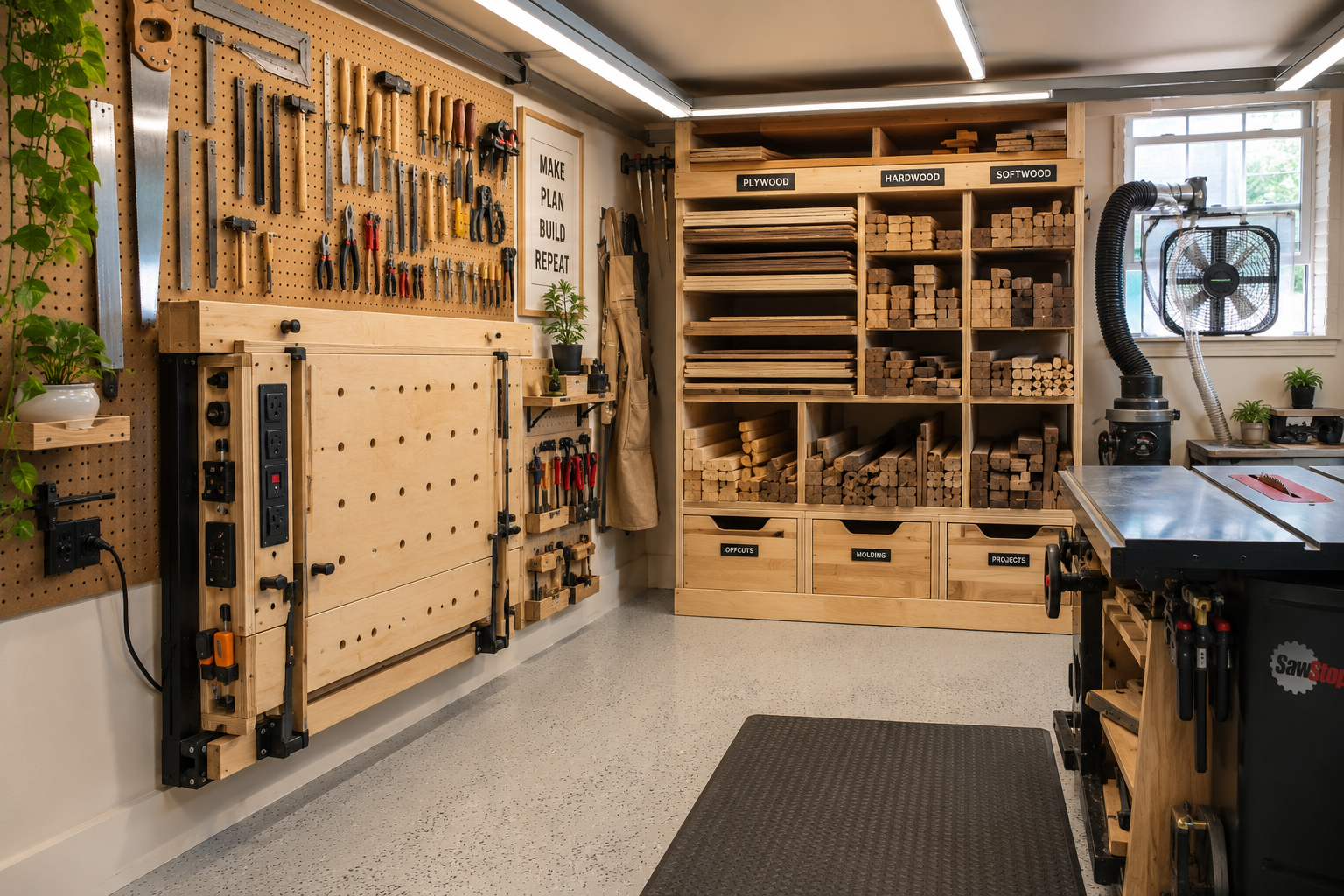
- Pegboards and French Cleats: These classic systems allow for flexible organization of hand tools, jigs, and accessories. Tools can be easily moved and rearranged as your needs change.
- Modular Shelving: Adjustable shelving units can hold bins, power tool cases, and project materials. For lumber storage, consider a vertical rack system that keeps various lengths and widths of wood off the floor and easily visible. Our guide on Building Modular Wood Storage Systems for Small Workshops offers detailed plans.
- Overhead Storage: If your ceiling height allows, consider sturdy overhead racks for storing less frequently used items or longer pieces of lumber. Ensure these are securely installed and do not impede movement.
Ergonomics for Comfort and Productivity
An efficient layout isn’t just about space; it’s also about how you interact with that space. Ergonomics, the study of people’s efficiency in their working environment, plays a critical role in preventing fatigue and injury.
- Adjustable Workbench Height: If possible, design or purchase a workbench that can be adjusted to your height for different tasks. Standing for long periods requires the work surface to be at an appropriate level to prevent back strain.
- Proper Lighting: Good lighting is crucial for precision work and safety. Implement a combination of general ambient lighting and task lighting over key work areas (e.g., workbench, machine tables). LED lighting is energy-efficient and provides clear, bright illumination.
- Anti-Fatigue Mats: Standing on concrete floors for hours can be taxing. Anti-fatigue mats significantly reduce strain on your feet, legs, and back.
- Tool Accessibility: Organize your most frequently used tools within easy reach. This minimizes bending, stretching, and searching, streamlining your workflow.
Budget Hacks for Organization and Ventilation
Achieving a highly organized and well-ventilated workshop doesn’t always require a significant investment. Smart, DIY solutions can be just as effective:
- Repurposed Containers: Utilize old plastic containers, coffee cans, or repurposed drawers for organizing fasteners, fittings, and small parts. Label everything clearly.
- Magnetic Tool Holders: A magnetic bar attached to a wall keeps metal hand tools visible and within easy reach, freeing up drawer space.
- DIY Ventilation Fan: While a full HVAC system is ideal, a powerful exhaust fan strategically placed in a window or wall can significantly improve air exchange. Position it to draw air away from your dusty operations and out of the shop, creating negative pressure that pulls fresh air in from an opposite opening. This is a simple, yet effective, way to clear airborne dust that escapes your source capture systems. Make sure to consider where the exhausted air is going to avoid simply moving dust to another area.
- Dedicated Finishing Area: If possible, create a small, separate area for finishing that is isolated from dust-producing activities. Even a temporary pop-up tent can help protect projects from airborne particles.
By integrating these smart storage solutions and ergonomic considerations, alongside mobile tool stations and robust dust collection, your small workshop in 2026 can become a highly efficient and enjoyable space for any woodworking endeavor, especially for crafting furniture.
Conclusion
Optimizing a small workshop is less about magic and more about methodical planning and smart choices. For 2026, the focus for furniture makers and woodworkers in compact spaces must shift towards dynamic layouts that prioritize mobility, superior dust management, and intelligent organization. By embracing mobile tool stations, such as those on casters or integrated into track systems, you reclaim valuable floor space, transforming a static room into a flexible manufacturing zone.
Crucially, upgrading your dust collection system, whether through advanced cyclone units or budget-friendly DIY air filters, is an investment in your health, the longevity of your tools, and the quality of your finished products. Combine these with vertical storage solutions, ergonomic considerations, and clever organization hacks, and you unlock the full potential of your small workshop. The goal is to create a space where every tool has its place, every operation is efficient, and safety is never compromised.
Actionable Next Steps:
- Assess Your Current Layout: Map out your existing tools and workflow. Identify bottlenecks and areas where mobility would improve efficiency.
- Prioritize Mobility: Begin by adding heavy-duty locking casters to your most frequently used stationary tools. Explore building a portable workbench or a dedicated mobile miter saw station.
- Upgrade Dust Collection: Start with source capture at your most dust-intensive tools. Consider a compact cyclone collector or enhance your shop vac with a DIY cyclone lid. Implement a box fan filter for ambient air cleaning.
- Implement Vertical Storage: Maximize wall space with pegboards, French cleats, and vertical lumber racks. Explore modular storage systems to keep your space tidy.
- Focus on Ergonomics: Ensure your primary workbench height is comfortable, improve lighting, and consider anti-fatigue mats.
By taking these steps, you can transform your small workshop into a highly productive and enjoyable environment, ready to tackle any project in 2026.
References
- Wood Magazine. (2020). Shop Layouts: Make the Most of Your Space. Meredith Corporation.
- Fine Woodworking. (2022). Dust Collection Solutions for Small Shops. Taunton Press.
- Schofield, M. (2018). The Small Wood Shop: A Practical Guide to Setting Up a Productive Workspace. Popular Woodworking Books.