

} For many passionate woodworkers, the dream workshop often starts as a humble corner in a garage or a small shed. However, the joy of crafting can quickly diminish when extreme temperatures make the space unbearable. Working through sweltering summers or freezing winters not only impacts comfort but also affects productivity, tool longevity, and even the quality of wood. The good news is that achieving year-round comfort doesn’t require a massive overhaul or an exorbitant budget. This article explores practical, budget-friendly DIY strategies for maintaining comfortable temperatures in your small woodworking shop, covering insulation techniques, portable heating/cooling units, and passive ventilation systems. With efficient and safe DIY approaches for year-round comfort, you can transform your small workshop into a productive haven, regardless of the season in 2026.
Key Takeaways
- Prioritize Insulation: The most cost-effective long-term solution for maintaining comfort in a small workshop is robust insulation.
- Layer Heating & Cooling: Combine passive design with active, portable units for flexible and efficient temperature control.
- Ensure Proper Ventilation: Air exchange is critical for safety, air quality, and effective temperature regulation.
- Safety First: Always prioritize fire prevention, carbon monoxide awareness, and proper electrical load management when implementing heating and cooling solutions.
- Smart Energy Use: Utilize timers, smart thermostats, and zone heating/cooling to minimize energy consumption.
The Foundation: Maximizing Your Workshop’s Thermal Envelope
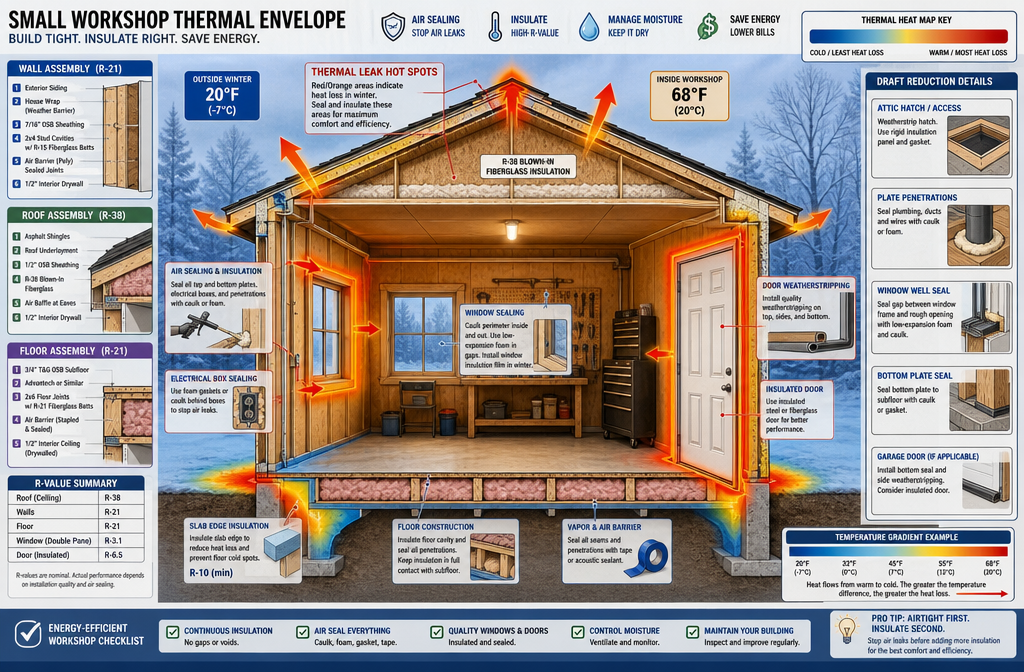
Before investing in any heating or cooling unit, the most impactful step you can take is to improve your workshop’s thermal envelope. A well-insulated and sealed space will retain heat in winter and keep it out in summer, dramatically reducing energy costs and making any active system far more effective.
DIY Insulation Strategies for Small Workshop Heating and Cooling Solutions
Effective insulation is the backbone of any climate-controlled space. For a small workshop, DIY approaches can be highly effective and budget-friendly.
Walls:
- Fiberglass Batts: A common and affordable option, fiberglass batts are installed between wall studs. Ensure proper fit without compressing the material, as compression reduces R-value. Always wear appropriate personal protective equipment (PPE) like gloves, masks, and eye protection when handling fiberglass.
- Rigid Foam Boards (XPS/EPS): These offer higher R-values per inch than fiberglass and are excellent for small spaces. They can be cut to fit snugly between studs or used as continuous insulation on the interior or exterior of walls. Seal all seams with foil tape or caulk to create an effective vapor barrier. This approach is particularly effective in areas prone to moisture.
- Mineral Wool: Similar to fiberglass but often denser and more resistant to fire and moisture. It’s a great choice for workshops where safety is a primary concern.
Ceilings and Roofs:
- Blown-in Cellulose or Fiberglass: If your workshop has an attic space, blown-in insulation is an excellent way to achieve high R-values. This can be a DIY project with rented equipment or professionally installed.
- Rigid Foam Boards: For exposed ceilings, rigid foam boards can be installed directly to the underside of rafters, providing insulation and a clean finish if covered with drywall or plywood.
- Reflective Insulation: For hot climates, a radiant barrier installed in the attic or roof can significantly reduce heat gain by reflecting radiant heat away from the building.
Floors:
- Insulating Slab Floors: If your workshop has a concrete slab, consider adding rigid foam insulation and a vapor barrier before pouring a new slab or installing a subfloor. For existing slabs, area rugs or anti-fatigue mats can provide some thermal break, though this is less effective than sub-slab insulation.
- Raised Floors: If your workshop is built on a raised foundation, insulate between the floor joists with fiberglass, mineral wool, or rigid foam.
Windows and Doors:
These are notorious weak points for heat transfer.
- Weatherstripping: Apply weatherstripping around all doors and windows to seal gaps.
- Caulking: Seal any cracks or openings around window and door frames with exterior-grade caulk.
- Double-Pane Windows: If budget allows, upgrading to double-pane windows is a significant improvement. Alternatively, add storm windows or apply clear window film for an extra layer of insulation.
- Insulated Doors: Ensure your workshop door is solid and insulated. If not, consider adding rigid foam panels to the interior.
“A well-insulated workshop is not just about comfort; it’s an investment in your tools, materials, and ultimately, your craft.”
Sealing Air Leaks: The Silent Energy Drain
Even with good insulation, air leaks can undermine your efforts. Identifying and sealing these leaks is a crucial, often overlooked, step in creating efficient Small Workshop Heating and Cooling Solutions.
- Smoke Pencil/Incense Stick Test: On a windy day, move a lit incense stick or smoke pencil around windows, doors, electrical outlets, and utility penetrations. Where the smoke wavers or is drawn inward/outward, you have an air leak.
- Foam Sealants: Use expanding foam sealants for larger gaps and cracks, especially around pipes, wires, and vents penetrating walls.
- Gaskets and Outlet Sealers: Install foam gaskets behind electrical outlet and switch plates on exterior walls.
- Duct Sealing: If you have any ductwork for ventilation or HVAC, ensure all seams and connections are properly sealed with mastic or foil tape. Building a mobile dust collection cart for any workshop is a perfect opportunity to seal all its connections as well.
Active Heating and Cooling Solutions for Small Workshops
Once your workshop is well-insulated, you can choose active heating and cooling systems that are appropriately sized and energy-efficient.
Portable and Spot Heating Solutions
For small workshops, particularly those that are not used continuously, portable units offer flexibility and cost-effectiveness.
- Electric Space Heaters:
- Radiant Heaters: These heat objects and people directly, making them efficient for spot heating. They are good for quickly warming a workspace.
- Convection Heaters: These warm the air and are better for ambient heating of the entire space.
- Safety First: Always choose heaters with tip-over protection and overheat shut-off features. Keep them away from flammable materials like wood dust, solvents, and rags. Never use extension cords with high-wattage heaters.
- Propane/Kerosene Heaters: While powerful, these produce combustion byproducts like carbon monoxide. They must be used only in very well-ventilated areas, ideally with a CO detector present. Their use in a small, enclosed woodworking shop is generally discouraged due to safety risks and potential moisture buildup.
- Infrared Panel Heaters: These are becoming increasingly popular for workshops. They directly heat surfaces and objects, similar to the sun’s warmth, providing efficient spot heating without circulating dust. They can be wall-mounted and are very safe.
Cooling Options for Small Workshops
When summer temperatures soar, effective cooling is essential for comfort and preventing tool damage.
- Window Air Conditioners: A straightforward solution for cooling a small, well-sealed workshop. Choose an ENERGY STAR rated unit appropriate for your room size. Ensure proper installation to prevent air leaks.
- Portable Air Conditioners: These units are mobile and don’t require window installation, but they still need to vent hot air outside via a hose. They are less efficient than window units but offer greater flexibility.
- Evaporative Coolers (Swamp Coolers): Ideal for dry climates, these units cool air by evaporating water. They are energy-efficient but add humidity to the air, making them unsuitable for humid regions or where wood stability is critical.
- Fans (Ceiling, Box, Pedestal): While not a cooling solution in themselves, fans create airflow, making higher temperatures feel more bearable and aiding in ventilation. Positioning box fans in windows can help draw cooler air in or push hot air out.

Smart Ventilation and Air Quality: Beyond Just Temperature
Maintaining comfortable temperatures is only part of the equation. Excellent air quality and controlled ventilation are critical for health, safety, and the integrity of your woodworking projects.
Passive and Active Ventilation Systems
Proper ventilation prevents the buildup of sawdust, fumes from finishes, and potentially carbon monoxide if combustion heaters are used.
- Cross-Ventilation: The simplest method involves opening windows or doors on opposite sides of the workshop to create a natural airflow. This is effective but dependent on external conditions.
- Exhaust Fans: A dedicated exhaust fan, typically mounted high on an exterior wall, pulls stale, dusty, or fume-laden air out of the workshop. For optimal air exchange, a corresponding intake vent should be located low on an opposite wall.
- HVAC Systems: For larger or more frequently used workshops, a mini-split heat pump system offers both efficient heating and cooling in a single unit, along with better air filtration. While a larger investment, it provides superior control and energy efficiency. These systems do not rely on ductwork, making them suitable for retrofits in small spaces.
- Dust Collection Systems: A robust dust collection system is paramount in any woodworking shop. It not only keeps the air cleaner but also removes fine airborne particles that can affect your health and settle on your finished projects. Investing in a good system, like one detailed in “Building a Mobile Dust Collection Cart for Any Workshop,” is a non-negotiable aspect of a safe and efficient workshop.
Addressing Air Quality and Humidity
Wood is sensitive to changes in humidity, which can lead to warping, cracking, or glue joint failures.
- Dehumidifiers: In humid climates, a dehumidifier can help control moisture levels, especially during summer. This protects both your wood stock and your tools from rust.
- Humidifiers: In very dry climates during winter, a humidifier might be necessary to prevent wood from drying out too quickly, though this is less common for workshops than for living spaces.
- Air Purifiers: Even with good dust collection, an ambient air purifier with a HEPA filter can capture fine airborne dust and VOCs (Volatile Organic Compounds) from glues and finishes, significantly improving overall air quality.
- Monitoring: Use a thermometer/hygrometer to monitor temperature and humidity levels. Aim for a consistent range, typically 60-75°F (15-24°C) and 30-50% relative humidity, for ideal woodworking conditions and personal comfort.

Radiant Heating Considerations for Small Workshops
Radiant heating systems offer a unique advantage in dusty environments like workshops because they heat objects and surfaces directly rather than the air. This means less air movement, which in turn means less airborne dust being circulated.
- Wall-Mounted Radiant Panels: Electric radiant panels can be mounted on walls or ceilings. They are silent, energy-efficient for spot heating, and pose minimal fire risk compared to some combustion heaters.
- Infrared Tube Heaters: Often seen in larger garages or commercial spaces, smaller versions can be effective in workshops. These gas-fired units emit infrared waves that heat objects, providing comfortable warmth. Crucially, these require proper venting to the outside to remove combustion byproducts.
- Radiant Floor Heating: While a more involved installation, especially for existing workshops, radiant floor heating provides incredibly comfortable, even heat. It’s completely out of the way, silent, and ideal for maintaining consistent temperatures without stirring up dust.
Radiant solutions, when chosen and installed safely, can contribute significantly to efficient and safe Small Workshop Heating and Cooling Solutions, especially by improving air quality and reducing dust circulation.
Conclusion
Creating a comfortable and safe small workshop environment for year-round use in 2026 is an achievable goal with careful planning and DIY execution. The most impactful first step is to optimize your workshop’s thermal envelope through thorough insulation and air sealing. This foundational work will reduce your energy consumption and make any subsequent heating or cooling system far more effective. From there, a combination of efficient portable heaters, smart cooling units, and vigilant ventilation systems will ensure your workspace remains a pleasant and productive haven, no matter the season. Always prioritize safety, particularly when dealing with electrical appliances, combustible fuels, and airborne particulates. By investing a little time and effort into these Small Workshop Heating and Cooling Solutions, you’ll extend your woodworking season and enhance your crafting experience for years to come.
Actionable Next Steps:
- Assess Your Space: Conduct a thorough inspection of your workshop’s current insulation, windows, doors, and potential air leaks.
- Prioritize Insulation & Sealing: Start with sealing air leaks and improving insulation on walls, ceilings, and floors. This offers the best return on investment.
- Select Heating/Cooling: Choose active heating and cooling units based on your climate, workshop size, and usage frequency, prioritizing energy efficiency and safety features.
- Implement Ventilation & Air Quality: Install or upgrade your dust collection system, add general ventilation (exhaust fans), and consider an air purifier.
- Monitor & Adjust: Use a hygrometer/thermometer to track conditions and fine-tune your systems for optimal comfort and wood stability.