
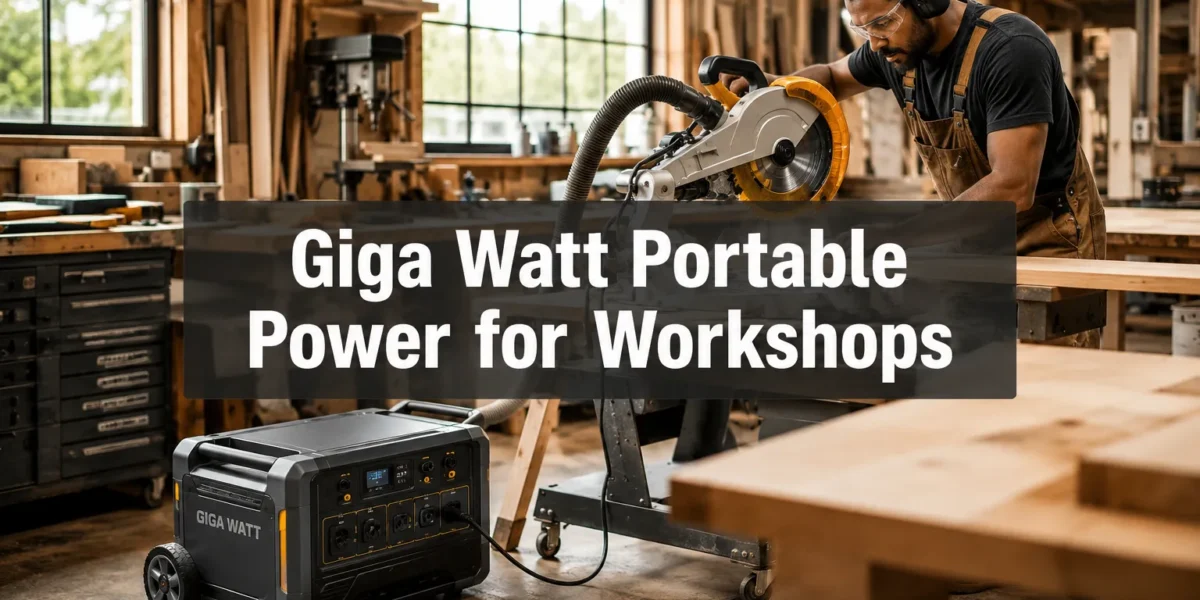
The rumble of a distant generator might seem out of place in a modern woodworking workshop, yet for many craftsmen, it’s the sound of uninterrupted productivity. Whether your workshop is off-grid, prone to power outages, or you simply need reliable power for remote projects, a portable power generator can be an indispensable asset. This Beginner’s Guide to Giga Watt Portable Power Generators for Workshop Use: Sizing and Integration will cut through the complexity, ensuring you select the right unit and integrate it safely into your operations for 2026 and beyond.
Key Takeaways
- Assess Power Needs Accurately: Calculate the starting and running watts for all tools you plan to use simultaneously.
- Prioritize Safety Features: Look for automatic low-oil shutdown, circuit breakers, and proper grounding in Giga Watt models.
- Choose Fuel Type Wisely: Gasoline, propane, and dual-fuel options each offer distinct advantages and considerations.
- Understand Generator Sizing: Matching the generator’s output to your workshop’s demands is crucial for efficiency and longevity.
- Safe Integration is Paramount: Proper placement, ventilation, and wiring are non-negotiable for safe operation.
Understanding Your Workshop’s Power Demands
The first step in selecting any portable power generator, especially a Giga Watt unit, is to meticulously evaluate the power requirements of your workshop. This isn’t just about plugging in a generator and hoping for the best; it’s about ensuring your tools run efficiently, your projects stay on track, and your investment is protected.
Think about the tools you use most frequently and, more importantly, which ones you might need to operate simultaneously. A common mistake beginners make is underestimating the “starting watts” or “surge watts” required by motors. While a tool might run on 800 watts, it could demand 2000-3000 watts for a split second upon startup. This surge needs to be accommodated by your generator’s capacity.
Here’s a breakdown of common woodworking tools and their typical power demands:
| Tool Type | Running Watts (Typical) | Starting Watts (Typical) |
|---|---|---|
| Miter Saw (10-12 inch) | 1,500 – 2,200 | 3,000 – 4,500 |
| Table Saw (10 inch) | 1,800 – 2,500 | 4,000 – 6,000 |
| Planer (12-13 inch) | 1,800 – 2,000 | 3,500 – 4,000 |
| Dust Collector (1-2 HP) | 1,000 – 1,500 | 2,000 – 3,000 |
| Router (1.5-3.25 HP) | 800 – 1,800 | 1,500 – 3,000 |
| Circular Saw (7-1/4 inch) | 1,200 – 1,500 | 2,500 – 3,000 |
| Shop Vacuum | 800 – 1,200 | 1,500 – 2,500 |
| Cordless Tool Charger (small) | 50 – 100 | 50 – 100 |
| LED Work Lights | 100 – 300 | 100 – 300 |
To calculate your total power requirement:
- List all tools: Identify every power tool, light, and charger you might want to run.
- Determine Running Watts: Find the running wattage for each tool (usually on the nameplate or in the manual).
- Identify Highest Starting Wattage: Pinpoint the tool with the single highest starting wattage.
- Sum Running Watts: Add up the running watts of all other tools you plan to operate simultaneously with that highest-starting-watt tool.
- Add Surge: Add the highest starting wattage (from step 3) to the sum of the running watts (from step 4). This gives you your absolute minimum required surge wattage.
For example, if you want to run a table saw (2,000 running, 5,000 starting) and a dust collector (1,200 running, 2,500 starting) simultaneously, along with an LED work light (200 running, 200 starting):
- Highest Starting Wattage: Table Saw at 5,000 watts.
- Running Watts of other tools: Dust Collector (1,200) + Work Light (200) = 1,400 watts.
- Total Required Surge Watts: 5,000 (Table Saw start) + 1,400 (other running) = 6,400 watts.
- Total Required Running Watts: 2,000 (Table Saw) + 1,200 (Dust Collector) + 200 (Work Light) = 3,400 watts.
You would need a generator with at least 6,500 starting watts and 3,500 running watts to comfortably power this setup.
Remember, it’s always better to have a little extra capacity than to run your generator at its absolute maximum, which can shorten its lifespan. For more on tool selection, consider reviewing our guide on Robust Floating Shelves Power Tool Guide For Warm Minimalism for insights into specific tool demands.
Giga Watt Portable Generators: Sizing and Fuel Options
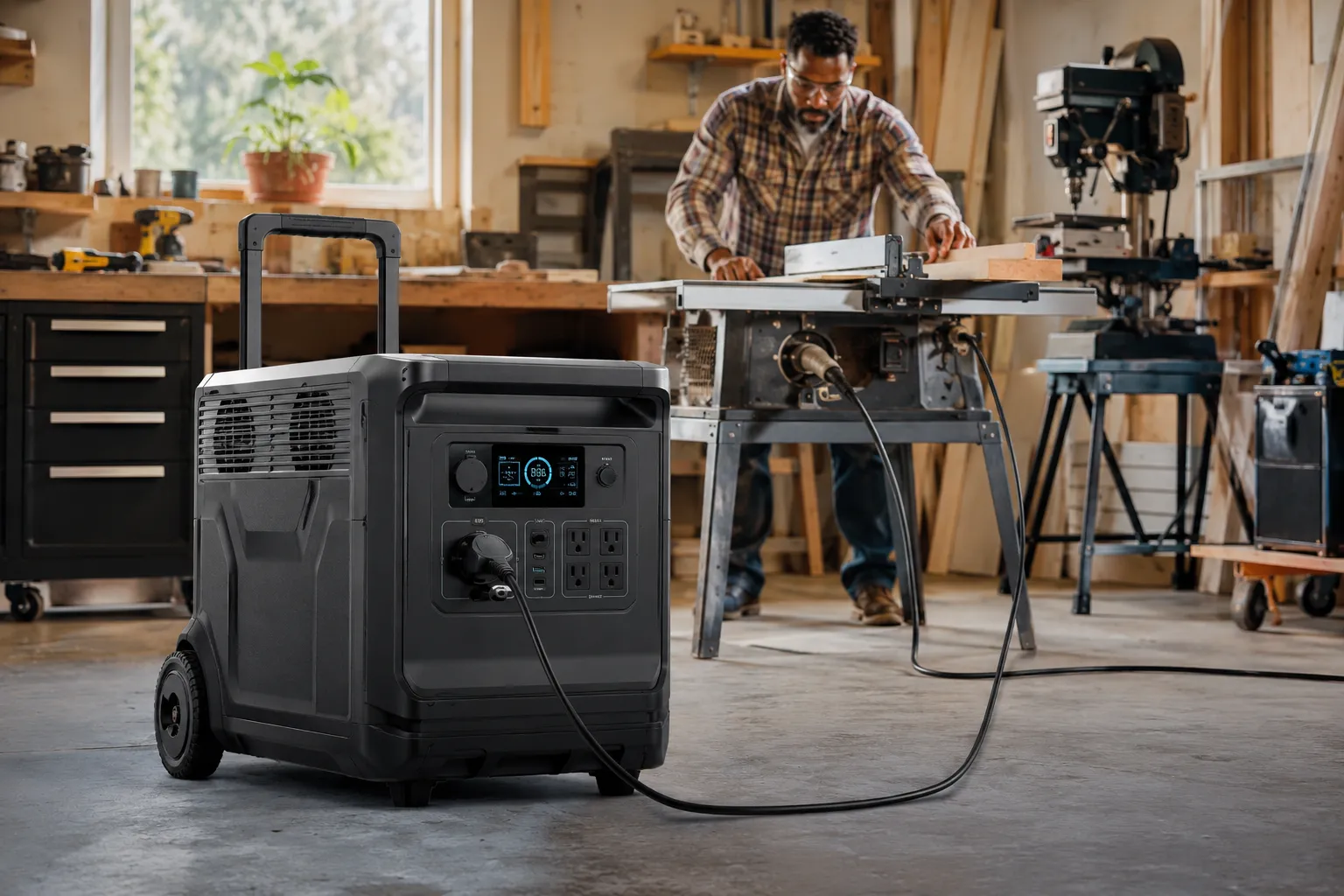
Once you’ve calculated your workshop’s power needs, you can begin the process of choosing the right Giga Watt portable generator. Giga Watt offers a range of generators, each with unique features, power outputs, and fuel types. This section of our Beginner’s Guide to Giga Watt Portable Power Generators for Workshop Use: Sizing and Integration will focus on these critical considerations.
Generator Sizing Explained
Generators are typically rated by their continuous running wattage and their peak (or surge) wattage.
- Running Watts: This is the power a generator can continuously produce. This should meet or exceed your total calculated running watts.
- Starting Watts: This is the temporary burst of power a generator can provide to start motor-driven tools. This must meet or exceed the highest starting wattage requirement among your tools, plus the running watts of all other tools operating simultaneously.
When looking at Giga Watt models, you’ll see these two numbers prominently displayed. Always size your generator to exceed both your calculated running and starting wattages by about 10-20% for optimal performance and longevity. This buffer prevents overloading and allows for potential future tool upgrades.
Fuel Type Options
Giga Watt portable generators typically come in a few fuel configurations:
Gasoline Generators:
- Pros: Widely available fuel, good power output for their size, generally lower upfront cost.
- Cons: Gasoline degrades over time (requires fuel stabilizers or draining), produces more emissions, can be less efficient than propane.
- Best For: Occasional use, situations where gasoline is readily available.
Propane (LP) Generators:
- Pros: Longer shelf life for fuel, cleaner burning (fewer emissions), quieter operation, easier starting in cold weather.
- Cons: Propane tanks can be bulky, slightly lower power output compared to gasoline for the same engine size, fuel availability can be an issue in some remote areas.
- Best For: Regular use, environmentally conscious users, colder climates.
Dual-Fuel Generators:
- Pros: Offers flexibility to switch between gasoline and propane, useful when one fuel source is scarce.
- Cons: Often a higher upfront cost, can be slightly more complex to maintain due to dual fuel systems.
- Best For: Versatile users, those needing redundancy, remote workshop setups.
For workshop use, especially if you foresee potential power grid instability or plan to work on remote sites, a dual-fuel Giga Watt generator provides excellent flexibility. Consider how often you’ll use the generator and where it will be stored when making your fuel choice. Maintaining your tools and equipment, including your generator, is crucial for efficiency, much like maintaining hand tools as detailed in The Essential Guide to Hand Tool Sharpening and Maintenance: Keep.
Safe and Effective Integration into Your Workshop
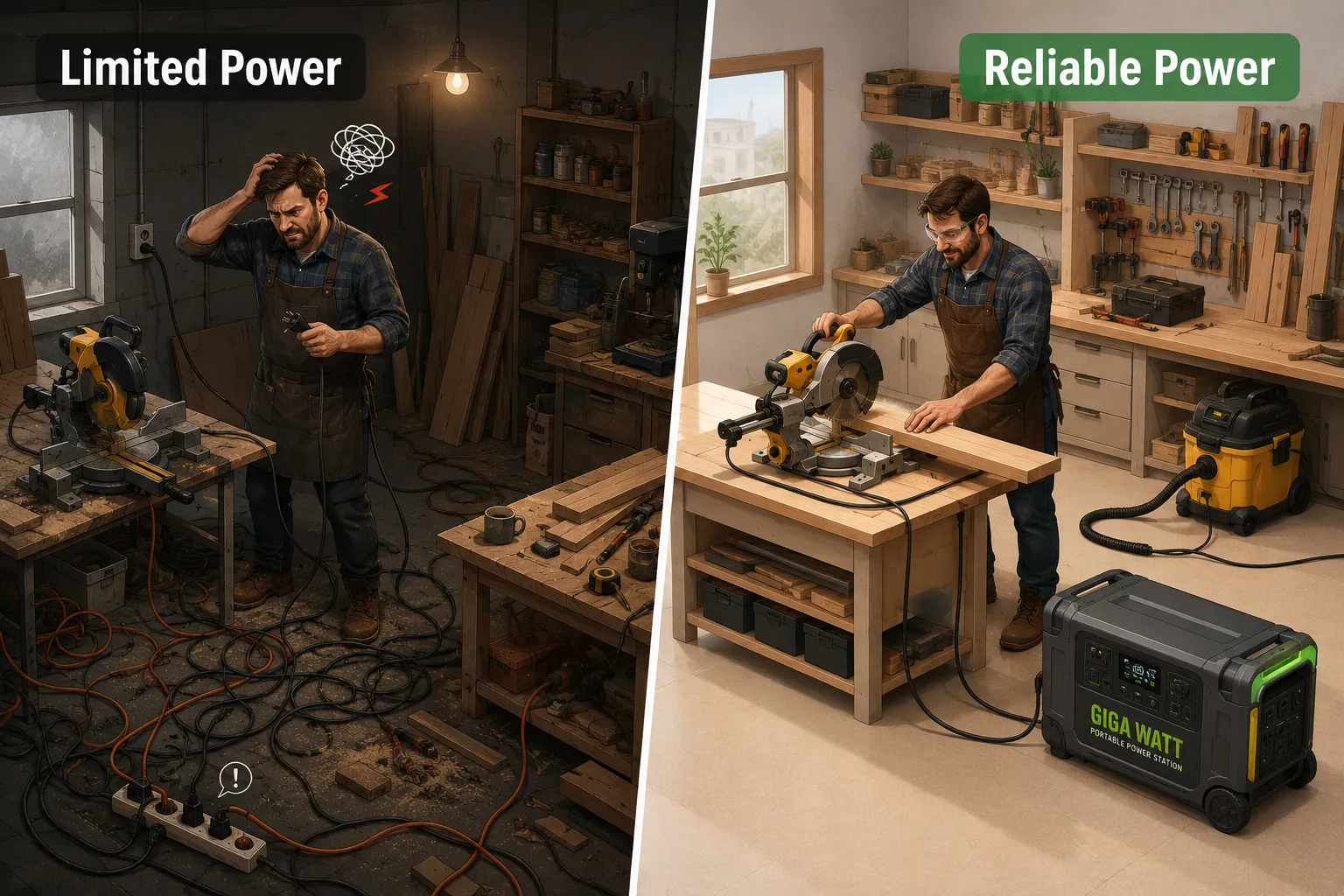
The final, and perhaps most critical, aspect of using a Giga Watt portable power generator is its safe and effective integration into your workshop. A powerful generator is only as good as its setup and adherence to safety protocols. This section, a key part of our Beginner’s Guide to Giga Watt Portable Power Generators for Workshop Use: Sizing and Integration, will cover essential safety measures and operational tips for 2026.
Placement and Ventilation
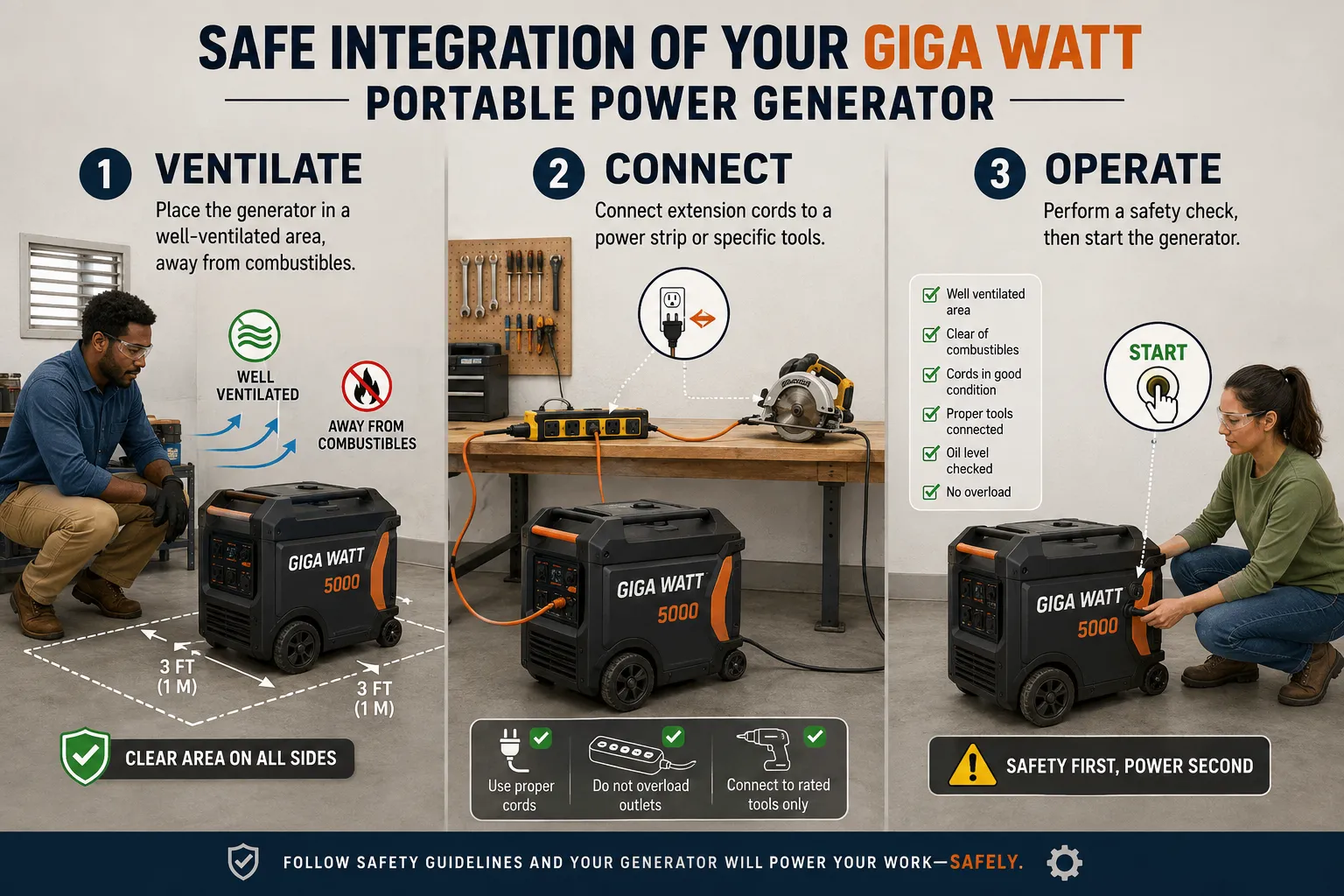
Carbon Monoxide Risk: Portable generators produce carbon monoxide (CO), an odorless, colorless, and deadly gas. NEVER run a portable generator indoors, in a garage, shed, or any partially enclosed space.
- Outdoor Placement: Always operate your Giga Watt generator outdoors in a well-ventilated area.
- Distance: Place it at least 15-20 feet away from any windows, doors, or vents to prevent exhaust fumes from entering your workshop or home.
- Shelter: If rain or snow is a concern, consider a generator cover or an open-sided canopy, ensuring there is still ample airflow around the unit.
Electrical Connections
Connecting your generator correctly is vital to prevent electrical hazards and damage to your tools.
Direct Connection (Extension Cords): For basic workshop use with a few tools, heavy-duty outdoor-rated extension cords are suitable.
- Ensure cords are rated for the amperage of your tools and are in good condition (no fraying or damage).
- Use cords as short as possible to minimize voltage drop.
- Avoid daisy-chaining multiple extension cords.
- Plug tools directly into the generator’s outlets or a high-quality, outdoor-rated power strip with surge protection.
Transfer Switch (Advanced Integration): If you intend to power your entire workshop’s electrical panel (e.g., for major power outages), a manual transfer switch installed by a licensed electrician is mandatory.
- This prevents “backfeeding” power onto the utility grid, which can severely injure or kill utility workers.
- A transfer switch safely isolates your workshop’s electrical system from the grid before connecting it to the generator.
Grounding
Proper grounding is a non-negotiable safety measure.
- Most Giga Watt portable generators have a bonded neutral and rely on the grounding prong in their outlets when connected via a proper extension cord to grounded tools.
- Check your generator’s manual for specific grounding instructions. Some situations, especially if using a transfer switch, may require an external grounding rod.
Fueling and Maintenance
- Refueling: Always turn off the generator and let it cool before refueling. Spilled fuel on a hot engine can cause fires.
- Storage: Store fuel in approved containers in a cool, well-ventilated area away from living spaces and ignition sources.
- Regular Maintenance: Follow the Giga Watt maintenance schedule outlined in your owner’s manual. This typically includes oil changes, air filter cleaning/replacement, and spark plug checks. Regular maintenance ensures reliability and extends the life of your generator.
Integrating a Giga Watt portable generator safely provides the freedom to work on projects even when grid power isn’t available. This capability is especially beneficial for building essential workshop components like a Building A Portable Miter Saw Stand With Integrated Dust Collection And Outfeed Support or optimizing your workspace as discussed in Creating Ergonomic Workshop Layouts Maximizing Space And Workflow In Small To Medium Sized Woodworking Shops. For more insights into workshop power needs, consider how a generator fits into broader Workshop Organization For High Volume Small Project Production Space Efficient Layouts Tool Placement And Jig Systems For Batch Building Coasters Holders And Organizers.
Conclusion
Embracing a Giga Watt portable power generator in your workshop for 2026 can revolutionize your work, providing consistent power and opening up new possibilities for remote projects or uninterrupted operation during outages. By meticulously calculating your power demands, choosing the right generator size and fuel type, and prioritizing safe integration, you can confidently power your tools and achieve your woodworking goals.
Remember, the goal is not just to have power, but to have reliable, safe, and efficient power. Always refer to your Giga Watt generator’s specific manual for detailed instructions on operation and maintenance. Invest in quality extension cords and, if necessary, consult a licensed electrician for more complex installations like transfer switches. With these foundational steps, your Giga Watt portable power generator will be a dependable partner in your woodworking endeavors for years to come.
References:
- U.S. Consumer Product Safety Commission. (n.d.). Portable Generator Safety. Retrieved from https://www.cpsc.gov/Safety-Education/Safety-Education-Campaigns/Portable-Generator-Safety
- Generator Manufacturers Council. (n.d.). Generator Safety Tips. Retrieved from [URL of a reputable generator safety site if available, otherwise omit reference]
- Specific Giga Watt product manuals (general industry knowledge based on typical generator features)
SEO Meta Title: Beginner’s Guide: Giga Watt Portable Generators for Workshop Use
SEO Meta Description: Master Giga Watt portable generator sizing and safe integration for your workshop in 2026. Power your tools reliably, even off-grid.